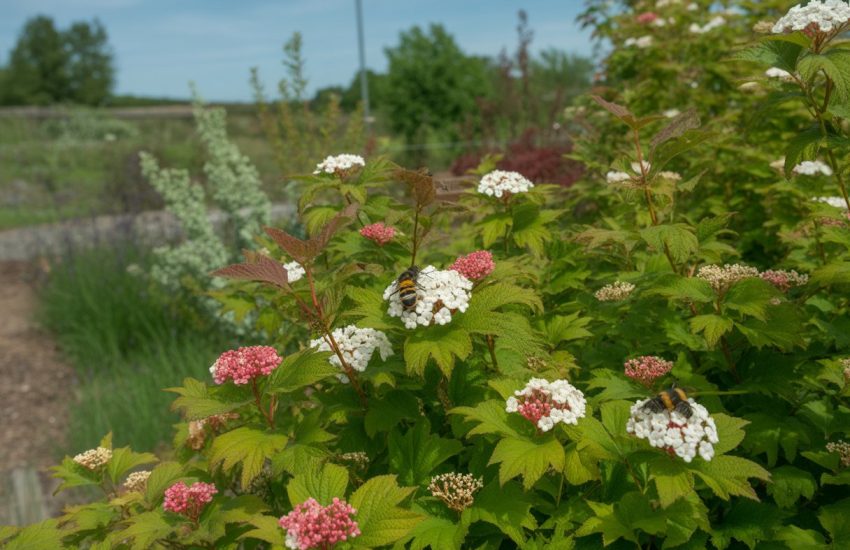
Scarlet Hedgenettle (Stachys coccinea)
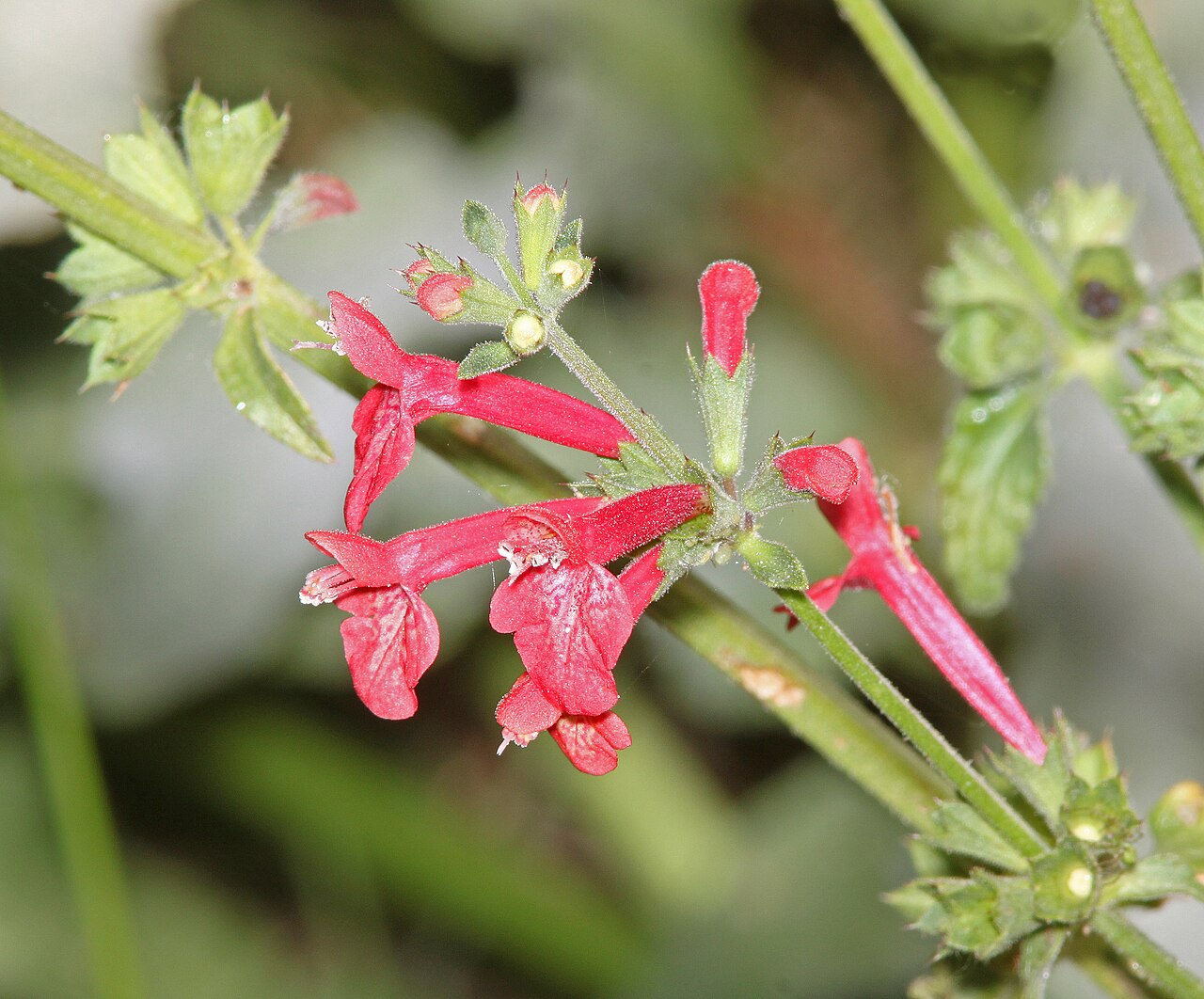
Stachys coccinea, commonly called Scarlet Hedgenettle or Texas betony, is a vivid, hummingbird-magnet perennial native to the mountain canyons and rocky slopes of the southwestern borderlands. Despite “nettle” in the name, it has no sting at all — the name refers only to its square stems and opposite leaves, classic traits of the mint family (Lamiaceae), to which it belongs alongside salvias, monardas, and true betonies.
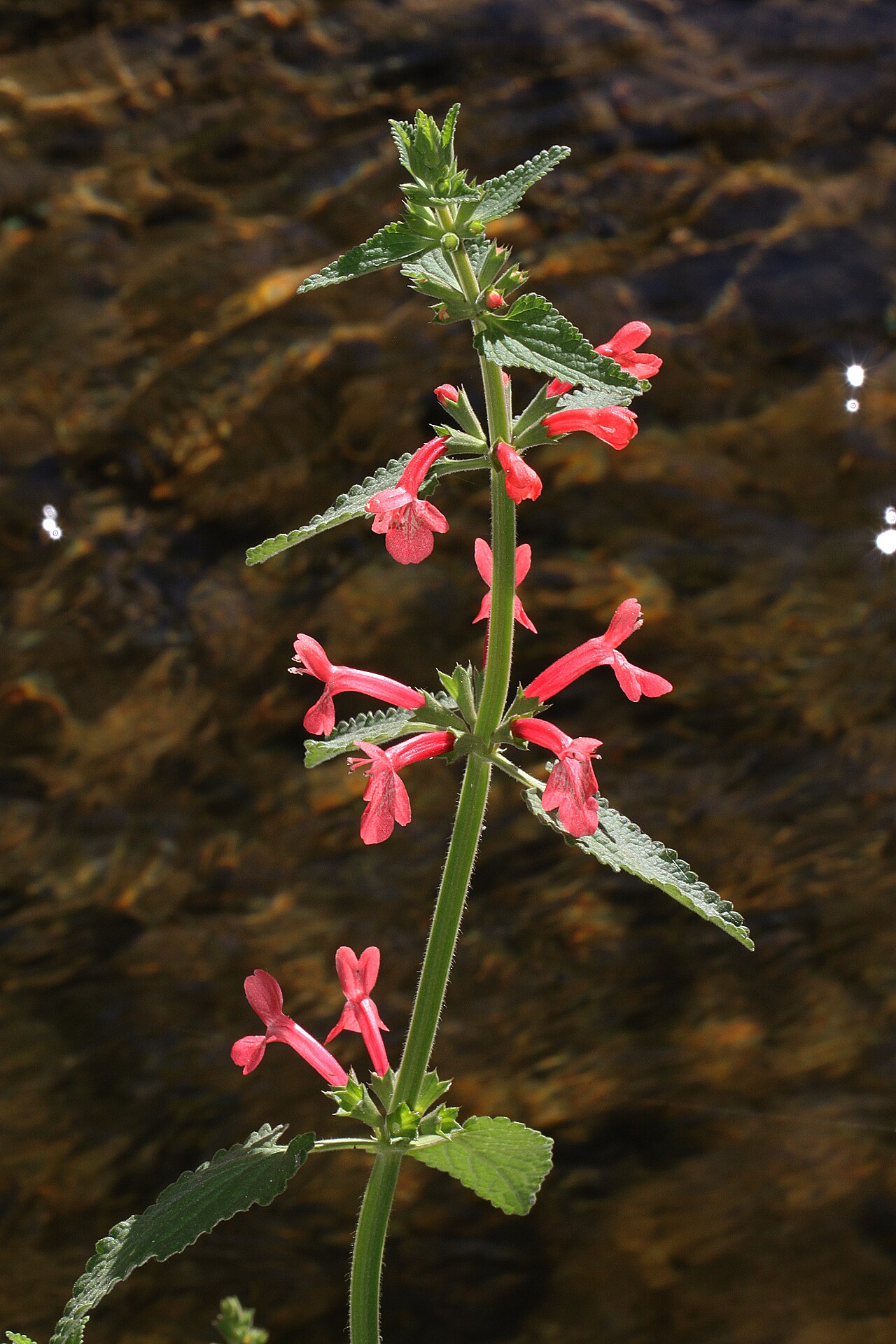
From spring through fall, scarlet hedgenettle sends up loose spikes of tubular, bright red to coral flowers over soft, triangular, mildly fuzzy leaves. The long bloom season and nectar-rich, hummingbird-shaped flowers make it one of the most reliable wildlife plants for gardens in its native range, often in near-constant bloom from the first warm weeks of spring until the first hard frost. It naturally grows in the shelter of rocks, canyon walls, and streamside vegetation in the sky island mountains of Arizona, southern New Mexico, and the Trans-Pecos and Edwards Plateau regions of Texas.
For gardeners in the Southwest looking for a tough, long-blooming, low-water perennial that hummingbirds cannot resist, scarlet hedgenettle is hard to beat — it tolerates considerable heat and drought once established, asks for nothing more than a bit of afternoon shade in the hottest gardens, and keeps blooming for months on end.
Identification
Scarlet hedgenettle is a soft-wooded, semi-woody perennial, typically growing 1 to 2 feet tall and slightly wider, with the square stems characteristic of the mint family.
Growth Habit
The plant forms a loose, spreading clump of upright to sprawling stems, often rooting where lower stems touch moist soil, giving it a naturally informal, slightly rambling habit well suited to rock gardens and canyon-style plantings. In favorable sites it can slowly colonize nearby ground via these rooting stems without becoming aggressive.
Leaves
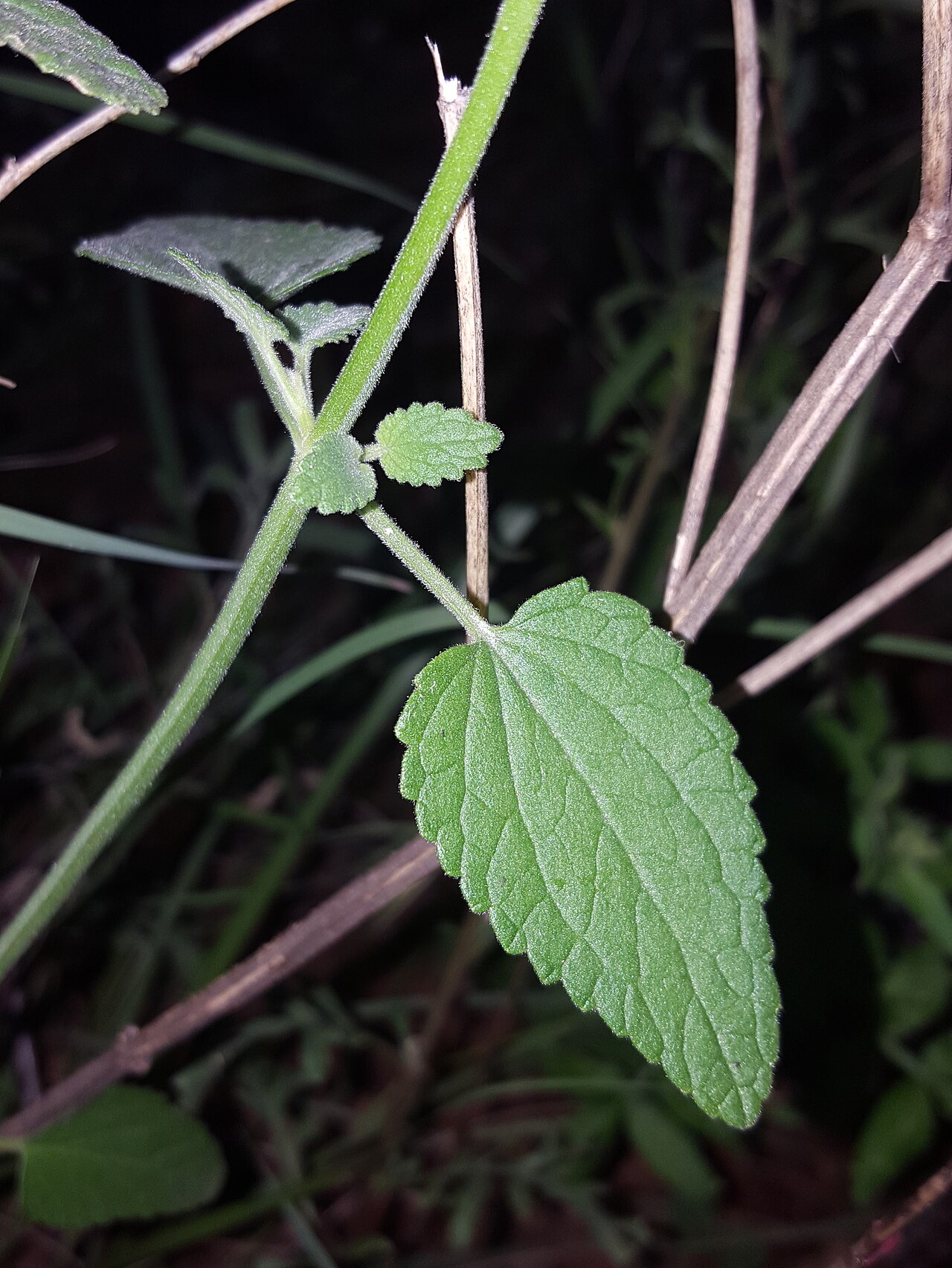
Leaves are opposite, triangular to heart-shaped at the base, with scalloped or toothed margins and a soft, slightly fuzzy texture from fine hairs covering both surfaces. They are medium green and aromatic when crushed, a trait shared with many mint-family relatives.
Flowers
Flowers are tubular, two-lipped, and bright red to coral-red, carried in loose, interrupted spikes (verticillasters) above the foliage from spring through fall wherever moisture allows continued growth. Each individual flower is shaped almost exactly for a hummingbird’s bill, and the long, nearly continuous bloom season is one of the plant’s most valuable garden traits.
Fruit & Seeds
Following pollination, each flower produces four small nutlets typical of the mint family, tucked within the persistent calyx. Seed set is modest compared to the showy flower display, and the plant relies at least as much on vegetative spread from rooting stems as on seed for persistence in the garden.
Quick Facts
| Scientific Name | Stachys coccinea |
| Family | Lamiaceae (Mint) |
| Plant Type | Herbaceous/Semi-Woody Perennial |
| Mature Height | 12–24 in |
| Mature Spread | 12–18 in |
| Growth Rate | Moderate |
| Sun Exposure | Full Sun to Part Shade |
| Water Needs | Low to Moderate |
| Soil Type | Rocky to loamy; well-drained |
| Soil pH | 6.5–8.0 (tolerates alkaline soils) |
| Bloom Time | Spring – Fall (nearly continuous with moisture) |
| Flower Color | Bright red to coral-red |
| Fall Color | None notable; foliage dies back with hard frost |
| Fruit | Small nutlets; not ornamental |
| Deer Resistant | Yes (aromatic mint-family foliage) |
| USDA Hardiness Zones | 7–10 |
Native Range
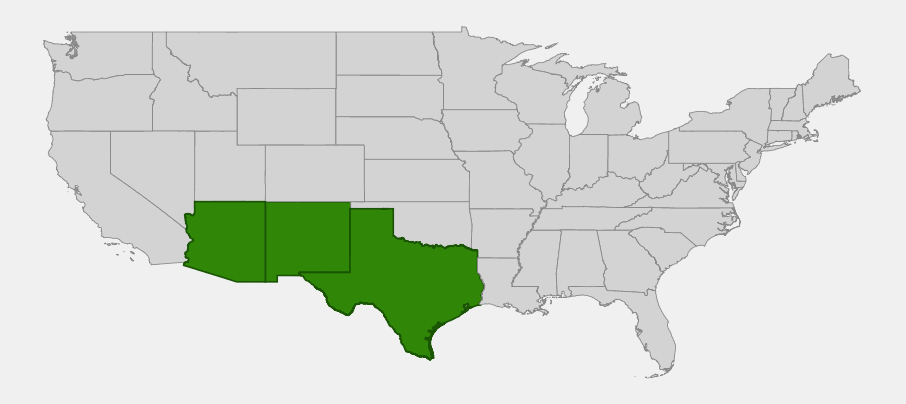
Scarlet hedgenettle is native to the sky island mountain ranges and canyon country of southeastern Arizona and southern New Mexico, and across much of Texas from the Trans-Pecos through the Edwards Plateau and into south-central portions of the state, with its range continuing south through Baja California Sur and mainland Mexico into Central America as far as Nicaragua.
Within the United States it is a plant of rocky canyons, streamside woodlands, and partially shaded slopes in oak and pine-oak woodland, typically at middle elevations where summer monsoon moisture supports an extended bloom season. It is frequently found growing along seasonal washes and canyon bottoms where extra moisture collects, often sheltered by rock outcrops or canopy from surrounding oaks and junipers.
Because its U.S. range sits at the northern edge of a much larger range extending deep into Mexico and Central America, scarlet hedgenettle is best adapted to the mild winters of its southwestern U.S. range and should be treated as marginally hardy, if at all, outside USDA zones 7 and warmer.
📋 Regional plant lists featuring Scarlet Hedgenettle: Arizona & New Mexico · South & West Texas
Growing & Care Guide
Scarlet hedgenettle is an easy, rewarding perennial for southwestern gardens, especially valuable in a dedicated Arizona pollinator garden or any planting focused on hummingbirds. For an overview of broader low-water design principles, see our pollinator garden design basics guide.
Light
Full sun to part shade both work well, with part shade — especially afternoon shade — recommended in the hottest low-desert gardens to extend bloom and reduce leaf scorch. In cooler, higher-elevation gardens within its range, full sun produces the most compact, floriferous plants.
Soil & Water
It tolerates a range of soils from rocky to loamy as long as drainage is reasonable, and it is more forgiving of occasional summer water than many desert natives, reflecting its canyon and streamside origins. Established plants handle real drought, as outlined in our broader guide to drought tolerant plants for Arizona landscapes, but regular water during the warm season extends and intensifies the bloom considerably — a worthwhile tradeoff for a plant this attractive to hummingbirds.
Planting Tips
Plant in spring after the last frost, siting it where it gets some protection from the most intense afternoon sun if your garden runs hot. It combines beautifully with rock features, canyon-style plantings, and other Southwest natives, and works well massed for a stronger hummingbird display.
Pruning & Maintenance
Cut back hard in late winter or early spring before new growth begins to keep the plant compact and encourage fresh, vigorous stems. Deadheading spent flower spikes through the season can encourage continued blooming, though it is not strictly necessary.
Propagation
Propagates easily from stem cuttings taken in the growing season, or by dividing and transplanting rooted stem sections. Seed can also be collected and sown, though vegetative propagation is faster and more reliable.
Landscape Uses
- Hummingbird gardens — among the most reliable nectar plants for the region
- Pollinator and wildlife plantings
- Rock gardens and canyon-style landscaping
- Border and mass plantings for long seasonal color
- Xeriscaping with occasional supplemental water
- Container gardens on patios where hummingbirds can be enjoyed up close
Wildlife & Ecological Value
Few native southwestern perennials match scarlet hedgenettle’s value to hummingbirds, thanks to a bloom season that stretches across most of the year and flowers shaped precisely for their feeding habits.
For Pollinators
Hummingbirds are the primary pollinators and the main draw for gardeners, visiting the tubular red flowers repeatedly through an extended spring-to-fall bloom season. Long-tongued native bees and some butterflies also visit for nectar, making the plant a genuinely multi-purpose pollinator resource rather than a hummingbird specialist alone.
For Birds
Beyond hummingbirds, the dense foliage provides some cover for small songbirds foraging in canyon and woodland-edge habitat, though the plant’s primary bird value remains its nectar rather than seed or shelter.
For Mammals
The aromatic, mint-family foliage is generally unpalatable to deer and other browsing mammals, which is part of why the plant performs reliably even in areas with regular deer pressure.
Ecosystem Role
In its native canyon and streamside habitat, scarlet hedgenettle contributes to the understory layer beneath oaks and junipers, helping stabilize soil on slopes and canyon bottoms while providing a long-blooming nectar resource that helps sustain hummingbird populations through the breeding and migration seasons in the sky island region.
Cultural & Historical Uses
Scarlet hedgenettle has long been recognized within its range in Mexico and the American Southwest for its vivid, long-lasting flowers, and it has been grown and selected for ornamental use for generations in the region, giving rise to several named horticultural selections with varying flower color and plant size. The species’ widespread presence in home gardens and traditional landscaping across its range reflects a long history of informal cultivation rather than large-scale commercial use.
Within the broader Lamiaceae family, several related Stachys species have documented traditional medicinal uses in other parts of the world, but well-documented, specific historical medicinal use of Stachys coccinea itself is not prominent in the available ethnobotanical literature, and this page makes no medicinal claims about the species.
Today its cultural significance is primarily horticultural: it is a widely appreciated garden plant throughout the Southwest and Mexico, valued across generations of home gardeners specifically for its reliability in attracting hummingbirds, a quality that has kept it in cultivation long before formal native-plant landscaping became popular.
Frequently Asked Questions
Does scarlet hedgenettle have stinging hairs like a true nettle?
No. “Hedgenettle” refers to its square stems and leaf shape, typical of the mint family, not to any stinging hairs. The foliage is soft and safe to handle.
How long does scarlet hedgenettle bloom?
With adequate moisture, it can bloom almost continuously from spring through fall, making it one of the longest-blooming native perennials available for southwestern hummingbird gardens.
Is scarlet hedgenettle the same plant as Texas betony sold at nurseries?
Yes, “Texas betony” is simply another common name for Stachys coccinea. Nurseries may also sell named cultivars, such as ‘Hidalgo’ or ‘Pow Wow’, selected for flower color or compact size, but these are all the same species.
Will it survive winter outside the desert Southwest?
It is best suited to USDA zones 7 through 10 and the mild winters of its native range. In colder climates it is usually grown as an annual or brought indoors, since hard freezes typically kill the plant outright.
Does scarlet hedgenettle need a lot of water?
No, but it is more water-tolerant than many desert natives and performs best, with the longest bloom season, when given occasional deep watering during the hottest months rather than being left completely dry.

Looking for a nursery that carries Scarlet Hedgenettle?
Browse our native plant nursery directory: Arizona · New Mexico · Texas