Cardinal Catchfly (Silene laciniata)
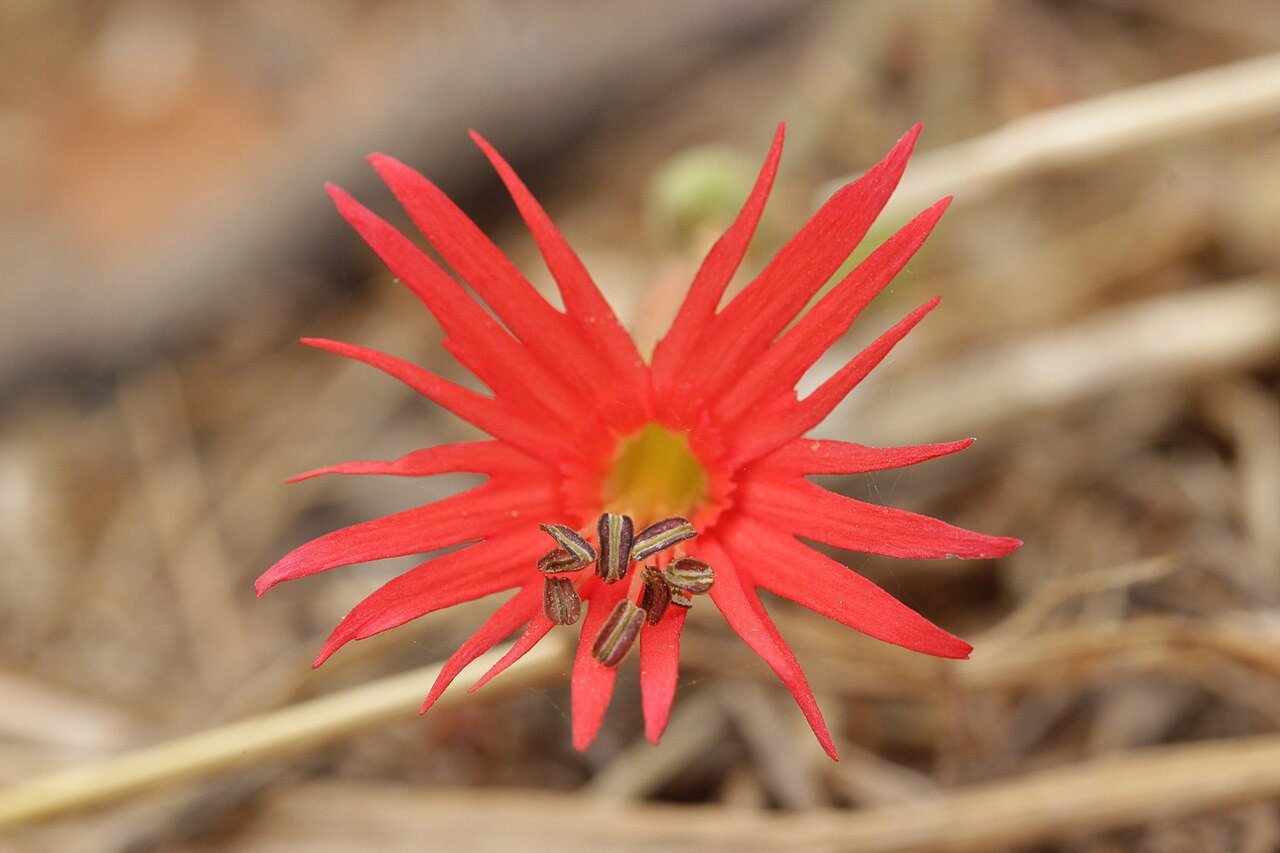
Silene laciniata, commonly called Cardinal Catchfly or Fringed Indian Pink, is one of the most vividly colored native wildflowers of the southwestern United States. A member of the carnation family (Caryophyllaceae), it produces brilliant scarlet-red, star-shaped flowers with deeply fringed, finger-like petal lobes that make it instantly recognizable along canyon trails and oak-woodland edges from California to Texas. Gardeners researching carnation-like native flowers for a hummingbird or rock garden often discover cardinal catchfly as one of the showiest options available.
This sprawling to loosely upright perennial grows from a woody base, sending up thin, often sticky-hairy stems 1 to 2 feet tall topped with a handful of flowers through summer. Despite its intense color, cardinal catchfly is an unassuming plant most of the year, dying back in dry seasons and persisting as a modest rootstock until rains or irrigation bring it back into bloom. It is a specialist hummingbird flower, with a tubular calyx and widely flared, deeply cut petals perfectly shaped to accommodate a long hummingbird bill.
In the garden, cardinal catchfly rewards well-drained, lean soil and some afternoon shade with a long season of eye-catching color, making it a favorite in native plant gardens, rock gardens and dry woodland borders throughout its range.
Identification
Cardinal catchfly is a low, sprawling to loosely erect herbaceous perennial that grows from a stout, woody base (caudex), often forming a small clump of several stems.
Stems & Leaves
Stems are slender, 8 to 24 inches tall, often sticky-hairy (glandular-pubescent) near the flower clusters — the “catchfly” in several Silene common names refers to this sticky texture, which can trap small insects without the plant being truly carnivorous. Leaves are opposite, narrow and lance-shaped, 1 to 3 inches long, and typically hairy, arranged in pairs along the stem with the largest leaves near the base.
Flowers
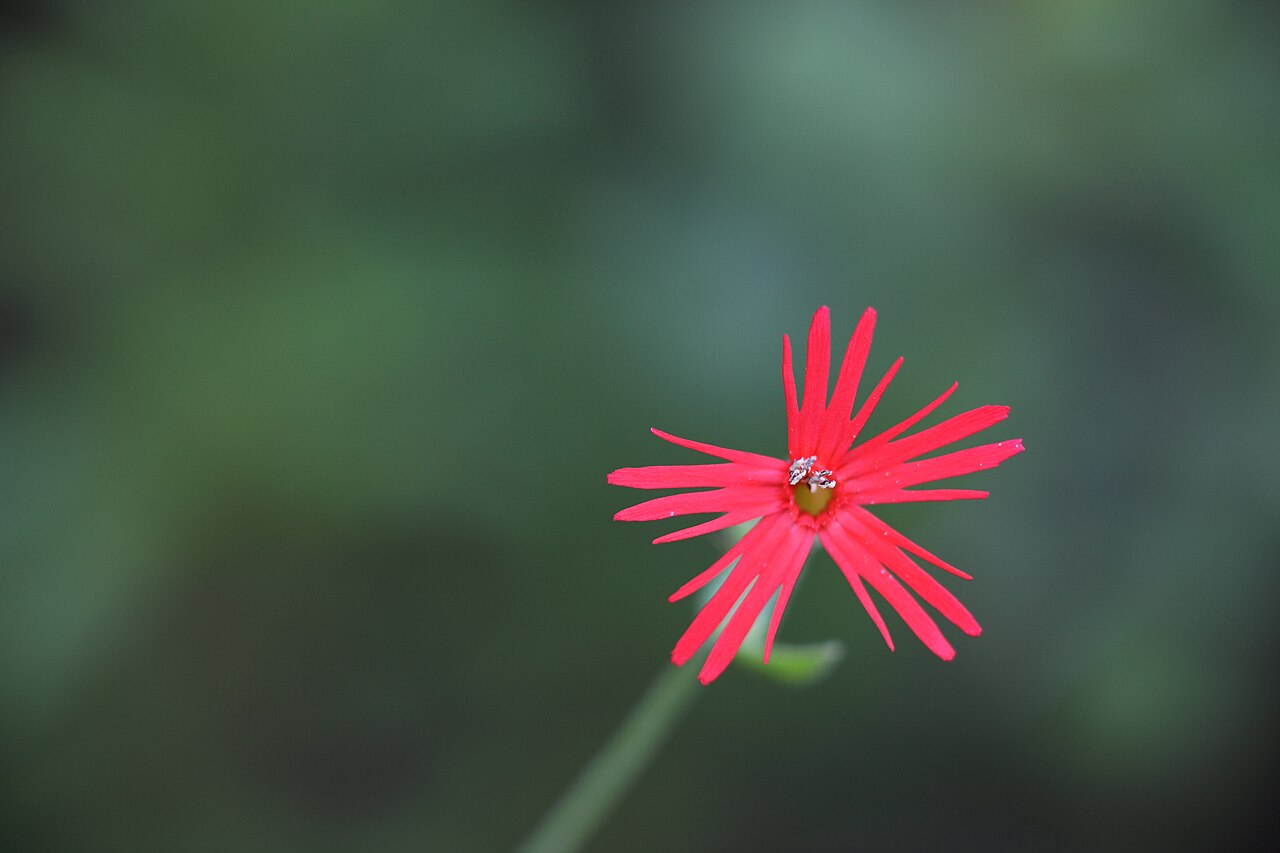
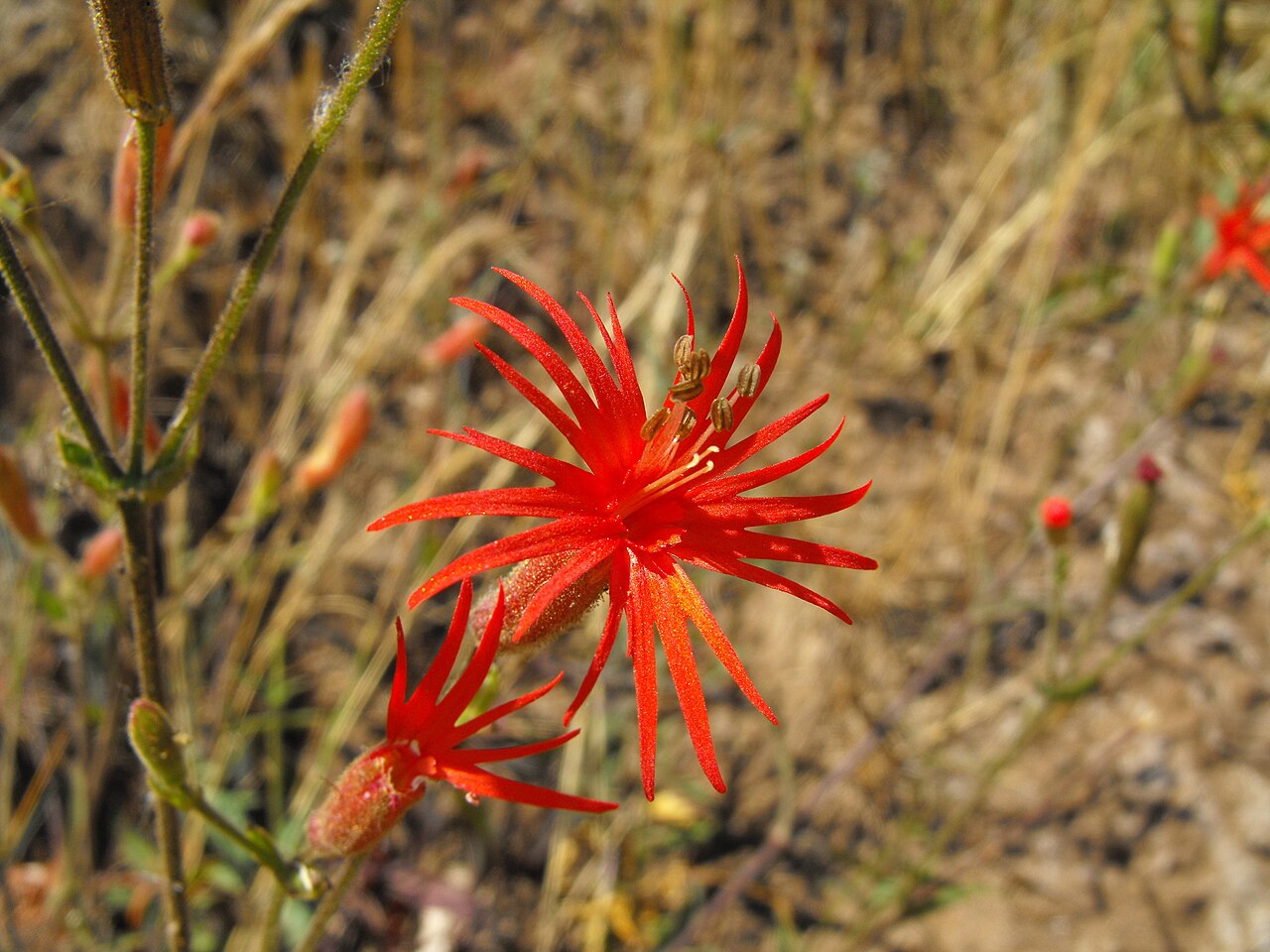
The flowers are the plant’s signature feature: 5 brilliant scarlet to deep red petals, each one deeply cut into 4 to 6 narrow, finger-like lobes, giving the flower a starburst or fringed appearance roughly 1.5 to 2 inches across. Flowers are held atop a narrow, tubular, often sticky-hairy calyx and open in loose clusters of a few flowers per stem. Bloom time runs generally from late spring through summer (May to August), varying by elevation and local rainfall.
Fruit & Seeds
After flowering, the calyx encloses a capsule that splits open at maturity to release numerous small, kidney-shaped seeds. Seed set can be light in drought years, and many populations rely substantially on the persistence of established perennial rootstocks rather than annual reseeding.
Quick Facts
| Scientific Name | Silene laciniata |
| Family | Caryophyllaceae (Carnation/Pink) |
| Plant Type | Herbaceous perennial, woody-based |
| Mature Height | 1–2 ft |
| Mature Spread | 1–1.5 ft, loosely clumping |
| Growth Rate | Slow to moderate |
| Sun Exposure | Part Shade to Full Sun |
| Water Needs | Low to moderate; good drought tolerance once established |
| Soil Type | Well-drained gravelly, rocky or sandy soil |
| Soil pH | Neutral to slightly alkaline |
| Bloom Time | May – August |
| Flower Color | Brilliant scarlet to deep red |
| Fall Color | None; foliage dies back in dry season |
| Fruit | Small capsule with numerous tiny seeds |
| Deer Resistant | Generally yes |
| USDA Hardiness Zones | 7–10 |
Native Range
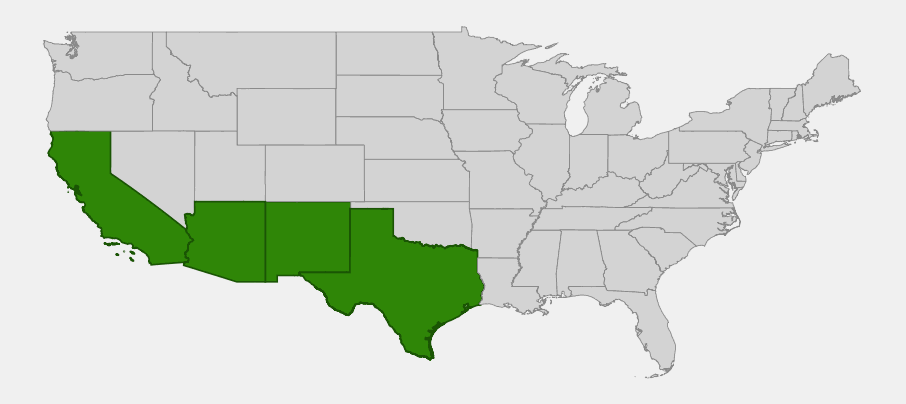
Cardinal catchfly is native to the southwestern United States, from California east through Arizona and New Mexico to central and western Texas, and south into northern Mexico. In California it occurs mainly in the southern Coast Ranges and southern California mountains and foothills; in Arizona and New Mexico it is found through the mountains and canyons of the Madrean and Mogollon regions; in Texas it is centered on the Edwards Plateau and Trans-Pecos.
Typical habitat includes dry, rocky slopes, canyon walls, oak and pine-oak woodlands, and chaparral, usually at middle elevations from roughly 1,000 to 7,000 feet. It often grows in part shade at the base of boulders or beneath open tree canopy, where some protection from the most intense afternoon sun helps it persist through the dry season. Common associates include native oaks, manzanita, and other drought-adapted chaparral and woodland shrubs such as cliffrose and Apache plume.
Because it depends on good drainage and tolerates only moderate summer water, cardinal catchfly is a poor match for consistently wet or heavy clay soils; it performs best where it can dry out between waterings, much as it does on its native rocky slopes.
📋 Regional plant lists featuring Cardinal Catchfly: California & Nevada · Arizona & New Mexico · South & West Texas
Growing & Care Guide
Cardinal catchfly is not difficult to grow once its preference for lean, well-drained soil and some afternoon relief from the sun is respected.
Light
It does best in part shade, especially at the base of shrubs, boulders or open tree canopy that provide relief from the hottest afternoon sun. In cooler coastal California gardens it can take more sun; in hot inland and desert-adjacent gardens, afternoon shade helps keep the plant from going dormant too early in the season.
Soil & Water
Plant in well-drained, gravelly or sandy soil; cardinal catchfly resents heavy clay and consistently wet conditions, which can cause root rot. Water regularly through the first growing season to establish a deep root system, then reduce to occasional deep watering during the dry season — established plants tolerate real drought but look and bloom better with a little supplemental water in cultivation.
Planting Tips
Set out nursery plants in fall or early spring. Choose a spot with good drainage, such as a slope, raised bed or rock garden pocket. Space plants 12 to 18 inches apart; the sprawling habit fills gaps between rocks and other drought-tolerant perennials nicely.
Pruning & Maintenance
Deadhead spent flower stems to tidy the plant and potentially extend bloom. Cut back dried foliage after the plant goes dormant in late summer or fall. Avoid heavy mulch piled against the woody crown, which can encourage rot in wetter climates.
Propagation
Seed is the most common method: sow in fall for natural winter chilling, or cold-stratify seed for 4 to 6 weeks before spring sowing. Germination can be slow and uneven. Established clumps can occasionally be divided in early spring, though the woody base makes this less reliable than with many other perennials.
Landscape Uses
- Hummingbird gardens — the tubular, scarlet flowers are a strong hummingbird draw
- Rock gardens and dry slopes with excellent drainage
- Oak woodland understory plantings in part shade
- Native alternative to garden pinks and carnations for gardeners drawn to the flower’s fringed, carnation-like form
- Xeriscape and water-wise borders once established
Wildlife & Ecological Value
Cardinal catchfly’s scarlet, tubular flowers are tailored almost perfectly to one group of pollinators above all others.
For Pollinators
Hummingbirds are the primary pollinators, drawn to the bright red color and tubular flower form that holds nectar at the base, out of reach of most insects. Some long-tongued native bees and butterflies will also visit for nectar, but the flower’s structure and color signal “hummingbird flower” above all else. Pairing it with other Southwest hummingbird natives such as snapdragon-vine extends the nectar season across more of the year.
For Birds
Beyond hummingbirds feeding directly on nectar, the plant’s seeds provide a minor food source for small, seed-eating birds once the capsules mature and split open in late summer.
For Mammals
The foliage is not a preferred browse for deer or rabbits, which makes cardinal catchfly a reasonably reliable choice in gardens where browse pressure is a concern, though no native plant is entirely browse-proof in a hungry season.
Ecosystem Role
As a long-lived perennial of rocky slopes and woodland edges, cardinal catchfly adds floral diversity and a long summer bloom window to plant communities that are otherwise often dominated by drought-dormant grasses and shrubs by midsummer, helping sustain hummingbird activity through the hottest months.
Cultural & Historical Uses
There is little documented history of cardinal catchfly as a food, medicinal or utilitarian plant among Indigenous peoples of its range; its primary significance has always been ornamental and ecological rather than practical. The vivid color and unusual fringed petals have long made it a favorite subject for botanical illustrators and wildflower photographers exploring the canyons and oak woodlands of the Southwest.
In recent decades, as native plant gardening has grown in popularity across California, Arizona, New Mexico and Texas, cardinal catchfly has gained attention as a strikingly colorful, water-wise alternative to non-native garden pinks and carnations, and as one of the more reliable native hummingbird plants for dry, part-shaded garden spots.
Frequently Asked Questions
Is cardinal catchfly related to garden carnations?
Yes, loosely — both belong to the carnation family (Caryophyllaceae), which is why the deeply fringed, star-shaped petals of cardinal catchfly can look reminiscent of carnation flowers, though the two are different genera with very different garden needs.
Does cardinal catchfly actually catch flies?
No. The “catchfly” name refers to the sticky, glandular hairs on the stems and calyx that can trap small insects, but the plant is not carnivorous and does not digest anything it catches.
How much water does cardinal catchfly need?
Established plants are fairly drought tolerant, but they look best and bloom longest with occasional deep watering during the dry season, especially in hotter inland gardens. Good drainage matters more than frequent watering — avoid soggy soil.
Is cardinal catchfly a good hummingbird plant?
Yes, it is one of the best native hummingbird flowers for dry, rocky gardens in its range, with tubular scarlet flowers shaped specifically to suit a hummingbird’s bill and feeding behavior.
Why does my cardinal catchfly die back in summer?
This is normal. In its native dry habitat, the plant often goes semi-dormant during the hottest, driest part of summer and resprouts from its woody base with cooler weather or rain. Reduce watering rather than increasing it if you see this happen.

Looking for a nursery that carries Cardinal Catchfly?
Browse our native plant nursery directory: California · Arizona · New Mexico · Texas