Roundleaf Catchfly (Silene rotundifolia)
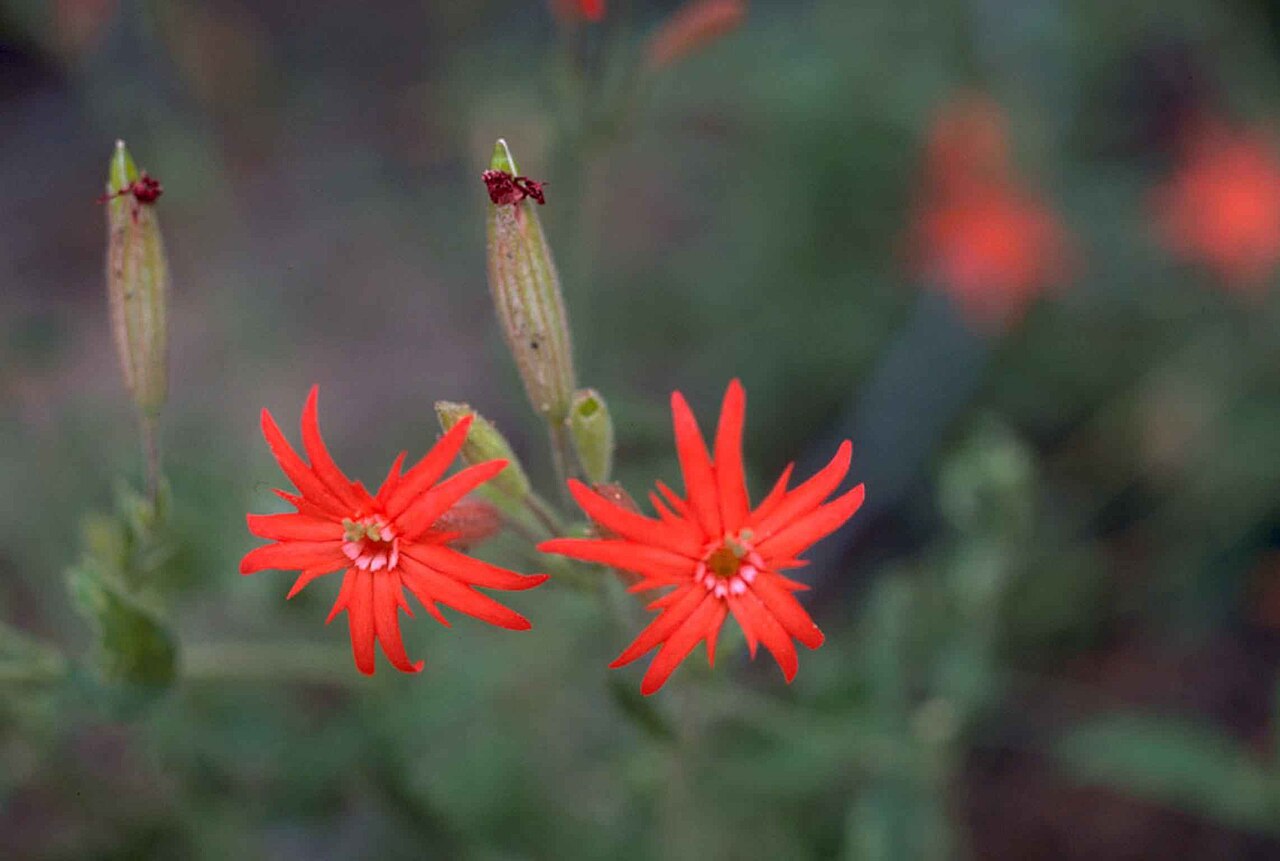
Silene rotundifolia, commonly known as Roundleaf Catchfly or Sandstone Fire Pink, is a regional specialty wildflower of the Appalachian Plateau, found on sandstone cliffs, rocky bluffs and shaded ledges in a fairly small home range centered on eastern Kentucky, Tennessee and West Virginia. A member of the carnation family (Caryophyllaceae) and a close relative of cardinal catchfly (Silene laciniata), it produces the same style of brilliant scarlet, deeply fringed flower on a plant specifically adapted to the crevices and ledges of sandstone rock faces.
As the name suggests, the leaves are distinctly rounder than those of most other native Silene species, an adaptation suited to the shaded, rocky cliff habitat where it grows — a trait gardeners who enjoy the fringed, carnation-family look of a garden Dianthus will notice right away in the flower form. Roundleaf catchfly forms a loose, sometimes sprawling or trailing clump 1 to 2 feet long, often cascading from a crack in a cliff face or growing at the base of sandstone boulders in rich, shaded woods. Its bright red flowers appear through the summer, drawing hummingbirds to otherwise shady cliff habitats that offer few other nectar sources.
Because of its narrow native range and specific habitat needs, roundleaf catchfly is less commonly offered in the nursery trade than some of its relatives, but it is an excellent choice for a shaded rock garden or naturalistic planting among boulders in the Appalachian region.
Identification
Roundleaf catchfly is a loose, sprawling to trailing herbaceous perennial that grows from a woody base, often rooting at the base of rock faces and cascading outward or downward from crevices.
Stems & Leaves
Stems are slender, often weak or sprawling, 1 to 2 feet long, frequently sticky-hairy especially near the flowers. Leaves are opposite and notably more rounded or broadly ovate than the narrow, lance-shaped leaves typical of other native Silene species — the source of both the scientific name rotundifolia (“round-leaved”) and the common name. Leaves are 1 to 3 inches long and usually thin in texture, suited to the shaded habitat where the plant grows.
Flowers
Flowers are bright scarlet red, with 5 petals each deeply cut into narrow lobes, forming the same striking fringed, starburst shape found in cardinal catchfly and California Indian pink. Flowers are roughly 1.5 inches across and bloom over an extended period from late spring through summer (May to August). They are borne on slender stalks that allow the flower to hang somewhat away from the rock face, improving visibility to pollinators.
Fruit & Seeds
After flowering, each flower develops a swollen, urn-shaped capsule within the persistent calyx, visible in the photo above as the inflated green pods behind the open flowers. The capsule splits open at maturity to release numerous small seeds, which can lodge in rock crevices and cracks to establish new plants on the same cliff face.
Quick Facts
| Scientific Name | Silene rotundifolia |
| Family | Caryophyllaceae (Carnation/Pink) |
| Plant Type | Herbaceous perennial, sprawling/trailing |
| Mature Height | 1–2 ft (trailing habit) |
| Mature Spread | 1–2 ft, sprawling over rock |
| Growth Rate | Slow to moderate |
| Sun Exposure | Part Shade to Shade |
| Water Needs | Low to moderate; good drainage essential |
| Soil Type | Thin, rocky or sandy soil over sandstone; excellent drainage |
| Soil pH | Acidic (sandstone-derived) |
| Bloom Time | May – August |
| Flower Color | Bright scarlet red |
| Fall Color | None; foliage persists into fall then declines |
| Fruit | Inflated capsule with numerous small seeds |
| Deer Resistant | Generally yes |
| USDA Hardiness Zones | 5–7 |
Native Range
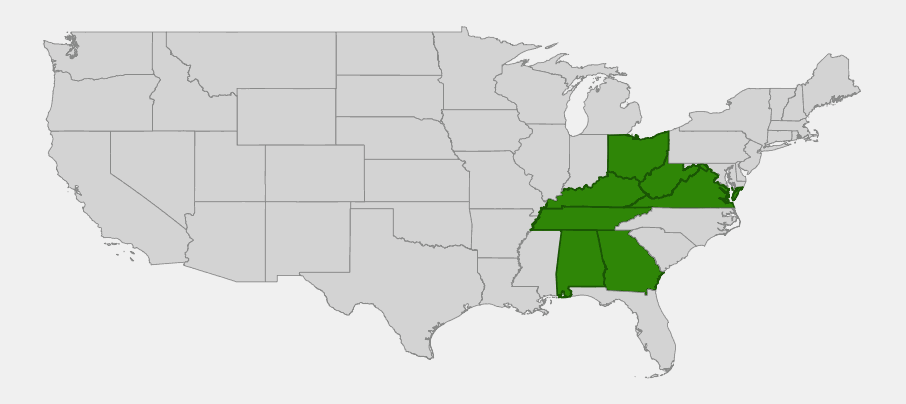
Roundleaf catchfly has a relatively narrow native range centered on the Appalachian Plateau, found in Ohio, Kentucky, Tennessee, West Virginia, Virginia, Georgia and Alabama. Within this range it is far from evenly distributed, occurring in scattered, often locally common populations tied closely to sandstone rock outcrops rather than spread broadly across the landscape.
Typical habitat is shaded to partly shaded sandstone cliffs, rock shelters, boulder fields and bluffs in rich, moist woodlands, generally to the west of the main Appalachian ridgelines. It is closely tied to acidic, sandstone-derived substrates and is rarely found on limestone. Common associates in these cliff and rock-shelter habitats include ferns, mosses and other specialized plants adapted to thin, rocky soil and dappled shade, such as crevice alumroot and crested iris.
Because its habitat is naturally patchy and specialized, roundleaf catchfly is best suited to gardens that can replicate shaded, rocky, well-drained conditions; it is not a plant for an open, sunny perennial border.
📋 Regional plant lists featuring Roundleaf Catchfly: Ohio & Indiana · Kentucky & Tennessee · Maryland, Virginia & West Virginia · Georgia, Alabama & Mississippi
Growing & Care Guide
Roundleaf catchfly is a specialist plant, and giving it conditions close to its native cliff habitat is the key to success in cultivation.
Light
It grows best in part shade to shade, as it would on a wooded cliff face or beneath a rock overhang. Too much direct, hot sun is likely to stress the plant, especially in the warmer, more southern parts of its range; a cool, shaded rock garden or north-facing slope suits it well.
Soil & Water
Plant in thin, rocky, well-drained, acidic soil — a crevice garden, rock wall or sandstone-amended bed mimics its native habitat far better than a standard garden bed. Good drainage is essential; this species does not tolerate standing water or heavy clay. Water regularly during establishment, then reduce to occasional watering, allowing the plant to dry between waterings as it would on an exposed rock face.
Planting Tips
Tuck plants into crevices, rock garden pockets or the base of boulders in a shaded spot, ideally angled so the trailing stems can cascade naturally. Plant in fall or spring. Because of its specific habitat needs, this species is best attempted by gardeners already building a rock garden or crevice garden rather than as a stand-alone bed plant.
Pruning & Maintenance
Minimal pruning is needed; trim back dead or damaged stems in late winter. Avoid rich, heavily amended soil or added fertility, which does not reflect the thin, rocky conditions the species is adapted to and can encourage weak, floppy growth.
Propagation
Seed is the most reliable method: sow in fall for natural winter stratification, or cold-stratify seed for several weeks before spring sowing into a gritty, well-drained seed mix. Cuttings of non-flowering stems can also root in a sandy propagation mix, offering an alternative for gardeners who already have an established plant.
Landscape Uses
- Shaded rock gardens and crevice gardens that replicate sandstone cliff habitat
- Retaining walls and rock outcrop plantings in part shade
- Appalachian native plant collections alongside other cliff and woodland specialists
- Hummingbird gardens in shaded settings where few other red flowers are available
Wildlife & Ecological Value
Roundleaf catchfly’s scarlet flowers are a valuable, if geographically narrow, nectar source in shaded Appalachian cliff habitats where red hummingbird flowers are otherwise scarce.
For Pollinators
Hummingbirds are the primary pollinators, drawn to the bright red, tubular-based flowers held away from the rock face on slender stalks. Because few other bright red, tubular flowers grow in deeply shaded cliff settings, roundleaf catchfly can be an important, concentrated nectar source where it occurs in quantity.
For Birds
Beyond direct hummingbird visitation, the small seeds provide a minor food source for seed-eating birds once the inflated capsules mature and split open.
For Mammals
The plant’s sticky, hairy foliage and inaccessible cliff-face habitat generally keep it away from heavy browse pressure, though this is more a function of habitat than any strong chemical deterrent.
Ecosystem Role
As a specialist of sandstone cliff and rock-shelter habitats, roundleaf catchfly is part of a distinctive plant community found almost nowhere else, and its presence can be an indicator of relatively undisturbed cliff and bluff ecosystems in the Appalachian Plateau region.
Cultural & Historical Uses
There is little documented history of roundleaf catchfly as a food, medicinal or utilitarian plant; given its narrow, often remote cliff-face habitat, it would have been less readily encountered or gathered than more widespread wildflowers. Its primary significance has always been ecological and, more recently, horticultural, as a specialty plant for rock garden and crevice garden enthusiasts in the Appalachian region.
Among the three fringed, scarlet-flowered Silene species covered on this site — cardinal catchfly, California Indian pink, and roundleaf catchfly — this species is the most narrowly distributed and the most tied to a single, specific habitat type, making it of particular interest to native plant collectors focused on Appalachian flora.
Frequently Asked Questions
Why is it called roundleaf catchfly?
The name refers to its leaves, which are noticeably more rounded or broadly oval than the narrow, lance-shaped leaves of most other native Silene species — reflected in the scientific name rotundifolia, meaning “round-leaved.”
Can I grow roundleaf catchfly outside the Appalachian region?
It can be grown outside its native range if you can replicate its specific conditions — shaded, acidic, well-drained, rocky soil — but it is not a forgiving plant for a typical sunny perennial bed. A rock or crevice garden gives the best chance of success.
Is roundleaf catchfly rare?
It is not formally listed as endangered across its range, but it occurs in scattered, localized populations tied to specific sandstone habitats rather than being widespread, so wild populations should not be collected from.
Does roundleaf catchfly need full sun to bloom?
No — unlike many native wildflowers, it blooms reliably in part shade to shade, which reflects its natural cliff-face and rock-shelter habitat.
How is roundleaf catchfly different from cardinal catchfly?
The two are closely related and share the same fringed, scarlet flower form, but roundleaf catchfly has distinctly rounder leaves, a more sprawling or trailing habit, a much smaller native range centered on the Appalachian Plateau, and a strong preference for shaded, rocky cliff habitat rather than the sunnier woodland and chaparral settings cardinal catchfly tolerates.

Looking for a nursery that carries Roundleaf Catchfly?
Browse our native plant nursery directory: Alabama · Georgia · Kentucky · Ohio · Tennessee & Virginia · West Virginia