Georgia Plume (Elliottia racemosa)
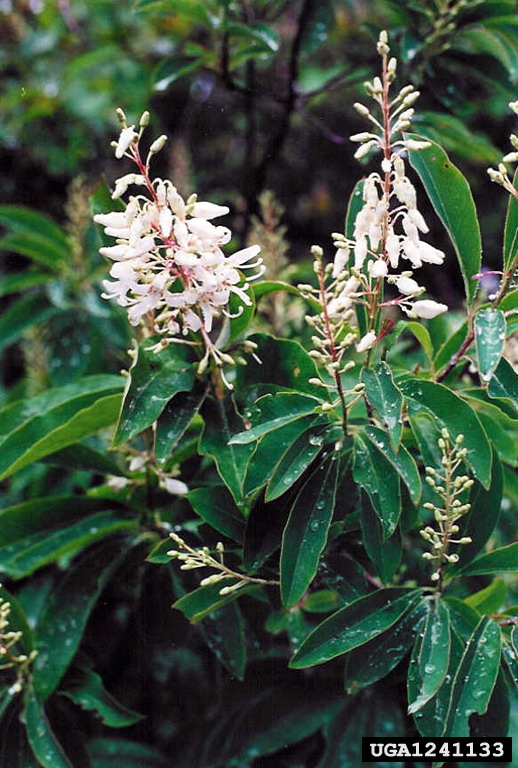
Elliottia racemosa, commonly known as Georgia Plume or Southern Plume, is one of the rarest and most remarkable native flowering trees in North America — found nowhere on Earth except the sandhills and coastal plain of Georgia. This large shrub or small tree produces spectacular upright plumes of fragrant white flowers in early summer, a display so striking that botanists have puzzled for over two centuries about how a plant this showy could remain so scarce.
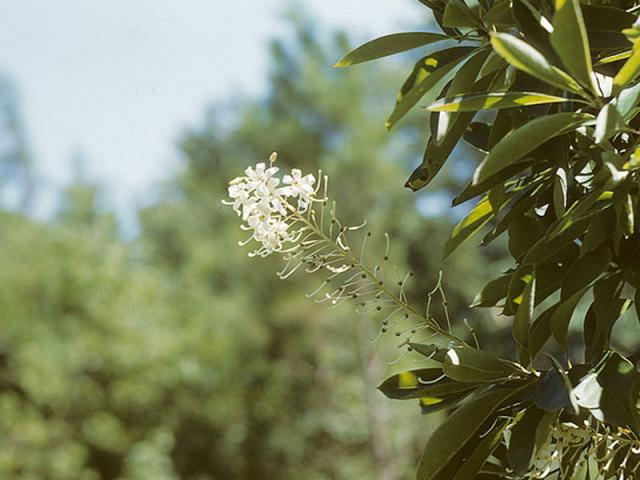
Growing 15 to 20 feet tall in the open, sandy woodlands it calls home, Georgia Plume forms an airy, open-branched shrub or small multi-trunked tree with glossy, leathery leaves and foot-long terminal clusters of starry white flowers that resemble a cross between an azalea and a fringetree. Despite being locally abundant where it does occur, the species has never been documented growing naturally anywhere outside Georgia — true botanical rarity hiding in plain sight along sandy roadsides and pine woodlands.
Georgia Plume produces few viable seeds in the wild and spreads mainly by root sprouts, a trait that likely contributes to its narrow natural range. For Georgia gardeners with the right sandy, well-drained site, growing this state-endemic species is both a horticultural reward and a genuine contribution to the conservation of one of the Southeast’s most distinctive native plants.
Identification
Georgia Plume typically grows as a large, multi-stemmed shrub or small single-trunked tree, usually 15 to 20 feet tall, occasionally taller in favorable sites. Its open, somewhat sparse branching habit and tendency to form root-sprout colonies give wild populations a loose, thicket-like appearance in sandhill and ridge habitats.
Bark & Stems
Bark on young stems is smooth and grayish-brown, becoming slightly rougher and more fissured with age, though it rarely develops the thick, deeply furrowed bark of larger forest trees given the species’ modest ultimate size. Twigs are slender and reddish-brown when young.
Leaves
Leaves are alternate, simple, elliptical to oblong, 2 to 5 inches long, with smooth margins and a glossy, leathery dark green upper surface. They are deciduous, typically turning muted shades of yellow to red before dropping in autumn, though fall color is generally less showy than the tree’s dramatic spring-to-summer bloom.
Flowers & Fruit
The flowers are Georgia Plume’s defining feature: fragrant, four- to seven-petaled white (occasionally pink-tinged) blossoms about an inch across, borne in dense, upright, plume-like racemes 6 to 12 inches long at the branch tips. Blooming occurs from late May into July, when a well-flowered specimen becomes genuinely spectacular, with dozens of candle-like white plumes rising above the foliage. The fruit is a small, dry, woody capsule; seed set in wild populations is notably poor, and most natural spread occurs instead through underground root sprouts, which can form sizable colonies from a single original plant.
Quick Facts
| Scientific Name | Elliottia racemosa |
| Family | Ericaceae (Heath) |
| Plant Type | Deciduous Large Shrub / Small Tree |
| Mature Height | 15–20 ft |
| Mature Spread | 10–15 ft (often colonial via root sprouts) |
| Growth Rate | Slow to moderate |
| Sun Exposure | Full Sun to Part Sun |
| Water Needs | Low to Moderate |
| Soil Type | Dry to moist, sandy, well-drained soils |
| Soil pH | 4.5–6.5 (acidic) |
| Bloom Time | Late May – July |
| Flower Color | White, occasionally pink-tinged |
| Fall Color | Muted yellow to red |
| Fruit | Small dry woody capsules; poor seed set |
| Deer Resistant | Moderate |
| USDA Hardiness Zones | 7–9 |
Native Range
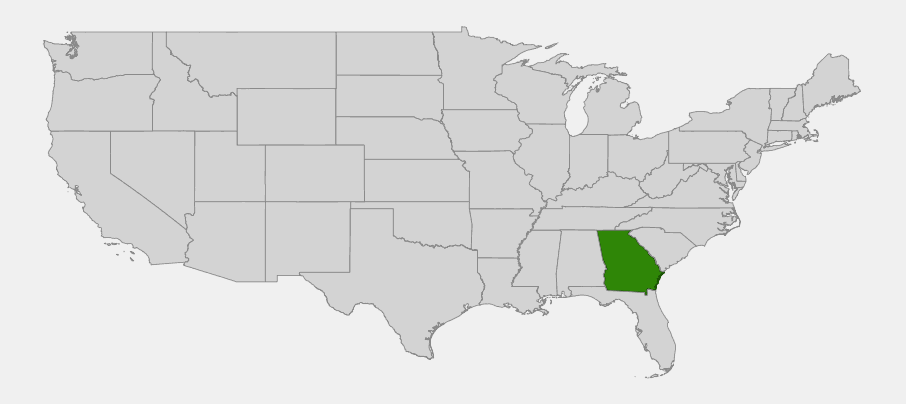
Georgia Plume is endemic to the state of Georgia, found nowhere else in the world. Its range covers the east-central and southern Coastal Plain, with the heaviest concentration of populations in the sandhill belt stretching from around Augusta southwest toward the Fall Line counties, plus scattered sites across the lower Coastal Plain. A single historical population once existed in Aiken County, South Carolina, collected in 1853, but it is now considered extirpated — the species has not been found growing wild in South Carolina for well over a century.
Within Georgia, Georgia Plume grows in xeric sandhills, dry sandy ridges, open pine-oak woodlands, and along sandy riverbluffs, typically at elevations below about 400 feet. It often grows alongside Longleaf Pine and Turkey Oak in fire-maintained sandhill communities, where periodic low-intensity fire helps keep the canopy open enough for this light-demanding shrub to flower well.
Roughly 70 natural populations are currently known, nearly all within Georgia’s borders, and much of the species’ historical sandhill habitat has been lost to conversion for agriculture and pine silviculture. This combination of a single-state range and ongoing habitat loss has earned Georgia Plume a global conservation rank of G2 (imperiled).
📋 Regional plant lists featuring Georgia Plume: Georgia, Alabama & Mississippi
Growing & Care Guide
Georgia Plume is not a common nursery item, but where available it makes a striking and conservation-worthy addition to Georgia gardens that can offer the dry, sandy, acidic conditions it requires. It is poorly suited to heavy clay soils or regularly irrigated garden beds.
Light
Full sun to light part shade produces the best flowering. In its native sandhill habitat the species benefits from the open canopy maintained by periodic fire; too much shade from surrounding trees or shrubs noticeably reduces bloom.
Soil & Water
Dry to moderately moist, deep, well-drained sandy soil with an acidic pH is essential, mirroring the sandhill conditions where it grows wild. Once established, Georgia Plume tolerates considerable drought, but good drainage is non-negotiable — heavy or poorly drained soils lead to root problems.
Planting Tips
Plant container-grown specimens in fall or early spring in a sandy, sunny site, and be patient — this is a slow starter that needs a season or two to settle in before active growth and flowering ramp up. Because wild seed production is low and the species is state-rare, always source plants from a native-plant nursery that propagates from cultivated stock rather than wild-collected material.
Pruning & Maintenance
Minimal pruning is needed. Because the species naturally spreads by root sprouts, gardeners who want to control colony size can remove unwanted sprouts at the base; conversely, those wanting a fuller thicket can simply let sprouts develop. Remove dead or damaged wood as needed, generally after the summer bloom period.
Propagation
Because natural seed set is poor and seedlings can be difficult to establish, Georgia Plume is most often propagated from root cuttings or by transplanting rooted sprouts from an existing colony — mirroring the vegetative spread that dominates its reproduction in the wild. Specialty native-plant growers occasionally offer nursery-propagated stock.
Landscape Uses
Georgia Plume’s rarity and striking bloom make it a standout choice for the right setting:
- Specimen shrub or small tree in sandy, sunny native gardens
- Sandhill and longleaf pine restoration plantings
- Native plant collector and conservation gardens
- Naturalized thicket or colony planting where space allows root sprouts to spread
Wildlife & Ecological Value
As a rare but locally conspicuous flowering shrub of Georgia’s fire-maintained sandhills, Georgia Plume contributes meaningfully to a habitat type that is itself increasingly scarce across the Southeast.
For Birds
The open, airy branching structure provides modest cover for sandhill-associated songbirds, and the shrub’s presence adds vertical structure and diversity to pine-oak sandhill communities that might otherwise offer limited midstory habitat.
For Mammals
Georgia Plume contributes browse and cover within the broader sandhill plant community used by White-tailed Deer and other wildlife moving through longleaf pine and turkey oak woodlands, though it is not documented as a preferred browse species.
For Pollinators
The fragrant, abundant summer flowers attract a range of native bees and other pollinating insects during a bloom period when fewer other woody plants are flowering in the sandhill understory, making flowering colonies a locally valuable nectar source each early summer.
Ecosystem Role
Georgia Plume is closely tied to the fire ecology of Georgia’s longleaf pine sandhills; periodic low-intensity fire helps maintain the open canopy this light-demanding shrub needs to flower and persist. As fire suppression and land-use change have reduced sandhill habitat across its range, conserving remaining Georgia Plume populations is increasingly linked to broader efforts to restore and maintain longleaf pine sandhill ecosystems.
Cultural & Historical Uses
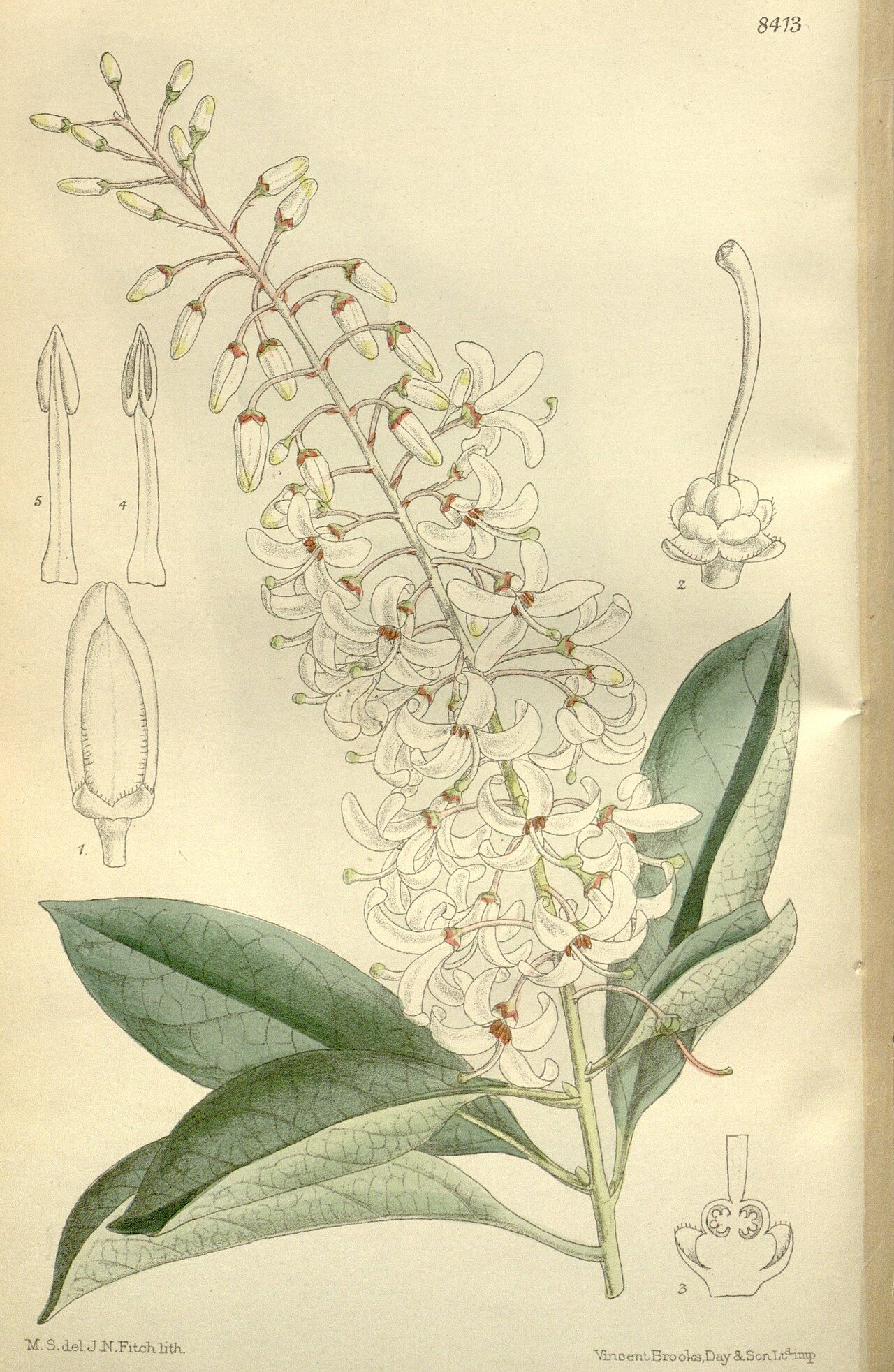
Georgia Plume was first collected and described in the late 18th century by botanist Stephen Elliott, for whom the genus Elliottia is named, and it quickly drew attention from American and European botanists for its striking flowers and unusual, highly restricted distribution. Its scarcity and showy bloom made it a prized subject for 19th-century botanical illustrators, including its depiction in Curtis’s Botanical Magazine in the early 20th century.
Unlike many Southeastern native trees, Georgia Plume has no significant history of timber, medicinal, or utilitarian use by Indigenous peoples or early settlers — its small size, limited distribution, and sparse populations meant it was never a practical resource plant. Its historical significance instead lies almost entirely in botany and natural history, as one of the Southeast’s most studied examples of a true single-state endemic.
Today, Georgia Plume is valued primarily as a conservation icon and a horticultural rarity, grown by botanical gardens, native-plant enthusiasts, and conservation-minded gardeners who want to support a species found nowhere else on Earth.
Frequently Asked Questions
Is Georgia Plume really only found in Georgia?
Yes, essentially. It is considered endemic to Georgia, with roughly 70 known wild populations. A single historical South Carolina population, last collected in 1853, is now considered extirpated, so the species survives only within Georgia today.
Why doesn’t Georgia Plume spread more in the wild if it produces so many flowers?
Despite its showy blooms, the species sets relatively few viable seeds in nature and instead spreads mainly through underground root sprouts, which tends to expand existing colonies rather than establish entirely new populations across the landscape.
Is Georgia Plume endangered?
It carries a global conservation rank of G2 (imperiled), reflecting its restriction to a single state and ongoing loss of sandhill habitat to agriculture and silviculture, though it is not currently federally listed as threatened or endangered.
What growing conditions does Georgia Plume need?
Full sun to light shade and dry to moderately moist, well-drained, acidic sandy soil, closely matching the sandhill habitat where it grows wild. It does not tolerate heavy clay or poorly drained sites.
Can I buy Georgia Plume at a regular nursery?
It is uncommon in the trade. Specialty Georgia native-plant nurseries occasionally offer nursery-propagated stock; always confirm that plants are propagated rather than wild-collected, given the species’ rarity.

Looking for a nursery that carries Georgia Plume?
Browse our native plant nursery directory: Georgia
For more Georgia native tree ideas, see our guides to the best flowering trees to grow in Georgia and small ornamental trees for yards.