
Hawaiian Cotton Tree / Kokiʻo (Kokia drynarioides)
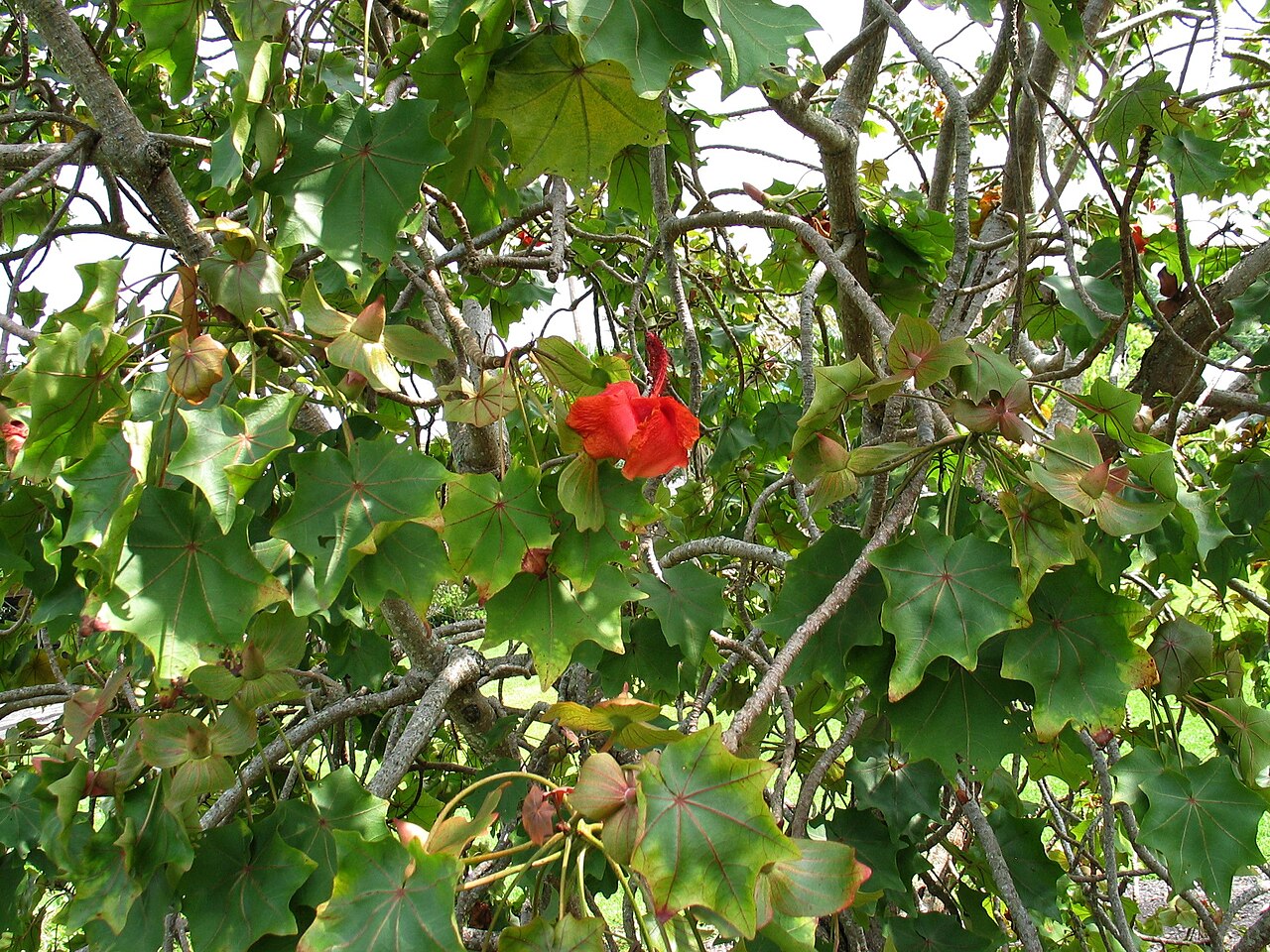
Kokia drynarioides, known as the Hawaiian Cotton Tree or Hau Hele ʻUla (and simply Kokiʻo), is a small flowering tree in the mallow family (Malvaceae) found only on the island of Hawaiʻi. It is one of the botanical treasures of the islands’ dry forest — and one of the rarest. Fewer than a dozen individuals are known to survive in the wild today, making it federally listed as Endangered and ranked Critically Endangered by the IUCN.
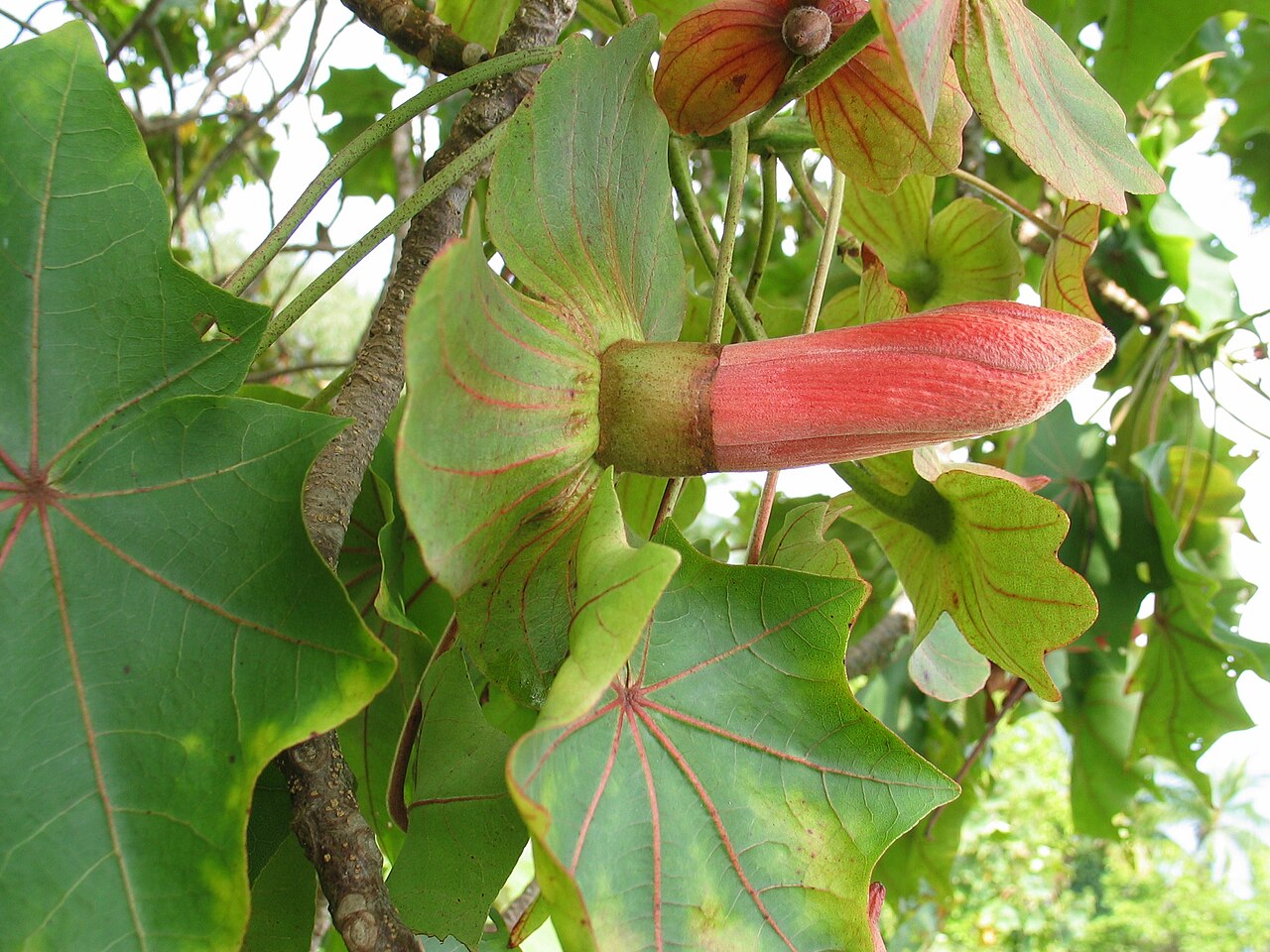
The tree is instantly recognizable when in bloom: large, maple-like lobed leaves surround curled, trumpet-shaped flowers that open orange-red and never fully unfurl, giving them an unusual twisted appearance unlike almost any other native Hawaiian flower. Despite its extreme rarity in the wild, Hawaiian cotton tree has been propagated in cultivation, and it survives today mainly thanks to botanical gardens, conservation nurseries, and a small number of protected dry forest preserves on Hawaiʻi Island.
For Hawaiʻi Island gardeners committed to native plant conservation, growing Kokiʻo is a meaningful way to support a species that would otherwise exist almost entirely in cultivation. It is not an easy landscape plant and is not widely available, but where it can be sourced responsibly from conservation-oriented growers, it offers a rare and beautiful connection to one of Hawaiʻi’s most endangered native trees.
Identification
Hawaiian cotton tree grows as a small, often multi-trunked tree or large shrub, typically reaching 10 to 20 feet tall in cultivation, with an open, spreading crown.
Leaves
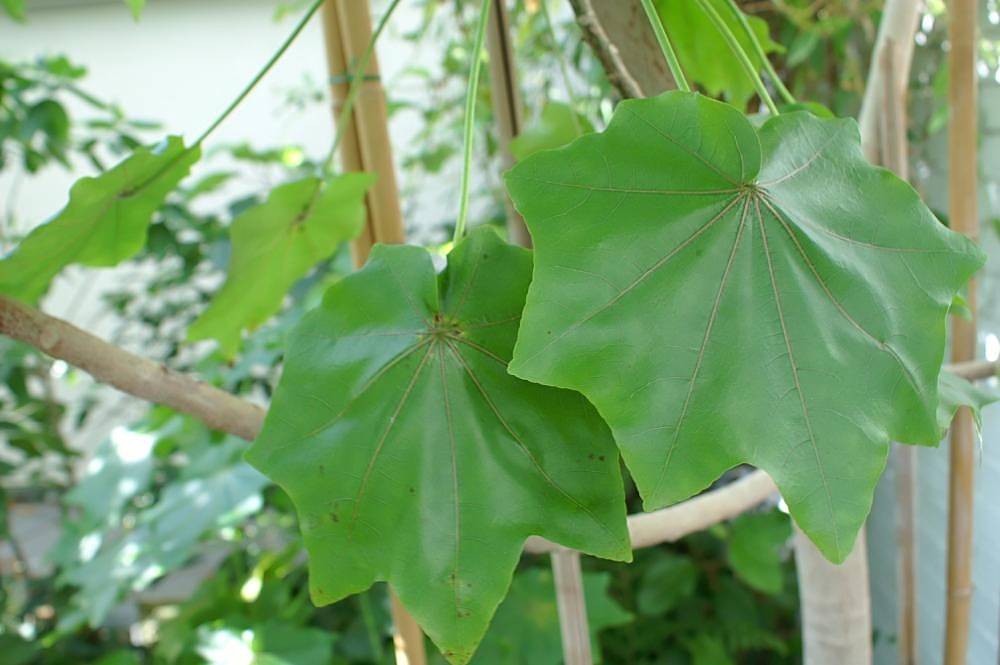
The leaves are large, alternate, and deeply palmately lobed with 3 to 7 pointed lobes, strongly resembling maple or sycamore leaves — an unusual look among Hawaiian natives. They are bright to deep green with prominent reddish veins, and new growth often shows a reddish or bronze flush.
Flowers
The flowers are the tree’s signature feature: tubular, curled blossoms 3 to 4 inches long that open orange-red to reddish-orange and remain tightly rolled rather than spreading flat like a typical hibiscus relative. They emerge from the leaf axils and are pollinated in the wild by native birds adapted to probe their curled shape, a relationship shared with several other rare Hawaiian dry forest flowers.
Fruit
The fruit is a woody, lobed capsule that splits open at maturity to release seeds coated in cottony fibers — the source of the “cotton tree” name — though the fibers are too short and sparse to have ever been commercially useful, unlike true cotton.
Quick Facts
| Scientific Name | Kokia drynarioides |
| Family | Malvaceae (Mallow) |
| Plant Type | Small Tree / Large Shrub |
| Mature Height | 10–20 ft |
| Growth Rate | Moderate |
| Sun Exposure | Full Sun |
| Water Needs | Low once established |
| Soil Type | Well-drained, rocky volcanic soils |
| Flower Color | Orange-red, curled and tubular |
| Conservation Status | Federally Endangered; IUCN Critically Endangered |
| USDA Hardiness Zones | 11 |
Native Range
Hawaiian cotton tree is endemic to the island of Hawaiʻi, where it grows only in dry forest on lava substrates in the North Kona district, at elevations of roughly 1,500 to 6,300 feet. The last known wild individuals persist at and near Puʻuwaʻawaʻa and Huʻehuʻe. It is not native to any other Hawaiian island or to the continental United States.
In its native dry forest habitat it grows alongside other now-rare natives such as Wiliwili (Erythrina sandwicensis), Māmane (Sophora chrysophylla), and ʻAʻaliʻi (Dodonaea viscosa). This lowland dry forest community is considered one of the most endangered ecosystems in the United States, reduced to a small fraction of its former extent by grazing, fire, and invasive species such as fountain grass, which fuels wildfires that the native dry forest flora is poorly adapted to survive.
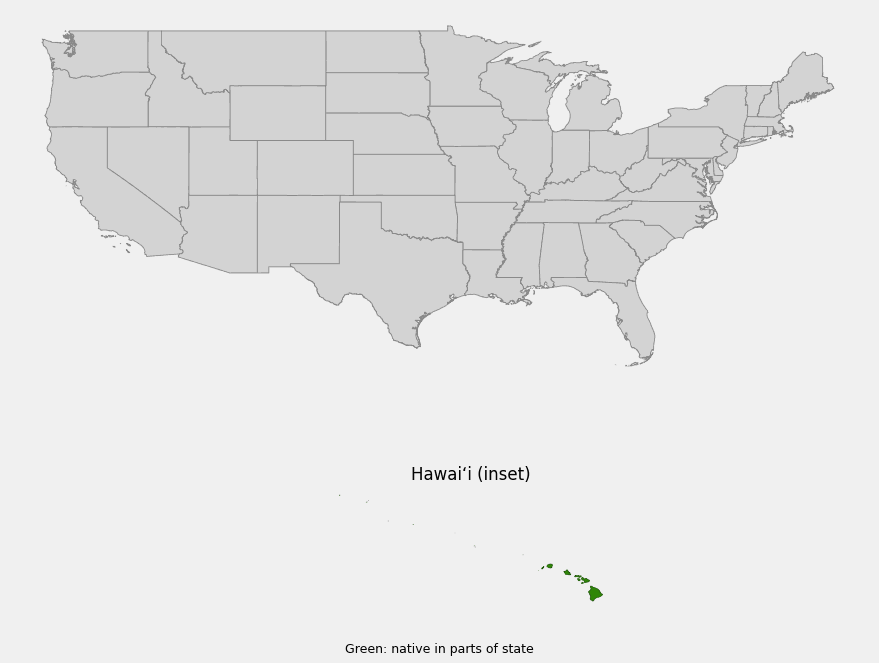
📋 Regional plant lists featuring Hawaiian Cotton Tree: Hawaii
Growing & Care Guide
Because wild populations are down to a handful of individuals, any cultivated Hawaiian cotton tree matters for the species’ survival. Source plants only from reputable conservation nurseries or botanical gardens participating in recovery programs — never from wild-collected material.
Light
Give it full sun, matching the open, exposed dry forest conditions of its native range. It does not perform well in shade.
Soil & Water
Well-drained, rocky volcanic soils are essential; it does not tolerate waterlogged ground. Young plants need regular water to establish, but mature trees are drought tolerant once their root systems are developed, reflecting the long dry seasons of their native Kona habitat.
Planting Tips
Plant in a site with excellent drainage and full sun exposure, ideally mimicking the rocky, lava-derived soils of leeward Hawaiʻi Island. Because so few wild trees remain, cultivated specimens in gardens and conservation collections represent an important genetic safety net for the species, so maintaining healthy, well-documented plantings matters beyond ordinary landscaping value.
Pruning & Maintenance
Minimal pruning is needed beyond removing dead or damaged branches. The tree is adapted to dry, rocky conditions and generally stays healthy with infrequent watering once established; overwatering is a more common problem than underwatering in cultivation.
Landscape & Conservation Uses
- Conservation plantings supporting ex-situ recovery of a critically endangered species
- Dry forest restoration within its native North Kona range
- Specimen planting for its striking curled orange-red flowers and maple-like leaves
- Xeriscape gardens once established, given its drought tolerance
Wildlife & Ecological Value
Hawaiian cotton tree’s curled, tubular flowers are adapted for pollination by native Hawaiian birds capable of probing their narrow shape, a pollination relationship that is itself threatened as native bird populations have declined across the islands. In the few remaining wild stands, the tree is part of a fragile web of co-dependent dry forest species, several of which — including Wiliwili and the even rarer uhiuhi (Caesalpinia kavaiensis) — face similar threats from habitat loss and invasive species.
Ecosystem Role
As one of the few surviving members of Hawaiʻi Island’s original lowland dry forest canopy, Hawaiian cotton tree helps anchor a nearly vanished ecosystem type. Dry forest restoration projects that include it, alongside associates like Māmane and ʻAʻaliʻi, aim to rebuild habitat structure for the insects and birds that depend on this specialized plant community.
Cultural & Historical Uses
Hawaiian cotton tree, also known historically as hau hele ʻula, was never a major source of fiber or other commercial products the way true cotton was, since its seed floss is sparse and short. Its significance is primarily botanical and cultural as one of the Hawaiian Islands’ rarest native trees. The genus Kokia contains only four species, all endemic to Hawaiʻi and all considered rare or extinct in the wild; a close relative, Kokia cookei, is discussed in our guide to Hawaiʻi’s rarest flowering trees and survives today only as grafted plants, since no wild individuals remain.
Since its federal listing as Endangered in 1984, Hawaiian cotton tree has become a flagship species for Hawaiʻi Island dry forest conservation. Botanical gardens, native plant nurseries, and conservation organizations on the island propagate it both to preserve its genetics and to make it available, in limited numbers, to gardeners willing to support its recovery.
Frequently Asked Questions
Is Hawaiian cotton tree actually used to make cotton?
No. Its seeds carry a sparse cottony floss, which is where the common name comes from, but the fibers are far too short and limited to have ever been used commercially, unlike true cotton (Gossypium species).
How rare is Hawaiian cotton tree?
Extremely rare. Fewer than a dozen individuals are known to survive in the wild on Hawaiʻi Island, and the species is listed as federally Endangered and ranked Critically Endangered by the IUCN. Most plants in cultivation today descend from a small number of founder individuals.
Can I buy a Hawaiian cotton tree for my garden?
Occasionally, from Hawaiʻi Island native plant nurseries and botanical gardens involved in its conservation. Always buy from a reputable, conservation-minded source and never collect material from the wild, since every remaining wild tree is critical to the species’ survival.
Why do the flowers stay curled instead of opening flat?
This tubular, curled flower shape is a specialized adaptation for pollination by native Hawaiian birds that probe narrow flowers for nectar, rather than the open, saucer-shaped blooms typical of many of its hibiscus relatives.
Is Hawaiian cotton tree related to Hawaiʻi’s hibiscus species?
Yes. It belongs to the mallow family, Malvaceae, the same family as Hawaiʻi’s native hibiscus species, though it is classified in its own small genus, Kokia, distinct from Hibiscus.

Looking for a nursery that carries Hawaiian Cotton Tree?
Browse our native plant nursery directory: Hawaii

