
Black Ironwood (Krugiodendron ferreum)
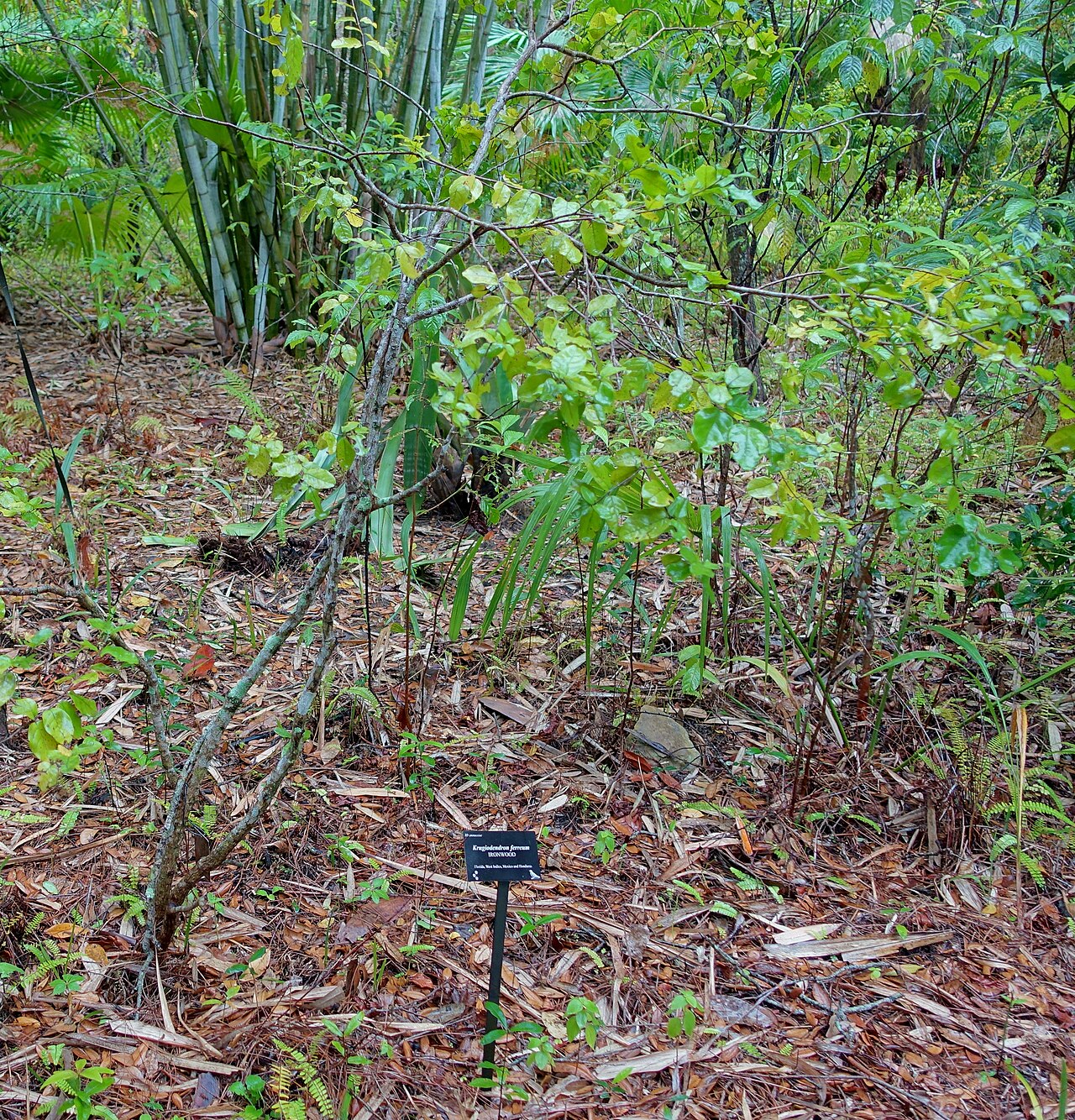
Krugiodendron ferreum, commonly called Black Ironwood or Leadwood, is a small, slow-growing tree native in the United States only to the tropical hardwood hammocks of extreme southern Florida, including the Florida Keys. It is best known for having one of the densest, heaviest woods of any tree in North America — dense enough to sink in water — a trait reflected in both of its common names.
Black ironwood typically grows as a shrub or small, often multi-trunked tree, usually 15 to 25 feet tall in Florida though capable of slightly larger size in favorable sites, with small, glossy evergreen leaves and an irregular, often gnarled growth habit that develops character with age. It is extremely slow-growing and long-lived, and because of its tolerance for deep shade it is frequently found as an understory tree beneath taller hammock canopy species rather than in open sun.
The wood’s extraordinary density — among the heaviest of any wood produced by a North American tree, with a specific gravity high enough that dry wood will not float — made it historically valuable for tool handles, mallets, and other applications demanding extreme hardness and durability, and gives rise to the alternative name “leadwood.”
Identification
Black ironwood is identified by its small, opposite, glossy evergreen leaves, dark gray to nearly black furrowed bark on older stems, and a dense, twiggy, often irregular branching habit typical of slow-growing hammock understory trees.
Bark & Stems
Bark is smooth and gray on young stems, becoming dark gray to blackish and finely furrowed or scaly with age, a characteristic that likely contributes to the “black” in its common name along with the color of the heartwood. Twigs are slender, often somewhat zigzag, and densely branched.
Leaves
Leaves are opposite (occasionally sub-opposite), simple, elliptical to oblong, 1 to 2.5 inches long, leathery and glossy dark green above with a paler underside, and evergreen year-round. The leaf tips are often slightly notched, a useful field mark distinguishing the species from similar-looking hammock shrubs.
Flowers
Small, inconspicuous yellowish-green flowers appear in clusters at the leaf axils, mainly in late winter and spring, and are easy to overlook against the dense foliage; they are nonetheless an important nectar source for small native bees and other insects in the hammock understory.
Fruit & Seeds
The fruit is a small, rounded drupe about 0.3 to 0.4 inch across, ripening from green to black, each containing a single hard seed. Fruit typically ripens in winter and is readily eaten and dispersed by hammock birds.
Quick Facts
| Scientific Name | Krugiodendron ferreum |
| Family | Rhamnaceae (Buckthorn) |
| Plant Type | Evergreen shrub or small tree |
| Mature Height | 15–25 ft |
| Mature Spread | 10–15 ft |
| Growth Rate | Very slow |
| Sun Exposure | Full Sun to Shade |
| Water Needs | Low once established |
| Soil Type | Limestone-based, well-drained hammock soils |
| Soil pH | Neutral to alkaline |
| Bloom Time | Late winter–spring |
| Flower Color | Yellowish-green |
| Fall Color | Evergreen; no notable fall color |
| Fruit | Small black drupe, ripens winter |
| Deer Resistant | Yes |
| USDA Hardiness Zones | 10 – 11 |
Native Range
In the United States, black ironwood is native only to extreme southern Florida — primarily Miami-Dade and Monroe counties, including the Florida Keys — where it grows in tropical hardwood hammocks on shallow, well-drained limestone soils. Like many South Florida hammock species, it has little frost tolerance and reaches the northern edge of its range here.
Within its range, black ironwood most often grows as a shade-tolerant understory tree beneath taller hammock canopy species such as gumbo limbo and live oak, though it also persists in more open, rocky coastal settings. It is a slow colonizer and is most reliably found in mature, relatively undisturbed hammock remnants rather than in young or regenerating habitat.
Outside Florida, black ironwood is widespread throughout the Caribbean (including the Bahamas, Cuba, and the Greater and Lesser Antilles), coastal Mexico, and parts of Central America, where it occupies similar dry limestone forest and coastal hammock habitats.
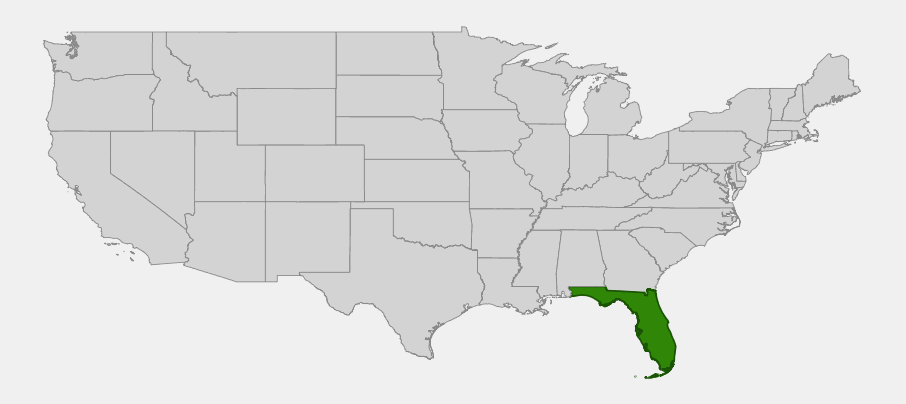
📋 Regional plant lists featuring Black Ironwood: none yet — no plantnative.org regional list currently covers South Florida hammock trees; see our full native plant directory for other Florida-native species.
Growing & Care Guide
Black ironwood is a tough, adaptable small tree well suited to South Florida landscapes that want low-maintenance structure without rapid, unmanageable growth — though its notoriously slow pace means patience is required.
Light
This species is unusually adaptable to light conditions, thriving in full sun as well as in the deep, dappled shade of a mature hammock canopy; it is one of relatively few native South Florida hammock trees genuinely comfortable in low light.
Soil & Water
Black ironwood is well adapted to South Florida’s shallow, rocky, limestone-based soils and tolerates alkaline pH readily. It is drought tolerant once established and needs little supplemental irrigation beyond the establishment period; good drainage is important, as the species does not tolerate prolonged flooding.
Planting Tips
Because growth is extremely slow, start with the largest practical nursery specimen if a mature-looking tree is wanted sooner rather than later. The species tolerates close planting among larger hammock trees and is a good choice for underplanting beneath an established canopy. Its dense, strong wood and compact form make it a sturdy, wind-resistant choice for storm-prone coastal sites.
Pruning & Maintenance
Black ironwood requires minimal pruning; occasional shaping to remove dead twigs or encourage a particular form is usually all that is needed. It is generally untroubled by serious pests or diseases in Florida landscapes.
Landscape Uses
Black ironwood is well suited to:
- Understory plantings beneath larger native hammock canopy trees
- Hedges or screens given its dense, twiggy growth habit
- Hammock restoration and native landscape plantings
- Low-maintenance specimen for small or slow-growing-tree gardens
Wildlife & Ecological Value
Black ironwood plays a quiet but steady ecological role in South Florida’s hardwood hammocks, offering year-round cover and a reliable winter food source.
For Birds
The small black fruits, ripening mainly in winter, are eaten by a variety of hammock songbirds, and the dense, twiggy branching provides good nesting and roosting cover, particularly valuable for small birds seeking protected shelter within the hammock understory.
For Mammals
Small hammock mammals make use of the dense cover the shrub provides, and fallen fruit is taken opportunistically by ground-foraging wildlife; there are no reports of significant browsing pressure on the foliage.
For Pollinators
Though inconspicuous, the small yellowish-green flowers attract native bees and other small pollinating insects during the late winter and spring bloom period, supplementing the broader hammock nectar supply at a time when fewer other hammock species are in flower.
Ecosystem Role
As a long-lived, shade-tolerant understory species, black ironwood adds structural and age diversity to mature hardwood hammocks, persisting for decades in the same spot and contributing to the dense, multi-layered canopy structure that defines intact South Florida hammock habitat. Its extremely dense wood decomposes very slowly, so standing or fallen ironwood can persist as structural habitat within the hammock for an unusually long time.
Cultural & Historical Uses
Black ironwood’s exceptional wood density — among the highest of any tree native to North America, dense enough that dried wood does not float — made it historically prized throughout its Caribbean and Florida range for tool handles, mallets, gear teeth, and other uses demanding extreme hardness, strength, and resistance to wear.
The alternative common name “leadwood” directly references this density, a quality that also made the wood valued for small boat fittings and other applications where a hard, heavy, rot-resistant timber was needed. Because trees are slow-growing and historically scattered, large-scale commercial logging of the species was never extensive, and today it is primarily appreciated in Florida as a durable, attractive native landscape plant rather than a timber source.
Indigenous and colonial-era communities throughout its Caribbean range are reported to have used the extremely hard wood for similar practical purposes, though detailed historical documentation specific to Florida’s population is limited compared with accounts from the wider Caribbean.
Frequently Asked Questions
Why is black ironwood called “leadwood”?
Because its wood is exceptionally dense — among the heaviest of any North American tree species — dense enough that dry wood will not float in water, much like lead.
How fast does black ironwood grow?
Very slowly. It is one of the slowest-growing native Florida trees, which is part of why mature specimens with character and good form are especially valued in cultivation.
Can black ironwood grow in shade?
Yes. Unlike many native Florida trees, it tolerates deep hammock shade well and is often found as an understory tree beneath taller canopy species, while also performing well in full sun.
Where does black ironwood grow natively in the U.S.?
Only in extreme southern Florida — primarily Miami-Dade and Monroe counties, including the Florida Keys — within tropical hardwood hammocks; it is more widespread throughout the Caribbean, coastal Mexico and Central America.
Is black ironwood good for wildlife?
Yes. Its winter-ripening black fruit feeds hammock birds, its small flowers provide late-winter nectar for native bees, and its dense branching offers reliable year-round cover.

Looking for a nursery that carries Black Ironwood?
Browse our native plant nursery directory: Florida
Black ironwood thrives in the shaded hammock understory alongside Gumbo Limbo and Live Oak. To learn more about building wildlife habitat with trees like this one, see our guide to planting native trees for wildlife.

