
Florida Fiddlewood (Citharexylum spinosum)
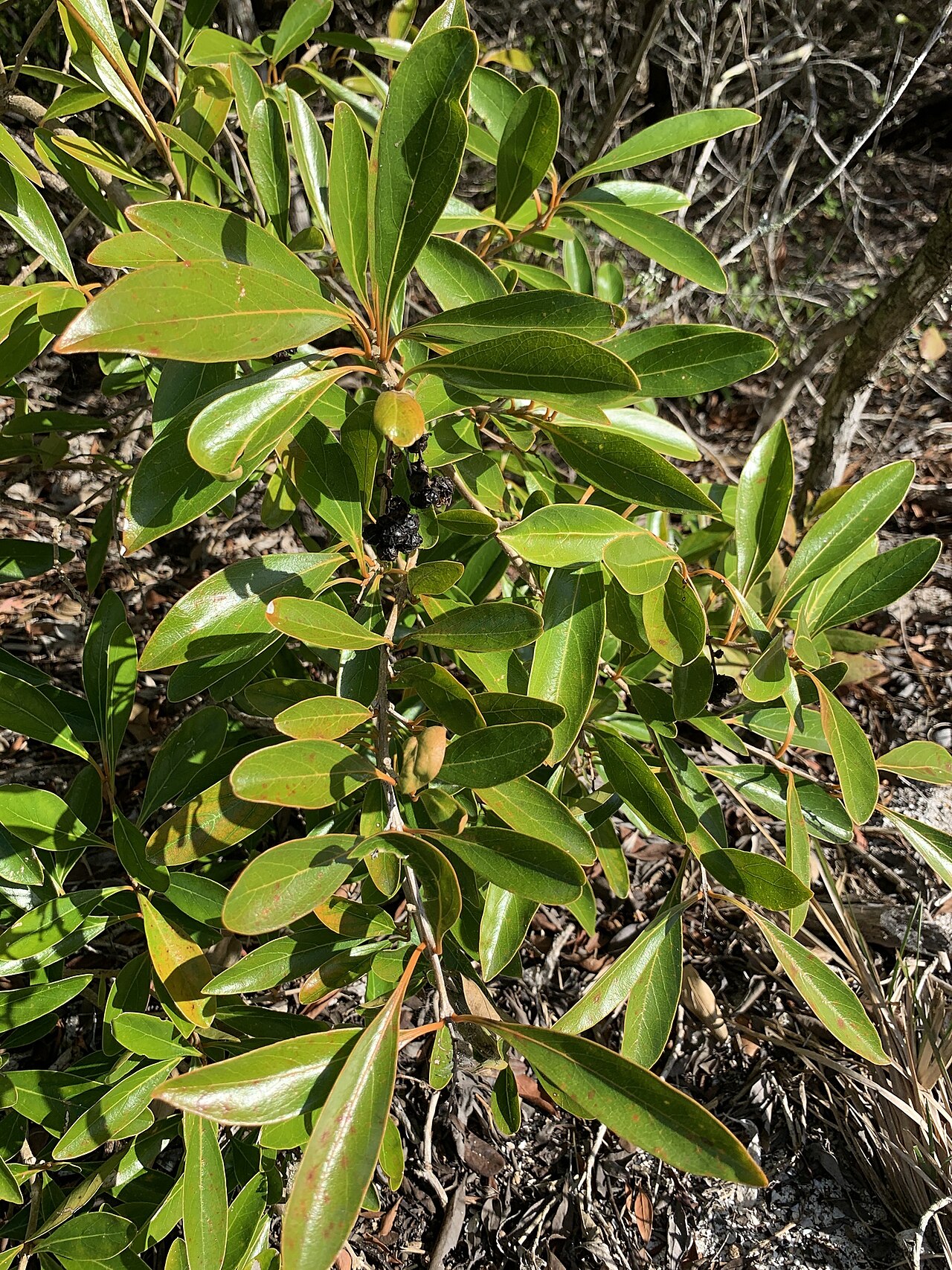
Citharexylum spinosum, commonly called Florida Fiddlewood or Spiny Fiddlewood, is a small to medium evergreen tree native in the United States only to the coastal hammocks of southern Florida and the Florida Keys. It is one of Florida’s most fragrant native flowering trees, producing long, drooping racemes of sweetly scented white flowers that are a favorite with both gardeners and pollinators.
Florida fiddlewood typically grows 20 to 35 feet tall, with a rounded to spreading crown of glossy, leathery, elliptical leaves that flush an attractive bronze-orange when new. The tree flowers nearly year-round in South Florida’s warm climate, with pendant spikes of small white blossoms giving way to small orange-to-black fruit that ripen in loose clusters. Despite the common name “spiny,” mature trees are generally not notably thorny; the epithet refers to the sometimes spine-tipped juvenile growth of young plants.
The hard, fine-grained wood historically gave the tree its common name “fiddlewood,” reflecting past use in instrument- and furniture-making in parts of its Caribbean range, though in Florida the species is valued today almost entirely as a fragrant, wildlife-friendly landscape and hammock tree.
Identification
Florida fiddlewood is identified by its glossy, opposite leaves with a distinctive bronze flush on new growth, smooth gray bark, and long, pendant clusters of small, fragrant white flowers followed by small colorful fruit.
Bark & Stems
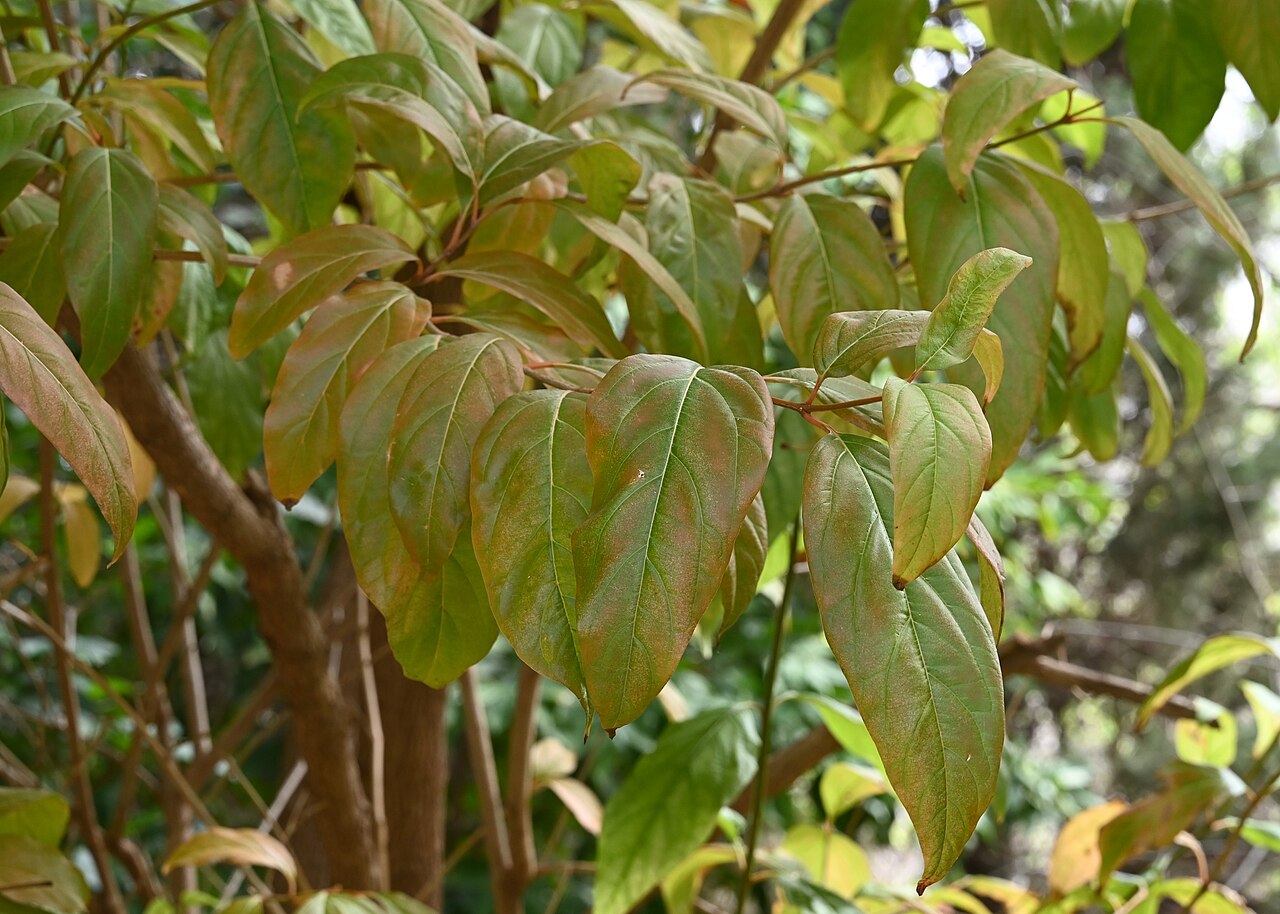
Bark is smooth and gray on young trees, becoming lightly furrowed and scaly with age. New twig growth and emerging leaves often show a distinctive orange to bronze tint before maturing to deep green, a helpful identification feature.
Leaves
Leaves are opposite, simple, elliptical to oblong-obovate, 2 to 5 inches long, leathery and glossy dark green above with a paler underside, often with a slightly wavy margin. New leaves emerge with a distinctive coppery-orange cast that fades as they mature.
Flowers
Small, fragrant, white, tubular-to-star-shaped flowers are borne in long, slender, drooping racemes 3 to 8 inches long, produced over much of the year in South Florida’s climate with a peak in spring and summer. The sweet fragrance, especially noticeable in the evening, is one of the species’ most valued garden traits.
Fruit & Seeds
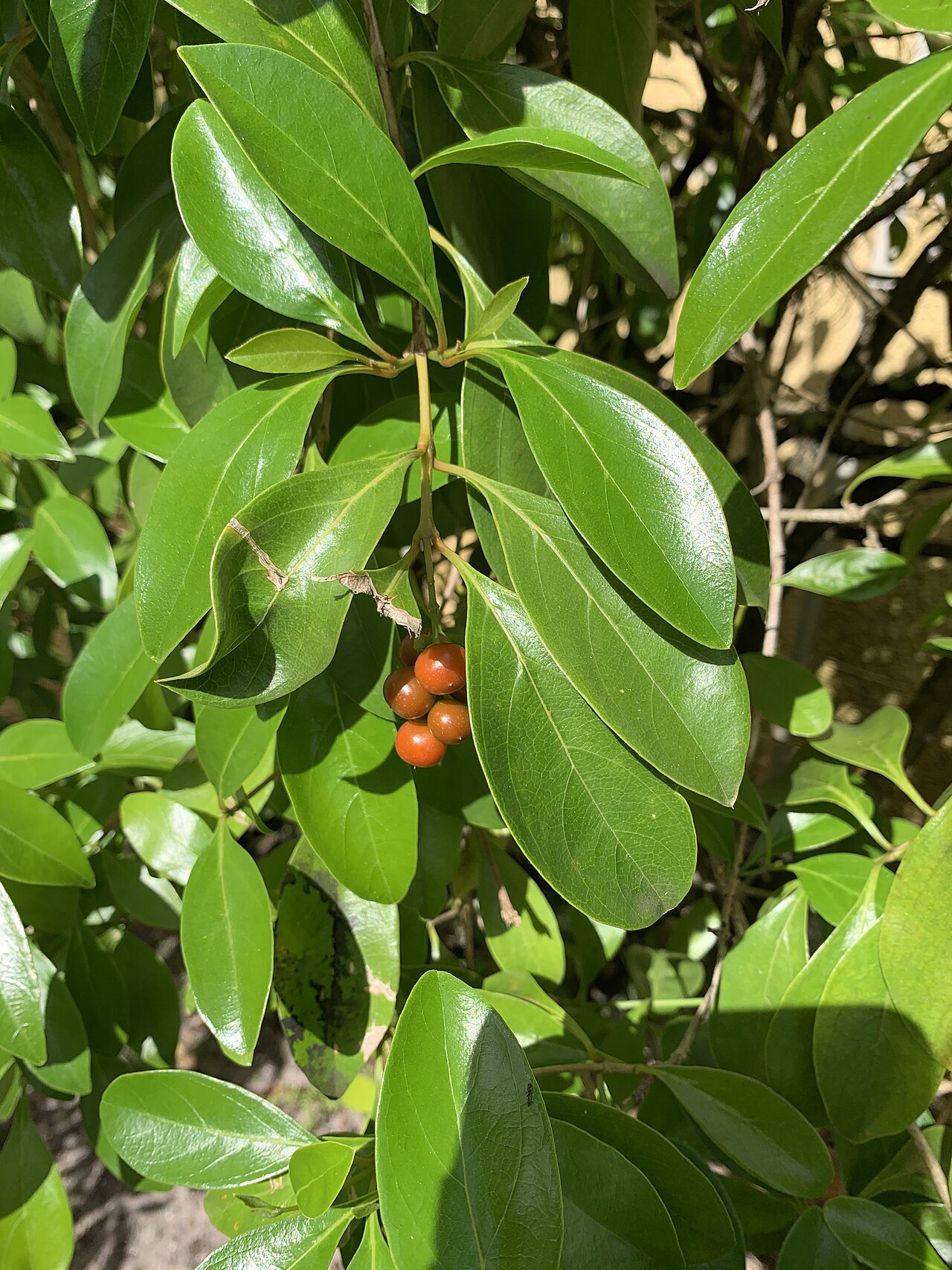
The fruit is a small, rounded drupe about 0.3 to 0.4 inch across, maturing from green through orange-red to black, borne in loose, drooping clusters that persist after flowering. Fruit ripens over an extended period and is heavily used by birds.
Quick Facts
| Scientific Name | Citharexylum spinosum |
| Family | Verbenaceae (Verbena/Vervain) |
| Plant Type | Evergreen tree |
| Mature Height | 20–35 ft |
| Mature Spread | 15–25 ft |
| Growth Rate | Moderate |
| Sun Exposure | Full Sun to Part Shade |
| Water Needs | Moderate |
| Soil Type | Limestone-based or sandy, well-drained soils |
| Soil pH | Neutral to alkaline |
| Bloom Time | Nearly year-round; peak spring–summer |
| Flower Color | White |
| Fall Color | Evergreen; new growth flushes bronze-orange |
| Fruit | Small orange-to-black drupe in drooping clusters |
| Deer Resistant | Moderate |
| USDA Hardiness Zones | 10 – 11 |
Native Range
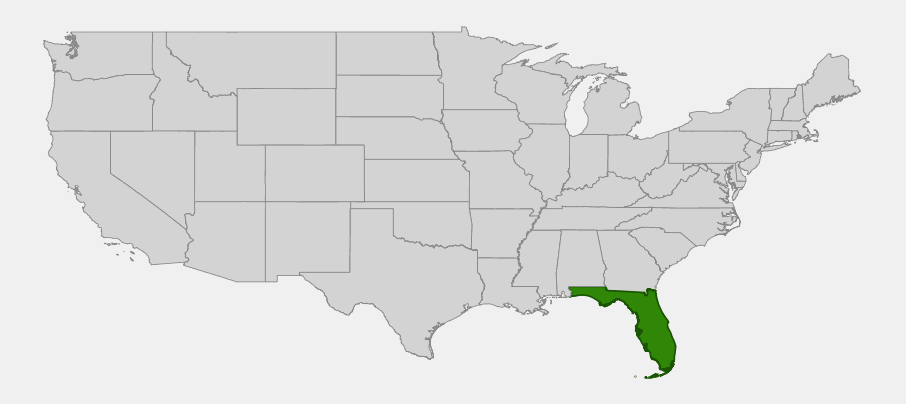
In the United States, Florida fiddlewood is native to the coastal hammocks of South Florida, principally Miami-Dade and Monroe counties, including the Florida Keys, with additional naturally occurring and widely naturalized populations recorded further up the Gulf and Atlantic coasts. Its natural cold tolerance is limited, placing a practical northern boundary on its native range.
Within its native range, Florida fiddlewood grows in tropical hardwood hammocks and coastal strand vegetation, typically as a canopy or sub-canopy tree alongside other South Florida hammock species, tolerating both the understory and more open, sun-exposed coastal edges.
Outside Florida, Florida fiddlewood is widespread throughout the Caribbean, including the Bahamas, Cuba, Puerto Rico, and the Lesser Antilles, where it is a common component of dry and moist coastal forests.
📋 Regional plant lists featuring Florida Fiddlewood: none yet — no plantnative.org regional list currently covers South Florida hammock trees; see our full native plant directory for other Florida-native species.
Growing & Care Guide
Florida fiddlewood is a popular landscape tree in South and Central Florida, valued for its fragrant, nearly continuous flowering, attractive bronze new growth, and strong appeal to birds and pollinators.
Light
Plant in full sun to light part shade for the best flowering and most compact form; trees grown in heavy shade become leggier and flower less profusely.
Soil & Water
Florida fiddlewood adapts well to both limestone-based and sandy Florida soils, provided drainage is reasonably good. It appreciates regular watering while young and performs best with moderate, consistent moisture, though established trees tolerate short dry spells reasonably well.
Planting Tips
Allow room for a mature spread of 15 to 25 feet when siting the tree, and keep in mind that fallen fruit can stain pavement, so avoid planting directly over driveways, walkways or parking areas. Young trees establish readily from containers and grow at a moderate, manageable pace.
Pruning & Maintenance
Light pruning to shape the canopy and remove crossing or damaged branches is usually all that is needed; the tree naturally develops an attractive rounded form. It is generally free of serious pest and disease problems in Florida landscapes.
Landscape Uses
Florida fiddlewood is well suited to:
- Fragrant specimen or patio tree near outdoor living areas
- Shade tree for South Florida yards
- Wildlife garden and bird-friendly plantings
- Hammock restoration and native landscape projects
Wildlife & Ecological Value
Florida fiddlewood’s near-continuous flowering and fruiting cycle make it one of the more dependable year-round wildlife resources among South Florida’s native hammock trees.
For Birds
The small fruit, ripening over an extended season, draws a wide range of songbirds including mockingbirds, cardinals, and migrating warblers and thrushes, while the dense canopy offers good nesting and roosting cover.
For Mammals
Hammock mammals use the canopy and understory for cover, and fallen fruit is taken opportunistically by ground-foraging wildlife; there are no significant reports of browsing damage to the foliage.
For Pollinators
The fragrant, nearly year-round flower racemes are a significant nectar source for bees, butterflies, and other pollinating insects in South Florida, with the evening fragrance also attracting moths after dark.
Ecosystem Role
As a reliably flowering and fruiting hammock tree, Florida fiddlewood helps anchor the food web of South Florida’s tropical hardwood hammocks across seasons when fewer other native species are in bloom or fruit, and its canopy contributes structural diversity and shade to hammock and coastal strand habitat.
Cultural & Historical Uses
The common name “fiddlewood,” applied to several related Citharexylum species across the Caribbean, reflects a history of the hard, fine-grained wood being used in parts of the region for furniture, tool handles, and reportedly in some traditions for stringed-instrument components, though documented Florida-specific use of the wood for this purpose is limited.
In modern Florida horticulture, the species is valued almost entirely as an ornamental and wildlife tree rather than for its wood or any medicinal use; its reputation rests on its fragrant, long-blooming flowers and reliable performance in both native hammock restoration plantings and conventional residential landscapes.
Frequently Asked Questions
Why is it called “fiddlewood”?
The name reflects a history of the hard, fine-grained wood of this and related Citharexylum species being used in parts of the Caribbean for furniture and other crafted items; the genus name itself derives from Greek words roughly meaning “guitar wood.”
Is Florida fiddlewood actually spiny?
Despite the species name spinosum, mature trees are generally not notably thorny; the spine-tipped growth referenced in the name typically appears on juvenile plants rather than mature specimens.
How fragrant are the flowers?
Quite fragrant, especially in the evening — the sweet scent of the pendant white flower clusters is one of the species’ most valued landscape traits and makes it a popular choice near patios and outdoor seating areas.
Where does Florida fiddlewood grow natively in the U.S.?
Only in South Florida — principally Miami-Dade and Monroe counties, including the Florida Keys — within tropical hardwood hammocks and coastal strand habitat; it is widespread throughout the Caribbean.
Does Florida fiddlewood attract birds?
Yes, strongly. Its extended fruiting season provides a dependable food source for a wide range of songbirds throughout much of the year.

Looking for a nursery that carries Florida Fiddlewood?
Browse our native plant nursery directory: Florida
Florida fiddlewood pairs well with fellow South Florida hammock natives such as Gumbo Limbo and Wild Tamarind. For more fragrant, wildlife-friendly tree ideas, see our guide to the benefits of planting native trees.

