
Chihuahua Pine (Pinus leiophylla)
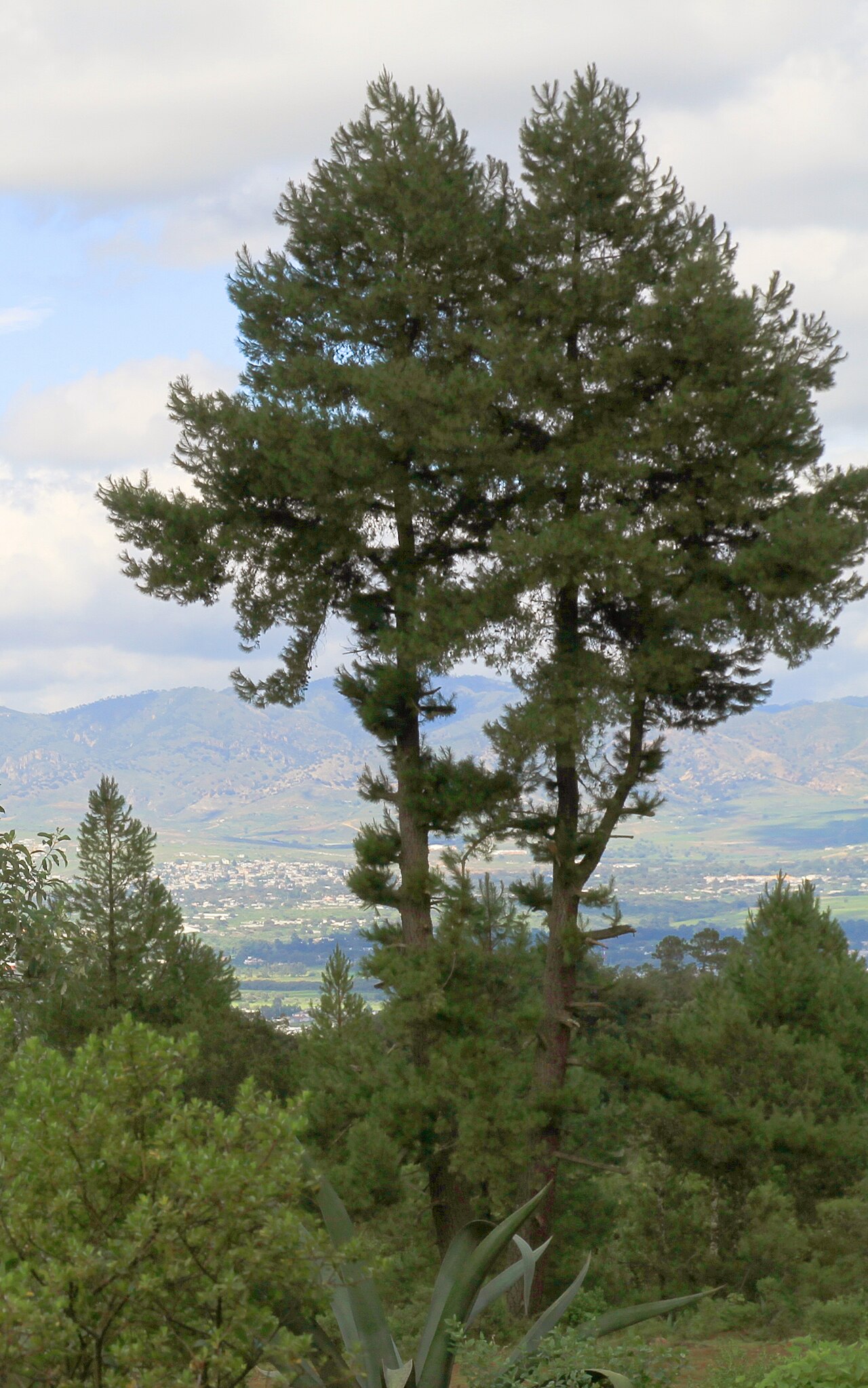
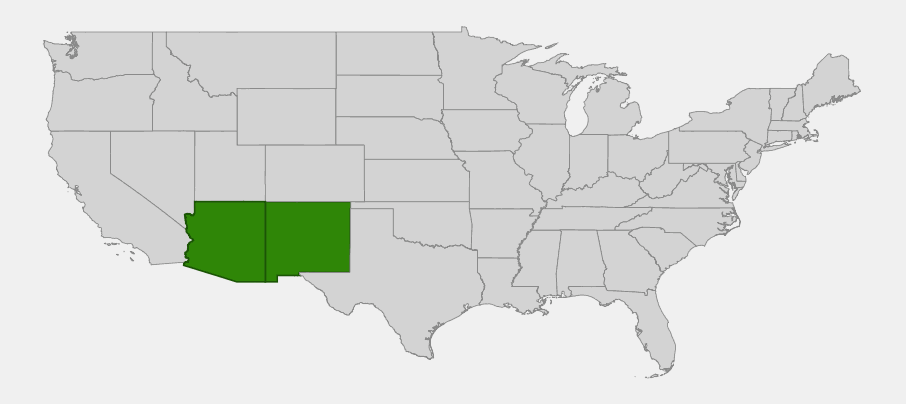
Pinus leiophylla, commonly known as Chihuahua Pine or smooth-leaf pine, is a medium-sized evergreen conifer that reaches the northern edge of its range in the United States, where the variety chihuahuana (sometimes treated as Pinus leiophylla subsp. chihuahuana) occupies the mountains of southeastern Arizona and the bootheel of southwestern New Mexico. The species is overwhelmingly a Mexican tree — its core range runs the length of the Sierra Madre Occidental from Sonora and Chihuahua south to Jalisco and Zacatecas — so the “sky island” ranges of the American Southwest represent only a sliver of its total distribution, but an ecologically important one.
What sets Chihuahua pine apart from almost every other pine in North America is its relationship with fire. Rather than relying solely on seed to recolonize burned ground, it is one of the only pines on the continent capable of resprouting from the root crown and even from cut stumps after top-kill, a trait more typical of oaks than conifers. Combined with semi-serotinous cones that can hold seed for several years, this makes Chihuahua pine a resilient, often dominant component of the pine-oak woodlands and Madrean evergreen forests it inhabits.
In the garden or in a restoration planting, Chihuahua pine is a specialty tree for warm, dry mountain and foothill climates in Arizona and New Mexico. It is not a tree for cold, wet, or low-desert sites, but where it is native it provides structure, shade, and food for wildlife that few other conifers can match at the same elevation band.
Identification
In its U.S. range, Chihuahua pine is a small to medium tree, typically 35 to 60 feet tall with a trunk 1 to 2 feet in diameter, though exceptional individuals in favorable canyon sites can grow taller. Young trees often appear as twin- or multi-leadered specimens with an irregular, open crown; older trees develop a single dominant trunk and a rounded, somewhat sparse canopy that lets dappled light through to the woodland floor.
Bark
Bark on young trees and branches is thin, scaly, and reddish to grayish brown. As the tree matures, the bark thickens to roughly 1 to 1.5 inches and breaks into flat, scaly plates separated by deep, dark furrows — a texture closer to Chihuahua pine’s oak neighbors than to the platy bark of ponderosa pine.
Needles
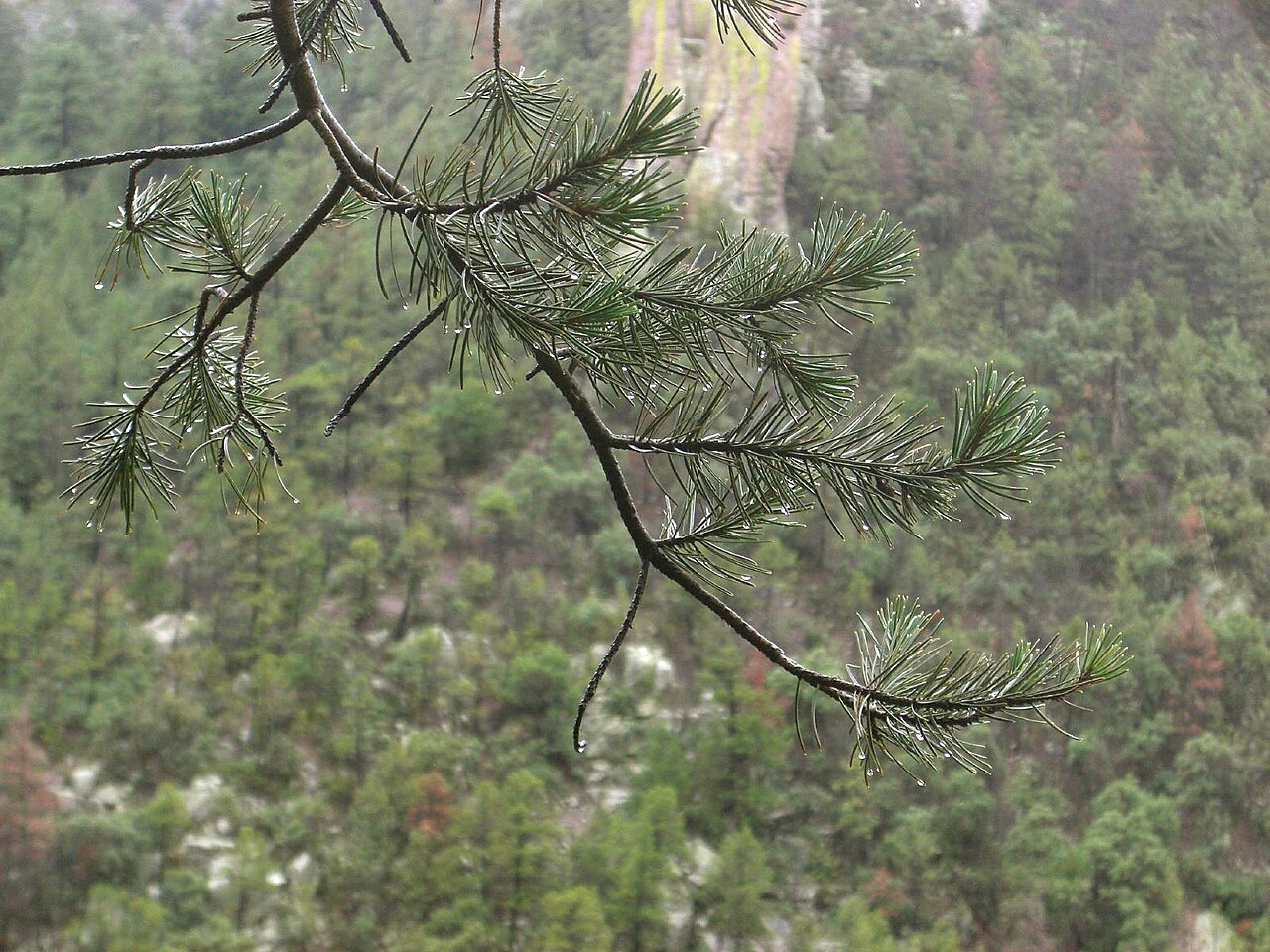
Needles grow in bundles (fascicles) of three, each 2 to 4.7 inches (5–12 cm) long, slender, and a light yellow-green that can take on a glaucous, blue-green cast in strong sun. Unlike most pines, mature Chihuahua pine needles lack an obvious persistent fascicle sheath at the base, a useful field mark once you know to look for it. Needles typically persist on the branch for three or more years, giving the crown a fuller, tufted look compared to shorter-needled pines at the same elevation.
Cones
Seed cones are small for a pine, 1.5 to 2.7 inches long, ovoid, and often clustered two or three together near the branch tips. They take roughly three years to mature — unusually long for a North American pine — passing through pink and purplish stages before ripening to grayish brown. Many cones are semi-serotinous, staying closed and attached to the branches for five years or more, which lets the tree hold a seed bank in the canopy that opens gradually or in response to heat.
Quick Facts
| Scientific Name | Pinus leiophylla (U.S. plants are var. chihuahuana) |
| Family | Pinaceae (Pine) |
| Plant Type | Evergreen coniferous tree |
| Mature Height | 35–60 ft (occasionally taller in Mexico) |
| Mature Spread | 20–35 ft, open rounded crown |
| Growth Rate | Slow to moderate |
| Sun Exposure | Full sun |
| Water Needs | Low once established |
| Soil Type | Rocky, well-drained mountain and canyon soils |
| Soil pH | Neutral to slightly acidic |
| Bloom Time | Spring (wind-pollinated, inconspicuous) |
| Flower Color | N/A (separate male and female cones) |
| Fall Color | Evergreen; no fall color change |
| Fruit | Small ovoid cones, 1.5–2.7 in, semi-serotinous |
| Deer Resistant | Yes, generally |
| USDA Hardiness Zones | 7–8 |
Native Range
Chihuahua pine is primarily a Mexican species, ranging along the Sierra Madre Occidental from northeastern Sonora and western Chihuahua south through Durango, Nayarit, northern Jalisco, and Zacatecas. In the United States it reaches only the southeastern corner of Arizona and the bootheel region of southwestern New Mexico, where it grows at elevations of roughly 4,920 to 7,800 feet in mountain ranges such as the Chiricahuas, Huachucas, Santa Ritas, Patagonias, and Peloncillos.
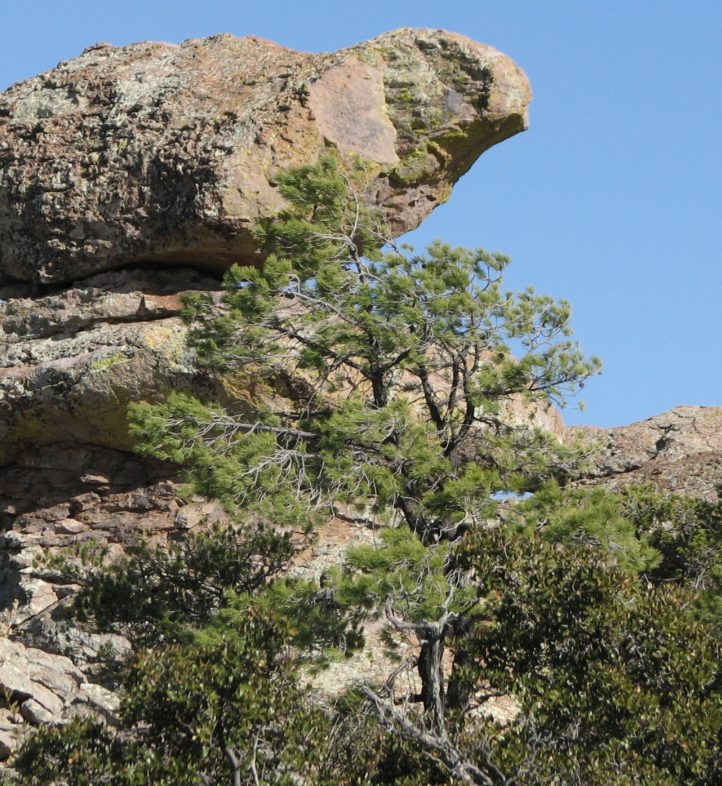
Within this limited U.S. range, Chihuahua pine occupies Madrean evergreen woodland and pine-oak forest on rocky slopes and canyon walls, often on igneous substrates. It frequently grows alongside Arizona pine (Pinus arizonica), Apache pine (Pinus engelmannii), Mexican pinyon, alligator juniper, and a diversity of evergreen oaks including silverleaf and Emory oak. In canyon bottoms it can grow with Arizona walnut, where the combination provides especially valuable bird habitat. For an overview of other low-water conifers suited to the state, see our guide to pine trees for Arizona.
Because its U.S. distribution is confined to a handful of isolated “sky island” ranges, Chihuahua pine is uncommon outside of southeastern Arizona and the extreme southwestern corner of New Mexico. It is not native anywhere else in the United States, and it should not be planted outside this warm, mid-elevation mountain climate band.
📋 Regional plant lists featuring Chihuahua Pine: Arizona & New Mexico
Growing & Care Guide
Chihuahua pine is a specialty tree best suited to gardeners and land managers within or near its native sky-island ranges in southeastern Arizona and southwestern New Mexico. It is rarely available in the nursery trade, but where mid-elevation mountain conditions can be replicated, it makes a tough, long-lived, low-water conifer.
Light
Give Chihuahua pine full sun. In the wild it grows in open-canopied pine-oak woodland with plenty of direct light reaching the understory, and young trees planted in heavy shade will stay thin and slow-growing.
Soil & Water
This pine is adapted to rocky, well-drained mountain soils with a neutral to slightly acidic pH, and it tolerates the dry, monsoon-pulse rainfall pattern of the Southwest borderlands — the same low-water philosophy covered in our broader guide to drought-tolerant plants for Arizona. Established trees need little supplemental water beyond the region’s natural summer and winter precipitation; soggy, poorly drained, or low-desert heat-island sites are unsuitable. Deep, infrequent watering during the first two to three years after planting helps young trees establish a deep root system.
Planting Tips
Plant container-grown stock in fall or early spring so roots can establish before the heat of summer or the cold of winter. Choose an elevation and exposure similar to the tree’s native canyon and foothill habitat — roughly 5,000 to 7,500 feet — and avoid low desert valleys where winter cold can be worse and summer heat too extreme. Because Chihuahua pine is not widely propagated commercially, seed collection and propagation (where legal, with landowner permission, and never from protected lands) may be the most realistic path to establishing it outside of its immediate native woodland.
Pruning & Maintenance
Established Chihuahua pine needs minimal maintenance. Remove only dead, damaged, or crossing branches, and avoid heavy pruning, which conifers tolerate poorly. Because the species can resprout from the root crown and even from cut stumps after fire or storm damage — an unusual trait for a pine — a top-killed tree should not automatically be removed; it may recover from the base.
Landscape Uses
In its narrow climatic niche, Chihuahua pine has several good uses:
- Restoration plantings in degraded Madrean woodland and sky-island habitat
- Specimen or accent tree in mid-elevation Southwest gardens with a naturalistic, woodland feel
- Erosion control on rocky mountain and canyon slopes within its native elevation band
- Wildlife plantings that pair it with oaks and junipers to recreate pine-oak woodland structure
- Fire-adapted landscaping where its resprouting ability offers resilience after wildfire
Fire Ecology
Chihuahua pine is one of the few North American pines capable of resprouting vigorously from the root crown and from cut or burned stumps, a strategy more typical of broadleaf trees than conifers. Combined with semi-serotinous cones that can hold a seed bank in the canopy for years, this resprouting ability allows the species to persist as a long-term dominant in pine-oak woodlands subject to frequent, low- to moderate-severity fire, rather than depending entirely on post-fire seedling establishment the way many other pines do.
Wildlife & Ecological Value
Chihuahua pine contributes to the structure and food web of one of the most biologically rich forest types in the American Southwest — Madrean sky-island woodland — even though its U.S. footprint is small.
For Birds
The small seed cones feed a range of montane birds, and where Chihuahua pine grows alongside Arizona walnut in canyon bottoms, the combination is noted as especially valuable nesting and foraging habitat for breeding birds. Across its range, pine seed is an important food source for jays, including Mexican jay, and for various finches; foliage-gleaning songbirds forage the needle clusters for insects.
For Mammals
Tree squirrels and other rodents feed on Chihuahua pine seed, helping disperse it through caching behavior. The open, rocky pine-oak woodland the species helps create also provides cover and forage for larger mammals that move through the sky islands, including white-tailed deer and black bear.
Ecosystem Role
As a climax or co-dominant species in Madrean pine-oak woodland, Chihuahua pine’s unusual ability to resprout after fire helps stabilize forest structure through repeated burns, buffering against the kind of stand-replacing loss that can follow fire in less fire-adapted conifers. Its presence alongside oaks and junipers supports one of the most diverse temperate forest communities in North America, a transition zone between the Rocky Mountain and Sierra Madrean floras that supports an outsized share of the region’s bird and insect diversity. See our guide to planting native trees for wildlife for more on why natives like this one outperform ornamentals for habitat value.
Cultural & Historical Uses
Throughout its much larger Mexican range, Chihuahua pine (known locally as “ocote blanco” or “pino chino”) has long been used as a source of timber, fuelwood, and resin by rural and Indigenous communities in the Sierra Madre Occidental. Its wood, while not prized as highly as that of larger Mexican pines, has served for construction lumber and firewood in mountain villages where it is often the most accessible conifer.
In its small U.S. range, Chihuahua pine has little documented history of commercial use, in part because the sky-island populations in Arizona and New Mexico are too limited in extent to support timber harvest. Instead, its significance in the United States is primarily ecological and recreational — it is a signature tree of popular birding and hiking destinations in the Chiricahua, Huachuca, and Santa Rita mountains, where visitors come specifically to see the unusual mix of Mexican and Rocky Mountain plant and animal species found nowhere else in the country.
Botanically, Chihuahua pine has long interested foresters and taxonomists for its fire-resprouting ability, a trait rare enough among pines that it is frequently cited in fire ecology literature as an exception to the rule that conifers cannot resprout after top-kill.
Frequently Asked Questions
Is Chihuahua pine native to the United States?
Yes, but only barely. It is native to a handful of mountain ranges in southeastern Arizona and the extreme southwestern corner of New Mexico; the great majority of its range lies in Mexico along the Sierra Madre Occidental.
Can Chihuahua pine resprout after fire?
Yes. Unlike most pines, Chihuahua pine can resprout from the root crown and from cut or burned stumps, a trait that helps it persist through the frequent, low-severity fires typical of Madrean pine-oak woodland.
How big does Chihuahua pine get?
In its U.S. range it typically reaches 35 to 60 feet tall with a trunk 1 to 2 feet in diameter. Trees in its larger Mexican range can grow taller under more favorable conditions.
Is Chihuahua pine available at nurseries?
It is rarely sold commercially. Within its native sky-island ranges, specialty native plant nurseries in southeastern Arizona occasionally carry seedlings, but availability is limited compared to more widely grown Southwest conifers.
What other trees grow with Chihuahua pine?
It commonly shares pine-oak woodland with Arizona pine, Apache pine, Mexican pinyon, alligator juniper, and evergreen oaks such as silverleaf and Emory oak, often along rocky canyon slopes between about 4,900 and 7,800 feet elevation.

Looking for a nursery that carries Chihuahua Pine?
Browse our native plant nursery directory: Arizona · New Mexico

