Goodding’s Ash (Fraxinus gooddingii)
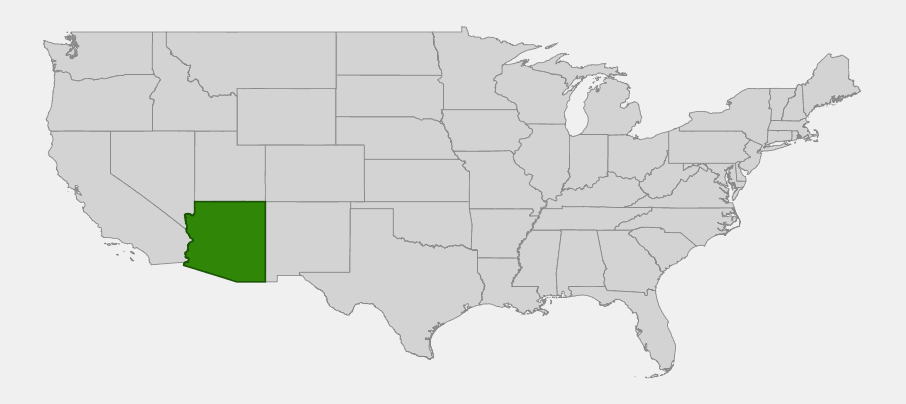
Fraxinus gooddingii, Goodding’s ash, is a small tree or large shrub found in the United States only in the canyons of Arizona’s southeastern “sky island” mountains. It is one of the country’s most range-restricted native ash trees, reaching the U.S. in just a couple of counties near the Mexican border, where it grows alongside oaks and sycamores in the moist, rocky bottoms of mountain canyons. Most of the species’ range actually lies south of the border in Sonora, Mexico, including on Isla Tiburón in the Gulf of California, so the handful of Arizona canyons that host it represent the far northern edge of its distribution.
Goodding’s ash is a modest-sized tree, usually staying under 20 feet, with the compound leaves typical of ashes and the small, wind-pollinated flowers that open before the leaves in spring. It was named for botanist Leslie Newton Goodding, who collected extensively in the Southwest in the early twentieth century, and it remains a plant known mostly to botanists and serious native-plant enthusiasts rather than the general gardening public, simply because so few people live within reach of its native canyons.
For gardeners in the Sky Island region of southeastern Arizona — the Huachuca, Patagonia, Santa Rita and Chiricahua mountains and the canyons around them — Goodding’s ash is a true local specialty: a small, tough, drought-adapted native tree for a canyon-bottom or part-shade planting that few neighboring states can offer at all.
Identification
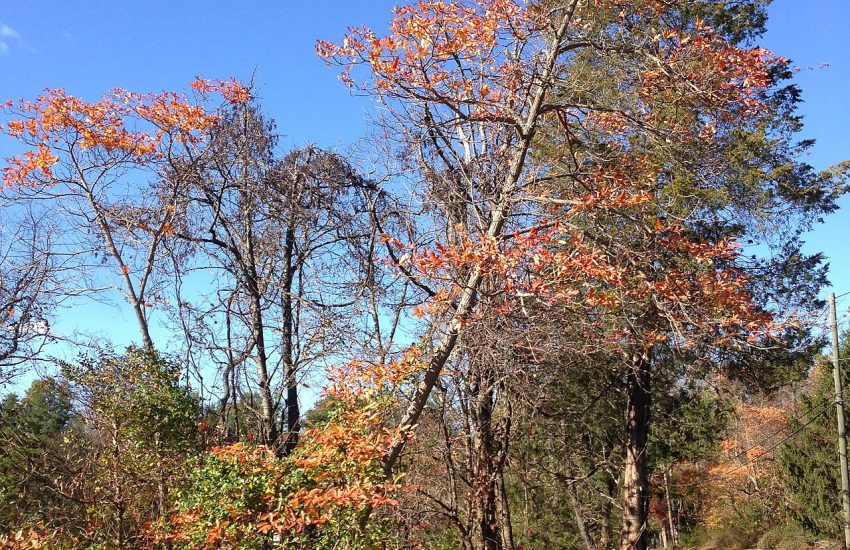
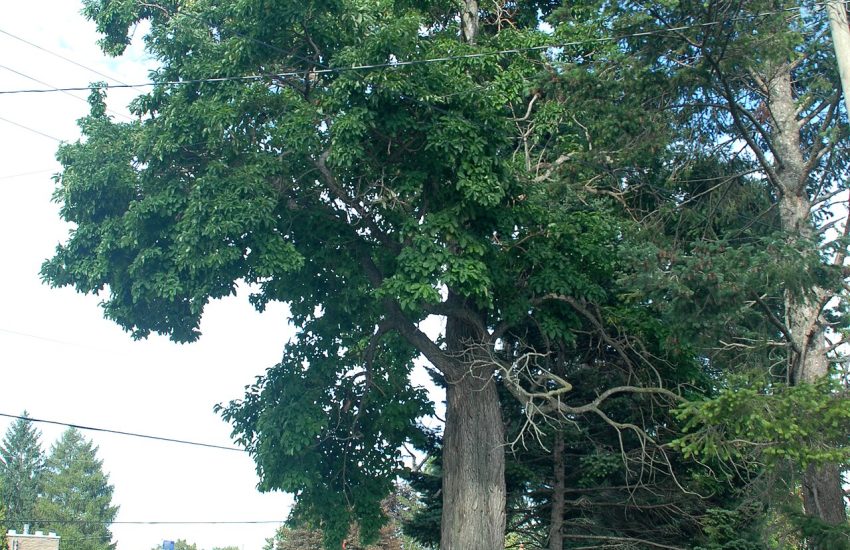
Goodding’s ash grows as a small, often multi-trunked tree or large shrub, typically 10 to 20 feet tall, occasionally a bit taller in favorable canyon-bottom sites with reliable moisture. Its overall form is more modest and shrubby than the familiar velvet ash of lowland washes, reflecting its adaptation to rocky, often steep canyon terrain.
Bark & Stems
Young twigs are slender and gray-green, maturing to thin, gray-brown bark that develops shallow furrows with age. Multiple trunks or low branching are common, especially where the tree has resprouted after fire or flash flooding, both regular events in its canyon habitat.
Leaves
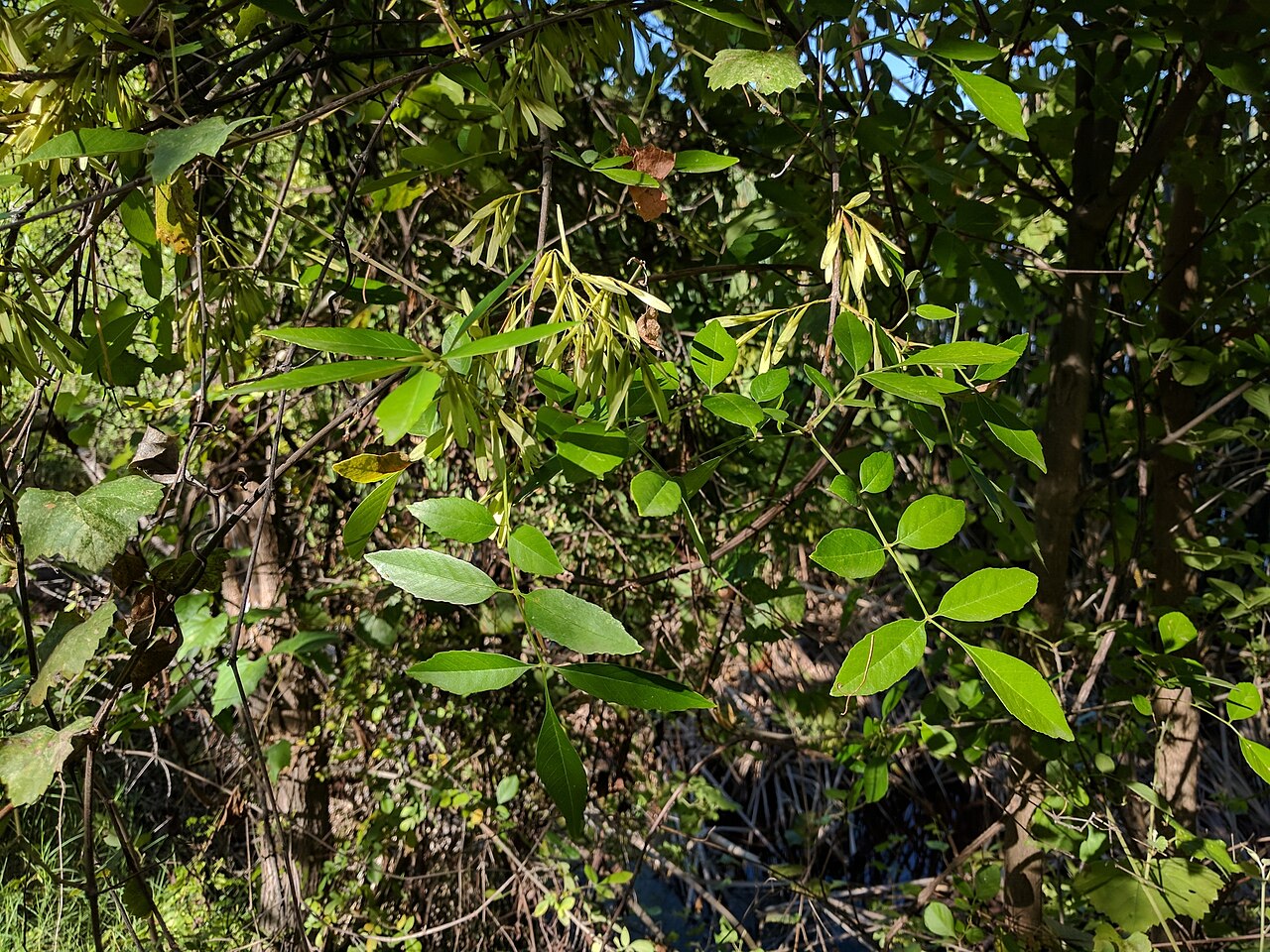
Like other ashes, the leaves are opposite and pinnately compound, usually with five to seven small, elliptic leaflets per leaf. The leaflets are notably small for an ash, often under 2 inches long, with finely toothed or nearly entire margins. Leaves emerge in spring after flowering and drop in fall, with modest yellow color.
Flowers & Fruit
Like most ashes, Goodding’s ash is dioecious, with separate male and female trees. Small, greenish, petal-less flowers appear in clusters in early spring before the leaves unfold, wind-pollinated rather than showy. Female trees produce the species’ winged samaras — small, single-winged seeds — that ripen by early summer and are carried off by wind and seasonal runoff through the canyon.
Quick Facts
| Scientific Name | Fraxinus gooddingii |
| Family | Oleaceae (Olive) |
| Plant Type | Deciduous small tree or large shrub |
| Mature Height | 10–20 ft |
| Mature Spread | 10–15 ft, often multi-trunked |
| Growth Rate | Slow |
| Sun Exposure | Part Shade to Full Sun |
| Water Needs | Low to moderate; appreciates canyon-bottom moisture |
| Soil Type | Rocky, well-drained canyon soils |
| Soil pH | Neutral to slightly alkaline |
| Bloom Time | March – April, before leaves |
| Flower Color | Greenish, inconspicuous |
| Fall Color | Modest yellow |
| Fruit | Small single-winged samaras, female trees only |
| Deer Resistant | Moderate |
| USDA Hardiness Zones | 8b – 9b |
Native Range
In the United States, Goodding’s ash is known only from Cochise and Santa Cruz counties in extreme southeastern Arizona, in canyons of the Sky Island ranges such as the Huachuca, Patagonia and Santa Rita mountains near the Mexican border. This is a very narrow U.S. foothold; the species is considerably more widespread across the border in Sonora, Mexico, including a notable population on Isla Tiburón in the Gulf of California.
Within Arizona, Goodding’s ash grows in rocky canyon bottoms and on shaded slopes in oak and oak-pine woodland, typically at elevations roughly between 3,500 and 5,500 feet, where seasonal streams and higher humidity support a richer mix of trees than the surrounding desert. It often grows with Arizona sycamore, Emory oak and netleaf hackberry in these canyon riparian communities.
Because its U.S. range is so limited, Goodding’s ash is uncommon in Arizona even within its home counties, and it is not a tree most Arizona gardeners will have grown up around. It is not currently federally listed, but given how few canyons host it in the U.S., wild populations deserve protection and plants for gardens should come from nursery propagation rather than wild collection.
📋 Regional plant lists featuring Goodding’s Ash: Arizona & New Mexico
Growing & Care Guide
Goodding’s ash is a specialty tree for southeastern Arizona gardens that can mimic its native canyon conditions: some shade, rocky but not waterlogged soil, and protection from the hottest, driest exposures.
Light
In the wild, Goodding’s ash often grows in the part shade of canyon walls and taller trees. In cultivation it does best with morning sun and afternoon shade, or dappled shade beneath larger trees, especially at lower, hotter elevations; at higher, cooler sites within its range it tolerates more sun.
Soil & Water
Plant in rocky, well-drained soil that mimics a canyon bottom — not a boggy low spot, but a site that receives occasional runoff or can be watered deeply on a regular schedule. Young trees need consistent moisture to establish; mature trees are reasonably drought tolerant but look and perform best with occasional deep watering during the hottest, driest months, reflecting the canyon-bottom habitat where the species naturally grows.
Planting Tips
Choose a site with some shelter from full afternoon sun, especially at lower desert elevations outside the tree’s higher-elevation Sky Island comfort zone. Because the species is dioecious, a single tree may or may not produce the small winged seeds depending on its sex; this has no effect on the tree’s health or appearance.
Pruning & Maintenance
Little pruning is needed beyond removing dead or crossing branches in late winter. Multi-trunked specimens can be thinned to a few strong leaders if a more tree-like form is wanted, or left multi-stemmed for a fuller, shrubbier look. Goodding’s ash has no unusual pest or disease problems beyond the general issues that affect ashes, such as occasional borers, though it has not faced the same emerald ash borer pressure as eastern ash species.
Propagation
Propagate from seed collected from female trees in early summer; as with most ashes, germination benefits from cold stratification over winter. Because the species is so narrowly distributed, seed and nursery stock are scarce outside its home region, so patience and realistic expectations are part of growing it.
Landscape Uses
- Canyon-style native gardens in southeastern Arizona’s Sky Island region
- Part-shade plantings beneath or alongside Arizona sycamore and Emory oak
- Small specimen or multi-trunk tree for a regional, drought-adapted landscape; see ideas in our guide to plants in the Arizona desert
- Wildlife and pollinator gardens, alongside our list of native plants for an Arizona pollinator garden
- Low-water canyon or wash plantings that need only occasional supplemental water once established
Wildlife & Ecological Value
Within its narrow Arizona range, Goodding’s ash contributes to the canopy diversity of Sky Island canyon forests, habitats prized for their unusually high biodiversity for the desert Southwest.
For Pollinators
The small, early spring flowers are wind-pollinated rather than insect-pollinated, so they offer little direct nectar or pollen reward, though they bloom early enough to provide some incidental forage for insects active before most spring wildflowers open.
For Birds
The tree’s canopy and multi-trunked structure give small canyon birds nesting sites and foraging cover, and the winged seeds are eaten by some seed-eating birds in season, supplementing the canyon’s broader food web.
For Mammals
Canyon-dwelling mammals use the tree’s cover and the broader riparian woodland it is part of for shelter and travel corridors between habitat patches in otherwise arid surrounding terrain.
Ecosystem Role
Goodding’s ash is one piece of the canopy mosaic in Sky Island canyon riparian zones, habitats that function as cool, moist refuges and biological corridors connecting desert lowlands to higher, forested mountain ranges — a landscape pattern that supports an outsized share of the region’s plant and animal diversity.
Cultural & Historical Uses
Goodding’s ash carries less documented traditional use than many Southwestern trees, likely a reflection of its small size and very limited distribution compared to more widespread regional ashes and oaks. It is named for Leslie Newton Goodding, a government botanist whose extensive early twentieth-century plant collecting across Arizona, New Mexico and the Southwest added many species, including this one, to formal scientific description.
In Sonora, where the species is more common, local communities within its range have likely made general use of ash wood in the small-scale ways common to many desert hardwoods, for tool handles and similar purposes, though detailed ethnobotanical records specific to this species are scarce.
Today, Goodding’s ash is of greatest interest to botanists, conservation biologists and native-plant specialists studying the unique Sky Island ecosystems of the Arizona–Sonora borderlands, where isolated mountain ranges function almost like ecological islands, each supporting its own distinctive mix of species.
Frequently Asked Questions
Where can I see Goodding’s ash in the wild?
Look in canyon bottoms of Arizona’s Sky Island ranges in Cochise and Santa Cruz counties, such as the Huachuca and Patagonia mountains, generally above 3,500 feet elevation where moist canyon microclimates occur.
How is Goodding’s ash different from the common velvet ash?
Goodding’s ash is smaller in every respect — a modest tree or large shrub rather than a substantial shade tree — with smaller leaflets, and it is restricted to rocky canyon habitat rather than the broader washes and bottomlands where velvet ash (Fraxinus velutina) typically grows.
Will Goodding’s ash grow outside southeastern Arizona?
It is best suited to gardens within or near its native Sky Island range, where the climate and elevation match its natural canyon habitat. It is not a tree typically offered or recommended for general Southwest landscaping outside that region.
Does Goodding’s ash need a lot of water?
Not once established, but it benefits from more consistent moisture than many desert natives, reflecting its canyon-bottom origins; occasional deep watering in the hottest months keeps it healthiest.
Is Goodding’s ash endangered?
It is not currently federally listed, but its U.S. range is extremely limited — just two Arizona counties — so wild populations should be treated as a conservation priority and left undisturbed.

Looking for a nursery that carries Goodding’s Ash?
Browse our native plant nursery directory: Arizona