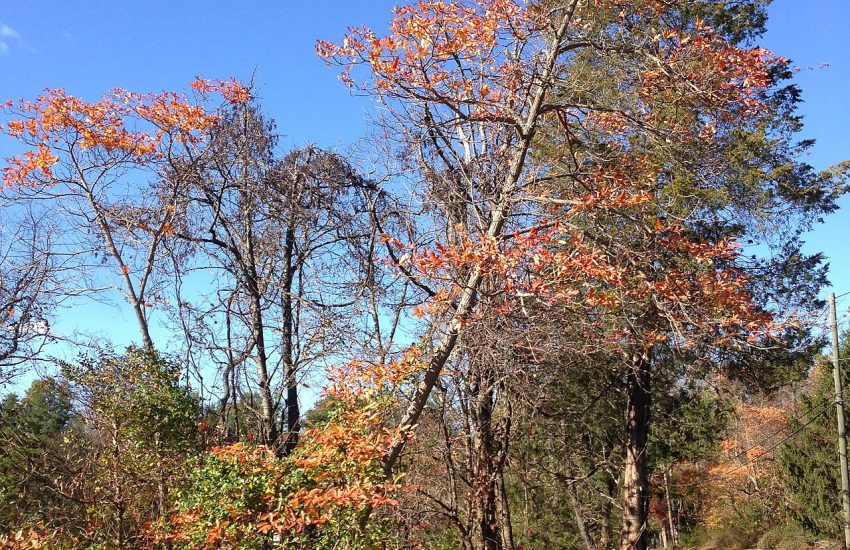
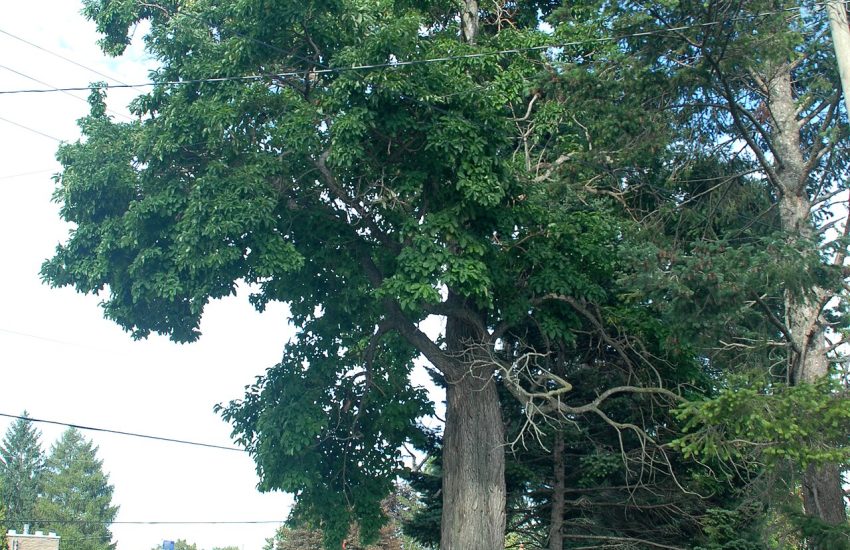
Sycamore-leaf Snowbell (Styrax platanifolius)
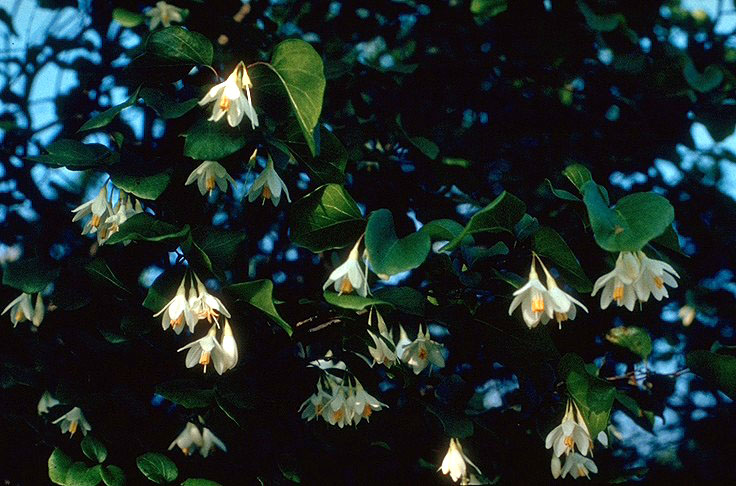
Styrax platanifolius, commonly called sycamore-leaf snowbell or Texas snowbell, is a deciduous shrub to small tree found almost entirely on the Texas Hill Country’s Edwards Plateau, where it grows along the rocky, spring-fed streams and canyons that cut through the region’s limestone. Each spring it produces a show of pendant, bell-shaped white flowers that dangle beneath broad, sycamore-like leaves, giving the plant both its common and scientific names (platanifolius means “plane-tree-leaved,” a reference to the sycamore, or Platanus, genus).
Sycamore-leaf snowbell is sometimes confused with its rarer, federally endangered relative, Texas snowbell (Styrax texana), which is now generally treated as a variety of this same species restricted to a handful of counties on the western Edwards Plateau. Sycamore-leaf snowbell itself, by contrast, is the more widespread member of the group, found across a broader swath of the Hill Country and Edwards Plateau and into adjacent northeastern Mexico, though it remains a true regional endemic found nowhere else in the United States.
For Hill Country and Edwards Plateau gardeners with a shaded, rocky, limestone site, especially near a creek or seasonal drainage, sycamore-leaf snowbell is an outstanding small native tree: fragrant in bloom, handsome in leaf, and a genuine piece of the region’s limestone canyon flora that few nurseries outside Central Texas carry.
Identification
Sycamore-leaf snowbell typically grows as a multi-stemmed, arching deciduous shrub or small tree 6 to 15 feet tall, occasionally taller on favorable sites, with a loose, graceful habit shaped by the steep, rocky terrain where it often grows.
Bark & Stems
Young stems are slender and gray-brown, often somewhat zigzagging between leaf nodes, maturing to thin, smooth to slightly fissured gray bark on older stems. Plants are usually multi-trunked from the base rather than forming a single dominant trunk.
Leaves
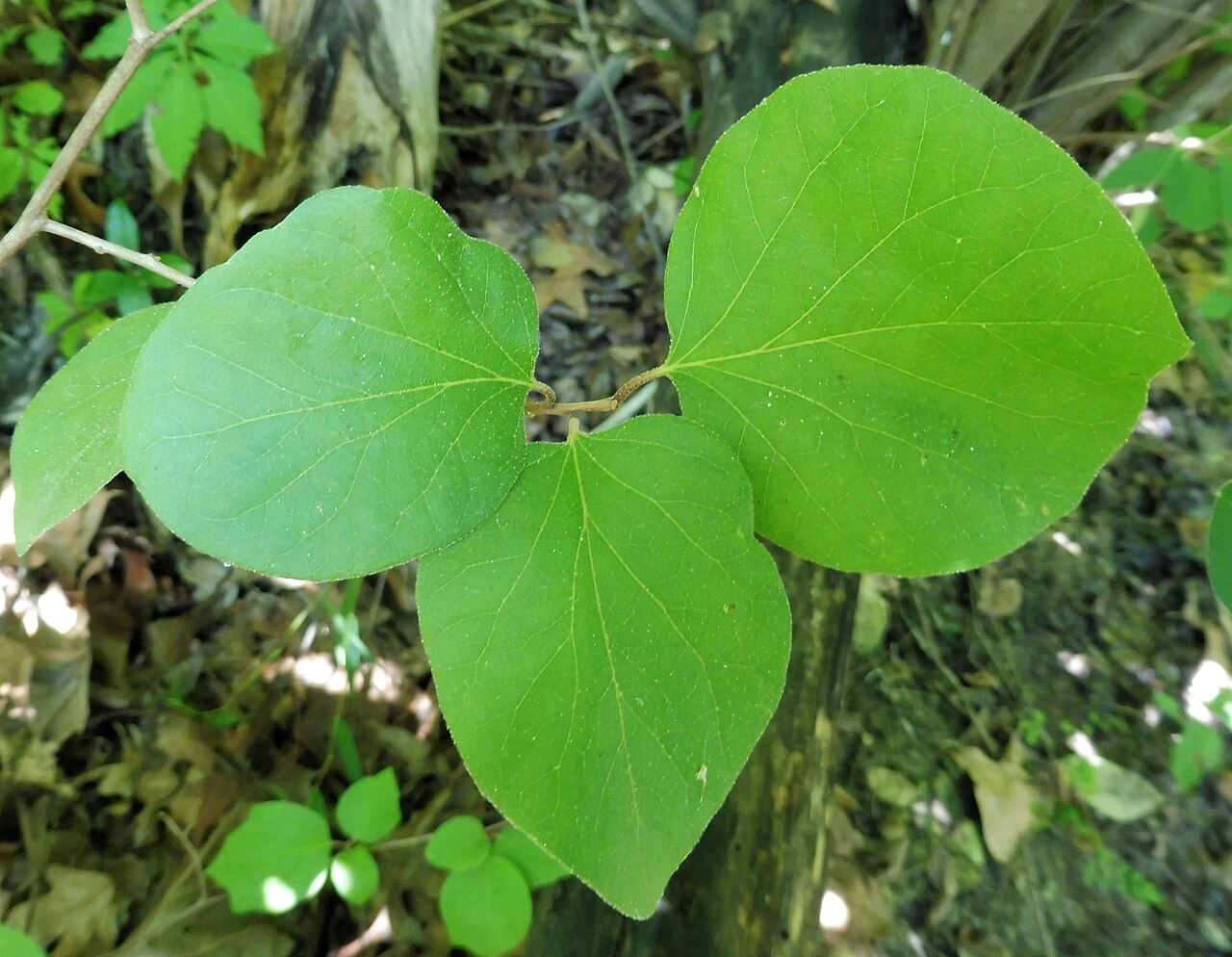
Leaves are broad, rounded to heart-shaped, 2 to 5 inches across, with a texture and silhouette reminiscent of a small sycamore leaf — the source of the common name. They are bright to medium green above, somewhat paler beneath, turning yellow before dropping in fall.
Flowers
In April and May, sycamore-leaf snowbell produces clusters of pendant, bell-shaped white flowers, each about an inch across with five recurved petals and a cluster of yellow stamens, hanging gracefully beneath the foliage along the previous year’s growth. The flowers have a light, pleasant fragrance and are genuinely showy against the broad green leaves.
Fruit & Seeds
Flowers are followed by small, dry, rounded capsules that mature through summer and eventually split to release their seeds. The capsules are inconspicuous compared to the flowers and are not a significant ornamental feature.
Quick Facts
| Scientific Name | Styrax platanifolius |
| Family | Styracaceae (Snowbell) |
| Plant Type | Deciduous shrub to small tree |
| Mature Height | 6–15 ft |
| Mature Spread | 6–12 ft |
| Growth Rate | Moderate |
| Sun Exposure | Part Shade (tolerates more sun with consistent moisture) |
| Water Needs | Moderate; prefers reliable moisture near streams |
| Soil Type | Rocky limestone, well-drained but near water |
| Soil pH | Alkaline |
| Bloom Time | April – May |
| Flower Color | White |
| Fall Color | Yellow |
| Fruit | Small dry rounded capsule |
| Deer Resistant | Low; deer readily browse the foliage |
| USDA Hardiness Zones | 7b – 9a |
Native Range
Sycamore-leaf snowbell is essentially endemic to the Texas Edwards Plateau and nearby areas, including the Lampasas Cut Plain and Llano Uplift, found across a cluster of Hill Country counties such as Bandera, Real, Kerr, Uvalde, Edwards, Val Verde, Kinney, Travis and Burnet. It also occurs in northeastern Mexico, in Coahuila, Nuevo León and Tamaulipas, but within the United States it is found nowhere outside this one Central Texas region.
Typical habitat is oak-juniper woodland on steep, rocky limestone banks and ledges along intermittent or perennial streams, rarely growing far from some reliable source of moisture even on otherwise dry, rocky sites. This streamside, canyon-edge habitat is characteristic of much of the Edwards Plateau’s most scenic terrain, including well-known natural areas across the Hill Country.
It is important to distinguish sycamore-leaf snowbell from the closely related and far rarer Texas snowbell, long known as Styrax texana and now generally treated as Styrax platanifolius var. texanus, a federally endangered plant restricted to a tiny area along the Nueces and Devils river drainages in Edwards, Kinney, Real and Val Verde counties. Sycamore-leaf snowbell proper, described here, is more widespread across the broader Edwards Plateau and is not currently federally listed, though as a regional endemic found in a limited habitat type, it still deserves careful stewardship.
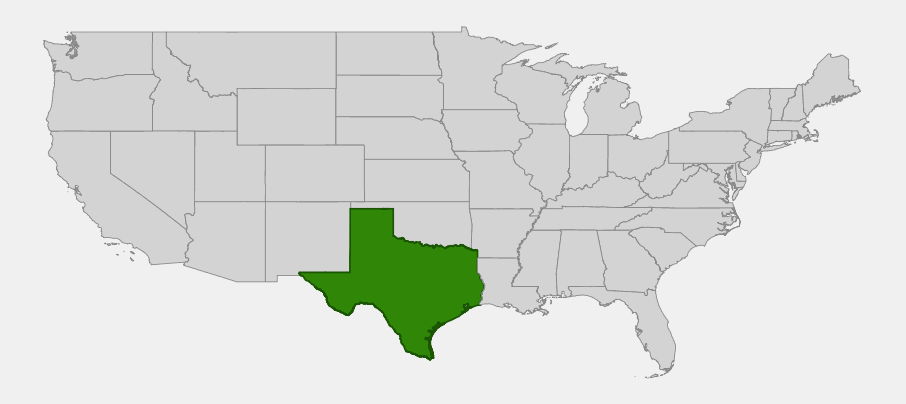
📋 Regional plant lists featuring Sycamore-leaf Snowbell: South and West Texas
Growing & Care Guide
Sycamore-leaf snowbell rewards gardeners who can match its native streamside, rocky-shade habitat, making it an excellent choice for a shaded creek bank, canyon-style garden or protected limestone slope in the Hill Country and beyond within its hardiness range.
Light
Part shade is ideal, mimicking the oak-juniper canopy it grows under in the wild. It tolerates more sun with consistently available moisture, but in hot, dry, fully exposed sites the foliage can scorch; a site with morning sun and afternoon shade, or dappled shade from taller trees, is the sweet spot.
Soil & Water
Plant in rocky, limestone-derived, well-drained soil, ideally on a slope or ledge above a stream or seasonal drainage, which is exactly the setting it favors in the wild. Unlike many Hill Country natives that lean heavily toward drought tolerance, sycamore-leaf snowbell appreciates more consistent moisture and does not thrive on neglect in dry, open sites; supplemental water during hot, dry spells will keep it healthiest, especially on sites without natural seep or stream access.
Planting Tips
Choose a sheltered, part-shade site near a water feature, drainage swale or the shaded side of the garden. Give it room to develop its naturally graceful, arching, multi-stemmed form rather than crowding it among denser shrubs. Because deer readily browse the foliage, protect young plants with fencing or cages until they are well established and tall enough to outgrow regular browsing pressure.
Pruning & Maintenance
Little structural pruning is needed; remove dead, damaged or crossing stems after flowering if shaping is desired. The plant’s natural arching habit is part of its appeal and should generally be left alone rather than sheared into a formal shape. It has no significant pest or disease problems in appropriate growing conditions.
Propagation
Propagate from seed collected from the dry capsules in late summer, or from semi-hardwood cuttings taken during the growing season. As with many Styracaceae, germination can be slow, and cuttings often root more reliably and quickly than seed for home gardeners wanting faster results.
Landscape Uses
- Shaded creek banks and canyon gardens across the Edwards Plateau and Hill Country
- Understory companion planting with Texas persimmon and agarita
- Specimen flowering shrub for a shaded limestone slope or rock garden; see our guide to rock garden plants for dry sites
- Fragrant spring flowering plant as part of a broader native bee garden
- Naturalistic woodland edge plantings near Mexican buckeye and other Hill Country shrubs
Wildlife & Ecological Value
Sycamore-leaf snowbell’s streamside habitat and showy spring flowers make it a valuable, if geographically limited, contributor to Edwards Plateau wildlife and pollinator communities.
For Pollinators
The fragrant white flowers attract a variety of native bees and other pollinating insects during their April-to-May bloom, offering a mid-spring nectar source along the shaded creek corridors where the plant grows.
For Birds
The multi-stemmed, arching growth habit provides nesting and foraging cover for small songbirds along Hill Country streams, part of the broader riparian woodland structure that supports bird diversity in the region.
For Mammals
White-tailed deer browse the foliage readily, which can limit the plant’s natural regeneration in areas with high deer populations, a real conservation concern for the genus across the Edwards Plateau. Protecting young plants from browsing is often necessary for the species to establish and spread naturally.
Ecosystem Role
As a shrub rooted directly along limestone stream banks and ledges, sycamore-leaf snowbell helps stabilize soil in exactly the kind of erosion-prone, water-adjacent terrain where root systems matter most, while contributing to the layered woodland structure of Edwards Plateau riparian corridors.
Cultural & Historical Uses
Sycamore-leaf snowbell has limited documented traditional use, reflecting both its restricted Hill Country range and its modest stature compared to larger regional trees with longer histories of utilitarian use. Its primary significance has always been more botanical and ecological than economic.
The species carries real conservation importance because of its close relationship to the federally endangered Texas snowbell, now generally treated as a variety of this same species and restricted to a handful of counties along the Nueces and Devils rivers. That close kinship has made sycamore-leaf snowbell and its variety a focus of ongoing botanical study into Edwards Plateau endemism and the surprisingly fine-scale habitat specialization found among the region’s limestone-adapted plants.
Today, sycamore-leaf snowbell is best known among Hill Country naturalists and native-plant gardeners as one of the signature spring-blooming shrubs of the region’s limestone canyons, a plant that rewards a hike along the right creek at the right time in April with a genuinely memorable flower display.
Frequently Asked Questions
Is sycamore-leaf snowbell the same as the endangered Texas snowbell?
No, though they are closely related. Texas snowbell, long called Styrax texana and now usually treated as Styrax platanifolius var. texanus, is a federally endangered plant restricted to a few counties along the Nueces and Devils rivers. Sycamore-leaf snowbell proper is more widespread across the Edwards Plateau and is not federally listed.
Why do people call it both sycamore-leaf snowbell and Texas snowbell?
Common names in this group overlap and can cause confusion; always confirm the scientific name, Styrax platanifolius, when buying or discussing this plant to avoid mixing it up with its rare, legally protected relative.
Does sycamore-leaf snowbell need to grow next to water?
Not strictly, but it performs best with more consistent moisture than many Hill Country natives, so a site near a stream, drainage or with regular supplemental water will give the healthiest, most floriferous plant.
Why is my sycamore-leaf snowbell getting eaten by deer?
The foliage is a favorite deer browse. Protect young plants with fencing or cages until they are tall and well established, since heavy browsing is one of the main obstacles to the species regenerating naturally in parts of its range.
How fast does sycamore-leaf snowbell grow?
It has a moderate growth rate, reaching a modest flowering size within a few years under good conditions, faster than many slow-growing Hill Country natives but not a quick screening plant.

Looking for a nursery that carries Sycamore-leaf Snowbell?
Browse our native plant nursery directory: Texas