Hinckley Oak (Quercus hinckleyi)
Quercus hinckleyi, the Hinckley Oak, is one of the rarest and most remarkable native trees in Texas — a dwarf, holly-leaved shrub oak restricted to a handful of rocky desert slopes in the Big Bend region. Standing no more than about five feet tall even at maturity, it forms dense, tangled, knee-high thickets of small, waxy, blue-green leaves armed with sharp spine-tipped teeth, a growth form shaped by tens of thousands of years of survival on some of the harshest, driest ground in North America.
This is not a garden center plant, and it should never be treated as one. Hinckley Oak is federally listed as a Threatened species under the U.S. Endangered Species Act, is listed as Threatened by the State of Texas, and is ranked Critically Endangered on the IUCN Red List. It survives today in only a small number of known populations in Brewster and Presidio counties, most within Big Bend Ranch State Park, with additional, poorly documented occurrences across the border in Chihuahua and Coahuila, Mexico. Fossil acorns and rodent-midden records show the species was far more widespread at the end of the last ice age, roughly 10,000 years ago, before a warming, drying climate pushed it back into its current tiny refuge of rocky desert slopes.
We include Hinckley Oak on PlantNative not as a plant to source and grow, but because understanding and valuing genuinely rare native trees like this one is part of understanding the full native flora of the United States. If you live near its native range and want to support its survival, the most valuable thing you can do is protect existing wild populations and their habitat rather than attempt to collect or transplant material from the wild.
Identification
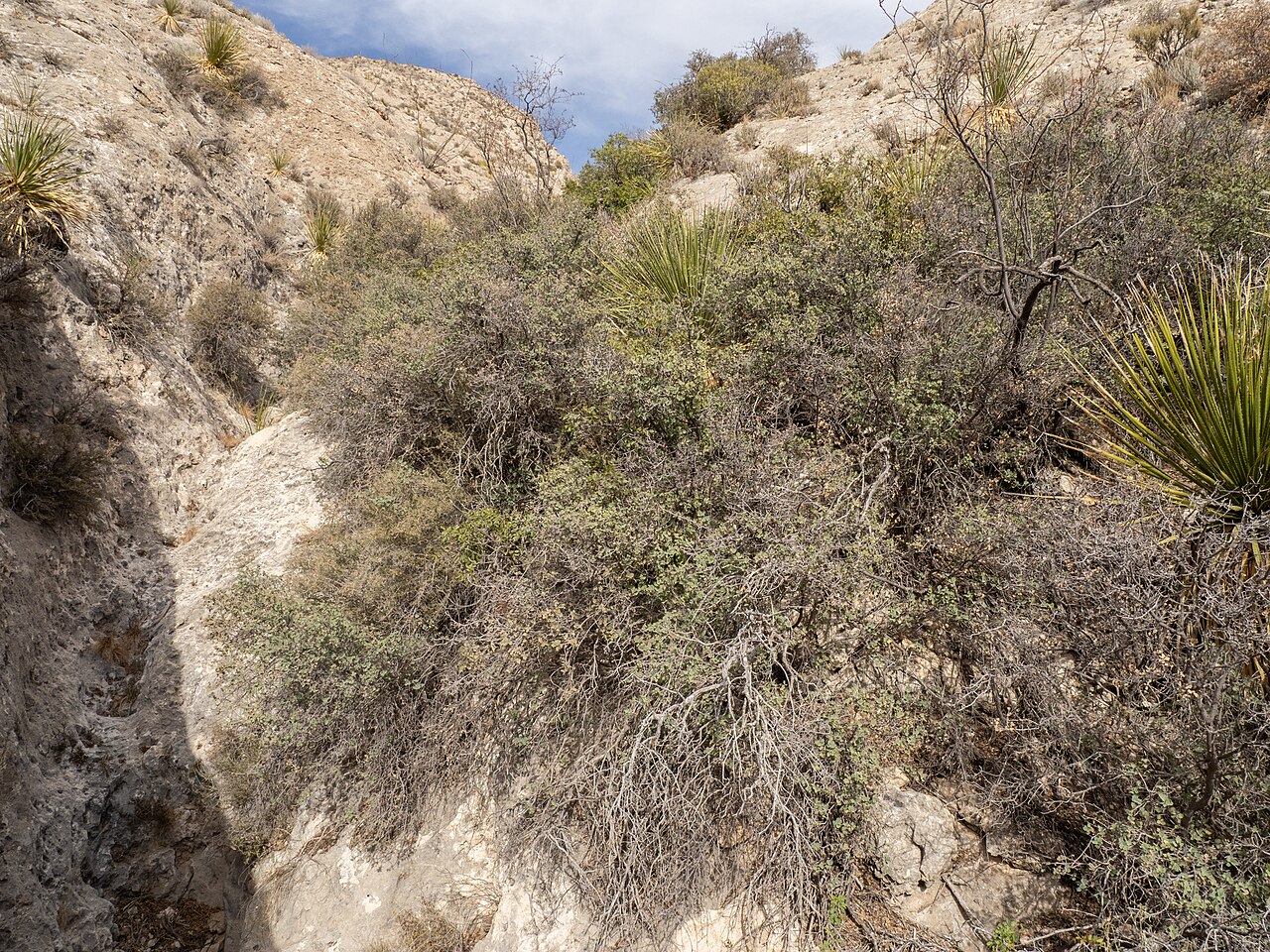
Hinckley Oak grows as a dense, low, intricately branched evergreen shrub, almost never exceeding about 5 feet (1.5 m) in height, forming tight, sprawling, knee-level thickets rather than anything resembling a typical tree form. Its compact size and tangled branching are themselves useful identification clues in a landscape where few other woody plants grow quite this low and dense.
Bark & Stems
Stems are intricately and densely branched, covered in scaly gray bark. New twigs emerge reddish before maturing to light brown, and are covered in microscopic star-shaped hairs along with a whitish, wax-like coating that is often visible to the naked eye as a pale bloom on the newer growth.
Leaves
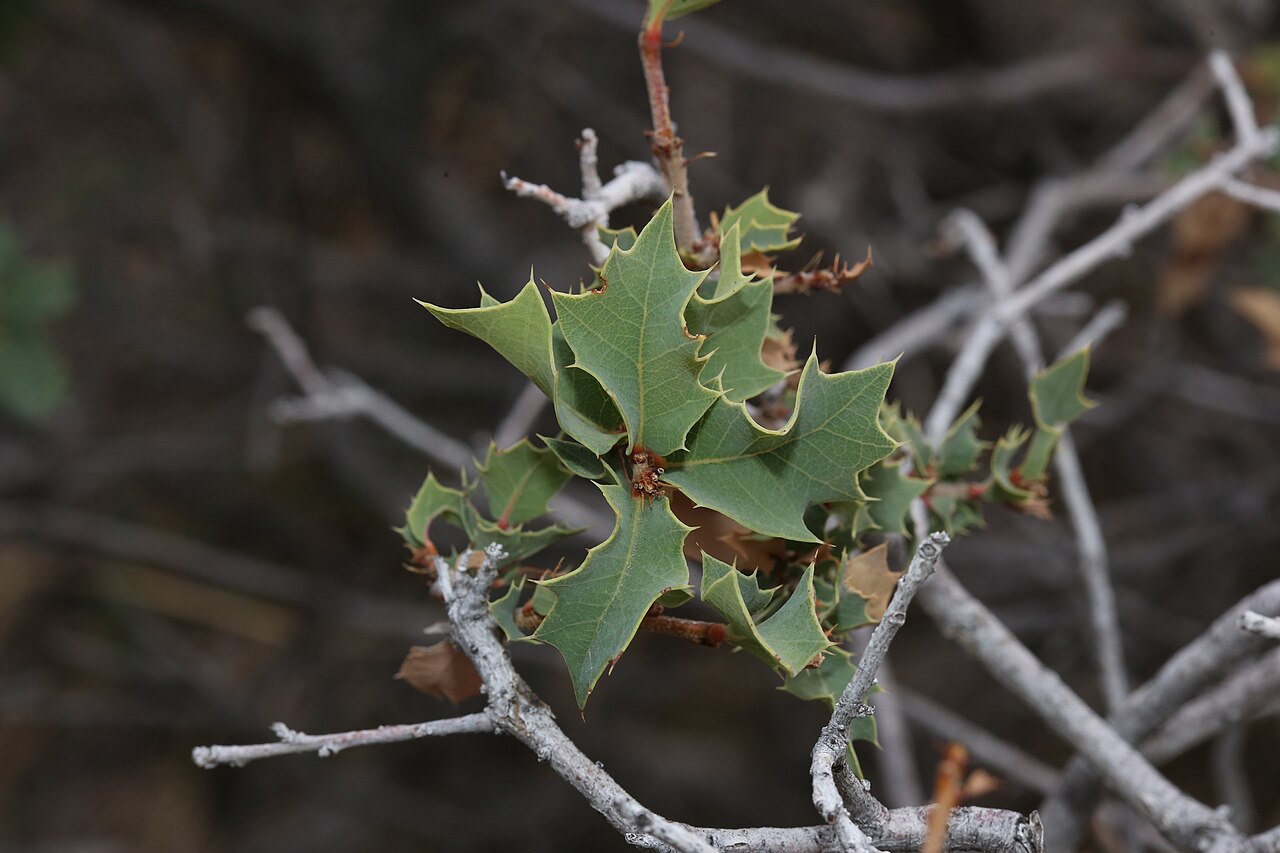
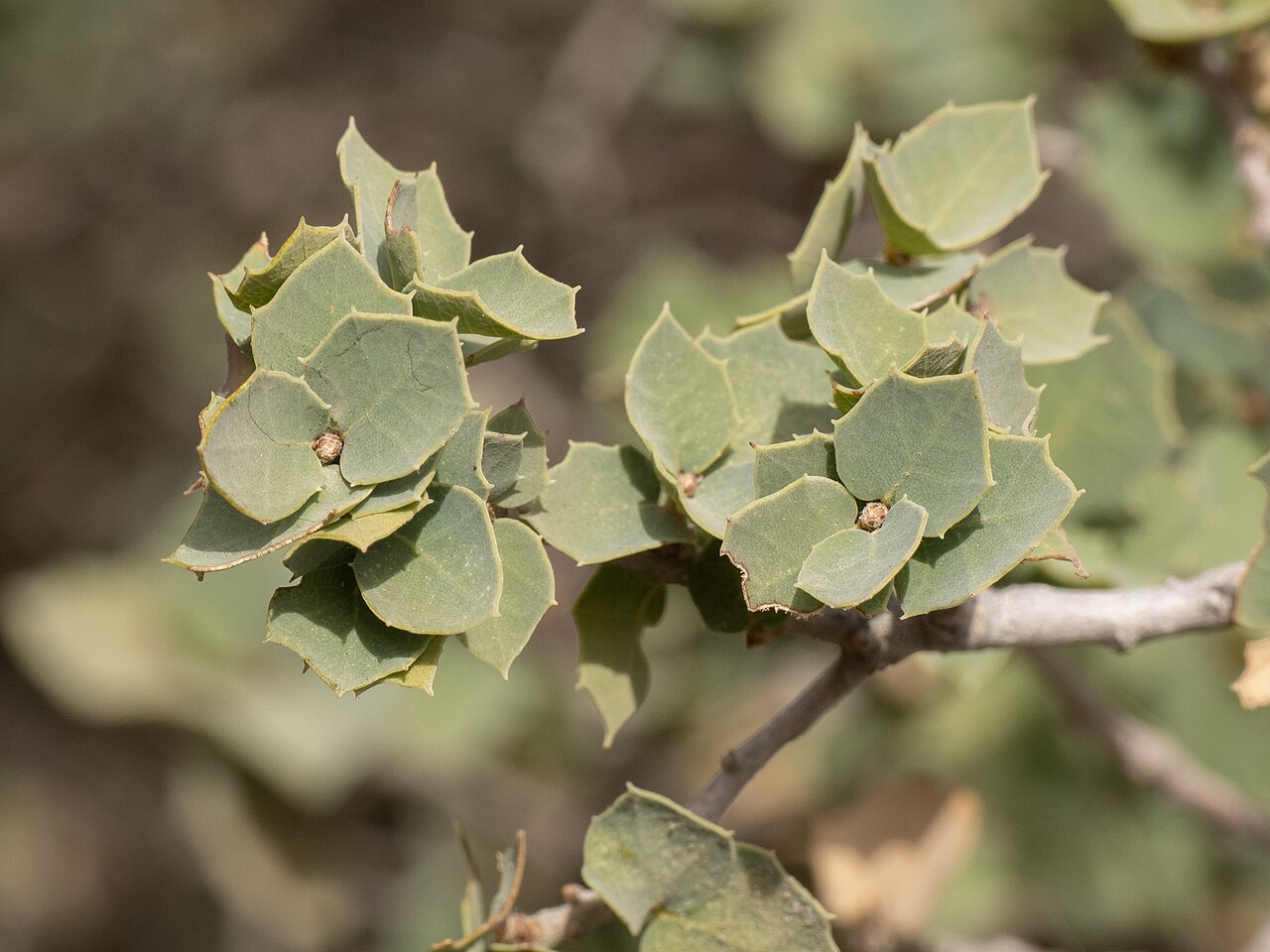
The leaves are the single best field mark: small (about ½ to 1½ inches, or 1.5 cm, long and wide), mostly rounded to oval in outline, leathery, hairless, and covered in the same whitish, waxy coating as the twigs, giving the whole plant a smoky, blue-green cast from a distance. Each leaf edge carries four to six sharp, spine-tipped teeth, closely resembling a miniature holly leaf — a resemblance so strong that casual observers often assume they have found a holly rather than an oak.
Flowers
Like all oaks, Hinckley Oak is monoecious, with separate male and female flowers on the same plant. Clusters of small male (pollen) flowers hang downward from short, sparsely hairy stalks in spring, while the inconspicuous female flowers occur singly, almost directly against the stem, where they are easy to overlook entirely.
Fruit & Seeds
The acorns are produced annually and mature in August and September. The saucer-shaped cap is shallow, covering only the base of the nut, and the egg-shaped nut itself is roughly ¾ inch (1–2 cm) long and hairless. Despite reliable annual acorn production, reproduction from seed in the wild appears to be poor, and much of the species’ persistence seems to rely on extensive clonal, root-sprouted growth rather than new seedlings — a pattern consistent with a relict population under long-term environmental stress.
Quick Facts
| Scientific Name | Quercus hinckleyi |
| Family | Fagaceae (Oak/Beech) |
| Plant Type | Dwarf Evergreen Shrub Oak |
| Mature Height | Up to 5 ft |
| Growth Rate | Very slow |
| Sun Exposure | Full Sun |
| Water Needs | Very Low |
| Soil Type | Shallow, rocky limestone or novaculite gravel |
| Bloom Time | Spring |
| Fall Color | None (evergreen) |
| Fruit | Acorn, ~3/4 in nut, shallow saucer-shaped cap |
| Deer Resistant | Likely (dense spiny holly-like foliage) |
| Conservation Status | Federally & State (Texas) Threatened; IUCN Critically Endangered; NatureServe G2/S2. Do not collect from the wild. |
Native Range
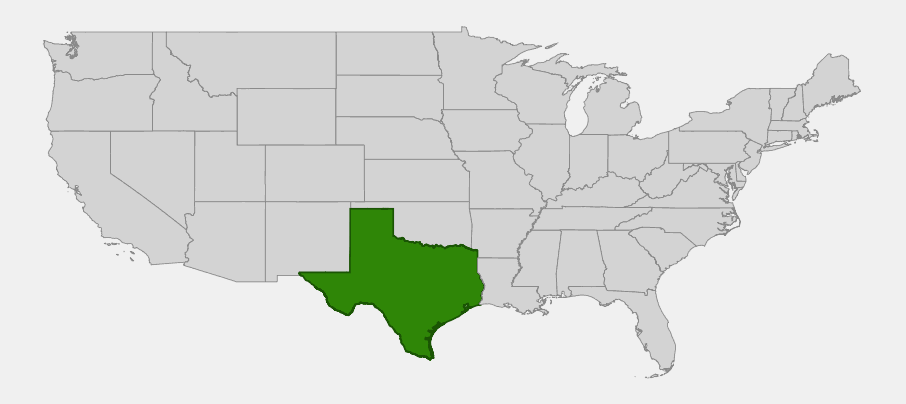
Hinckley Oak is known in the United States from only a small number of documented occurrences in Brewster and Presidio counties in the Big Bend region of far West Texas, with the majority of known plants growing within Big Bend Ranch State Park. It has also been recorded in the adjacent Mexican states of Chihuahua and Coahuila, though the full extent of its distribution south of the border remains poorly documented.
It grows exclusively in harsh Chihuahuan Desert scrub habitat on dry, rocky desert slopes, typically on thin, well-drained limestone or novaculite gravel soils around 4,500 feet elevation. This is an unforgiving site type — exposed, sun-baked, and essentially soilless by most garden standards — that few other woody plants can tolerate, which is part of why the species has persisted here even as its range contracted dramatically since the end of the last ice age.
Because the species reproduces heavily by clonal root-sprouting, a visually extensive “population” covering a hillside may in fact represent relatively few genetically distinct individuals, a detail that matters for conservation genetics and for understanding just how vulnerable this species remains despite locally dense growth.
📋 Regional plant lists featuring Hinckley Oak: South and West Texas
Growing & Care Guide
Hinckley Oak is not available in commercial horticulture, has no meaningful history of cultivation, and should not be sourced from the wild under any circumstances given its Threatened and Critically Endangered status. The notes below describe the conditions this species requires in its native habitat, offered for understanding rather than as planting instructions.
Habitat Requirements
In the wild, Hinckley Oak depends on full, unshaded desert sun and extremely sharp drainage on thin, rocky, mineral soils with essentially no organic topsoil — conditions that would be considered inhospitable for almost any other woody landscape plant. It receives minimal rainfall and tolerates extreme heat, intense sun, and long dry periods as a matter of course.
Conservation Priority
The appropriate response to encountering this species is documentation and protection, not collection. If you are a landowner, land manager, or researcher within its known range in Brewster or Presidio County, coordinate with Texas Parks and Wildlife, the Center for Plant Conservation, or Big Bend Ranch State Park staff on any conservation, seed-banking, or monitoring work rather than acting independently. Removing wild plants, digging acorns, or taking cuttings without authorization can directly harm an already critically small, genetically limited population.
Landscape Uses
- None recommended for ordinary home landscaping, given its rarity and absence from legitimate nursery trade
- Conservation and seed-bank collections maintained by authorized botanical institutions
- Habitat protection within Big Bend Ranch State Park and surrounding Chihuahuan Desert lands as the single most effective action for this species’ survival
Wildlife & Ecological Value
Despite its diminutive size and rarity, Hinckley Oak plays a genuine ecological role within its narrow Chihuahuan Desert range, functioning much as other scrub oaks do for desert wildlife, just on an extremely local scale.
For Wildlife
Annual acorn production provides a food source for desert rodents and other wildlife capable of reaching this low, thorny, ground-hugging shrub, and the dense, interlocking branches offer secure cover for small animals in an otherwise exposed desert slope environment, similar to the role played by other low, spiny Chihuahuan Desert shrubs.
Ecosystem Role
As a relict species that has persisted through roughly 10,000 years of dramatic climate change, Hinckley Oak is a living reminder of a cooler, wetter Chihuahuan Desert landscape that has largely disappeared. Its survival on a handful of rocky slopes makes it an important indicator species for Big Bend conservation efforts, and the genetic diversity preserved in its few wild populations represents an irreplaceable resource for understanding how desert plants adapt — or fail to adapt — to long-term climate change.
Cultural & Historical Uses
Hinckley Oak is named for Leon Kincaid Hinckley, who first brought the species to scientific attention from the Big Bend region in the early twentieth century; it was later formally described as a distinct species by botanist Cornelius Herman Muller. Known locally in Spanish as “chaparro,” it has no significant documented history of use by Indigenous peoples or settlers as a resource plant, distinct from the general historical use of acorns by desert peoples across other, more common Southwestern oak species.
Its primary significance today is scientific and conservation-related rather than practical: it serves as a touchstone species for understanding Chihuahuan Desert plant endemism, postglacial climate change, and the genetics of long-term survival in small, isolated plant populations. For gardeners and native-plant enthusiasts in the broader region, more widely available desert oaks such as Emory oak, and the full range of Southwestern oak species covered in our guide to New Mexico oak trees, offer a legitimate and sustainable way to bring oak character into a Chihuahuan Desert-adjacent landscape.
Frequently Asked Questions
Can I buy or grow Hinckley Oak?
No. It is not available through legitimate nurseries, and given its status as a federally and state Threatened, IUCN Critically Endangered species known from only a handful of wild populations, it should never be collected from the wild. If you want a hardy, holly-leaved desert oak for a Southwestern landscape, consider more common, legally available native oaks instead, such as those covered in our New Mexico oak trees guide or our list of best Texas native plants for landscaping.
Why is Hinckley Oak so rare?
It is considered a relict species — more widespread during the cooler, wetter climate at the end of the last ice age roughly 10,000 years ago, but pushed back into a tiny refuge of rocky desert slopes as the regional climate warmed and dried. Low rates of successful seedling establishment compound the problem, since much of its spread today comes from clonal root growth rather than new plants from seed.
Is Hinckley Oak the same as other shin oaks?
No. While it shares a low, shrubby growth habit with other Southwestern “shin oaks,” its small, rounded, distinctly holly-like leaves with four to six sharp spine-tipped teeth and its extremely restricted Big Bend range set it apart from more widespread shrub oaks such as scrub oak.
Where can I see Hinckley Oak in the wild?
The most reliable place is Big Bend Ranch State Park in West Texas, which protects the majority of known populations. Stay on designated trails, avoid disturbing any plants you encounter, and never attempt to collect leaves, acorns, or cuttings.
What is being done to protect it?
As a federally listed Threatened species, Hinckley Oak benefits from legal protections against take on federal land and is a priority for conservation partners including Texas Parks and Wildlife and national plant conservation organizations, which track its populations and support seed-banking and research into its genetics and reproduction.

Looking for a nursery that carries Chihuahuan Desert native plants?
Browse our native plant nursery directory: Texas