Santa Cruz Island Oak (Quercus parvula)
Quercus parvula, known as the Santa Cruz Island Oak, is a California endemic red oak that exists as two recognized varieties occupying very different corners of the state. The nominate variety, Quercus parvula var. parvula, gives the species its common name and is confined almost entirely to Santa Cruz Island and a handful of coastal sites in Santa Barbara County. The second variety, Quercus parvula var. shrevei — often called Shreve oak — is a larger, more tree-like plant of the mainland Coast Ranges, from Santa Barbara County north to Mendocino County.
Both varieties share the same small, finely toothed evergreen leaves and red-oak-type acorns, but they diverge sharply in stature and habitat. The island variety stays a compact, wind-sculpted shrub shaped by its exposed, fog-swept island home, while the mainland Shreve oak variety grows into a substantial forest tree in the moist, shaded canyons of the Coast Ranges. The California Native Plant Society tracks var. parvula as a plant of limited distribution (Rank 4.2) because of its narrow island range.
For gardeners, Santa Cruz Island oak in the broad sense — particularly the mainland Shreve oak form — makes a handsome evergreen shade tree for coastal and near-coastal California gardens with the moisture to support it, while the true island form is a plant mainly for restoration projects and botanic collections within its native range.
Identification
Growth form varies enormously between the two varieties. Var. parvula on Santa Cruz Island typically stays a dense shrub 3 to 10 feet tall, shaped by wind and salt exposure. Var. shrevei on the mainland can reach 30 to 80 feet as a substantial canopy tree in sheltered Coast Range canyons, with a broad, rounded crown.
Bark & Stems
Young twigs are slender and often finely hairy when new, aging to smooth gray-brown bark. On mature mainland trees the bark develops shallow furrows and plates typical of red oaks; on the shrubby island form the bark stays smoother on the thinner stems.
Leaves
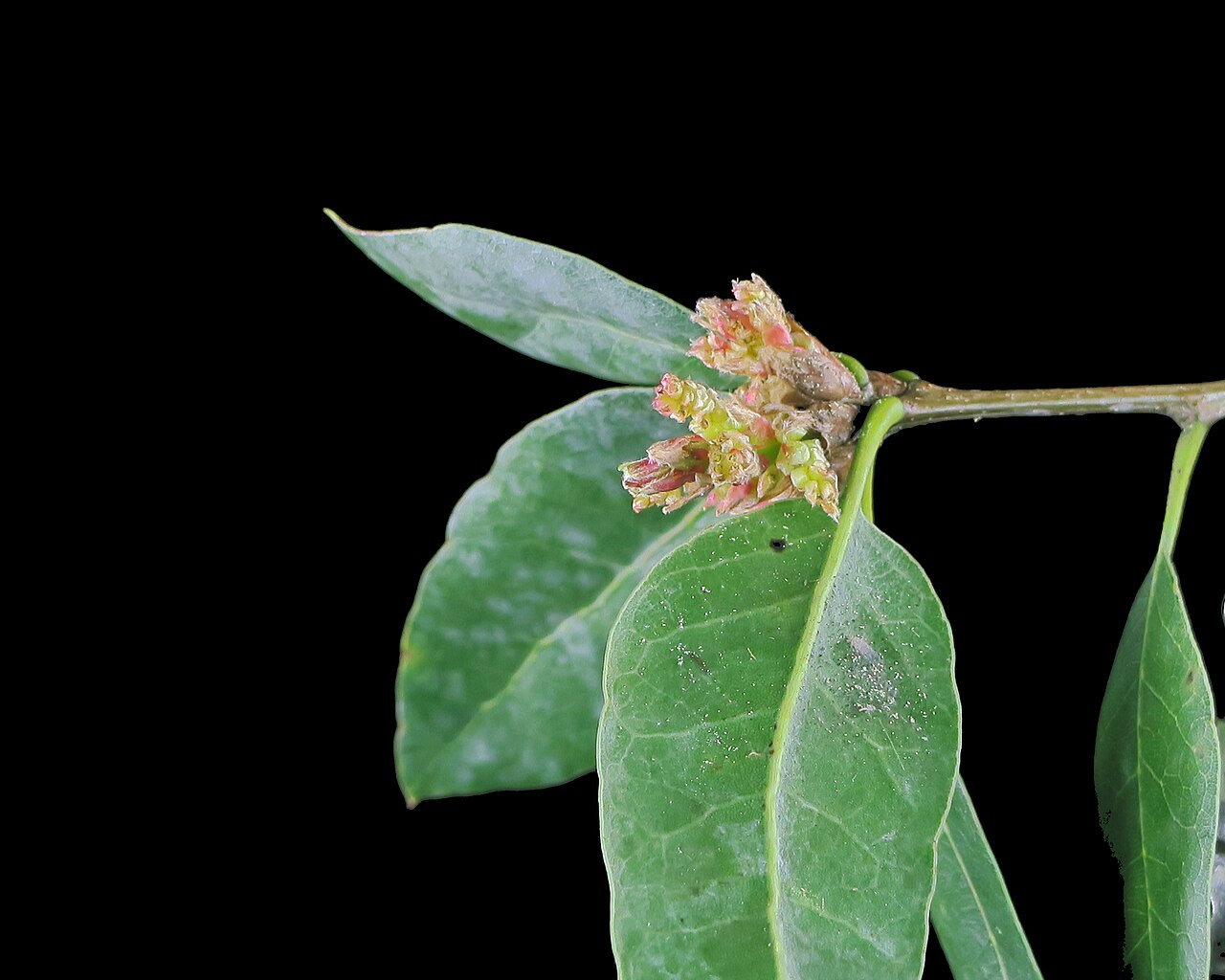
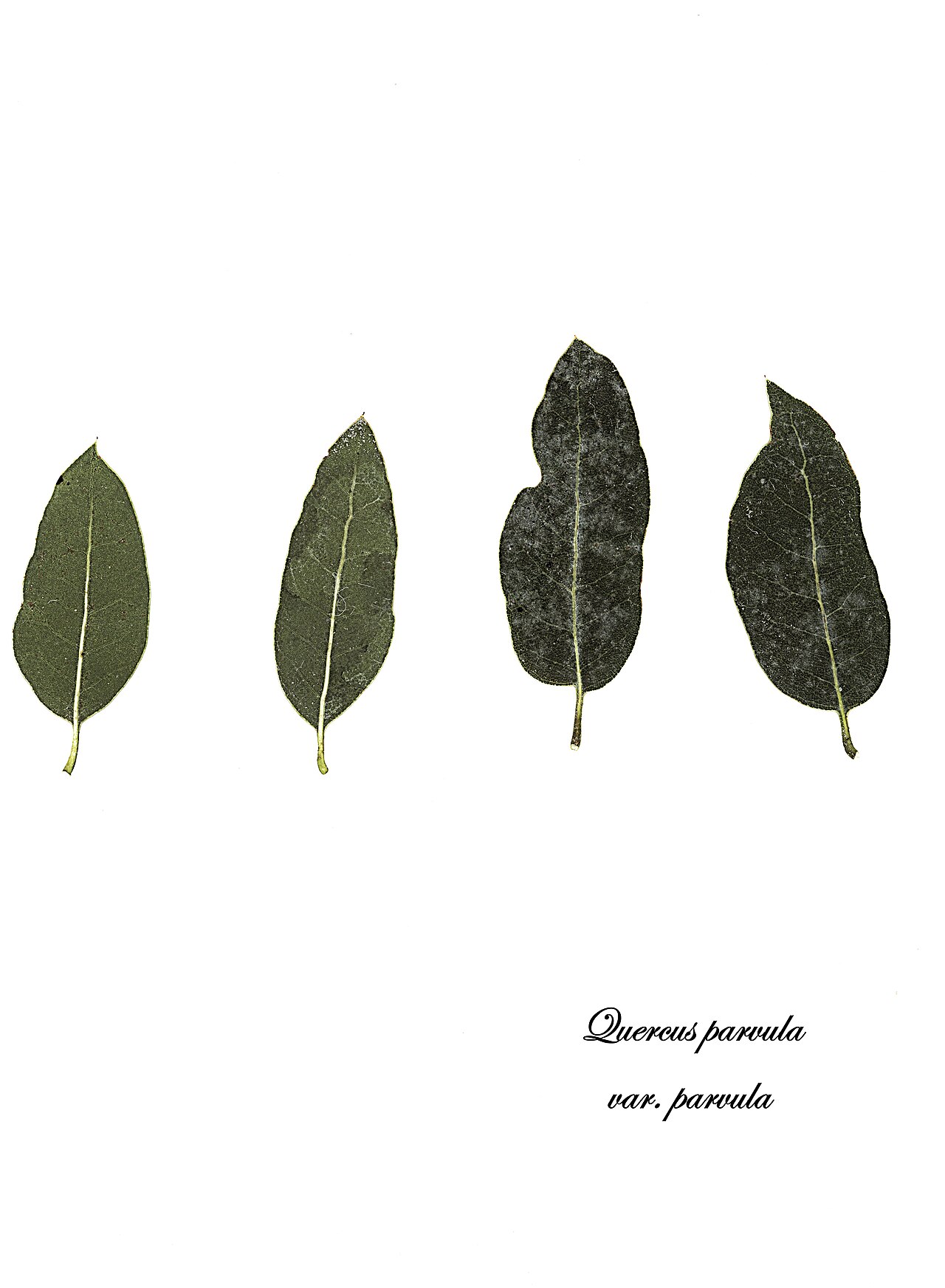
The evergreen leaves are relatively small for a California oak, typically 1 to 3 inches long, oval to oblong, with fine spine-tipped teeth along the margins — though leaf shape and tooth sharpness vary noticeably between individuals and even on the same plant, as the range of forms seen in herbarium specimens shows. The upper surface is glossy dark green; the underside is paler and finely hairy along the veins.
Flowers & Fruit
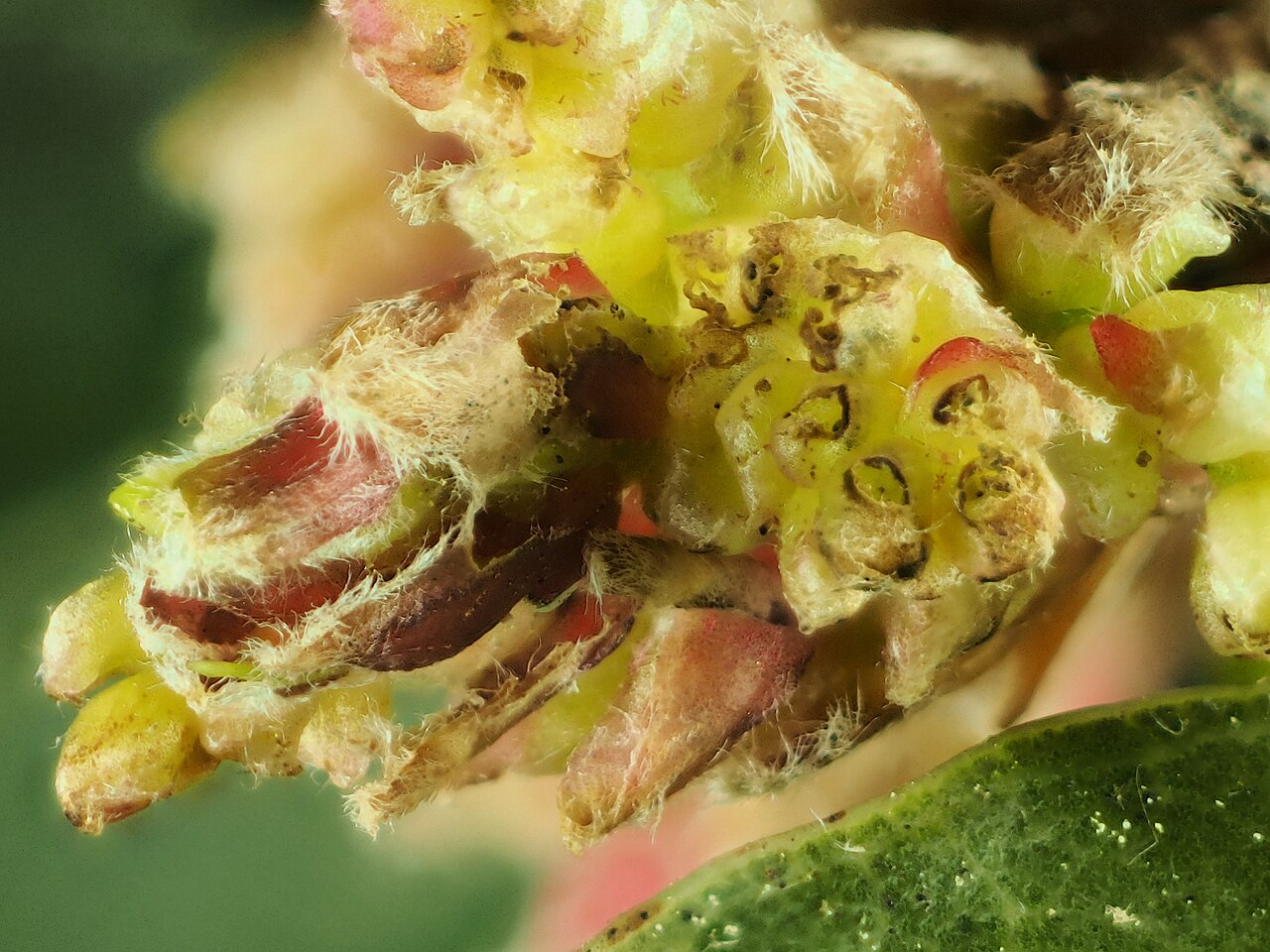
Like other oaks, Santa Cruz Island oak is wind-pollinated. Slender, pink-tinged male catkins emerge from the branch tips in spring alongside new leaf growth, a detail visible on plants in cultivation at botanic gardens. Acorns mature the following year, as is typical for red oaks, with a shallow scaly cap covering a portion of an oblong nut.
Quick Facts
| Scientific Name | Quercus parvula |
| Family | Fagaceae (Oak) |
| Plant Type | Evergreen shrub (island form) to large tree (mainland Shreve oak form) |
| Mature Height | 3–10 ft (island); 30–80 ft (mainland) |
| Mature Spread | Variable; broad-crowned on the mainland tree form |
| Growth Rate | Slow to moderate |
| Sun Exposure | Full Sun to Partial Shade |
| Water Needs | Low once established |
| Soil Type | Well-drained; tolerates rocky and sandy soils |
| Soil pH | Slightly acidic to neutral |
| Bloom Time | Spring |
| Flower Color | Cream, green, pink-tinged catkins |
| Fall Color | None (evergreen) |
| Fruit | Acorns maturing in the second year (red oak type) |
| Deer Resistant | Yes (tough, spine-toothed foliage) |
| USDA Hardiness Zones | 9–10 |
Native Range
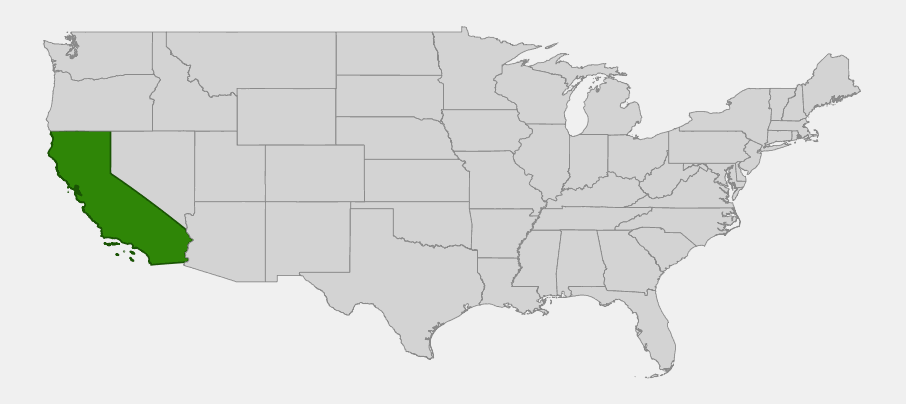
Santa Cruz Island oak is endemic to California, where it occupies two disjunct areas as separate varieties. Variety parvula, the true island form, is found principally on Santa Cruz Island with a few outlying occurrences along the adjacent Santa Barbara County coast. Variety shrevei, the mainland Shreve oak, ranges through the outer South and Central Coast Ranges from Santa Barbara County north through the San Francisco Bay Area to Mendocino County.
The island variety grows in maritime chaparral and closed-cone pine forest on the island’s slopes, shaped by salt-laden wind and summer fog rather than rainfall. The mainland variety instead favors moist, shaded woodlands and canyon slopes in the outer Coast Ranges, where coastal fog and higher rainfall support a much larger tree. Elevations range from near sea level to roughly 3,000 feet depending on the variety and site.
Because the two varieties are geographically separated and ecologically distinct, botanists sometimes debate whether they are best treated as varieties of one species or as separate species; current treatments in the Jepson eFlora and USDA PLANTS keep them together as Quercus parvula with two varieties, a classification this page follows while describing their differences.
📋 Regional plant lists featuring Santa Cruz Island Oak: California & Nevada
Growing & Care Guide
Which growing conditions suit this oak depends on which variety you’re planting. The mainland Shreve oak form makes a fine shade tree for coastal and near-coastal gardens; the island form is better suited to restoration plantings or specialty collections within its native range.
Light
Full sun suits the compact island form, which grows in open, wind-exposed chaparral. The larger mainland tree form tolerates full sun but often grows naturally with some shade from neighboring canopy trees in its Coast Range canyon habitat.
Soil & Water
Both varieties need well-drained soil and resent standing water around their roots. Water young plants regularly through their first two summers to establish deep roots, then reduce irrigation significantly — established plants, especially the island form, are adapted to dry summers and only need supplemental water during unusually long dry spells.
Planting Tips
Plant in fall or winter so roots can establish during the rainy season. The mainland tree form needs adequate space to develop its broad crown, ideally 25 feet or more from structures and other large trees. Coastal fog-belt gardens most closely match this oak’s natural moisture regime and give the best results.
Pruning & Maintenance
Established oaks need minimal pruning; remove dead or crossing branches in the dormant season and avoid heavy cuts, which oaks tolerate poorly. Never irrigate heavily near the trunk of an established oak, as this is a leading cause of root and crown disease in California native oaks.
Landscape Uses
- Shade tree for coastal and fog-belt California gardens (mainland Shreve oak form)
- Native hedge or screen in exposed coastal sites (compact island form)
- Woodland and canyon restoration plantings alongside canyon live oak
- Wildlife garden plantings paired with toyon
- Low-water landscaping; see our guide to low-maintenance shrubs for California
Wildlife & Ecological Value
As with all California oaks, Santa Cruz Island oak supports a wide web of wildlife wherever it grows, though its ecological role differs between its island and mainland settings.
For Pollinators
The wind-pollinated catkins are not a nectar source, but the shrub or tree itself hosts a range of moths and other insects whose larvae feed on oak foliage, forming a foundation of the local insect food web.
For Birds
On Santa Cruz Island, the island scrub-jay forages on oak acorns across the island’s oak thickets, including this species, and helps disperse seed in the process. On the mainland, acorn woodpeckers, scrub-jays, and band-tailed pigeons are typical acorn consumers wherever Shreve oak grows among other Coast Range oaks.
For Mammals
Acorns provide fall and winter food for the island fox on Santa Cruz Island and for deer, squirrels, and other mammals on the mainland. Dense branching in both varieties offers nesting and shelter habitat.
Ecosystem Role
The mainland tree form contributes significant canopy cover and leaf litter to Coast Range woodlands, supporting understory plants and soil organisms beneath it. The island shrub form, though smaller, is an important structural element in island chaparral, stabilizing slopes and providing one of the few substantial woody habitats on an island landscape otherwise dominated by grassland.
Cultural & Historical Uses
Like other California oaks, Santa Cruz Island oak’s acorns were historically gathered and processed by Indigenous peoples of the region — the Chumash on the Channel Islands and adjacent mainland coast — as part of a broader acorn-based diet common across Indigenous California, after leaching to remove bitter tannins.
The mainland variety, Shreve oak, is named for American botanist Forrest Shreve, reflecting its documentation during early 20th-century botanical surveys of California’s Coast Ranges. Neither variety became commercially significant as a timber species, given their modest size compared with larger California oaks like valley oak.
Today, the species’ significance is primarily ecological and conservation-focused. The island variety in particular has benefited from decades of habitat restoration on Santa Cruz Island following the removal of introduced grazing animals that once suppressed oak regeneration there.
Frequently Asked Questions
What is the difference between Santa Cruz Island oak and Shreve oak?
They are the two varieties of the same species, Quercus parvula. Variety parvula (“Santa Cruz Island oak” in the strict sense) is a compact shrub confined to Santa Cruz Island and nearby coastal Santa Barbara County. Variety shrevei (“Shreve oak”) is a much larger tree found in the mainland Coast Ranges from Santa Barbara to Mendocino County.
Is Santa Cruz Island oak rare?
The island variety is tracked by the California Native Plant Society as a plant of limited distribution (Rank 4.2) because of its narrow range confined mostly to one island. The mainland Shreve oak variety is more widespread and not considered rare.
Can I grow this oak outside California?
It is a California endemic adapted to the state’s Mediterranean climate of wet winters and dry summers, and it is best suited to gardens within or near its native coastal range rather than regions with very different rainfall patterns or winter cold.
How is this oak different from interior live oak?
Interior live oak (Quercus wislizeni) is a closely related red oak with similar glossy, spiny leaves, but it is a widespread mainland species of interior foothills and valleys, quite distinct in range and habitat from the coastal and island distribution of Santa Cruz Island oak.
Does this oak need regular watering once established?
No. Established plants of both varieties are adapted to California’s dry summers and should receive little to no supplemental irrigation, especially close to the trunk, where excess water promotes root and crown disease in native oaks.

Looking for a nursery that carries Santa Cruz Island Oak?
Browse our native plant nursery directory: California