ʻAhakea Lau Nui (Bobea elatior)
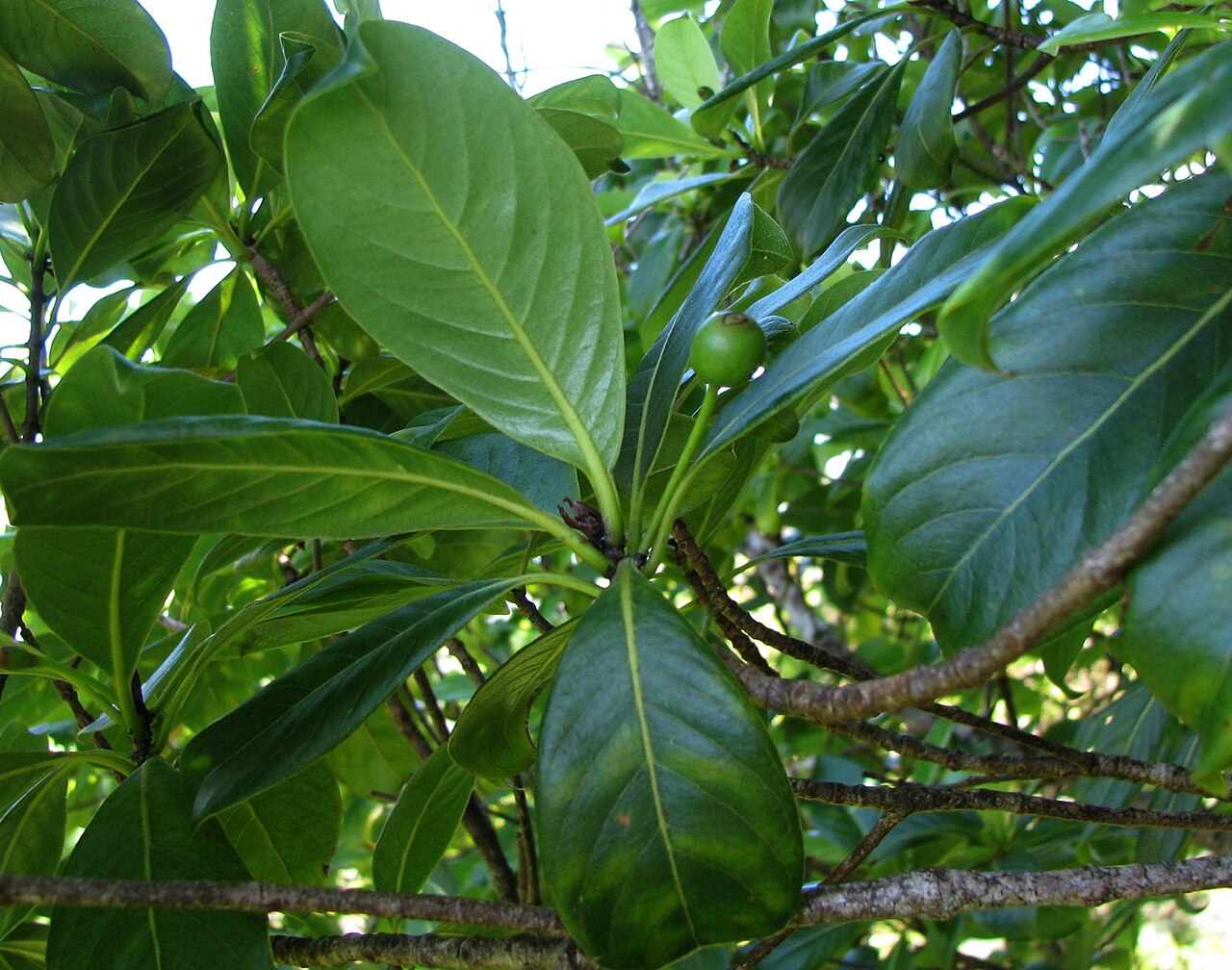
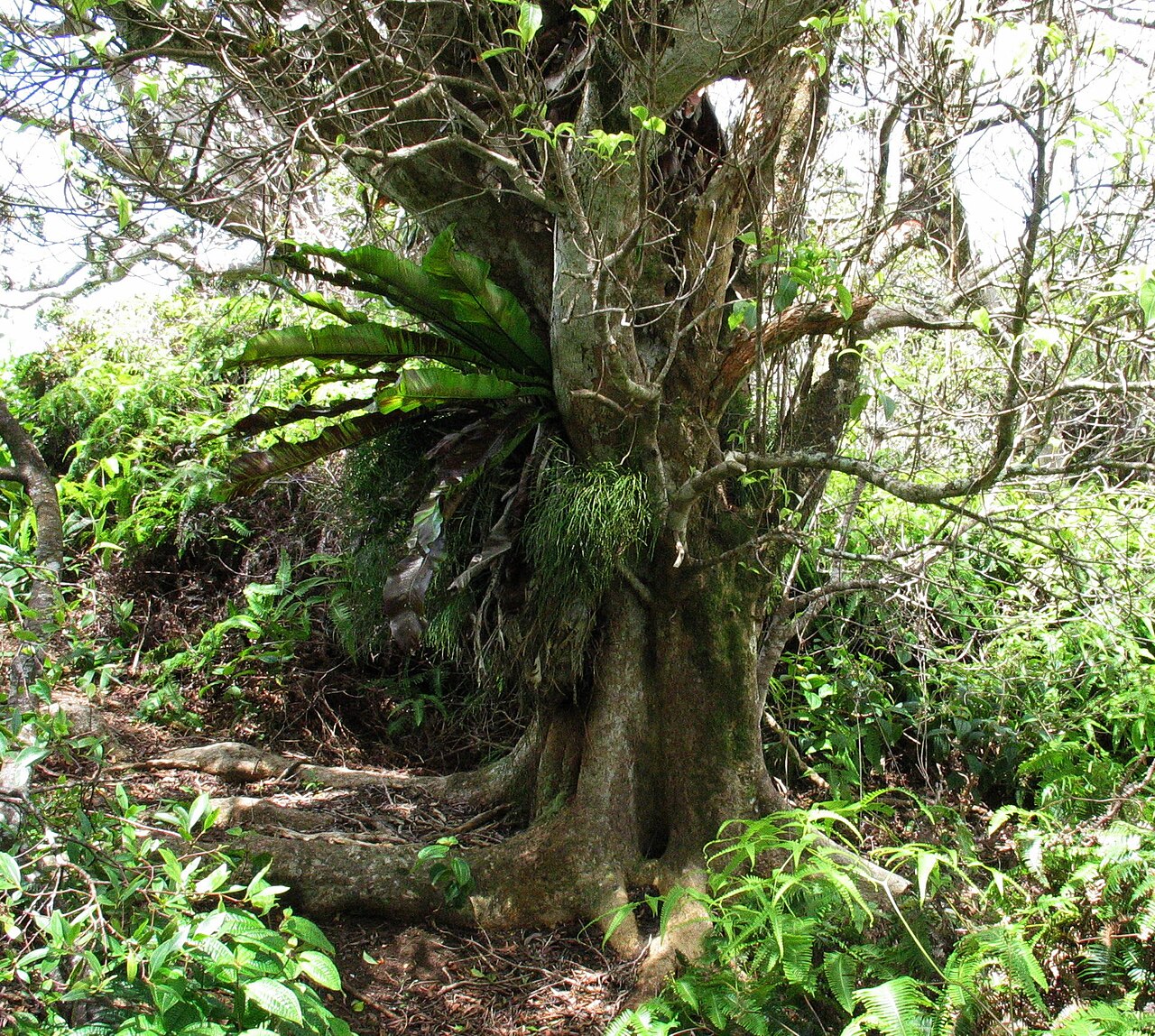
Bobea elatior, known in Hawaiian as ʻahakea lau nui (“large-leaved ahakea”), is a native Hawaiian tree in the coffee family (Rubiaceae) and a member of Bobea, a genus found nowhere else on Earth. It grows in mesic valleys and mesic-to-wet forest across several of the main Hawaiian Islands, where old individuals can develop into substantial, gnarled trees with buttressed roots and epiphyte-covered trunks.
Like several other Hawaiian hardwood trees, ʻahakea lau nui was historically important for its wood rather than for showy flowers — it is not a plant grown for ornamental display, but one valued, both traditionally and today, for its structural qualities and its place in native forest ecosystems. For gardeners and restoration projects building out Hawaiian native forest, it is a solid, under-appreciated canopy and subcanopy species.
The genus Bobea is itself a small, entirely Hawaiian endemic group, with a handful of species scattered across the islands, each going by some version of the name ahakea. ʻAhakea lau nui stands out among them for its comparatively large leaves and its tendency to grow into substantial, long-lived trees in favorable mesic and wet forest settings, rather than remaining a smaller shrub-like form.
Identification
ʻAhakea lau nui grows as a tree, occasionally a shrub, reaching up to about 50 feet (15 m) tall. Older trees develop thick, buttressed trunks and often host epiphytic ferns and other plants in wet forest settings. The wood is a dull orange-brown that deepens to a rich dark gold when traditionally rubbed with kukui nut oil.
Leaves
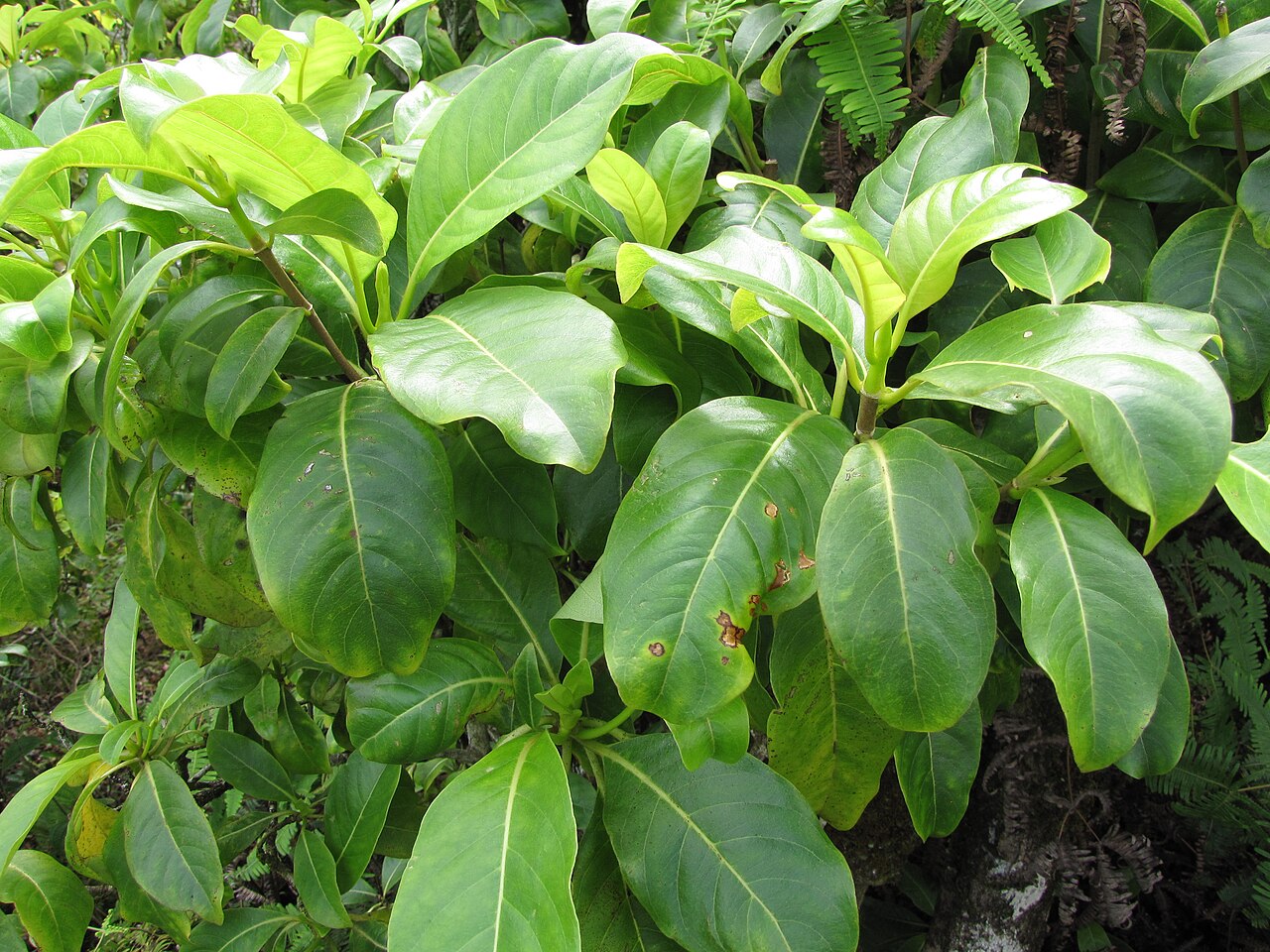
Leaves are simple and arranged oppositely on the stem, elliptic to obovate in shape, roughly 1 to 6 inches (1.5–15 cm) long and 0.4 to 2 inches (1–5.5 cm) wide, with a pointed to rounded tip and a tapering base. They are glossy dark green above, giving the tree a lush, polished look in the forest canopy.
Flowers
Flowers are small, greenish to yellowish or sometimes white, in keeping with the understated flowering style typical of many native Hawaiian coffee-family trees — easy to overlook compared with showier natives.
Fruit
The fruit is a small, fleshy drupe that ripens from green to purplish-black, growing singly or in small clusters at the leaf axils.
Quick Facts
| Scientific Name | Bobea elatior |
| Family | Rubiaceae (Coffee) |
| Plant Type | Tree (rarely shrub) |
| Mature Height | Up to 50 ft |
| Growth Rate | Slow |
| Sun Exposure | Partial Sun to Shade |
| Water Needs | Moderate to High |
| Soil Type | Moist, well-drained forest soils |
| Flower Color | Greenish to yellowish or white, inconspicuous |
| Conservation Status | Uncommon native; not federally listed |
| USDA Hardiness Zones | 10–11 |
Native Range
ʻAhakea lau nui is endemic to the Hawaiian Islands, growing in mesic valleys and mesic-to-wet forest on Kauaʻi, Oʻahu, Molokaʻi, Maui, and Hawaiʻi Island, at elevations of roughly 820 to 3,280 feet (250–1,000 m). It is not native outside Hawaiʻi.
It grows as part of mixed native forest alongside other canopy and subcanopy associates, including Koa (Acacia koa) and ʻŌhiʻa Lehua (Metrosideros polymorpha), and in wetter forest settings older trees often host native epiphytic ferns growing in the moss and leaf litter that accumulates in their trunk crevices.
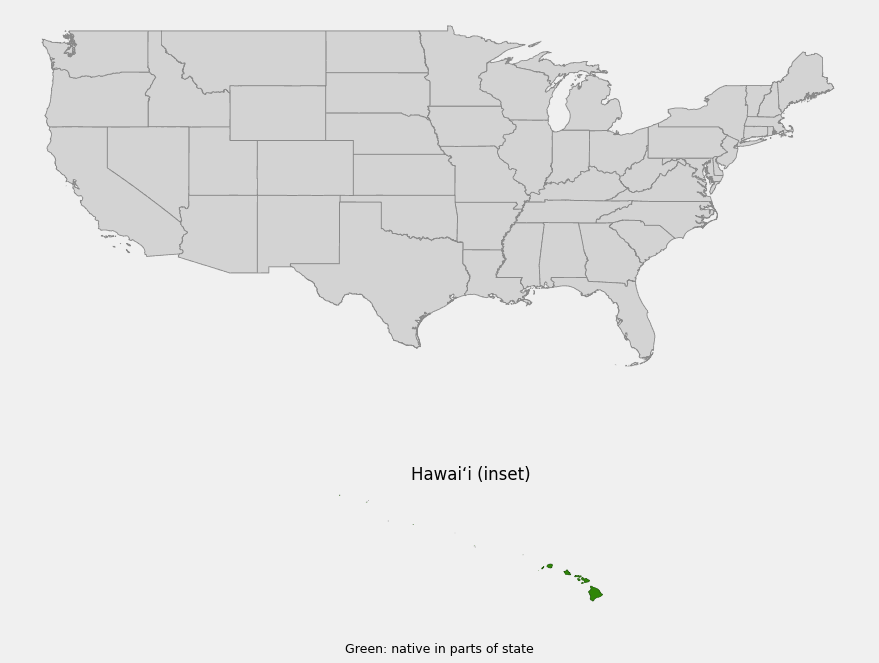
📋 Regional plant lists featuring ʻAhakea Lau Nui: Hawaii
Growing & Care Guide
ʻAhakea lau nui is grown mainly by Hawaiian native plant enthusiasts and forest restoration projects, not as a general-purpose landscape tree, and it can be slow to find commercially.
Light
It tolerates partial shade to partial sun, reflecting its role as a canopy and subcanopy tree within mixed native mesic and wet forest, rather than a species adapted to fully open, exposed sites.
Soil & Water
Moist, well-drained forest soils suit it best, with moderate to high water needs that reflect its mesic-to-wet forest origins; it is not a drought specialist in the way some dry-forest Hawaiian natives are.
Planting Tips
Plant it as part of a layered native forest planting alongside other canopy and subcanopy associates, since it is naturally a component of complex, multi-species forest rather than a stand-alone specimen tree. Protecting young plants from competition by invasive weeds helps establishment, since Hawaiian mesic and wet forest understories are especially vulnerable to invasion.
Pruning & Maintenance
Minimal pruning is needed beyond removing dead or damaged wood; mature trees are slow-growing and long-lived, and heavy shaping is neither necessary nor appropriate for this forest species.
Propagation
Propagation is typically from seed collected from ripe purplish-black fruit; as with many native Hawaiian trees, fresh seed generally germinates more reliably than stored seed, and seedlings grow slowly in their first years. Most propagation happens through dedicated Hawaiian native plant nurseries rather than casual home cultivation.
Pests & Problems
No major pest or disease problems are well documented specifically for ʻahakea lau nui, but like other native Hawaiian forest trees it is vulnerable to competition from invasive plants in the understory and to habitat degradation from feral ungulates, both of which limit natural seedling establishment outside protected forest reserves.
Landscape & Conservation Uses
- Native forest restoration plantings in mesic and wet forest zones
- Mixed native canopy gardens alongside koa and ʻōhiʻa lehua
- Specialty native collections focused on traditional Hawaiian hardwoods
Wildlife & Ecological Value
ʻAhakea lau nui’s small fleshy fruit likely provides food for native Hawaiian forest birds, continuing a seed dispersal relationship shared with many other native Hawaiian fruiting trees, though as with much of Hawaiʻi’s native flora, documentation of specific pollinator and disperser relationships for this species is limited.
Ecosystem Role
As old ʻahakea lau nui trees mature, their thick, moss-covered trunks and buttressed roots create microhabitat for native epiphytic ferns and other forest organisms, adding structural complexity to mesic and wet forest that supports a wider community of native species than younger, simpler forest stands.
Cultural & Historical Uses
Early Hawaiians valued ʻahakea for its dull orange-brown wood, which deepened to a rich dark gold color when rubbed with kukui nut oil. This attractive, workable wood was used for canoe parts, particularly gunwales, as well as for poi pounding boards, canoe paddles, and door frames — applications that took advantage of both its appearance and its structural strength.
As one of several native Hawaiian hardwood trees used in traditional woodworking, ʻahakea lau nui sits alongside other utility species documented in our guides to canopy trees in Hawaii and identifying Hawaii’s native and introduced trees.
Frequently Asked Questions
What does “ahakea lau nui” mean?
“Lau nui” means “large leaf” in Hawaiian, distinguishing this species from other native Bobea species that share the general name ʻahakea but have smaller leaves.
Is ʻahakea lau nui the same as other ahakea species?
No. The genus Bobea, endemic to Hawaiʻi, includes several species that all share the common name ahakea; Bobea elatior is distinguished as ʻahakea lau nui for its comparatively large leaves.
Why was ʻahakea wood used for canoe gunwales?
Its dense, workable wood held up well to the structural demands of canoe construction, and its attractive gold color when treated with kukui oil made it a favored choice for visible parts like gunwales and paddles.
Can I buy ʻahakea lau nui for my garden?
It is rarely available through general nurseries. It is grown mainly through Hawaiian native plant specialists and forest restoration programs rather than mainstream retail channels.
Is ʻahakea lau nui endangered?
It is not federally listed as threatened or endangered, but like most native Hawaiian mesic and wet forest trees, it has become uncommon as forest habitat has been reduced and fragmented across the islands.
Why do old ʻahakea lau nui trees sometimes have ferns growing on them?
Mature trees develop thick, moss-covered trunks and buttressed roots that collect leaf litter and moisture, creating ideal conditions for native epiphytic ferns to take hold — a common feature of old-growth individuals in wetter Hawaiian forest.

Looking for a nursery that carries ʻAhakea Lau Nui?
Browse our native plant nursery directory: Hawaii