Kāwaʻu (Zanthoxylum dipetalum)
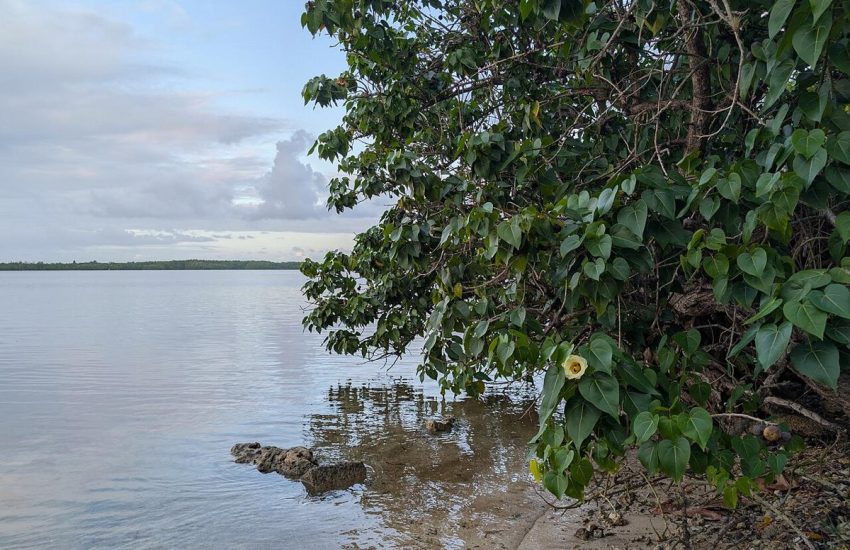
Zanthoxylum dipetalum, called kāwaʻu or aʻe in Hawaiian, is a rare native tree in the citrus family (Rutaceae) — the same genus that produces Sichuan pepper in Asia. It grows wild only in Hawaiian forests, on a handful of the islands, and is uncommon enough that most gardeners on the mainland will never have heard of it. No verified, freely licensed photograph of this species could be located for this guide; if you know of one, please let us know so we can add it.
Kāwaʻu is not a plant you will find at a typical garden center. It belongs to Hawaiʻi’s dry-to-mesic forest community, growing alongside better-known natives like koa and māmane, and it is primarily of interest to native-forest restoration projects, botanical gardens, and gardeners on the islands who are specifically building out a native plant collection. A separate, much rarer variety of this species, Zanthoxylum dipetalum var. tomentosum, is restricted to a single volcano on Hawaiʻi Island and is federally listed as Endangered; the widespread variety described in this guide is not federally listed but is still considered vulnerable and uncommon across its range.
Part of what makes kāwaʻu worth knowing about is precisely that it is not famous. Hawaiʻi’s native flora includes hundreds of species that rarely make it into general-interest guides because they lack the dramatic flowers of ʻōhiʻa lehua or the cultural prominence of koa, yet they are just as integral to intact native forest. Kāwaʻu is a useful example of this quieter category: a real, functioning part of Hawaiian forest ecology that deserves documentation even without a marketable flower or a well-photographed profile.
Identification
Kāwaʻu is a tree reaching roughly 30 to 50 feet tall, with a trunk that can grow to about a foot in diameter in old individuals. Like many members of the citrus family, the wood has a yellowish cast, which is reflected in the common name kāwaʻu and in historical uses of related trees for carved implements.
Leaves
Leaves are alternate and compound, typically made up of three to seven leathery, elliptical leaflets with smooth edges. Hold a leaflet up to the light and you can see small translucent oil glands dotting the surface — a classic citrus-family trait responsible for the aromatic scent of crushed foliage.
Flowers
Flowers are small, greenish, and borne in branched clusters at the leaf axils, in the understated style typical of Rutaceae; they are easy to overlook compared with showier Hawaiian natives.
Fruit
The fruit is a small, fleshy-to-woody follicle that splits open at maturity to expose a shiny black seed, another trait shared with its Sichuan pepper relatives, though Hawaiian kāwaʻu is not used as a culinary spice.
Quick Facts
| Scientific Name | Zanthoxylum dipetalum |
| Family | Rutaceae (Citrus) |
| Plant Type | Tree |
| Mature Height | 30–50 ft |
| Growth Rate | Slow to moderate |
| Sun Exposure | Partial Sun to Shade |
| Water Needs | Moderate |
| Soil Type | Well-drained forest soils |
| Flower Color | Greenish, inconspicuous |
| Conservation Status | Vulnerable (IUCN); Imperiled (NatureServe); var. tomentosum is federally Endangered |
| USDA Hardiness Zones | 10–11 |
Native Range
Kāwaʻu is endemic to the Hawaiian Islands, found on several of them — Kauaʻi, Oʻahu, Maui, and Hawaiʻi — in dry to mesic forest, and sometimes along the margins of wetter forest, at elevations of roughly 850 to 4,200 feet. It is nowhere common, and the separate variety tomentosum is known only from the slopes of Hualālai on Hawaiʻi Island, where fewer than 30 individuals survive. It is not native outside Hawaiʻi.
Across its range it grows in the company of other Hawaiian forest natives, including Koa (Acacia koa), Māmane (Sophora chrysophylla), and ʻŌhiʻa Lehua (Metrosideros polymorpha), forming part of the diverse mixed forest canopy that once covered far more of the islands than it does today.
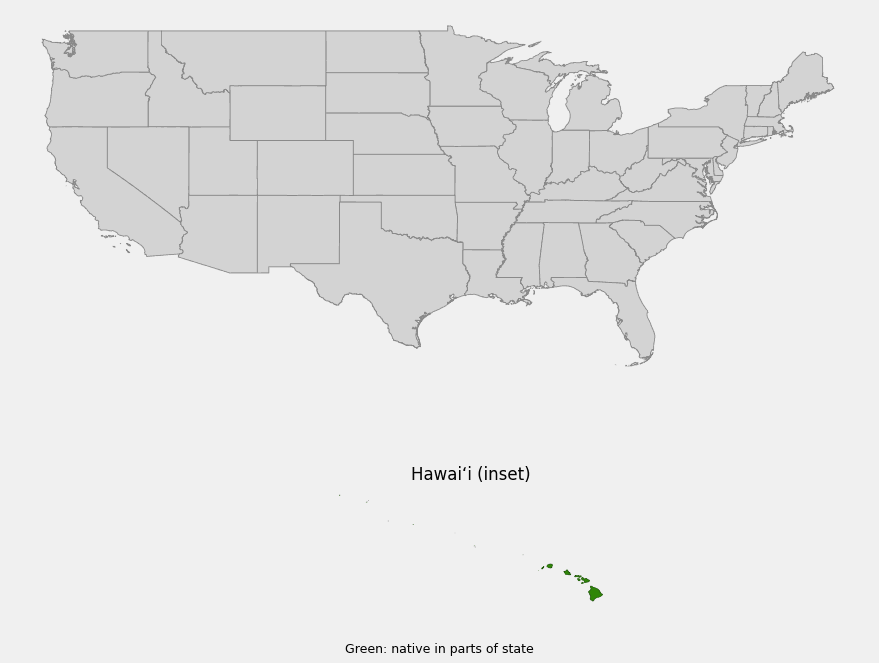
📋 Regional plant lists featuring Kāwaʻu: Hawaii
Growing & Care Guide
Kāwaʻu is grown almost exclusively as part of native Hawaiian forest restoration or specialty native collections, not as a mainstream landscape tree, and seed or seedling stock can be hard to source. If you are on the islands and want to try it, work with a native plant nursery or restoration group familiar with propagating Hawaiian forest trees.
Light
In the wild it grows under full forest canopy as well as in more open dry forest, so it tolerates a range of light from partial shade to fairly open sun, especially once established.
Soil & Water
It prefers well-drained forest soils with moderate moisture; it is not adapted to constantly wet or waterlogged ground, reflecting its dry-to-mesic forest origins.
Planting Tips
Because this species is uncommon everywhere it grows, any planting is best treated as a conservation-minded restoration effort rather than ordinary landscaping — pair it with other native canopy associates such as koa and māmane rather than planting it in isolation.
Pruning & Maintenance
Established trees need little intervention beyond removing dead wood; as a slow-growing forest tree, kāwaʻu is not suited to heavy shaping or hedging.
Propagation
Propagation is typically from seed collected from the shiny black seeds inside the mature follicles, though as with many Hawaiian forest trees, seed can have inconsistent germination and may benefit from fresh collection and prompt sowing rather than long storage. Because wild stock is uncommon and scattered, most seed sourced for restoration work comes through coordinated native plant nurseries and conservation seed banks on the islands rather than casual collection.
Pests & Problems
No major pest or disease problems are well documented for kāwaʻu specifically, but like other native Hawaiian trees it can be vulnerable to competition from aggressive non-native plants, as well as to the broader pressures of feral ungulates (goats, pigs, and deer) that browse native forest understory and prevent seedling establishment across much of Hawaiʻi’s dry and mesic forest.
Landscape & Conservation Uses
- Native forest restoration plantings within its historic Hawaiian range
- Botanical and conservation collections focused on Hawaiian flora
- Mixed native canopy plantings alongside koa, māmane, and ʻōhiʻa
Wildlife & Ecological Value
As with many Hawaiian forest trees, kāwaʻu’s small flowers and fruit are part of a forest ecosystem that evolved alongside native insects and birds found nowhere else on Earth. Maintaining mixed-species native forest, rather than monocultures of a single showy tree, helps support the full web of native pollinators and seed dispersers that depend on diverse canopy structure.
Ecosystem Role
Kāwaʻu is one of many lesser-known native trees that fill out the structure of Hawaiian dry and mesic forest alongside more famous species like koa and ʻōhiʻa. Its continued presence, however inconspicuous, is part of what makes these forest communities functionally intact rather than reduced to a handful of dominant species.
Hawaiian dry and mesic forests overall have lost the great majority of their original extent to agriculture, grazing, and invasive grasses that fuel wildfire, and the understory species that once filled these forests — including less conspicuous trees like kāwaʻu — have often declined even faster than the better-known canopy dominants, simply because fewer people notice or prioritize them. Conservation attention tends to follow showy or culturally prominent species, which makes documentation projects like this one useful for drawing attention to the quieter members of the native flora that still need protecting.
Cultural & Historical Uses
The yellowish wood characteristic of Zanthoxylum species, reflected in the Hawaiian name kāwaʻu, was traditionally associated with carved implements among related Hawaiian hardwoods, though detailed, verified records of specific traditional uses of this particular species are limited. Its rarer relative, Zanthoxylum dipetalum var. tomentosum, is documented as having been used by early Hawaiians for tools and signaling instruments, a use likely shared more broadly within the genus given the similar wood properties.
Today kāwaʻu’s main significance is as a component of Hawaiʻi’s native forest biodiversity rather than as a plant with ongoing traditional or commercial use. You can read more about the broader diversity of Hawaiian native trees in our guides to canopy trees in Hawaii and flowering trees of Hawaii.
Frequently Asked Questions
Is kāwaʻu related to the Sichuan pepper used in cooking?
Yes, it is in the same genus, Zanthoxylum, as the plants that produce culinary Sichuan pepper in Asia, but the Hawaiian species is not used as a spice.
Can I buy kāwaʻu for my garden?
It is rarely, if ever, sold commercially. It is mainly grown through native Hawaiian forest restoration projects and specialty native plant collections rather than general nurseries.
Is kāwaʻu endangered?
The species as a whole is considered vulnerable and uncommon, but it is not federally listed. A separate, much rarer variety, Zanthoxylum dipetalum var. tomentosum, restricted to Hawaiʻi Island’s Hualālai volcano, is federally listed as Endangered with fewer than 30 known individuals.
What does kāwaʻu look like compared with other Hawaiian trees?
It is a mid-sized forest tree with compound, leathery leaflets dotted with tiny oil glands, small greenish flowers, and a small black-seeded fruit — subtler and less showy than famous Hawaiian natives like ʻōhiʻa lehua or koa.
Why are there no photos of kāwaʻu on this page?
No freely licensed photograph that clearly documented this species was available at the time this guide was written. This is common for lesser-known Hawaiian natives that are not widely photographed; we will add images if a verified, properly licensed photo becomes available.
Does kāwaʻu need to be planted with other native species?
It is not strictly required, but because kāwaʻu is a forest-interior species adapted to growing within a diverse native canopy, restoration plantings that include companion species such as koa, māmane, and ʻōhiʻa lehua tend to recreate conditions closer to its natural habitat than a solitary specimen planting.

Looking for a nursery that carries Kāwaʻu?
Browse our native plant nursery directory: Hawaii