Loulu (Pritchardia maideniana)
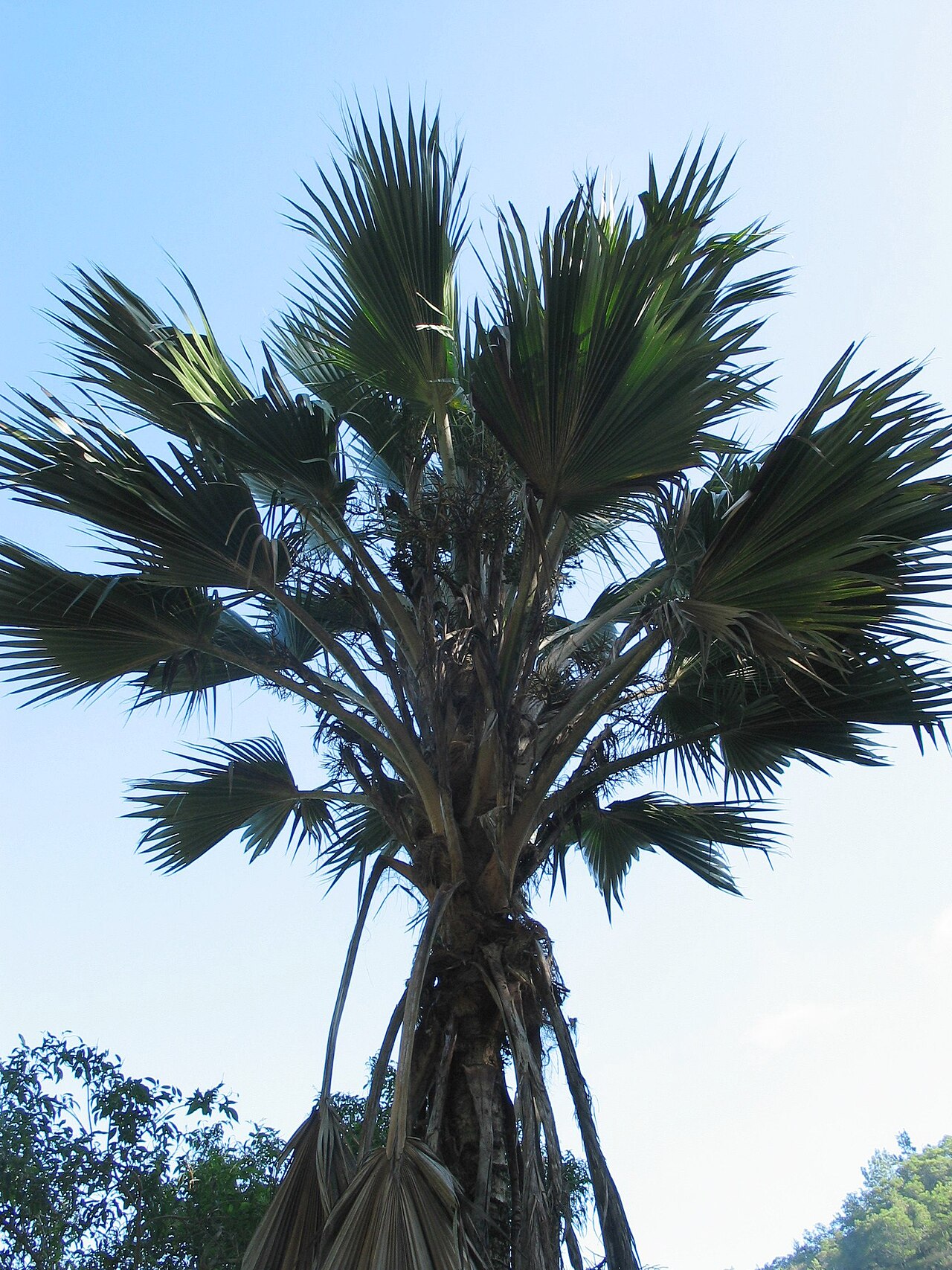
Pritchardia maideniana is a large Hawaiian fan palm known simply as Loulu, or sometimes hawane, historically found along the coasts and mountains of Hawaiʻi Island. For many years it was treated as a variety of the closely related Pritchardia affinis, but current taxonomic authorities — including USDA PLANTS and Plants of the World Online — now recognize P. maideniana as the accepted name, with P. affinis itself placed in synonymy under it.
This is a big, handsome palm, reaching 33 to 82 feet tall, with broad, undulating fan leaves that are green above and noticeably pale green below, dusted with a few small yellow scales. Long, soft, tangled hairs trail along the folds of the leaf segments down to the leafstalk, giving the crown a slightly shaggy, textured look compared to some of its smoother-leaved relatives.
Loulu is federally listed as Endangered, and most of the individuals that remain in the wild grow in places under heavy pressure from development, which makes every garden and restoration planting meaningful for the species’ survival. On the west side of Hawaiʻi Island it has long been grown as a landscape palm, and conservation nurseries now propagate it from seed of known wild origin for outplanting projects across the islands.
Identification
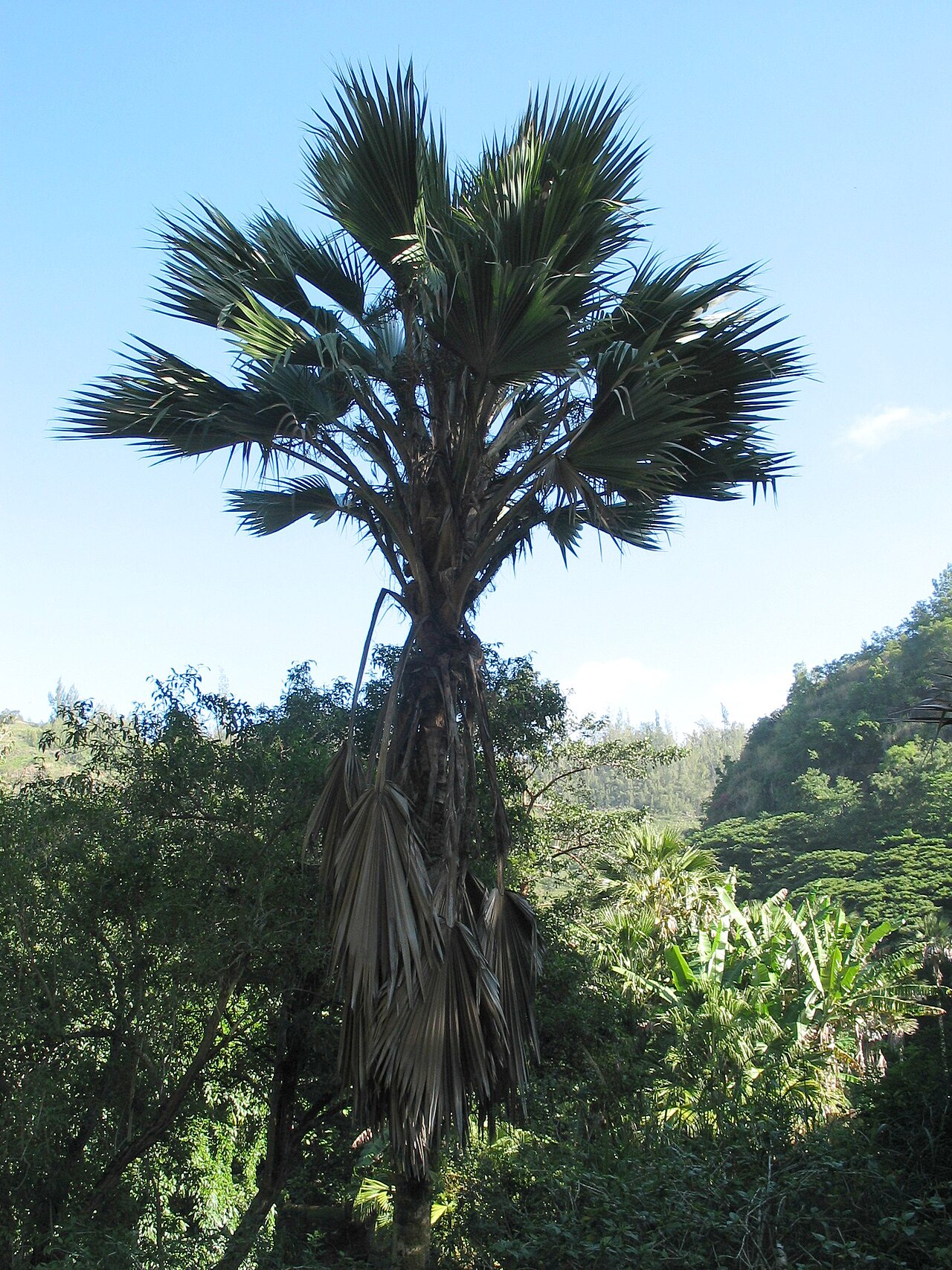
Loulu is a solitary, single-trunked fan palm growing to a substantial 33 to 82 feet at maturity, with a stout gray trunk that thickens with age and a dense, rounded crown of large leaves.
Leaves
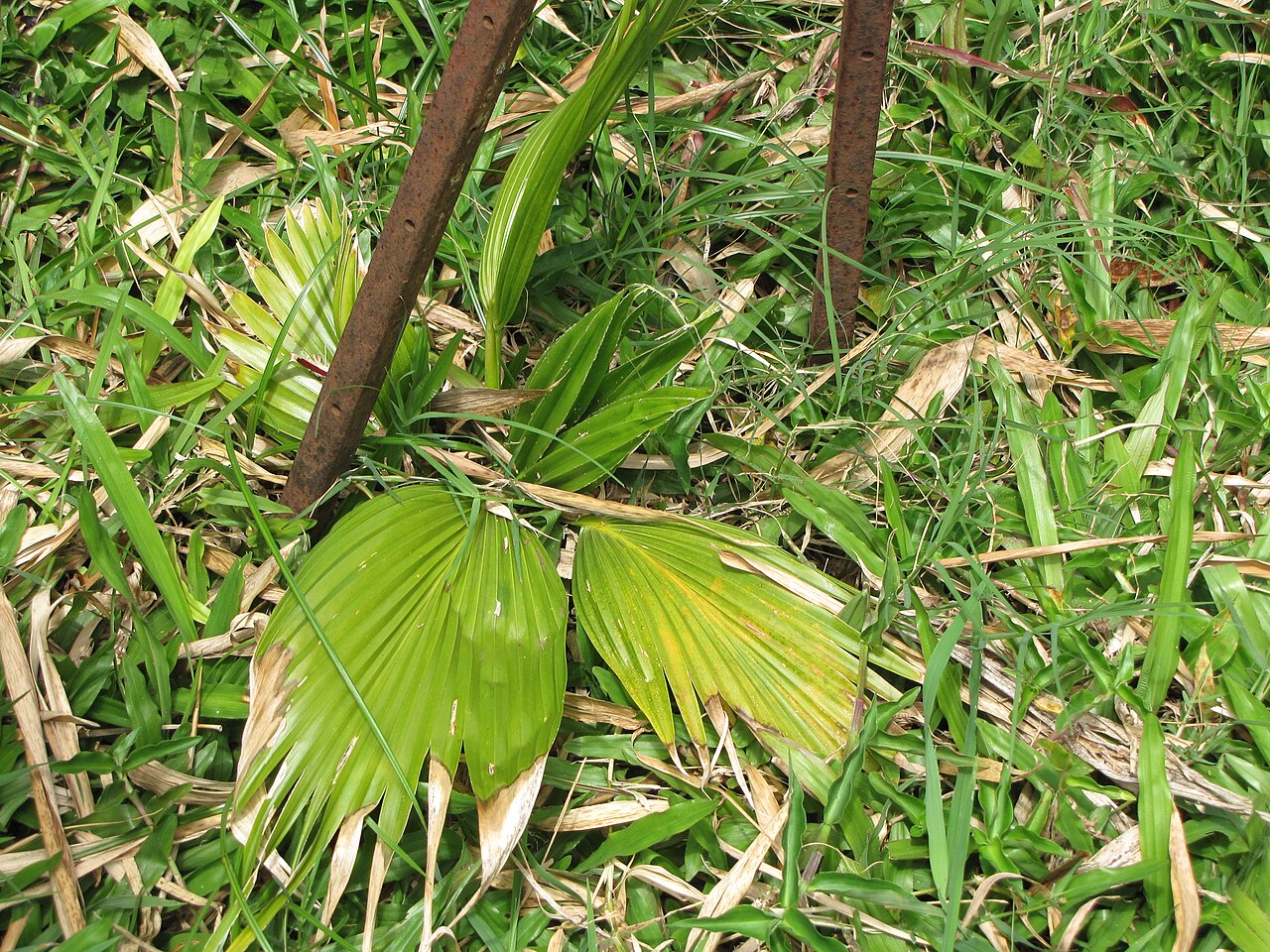
The leaf blades are orbicular to wedge-shaped, hairless on the surface, green above and pale green below, and lightly dusted with small yellow scales. The blade surface has a distinctive undulating, slightly wavy texture rather than lying perfectly flat. Pale, long, soft, tangled hairs extend along the folds between leaf segments down to the base of the leafstalk, a texture detail that helps separate this species from some of its smoother Hawaiian relatives.
Flowers
Like other loulu, this species produces branched flower stalks that emerge from among the leaf bases and extend out past the leaves, carrying numerous small cream to pale yellow flowers in a much-branched inflorescence typical of the genus.
Fruit
The fruit is brown to black, almost round, and relatively small for a palm this large — about 0.9 inch (2.3 cm) across. Each fruit holds a single seed, and a mature palm can produce a heavy annual crop.
Quick Facts
| Scientific Name | Pritchardia maideniana |
| Family | Arecaceae (Palm) |
| Plant Type | Solitary Fan Palm |
| Mature Height | 33–82 ft |
| Mature Spread | Crown 15–20 ft across |
| Growth Rate | Slow to moderate |
| Sun Exposure | Full sun |
| Water Needs | Moderate; drought tolerant once established |
| Soil Type | Well-drained volcanic soils |
| Fruit | Brown-black, nearly round, about 0.9 in. across |
| Conservation Status | Federally Endangered |
| USDA Hardiness Zones | 10b–12 |
Native Range
Loulu is endemic to the island of Hawaiʻi. Historically it was known from the Kohala mountains and along both the southeastern and western coasts of the island, with remaining wild populations today concentrated in South Kona, where many surviving trees grow on land under pressure from development. It is not native to Oʻahu, Maui, or any other Hawaiian island, nor to the continental United States, though it has been planted as a landscape and restoration palm well beyond its historic native range, including on Maui and the island of Kahoʻolawe as part of dryland forest recovery projects.
In its native West Hawaiʻi range, Loulu grows in dry to mesic lowland and coastal habitat, tolerating the leeward island’s long dry seasons once established — a trait that has made it a popular, tough landscape specimen on that side of the island, quite different from the consistently wet forest favored by some of its sibling loulu species.
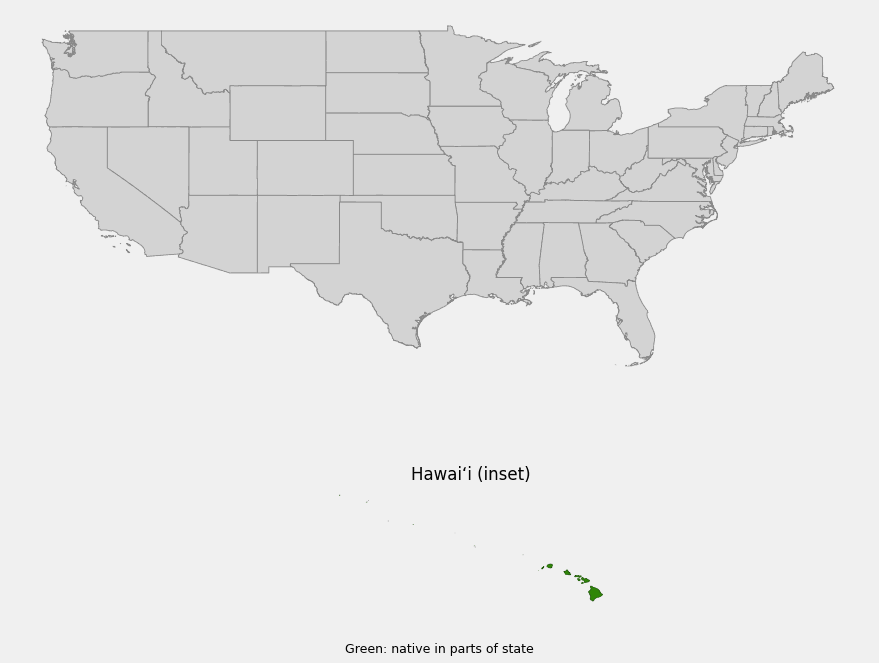
📋 Regional plant lists featuring Loulu: Hawaii
Growing & Care Guide
Loulu is one of the more garden-friendly native loulu species, long favored as a landscape palm on leeward Hawaiʻi Island for its tolerance of dry conditions once established and its imposing, undulating fan crown.
Light
Give it full sun; this species grows naturally in open, dry coastal and lowland habitat rather than shaded wet forest, and performs best with plenty of direct light.
Soil & Water
Plant in well-drained volcanic soil. Water regularly while young to help the palm establish a strong root system, but expect good drought tolerance in mature trees, reflecting the long dry seasons typical of its native West Hawaiʻi range.
Planting Tips
Because so much of the remaining wild population grows on land valued for development, every cultivated tree matters for the species’ long-term survival. Where possible, source seedlings from reputable conservation nurseries propagating from documented wild seed, and consider Loulu for dry-forest restoration plantings as well as ordinary landscaping.
Pruning & Maintenance
Remove dead fronds as they brown and droop below the crown. Otherwise this is a low-maintenance palm once established, needing little beyond occasional cleanup.
Landscape Uses
- Specimen palm for dry to moderate-rainfall landscapes, especially on leeward Hawaiʻi Island
- Dryland forest restoration plantings within and beyond its historic South Kona range
- Coastal and lowland landscaping, given its tolerance for dry, sunny sites
- Native palm collections alongside other endemic Pritchardia species
Wildlife & Ecological Value
Loulu’s fruit crop provides food for forest and shoreline birds where mature trees still stand, and historically would have been dispersed more widely by native fruit-eating birds now reduced across the islands. As with other Pritchardia species, introduced rats are a major threat to natural regeneration, since they consume fruit and seeds before seedlings can establish.
Ecosystem Role
As one of the larger native palms of leeward Hawaiʻi Island’s dry and coastal lowland habitat, Loulu once formed a conspicuous part of a plant community that has been drastically reduced by development, grazing, and fire. Restoration plantings on Maui and Kahoʻolawe, outside its historic native range, aim to rebuild dryland forest structure using this and other hardy native species suited to leeward island conditions.
Cultural & Historical Uses
Loulu palms held significant practical value for Native Hawaiians, who wove the broad, tough fan leaves into thatching, fans, baskets, and mats, and used the sturdy trunks as house posts. The fruit kernel was eaten, and loulu leaf bud and inner tissue were combined with other native plants in traditional Hawaiian healing practices recorded by ethnobotanists — a historical use, not a modern medical recommendation.
Pritchardia taxonomy in this part of the genus has shifted over time: for decades this species circulated under the name Pritchardia affinis, and it is still sometimes found under that name in older nursery lists and plant guides, including our own guide to Hawaiʻi’s rare native flowering trees, which covers several of the islands’ most threatened endemics. Botanists studying Hawaiʻi’s loulu continue to refine the boundaries between closely related species such as this one and Loulu Lelo (Pritchardia hillebrandii), reflecting how much remains to be learned about this iconic Hawaiian palm genus.
Frequently Asked Questions
Is Loulu the same plant as Pritchardia affinis?
Essentially yes. Pritchardia affinis is now treated as a synonym of Pritchardia maideniana by USDA PLANTS and Plants of the World Online, so plants and references labeled “affinis” are this same species under an older name.
How big does this palm get?
Quite large for a Hawaiian native palm — mature trees reach 33 to 82 feet tall, with a thick, sturdy trunk and a full, rounded crown of undulating fan leaves.
Does Loulu need a wet, rainforest climate to grow?
No. Unlike some other native loulu species that need consistently wet forest conditions, this species is naturally adapted to dry to mesic lowland and coastal habitat on leeward Hawaiʻi Island, and tolerates drought well once established.
Why is Loulu endangered if it’s a popular landscape palm?
Cultivated specimens are common, but the wild population is small and concentrated in South Kona on land that is often targeted for development, and wild seedling recruitment is suppressed by rats eating the fruit. Garden and restoration plantings help, but they do not replace the need to protect remaining wild habitat.
Can I plant Loulu outside of Hawaiʻi Island?
Yes, within Hawaiʻi — it has been successfully used in dryland restoration projects on Maui and Kahoʻolawe. Outside Hawaiʻi it needs a frost-free, warm climate similar to its native range to thrive.

Looking for a nursery that carries Loulu?
Browse our native plant nursery directory: Hawaii