Sassafras Leaves Changing Color Early: Seasonal Change or Stress?
Last updated: November 6, 2026
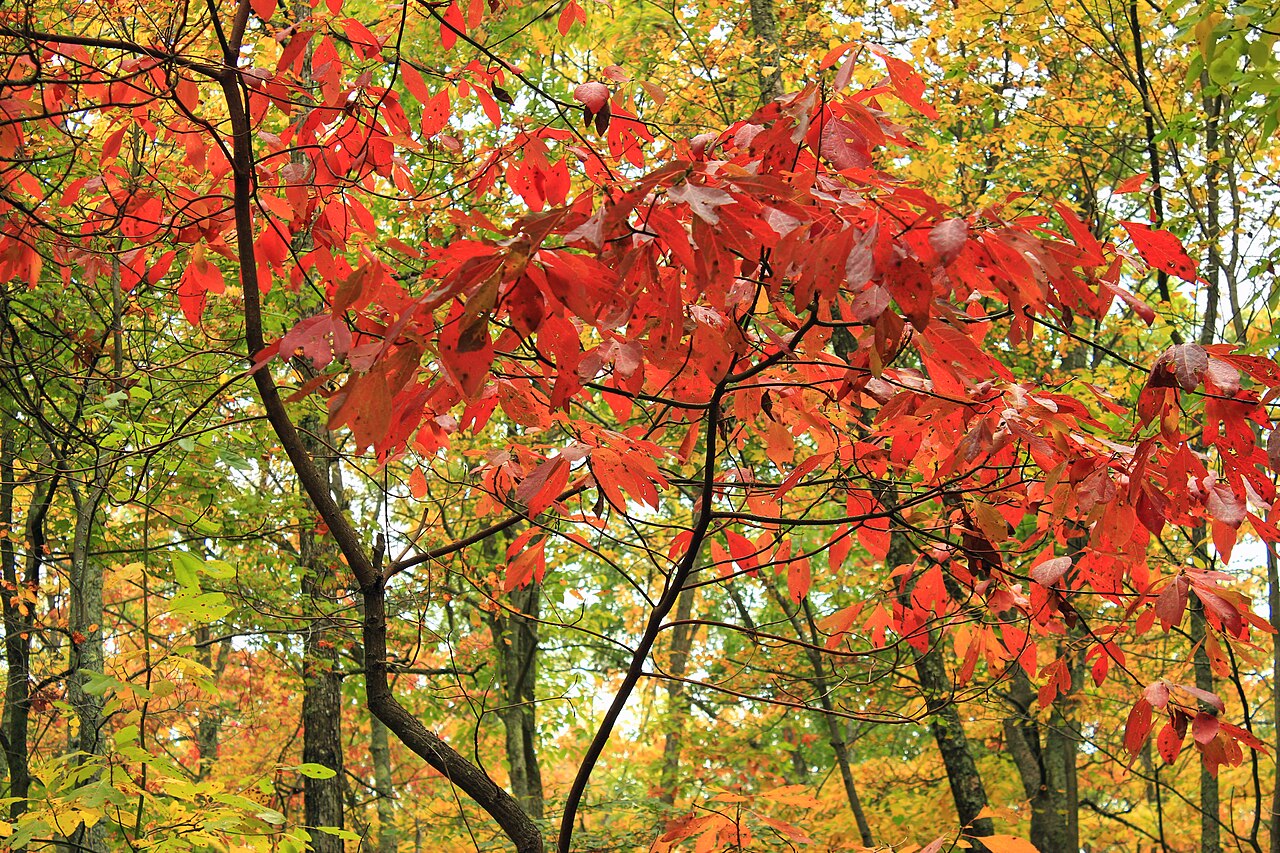
Your sassafras is turning orange or red, and it’s still summer. The rest of the yard is green.
Sassafras is famous for its fall color, so a few early leaves can be easy to dismiss. Sometimes that’s fine. But color that shows up weeks ahead of schedule can be the tree’s way of saying something is wrong.
This guide helps you tell normal seasonal change from stress, and spot the one serious disease that also turns sassafras red early.
The Short Answer
Early color on sassafras (Sassafras albidum) is usually one of these:
- Normal timing, especially in a dry or hot late summer, when many trees color a bit early.
- Drought stress from a dry summer or a dry spell weeks earlier.
- Root or trunk problems: deep planting, girdling roots, mower wounds, compaction, or construction damage.
- A recent transplant still short of roots.
- Yellowing between green veins, which points to chlorosis on alkaline soil.
- Laurel wilt in parts of the eastern US: sudden reddish wilting that looks like fall color. This one needs fast attention.
How Normal Fall Color Works
Fall color isn’t triggered by cold alone. University of Wisconsin Extension explains that by late August, trees have already moved past their active growth period and are preparing for dormancy. That process is driven by day length.
As chlorophyll breaks down, other pigments such as yellow and orange show through. NC State Extension describes sassafras fall color as yellow, orange, and red. The Morton Arboretum lists early and mid-fall as its season of interest.
Weather shifts the timing. Purdue’s Landscape Report notes that high heat and drought can make colors appear earlier or duller than usual for a species. So one early year across a whole neighborhood is often just the season.
Seasonal Change or Stress?
| Other sassafras nearby coloring too | Likely seasonal or weather-driven. |
| Only your tree is coloring | Possible stress. Work through the checks below. |
| Color appears in July or early August | More likely stress than season. |
| Same tree colors early every year | Chronic root or site problem. |
| Yellow leaves with green veins | Chlorosis, often from high soil pH. |
| Leaves turn red and wilt within days | Possible laurel wilt. See Check 6. |
Check 1: Compare It to Its Neighbors
Start by looking around. Are other sassafras in your area, or along nearby roadsides and woods, starting to color?
Purdue notes that individual trees may color earlier than others of their species in the same area, and that trees showing color in August, September, or even early October may be signaling trouble. If yours is the only one, take it seriously.
Also note which part of the tree is coloring. One branch or one side often points to a problem in the roots or trunk on that side. The whole canopy at once suggests a broader water or root issue.
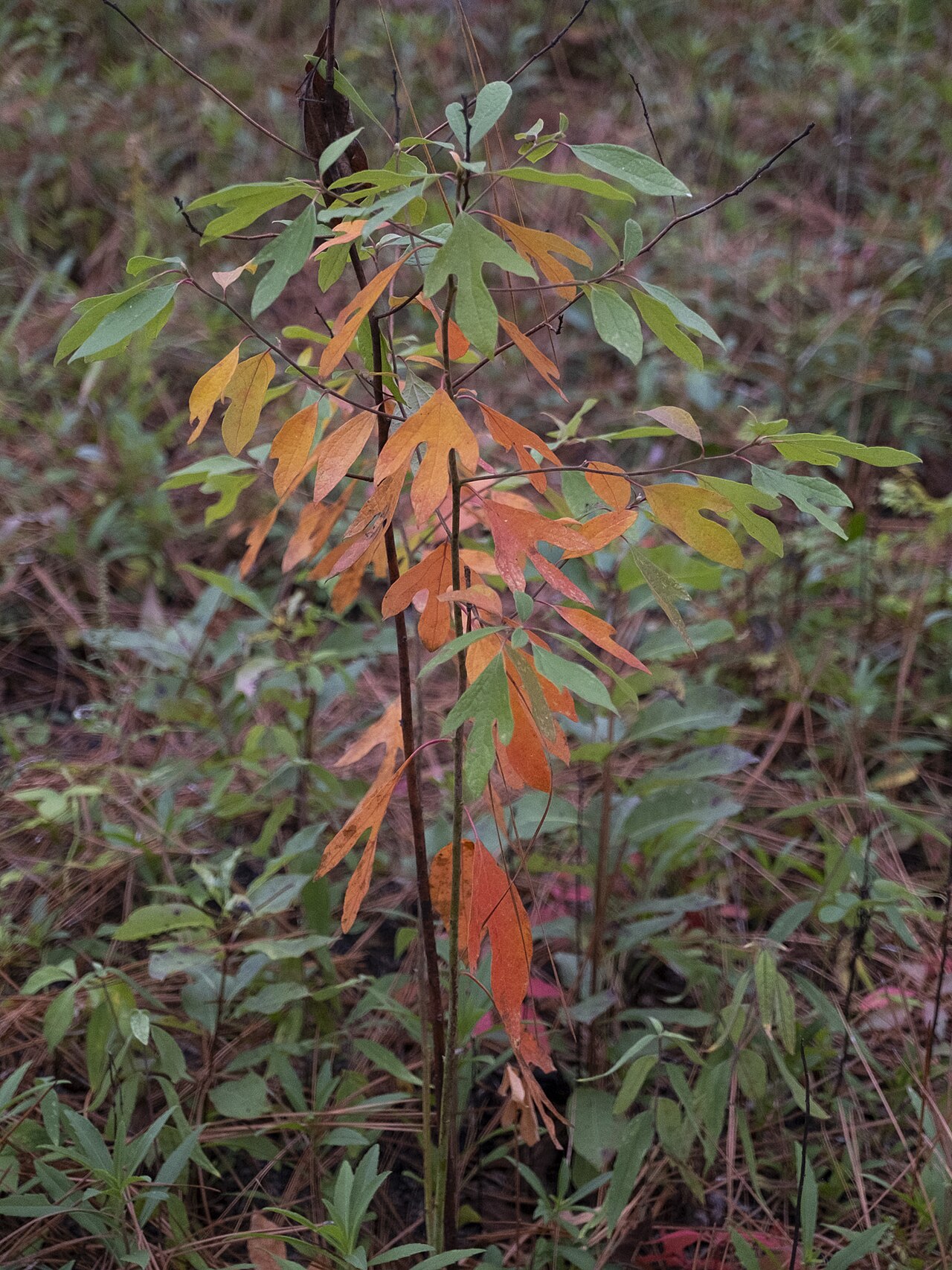
Check 2: Think Back on Rainfall
Illinois Extension calls drought a common culprit behind early fall color. Dry spells in spring or late summer can both leave trees short of water heading into fall.
Wisconsin Extension adds an important point: tree symptoms lag behind their causes. What you see now may have started months or even years ago.
Sassafras is drought tolerant once established, according to NC State. But young trees, recent transplants, and trees in shallow or compacted soil are much less forgiving. If it’s been dry, water deeply at the root zone. Wisconsin notes trees won’t instantly turn green again, but watering helps prevent further stress.
A layer of mulch over the root zone helps hold moisture. Illinois Extension recommends 2 to 4 inches, kept off the trunk. See our mulching guide for native gardens.
Check 3: Inspect the Trunk Base and Roots
This is where both Purdue and Illinois Extension say to look next. Clear any mulch or grass from the base of the trunk and check for:
- A missing root flare. If the trunk goes straight into the ground, the tree may be planted too deep or the soil grade may have been raised.
- Circling roots. Illinois Extension notes a root circling the trunk can slowly strangle it.
- Wounds at the base. Mower and string trimmer damage cuts the tissue just under the bark that moves water and nutrients.
- Fungi or old scars. Wisconsin Extension notes wood-rot fungi on the trunk indicate past injury.
Mower wounds are common on sassafras because it often grows right at the lawn edge. Damage there can also trigger root sprouts, as our guide to sassafras suckers in the lawn explains.
Check 4: Consider Recent Changes
Think about what’s happened near the tree over the past few years. Purdue asks whether there’s been construction near the tree in the last five years. Wisconsin notes that construction injury can take three to five years to show in the canopy.
Other site stresses Wisconsin lists include heat from nearby pavement, compacted or missing topsoil, and deicing salts building up in the soil.
A newly planted or moved sassafras is a special case. Early color in its first year or two is a common stress sign while roots regrow. See our guides to sassafras drooping after planting and moving a young sassafras for what to check in the root ball.
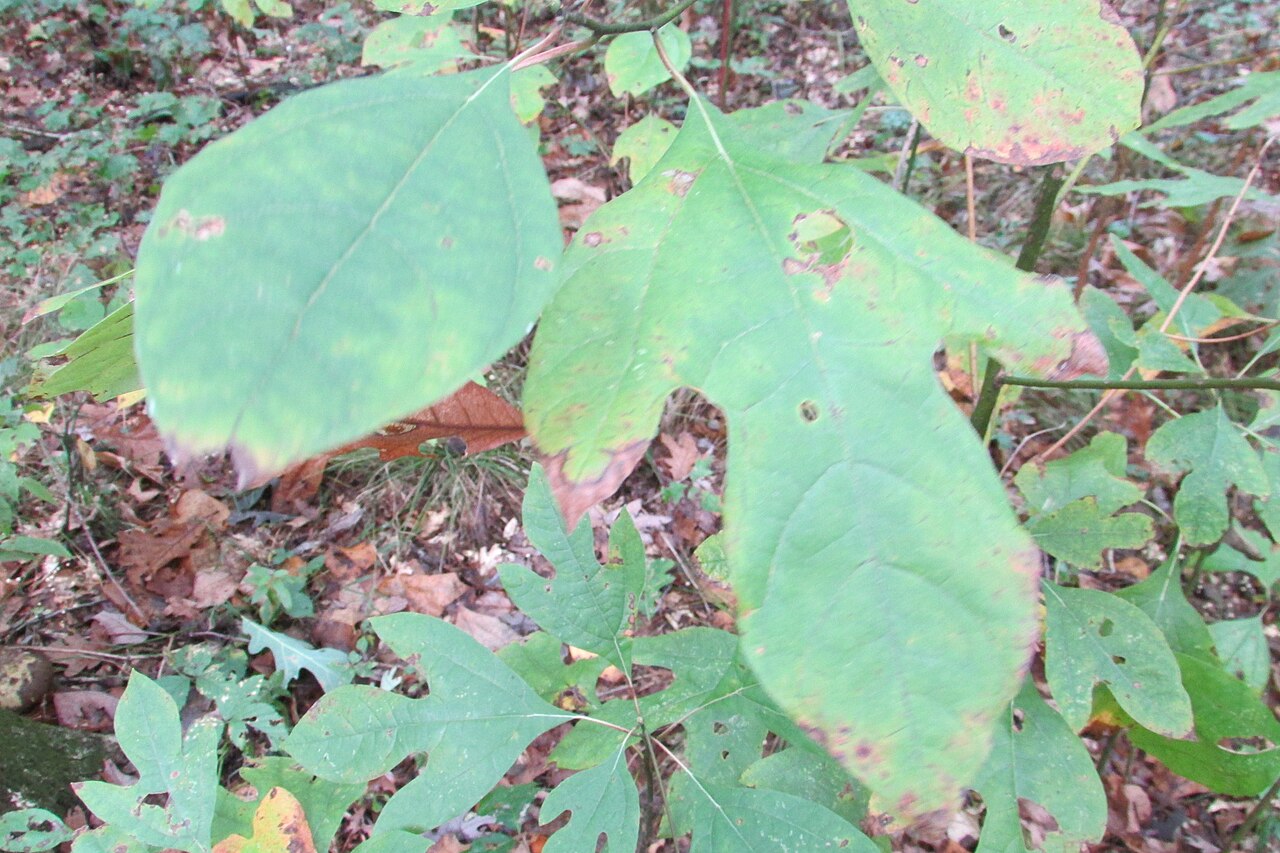
Check 5: Look Closely at the Leaves
Pick a few discolored leaves and look at the pattern. It can point to a cause that isn’t fall color at all.
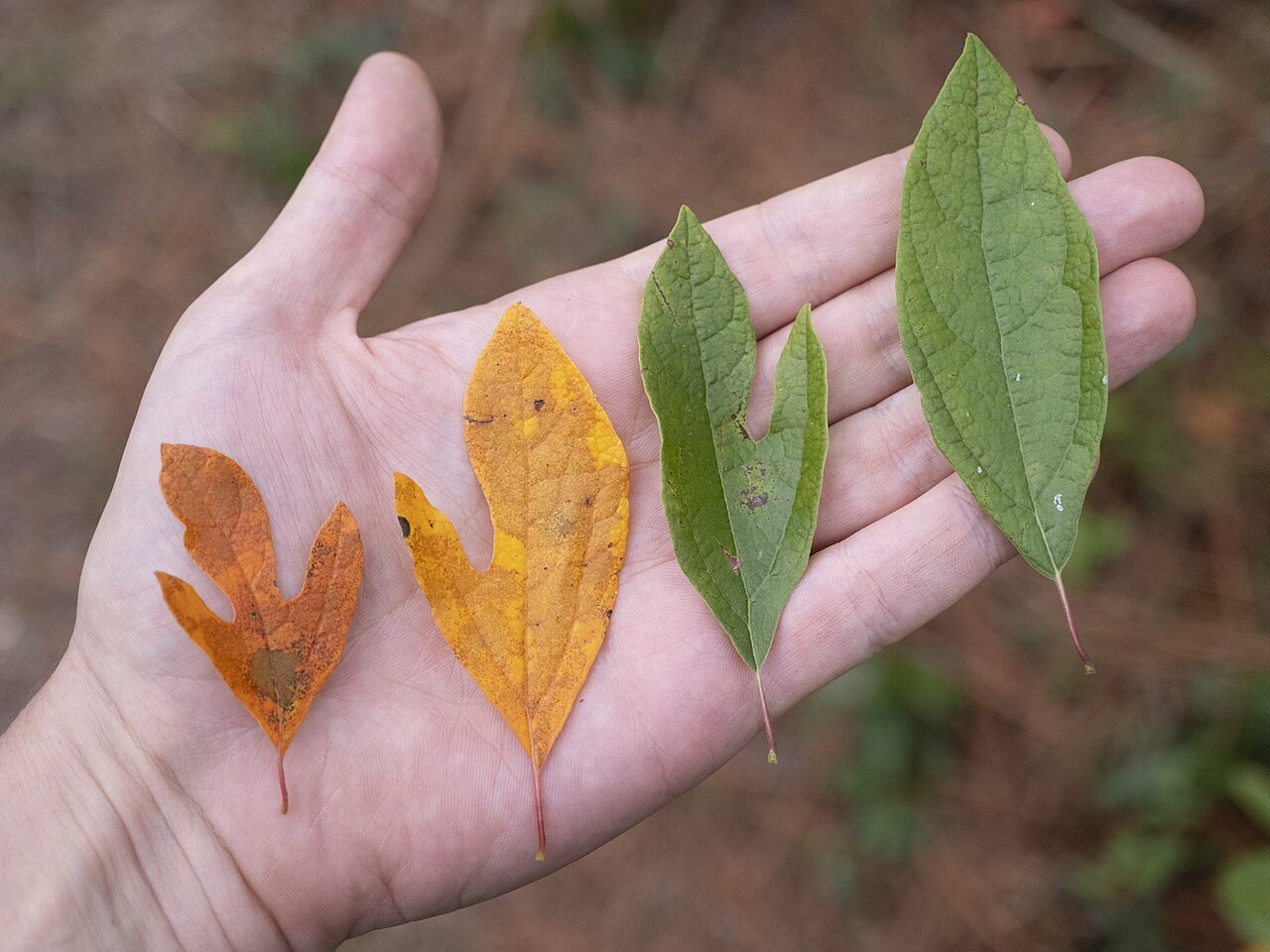
- Yellow leaf with green veins: NC State notes that sassafras leaves may turn yellow while the veins stay green in alkaline soils. The Lady Bird Johnson Wildflower Center also mentions occasional iron chlorosis on high-pH soils. A soil test will tell you the pH.
- Spots or blotches: NC State lists leaf spots among sassafras foliage diseases, and the Morton Arboretum mentions leaf spots and powdery mildew. These are usually cosmetic.
- Holes or lacy, skeletonized leaves: insect feeding. The Morton Arboretum lists Japanese beetle as a possible pest. Chewed leaves may also be caterpillar feeding. The Wildflower Center lists sassafras as a larval host for the spicebush swallowtail, and this native feeding is nothing to treat.
- Even yellow, orange, or red across the leaf: true early fall color, from season or stress.
Many of the same patterns show up on sassafras’s laurel-family relative spicebush. Our guide to spicebush leaves turning yellow in summer covers them.
Check 6: Rule Out Laurel Wilt
This is the check that matters most if you live in the Southeast or nearby. Laurel wilt is a fatal disease of laurel-family trees, spread by the invasive redbay ambrosia beetle and its fungus.
University of Kentucky Extension describes how it shows up on sassafras: sudden wilting and discoloration, with leaves first turning a reddish color that resembles fall color, followed by rapid leaf death. Dead leaves are reddish-brown. Dieback may hit part of the canopy or the whole tree.
NC State Extension notes the symptoms resemble drought stress. Under the bark, the sapwood shows dark streaks running with the grain. Small entry holes and thin “toothpicks” of sawdust may appear on the trunk, though UK notes they can be hard to find.
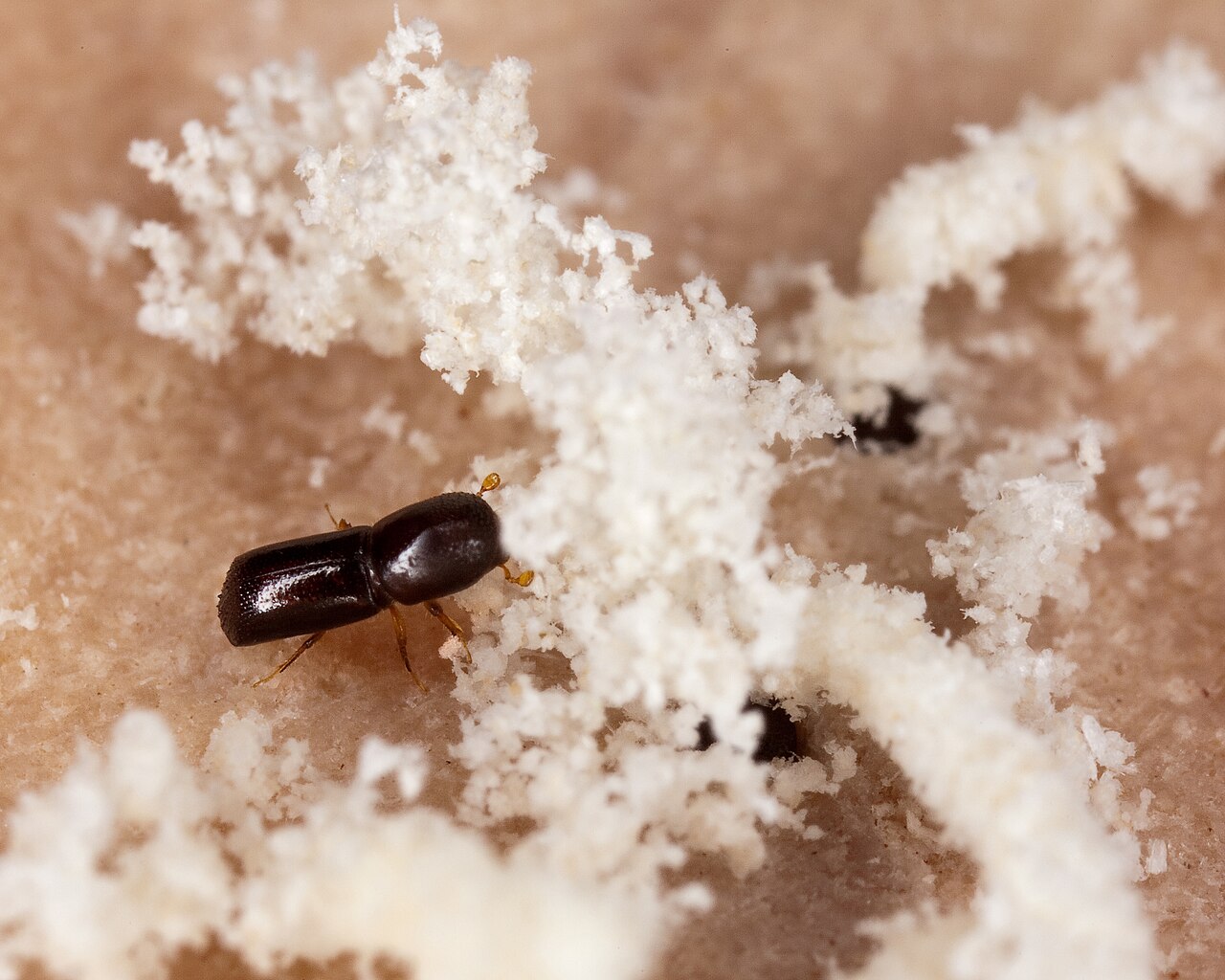
NC State lists sassafras and redbay as the hosts most commonly infested. Laurel wilt spread across the Southeast after it was first detected in Georgia in 2002, and UK Extension reported it in southwestern Kentucky by 2019.
There’s no cure. UK Extension says infected sassafras typically die within several months. If you suspect it, contact your county Extension office or state forestry agency. Don’t move wood or firewood from the tree. A dying tree near a house or driveway should be handled by a professional; see our guide to when sassafras work needs an arborist.
Troubleshooting at a Glance
| Whole neighborhood coloring early after a dry summer | Weather. Water young trees and mulch. |
| One tree coloring early every year | Check root flare, girdling roots and old wounds. |
| Tree planted or moved in the last two years | Transplant stress. Keep the root ball evenly moist. |
| Yellow leaves, green veins | Test soil pH. Chlorosis is likely on alkaline soil. |
| Spots, holes, or rolled leaves | Leaf disease or insects. Usually cosmetic. |
| Sudden red wilt, streaked sapwood | Possible laurel wilt. Contact Extension right away. |
What to Do Now
If it’s weather or drought: water deeply during dry spells, especially for young trees, and keep a mulch ring in place. There’s nothing else to fix.
If it’s a root or trunk problem: pull mulch back from the trunk, keep mowers and trimmers away, and avoid more root damage. Wisconsin Extension advises leaving trunk wounds alone and pruning out dead wood. A large tree with suspected structural problems should be inspected by a trained arborist.
If it’s chlorosis: get a soil test before treating anything. Sassafras prefers acidic soil, so a high-pH site may be a poor long-term match.
If it might be laurel wilt: act quickly. Report it, and don’t move the wood.
Whatever the cause, skip fertilizer as a quick fix. It won’t reverse early color, and a stressed tree with damaged roots can’t use it well.
A Season-by-Season Plan
- Spring: check the root flare and mulch ring. Pull mulch away from the trunk and set mower decks high near the tree.
- Early summer: water young or recently planted trees during dry spells. Note any leaves that look off-color.
- Late summer: compare your tree with others nearby. Look closely at any early-coloring branches, and check for sudden wilting.
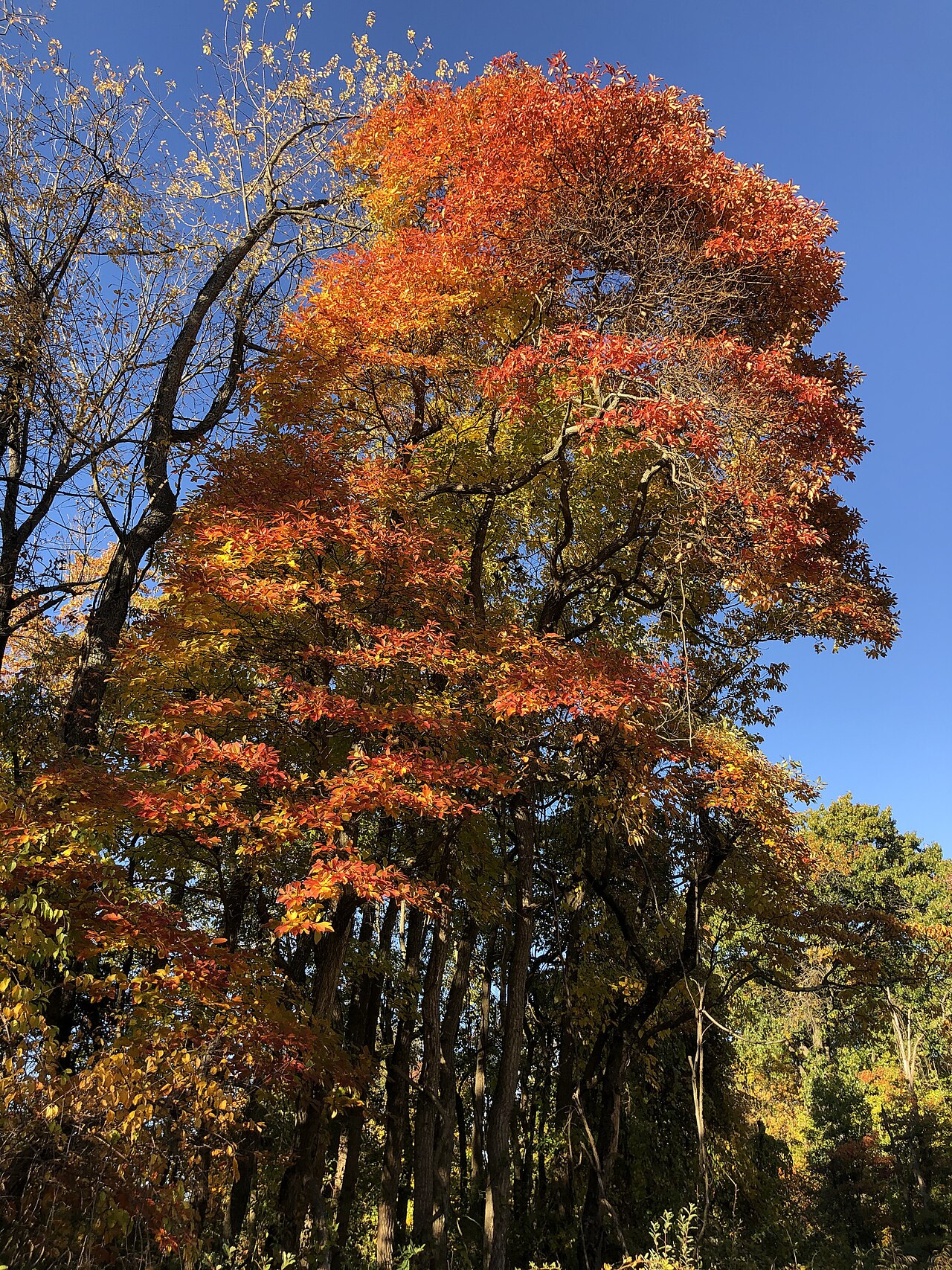
- Fall: enjoy normal color. Water through dry autumns so trees go into winter well hydrated.
- Winter: plan any root-zone fixes, soil tests, or arborist visits for the dormant season.
📋 More on this plant: read the full Sassafras (Sassafras albidum) profile, or see it in our native plant lists for New York, Pennsylvania & Northern New Jersey, Delaware, Southern New Jersey & Long Island, Maryland, Virginia & West Virginia, North Carolina & South Carolina, and Arkansas, Louisiana, Eastern Oklahoma & Eastern Texas.
Frequently Asked Questions
When does sassafras normally change color?
In early to mid-fall in most of its range. The Morton Arboretum lists early and mid-fall as its peak season. Hot, dry weather can push color somewhat earlier.
Why is only one branch of my sassafras turning red?
Check for damage to the trunk or roots on that side, such as mower wounds or construction. Sudden red wilting on a branch can also be an early sign of laurel wilt in areas where it’s present.
Is early fall color bad for the tree?
Not by itself. It’s a symptom. One early year after a drought is usually harmless. Early color year after year, or color with wilting and dieback, points to a problem worth fixing.
Can watering make the leaves turn green again?
No. Leaves that have colored won’t green up. Wisconsin Extension notes that watering dry soil helps prevent further stress, but the tree won’t instantly turn green.
How do I know if it’s laurel wilt?
Look for sudden reddish wilting, leaves dying fast, and dark streaks in the sapwood under the bark. Contact your county Extension office or state forestry agency to confirm. A lab can test samples.
Sources
- University of Wisconsin–Madison Extension, Early fall colors can be a sign of tree distress: day-length-driven dormancy, delayed stress symptoms, site stresses, and what to do.
- Purdue Extension, Early Fall Color – A Symptom of Stress: weather effects, individual early trees, and root flare, girdling root, wound and compaction checks.
- University of Illinois Extension, Early fall color could be a sign of tree stress: drought, root flare, base damage, circling roots, construction, and mulching.
- University of Kentucky Entomology, Laurel Wilt Disease & Redbay Ambrosia Beetle (ENTFACT-459): symptoms on sassafras, spread, and management.
- NC State Extension, Laurel Wilt Disease: hosts, drought-like symptoms, sapwood streaking, and history.
- North Carolina Extension Gardener Plant Toolbox, Sassafras albidum: fall color, drought tolerance, chlorosis in alkaline soils, leaf diseases, and swallowtail feeding.
- The Morton Arboretum, Sassafras: season of interest, fall color, and pests.
- Lady Bird Johnson Wildflower Center, Sassafras albidum: iron chlorosis on high-pH soils and larval host plants.