Milkweed Leaves Being Eaten: Identify the Visitor Before Acting
Last updated: November 6, 2026
You walk out to your milkweed and find ragged leaves, lacy holes, or whole leaves gone. The first instinct is to grab a spray bottle.
Put it down for now. Milkweed is grown mainly to be eaten, and the most likely culprit is exactly the caterpillar you planted it for. Even the other insects you’ll find are mostly milkweed specialists that rarely do lasting harm.
This guide helps you identify what’s eating your milkweed by the damage pattern and the visitor itself, so you can decide whether to do anything at all. For managing sap-sucking aphids and related organic methods, see our separate guide to organic pest control for milkweed.
The Short Answer
Few animals can eat milkweed, because its sap and leaves contain toxic compounds. The leaf-chewers you’re most likely to find are:
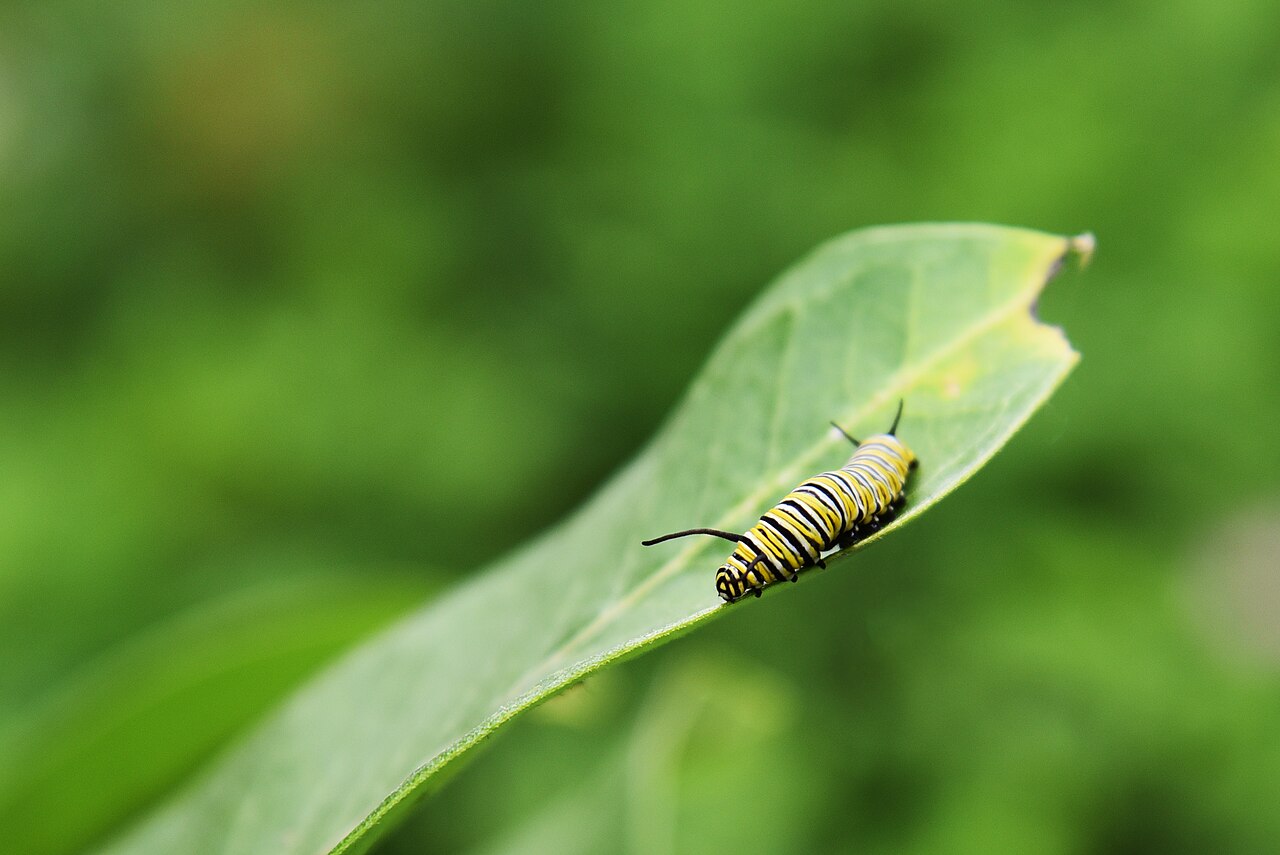
- Monarch caterpillars: striped yellow, black, and white, with black filaments. Leave them.
- Queen caterpillars in the far southern U.S.: similar, but with three pairs of filaments.
- Milkweed tussock moth caterpillars: groups that skeletonize leaves, later fuzzy black, white, and orange.
- Red milkweed beetles and swamp milkweed leaf beetles: brightly colored beetles that chew leaves.
In most gardens, no treatment is needed. Identify first, then decide.
Why So Few Things Eat Milkweed
Milkweed defends itself with sticky white sap, and its leaves contain toxic cardiac glycosides. Wisconsin Horticulture explains that these chemicals deter most mammals and insects, so only species that have evolved to handle them can thrive on the plant.
Many of those specialists store the toxins in their own bodies for protection. That’s why so many milkweed insects wear warning colors of red, orange, black, and yellow.
NC State Extension lists aphids, milkweed beetles, monarch larvae, and milkweed tussock moth larvae as common milkweed visitors that generally aren’t problematic. NC State also rates swamp milkweed as resistant to deer browsing.
Read the Damage First
| Small arc-shaped or round holes | Young monarch caterpillar. Look on the leaf underside. |
| Leaf edges chewed, whole leaves gone | Older monarch caterpillars, or later-stage tussock caterpillars. |
| Lacy, see-through leaves with veins left | Young milkweed tussock caterpillars feeding in a group. |
| Chewing beyond a cut leaf vein | Red milkweed beetle or older tussock caterpillars draining the sap first. |
| Yellowed, sticky, curled shoots, no holes | Not chewing at all. Likely oleander aphids. |
Step 1: Look on the Undersides and the Top Leaves
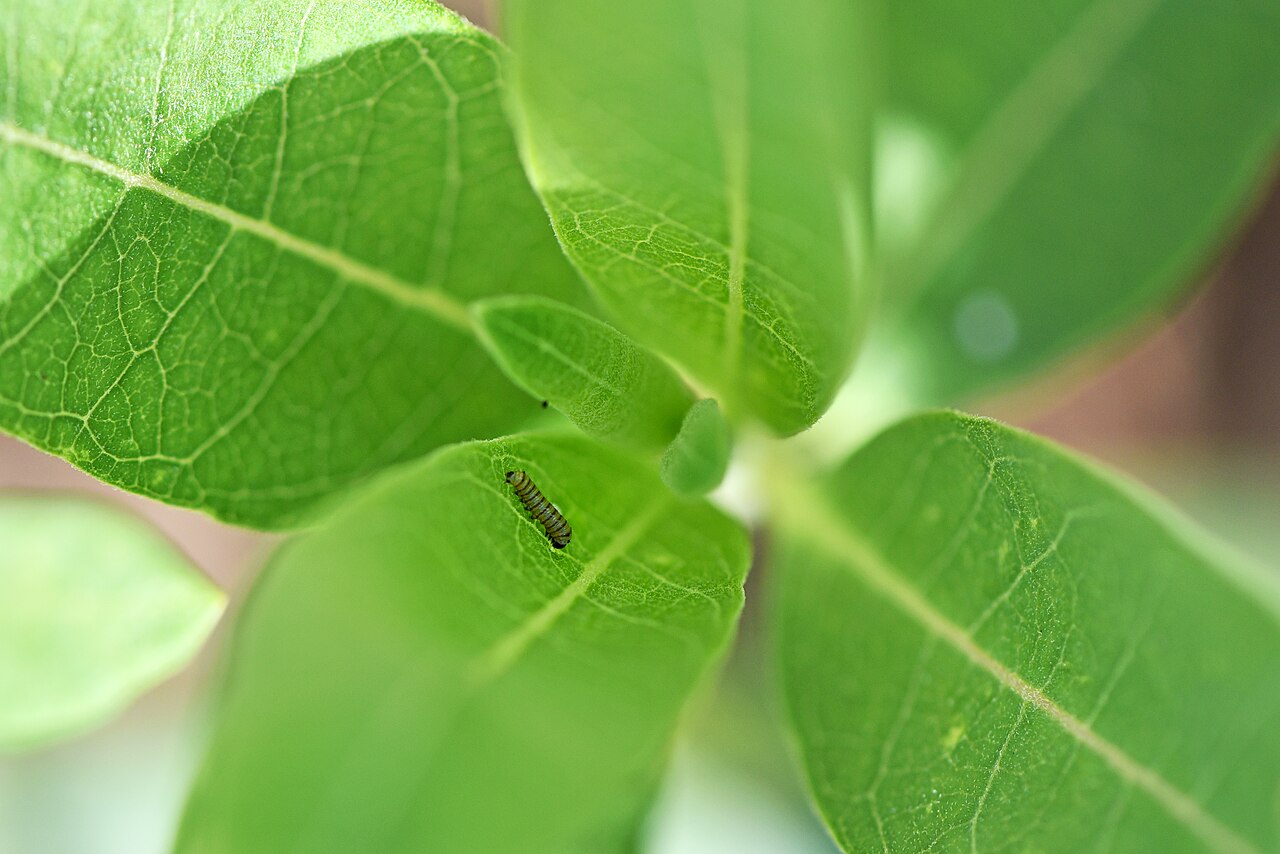
Most milkweed visitors hide. Turn over several leaves, especially the soft new ones near the top of each stem, and look along the stems and flower clusters.
Bring a hand lens or use your phone’s camera zoom. Newly hatched caterpillars are tiny, and eggs are smaller still.
Note three things: the color and shape of whatever you find, whether it’s alone or in a group, and what the damage on that leaf looks like.
Step 2: Check for Monarch Caterpillars
Monarchs are the reason most people plant milkweed, so rule them in or out first.
A newly hatched monarch caterpillar is pale, almost translucent, with a large black head. According to Wikipedia’s monarch account, it often feeds in a circular motion and leaves a characteristic arc-shaped hole in the leaf.
Within days it develops the familiar pattern: bands of white, yellow, and black, with a pair of black filaments near the head and a smaller pair near the tail. Older caterpillars eat from leaf edges and can strip a small plant.
That’s normal. A plant eaten back by monarchs usually puts out new leaves, and established plants regrow from their roots the following year. If you have several caterpillars on one small plant, plant more milkweed next year rather than removing caterpillars.
In the far southern U.S., you may also find queen butterfly caterpillars. They look similar but carry three pairs of black filaments instead of two. Queens are mainly found in peninsular Florida and the southern parts of Texas, New Mexico, Arizona, and California. They’re also milkweed specialists, so leave them too.
Step 3: Look for Groups of Caterpillars
If you find a cluster of small caterpillars feeding side by side, you likely have milkweed tussock moth caterpillars (Euchaetes egle).
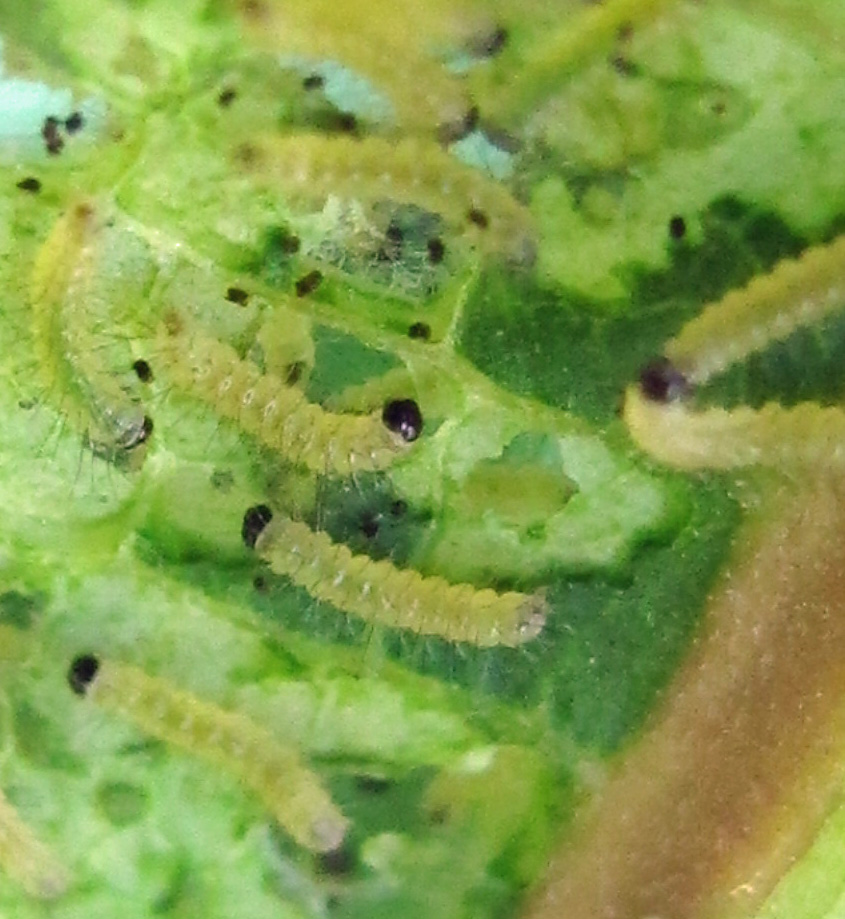
Wisconsin Horticulture describes the young caterpillars as pale and hairless with black heads. They feed together and skeletonize whole leaves, eating between the veins to avoid the latex sap.
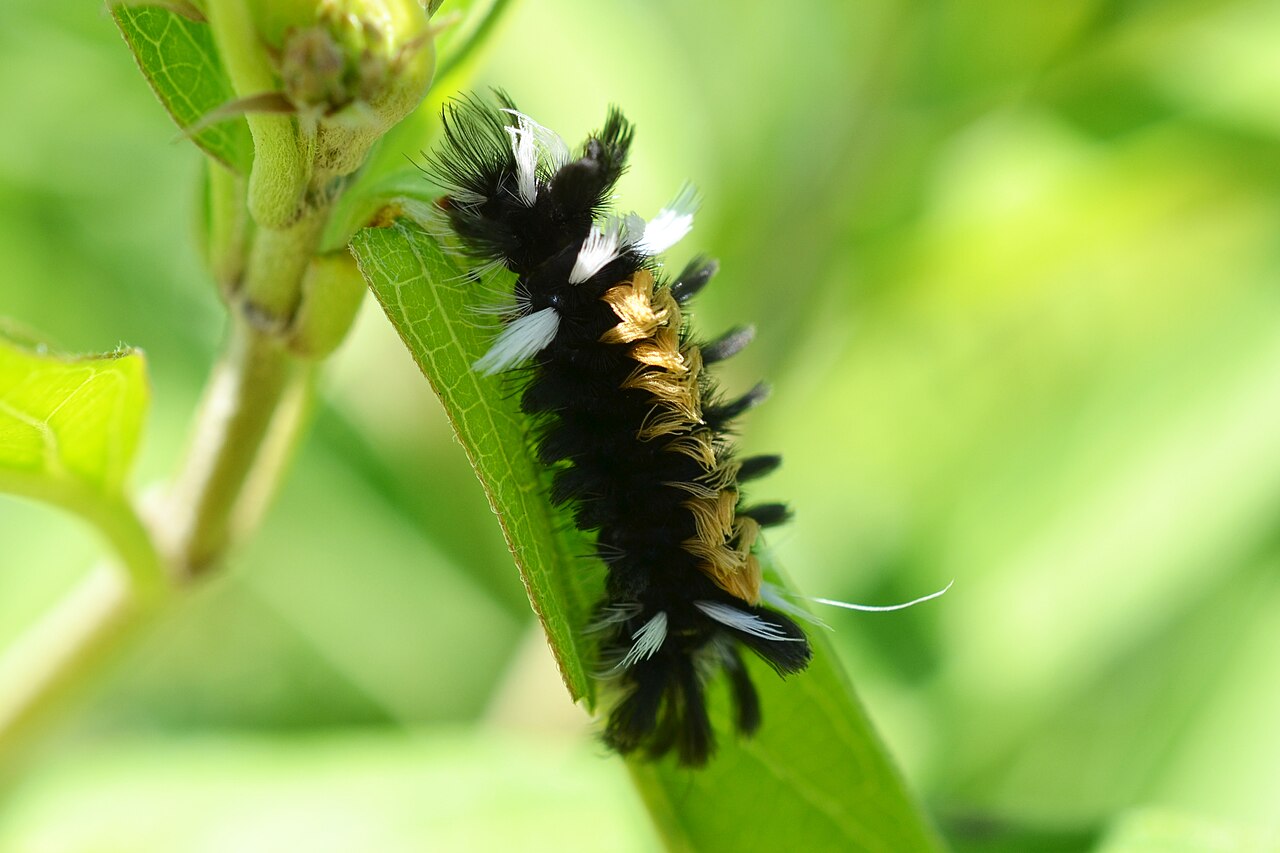
By the third stage they’re covered in tufts of black, white, and orange or yellow hairs, and they start to wander. Older caterpillars cut major leaf veins to reduce the sap they encounter.
They rarely compete with monarchs. Wisconsin Horticulture notes that tussock caterpillars generally feed on older shoots, while monarchs prefer younger shoots. They’re native, and on an established plant the damage is mostly cosmetic.
Step 4: Identify Any Beetles
Two kinds of beetles commonly chew milkweed leaves. Both are native and both are easy to recognize.
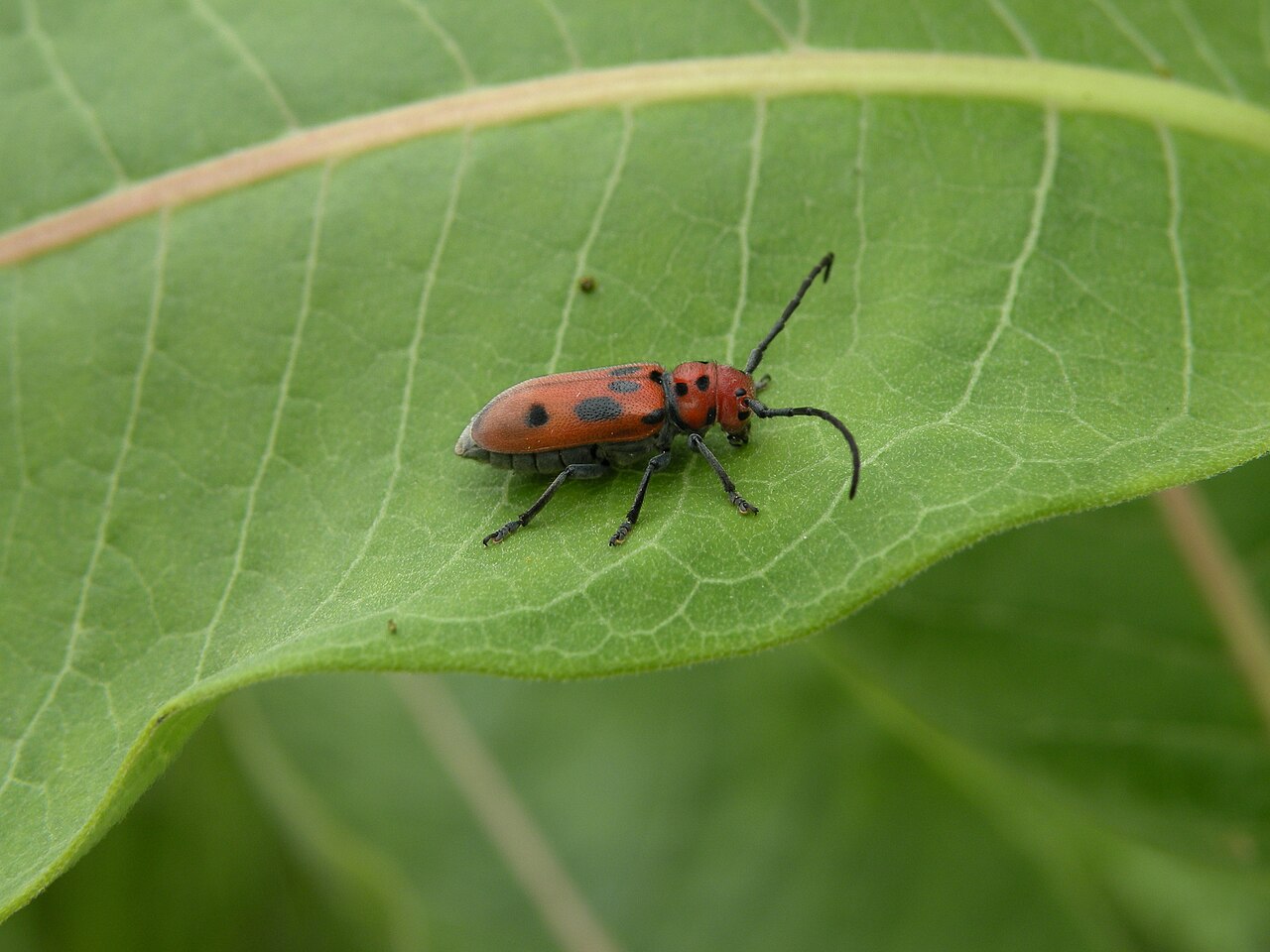
Red milkweed beetle (Tetraopes tetrophthalmus): an orange-red longhorn beetle with black spots and long black antennae. Wisconsin Horticulture describes adults eating leaves, buds, and flowers. They first cut a leaf vein so the sap drains, then feed beyond the cut. The larvae live underground and feed on the roots.
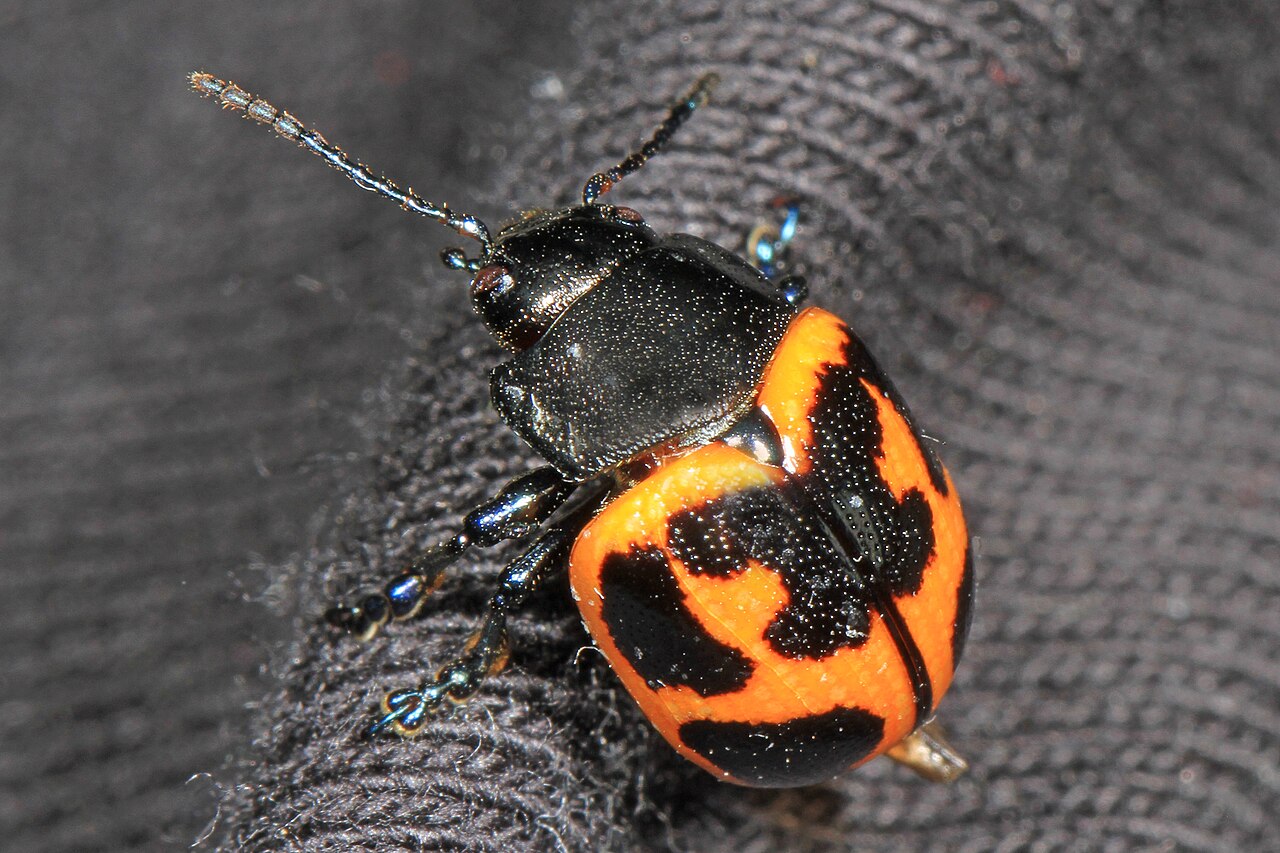
Swamp milkweed leaf beetle (Labidomera clivicollis): a rounded, dome-shaped beetle with a black head, orange to yellow wing covers patterned in black, and metallic blue legs. Adults and larvae both chew leaves, mainly on swamp milkweed, though they also turn up on common milkweed and butterfly weed. Females lay clusters of bright orange eggs on leaf undersides in early summer.
Neither beetle is usually a serious problem on established plants, and NC State lists milkweed beetles among visitors that aren’t typically problematic.
Step 5: Rule Out Look-Alikes That Don’t Chew
Some insects on milkweed aren’t eating leaves at all, so don’t blame them for holes.
- Oleander aphids: bright yellow with black legs, in dense clusters on shoots and buds. They suck sap rather than chew. Heavy colonies can stunt shoots and leave sticky honeydew and black sooty mold. If whole stems droop all day, look below ground instead, as described in our guide to swamp milkweed wilting in damp soil.
- Large and small milkweed bugs: red-orange and black true bugs that feed mostly on seeds in the pods. Wisconsin Horticulture says they do little damage to the plant and control generally isn’t needed.
Quick Reference: Who’s on Your Milkweed?
| Striped caterpillar, 2 pairs of filaments | Monarch. Protect it. |
| Striped caterpillar, 3 pairs of filaments | Queen (southern U.S.). Protect it. |
| Group of pale caterpillars, lacy leaves | Young milkweed tussock caterpillars. Usually tolerate. |
| Fuzzy black, white, and orange caterpillar | Older milkweed tussock caterpillar. Usually tolerate. |
| Red beetle, black spots, long antennae | Red milkweed beetle. Usually tolerate. |
| Domed orange-and-black beetle, blue legs | Swamp milkweed leaf beetle. Handpick only if a small plant is struggling. |
| Yellow clusters on shoots, no holes | Oleander aphids. Not chewers. Rinse off if heavy. |
Should You Do Anything?
Usually not. Here’s how to decide.
If it’s monarchs or queens: leave them alone. This is what the plant is for. If they run out of food, the long-term fix is more milkweed, planted in several spots.
If it’s tussock caterpillars or beetles on an established plant: tolerate them. They’re native specialists and part of the same food web that supports birds and other wildlife. Established milkweeds regrow from the roots each year.
If a small or newly planted milkweed is being stripped by something other than monarchs: pick off beetles or snip off a leaf carrying a tussock caterpillar group and move it to a larger, established milkweed nearby. Check every leaf for monarch eggs and caterpillars before removing anything. Young transplants are the most vulnerable, so our guide to raising sturdy milkweed seedlings is worth a read if you grow your own.
Avoid sprays. Wisconsin Horticulture notes that even treatments used against aphids, including insecticidal soap and neem oil, could also affect small monarch caterpillars. Anything strong enough to kill a beetle or caterpillar will kill the monarchs on the same plant.
For more ways to make your garden welcoming to monarchs and other butterflies, see our guide to attracting butterflies to gardens.
A Season-by-Season Watch List
- Spring: new shoots appear. Watch leaf undersides for tiny monarch eggs and the first arc-shaped holes.
- Early summer: check swamp milkweed for clusters of orange beetle eggs. Red milkweed beetle adults appear around bloom time.
- Midsummer to late summer: look for groups of tussock caterpillars and lacy leaves on older shoots.
- Late summer to fall: milkweed bugs gather on pods. Damage to leaves now matters little to the plant.
- Every season: skip broad sprays and keep planting milkweed so there’s enough to share.
Choosing a mix of species helps too. Common milkweed, swamp milkweed, and butterfly weed suit different sites, so several can share one yard. If common milkweed starts wandering, our boundary maintenance guide shows how to keep it in place without sprays.
📋 Find a milkweed for your region: see native milkweeds in our plant lists for Kentucky & Tennessee, Nebraska, Kansas & Eastern Colorado, and Connecticut, Massachusetts & Rhode Island.
Frequently Asked Questions
What is eating my milkweed leaves?
Most often monarch caterpillars. Other common leaf-chewers are milkweed tussock moth caterpillars, red milkweed beetles, and swamp milkweed leaf beetles. Look on leaf undersides and match the visitor and the damage pattern.
Will milkweed grow back after caterpillars eat it?
Established native milkweeds usually regrow new leaves and return from their roots the next year. Very small, newly planted milkweeds are the most vulnerable to heavy feeding. If a plant doesn’t reappear next spring, see milkweed not returning in spring before you replant.
Should I kill milkweed tussock caterpillars?
Usually there’s no need. They’re native milkweed specialists that tend to feed on older shoots. On a small plant you can move a group to a larger milkweed instead.
Are red milkweed beetles harmful?
They chew leaves and their larvae feed on roots, but they’re a normal part of milkweed’s insect community and rarely a serious problem for established plants.
Can I spray insecticidal soap on milkweed?
Wisconsin Horticulture cautions that aphid treatments like insecticidal soap and neem could also affect small monarch caterpillars. Check carefully for eggs and caterpillars first, and prefer rinsing aphids off with water.
Sources
- University of Wisconsin–Madison Extension, Wisconsin Horticulture, Common Milkweed Insects: milkweed toxins, tussock moth, milkweed bugs, milkweed beetles, aphids, and treatment cautions.
- North Carolina Extension Gardener Plant Toolbox, Asclepias incarnata: common pests and deer resistance.
- Wikipedia, Monarch butterfly: caterpillar stages and feeding pattern.
- Wikipedia, Queen (butterfly): caterpillar filaments, U.S. range, and host plants.
- Wikipedia, Asclepias syriaca: insect community on common milkweed.