Sassafras Suckers Appearing in the Lawn: A Management Decision Guide
Last updated: November 5, 2026
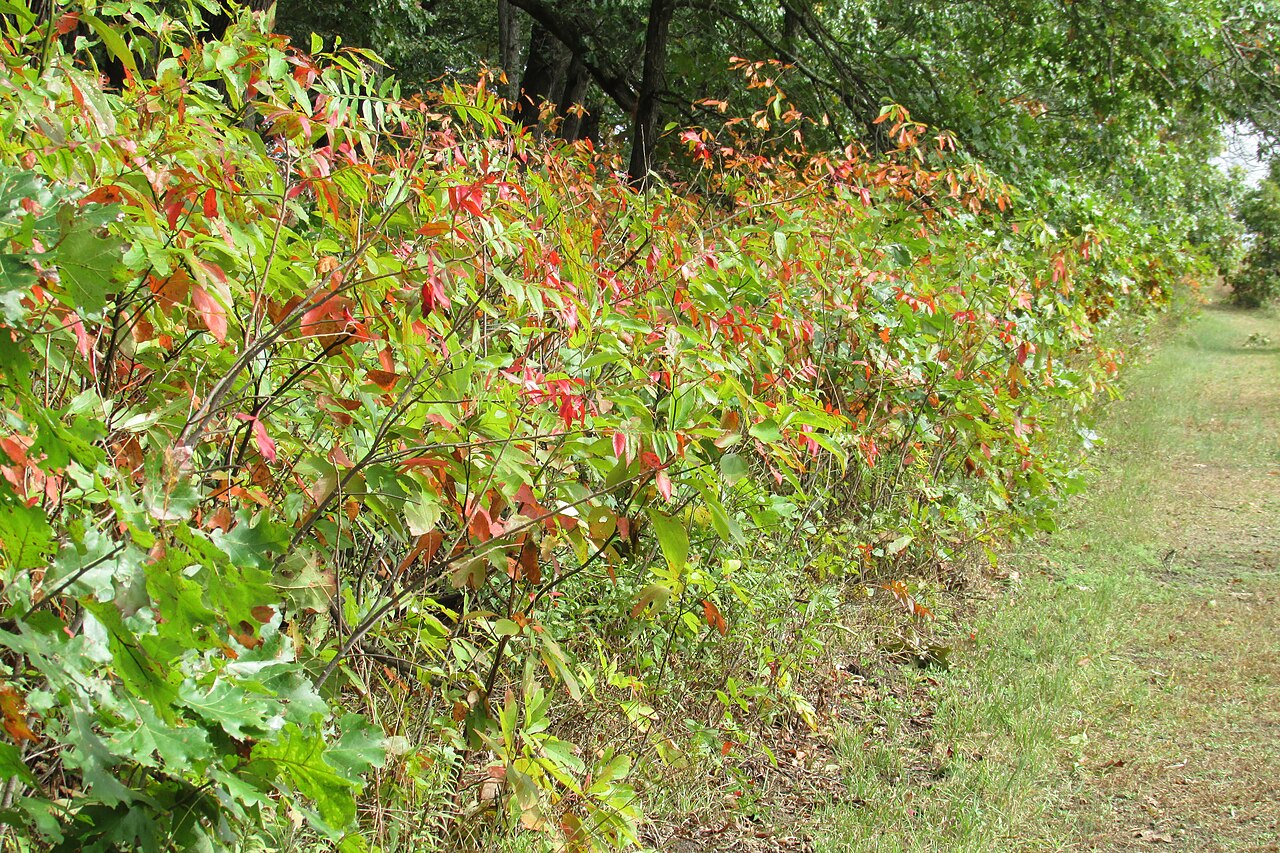
Small sassafras shoots are popping up in your lawn, sometimes many feet from the tree. You mow them down, and a few weeks later they’re back.
That’s normal for sassafras. The tree spreads by sending up new shoots from its roots, and in the wild that’s how it builds groves along fields and woodland edges.
You have more than one good option here. This guide helps you confirm what you’re looking at, understand why it’s happening, and choose a plan that fits your yard.
The Short Answer
Sassafras (Sassafras albidum) naturally sends up root sprouts, often called suckers. They’re still connected to the parent tree. Your realistic choices are:
- Keep mowing if a few sprouts in turf don’t bother you. Mowing controls height but won’t make them go away.
- Cut them out below the soil line and stop wounding the roots with mowers and trimmers.
- Give part of the lawn to a grove, which is the low-effort, wildlife-friendly choice.
- Dig a few and move them while dormant, if you want more sassafras elsewhere.
- Don’t spray attached suckers with weed killer. The chemical can travel back into the parent tree.
Why Sassafras Sends Up Suckers
Sassafras roots run shallow and wide. A USDA Forest Service species review describes a shallow root system with prominent lateral roots, mostly within the top 6 to 20 inches of soil.
Buds along those roots can grow into new shoots. NC State Extension notes that sassafras tends to sucker repeatedly and will spread to form thickets. Left unchecked, a single tree can end up in the middle of a sizable colony.
Root sprouts also grow fast because they’re fed by an established root system. Wikipedia’s species account, citing forestry sources, reports sprouts reaching about 4 feet in their first year.
Some things make sprouting worse. Damage to the trunk base or roots is a common trigger. University of Georgia Extension explains that wounds from mowers, string trimmers, or heavy equipment cause trees to release hormones that start new buds and sprouts.
Cutting the tree back hard does the same. Sassafras sprouts vigorously after its top is killed, whether by fire or cutting. If you remove the main trunk, expect more sprouts, not fewer.
What Usually Triggers More Sprouts
| Mower or trimmer wounds | Scraped surface roots and bark at the trunk base prompt new shoots. |
| Heavy pruning or topping | Losing a lot of canopy pushes the roots to replace it. |
| Removing the main trunk | Stump and root sprouts appear across the root zone. |
| Root damage from digging | Trenching, edging, or construction near the tree. |
| General stress | Drought, compaction, or decline can also set off sprouting. |
Check 1: Confirm It’s Sassafras
Before you plan anything, make sure the shoots are actually sassafras. Plenty of tree seedlings show up in lawns.
Sassafras is easy to identify by its leaves. A single shoot often carries three shapes at once: an unlobed oval, a two-lobed “mitten,” and a three-lobed leaf. Young green stems smell spicy when you scratch them.
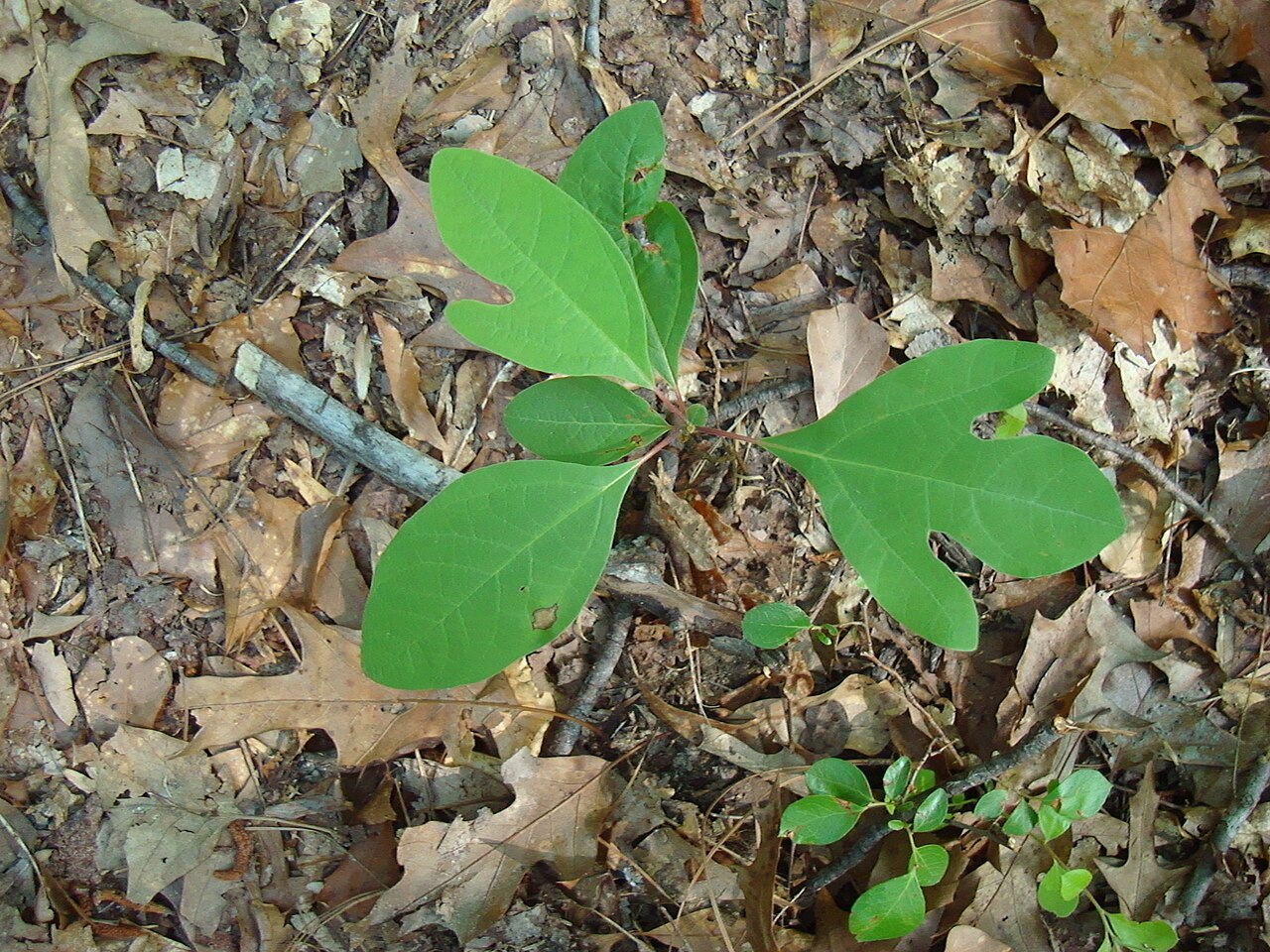
If the leaves are all one shape, or the stem has no scent, you may be dealing with something else. Take a leaf to your local Extension office or a native plant society if you’re unsure.
Check 2: Sucker or Seedling?
Birds eat sassafras fruit and drop the seeds, so some lawn shoots are true seedlings. The distinction matters, because seedlings come out easily and suckers don’t.
Use a trowel to expose the soil around the base of the shoot. A seedling has its own small root going straight down. A sucker comes off a horizontal root that runs back toward the parent tree.
Patterns help too. Suckers tend to appear in arcs or lines radiating from the tree. Seedlings are more scattered, often under places birds perch, such as fences or wires.
- Seedling: pull it while it’s small, or pot it up if you want to keep it.
- Sucker: it’s part of the parent tree. Choose one of the plans below.
Check 3: Map Where the Roots Run
Walk the lawn and mark every sprout with a flag or golf tee. Within a few minutes you’ll see the shape of the root system.
Many homeowners are surprised by how far the sprouts travel. Because the lateral roots stay shallow and spread widely, shoots can appear well beyond the edge of the canopy.
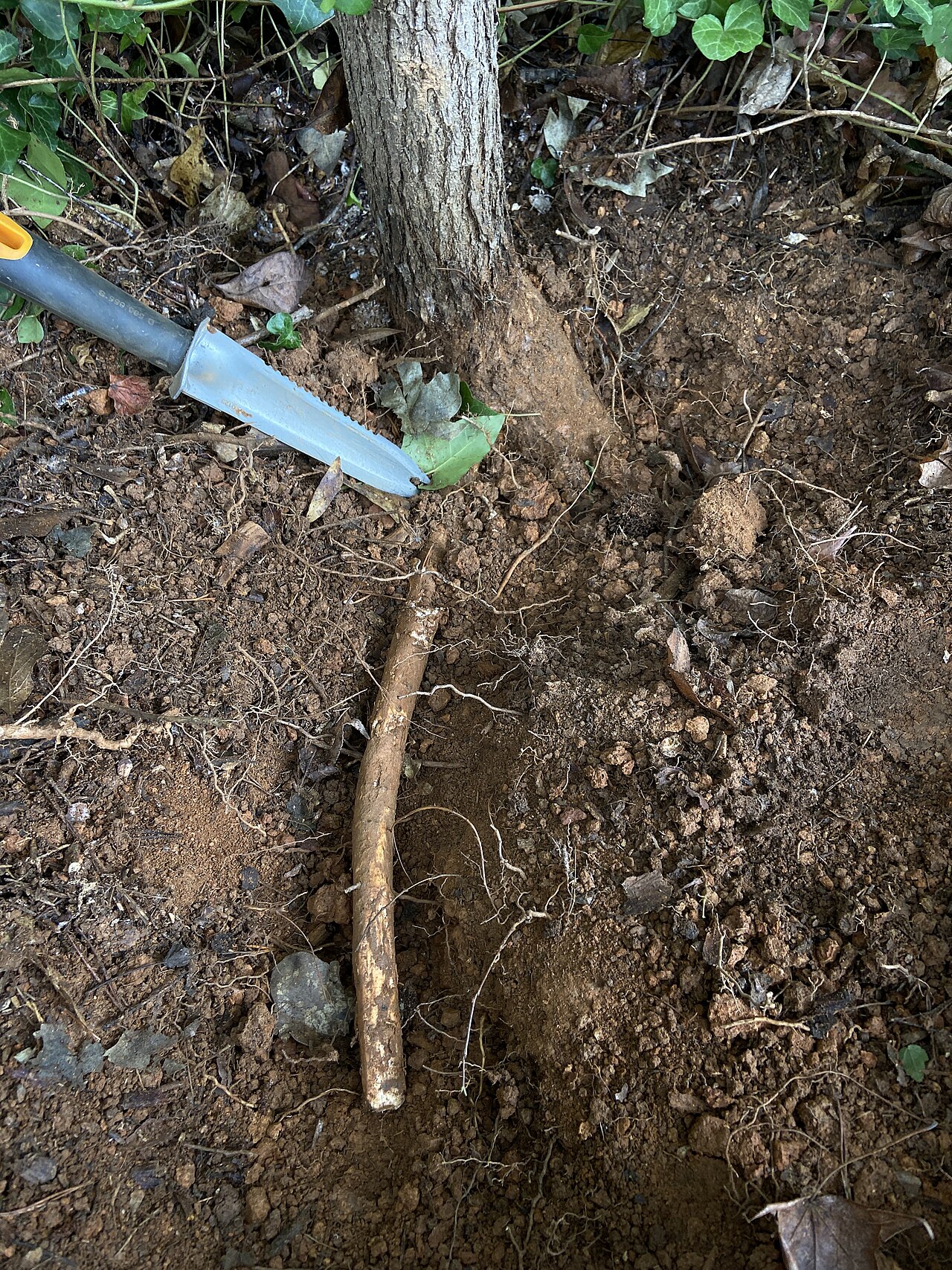
Note where the flagged sprouts cluster. Spots along the mowing route, near bed edges, or beside a path are usually where roots have been nicked. That points to Check 4.
Check 4: Look for Mower and Trimmer Damage
Look closely at the trunk base and at any roots that surface in the lawn. Scars, peeled bark, and chewed root tops all suggest repeated wounding.
UGA Extension recommends keeping mowers and trimmers away from the trunk and roots and putting a mulch island around the base of the tree. Expand that island as the tree and its roots grow.
A wide ring of mulch also helps the tree in other ways. See our mulching guide for native gardens for depth and material choices. Keep mulch a few inches away from the trunk itself.
Check 5: Decide What You Want This Corner of the Yard to Be
This is the real decision. Sassafras suckering isn’t a disease or a defect, so the question is how much grove you’re willing to have.
The Lady Bird Johnson Wildflower Center notes that sassafras can sucker into a small grove but is easily controlled as a single tree. Both are legitimate landscape choices.
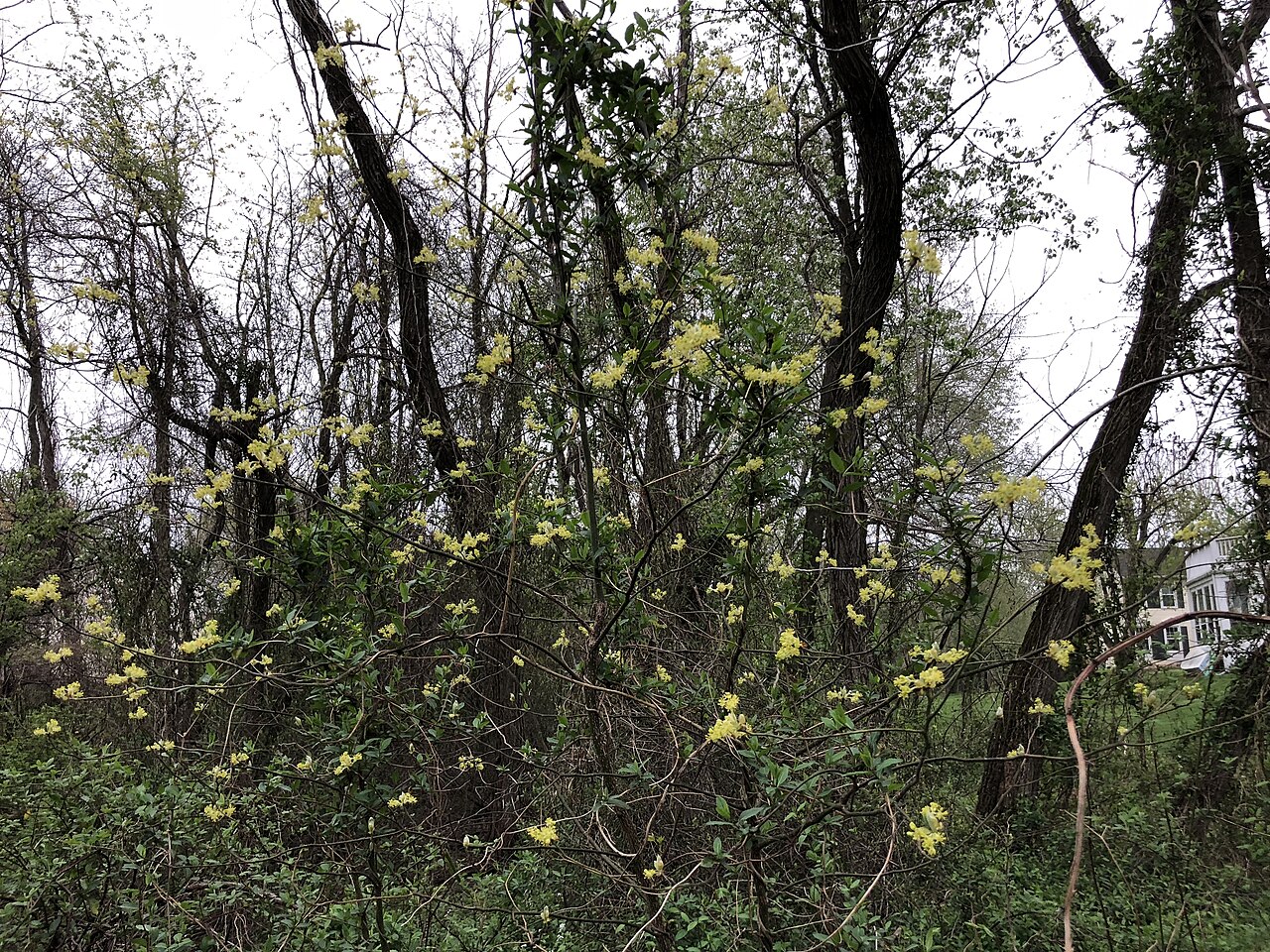
Sassafras is also a valuable host plant. Its leaves feed the caterpillars of the spicebush swallowtail and several other butterflies and moths, and birds eat the fruit on female trees. A small colony at the edge of a yard can do real work for wildlife.
Troubleshooting at a Glance
| A few sprouts, mowed with the lawn | Low-stakes. Keep mowing and stop scraping the roots. |
| Many sprouts near the trunk | Likely mower wounds. Install a wide mulch ring and cut sprouts below grade. |
| Sprouts in a line across the lawn | Following a lateral root. Consider turning that strip into a planted bed. |
| Sudden flush after pruning or trunk removal | Expected response. Plan for several seasons of follow-up. |
| Scattered single shoots far from any tree | Possibly bird-sown seedlings. Check for a taproot and pull them. |
| Sprouts plus a declining parent tree | Stress sprouting. Have the tree looked at before removing anything. |
Your Options, From Least to Most Work
Option 1: Mow and accept it. If the sprouts are scattered, regular mowing keeps them at turf height. A USDA Forest Service review notes that mowing doesn’t eliminate sassafras, because new root sprouts quickly replace cut stems. In a lawn that just means you’ll keep seeing a few.
Option 2: Cut below the soil line. For sprouts you want gone, cut each one off just below the surface with a sharp spade or hand pruners. Cutting below grade leaves no stub at the surface, and many gardeners find it gives a cleaner result than mowing over the same shoots all summer.
- Do it while sprouts are small and green, when cuts are quick and clean.
- Avoid tearing the parent root. A clean cut wounds it less.
- Expect to repeat this. UGA Extension notes that once suckers start, they usually come back, so it’s an ongoing chore.
The same approach works for other suckering natives. Our guides to pawpaw root suckers and black chokeberry suckers along a lawn use similar steps.
Option 3: Turn the sucker zone into a grove bed. Stop mowing a defined area, mulch it, and let the sprouts fill in. NC State notes that sassafras can be used in naturalized areas or as a screen by allowing the suckers to spread. Mow a clean edge around the bed so it looks intentional.
You can still shape a grove. NC State also notes that sassafras can be kept at shrub size by cutting it to the ground every 2 to 3 years. That lets you keep a low thicket rather than a tall stand.
Option 4: Dig and move a few. The Wildflower Center notes that sassafras freely produces root suckers that can be dug and moved. Small ones are the best candidates, ideally while dormant, with a piece of the parent root attached. Expect losses. Sassafras has a reputation for transplanting poorly.
What about herbicides? UGA Extension is clear: root suckers are connected to the tree, so don’t spray them. Many systemic herbicides can be absorbed through the sprouts and damage the whole tree. Our overview of choosing and using lawn herbicides explains the difference between systemic and contact products.
Be careful with broadleaf lawn weed killers, too. Spraying a lawn full of sassafras sprouts exposes the parent tree for the same reason.
If you’re removing the parent tree and want the whole colony gone, that’s a bigger job. Forestry studies show that cut sassafras sprouts readily from stumps and roots. Talk with an ISA Certified Arborist or a licensed pesticide applicator before you start, and follow all label directions.
A Season-by-Season Plan
- Late winter: flag last year’s sprout locations and decide which areas stay lawn and which become grove. Dig any suckers you want to move before buds open.
- Spring: build or widen a mulch ring around the trunk. Set the mower deck high near the tree and keep trimmers off exposed roots.
- Late spring – summer: cut unwanted sprouts below grade every few weeks while they’re small. In the grove bed, let them grow.
- Late summer: watch for a flush of new sprouts after drought or any pruning. Water the parent tree deeply during long dry spells.
- Fall: enjoy the color. Rake or mulch-mow leaves, and note where the colony has expanded for next year’s plan.
If you live in New York, see our article on landscaping with native sassafras in New York for design ideas that use the suckering habit as a hedgerow.
📋 More on this plant: read the full Sassafras (Sassafras albidum) profile, or see it in our native plant lists for New York, Pennsylvania & Northern New Jersey, Delaware, Southern New Jersey & Long Island, Maryland, Virginia & West Virginia, North Carolina & South Carolina, and Arkansas, Louisiana, Eastern Oklahoma & Eastern Texas.
Frequently Asked Questions
Will mowing kill sassafras suckers?
No. Mowing keeps them short, but the roots keep producing new shoots. Forestry research summarized by the USDA Forest Service found that mowing doesn’t control sassafras, because sprouts quickly replace the cut stems.
Can I spray sassafras suckers with weed killer?
Not while they’re attached to a tree you want to keep. UGA Extension warns that systemic herbicides can move from root suckers into the whole tree and damage it.
Will cutting down the sassafras tree stop the suckers?
Usually not, at least not right away. Sassafras sprouts vigorously from stumps and roots after the trunk is removed, so expect more shoots for several seasons.
How far from the tree can sassafras suckers appear?
Often well beyond the canopy edge. The lateral roots are shallow and wide-ranging, so sprouts can show up surprisingly far across a lawn.
Can I transplant a sassafras sucker?
Yes, with care. Choose a small one, dig it while dormant with a section of the parent root, and keep it well watered. Sassafras is known as a difficult tree to transplant, so plan on moving a few to get one that thrives.
Sources
- North Carolina Extension Gardener Plant Toolbox, Sassafras albidum: repeated suckering and thickets, removing suckers for a single trunk, cutting to the ground every 2–3 years, and using suckers for screens.
- USDA Forest Service, Fire Effects Information System, Sassafras albidum: shallow lateral roots 6–20 inches deep, root and stump sprouting, sprouting after top-kill, and mowing as ineffective control.
- University of Georgia CAES, Prevent root suckers by keeping mowers, trimmers away from trees: wounding as a trigger, mulch islands, repeated removal, and not spraying attached suckers.
- Lady Bird Johnson Wildflower Center, Sassafras albidum: groves vs. single trees, digging and moving root suckers, and larval host plants.
- Wikipedia, Sassafras albidum: root sprout growth rates, clonal colonies, and Lepidoptera hosted.