Can You Move a Young Sassafras? Assessing Roots and Transplant Risk
Last updated: November 6, 2026
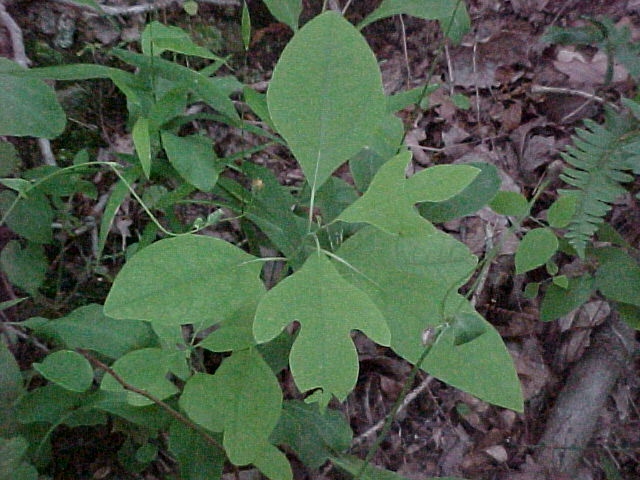
You have a young sassafras in the wrong spot. Maybe it popped up in a bed, along a fence, or too close to the house, and you’d rather move it than cut it down.
Sassafras has a reputation as a tree that hates being moved. That reputation is partly earned, but it isn’t the whole story.
Whether your move works depends mostly on how big the plant is, how it got there, and what its roots look like. This guide walks you through each of those checks so you can judge the risk before you dig.
The Short Answer
Yes, you can move a young sassafras, but the odds drop quickly as the plant gets bigger. In general:
- Small seedlings and container-grown plants are the best candidates.
- Root suckers can be moved, but they have little root of their own. Expect some losses.
- Established saplings and trees are risky because so much of the root system gets left behind.
- Move it while it’s dormant, ideally in early spring, and keep it watered for the next couple of seasons.
- If the trunk is thick or the root ball would be large, hire a professional or plant a new nursery tree instead.
Why Sassafras Is Hard to Move
Every transplant loses roots. Iowa State University Extension puts it bluntly: transplanting, however carefully it’s done, destroys a large portion of the absorbing root area.
Sassafras makes that loss worse, though sources describe the reason a little differently. NC State Extension says a large taproot makes transplanting established trees difficult. A USDA Forest Service species review instead describes a shallow root system with prominent lateral roots, and says sassafras is hard to transplant because those roots are sparse and far-ranging.
Either way, the result is the same. A shovel-sized root ball captures only a small share of the roots on an older sassafras. The roots it leaves behind are the ones the tree was counting on.
Wikipedia’s species account adds one more detail: the roots are thick and fleshy. University of Maryland Extension recommends planting or transplanting fleshy-rooted trees in spring rather than fall.
Not every source treats sassafras as a problem plant. The Morton Arboretum lists it as transplanting well and recommends spring planting. That rating fits nursery-grown stock, whose roots have been kept compact in a container. A wild seedling or a tree that has been in the ground for years is a different situation.
Transplant Risk by Plant Type
| Container-grown nursery plant | Low risk. The whole root system comes with it. |
| Small seedling, one season old | Low to moderate. Dig deep enough to keep the main root. |
| Root sucker from a parent tree | Moderate. It depends on the parent’s root until you sever it. |
| Sapling several feet tall | High. Most of its roots lie outside any ball you can dig by hand. |
| Established tree | Very high. A job for professionals with equipment, if it’s worth doing at all. |
Check 1: Is It a Seedling or a Root Sucker?
This is the most important check, because the two behave very differently once you dig them.
Birds spread sassafras seed, so lone seedlings show up in beds and fence lines. Sassafras also sends up shoots from its roots, and those suckers often appear in clusters or lines near a parent tree.
Pull back the soil at the base with a trowel. A seedling has its own root heading downward. A sucker sits on a horizontal root that runs back toward a larger tree. Our guide to sassafras suckers in the lawn covers how to tell them apart in more detail.
The Lady Bird Johnson Wildflower Center notes that sassafras freely produces root suckers that can be dug and moved. The catch is that a sucker’s own roots are often sparse, because the parent root has been doing the work.
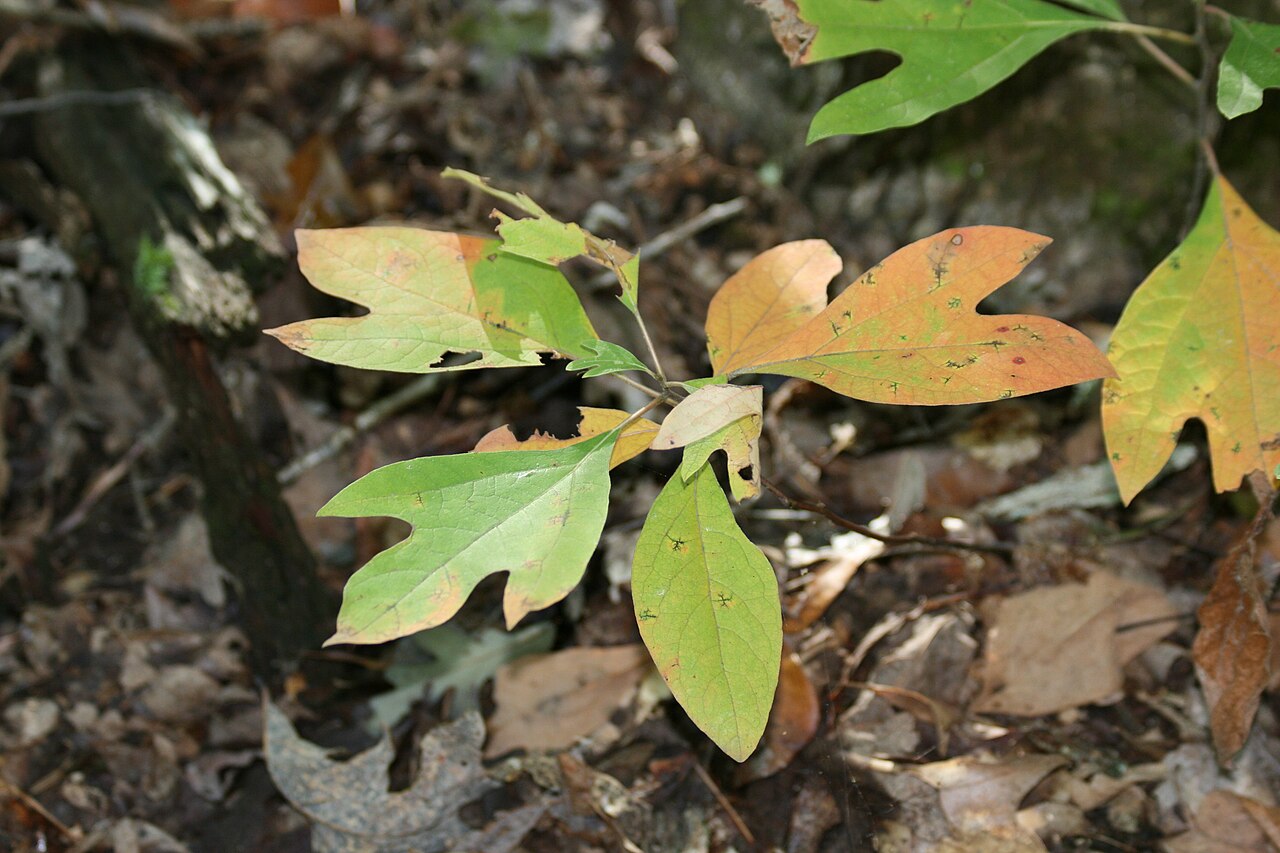
Check 2: Measure the Plant
Size sets the ceiling on your chances. The bigger the plant, the bigger the root ball it needs, and the faster that ball gets too heavy to handle.
Iowa State Extension gives a sense of the weights involved. A 12-inch soil ball can weigh 30 to 60 pounds, and a 24-inch ball can weigh 250 to 400 pounds. Balls over about 24 inches across generally call for mechanical equipment and may be a sign you need a professional.
The same publication notes that species known to be difficult to move should get a larger soil ball than easy ones. With sassafras, that pushes the practical size limit down.
- Under knee height: a reasonable do-it-yourself move.
- Waist to head height: possible with root pruning and a generous ball, but expect a long recovery.
- Taller than you, or a trunk an inch or more thick: think carefully. University of Maryland Extension says trees with trunks two inches or more across are more difficult and may need a landscape professional.
Check 3: Probe the Roots Before You Commit
Before you plan the move, find out what the roots are doing. A few minutes with a trowel tells you more than any rule of thumb.
Work around the plant about a hand’s width out from the stem. Gently loosen the top few inches of soil and feel for roots.
- Fine, branching roots close to the stem: good. These will come up in the ball.
- One thick root running straight sideways: likely a sucker or a plant with a far-reaching lateral root. Most of its feeding roots are elsewhere.
- A thick root heading straight down: dig deeper than you planned so you don’t snap it.
Fill the soil back in when you’re done. If what you found looks unpromising, root pruning ahead of time (Step 2 below) can improve your odds.
Check 4: Pick the Right Season
Timing matters more for sassafras than for many trees. Iowa State Extension recommends moving trees during the dormant season and calls early spring generally the best time, since conditions favor fast root growth.
The Morton Arboretum also recommends spring planting for sassafras, which fits the fleshy-root advice above.
Illinois Extension cautions against the move most people try: digging in early summer, right before hot, dry weather. A tree that has just lost roots is poorly equipped for that stretch.
If you must move a plant in leaf, keep the ball intact and plan on extra watering. Iowa State favors a balled-and-burlapped root ball, rather than bare roots, for deciduous trees moved during the growing season.
Check 5: Look at the New Site
A good destination can make up for some root loss. A poor one can sink an otherwise careful move.
NC State Extension says sassafras prefers well-drained, sandy, acidic soils, adapts to other well-drained soils, and grows in sun to part shade. NC State also notes it may get root rot in wet clay. The Wildflower Center mentions occasional iron chlorosis on high-pH soils.
Plan for the plant’s future, too. Sassafras suckers and can form thickets, so pick a spot where a small grove would be welcome, or where you can mow around it. Keep it clear of foundations, septic fields, and overhead lines, or you may face pruning near structures later.
In the US, call 811 before you dig the new hole so underground utilities get marked.
Troubleshooting at a Glance
| Small seedling, own root, dormant season | Good odds. Dig deep and move it the same day. |
| Sucker attached to a parent root | Fair odds. Sever and root prune a season ahead if you can. |
| Sapling over head height | Poor odds by hand. Root prune well in advance or hire a pro. |
| Must move in summer | Risky. Keep the ball intact, shade it, and water closely. |
| New site is wet clay or alkaline | Pick another spot. Root rot and chlorosis are likely. |
How to Move It: Step by Step
Step 1: Decide whether to move it at all. If the plant is large, a new container-grown sassafras is often the better bet. Smaller, younger plants become established faster than bigger ones, as University of Maryland Extension points out. The Wildflower Center also notes sassafras can be grown from root cuttings taken in early spring before leaf-out.
Step 2: Root prune ahead of time for anything bigger than a seedling. UMD recommends starting root pruning in early fall, at least six months and ideally up to two years before the move. Cutting a ring around the plant with a sharp spade encourages new feeder roots inside the future ball. For a root sucker, this is also when you cut the connection to the parent root.
UMD’s guide sizes the ring at about eight inches of radius for each inch of trunk diameter. Illinois Extension describes the same basic technique for shrubs that have been in the ground only a couple of years.
Step 3: Water the day before. Digging is easier, and the ball holds together better, in moist soil. Iowa State advises digging when the soil is moist and the plant isn’t under moisture stress.
Step 4: Dig a generous ball. Cut straight down outside your root-pruning ring. Sever thicker roots cleanly with loppers rather than tearing them with the spade, as Iowa State recommends. Undercut the ball and lift it from below, never by the stem.
Step 5: Replant right away at the same depth. Keep the roots from drying out. Set the plant so the root flare, where the trunk widens into roots, sits at the soil surface as it did before. Purdue Extension warns that planting too deep suffocates roots, and UMD notes a buried flare can promote girdling roots.
Step 6: Backfill with the native soil. Purdue advises against filling the hole with peat or a lighter mix in heavy soil. The contrast can trap water around the roots, sometimes called the “bathtub effect.”
Step 7: Water and mulch. Soak the ball and backfill, then spread mulch in a wide ring, kept a few inches off the stem. Our mulching guide for native gardens covers material and depth.
Aftercare: The First Two Seasons
Purdue Extension calls watering after transplanting especially critical in the first year, and warns that overwatering is just as harmful as underwatering. Plants in well-drained soil generally need at least an inch of water a week during the growing season. Plants in poorly drained soil need less.
Check before you water. Push a finger or trowel into the root ball itself, not just the surrounding soil. See our watering guide for shrubs and trees for signs of too much and too little.
Expect slow growth. Purdue notes that reduced growth the first year is normal, and that it takes a few years for woody plants to settle in. Purdue lists wilting, yellowing and scorched leaf edges as common transplant-shock symptoms in the first summer. If the leaves droop badly, work through our guide to sassafras leaves drooping after planting.
Skip fertilizer at planting, and don’t prune heavily to “balance” the roots. Remove only broken or dead stems. The USDA Forest Service review notes that sassafras sprouts vigorously after its top is killed, so a plant that dies back after a move may resprout from the roots. Give it a full season before giving up.
The same planning applies to sassafras’s close relative in the laurel family, spicebush. Our guide to transplanting a young spicebush follows a similar plan.
A Season-by-Season Plan
- Early fall (a season or more ahead): root prune any plant bigger than a seedling, and cut sucker connections to the parent root.
- Late winter: prepare the new hole once the ground can be worked. Have utilities marked.
- Early spring, before buds open: water the day before, dig, and replant the same day.
- Late spring – summer: water deeply when the root ball feels dry. Keep mowers and string trimmers off the mulch ring.
- Fall: keep watering through dry autumns until the ground freezes. Some early fall color on a new transplant is a common stress sign. Note any dieback for late-winter cleanup.
- Second year: continue watering through dry spells. New growth should start to lengthen.
📋 More on this plant: read the full Sassafras (Sassafras albidum) profile, or see it in our native plant lists for New York, Pennsylvania & Northern New Jersey, Delaware, Southern New Jersey & Long Island, Maryland, Virginia & West Virginia, North Carolina & South Carolina, and Arkansas, Louisiana, Eastern Oklahoma & Eastern Texas.
Frequently Asked Questions
Does sassafras have a taproot?
Sources differ. NC State Extension describes a large taproot that makes established trees hard to move. A USDA Forest Service review describes a shallow root system with prominent, far-ranging lateral roots. Either way, an older tree loses a large share of its roots when dug.
What is the best time to transplant sassafras?
Early spring, while the plant is still dormant. The Morton Arboretum recommends spring planting for sassafras, and Iowa State Extension calls early spring generally the best time to move trees.
Can I transplant a sassafras sucker?
Yes. The Lady Bird Johnson Wildflower Center notes that root suckers can be dug and moved. Choose a small one, sever it from the parent root a season ahead if possible, and dig it while dormant.
How big a sassafras can I move myself?
Small seedlings and knee-high plants are realistic. Once the root ball would be much over 24 inches across, Iowa State Extension says you’ll generally need mechanical equipment, and possibly a professional.
My transplanted sassafras lost all its leaves. Is it dead?
Not necessarily. Scratch a twig with a fingernail. Green tissue underneath means it’s alive. Keep the root ball evenly moist and wait. Sassafras can also resprout from its roots if the top dies back.
Sources
- North Carolina Extension Gardener Plant Toolbox, Sassafras albidum: taproot and difficulty transplanting established trees, soil and light preferences, root rot in wet clay, suckering.
- USDA Forest Service, Fire Effects Information System, Sassafras albidum: shallow lateral root system and difficulty transplanting due to sparse, far-ranging roots.
- The Morton Arboretum, Sassafras: spring planting, transplant rating, suckering.
- Lady Bird Johnson Wildflower Center, Sassafras albidum: digging and moving root suckers, root cuttings, iron chlorosis on high-pH soils.
- Iowa State University Extension, Transplanting Trees and Shrubs: timing, root ball size and weight, digging technique.
- University of Maryland Extension, Planting a Tree or Shrub: root pruning schedule and ring size, fleshy-rooted trees, large transplants.
- University of Illinois Extension, Need to move a shrub?: avoiding early-summer moves and root pruning technique.
- Purdue Extension, Transplant Shock of Trees and Shrubs (BP-31): planting depth, backfill, watering and slow first-year growth.
- Wikipedia, Sassafras albidum: thick, fleshy roots and root sprouting.