Blazing Star Flower Spikes Falling Over: Support or a Site Change?
Last updated: November 6, 2026
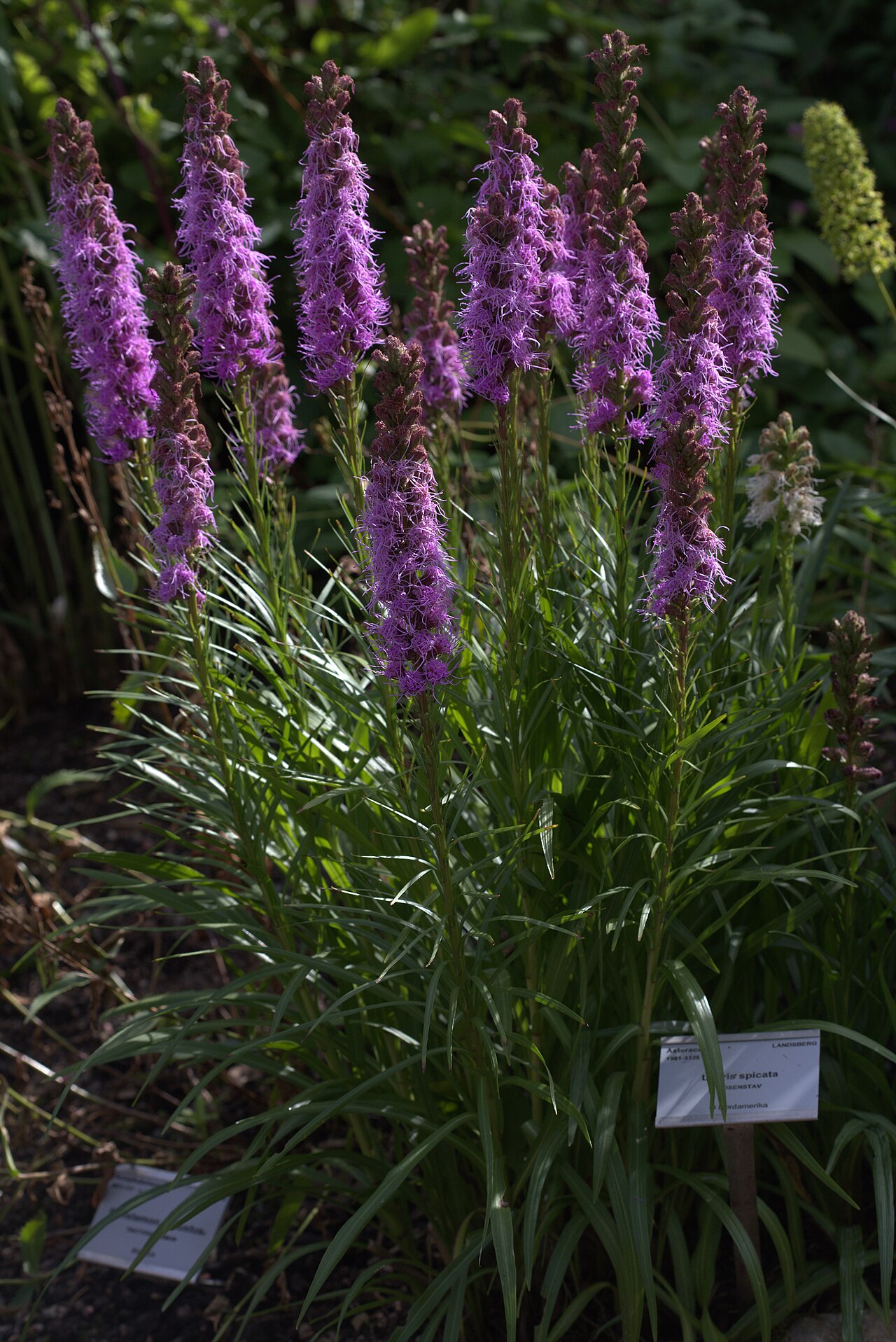
Your blazing star was supposed to give you neat purple exclamation points. Instead, the flower spikes are leaning, sprawling across the path, or lying flat after the last storm.
Stakes will hold them up this year. But in its natural home, blazing star stands on its own. When it doesn’t, something about the site is usually pushing it over.
This guide helps you sort out which spikes simply need a quick tie and which are telling you the plant needs a different spot. Work through the checks before you buy any hardware.
The Short Answer
Blazing star (Liatris spicata) normally holds its spikes upright without help. When the spikes fall over, the usual causes are:
- Too little sun, which stretches the stems and makes them lean toward the light.
- Soil that is too rich or a plant that gets fertilizer meant for its neighbors.
- Too much water from irrigation or a naturally wet spot.
- A very tall species or cultivar growing without neighbors to lean on.
- Weather: a heavy rain on fully open spikes, or strong wind.
- Stem rot at the base, which causes collapse rather than leaning.
Why Blazing Star Usually Stands Up on Its Own
Blazing star is a plant of open prairies, meadows, and sunny wetland edges. It evolved in full sun, in soil that isn’t especially rich, surrounded by grasses and other wildflowers.
Under those conditions the stems grow thick and stiff. Wisconsin Horticulture Extension describes the spikes as generally very upright and needing no staking, unless the plants are grown in very fertile, moist soil.
That’s the key to this whole problem. A garden bed is often richer, wetter, shadier, and emptier than a prairie. Each of those differences can weaken the stems.
Check 1: Is It Leaning or Collapsing?
Start by looking at how the stems are failing. This decides whether you’re dealing with growth or with disease.
- Stems curve or tilt in one direction but are firm all the way down: this is a growth issue. Keep reading.
- Stems bent flat after a storm but still green and firm: weather knocked them over. They may partly recover.
- Stems bent sharply near the base, with soft, brown, or water-soaked tissue at the bend: suspect stem rot.
Wisconsin Horticulture lists stem rot (Sclerotinia sclerotiorum) among the diseases of Liatris. Rotting stems should be cut out and removed, not staked. Better spacing and drier soil are the long-term fixes. Our guide to common blazing star problems covers disease in more detail.
Check 2: Count the Hours of Sun
Light is the most common reason a healthy blazing star leans. In shade, stems stretch, grow thinner, and bend toward whatever light they can find. The Old Farmer’s Almanac notes that low light can cause floppy stems and fewer blooms.
Watch the bed on a summer day. Count the hours of direct sun in the morning, at midday, and in the afternoon.
- 6 hours or more: light is probably fine. Look at soil and water next.
- 4 to 6 hours: stems may lean, especially toward the brightest side.
- Under 4 hours: shade is likely the main cause.
Deep shade can also stop flowering altogether; see our checklist for blazing star with leaves but no flowers.
A strong clue is direction. If every spike leans the same way, toward a lawn, a gap in the trees, or the south, the plant is reaching for light. Illinois Wildflowers makes a similar observation about prairie blazing star, which stays fairly erect in gardens but may bend oddly when something blocks its sunlight.
Check 3: Look at Soil Richness and Fertilizer
This one surprises many gardeners. Wisconsin Horticulture notes that blazing star tolerates poor soil, and that some types flop over when grown in soil that’s too rich.
Rich soil and fertilizer push fast, soft growth. The spike gets tall and heavy before the stem below it firms up. Then the first heavy rain finishes the job.
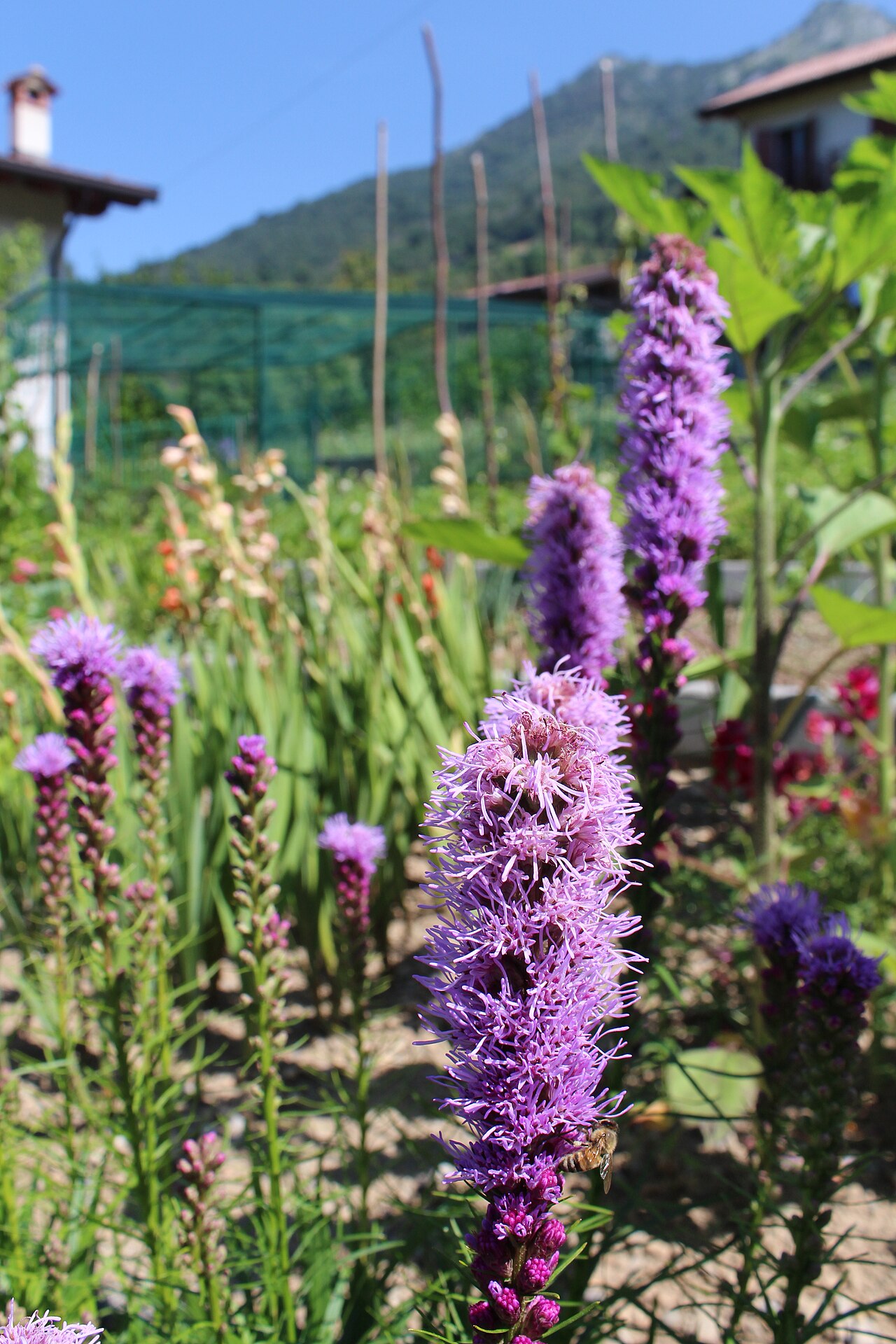
Ask these questions about the bed:
- Do you add compost or manure every year?
- Does lawn fertilizer get spread right up to the edge?
- Is it a vegetable bed or a border mixed with heavy feeders like roses?
If yes, stop feeding the blazing star. Our guide to the best soil for blazing star explains why lean, well-drained soil grows sturdier plants.
Check 4: Check the Water
Dense blazing star is native to moist prairies and marsh edges, so it handles more water than many prairie plants. Even so, constant moisture in a garden bed has the same effect as rich soil: lush, soft growth.
Plants in an irrigated bed with daily sprinklers, or at the bottom of a slope where water collects, are more likely to flop. Established blazing star is fairly drought tolerant, according to Wisconsin Horticulture, and rarely needs regular watering after its first season.
If the bed is on an irrigation zone, consider moving the blazing star to a zone that runs less often, or capping the nearest emitter.
Check 5: Consider the Species and Cultivar
Some blazing stars are simply tall. NC State Extension lists dense blazing star at 3 to 6 feet and notes that taller stems can flop and may need staking. The Lady Bird Johnson Wildflower Center lists plants up to about 6 feet.
Prairie blazing star (Liatris pycnostachya) is another tall species, with spikes 2 to 5 feet tall, and its long wands of flowers carry a lot of weight when wet.
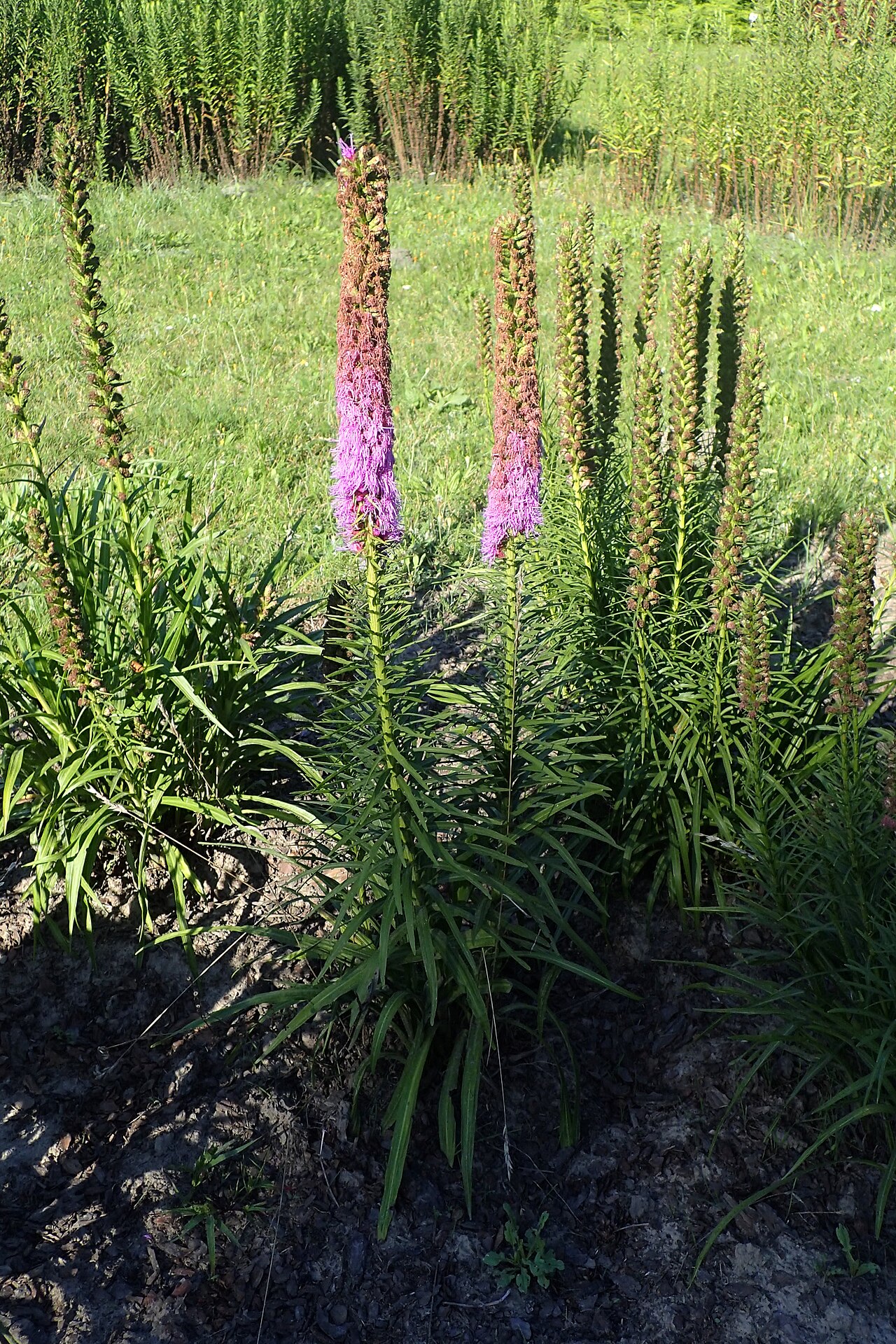
Cultivars vary too. Wisconsin Horticulture describes ‘Floristan Violet’ as strong-stemmed and favored by florists, and ‘Kobold’ as a compact variety suited to the front of the border. If tall stems keep failing even in a good site, a shorter cultivar may be the simplest fix.
Check 6: Look at the Neighbors
In a prairie, blazing star never stands alone. Grasses and sturdy wildflowers grow right up against it and give the spikes something to lean on.
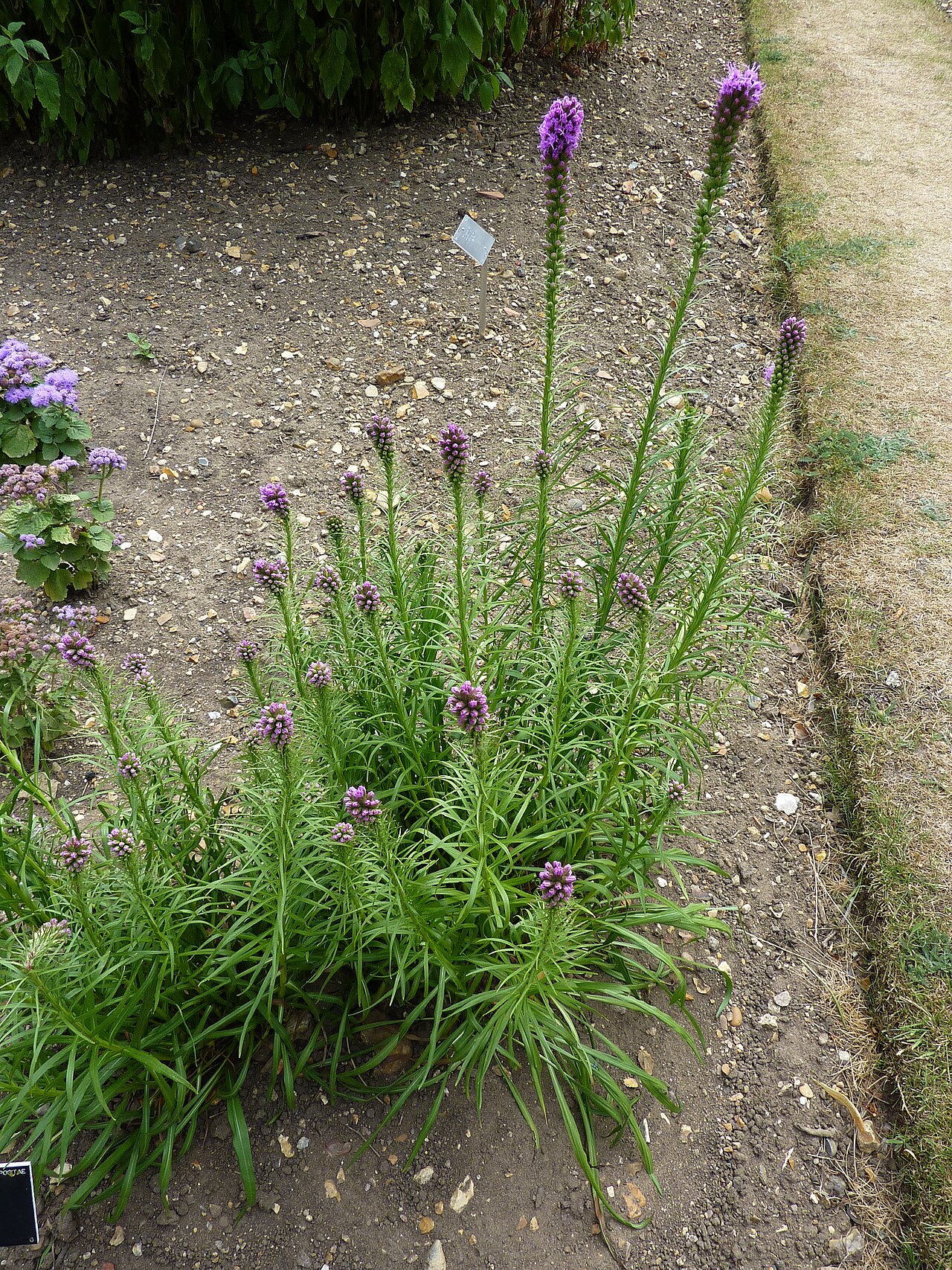
In a mulched bed with wide gaps, each clump has to hold itself up. Tall spikes on an isolated plant tend to splay outward from the center, as in the photo above.
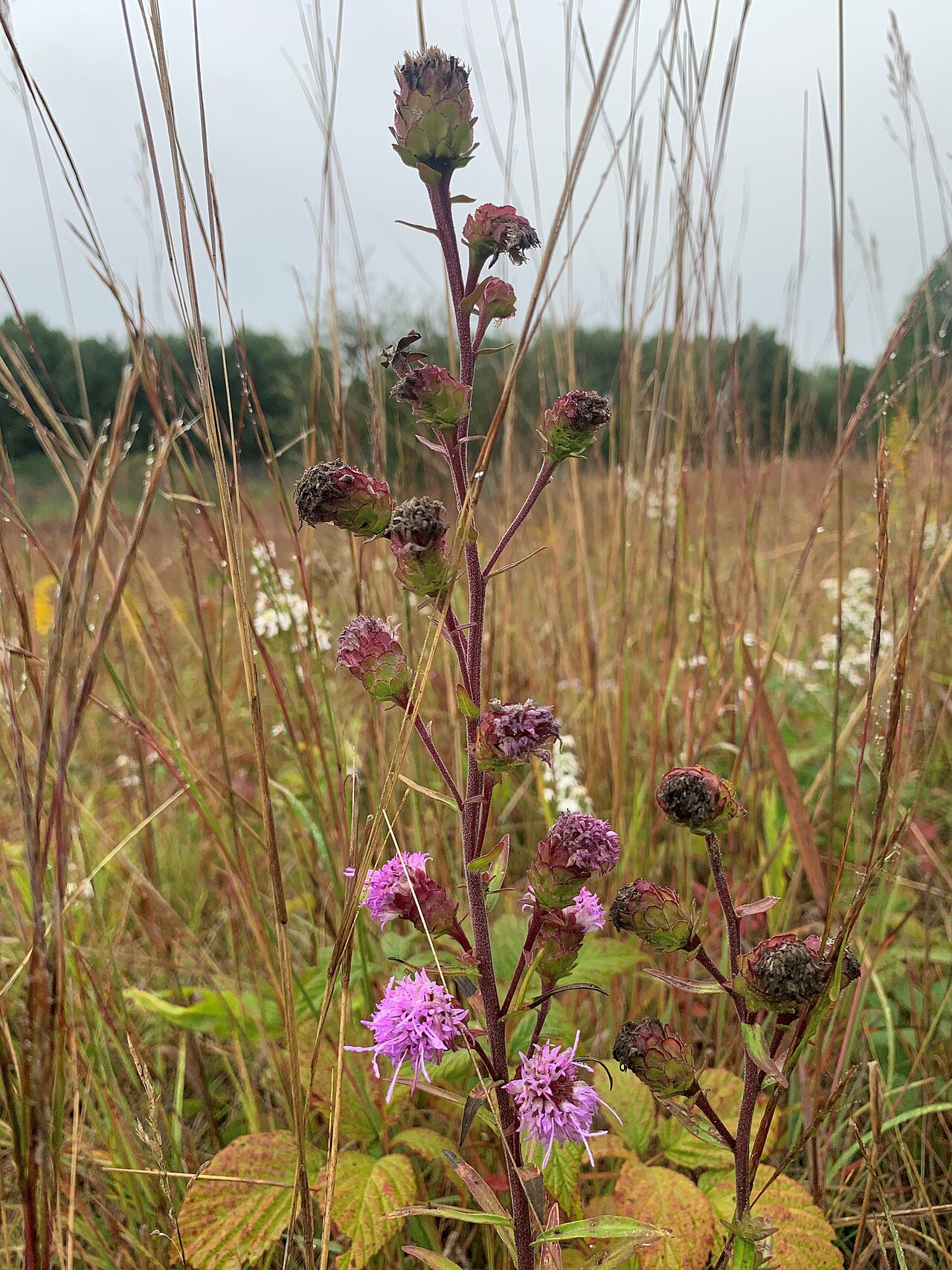
Wisconsin Horticulture recommends combining blazing star with prairie grasses. Clump-forming natives like little bluestem make good living supports. The same principle shows up with other tall natives, like New England asters, that stand better in company.
Check 7: Was It the Weather?
Sometimes a healthy plant in a good spot just gets hit. A long, heavy rain soaks the fluffy flower spikes and makes them top-heavy. A gusty storm does the rest.
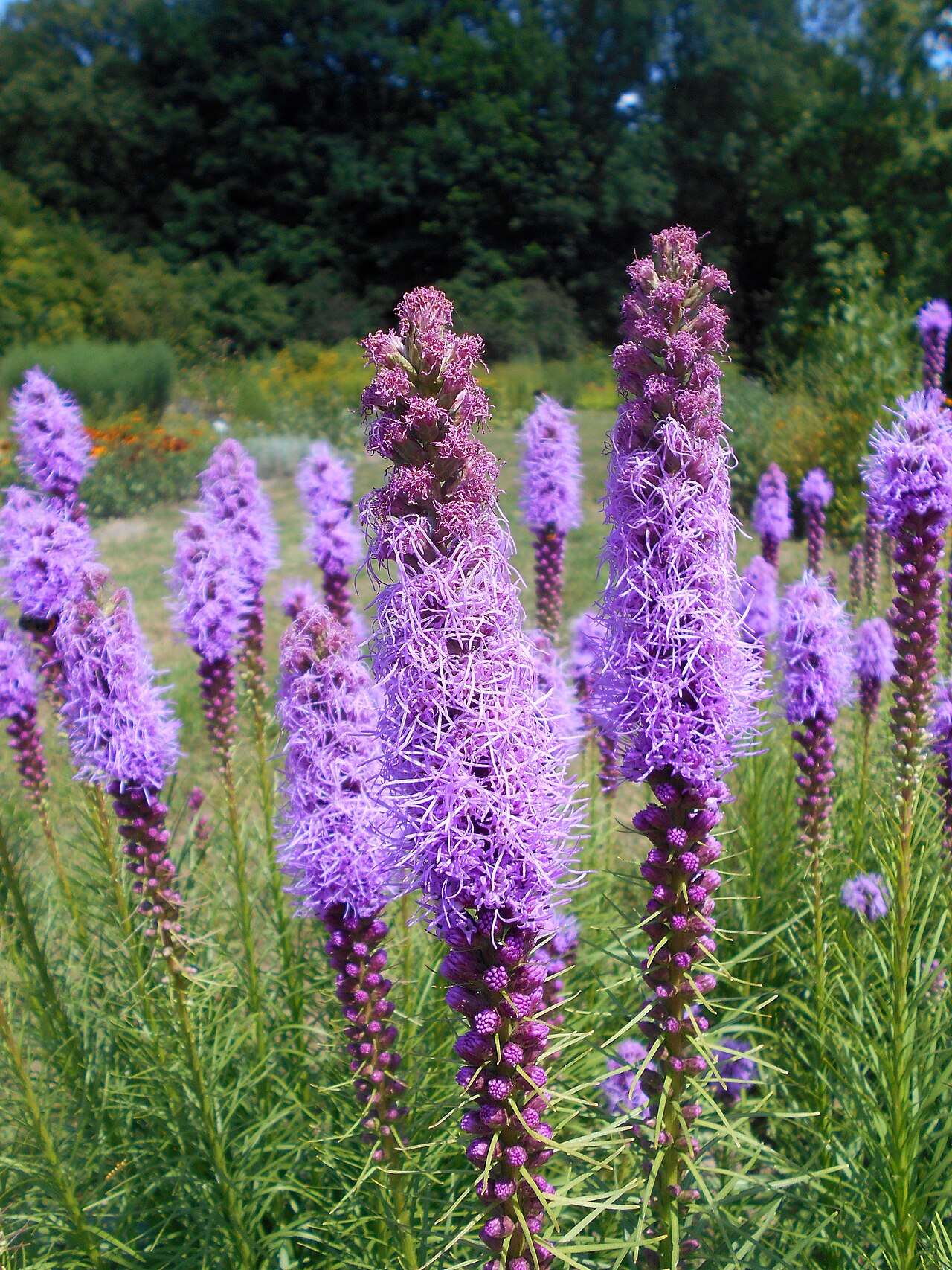
If only a few stems went over after one storm, and the plant passed every other check, you probably don’t have a site problem. Some stems will curve back up at the tip within a few days. The rest you can tie or cut.
Troubleshooting at a Glance
| All spikes lean one way | Too much shade. Move to full sun when dormant or in early spring. |
| Tall, lush, dark green, floppy | Rich soil or fertilizer. Stop feeding; consider a leaner spot. |
| Floppy in an irrigated bed | Too much water. Water only in long dry spells. |
| Spikes splay outward from a lone clump | No neighbors. Add grasses or plant in groups. |
| A few stems down after a storm | Weather. Tie loosely or cut for the vase. |
| Soft, brown stem at the base | Possible stem rot. Remove the stem, improve spacing and drainage. |
Support or Site Change? How to Decide
Stake this year if: the plant gets 6+ hours of sun, isn’t fed, and only flopped after bad weather or in its first big bloom year. A support is a reasonable, temporary fix.
Change the site if: it leans every year, every spike leans the same direction, or the bed is shady, irrigated, or heavily amended. Stakes won’t fix the cause, and you’ll be staking it forever.
For a quick fix this season, use one of these methods:
- Single stakes: push a thin bamboo cane in beside each heavy spike, a few inches from the base. Tie loosely with soft twine in a figure-eight so the stem isn’t pinched.
- Corral: set three or four stakes around the clump and run twine around them at about half the plant’s height. This works well for crowded clumps.
- Grow-through ring: next spring, set a ring support over the clump when the leaves are a few inches tall. The stems grow up through it and hide it.
- Cut them: leaning spikes make good cut flowers. Wisconsin Horticulture suggests harvesting when half to two-thirds of the flowers are open.
For a permanent fix, move the clump. Wisconsin Horticulture recommends digging and dividing in spring just as the leaves emerge; our guide on when to divide blazing star walks through it. Replant in full sun in lean, well-drained soil, spaced about 12 to 15 inches apart, and stop fertilizing.
A Season-by-Season Plan for Upright Spikes
- Early spring: move or divide clumps in poor sites as the leaves emerge. Set grow-through supports over tall cultivars now.
- Spring: skip fertilizer. Keep lawn feed and compost top-dressings away from the clump.
- Early summer: water only in prolonged dry spells. Watch which way the spikes lean as they elongate.
- Bloom: tie any leaning stems early, before a storm does the damage. Cut a few spikes for the house.
- Fall and winter: leave stems standing for seed-eating birds. NC State Extension suggests cutting dead stems back to 12 to 24 inches and leaving them for stem-nesting native bees.
If you’re starting new plants, our guide to blazing star corms that won’t sprout covers planting depth and drainage from day one. Growing on a windy patio? Our guide to blazing star in a pot explains why compact cultivars work best there.
📋 More on this plant: read the full Blazing Star (Liatris spicata) profile, or see it in our native plant lists for North Carolina & South Carolina, Georgia, Alabama & Mississippi, Arkansas, Louisiana, Eastern Oklahoma & Eastern Texas, Ohio & Indiana, and Michigan, Wisconsin & Eastern Minnesota.
Frequently Asked Questions
Why is my liatris falling over?
Most often it’s too little sun, soil that’s too rich, or too much water. Those conditions grow tall, soft stems that can’t carry a heavy, wet flower spike. Tall species and storms make it worse.
Do I need to stake blazing star?
Usually not. In full sun and lean, well-drained soil, the spikes generally stand on their own. Staking is mostly needed for very tall plants or ones in rich, moist beds.
Can a bent blazing star spike straighten back up?
A stem that’s bent but not broken may turn its tip upward again within a few days. The bend itself won’t straighten. Tie it gently or cut it for an arrangement.
Should I cut back blazing star to keep it shorter?
Not usually. Each stem ends in a single flower spike, so cutting stems back early in the season risks removing that year’s flowers. Fix the light and soil instead, or choose a compact cultivar like ‘Kobold’.
Is it better to move blazing star in spring or fall?
Wisconsin Horticulture recommends dividing in spring just as the leaves emerge. That gives the plant a full season to root in before winter.
Sources
- Wisconsin Horticulture, Division of Extension, Liatris: upright habit without staking except in fertile, moist soil, flopping in rich soil, sun, spacing, drought tolerance, stem rot, cultivars, division timing, cut-flower harvest.
- North Carolina Extension Gardener Plant Toolbox, Liatris spicata: height, taller stems flopping and staking, cutting stems to 12–24 inches for stem-nesting bees.
- Lady Bird Johnson Wildflower Center, Liatris spicata: height, habitat, native range.
- Illinois Wildflowers, Prairie Blazingstar: upright habit in gardens and bending when sunlight is obstructed.
- The Old Farmer’s Almanac, Liatris (Blazing Star): floppy stems from low light and excess fertilizer, stakes and cages.