Blazing Star Growing Leaves but No Flowers: A Troubleshooting Checklist
Last updated: November 6, 2026
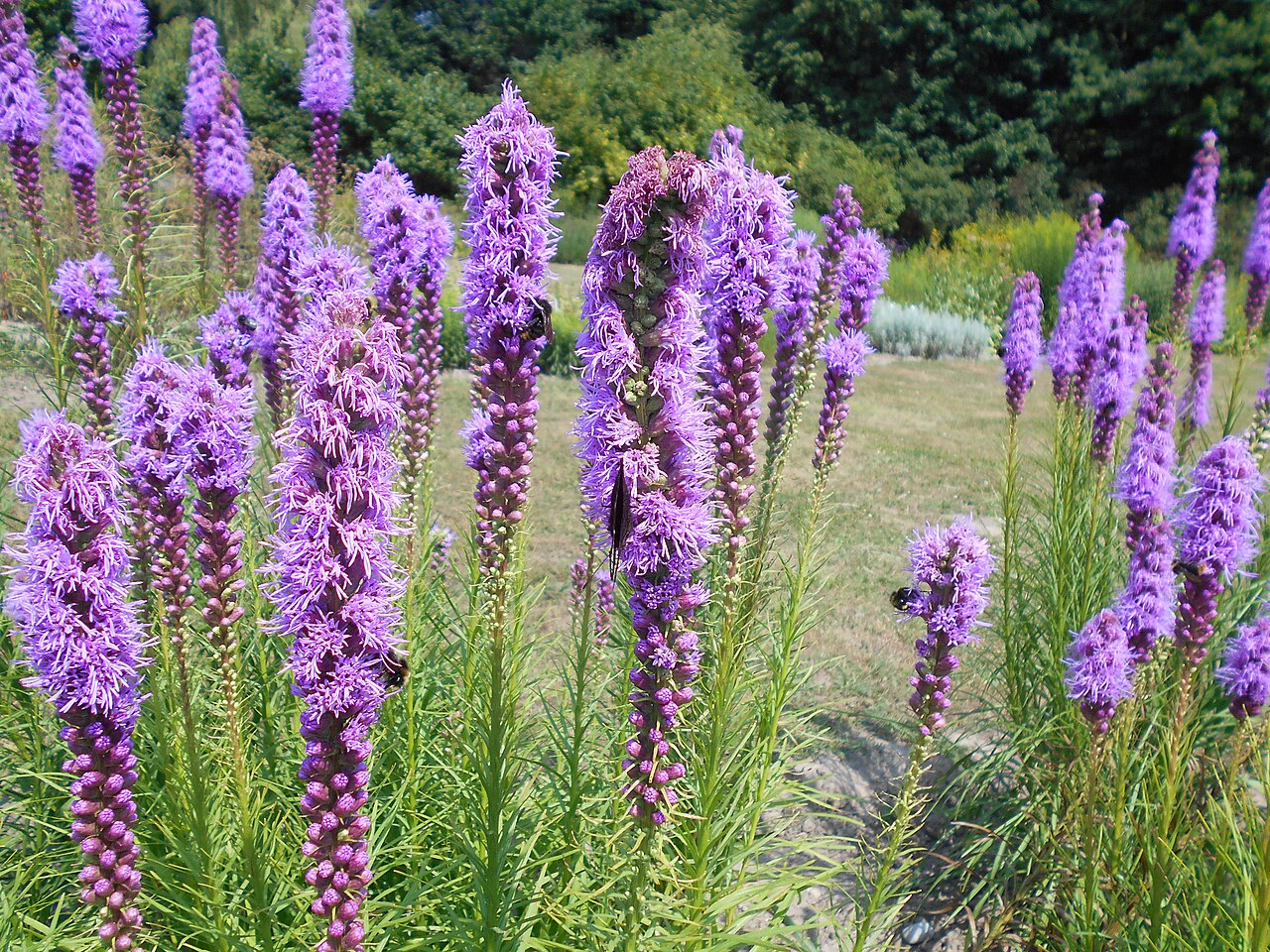
Your blazing star looks healthy. The grassy leaves are green and full. But summer is moving along, and there’s no sign of the purple spikes you planted it for.
That’s frustrating, but it’s also one of the more fixable problems with this plant. A leafy blazing star with no flowers is alive and storing energy. Something is just keeping it from putting that energy into bloom.
Work through this checklist in order. The first two checks take a minute and solve a surprising number of cases.
The Short Answer
Blazing star (Liatris spicata) that grows leaves but no flowers is usually:
- Too young. Seed-grown plants often take two or three years to bloom.
- Not done yet. Bloom runs from July into September, and some species are later.
- In too much shade. It needs full sun to flower well.
- Overfed or growing in soil that’s too rich.
- Cut back or eaten at the wrong time, removing the flower stems.
- Stressed by wet soil, crowding, or a recent move.
How Blazing Star Builds a Flower Spike
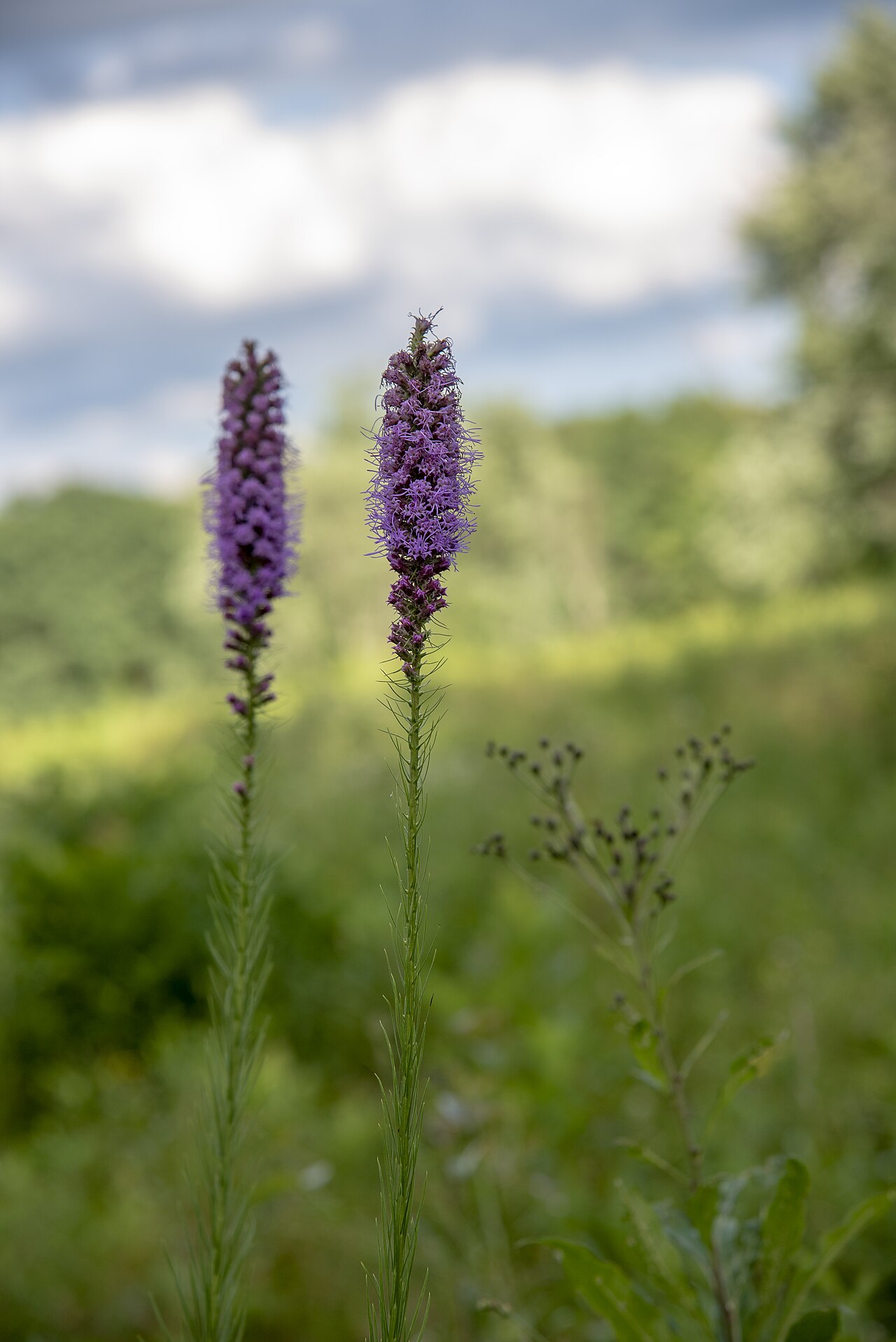
Blazing star starts each spring as a tuft of narrow leaves rising from an underground corm. As the season goes on, a central stem lengthens, still clothed in leaves, and the flower heads form at its tip.
The spike blooms in an unusual order. Flowers open at the top first and work their way down, so a spike can look half-finished for a while. The Lady Bird Johnson Wildflower Center lists bloom from July through September.
Making that spike takes stored energy. A corm that’s too small, too shaded, or too stressed will put up leaves to feed itself and skip flowering for the year.
When to Expect Flowers
| Grown from seed | Usually the second or third year |
| Planted as corms | Often the first or second summer, depending on corm size |
| Nursery potted plant | Often the first or second summer |
| Divided or moved | Small divisions may skip a year |
| Bloom season | July to September for dense blazing star |
Check 1: How Old Is the Plant?
Age is the most common answer, especially for plants grown from seed. Wisconsin Horticulture Extension notes that seed-grown blazing star generally won’t bloom until its second or third year.
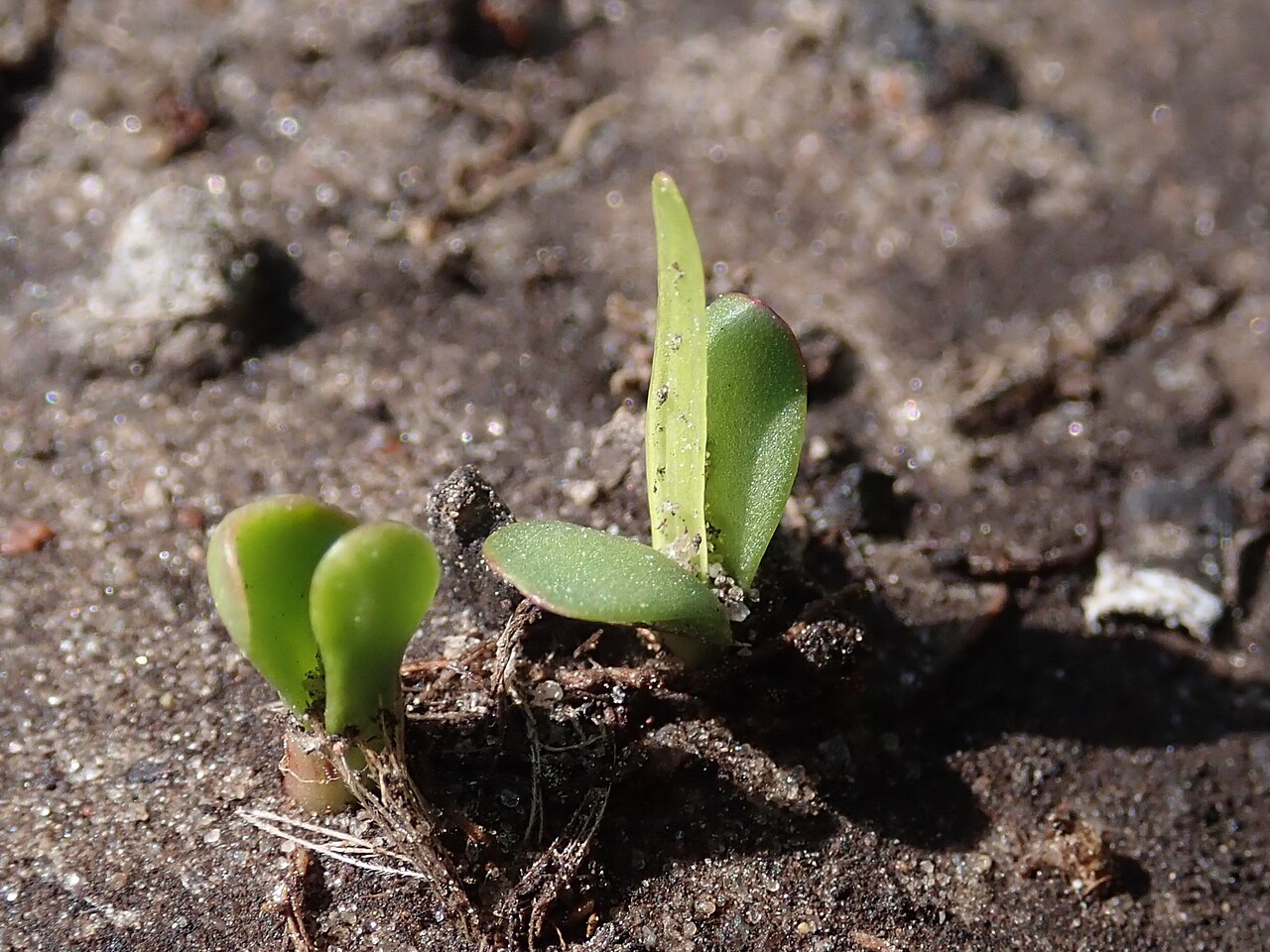
Those first years go into building the corm. A small corm can feed leaves but not a flower spike. Plugs from a seed tray or a young potted plant may be in the same position, even if they look full above ground.
Our blazing star profile notes that corms or nursery plants usually flower in their first or second year after planting. If yours is younger than that, the answer may simply be patience.
Check 2: Is It Still Early?
Look at the calendar and at your region. Dense blazing star blooms from July into September. In the north, or after a cool spring, the first spikes may not open until August.
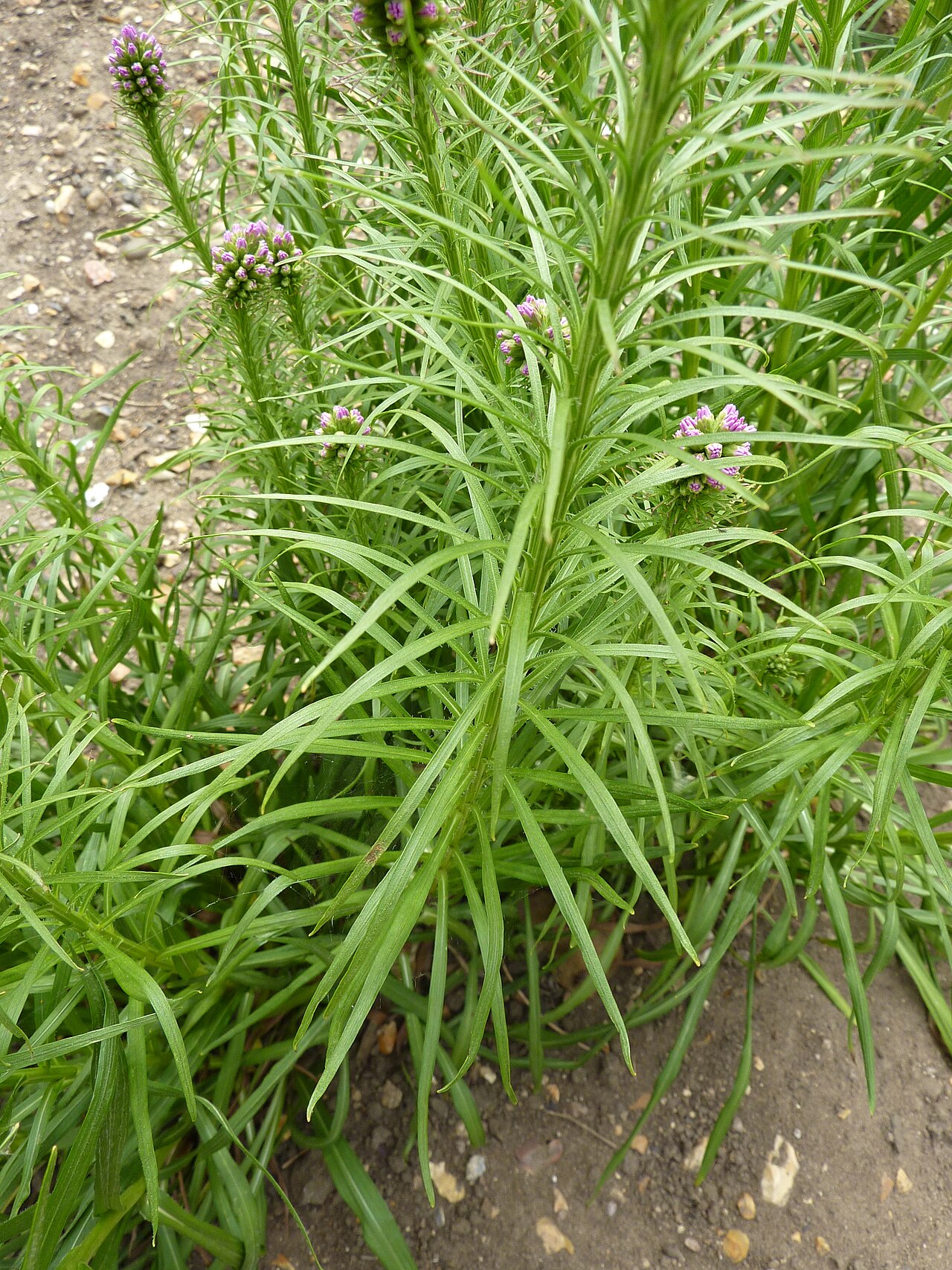
Check whether the stems are lengthening. A flowering stem rises well above the basal tuft of leaves, and you can usually see tight flower heads clustered at its tip weeks before they color up.
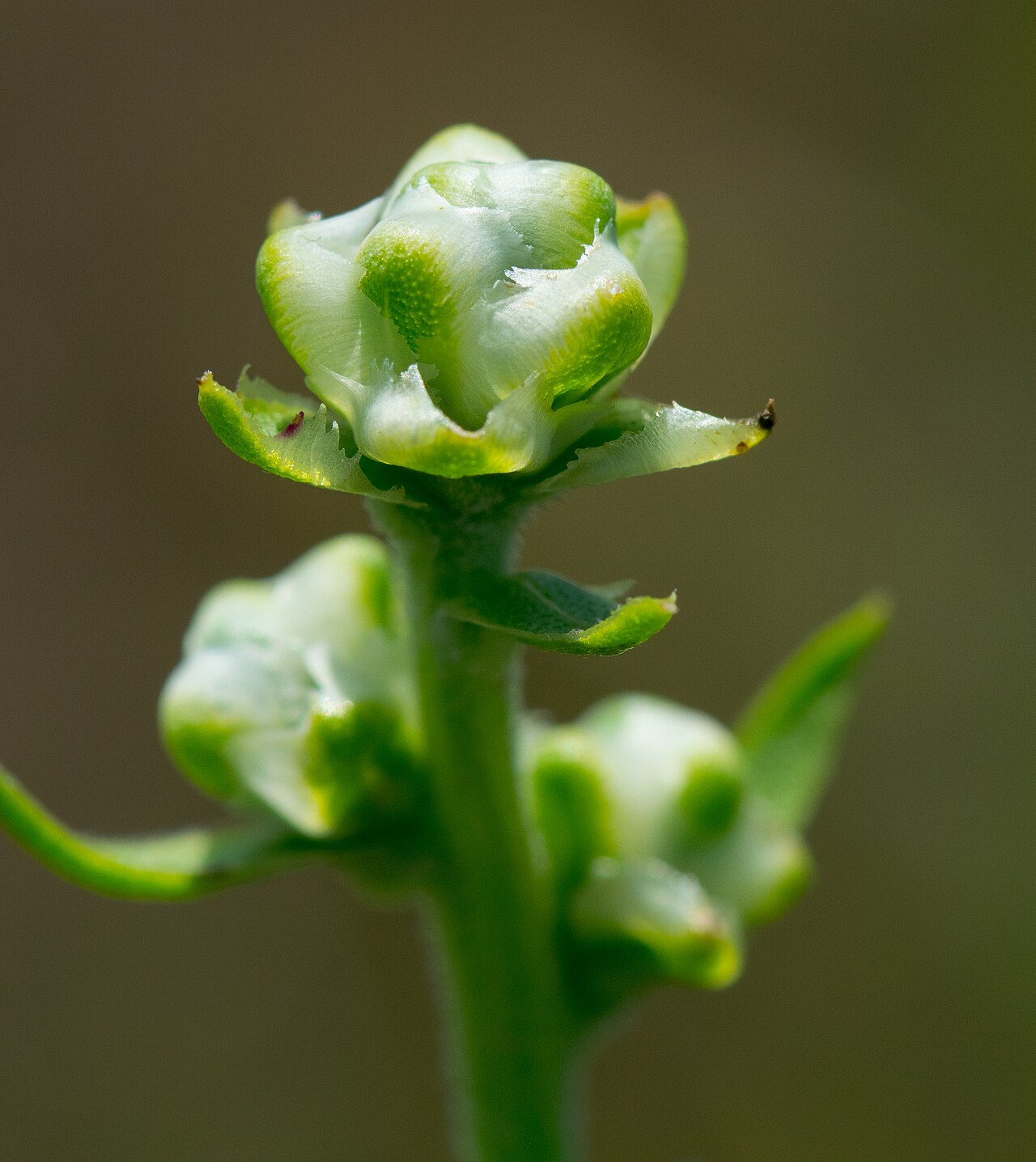
Also confirm which blazing star you have. Rough blazing star (Liatris aspera) flowers in August, according to Wisconsin Horticulture, later than many dense blazing star plantings. Its round green buds can look like nothing is happening for weeks.
Check 3: Measure the Sun
Blazing star is a prairie and meadow plant. Wisconsin Horticulture says it performs best in full sun, though it tolerates some shade. Our profile recommends at least six to eight hours of direct sun for good flowering.
In shade, the plant often keeps its leaves but skips or reduces flowering. Stems that do form tend to be thin and lean toward the light.
Count the hours of direct sun in midsummer, when nearby trees are in full leaf. A spot that was sunny when you planted it may be shadier now that a shrub or tree has filled in. If your only sunny spot is a patio, growing blazing star in a pot lets you put it right where the light is.
Check 4: Look at Soil and Fertilizer
Blazing star grows well in average or even poor soil. The Old Farmer’s Almanac lists overfeeding, along with too little sun, as a cause of poor bloom.
Rich soil and nitrogen fertilizer push leafy growth. If your clump is unusually lush and dark green but flowerless, look at what’s been added nearby. Lawn fertilizer that drifts into the bed is a common hidden source.
Stop feeding the plant. If you’re not sure what’s in the soil, a basic test is cheap and more reliable than guessing. Our soil testing tips for beginners show how to collect a good sample.
Check 5: Ask Whether It Was Cut or Eaten
Each blazing star stem ends in a single flower spike. Cut that stem early in the season, and that year’s flowers on it are gone.
Think back over spring and early summer:
- Did anyone shear or string-trim the bed for tidiness?
- Was the plant mowed along a meadow edge?
- Did you cut stems back after mid-spring?
Our guide to pruning blazing star covers the safe windows: late fall or late winter, before new growth.
Animals can do the same thing. Illinois Wildflowers notes that rabbits and groundhogs eat young prairie blazing star, and deer browse mature plants. Look for stems clipped off cleanly at an angle, which points to rabbits, or torn, ragged tips, which point to deer.
Check 6: Consider Crowding, Moving, and Wet Soil
An older clump that has gotten wider every year but blooms less may be crowded. If that sounds like yours, see our guide to when to divide blazing star. Reading the clump in spring will tell you whether it’s crowding or something else.
A plant moved or divided this year often skips a bloom season while it rebuilds. That’s normal and usually resolves the next summer.
Wet soil is the last suspect. Wisconsin Horticulture warns that blazing star rots if the soil stays too moist. A plant losing corms to rot in a soggy spot will look weaker each year, with fewer shoots and fewer flowers. Our guide to blazing star corms not sprouting covers how to check drainage and spot rot.
Check 7: Make Sure You Didn’t Miss It
This sounds unlikely, but it happens. Blazing star blooms for a few weeks, and a busy summer or a vacation can cover the whole show.
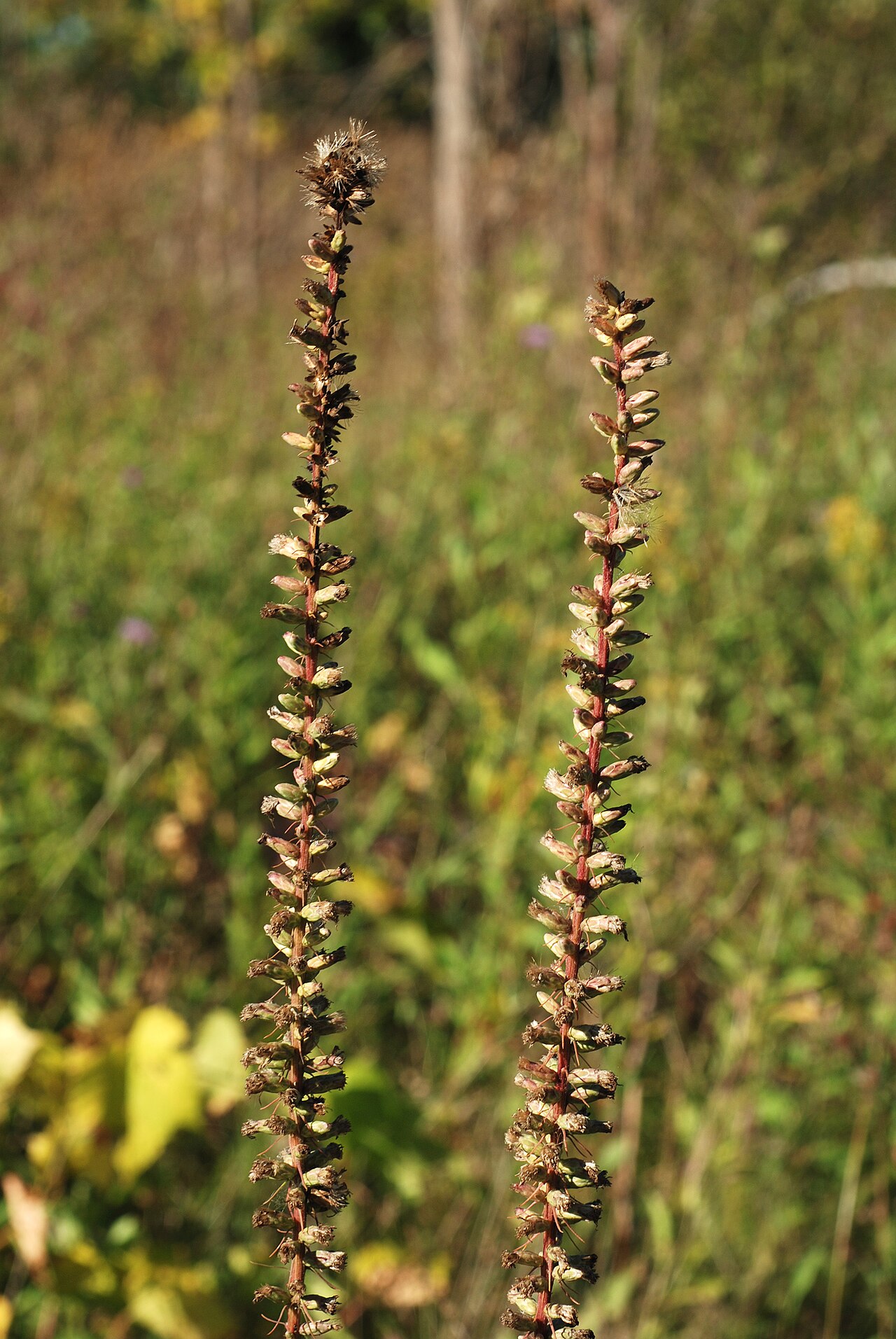
Look for tall, brown stems lined with dried flower heads and fluffy seed. If they’re there, the plant flowered. If spikes are short and few, it bloomed weakly, and the checks above still apply.
Troubleshooting at a Glance
| First or second year from seed | Normal. Wait a season or two. |
| Stems rising, buds at the tips | It’s on its way. Check again in a few weeks. |
| Leafy, thin, leaning stems | Too much shade. Move to full sun. |
| Lush, dark green, no flowers | Overfed. Stop fertilizing. |
| Clipped or ragged stem tips | Rabbits, deer, or pruning. Protect the plant next spring. |
| Wide old clump, fewer spikes each year | Crowding. Divide in early spring. |
| Fewer shoots, soft corms, wet spot | Rot. Improve drainage or relocate. |
What to Do This Year
If the plant is young or it’s still midsummer: do nothing. Keep weeds down and water only in long dry spells.
If shade is the cause: plan to move the clump in early spring as the leaves emerge, into a spot with full sun. Trimming back an overhanging shrub can help in the meantime.
If it’s been fed: stop now. Don’t try to fix it with a “bloom booster” fertilizer. Lean soil is what this plant prefers.
If it was cut or browsed: leave the plant alone for the rest of the season. Next spring, protect new growth with a simple wire cage if rabbits are around, and keep trimmers away until fall.
If spikes do form but flop over, our guide to blazing star spikes falling over covers that next step.
A Season-by-Season Plan for More Flowers
- Late winter: cut old stems back before new growth. Note how much sun the bed gets once trees leaf out.
- Early spring: move or divide clumps that need it. Set rabbit cages over young plants.
- Spring to early summer: no fertilizer and no shearing. Keep lawn feed out of the bed.
- Midsummer: watch for stems rising above the leaves and buds forming at the tips.
- Late summer to fall: enjoy the bloom, then leave seed heads for goldfinches and other birds.
📋 More on this plant: read the full Blazing Star (Liatris spicata) profile, or see it in our native plant lists for North Carolina & South Carolina, Georgia, Alabama & Mississippi, Arkansas, Louisiana, Eastern Oklahoma & Eastern Texas, Ohio & Indiana, and Michigan, Wisconsin & Eastern Minnesota.
Frequently Asked Questions
Why is my liatris not blooming?
The most common reasons are a young plant, too much shade, or too much fertilizer. Check the plant’s age and the hours of direct sun first, then work through feeding, pruning, and wildlife.
How long does blazing star take to bloom from seed?
Usually two to three years. Wisconsin Horticulture notes that seed-grown plants generally won’t bloom until their second or third year.
Does blazing star bloom the first year from corms?
It often does, if the corms are large and healthy. Smaller corms may produce only leaves the first summer and bloom the next.
Will fertilizer make blazing star flower?
Usually not. Blazing star prefers lean soil, and extra fertilizer tends to produce more leaves and floppier stems rather than more flowers.
Can deadheading make blazing star bloom more?
Removing faded spikes can tidy the plant, and some gardeners report a little extra bloom. It won’t make a non-flowering plant flower, though. Leaving spent spikes feeds birds through fall and winter.
Sources
- Wisconsin Horticulture, Division of Extension, Liatris: top-down bloom, full sun, poor-soil tolerance, rot in overly moist soil, rough blazing star bloom timing, seed-grown plants blooming in the second or third year.
- Lady Bird Johnson Wildflower Center, Liatris spicata: bloom months, habit, native range.
- Illinois Wildflowers, Prairie Blazingstar: rabbits, groundhogs, and deer feeding on blazing star.
- The Old Farmer’s Almanac, Liatris (Blazing Star): lack of blooms from low light and overfeeding, slow establishment.
- North Carolina Extension Gardener Plant Toolbox, Liatris spicata: growth habit and native range in North Carolina.