
Pawpaw Root Suckers: Which Shoots Should You Keep?
Last updated: November 5, 2026
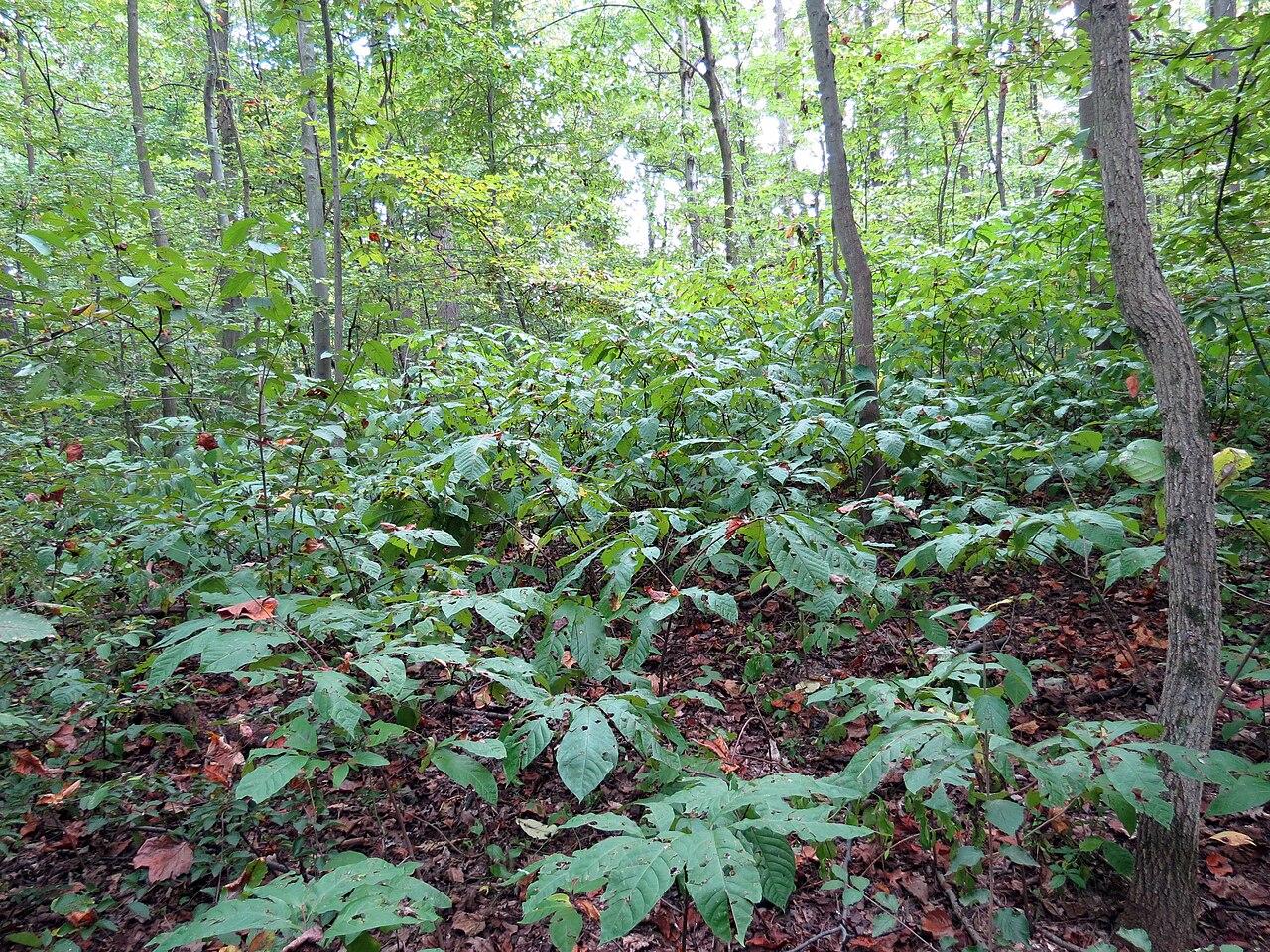
A few years after planting a pawpaw, new shoots start popping up in the mulch, the lawn, or the flower bed several feet from the trunk. Some look like perfectly good little trees.
Those shoots are root suckers, and they’re how pawpaw builds the thickets it forms in the wild. Whether you keep them depends entirely on what you want from the planting.
This guide explains what suckers are, why most of them are not the free trees they appear to be, and how to decide which ones to keep, remove, or leave alone.
The Short Answer
Pawpaw (Asimina triloba) suckers grow from the roots of an established tree. Which ones to keep depends on your goal:
- Fruit from a single-trunk tree: remove them all. Clemson Extension recommends this for faster growth and earlier fruiting.
- A grafted, named cultivar: remove them all. Suckers come from the rootstock, not the variety you bought.
- A naturalized thicket for wildlife or erosion control: keep well-spaced suckers inside the area you’ve set aside.
- Replacing a failing trunk: keep one strong, well-placed sucker.
- A second tree for pollination: none of them will work. Suckers are clones of the parent’s roots.
How Pawpaw Suckers Work
Pawpaw spreads by sending up new stems from shallow, horizontally spreading underground runners. Over time, one tree can become a patch. Alabama Extension describes wild groves as one or more “mother trees” surrounded by numerous smaller root suckers that look like separate trees.
The stems in a patch stay connected underground and can share resources. Stems that reach sunlight grow tallest and bear the most fruit, while stems in shade lean and bend toward light gaps.
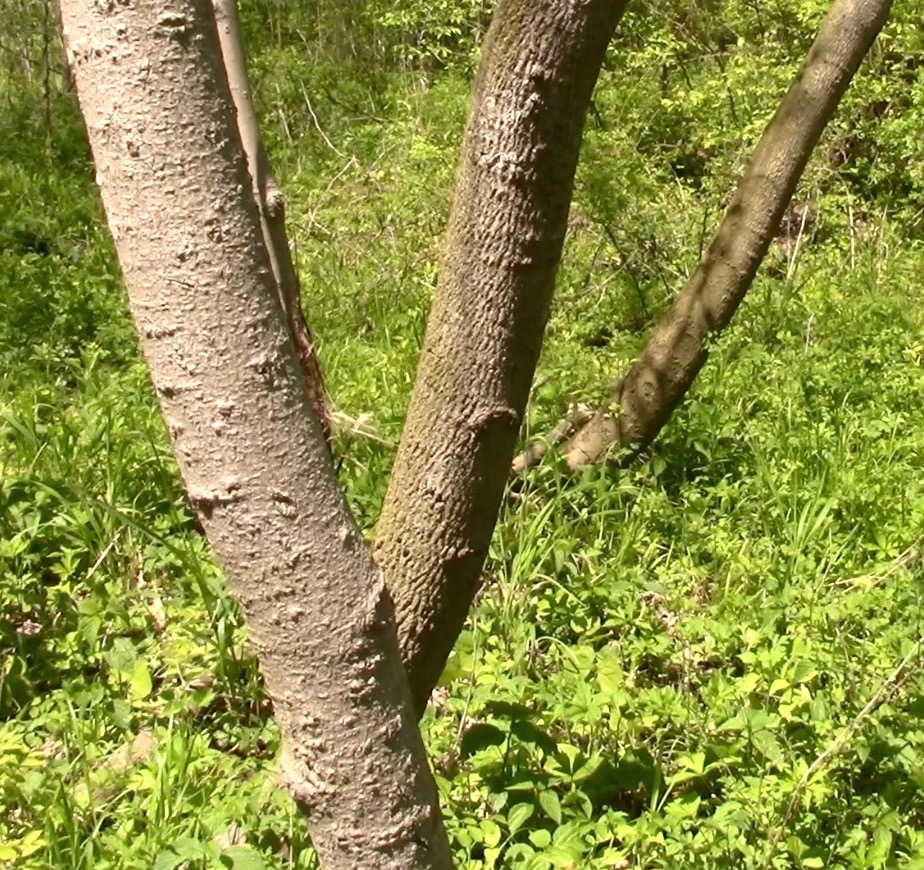
Suckering usually starts once a tree is established. Clemson Extension notes that mature pawpaws sucker profusely from the roots, and NC State Extension warns that root suckers can be troublesome in the landscape.
Two facts about suckers drive every decision below:
- They’re genetic copies of the root system they grow from. On an own-root tree, that’s the parent tree itself.
- They have weak root systems of their own. Purdue Extension notes that root suckers normally have no secondary roots for a great distance from the shoot.
Keep or Remove? A Quick Guide
| Sucker below the graft on a named cultivar | Remove. It’s rootstock, with unknown fruit quality. |
| Sucker in the lawn, path, or a neighbor’s yard | Remove, and keep removing as new ones appear. |
| Sucker crowding the base of a young fruiting tree | Remove to keep a single trunk and focus growth. |
| Sucker inside a planned thicket or woodland edge | Keep the strongest, thin the weakest and most crowded. |
| Vigorous sucker near a dying or damaged trunk | Keep one as a replacement leader. |
| Sucker you hoped to use as a pollination partner | Won’t work. Plant a genetically different tree instead. |
Step 1: Decide What You Want From the Planting
Before cutting anything, decide which of two very different plantings you’re managing.
A fruit tree. You want one trunk, good light into the canopy, and energy going into flowers and fruit. Alabama Extension recommends training pawpaws to a central leader with well-spaced branches so light reaches the fruit. Suckers compete with that goal.
A native thicket. You want a patch that shades out weeds, holds soil, and feeds wildlife. Pawpaw’s habit of forming dense, well-rooted thickets is one reason it’s used in streambank and riparian restoration. Here, suckers are the point.
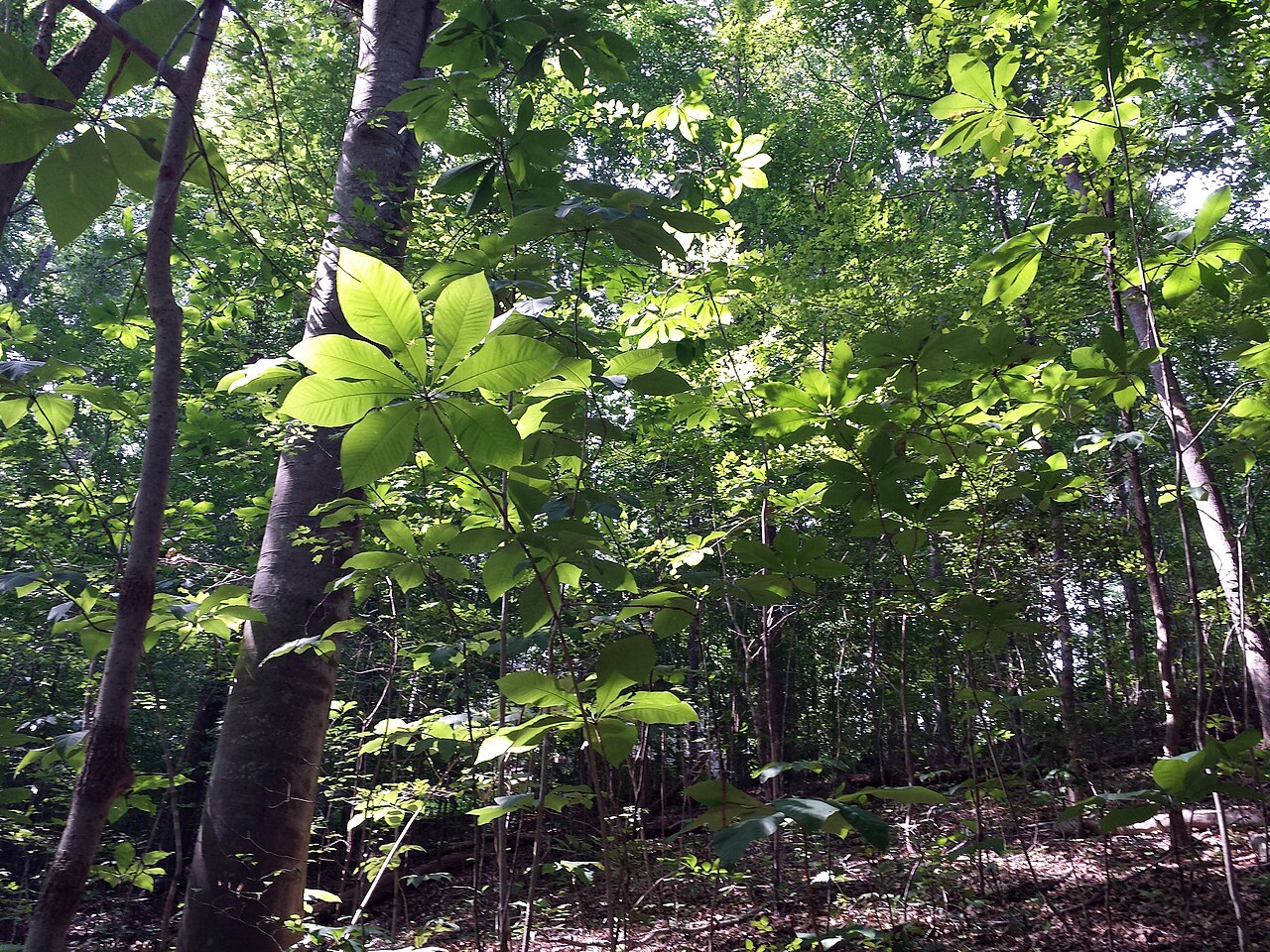
Many yards can have both: a single-trunk tree near the house and a looser patch at the woodland edge. Just decide where the boundary is, and treat suckers differently on each side of it.
Step 2: Check Whether Your Tree Is Grafted
Most named pawpaw cultivars are grafted onto seedling rootstock. Alabama Extension notes that commercial trees combine scion wood from a known cultivar with rootstock grown from seed.
Look at the lower trunk for a slight bulge, bend, or change in bark texture a few inches above the soil. That’s the graft union. Any sucker that comes up from the roots, or from the trunk below that line, belongs to the rootstock.
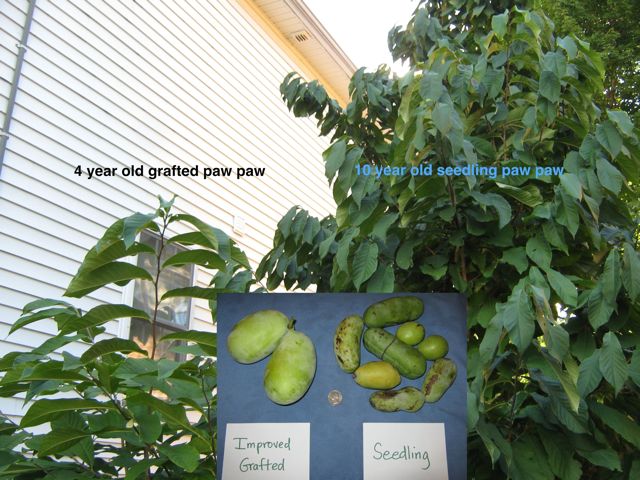
A rootstock sucker will not produce the cultivar’s fruit. If it’s allowed to grow, it can eventually crowd or shade the grafted top. On grafted trees, remove every sucker.
Step 3: Remove Unwanted Suckers the Right Way
Cutting is cleaner than pulling. Yanking a sucker can tear the root it shares with your tree.
- Use clean, sharp pruners or loppers.
- Pull back mulch or soil to expose the base of the sucker where it leaves the root.
- Cut it flush at its point of origin, as low as you can reach without digging into the main root.
- Replace the mulch over the cut.
- Check again every few weeks during the growing season. Removing them while small is far easier than cutting woody stems later.
In the lawn, regular mowing keeps most suckers from ever growing past a few inches. Along a bed edge, a mown strip or path gives you a clean line to manage.
Kentucky State University recommends corrective pruning of pawpaw in late winter or early spring before bud break. Suckers can come off any time you see them, but save structural cuts on the main tree for that window. Our guide to pruning basics for small trees covers cut placement and tools.
Step 4: Never Spray Herbicide on Suckers
It’s tempting to spray suckers in the lawn with a weed killer. Don’t.
Alabama Extension warns that because pawpaws sucker through a shared root system, systemic herbicides sprayed on surrounding vegetation can be taken up by the main trunk when suckers are present. It advises removing suckers before any herbicide use near pawpaws and shielding trunks.
For a home planting, the safest approach is to skip herbicides in the pawpaw’s root zone entirely. A sucker connected to your tree can carry the chemical back to it.
Step 5: Keep the Right Suckers for a Thicket
If you’re managing a patch, you still have choices. Not every shoot deserves to stay.
- Keep straight, vigorous suckers growing toward the light, spaced so they don’t rub against each other.
- Remove spindly shoots, shoots crowded tightly against a larger stem, and anything leaning out over a path or lawn.
- Keep some young, leafy growth. Zebra swallowtail butterflies prefer young pawpaw leaves for laying eggs.
- Set a hard edge. Mow or cut anything that comes up outside the patch boundary.
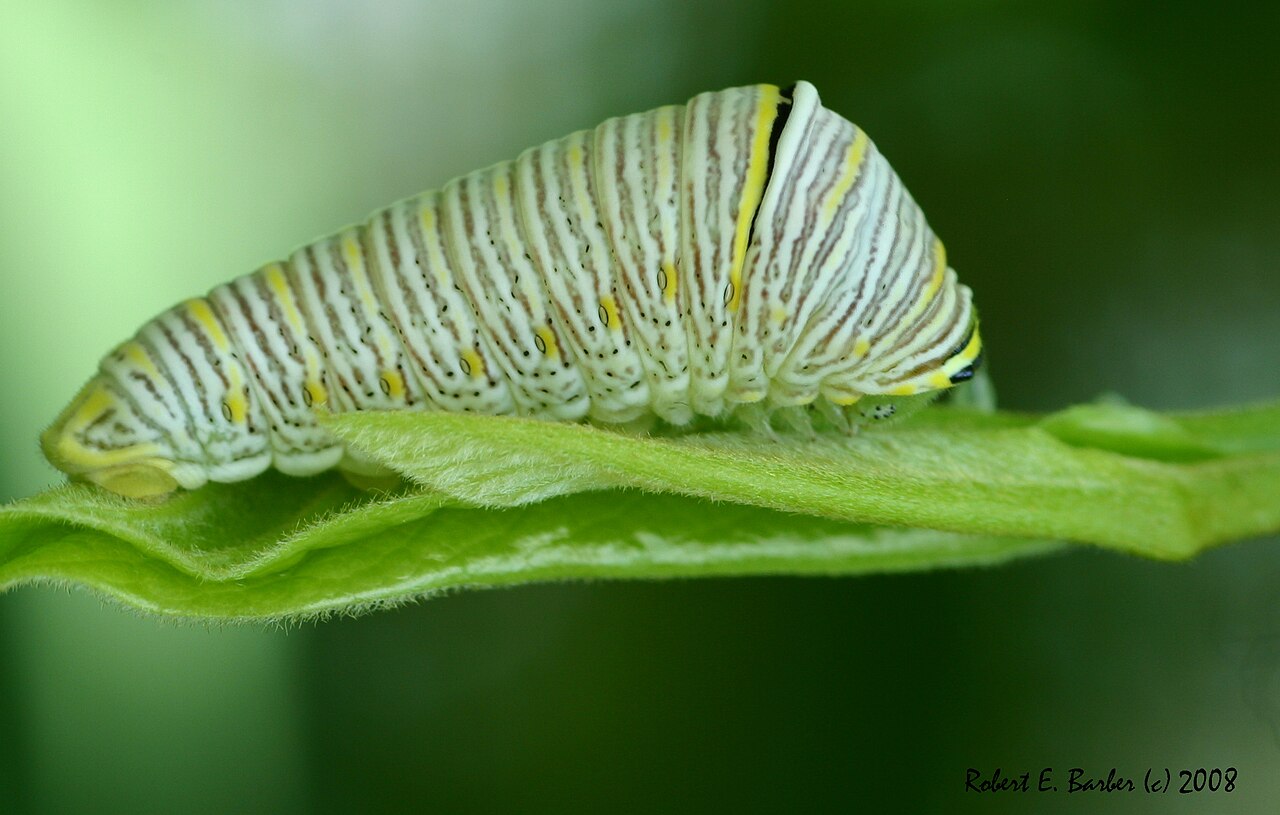
Pawpaw is the larval host for the zebra swallowtail (Eurytides marcellus). Clemson and NC State both note that caterpillar feeding seldom does serious harm to established trees. Alabama Extension adds that they can damage very young trees, which is one more reason a thicket with plenty of extra shoots suits them well. See our guide to attracting butterflies to gardens for nectar plants that support the adults.
Thickets also hold soil on slopes and streambanks. If that’s your goal, our guide to slope erosion control with natives covers companion plants.
Step 6: Use a Sucker to Replace a Failing Trunk
Sometimes the main trunk is damaged by storms, mower wounds, or disease. Clemson notes that ambrosia beetles sometimes kill stressed pawpaws, and Alabama Extension reports Armillaria root rot in mature plantings.
On an own-root tree, a vigorous sucker near the base can become the new trunk. Pick one that’s straight, well rooted at its base, and a short distance from the old trunk. Remove its competitors and train it as a single leader.
On a grafted tree, a sucker replacement gives you rootstock, not the original cultivar. That’s still a pawpaw, and it can be top-worked by grafting later. Alabama Extension notes that bark inlay grafting is a proven method for topworking larger trunks.
If the old trunk has large dead limbs over a house, path, or play area, have a qualified arborist assess it before removal.
Step 7: Think Twice Before Transplanting a Sucker
Digging a sucker for a friend or another part of the yard looks easy, but it usually fails.
Purdue Extension says transplanting pawpaw root suckers is extremely difficult and usually ends in failure, because the sucker lacks its own secondary roots. Alabama Extension and Clemson Extension agree that dug suckers are mostly unsuccessful.
If you want to try, Kentucky State University suggests cutting partway through the root connecting the sucker to the parent tree some weeks before moving it. That encourages the sucker to grow its own roots. Move it in spring as growth begins, keep as much soil on the roots as possible, and shade it afterward.
Growing new trees from seed is usually more reliable. See our guide on raising pawpaw seedlings in containers, then follow the steps for protecting a newly planted pawpaw.
Why a Sucker Won’t Help Your Tree Fruit
Pawpaws are self-incompatible and need pollen from a genetically different tree. A sucker from an own-root tree has the same genes as its parent, so it can’t serve as the pollination partner.
Fruitless wild patches have been documented for exactly this reason. If your pawpaw flowers without fruiting, our pawpaw pollination checklist walks through the fixes.
A Season-by-Season Sucker Plan
- Late winter – early spring: walk the planting before bud break. Cut out last year’s unwanted suckers and make any structural pruning cuts on the main tree.
- Spring: watch for new shoots as the soil warms. If you plan to transplant a sucker, sever its root connection partway several weeks ahead.
- Summer: remove new suckers while they’re small. Mow lawn edges regularly. Leave caterpillars alone.
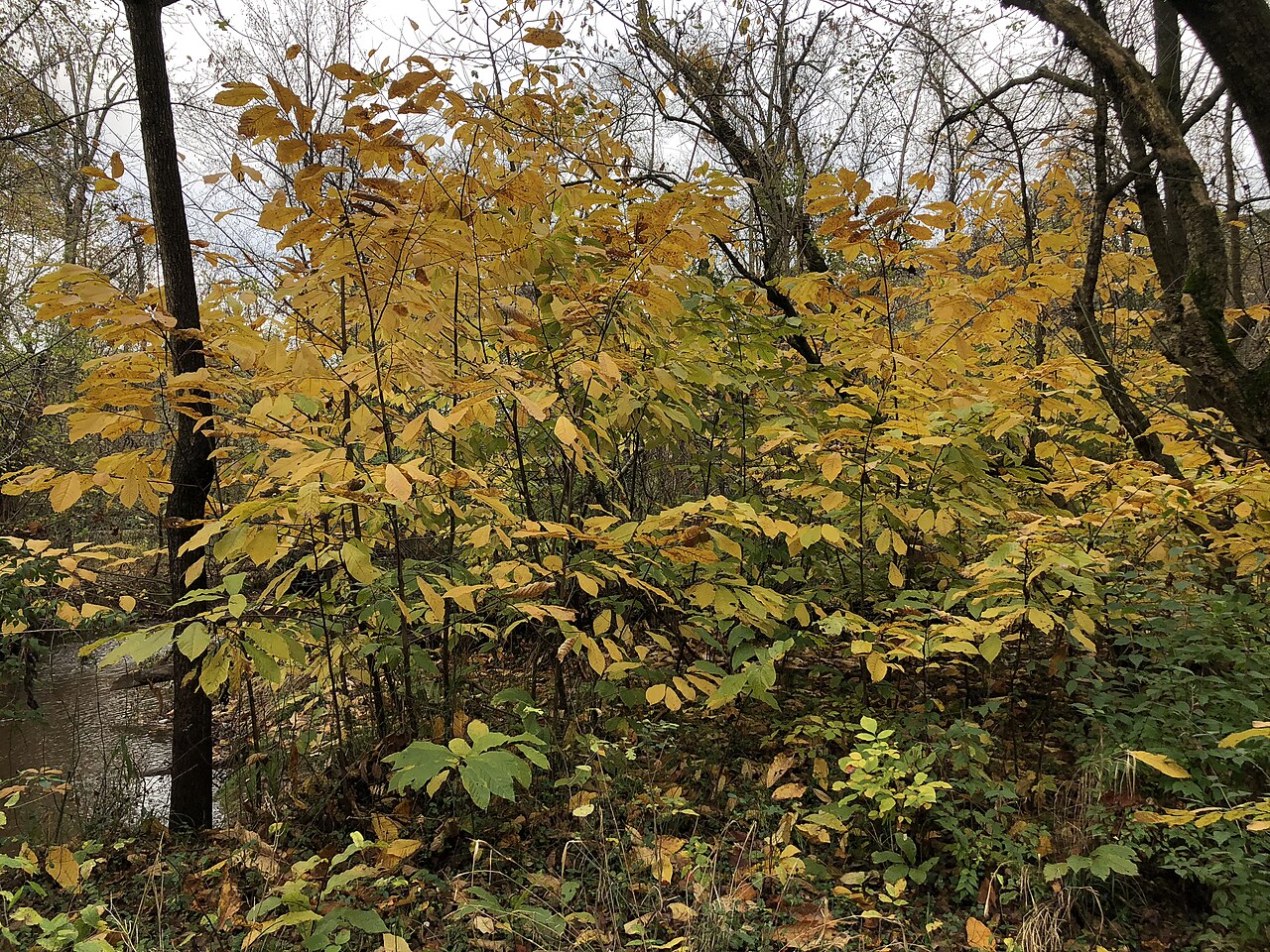
- Fall: mark which suckers in a thicket to keep next year. Yellow fall color makes the patch boundary easy to see.
📋 More on this plant: read the full Paw Paw (Asimina triloba) profile, or see it in our native plant lists for Georgia, Alabama & Mississippi, Delaware, Southern New Jersey & Long Island, Illinois, Iowa & Missouri, Ohio & Indiana, Maryland, Virginia & West Virginia, and North Carolina & South Carolina.
Frequently Asked Questions
Should I remove pawpaw suckers?
If you’re growing pawpaw as a fruit tree, yes. Clemson Extension recommends removing root suckers to keep a single trunk for faster growth and earlier fruiting. In a naturalized thicket, keep the healthy, well-spaced ones.
Can a pawpaw sucker pollinate the parent tree?
No. On an own-root tree, the sucker is genetically identical to the parent, and pawpaws need pollen from a genetically different tree.
Can I dig up a pawpaw sucker and plant it elsewhere?
You can try, but success is low. Suckers have few roots of their own. Cutting partway through the connecting root weeks ahead and moving it in spring improves the odds.
Will cutting suckers make more come back?
New suckers usually keep appearing from an established root system, so plan on removing them regularly. Cutting cleanly at the base, rather than tearing, keeps the job manageable.
How far do pawpaw suckers spread?
It varies with soil, light, and age. Over many years a wild patch can cover a large area. In a garden, a mown edge or regular cutting keeps a tree or thicket where you want it.
Sources
- Clemson Cooperative Extension HGIC, Pawpaw: profuse suckering, removing suckers for a single trunk, root-sucker transplants, ambrosia beetles, zebra swallowtail.
- Alabama Cooperative Extension System, Pawpaw Production Guide: mother trees and suckers, grafting onto seedling rootstock, herbicide uptake through suckers, central leader training, Armillaria.
- Purdue Extension, HO-220: Growing Pawpaws: why root-sucker transplants fail.
- Kentucky State University, Pawpaw FAQ: partially severing suckers before transplanting.
- Kentucky State University, Pawpaw Training and Pruning: corrective pruning before bud break.
- North Carolina Extension Gardener Plant Toolbox, Asimina triloba: suckers in the landscape, zebra swallowtail feeding.
- Wikipedia, Asimina triloba: clonal patch growth, root-sucker genetics, riparian restoration, zebra swallowtail egg-laying.

