
How to Tell Whether Pawpaw Seedlings Need Larger Pots
Last updated: November 5, 2026
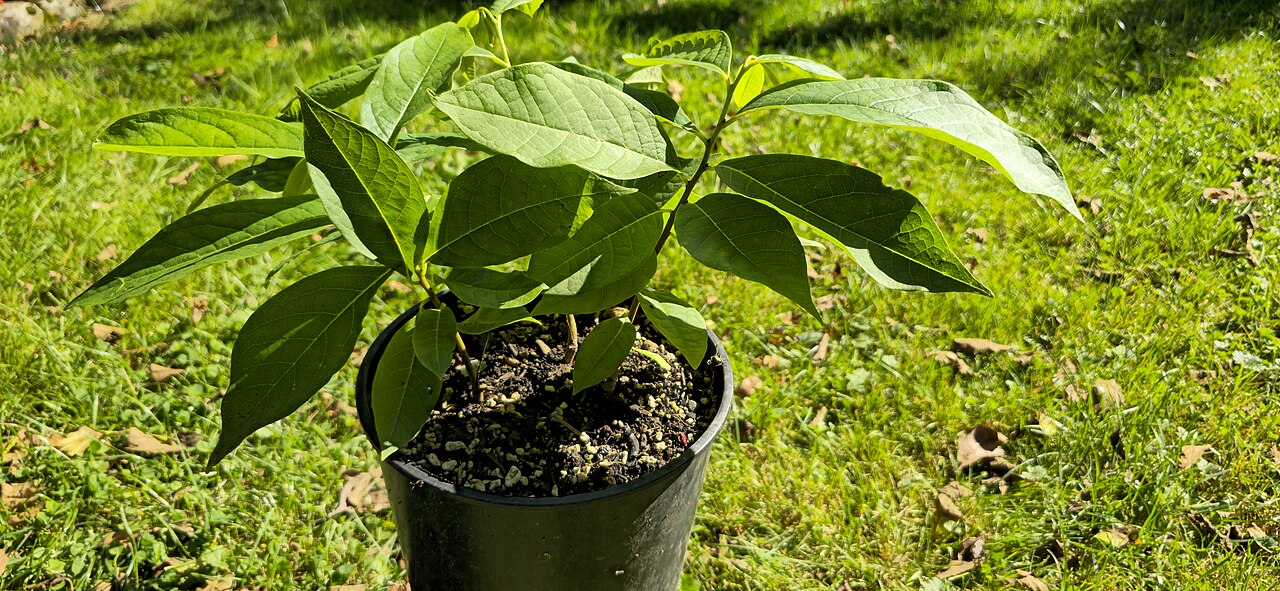
You grew pawpaw from seed, and now you have a few small seedlings in pots. The question is whether they need bigger containers, and when.
Pawpaw doesn’t behave like a tomato or a houseplant in a pot. It spends its first weeks building a long taproot before it shows much above ground, and it hates having its roots disturbed.
That means the usual signs of a crowded pot show up differently, and potting up at the wrong time can set a seedling back. Here’s how to read your seedlings and decide whether to pot up, plant out, or leave them alone.
The Short Answer
A pawpaw (Asimina triloba) seedling probably needs a larger pot if you see two or more of these:
- Roots coming out of the drainage holes, especially a thick taproot.
- Roots circling the bottom of the root ball when you slide it out.
- The pot dries out within a day even in mild weather.
- Growth stalls in a seedling past its first year, despite good care.
- The pot is shallow, well under the 10 to 18 inches of depth recommended for pawpaw seedlings.
The best time to move up is spring, as new growth starts. A seedling one to three years old in a deep pot may be ready for the ground instead.
How a Pawpaw Seedling Grows in a Pot
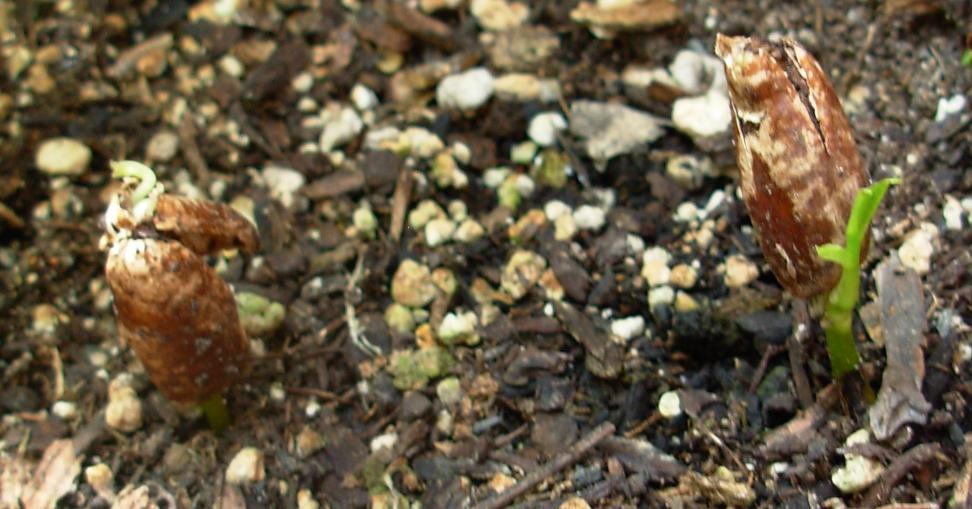
Pawpaw seeds are large, and they carry enough stored food to grow a root long before a leaf appears. Purdue Extension describes the sequence: the root emerges after about 18 to 24 days, grows into a taproot about 10 inches long, and only then sends up a shoot, after roughly 50 to 60 days.
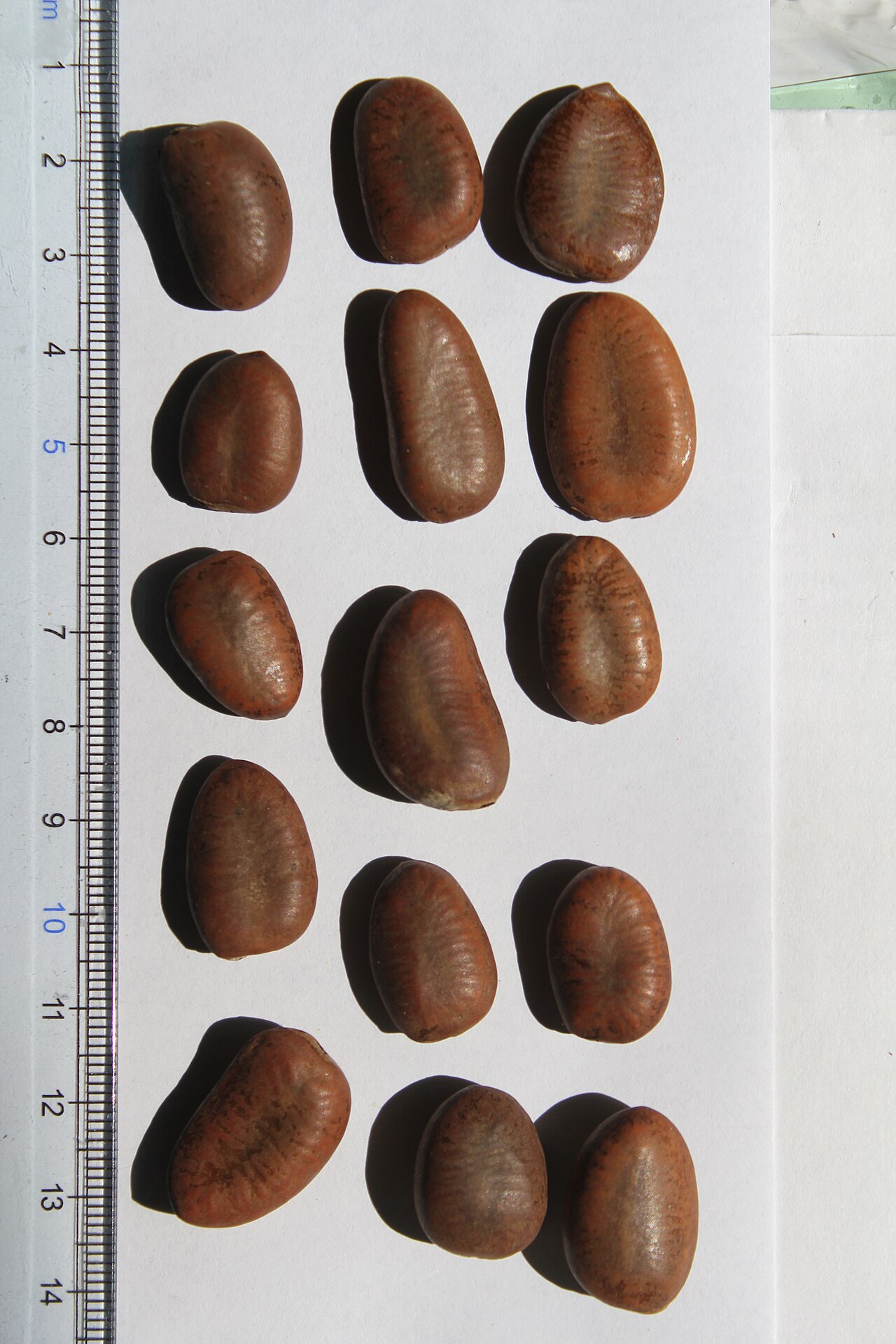
Germination is hypogeal, meaning the seed leaves stay inside the seed coat. The shoot comes up as a bare stem, and true leaves follow.
Above ground, growth is slow at first. Kentucky State University notes that for the first two years, growth is slow as the root system establishes itself, but thereafter it accelerates.
Pot Depth Guide for Pawpaw Seedlings
| Root trainers about 10 inches tall | The shortest option Kentucky State University lists for starting seed. |
| Tree pots 14 to 18 inches tall | Kentucky State University’s recommended range. Alabama Extension also recommends deep 14-inch tree pots. |
| 2-gallon tree pots | Size used in Kentucky State University seedling research on root development. |
| Standard 4- to 6-inch nursery pots or bowls | Too shallow for the taproot. Expect circling roots or a seed pushed above the soil. |
Depth matters far more than width for this species. A narrow, tall pot suits a pawpaw seedling better than a wide, shallow one of the same volume.
Sign 1: The Taproot Has Reached the Bottom
Lift the pot and look at the drainage holes. A pale, thick root poking through, or roots stuck to the surface below the pot, means the taproot has hit bottom.
In a shallow container this can happen before the seedling has more than a couple of leaves. Purdue’s figure of a 10-inch taproot before the shoot appears shows why: a standard small pot simply runs out of depth.
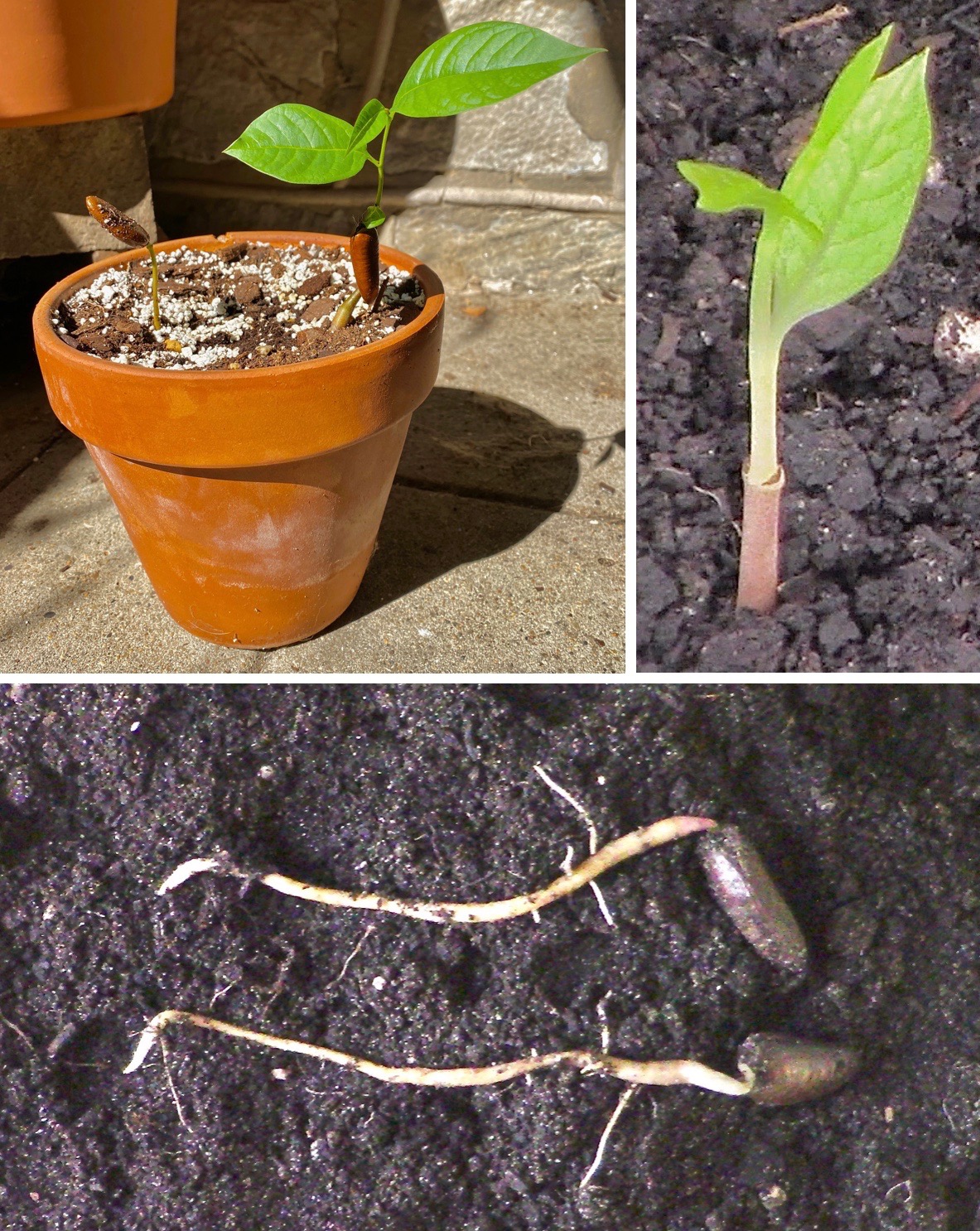
A root growing out of the pot and into the ground or gravel below is a strong signal. Once it anchors there, moving the pot tears it. Lift and move pots now and then so roots don’t grow into the surface underneath.
Sign 2: The Seed Is Riding on Top of the Stem
If the big brown seed is perched above the soil or lifted on the stem, the seed was planted too shallowly or the pot is too short. The extending taproot pushed it upward.
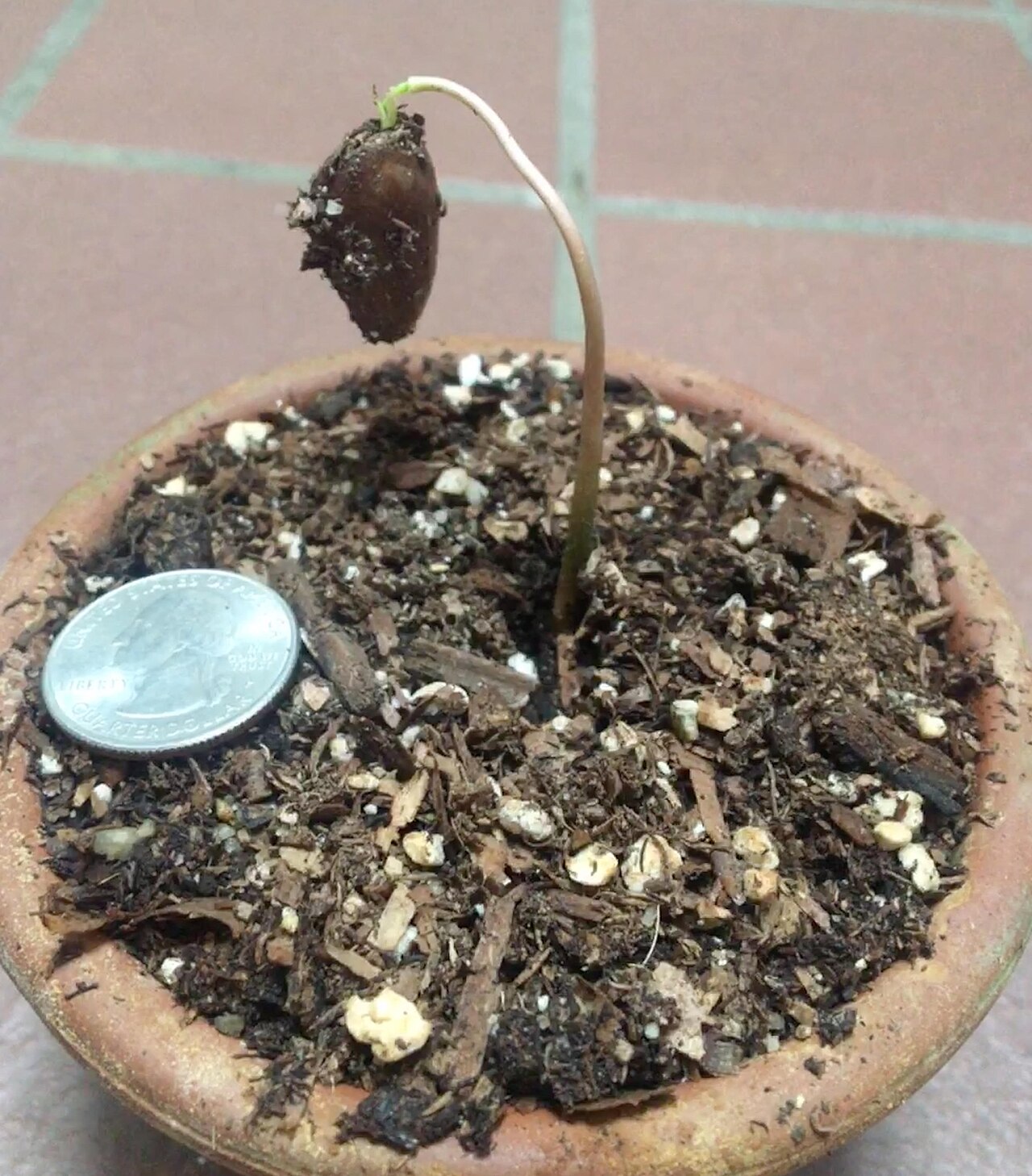
This isn’t usually fatal by itself. It does tell you two things: the next pot should be much deeper, and the next batch of seed should go into a tall container. Kentucky State University and Alabama Extension both recommend sowing stratified seed about 1 inch deep.
Sign 3: Roots Circle the Root Ball
On a cool morning after watering, tip the pot sideways, support the base of the stem with your fingers, and slide the root ball partway out. Don’t pull on the stem.
Penn State Extension’s rule for container plants applies here. If roots are circling around the root ball, or are so dense you can hardly see potting mix in the bottom third, it’s time to repot.
University of Georgia Extension describes the same condition in woody plants: roots outgrow the container, circle the bottom, and turn back up the wall. Left alone, that pattern leads to stunted growth.
If you see mostly potting mix with a few roots, slide it back in. The seedling isn’t ready.
Sign 4: The Pot Dries Out Too Fast
Container plants dry out faster than plants in the ground. Penn State lists fast drying, even in cool weather, as one of the first hints that a plant is pot-bound.
For a pawpaw, frequent drying is more than an inconvenience. Alabama Extension says to keep emerging seedlings moist, and Kentucky State University stresses adequate soil moisture for young trees. A pot that needs water every afternoon in early summer is too small for the plant in it.
Check whether something else explains it first. Small unglazed clay pots dry out faster than plastic, and a pot sitting on hot pavement in full sun dries out quickly regardless of root mass.
Sign 5: Growth Has Stalled After the First Year
Be careful with this one. Slow growth in a pawpaw’s first two years is normal, so a small seedling isn’t automatically a pot-bound one.
Stalled growth becomes meaningful when it shows up with the other signs. Penn State flags growth that has stopped or slowed despite regular feeding in spring and summer as a pot-bound symptom.
Also rule out light. Young pawpaws are very sensitive to full sun, and Kentucky State University and Alabama Extension both call for partial shade for emerging seedlings. A pale or scorched seedling in full sun needs shade, not a bigger pot.
Pot Up, Plant Out, or Wait?
Once you know the seedling is crowded, choose one of three paths.
Pot up if the seedling is in its first or second year, still looks fragile, or you aren’t ready to plant it in its permanent spot. Move it into a deeper pot, ideally 14 inches or more.
Plant out if the seedling is sturdy and at least a season old, and you have a prepared site. Alabama Extension recommends container-grown trees one to three years old for establishing pawpaws, and Kentucky State University notes that container-grown trees may establish better than field-dug ones.
Wait if it’s midsummer, fall, or winter. Kentucky State University found that pawpaws transplant best in spring, when new growth begins or soon after. Penn State gives the same spring timing for repotting container plants in general.
Pawpaw is not a long-term container tree. Our pawpaw profile notes that young trees can live in large containers for a few years but eventually need to go in the ground.
How to Pot Up a Pawpaw Seedling Without Hurting It
Pawpaw roots are fleshy and brittle, with few fine root hairs, according to Kentucky State University. Treat the root ball as one piece.
- Time it for spring. Pot up as buds swell or new leaves start to open.
- Choose a deeper pot with drainage holes. Penn State and UGA both stress that drainage is essential, since waterlogged mix starves roots of air.
- Go up a moderate step. UGA’s general rule for woody plants is a pot 3 to 4 inches wider than the current one. For pawpaw, add as much depth as you can.
- Water the seedling first and let it drain, so the root ball holds together.
- Add mix to the new pot so the top of the old root ball will sit about an inch below the rim, with the stem base at the same level it grew before.
- Slide the root ball out gently and set it in without breaking it apart. If a few roots circle the bottom, ease them outward with your fingers rather than cutting. Avoid slicing the taproot.
- Fill around the sides, firm lightly, and water thoroughly.
- Keep it in bright shade for a couple of weeks while the roots grow into the new mix.
Use a quality potting mix rather than straight garden soil in containers. Kentucky State University suggests a well-aerated mix with a pH of 5.5 to 7 for pawpaw seed. Our guide to container gardening with natives covers mixes and drainage in more detail.
Quick Reference
| Taproot through the drainage hole | Pot up into a deeper pot or plant out next spring. |
| Seed lifted above the soil | Pot was too shallow. Move to a tall pot at the next spring flush. |
| Dense, circling roots | Pot-bound. Pot up in spring, easing roots outward without cutting. |
| Dries out daily, plenty of roots | Pot is too small. Pot up or plant out. |
| Small, slow, roots not crowded | Normal first-year growth. Leave it alone. |
| Pale or scorched leaves in full sun | Light problem, not pot size. Move to bright shade. |
A Season-by-Season Plan for Potted Seedlings
- Fall: collect seed from ripe fruit, clean it, and never let it dry out. Sow it in fall in a tall pot or bed outdoors, or stratify it cold and moist. Kentucky State University calls for 70 to 100 days of cold, moist stratification.
- Late winter – spring: sow stratified seed about 1 inch deep in tall containers. Bottom heat speeds germination, according to Alabama Extension.
- Summer: keep emerging seedlings moist and in partial shade. Fall-sown seed usually germinates the next year in late July to August, Kentucky State University notes.
- First fall and winter: protect potted seedlings from drying out and from hard freezes. Containers freeze harder than ground soil, so many growers sink pots into the ground or a mulched bed.
- Second spring: check the drainage holes and root ball as new leaves open. Pot up or plant out based on the signs above.
For outdoor fall sowing in general, see our guide to sowing native seeds in fall. When your seedlings move to the garden, follow our steps for protecting a newly planted pawpaw from sun and water stress.
Remember that each seedling is genetically different. That’s useful later: two of your seedlings can pollinate each other. Our pawpaw pollination checklist explains why that matters.
📋 More on this plant: read the full Paw Paw (Asimina triloba) profile, or see it in our native plant lists for Georgia, Alabama & Mississippi, Delaware, Southern New Jersey & Long Island, Illinois, Iowa & Missouri, Ohio & Indiana, Maryland, Virginia & West Virginia, and North Carolina & South Carolina.
Frequently Asked Questions
How deep should a pot be for a pawpaw seedling?
Kentucky State University recommends tall containers such as tree pots 14 to 18 inches tall, or root trainers about 10 inches tall. Alabama Extension also recommends deep 14-inch tree pots. Shallower pots tend to push the seed up or force the taproot to circle.
Can I cut a pawpaw seedling’s taproot to fit a pot?
It’s best not to. Pawpaw roots are fleshy and brittle with few fine root hairs, and Kentucky State University describes pawpaws as quite difficult to transplant. Choose a deeper pot instead.
How long can a pawpaw stay in a pot?
A few years in a large, deep container. Alabama Extension recommends planting container-grown trees one to three years old. Long-term container culture isn’t ideal for a taprooted tree.
Why is my pawpaw seedling so small after a whole summer?
Slow top growth is normal. Much of the first season’s energy goes into the taproot, and Kentucky State University notes growth stays slow for the first two years before speeding up.
Should I fertilize potted pawpaw seedlings?
Fertilizer won’t fix a cramped root system or too much sun, so address pot depth, moisture, and shade first. If you do feed, keep it light; a seedling with little root room can’t use much.
Sources
- Kentucky State University, Pawpaw Planting Guide: seed handling, stratification, sowing depth, tall containers, slow early growth, brittle roots, spring transplanting.
- Kentucky State University, Pawpaw Seedling Growth in 2-Gallon Treepots: container research on root development.
- Purdue Extension, HO-220: Growing Pawpaws: germination timeline and taproot length.
- Alabama Cooperative Extension System, Pawpaw Production Guide: 14-inch tree pots, bottom heat, partial shade, planting container trees one to three years old.
- Penn State Extension, Repotting Houseplants: pot-bound signs, spring timing, drainage.
- University of Georgia Extension, Repotting Basics for Woody Container Plants: root-bound woody plants, pot sizing.
- Wikipedia, Asimina triloba: hypogeal germination and seeds pushed up in shallow pots.

