Tomato Leaves Curling After a Hot Day: Observations to Make Before Treating
Last updated: November 6, 2026
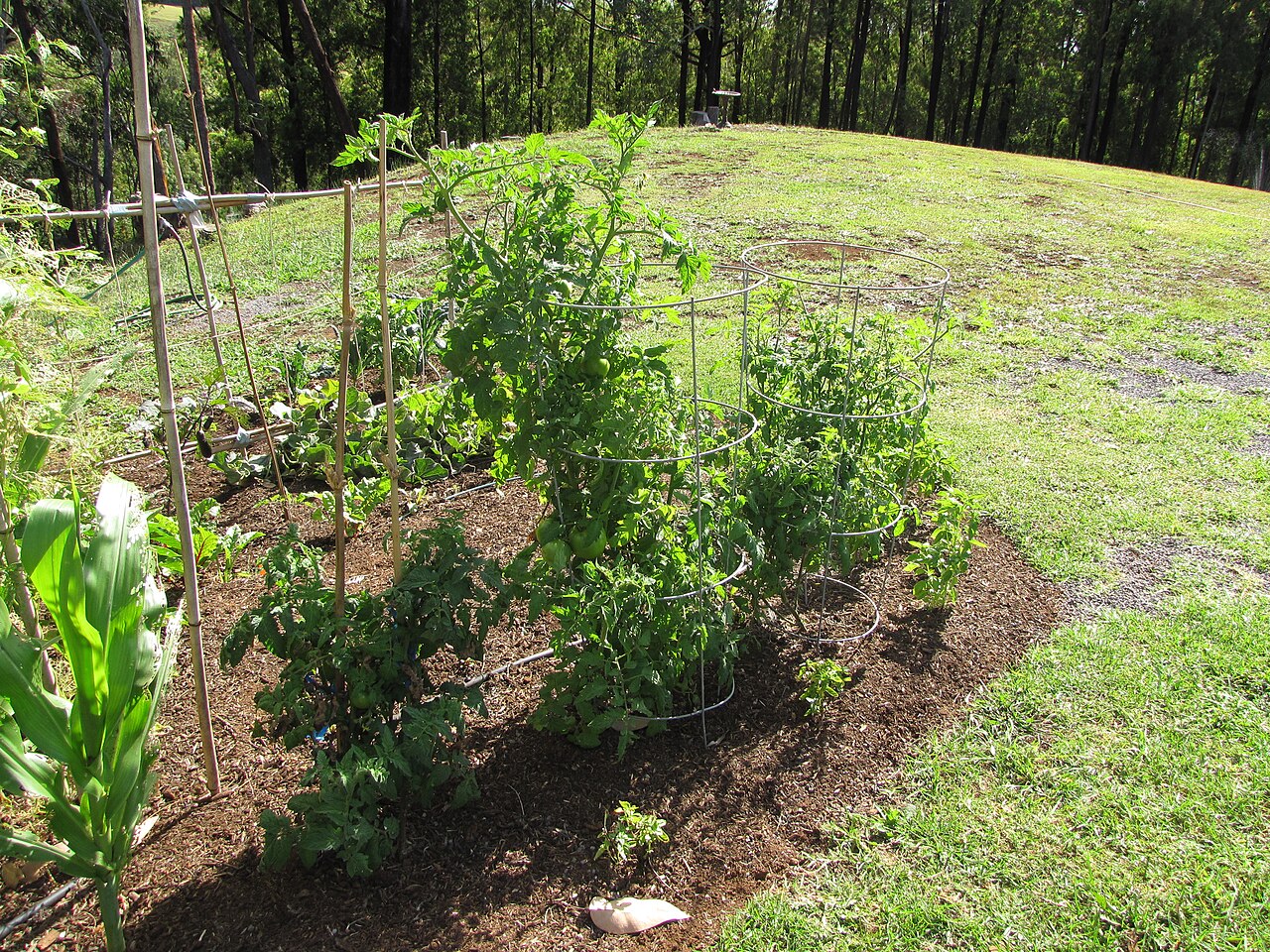
Yesterday was hot. This morning, the leaves on your tomato plants are rolled up like tubes, and you’re wondering what to spray.
Most of the time, the answer is nothing. Heat-related leaf roll is the most common reason tomato leaves curl, and it rarely hurts the harvest.
But a few less common causes, including herbicide drift, viruses, and mites, can look similar at first glance and do need action. A few careful observations will tell you which one you’re dealing with before you treat anything.
The Short Answer
If the curling started after hot, dry weather, begins on the lower, older leaves, rolls upward, and the leaves are firm, leathery, and normal green, it’s almost certainly physiological leaf roll. University of Minnesota Extension says no management is needed.
- New growth twisted, cupped downward, or distorted: suspect herbicide drift or contaminated compost or mulch.
- Curling with yellowing, mosaic patterns, or stunting: suspect a virus.
- Distorted young leaves with bronzing underneath: suspect broad mites.
- Limp, soft leaves that droop: that’s wilting, not rolling. Check soil moisture first.
Why Tomato Leaves Roll in Heat
University of Missouri IPM explains that when spring turns to hot, dry summer, tomato plants suddenly lose water through their leaves faster than the roots can take it up.
The leaflets curl in response. A curled leaflet catches less of the sun’s energy and stays a little cooler, so the plant loses less water. It’s a defense, not a disease.
Minnesota Extension lists hot, dry weather as the main trigger, but other stresses can do it too: fast growth and pruning. Missouri adds excess moisture or nitrogen, insufficient water, severe pruning, and root damage.
Leaf Roll vs. the Look-Alikes
| Heat leaf roll | Lower leaves first. Margins roll up and inward. Thick, leathery, normal green. Little effect on yield. |
| Herbicide injury | New growth first. Leaf stems bend downward, leaflets cup or twist. Yield losses likely. |
| Virus | Newer leaves twisted with no clear pattern. Often yellow-green mosaic or stunting follows. |
| Broad mites | Young leaves and flowers twisted. Undersides may look bronzed. Mites too small to see. |
| Wind damage | Twisted leaves and dry edges after high wind and low humidity. Recovers as weather improves. |
Each row has a different fix, and spraying the wrong thing can add stress to a plant that was going to be fine. Work through the observations below in order.
Observation 1: Which Leaves Curled First?
This one observation does most of the work. Stand back and look at where on the plant the curling is.
Minnesota Extension and Missouri IPM both note that heat-related leaf roll starts on the lower, older leaves. In severe or persistent stress, it can spread until the whole plant is affected.
Herbicide injury and viruses usually show up first on new growth at the tips. If the top of the plant looks strange while the bottom is normal, take that seriously.
Observation 2: Which Way Do They Roll, and How Do They Feel?
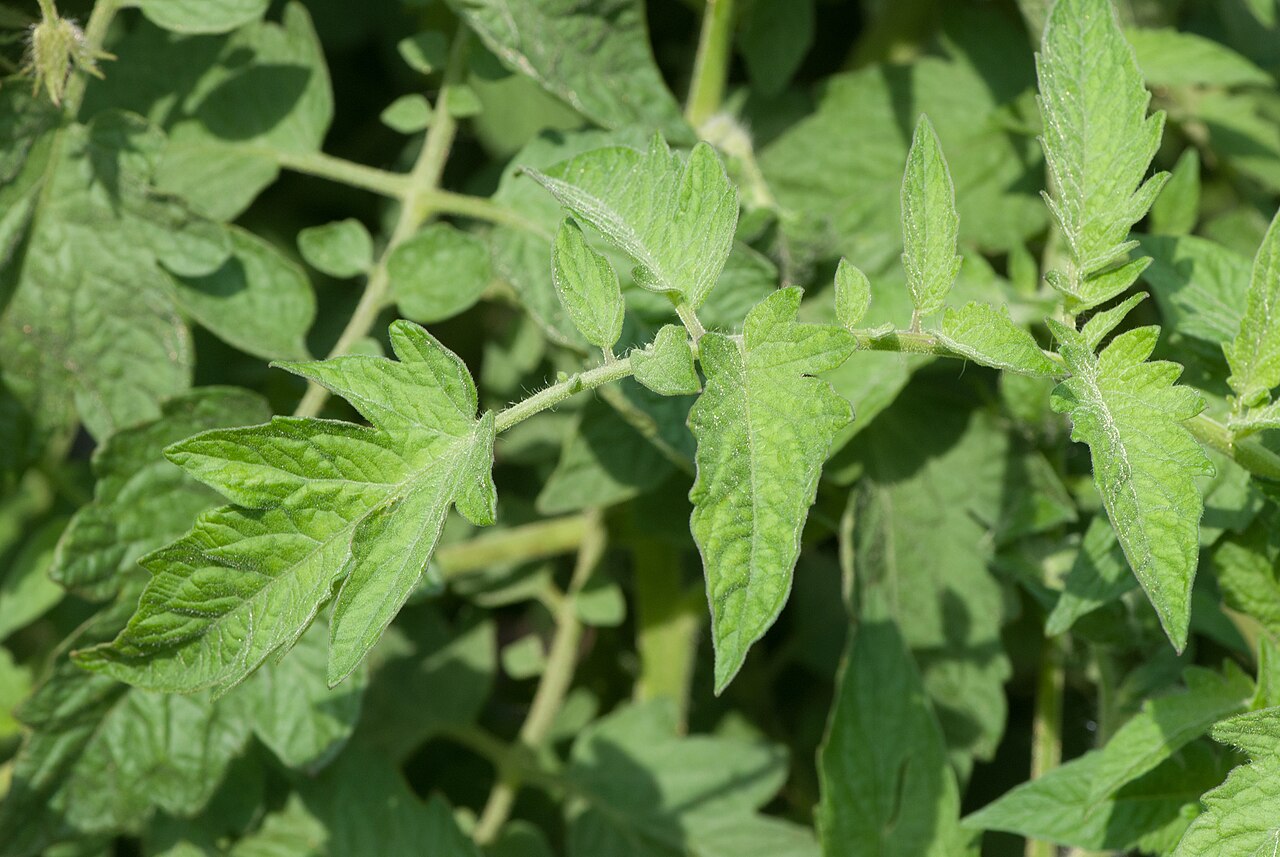
Touch the curled leaves. Minnesota Extension describes leaf roll as margins that roll upward until they touch or overlap, with leaves that feel firm and leathery.
Missouri IPM adds that the leaves stay a normal green color. The upward roll is often followed by leaflets curling inward.
Compare that with herbicide injury, where Missouri notes downward bending of the leaf stems and cupping of the leaflets is common. Twisted, strap-like, or oddly shaped new leaves are a red flag.
Observation 3: Is It Rolling or Wilting?
These get confused all the time. A rolled leaf is stiff and holds its shape. A wilted leaf is soft and limp, and the whole leaf hangs down.
Check the soil a few inches down. If it’s dry and the leaves are limp, the plant simply needs water. Minnesota Extension advises soaking the soil thoroughly when you water tomatoes, rather than giving light sprinkles.
Containers are the usual suspects here. If your plants are in bags or pots, see our grow bag watering audit.
Don’t overcorrect, though. Missouri lists excess moisture as one of the stresses behind leaf roll too. Keep moisture even, not soggy. A sudden heavy soak after a dry spell can also split ripening fruit, as covered in our guide to cracked tomatoes after rain.
Observation 4: Check Again Tomorrow Morning
Wilting from heat often eases overnight. Leaf roll is different: Minnesota Extension notes that once leaves roll, they won’t unroll, even when the weather turns cool and wet.
So don’t wait for the leaves to flatten as a sign that things are fine. Instead, watch the new leaves that form over the next week or two. If they come out flat and normal, the plant is fine.
Observation 5: Look for Color Changes
Leaf roll keeps leaves green. Yellowing, mottling, or a mosaic pattern of light and dark green alongside curling points in a different direction.
Texas A&M AgriLife Extension notes that hundreds of viruses can cause leaf curling and stunting in tomatoes, and that early virus symptoms can be confused with herbicide damage. The disease often progresses to yellow-green mosaic patterns.
Missouri IPM notes that virus-related curling is often erratic, with no particular pattern, and new leaves are usually twisted first.
Observation 6: Turn the Leaves Over
Look at the undersides of the youngest leaves and around the flowers. Two pests matter here.
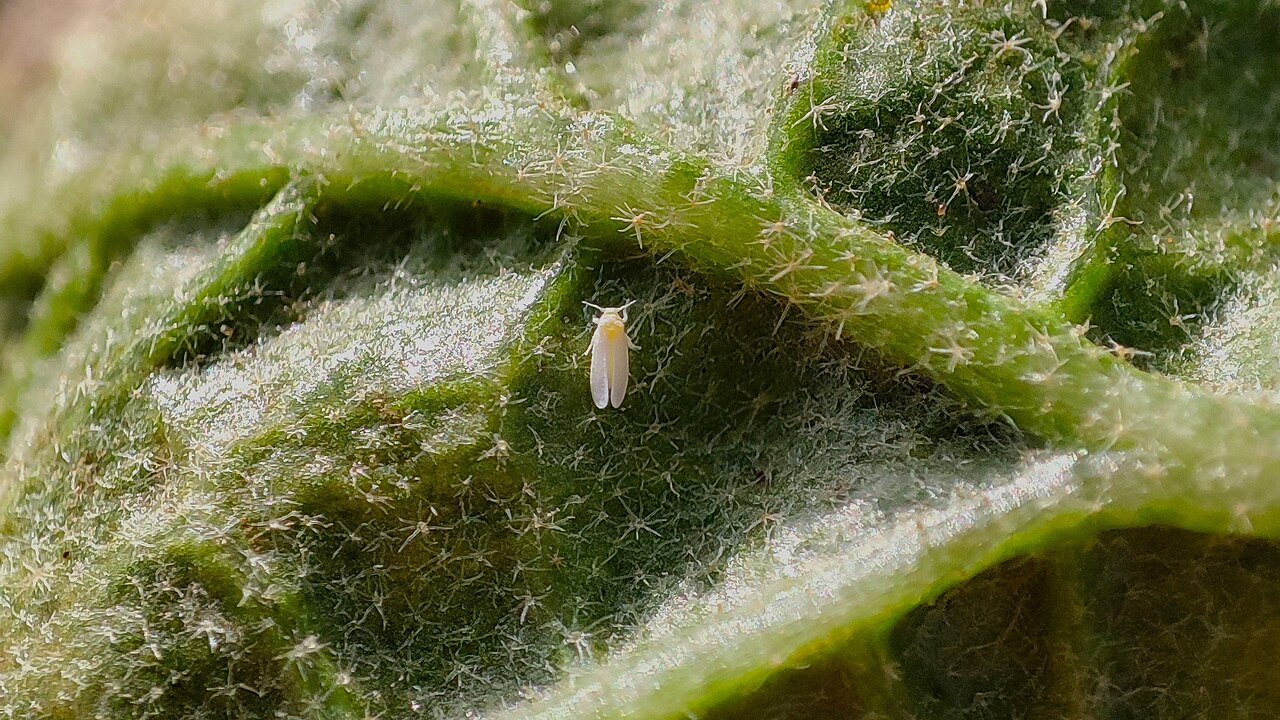
Whiteflies. Texas A&M notes that the geminivirus group, which includes tomato yellow leaf curl virus, is spread to tomatoes by the sweet potato or silverleaf whitefly. Small white insects flying up when you brush the plant are worth noting.
Broad mites. Texas A&M describes broad mites as invisible to the naked eye and easy to miss even with a magnifying glass. They feed on young leaves and flowers and inject toxins that severely twist the leaves. Heavy infestations can make leaf undersides look bronzed.
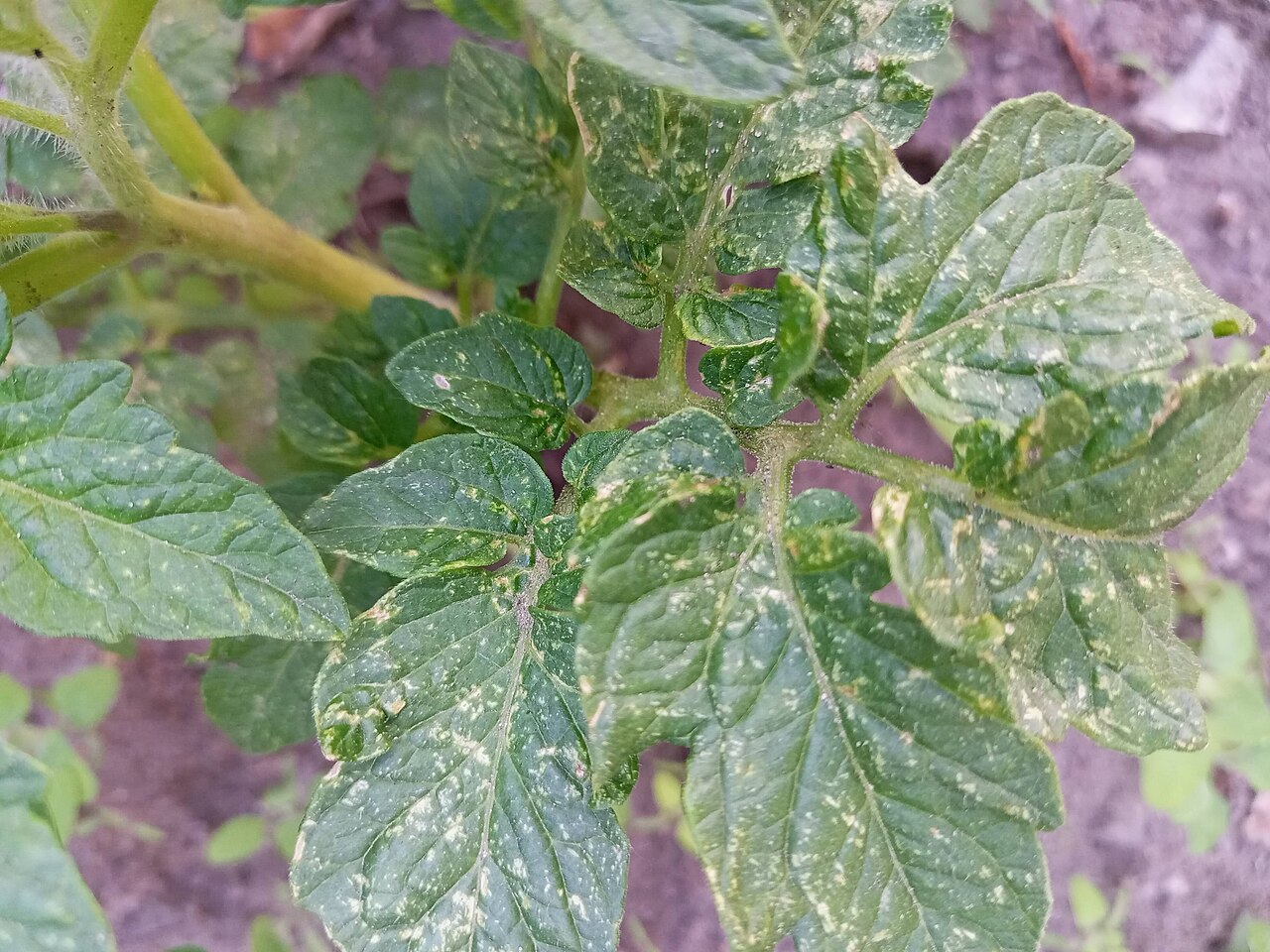
Speckled, stippled leaves point to other sap-feeders such as spider mites or thrips. Our guide to organic pest control for tomatoes covers identifying common pests.
Observation 7: Think Back Over the Last Few Weeks
Write down anything that changed recently. Several triggers are easy to forget.
- Heavy pruning. Minnesota Extension and Missouri IPM both list pruning as a trigger. Missouri recommends pruning indeterminate varieties conservatively.
- A big dose of fertilizer. Missouri advises avoiding excessive fertilizer, especially nitrogen.
- Lawn or weed spraying nearby. Texas A&M notes that tomatoes are extremely sensitive to growth-regulator herbicides like 2,4-D and dicamba, found in many lawn weed killers, and that drift can travel in light wind.
- New compost, manure, hay, or straw mulch. Missouri and Texas A&M both warn that long-lasting pasture herbicides such as aminopyralid, clopyralid, and picloram can survive in hay, manure, and compost and damage tomatoes.
- Root disturbance from digging or cultivating close to the plant.
Observation 8: Compare Varieties and Locations
Minnesota Extension notes that some varieties roll more readily than others, and that leaf roll is very common in hoop houses. Missouri adds that indeterminate varieties seem more prone than determinate types.
If every plant of one variety is rolled and the others are fine, that’s a variety trait. Our guide to determinate and indeterminate tomatoes explains the difference.
If only plants along one edge of the garden, near a lawn or a fence line, show twisted new growth, think about drift from that direction.
Troubleshooting at a Glance
| Lower leaves rolled up, leathery, green | Heat leaf roll. No treatment. Keep watering even. |
| Leaves soft and limp, soil dry | Wilting. Water deeply now. |
| New growth twisted, cupped down | Possible herbicide. Trace sprays, compost, manure, mulch. |
| Curling plus yellow mosaic or stunting | Possible virus. Get a diagnosis. |
| Distorted tips, bronzed undersides | Possible broad mites. Get a diagnosis before spraying. |
| Rolling after heavy pruning or feeding | Stress roll. Ease off and let new growth come in. |
What to Do Next
If it’s heat leaf roll: Minnesota Extension notes it doesn’t noticeably reduce growth or yield, so no treatment is needed. Texas A&M adds that mild roll doesn’t lower yield or quality, though severe roll may cause some flowers to drop. If you’re losing blossoms too, see our guide to tomato flowers dropping without fruit.
Reduce the stress where you can. Missouri suggests avoiding excess nitrogen, pruning lightly, and shading plants during high temperatures when practical. Steady watering and mulch help too. Our drip irrigation tips make even moisture easier.
If you suspect herbicide: don’t eat fruit from plants you think were exposed until you know what product was involved, and read its label for food-crop guidance. Texas A&M notes there is no remedy for leaves already injured. If new shoots come out normal and at least four to six weeks of season remain, plants may outgrow the damage. If new growth keeps showing symptoms, the plants are unlikely to recover.
If you suspect a virus or mites: contact your local Extension office or plant diagnostic lab before spraying. Texas A&M warns that sulfur miticides can damage tomatoes above 90°F or when plants are water stressed, so treating the wrong problem in a heat wave can make things worse. Plants confirmed to have a virus should be removed.
A Season-by-Season Plan
- Before planting: ask where compost, manure, and straw came from, and whether hay fields were treated with pasture herbicides. Our step-by-step tomato planting guide covers bed prep.
- Late spring: mulch once soil warms and set up steady watering before the first heat wave.
- Early summer: expect some leaf roll on lower leaves as heat arrives. Watch new growth, not old.
- Midsummer: prune lightly, avoid extra nitrogen, and give afternoon shade during extreme heat if practical. Keep lawn weed sprays well away from the garden, and never spray on windy days.
- Fall: note which varieties rolled badly and which didn’t, and favor the calmer ones next year. Then clean and store your tomato supports so they start next season clean.
For general tomato care through the season, see our beginner’s guide to growing tomatoes. Gardening somewhere hot and dry? Our guide to waterwise gardening in hot climates has more on mulching and soil moisture.
Frequently Asked Questions
Will curled tomato leaves uncurl?
Not usually. Minnesota Extension notes that rolled leaves stay rolled even when weather turns cool and wet. Judge recovery by the new leaves, not the old ones.
Does tomato leaf roll reduce the harvest?
Heat-related leaf roll has little effect on yield, according to Minnesota Extension and Missouri IPM. Severe cases may cost some flowers.
Should I water more when tomato leaves curl?
Only if the soil is dry. Check a few inches down. Leaf roll is linked to both too little and too much water, so aim for steady, deep watering rather than extra.
How can I tell herbicide damage from heat curl?
Heat curl starts on lower leaves, rolls upward, and stays green. Herbicide damage usually shows on new growth first, with leaf stems bending down and leaflets cupping or twisting.
Should I spray my tomatoes for leaf curl?
Not for heat leaf roll. Identify the cause first. Spraying a heat-stressed plant can harm it, and Texas A&M specifically warns against some miticides above 90°F or on water-stressed plants.
Sources
- University of Minnesota Extension, Tomato disorders: leaf roll triggers, symptoms, no unrolling, variety and hoop house effects, no management needed.
- University of Missouri Integrated Pest Management, Tomato Leaf Curl: physiological leaf curl mechanism, stress causes, herbicide and virus symptoms, management.
- Texas A&M AgriLife Extension, What Makes Tomato Leaves Twist or Curl? (EHT-064): wind damage, herbicide drift and residue, broad mites, viruses and whiteflies.
- University of Minnesota Extension, Growing tomatoes in home gardens: deep, thorough watering.