Staking Dahlias After They Have Grown: A Late-Season Support Guide
Last updated: November 6, 2026
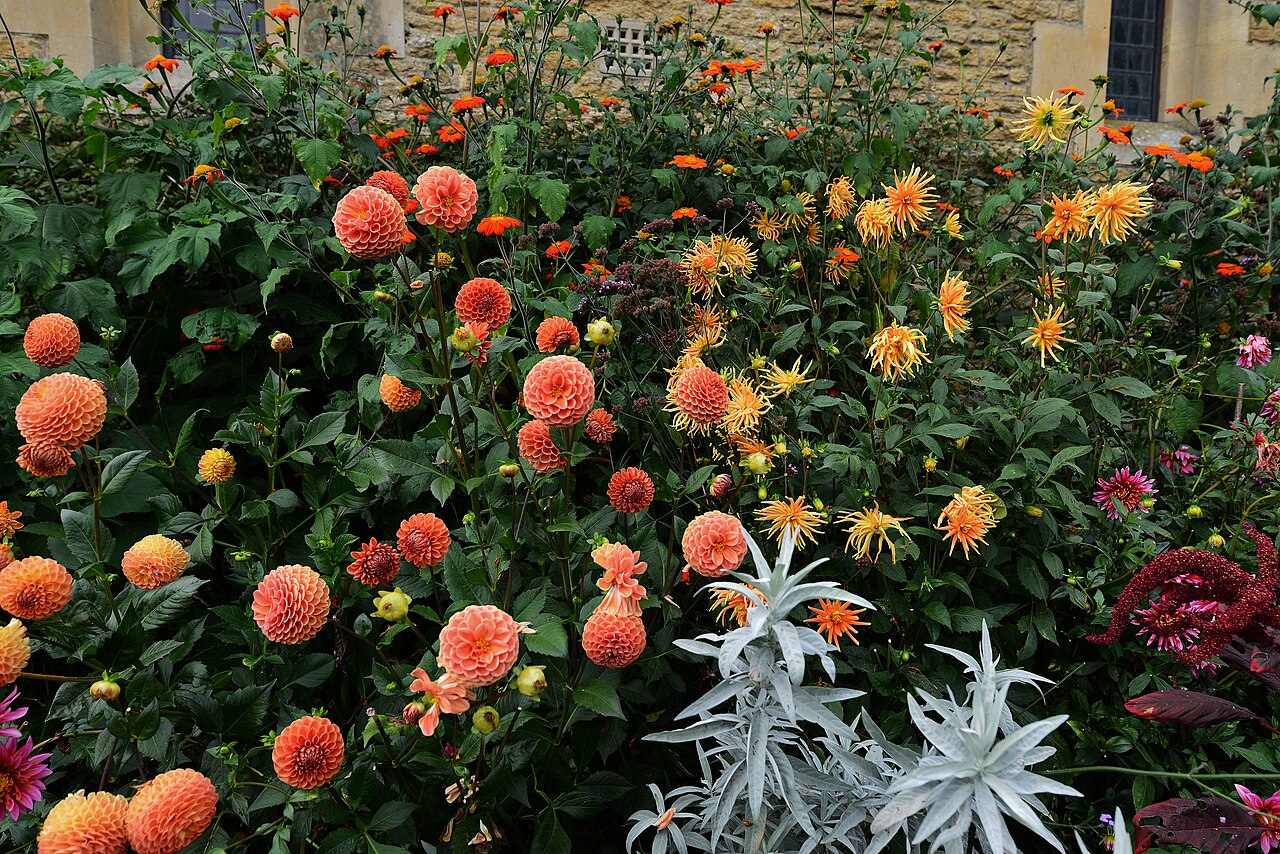
Everyone says to stake dahlias at planting time. You didn’t, and now the plants are waist-high or taller, loaded with buds, and starting to lean.
The good news is that late staking still works. You just have to do it differently from spring staking, because there’s now a spreading root system and a cluster of new tubers under the soil.
This guide covers how to choose a support for an already-grown dahlia, where to place it so you don’t spear the tubers, and how to rescue stems that have already fallen over.
The Short Answer
- Yes, you can stake now. It’s harder than at planting, but well worth doing on tall varieties.
- Set supports away from the main stem, not right against it, to avoid the tuber clump.
- Use several stakes and twine to make a corral around a mature plant rather than one stake jammed against the stem.
- Tie loosely, leaving room for the stems to move and thicken.
- Work in stages on plants that are already leaning, and cut stems that have snapped.
Why Tall Dahlias Topple
Dahlia stems are hollow. UC Master Gardeners in Placer County note that tall-stemmed dahlias need support to keep from falling over once they flower.
Height adds leverage. Garden dahlias range from about a foot tall to six feet or more, and the University of Minnesota Landscape Arboretum recommends staking cultivars taller than three feet with a strong stake, since big dahlias can be heavy.
The roots don’t help much, either. The same arboretum guidance describes dahlias as shallow-rooted. Rain-soaked flowers, a gust of wind and soft soil are often enough to tip a tall plant or split a stem at a branch joint.
Choosing a Support for a Grown Plant
| Under about 2 ft | Border types usually don’t need staking. |
| 3–4 ft, single plant | Three or four stakes with twine wrapped around them, or a sturdy square cage. |
| 4–6 ft+, single plant | Four strong stakes (hardwood, rebar or thick bamboo) driven deep, with several tiers of twine. |
| A row or bed | Corral method: strong posts at the corners and every few feet, with twine run around the whole group. |
| Already leaning or broken | Support what’s still upright, then cut snapped stems for the vase. |
Step 1: Check the Plant Before You Start
Walk around the plant and note three things: which way it’s leaning, whether any stems are split or kinked, and how wide the leafy spread is at the base.
A plant that’s leaning but intact can be eased back upright. A stem that’s split at a joint or snapped won’t heal, so plan to remove it.
Also check the soil. If the bed is soggy after rain, wait for it to drain a little. Wet soil gives stakes less grip and lets the root ball shift as you work.
Step 2: Gather the Right Materials
Go bigger than you think you need. Light bamboo canes or short garden stakes that are fine for annuals often bend under a full-grown dahlia.
- Stakes: hardwood stakes, rebar, or thick bamboo poles. Longfield Gardens, a commercial bulb grower, suggests 5–6 foot stakes for varieties that grow 4 feet or more.
- Ties: soft garden twine, strips of cloth, or stretchy plant tape. Avoid thin wire, which cuts into hollow stems.
- A mallet to drive stakes, and clean pruners for damaged stems.
- Optional: a square folding tomato cage, which can slide around a medium-sized plant from the side if you open it up.
Illinois Extension’s state Master Gardener specialist uses simple bamboo and string for her cut-flower dahlias, which works well when several canes share the load.
Step 3: Place Stakes Away from the Crown
This is the step that matters most for late staking. By midsummer, a dahlia has a cluster of new tubers forming around the base of the main stem, plus feeder roots spreading outward.
At planting time, stakes go right beside the tuber. Late in the season, set them farther out instead. A good rule is to place them near the outer edge of the leafy spread, at least several inches from the main stem, rather than against it.
Use several stakes around the plant, usually three or four, instead of one. Spacing them in a rough square or triangle lets twine hold the stems from every side without any single stake needing to be close.
If a stake meets firm resistance as you push it in, pull it out and move it a few inches. That resistance may be a tuber.
Step 4: Drive Stakes Deep and Straight
A stake is only as strong as its anchor. Longfield Gardens recommends driving stakes at least 12 inches deep, and deeper in sandy soil or windy spots.
Drive each stake straight down, angled very slightly outward if anything, so the twine pulls it toward the plant rather than over. Tap it in gradually with a mallet instead of one hard push.
If your soil is very loose, longer stakes driven deeper are better than adding more short ones.
Step 5: Tie In the Stems Loosely
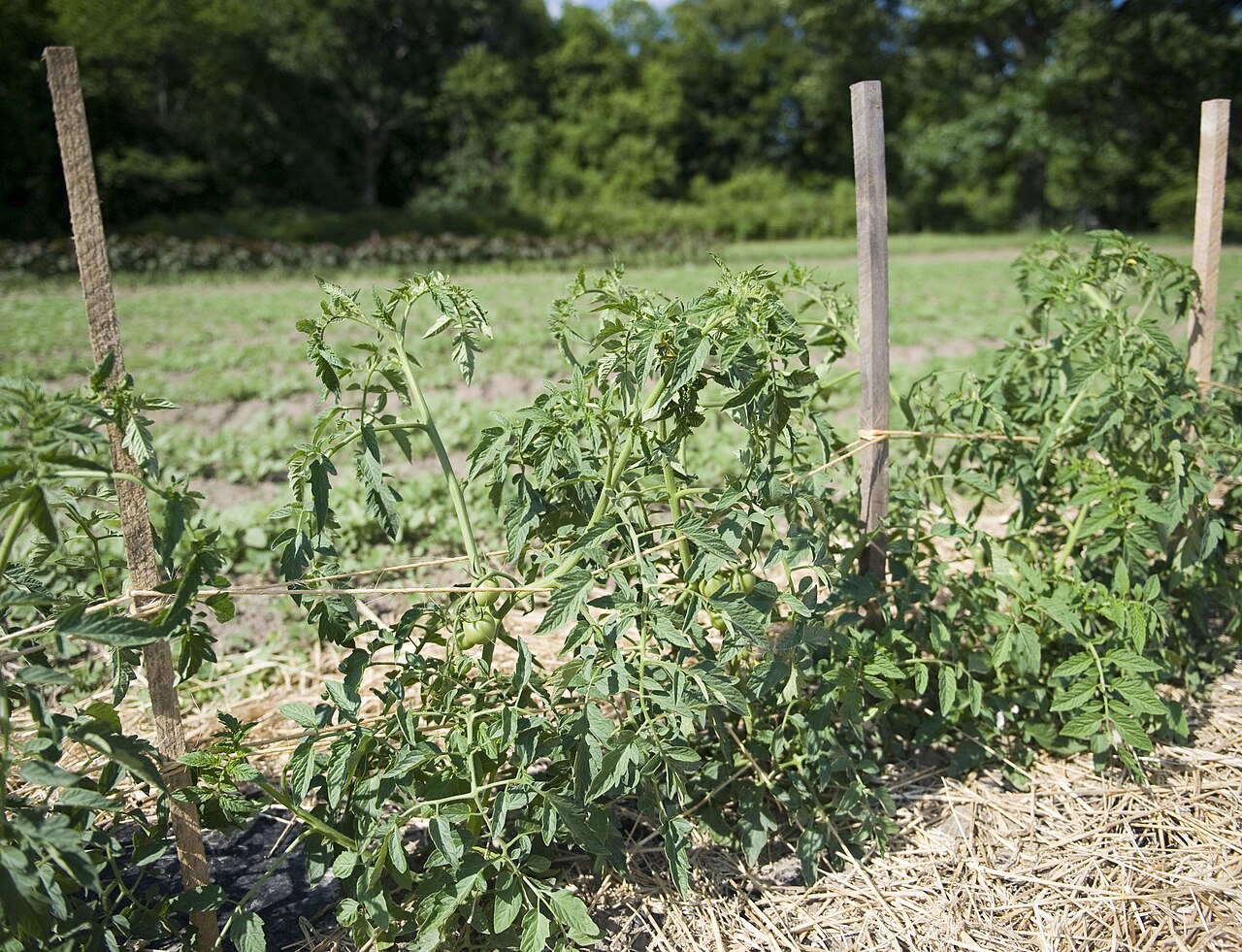
Start with the lowest tier. Wrap twine around the first stake, then run it around the outside of the plant to each stake in turn, looping it once at each one so it can’t slide.
Longfield Gardens suggests starting the lowest row of twine 12–18 inches off the ground and adding more rows about every 12 inches as the plant gets taller. On an already tall plant, put in all the tiers you need now.
For individual heavy stems, tie them to the nearest stake with a loose figure-eight loop: one loop around the stem, a cross, then one around the stake. Leave a little slack so the stem can sway and thicken without being strangled.
Don’t bundle all the stems tightly into one bunch. That traps humid air in the middle of the plant and makes deadheading harder.
Step 6: For Rows and Beds, Build a Corral
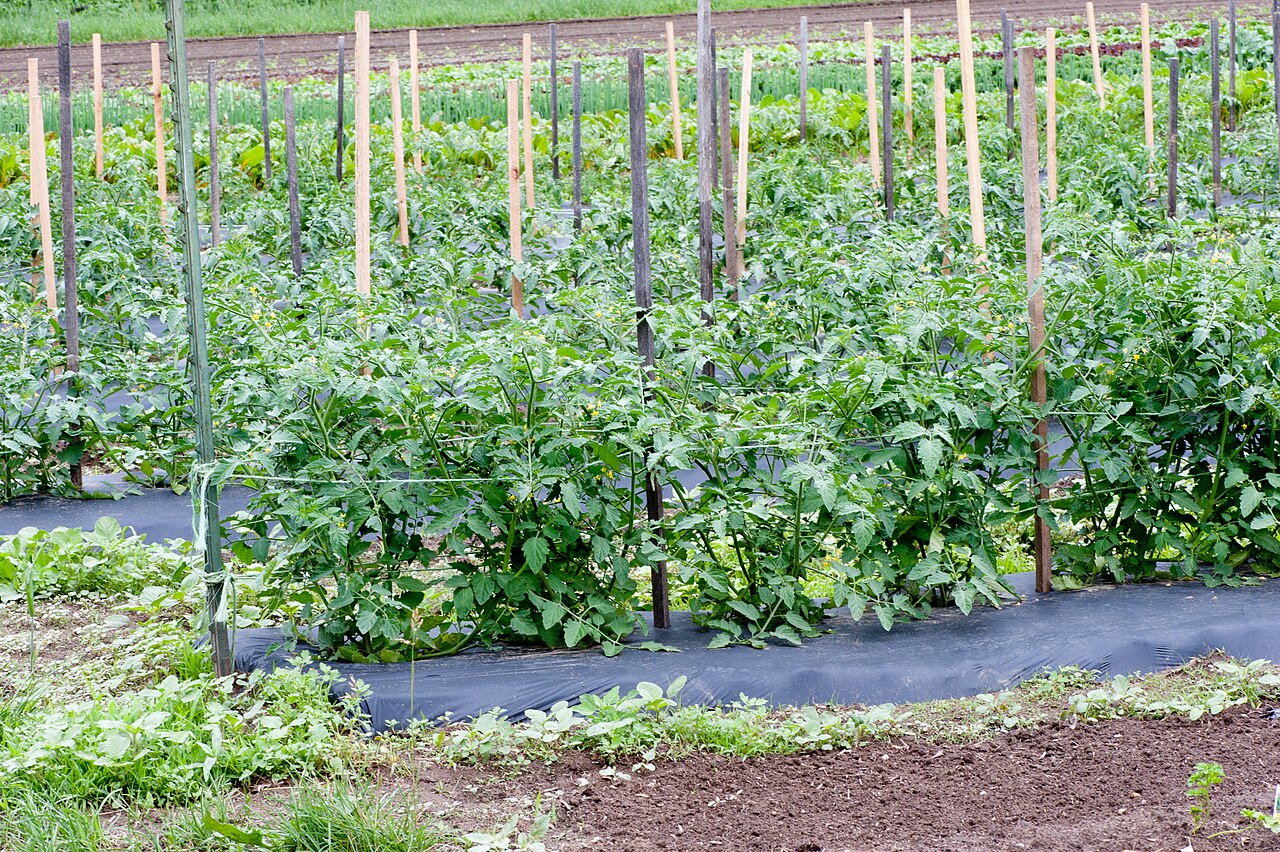
If you grow dahlias in a row or block, staking each plant separately is slow. The corral method supports the whole group at once.
Longfield Gardens recommends strong posts such as steel T-posts or 2-inch hardwood stakes at the corners and every 3 to 4 feet, since twine sags over longer spans. Run twine around the outside of the group, and if the bed is wide, across the middle as well.
Late in the season, slip the posts in along the outer edge of the planting and between plants rather than right next to the stems.
Step 7: Rescue Leaning and Broken Stems
Leaning but intact: ease the stem back upright gradually and catch it with twine. Don’t force it all the way in one go if it resists; bring it partway and adjust again in a few days.
Kinked or partly split: if the stem is still mostly attached and the leaves above haven’t wilted, you can try supporting it close to the damage. If the top wilts within a day, it won’t recover.
Snapped: cut the broken stem cleanly just above a healthy leaf pair or side branch. Put any open flowers in a vase. The plant will keep producing on its remaining stems.
Wipe your pruners between plants. The American Dahlia Society recommends sterilizing cutting tools between plants, because tools can carry dahlia viruses.
Quick Reference
| Stake length | 5–6 ft for plants that grow 4 ft or more (Longfield Gardens). |
| Stake depth | At least 12 inches; deeper in sand or wind. |
| Late-season placement | Several stakes near the edge of the leafy spread, not against the main stem. |
| Twine tiers | First at 12–18 in, then about every 12 in. |
| Corral post spacing | Every 3–4 ft so the twine doesn’t sag. |
| Ties | Soft and loose, figure-eight style. |
What to Do After Staking
Water and mulch as usual. Staking doesn’t change the plant’s needs, but firm, evenly moist soil helps stakes hold.
Keep cutting and deadheading. Regular cutting keeps plants bushier and lightens the load on top. Our guide to deadheading dahlias shows where to cut.
Check the ties after storms. Loosen any that are biting into stems and add another tier if the plant has grown above the top one.
Mark the stakes. At digging time in fall, the stakes show you where the clump is, and their distance from the stem reminds you how far the tubers spread.
If your plant is tall and leaning but has few flowers, our guide to dahlias growing tall but not flowering covers the light, feeding and pinching issues that often cause both problems.
A Season-by-Season Plan for Next Year
- Spring planting: set a strong stake beside each tall variety’s tuber before covering it, as our tuber planting guide describes. For rows, put corral posts in at planting.
- Early growth: pinch tall varieties when they have three to four pairs of leaves. Pinched plants grow shorter and bushier, a technique that also helps New England asters that flop.
- Early summer: add the first tier of twine or the first tie once plants reach about knee height.
- Midsummer onward: add tiers as plants grow and check ties after storms.
- Fall: after frost, cut stems and lift tubers, using the stakes as a guide to where the clump sits. It’s a good time for dividing dahlia tubers too.
For more on growing these plants, see our full dahlia growing guide and dahlia planting basics. If you’re replanning the bed, our guide to dahlia tubers not sprouting explains why a stake set at planting also makes it easier to check on slow tubers in spring.
Frequently Asked Questions
Is it too late to stake my dahlias?
Usually not. As long as the stems aren’t already broken, supports added in midsummer still prevent damage from wind and rain. Set stakes farther from the main stem than you would at planting.
Will staking late damage the tubers?
It can if you drive a stake right next to the stem. Placing several stakes near the outer edge of the plant and moving any stake that meets resistance keeps the risk low.
What’s the best way to support a very tall dahlia?
Several strong stakes around the plant with tiers of twine between them work better than one stake. For 4–6 foot plants, use long, sturdy stakes driven at least a foot deep.
Can I use a tomato cage on dahlias?
Yes, for small to medium plants. Square folding cages are the easiest to fit around a grown plant. Round cages are often too short and narrow for big varieties.
What should I do with a dahlia stem that snapped?
Cut it cleanly above a healthy leaf pair or side branch and enjoy any flowers indoors. A snapped hollow stem won’t reconnect, but the plant will keep blooming on its other stems.
Sources
- University of Minnesota Landscape Arboretum, Dahlia Trial Garden: At-Home Gardening & Care: staking cultivars over 3 feet, strong stakes, shallow roots, pinching.
- UC Master Gardeners of Placer and Nevada Counties, Glorious Dahlias (The Curious Gardener, Spring 2016): hollow stems, caging early, staking at planting and tying as plants grow.
- Illinois Extension, Tender bulbs make for summer delights: staking taller varieties with bamboo and string.
- NC State Extension Gardener Plant Toolbox, Dahlia: tall dahlias may require staking.
- Longfield Gardens, How to Pinch and Stake Dahlias: stake sizes and depth, twine tiers, corral post spacing, staking late still worthwhile.
- American Dahlia Society, Digging, Dividing, and Storing Tubers: sterilizing cutting tools between plants.
- Wikipedia, Dahlia: stem height range.