
Grassleaf Coneflower (Rudbeckia graminifolia)
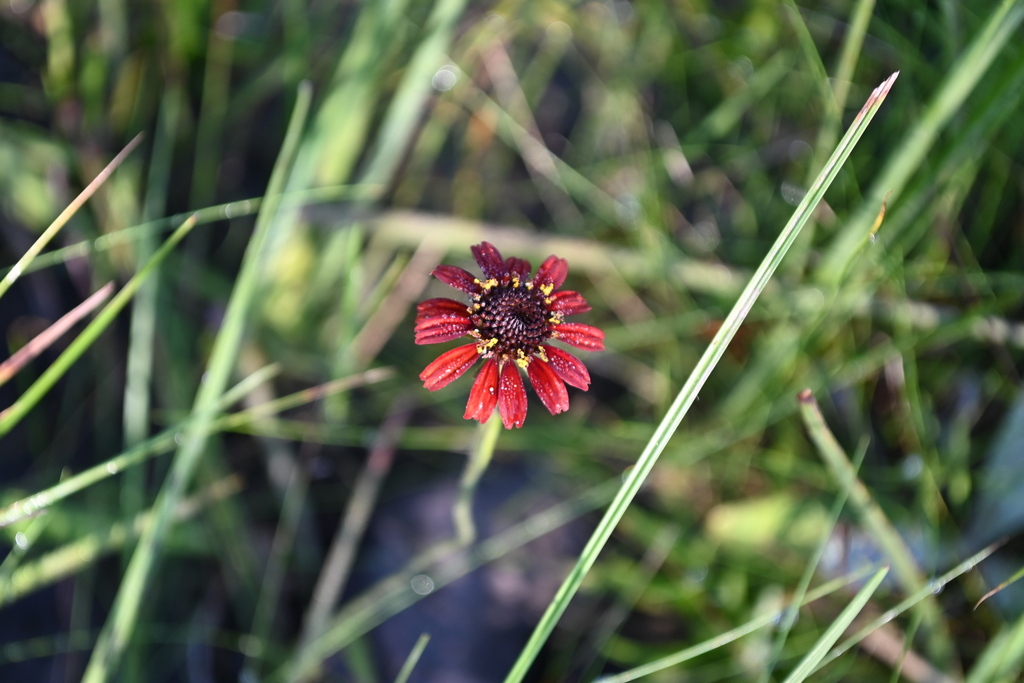
Rudbeckia graminifolia, the Grassleaf Coneflower, is one of the most unusual members of the black-eyed Susan genus. Instead of the familiar golden-yellow rays, its small flower heads carry short, brick-red to maroon rays that hang down beneath a domed, nearly black cone. The plant itself is slender and easy to miss: a tuft of narrow, grass-like leaves and a wiry stalk usually 1 to 2 feet tall. It belongs to the aster family (Asteraceae) and grows in wet, sunny, grassy places: wet pine savannas, wet prairies, bog edges and moist roadside ditches.
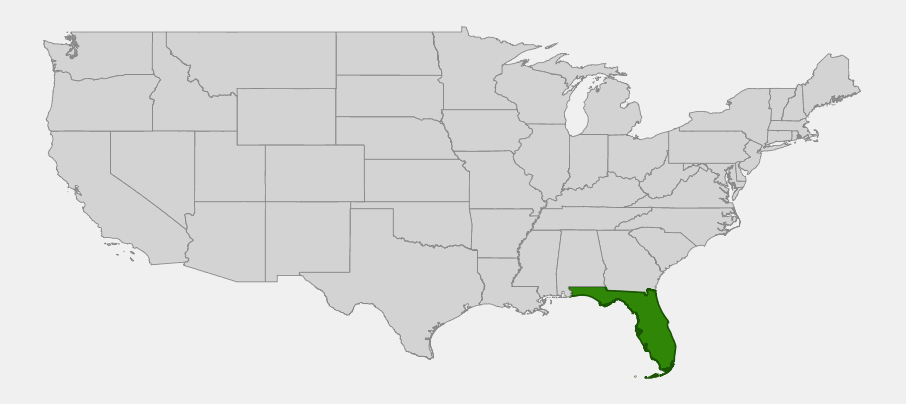
Grassleaf coneflower is endemic to Florida per the Atlas of Florida Plants, and its whole known range fits inside a handful of counties in the central Florida Panhandle, in and around the Apalachicola National Forest. The Florida Wildflower Foundation and the Flora of the Southeastern United States describe it the same way: a plant of the Apalachicola region and nowhere else. It is not listed as Endangered or Threatened by the state, and it can be locally plentiful in good habitat, but a range this small leaves it exposed to drainage, development and fire suppression.
Because it is so localized, grassleaf coneflower is mostly a plant to admire in the wild rather than to plant. The Florida Wildflower Foundation notes that it is not commercially available. If you do grow it, use only nursery-propagated plants or seed from a reputable native nursery, and never dig plants or collect seed from wild populations. This guide covers how to recognize it, where it grows, what it needs, and why it matters in the fire-maintained savannas of the Apalachicola region.
Identification
Out of flower, grassleaf coneflower looks like a clump of grass or a young sedge. In flower it is unlike any other Florida Rudbeckia. Its relatives, such as black-eyed Susan and cutleaf coneflower, have bright yellow rays, while this species has short red to maroon ones.
Growth Habit
Grassleaf coneflower is an annual to short-lived perennial (the Florida Native Plant Society gives both). It forms a small basal tuft of leaves and sends up one to a few slender, mostly unbranched flowering stems. The Lady Bird Johnson Wildflower Center gives a height of up to about 3 feet, but most plants are under 2 feet.
Leaves
The leaves are long, narrow and grass-like, which gives the plant its common name and its species name (graminifolia means “grass-leaved”). Most of them are crowded at the base of the plant. The few leaves on the flowering stem are smaller and become reduced toward the top, so the upper stem looks almost bare.
Flowers
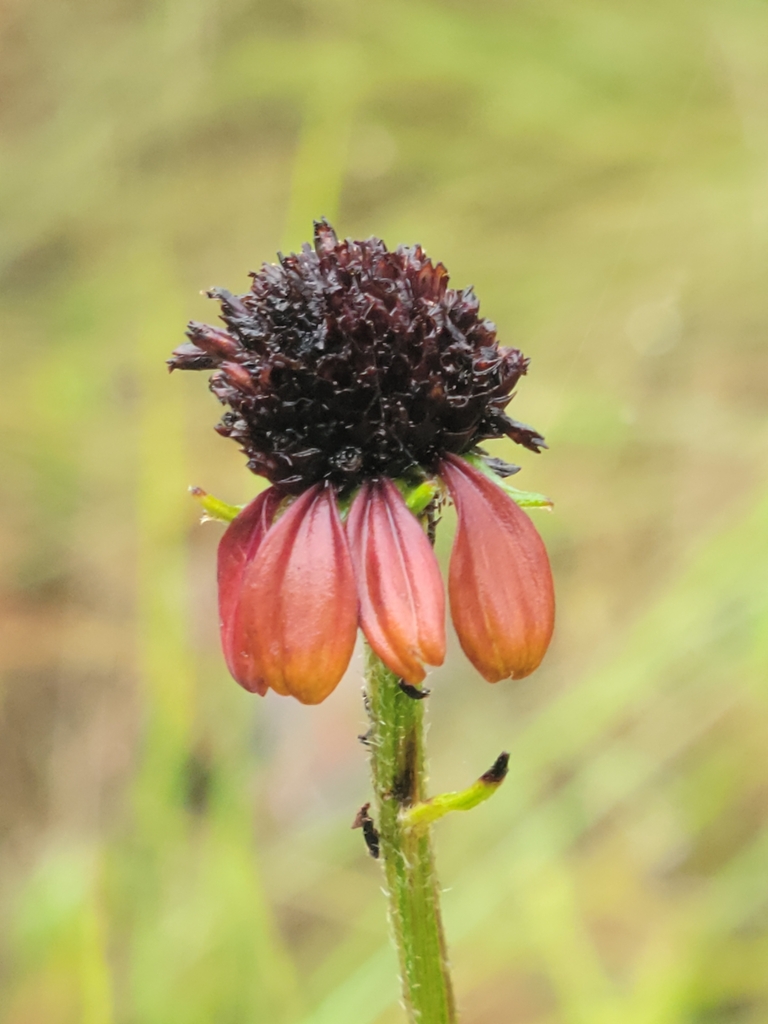
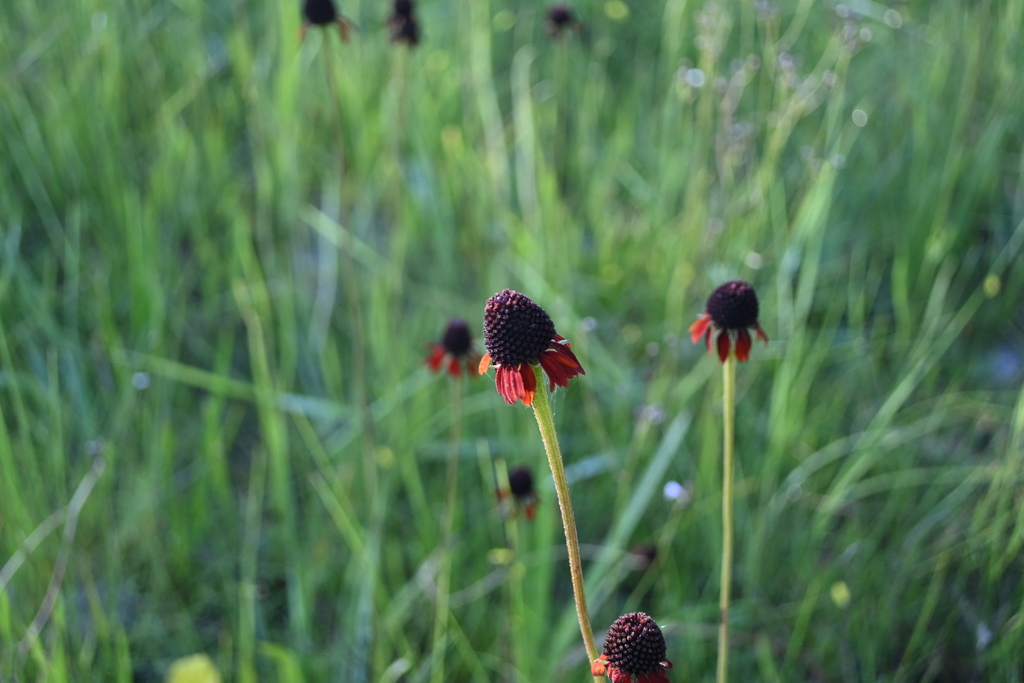
Each stem usually ends in a single flower head. The disk is dark purple-brown to blackish, rounded to egg-shaped, and stands up like a small cone or thimble. Around it is a ring of short ray florets. The Lady Bird Johnson Wildflower Center describes them as maroon-red, often blackish at the tips. The rays are short for a coneflower and often droop, so the head can look like a dark button with a red fringe. Plants flower mainly in summer, with records from spring into fall (roughly April through October).
Fruit & Seeds
After flowering, the disk ripens into a dark, bristly seed head of small, four-angled cypselae (the dry, one-seeded fruits of the aster family, often called achenes). Old seed heads often persist on the dry stalks into fall.
Quick Facts
| Scientific Name | Rudbeckia graminifolia (Torr. & A. Gray) C.L. Boynt. & Beadle |
| Family | Asteraceae (aster family) |
| Plant Type | Herbaceous wildflower; annual to short-lived perennial |
| Mature Height | 1–2 ft (up to about 3 ft) |
| Mature Spread | 6–12 in |
| Growth Rate | Moderate |
| Sun Exposure | Full sun |
| Water Needs | High; moist to wet soil, seasonally saturated |
| Soil Type | Wet sand and peaty sand of savannas and bog edges |
| Soil pH | Acidic (about 4.5–6.0) |
| Bloom Time | Mainly summer; about April–October |
| Flower Color | Brick-red to maroon rays, often darker at the tips; dark brown disk |
| Fall Color | None notable |
| Fruit | Small dark cypselae (achenes) in a cone-shaped head |
| Deer Resistant | Unknown; rarely browsed in its wet habitat |
| USDA Hardiness Zones | 8–9 |
Native Range
Grassleaf coneflower has one of the smallest ranges of any Rudbeckia. USDA PLANTS and the Lady Bird Johnson Wildflower Center record it only from Florida, and it is endemic to Florida per the Atlas of Florida Plants. Within the state it is restricted to the central Panhandle. The Florida Wildflower Foundation lists Bay, Calhoun, Gulf, Franklin, Liberty and Leon counties, and most populations are in and around the Apalachicola National Forest and the coastal savannas near Apalachicola Bay. NatureServe notes an old report from Georgia, but its location is unknown, and it is not part of the accepted range.
The Apalachicola region is one of the richest areas for plants in temperate North America, with many species found nowhere else. Its wet pine savannas and flatwoods sit on flat, poorly drained, sandy soils that are waterlogged for part of the year and dry in other seasons. Grassleaf coneflower grows in the wettest, most open parts of this landscape: grassy savannas, wet prairies, the edges of bogs and cypress strands, and moist roadside ditches that mimic open savanna.
Like many savanna plants, it depends on frequent fire. Low-intensity fires every few years keep shrubs and young trees from closing over the grassy ground layer. Where fire is kept out, wax myrtle, titi and other shrubs take over and the coneflower fades away. Well-managed public lands, especially the Apalachicola National Forest with its regular prescribed burning, hold most of the remaining habitat.
📋 Regional plant lists featuring Grassleaf Coneflower: North & South Florida
Growing & Care Guide
Grassleaf coneflower is rarely grown, and the Florida Wildflower Foundation notes that it is not commercially available. Because it is endemic to Florida and confined to a small area of the Panhandle, please buy only nursery-propagated plants or seed from a reputable native nursery if they become available, and never dig plants or collect seed from wild populations. The notes below describe the conditions it needs, for gardeners and restoration managers working within its native range.
Light
Full sun. In the wild it disappears when shrubs or trees shade the savanna, so give it an open spot with no overhead cover.
Soil & Water
It needs acidic, sandy or peaty soil that stays moist to wet through the growing season and may stand briefly under water after heavy rain. Its wetland indicator status is Facultative Wetland (FACW). Ordinary well-drained garden beds are too dry. A low spot, a rain garden, or a lined bog garden kept moist with rainwater is a better match. Do not fertilize; rich soil favors grasses and weeds that crowd it out.
Planting Tips
Set plants among low, open companions such as small grasses, pipeworts and meadow beauties rather than in bare ground, which dries and crusts at the surface. Leave space around each plant so taller neighbors do not shade it.
Pruning & Maintenance
Little care is needed. Leave the seed heads standing so the plant can reseed. Because it is short-lived, a planting persists by seedlings rather than by long-lived crowns. In savanna restorations, prescribed fire or a late-winter mowing every few years keeps shrubs and dense grasses in check, the way natural fires once did.
Propagation
Grows from seed. Fresh seed can be sown on the surface of moist, sandy, acidic soil in fall or late winter. Seed collection from wild populations should be left to permitted conservation and restoration programs.
Landscape Uses
- Wet savanna restoration: within its Panhandle range, using locally sourced, propagated material
- Bog and rain gardens: in a sunny, constantly moist, acidic spot within its native range
- Native plant collections: an unusual red-rayed coneflower for collectors of Florida endemics
- Pollinator plantings: a nectar and pollen source for small bees and other insects in summer
Wildlife & Ecological Value
Grassleaf coneflower is a small plant in a very rich community. Where it is common, the savanna usually still has a natural water table and a recent history of fire.
For Pollinators
Like other coneflowers, its flower heads hold many small tubular disk florets that open in rings over several days, offering nectar and pollen to small native bees, flies, beetles and butterflies. Its summer bloom adds to a long season of flowers in Panhandle savannas.
For Birds
Seed-eating birds forage on the seeds of many coneflowers, and grassleaf coneflower seed heads may feed sparrows and other birds that visit open savannas in fall and winter. The open, fire-maintained habitat it shares is important for birds such as Bachman’s sparrows and brown-headed nuthatches.
For Mammals
It has little direct value for mammals. Its wet, open habitat is used by white-tailed deer and small mammals.
Ecosystem Role
Grassleaf coneflower is one of many Apalachicola region endemics that rely on frequent fire and natural hydrology. Its presence is a useful sign of intact wet savanna. Drainage, plowing, conversion to pine plantations and long fire-free periods have all reduced this habitat across the Panhandle, which is why public lands that are burned regularly hold most of the remaining populations.
Cultural & Historical Uses
John Torrey and Asa Gray first described the plant in the nineteenth century under a different genus. Charles Lawrence Boynton and Chauncey Delos Beadle later moved it to Rudbeckia, which gives the full name Rudbeckia graminifolia (Torr. & A. Gray) C.L. Boynt. & Beadle. The genus honors the Swedish botanists Olof Rudbeck the elder and younger, father and son, at Uppsala.
There is no recorded traditional use of this plant, which is not surprising for a small wildflower confined to a few counties. Its modern fame comes from botanists and wildflower enthusiasts who travel to the Apalachicola National Forest in summer to see it along savanna roadsides, often alongside pitcher plants and other regional specialties.
Grassleaf coneflower is a good example of why the Apalachicola region is considered a botanical hotspot. Protecting it depends less on gardens than on keeping its savannas wet, open and regularly burned. Gardeners can help most by supporting conservation lands and by choosing propagated plants instead of wild-collected ones.
Frequently Asked Questions
Where can I see grassleaf coneflower?
In the Florida Panhandle, mainly in and around the Apalachicola National Forest and the coastal savannas near Apalachicola Bay, in wet, grassy, open places and moist roadside ditches. Look in summer, when the red-rayed flowers stand above the grass.
Is grassleaf coneflower endangered?
It is not listed as Endangered or Threatened by the state of Florida, but it is endemic to Florida per the Atlas of Florida Plants and confined to a few Panhandle counties. Never dig plants or collect seed from the wild.
Can I buy grassleaf coneflower?
It is rarely, if ever, sold. The Florida Wildflower Foundation notes that it is not commercially available. If a reputable native nursery offers propagated plants or seed, buy those; never take plants or seed from wild populations.
How is it different from black-eyed Susan?
Black-eyed Susan (Rudbeckia hirta) has hairy leaves and long golden-yellow rays. Grassleaf coneflower has smooth, grass-like leaves and short, drooping, red to maroon rays around a dark cone.
What growing conditions does it need?
Full sun and acidic, sandy or peaty soil that stays moist to wet, with little competition from taller plants. It does not tolerate dry, shady or fertilized garden beds.

Looking for a nursery that carries Grassleaf Coneflower?
Browse our native plant nursery directory: Florida