
Yellowleaf Hawthorn (Crataegus flava)
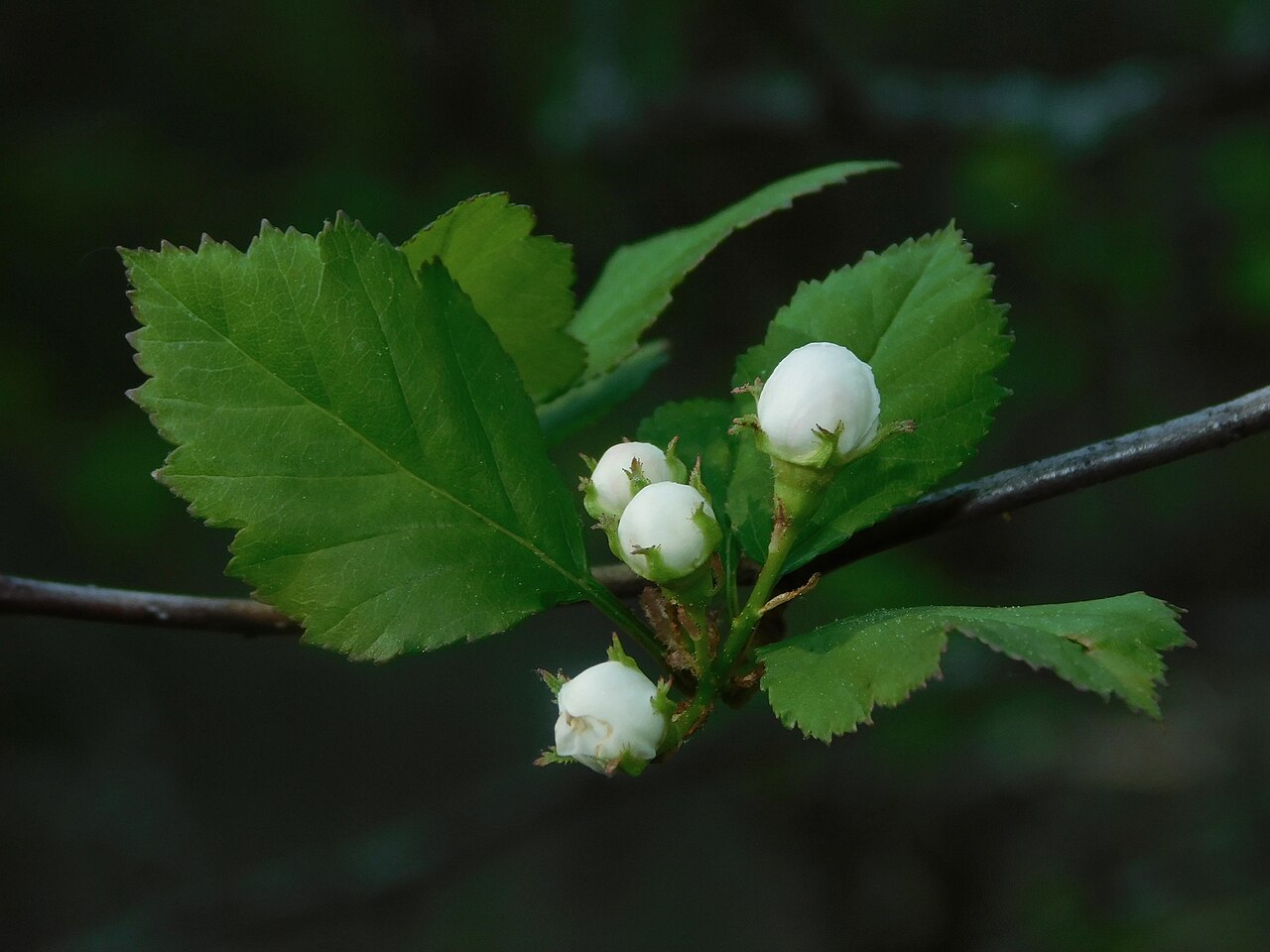
Crataegus flava, the Yellowleaf Hawthorn, is a thorny shrub or small tree of dry, sandy woods in the southeastern United States. It is also called beautiful hawthorn and Sargent’s hawthorn. It usually grows 10 to 20 feet tall with a broad, open, irregular crown, stiff spiny branches, and small toothed leaves that often have a yellowish-green cast. In spring it carries clusters of white, five-petaled flowers, and by late summer and fall these become small, rounded haws that ripen yellow, orange or reddish brown. It belongs to the rose family (Rosaceae), alongside apples, serviceberries and plums.
Hawthorns are a notoriously difficult genus, and C. flava is one of the hardest. The name goes back to William Aiton’s 1789 catalog of the plants at Kew, and botanists have argued ever since about exactly which wild southeastern hawthorn it describes. In the late 1800s and early 1900s Charles Sargent, Chauncey Beadle and others named dozens of “species” from small differences in leaves and fruit. USDA PLANTS now folds ten of those names into Crataegus flava, including C. floridana, C. lepida, C. recurvata and C. visenda, while some current specialists split the group differently. For gardeners, the practical point is simple: this is the small, thorny, yellow-fruited hawthorn of southeastern sandhills and dry oak woods.
In Florida it grows in the Panhandle and the northern and central peninsula, in sandhills, dry hammocks and oak-pine woods, and it is recorded as native by the Atlas of Florida Plants. Like other native hawthorns it is valuable for wildlife. Its spring flowers feed native bees, its foliage supports many moth and butterfly caterpillars, and its thorny branches give songbirds safe nesting cover. This guide covers how to identify yellowleaf hawthorn, where it grows, and how to use it in a dry, sunny native landscape.
Identification
Yellowleaf hawthorn is easiest to recognize by the combination of a small, irregular tree habit, long straight thorns, small wedge-shaped toothed leaves, and few-flowered clusters of white flowers. Positive identification of southeastern hawthorns often needs flowers and ripe fruit from the same plant, and even experienced botanists sometimes disagree.
Form & Bark
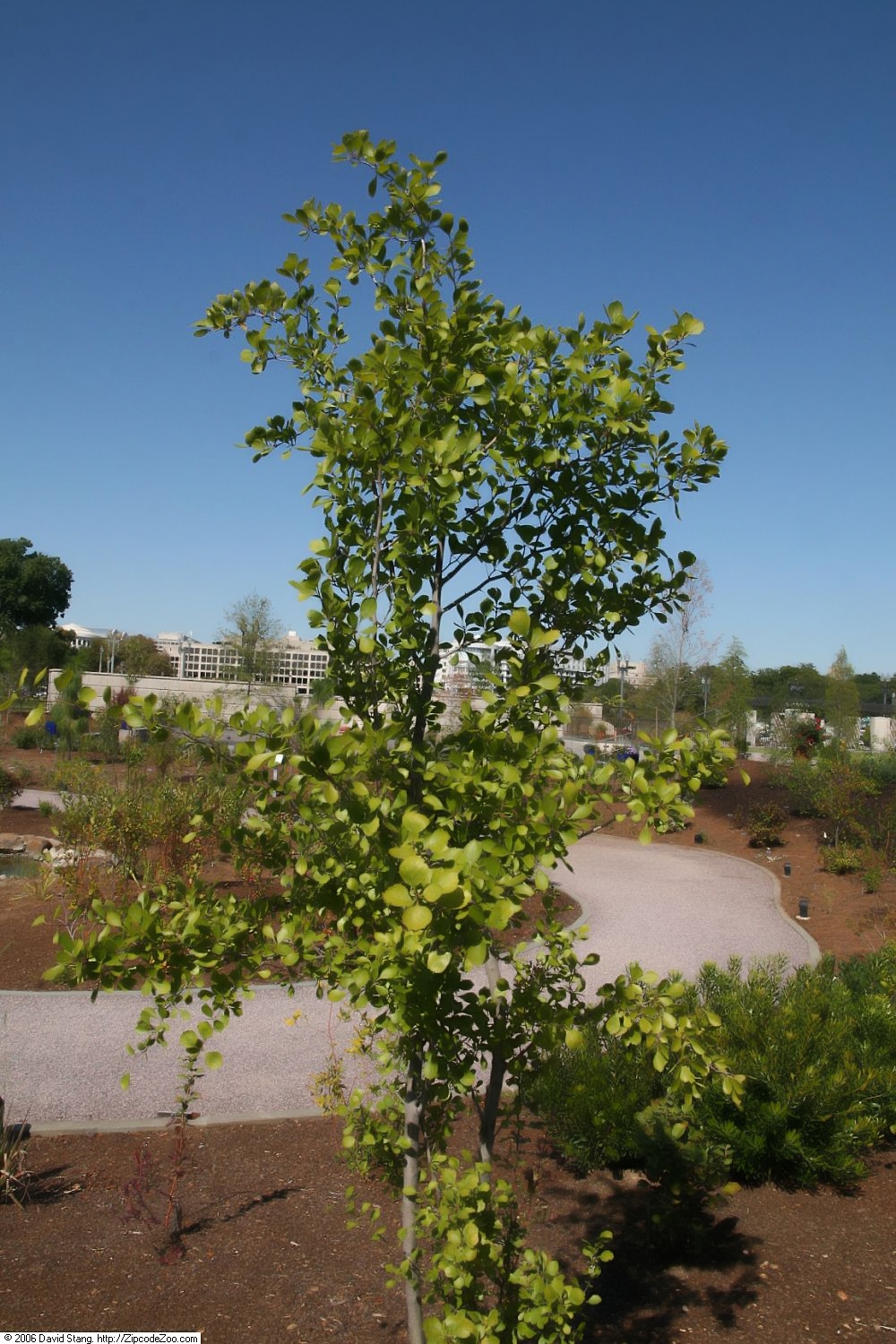
It is a deciduous shrub or small tree, typically 10 to 20 feet tall, with a short trunk and a broad, open, often lopsided crown. Branchlets are slender and zigzag, and many plants have a slightly drooping look. Young twigs are reddish brown and become gray with age. The bark on older trunks is dark gray to blackish and breaks into small, scaly plates.
Thorns
Most plants are armed with straight, slender thorns about 1 to 2 inches long on the branches and twigs. These are modified short shoots, and they are sharp enough to deserve respect when pruning or planting near paths.
Leaves
The leaves are alternate, about 1 to 2½ inches long, obovate to wedge-shaped, narrowing to the base, with a toothed edge and often a few shallow lobes toward the tip. They are thin, often somewhat glandular along the margin and leafstalk, and pale green to yellowish green, especially in sun. They drop in fall, often turning dull yellow.
Flowers
Flowers open in early spring, usually March to April in Florida and April to May farther north, as the leaves expand. They come in small clusters of a few flowers (sometimes solitary) and are white, about ½ to ¾ inch across, with five rounded petals and about 20 stamens. The sepals are often glandular-toothed, a useful clue for hawthorn keys.
Fruit
The fruit is a small pome, or haw, about ⅜ to ⅝ inch across, rounded to slightly pear-shaped, with the dried sepals still attached at the tip. It ripens from late summer into fall and is yellow, orange-yellow or reddish brown depending on the plant. The flesh is dry to mealy and holds three to five hard, bony nutlets. Ripe haws often drop soon after they color.
Quick Facts
| Scientific Name | Crataegus flava (syn. C. floridana, C. lepida, C. recurvata, C. visenda and others) |
| Family | Rosaceae (rose family) |
| Plant Type | Deciduous thorny shrub or small tree |
| Mature Height | 10–20 ft |
| Mature Spread | 8–15 ft |
| Growth Rate | Slow to moderate |
| Sun Exposure | Full sun to part shade |
| Water Needs | Low once established; tolerates dry, sandy soil |
| Soil Type | Well-drained sand, loamy sand or rocky soil |
| Soil pH | Acidic (about 4.5–6.5) |
| Bloom Time | March–May (earliest in Florida) |
| Flower Color | White |
| Fall Color | Dull yellow |
| Fruit | Small yellow, orange or reddish-brown haw (pome), late summer–fall |
| Deer Resistant | Moderately; thorns protect older plants, but deer browse young growth |
| USDA Hardiness Zones | 6–9 |
Native Range
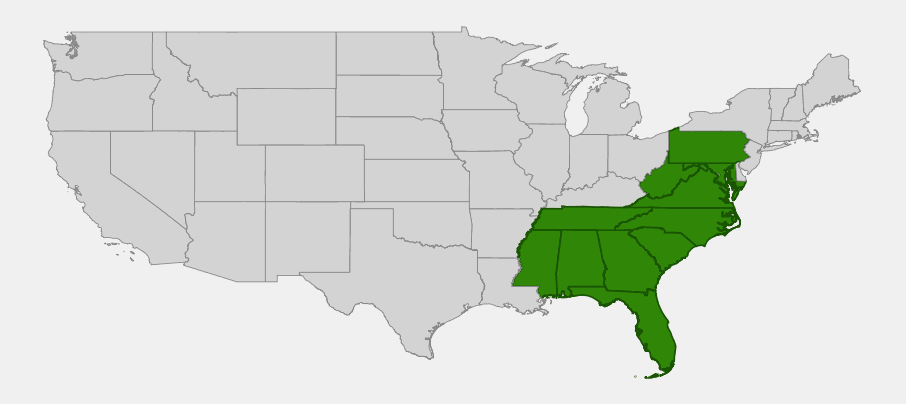
USDA PLANTS records Crataegus flava as native in eleven states: Alabama, Florida, Georgia, Maryland, Mississippi, North Carolina, Pennsylvania, South Carolina, Tennessee, Virginia and West Virginia. The Lady Bird Johnson Wildflower Center summarizes its distribution as Virginia and Tennessee south to Florida and Mississippi. The northern records reflect the broad way the name has been applied, and the plant is most frequent on the Coastal Plain and lower Piedmont of the Carolinas, Georgia, Alabama and north Florida.
In Florida, the Atlas of Florida Plants lists it as native, with records across the Panhandle and the northern and central peninsula. It grows in sandhills with longleaf pine and turkey oak, in dry oak scrub edges, xeric hammocks, upland mixed woods, fencerows and old fields. Its typical soils are deep, well-drained, acidic sands, and it often grows in light shade beneath scattered pines and oaks rather than in dense forest.
Because southeastern hawthorns hybridize and have been named and renamed so often, county-level records under this name should be read with caution. The USDA county map linked here is the best starting point, and local herbaria and state floras can confirm which hawthorns grow near you.
📋 Regional plant lists featuring Yellowleaf Hawthorn: North & South Florida · Alabama, Georgia & Mississippi · North & South Carolina · Maryland, Virginia & West Virginia · Kentucky & Tennessee · New York, Pennsylvania & Northern New Jersey
Growing & Care Guide
Yellowleaf hawthorn is a tough small tree for hot, dry, sandy sites where many ornamental trees struggle. It is not common in the nursery trade, so look for it at native plant nurseries in the Southeast, often sold under the name Crataegus flava or one of its older names. It grows slowly at first but needs very little care once its roots are established.
Light
It flowers and fruits best in full sun, and it also grows well in the light, shifting shade of open pine or oak woods. In heavy shade it becomes thin and sparse and produces few flowers.
Soil & Water
Plant it in well-drained, acidic sand or sandy loam. It is adapted to deep sandhill soils that dry out quickly, and it dislikes wet or poorly drained clay. Water regularly during the first growing season. After that, it rarely needs irrigation except in prolonged drought. Fertilizer is unnecessary and can encourage soft growth that is more prone to disease.
Planting Tips
Plant container-grown trees in fall or winter in Florida and the Deep South, or early spring farther north. Set the root ball at the same depth it grew in the pot and mulch lightly with pine straw or leaf litter, keeping mulch off the trunk. Allow room for its spread and its thorns: keep it away from walkways, play areas and narrow passages.
Pruning & Maintenance
Little pruning is needed. Remove dead or crossing branches in late winter, and wear heavy gloves and eye protection. Like other hawthorns it can get cedar-apple and cedar-hawthorn rusts, which spot leaves and fruit, especially where eastern red cedar grows nearby, and fire blight can kill twig tips. Good air circulation and avoiding heavy fertilizer help. Most native plantings tolerate some leaf spotting without lasting harm.
Propagation
Hawthorn seed has a hard, bony nutlet and a deeply dormant embryo. Clean the seeds from ripe fruit in fall and sow them outdoors, or give them a long warm period followed by cold stratification. Germination often does not occur until the second spring. Hawthorns are difficult to root from cuttings, so most nursery plants are grown from seed.
Landscape Uses
- Wildlife hedgerows: its thorny branches make protected nest sites and escape cover for songbirds
- Sandhill and dry woodland restoration: within its native range, under longleaf pine and scrub oaks
- Small specimen tree: a spring-flowering accent for dry, sunny yards where larger trees will not fit
- Pollinator gardens: early white flowers for native bees and other spring insects
- Barrier planting: a living fence along property edges where thorns are an advantage
Wildlife & Ecological Value
Native hawthorns are among the most valuable small trees for wildlife in eastern North America, and yellowleaf hawthorn is no exception. It offers flowers, foliage, fruit and shelter in one plant.
For Pollinators
The early spring flowers are visited by small native bees, including mining bees, sweat bees and small carpenter bees, as well as flies and beetles. The Xerces Society lists this species as having special value to native bees.
For Birds
The thorny branches are favored nest sites for northern mockingbirds, brown thrashers, northern cardinals and other shrub-nesting birds, because predators find them hard to reach. Mockingbirds, thrashers, cedar waxwings and other fruit-eating birds take the haws in fall, and wild turkeys and northern bobwhite eat fallen fruit.
For Mammals
Gray foxes, raccoons, opossums, squirrels and white-tailed deer eat fallen haws. Deer also browse young leaves and shoots, so young plants may need protection until they are tall enough.
Ecosystem Role
Hawthorns host the caterpillars of many moths and butterflies, including the striped hairstreak butterfly, whose caterpillars feed on hawthorns and other woody plants of the rose family. In sandhills the species is adapted to frequent low-intensity fire: top-killed stems typically resprout from the base, and the plant persists as a shrub between fires.
Cultural & Historical Uses
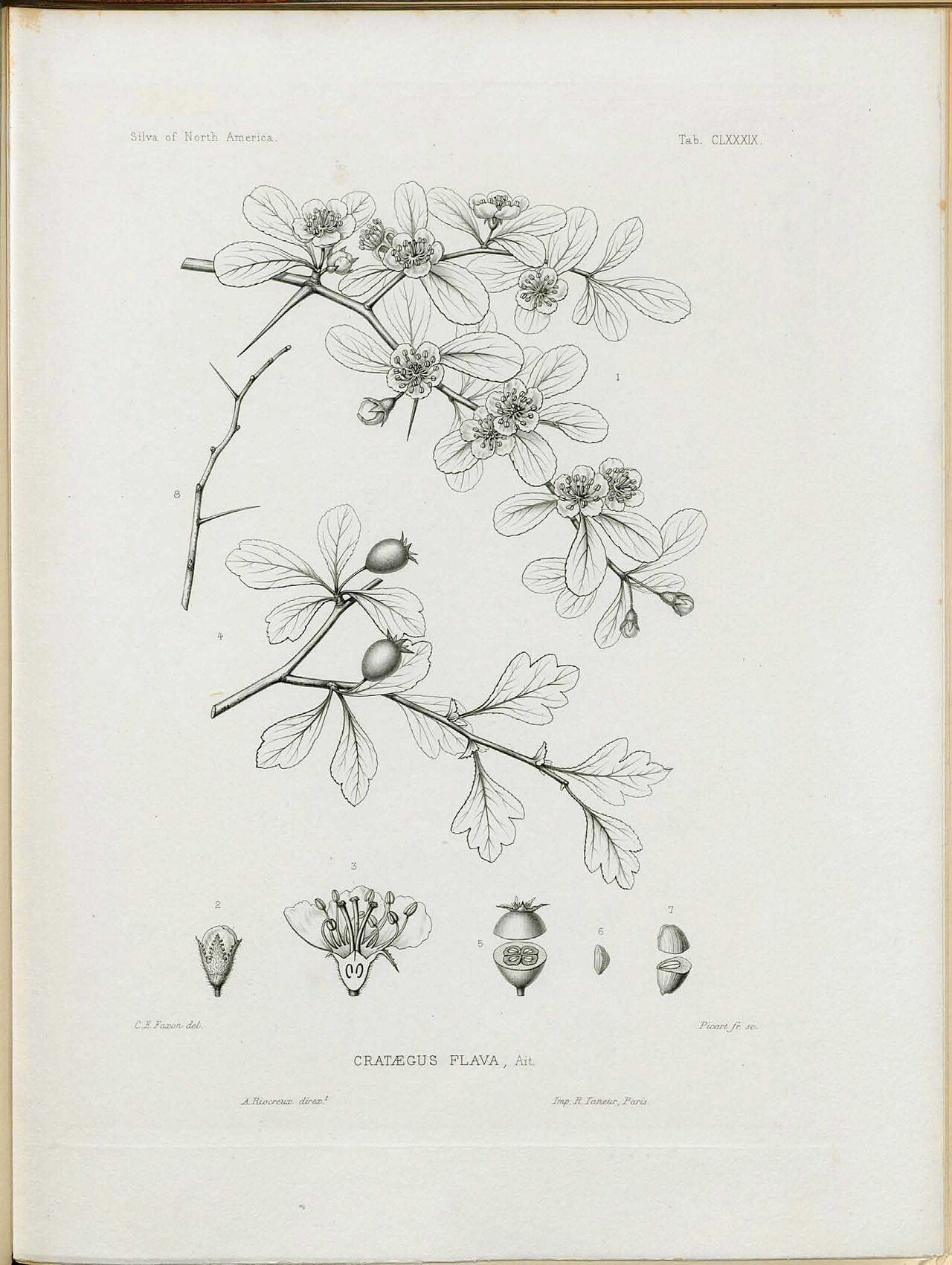
William Aiton published Crataegus flava in 1789 in Hortus Kewensis, describing a plant grown at the Royal Botanic Gardens at Kew from North American seed. Early English nurseries sold it as the “yellow-fruited thorn,” and J. C. Loudon illustrated it under that name in his Arboretum et Fruticetum Britannicum (1838). Charles Sprague Sargent later figured it and several related forms in his Silva of North America.
Native peoples across eastern North America gathered hawthorn fruits, eating them fresh, dried or cooked and mixed with other foods, and used the hard wood and thorns for small tools. Records for this particular species are scarce, but its haws are typical of the genus: edible when ripe, though small, mealy and seedy. Southern cooks have long made jelly from native haws, especially the related mayhaws.
The tangled history of its name made Crataegus flava a symbol of the “hawthorn problem” in American botany. At the height of the craze more than a thousand hawthorn species were described from North America. Most are now treated as synonyms, hybrids or local forms, and USDA PLANTS lists ten such names under this one species.
Frequently Asked Questions
Why is it called yellowleaf hawthorn?
The name refers to the pale yellowish-green foliage, which is especially noticeable in full sun. The scientific name flava means yellow and is often said to refer to the yellow fruit of the plant Aiton described.
Are yellowleaf hawthorn fruits edible?
Yes, the ripe haws are edible, as are those of other hawthorns, but they are small, dry and seedy. They are better left for wildlife or cooked into jelly. Do not eat the seeds, which like those of apples contain compounds that release cyanide.
How big does yellowleaf hawthorn get?
Most plants reach 10 to 20 feet tall with a broad, open crown about as wide as tall. On very dry, poor sandhill soils it often stays a shrub under 10 feet.
Does it have thorns?
Yes. Most plants have straight, sharp thorns 1 to 2 inches long. Plant it where the thorns are an asset, such as a wildlife hedge or property edge, not beside a path or play area.
Will yellowleaf hawthorn grow in wet soil?
No. It is a plant of dry, well-drained sandy soils. For wet sites in the Southeast, consider mayhaws such as Crataegus aestivalis, which grow naturally in swamps and floodplains.

Looking for a nursery that carries Yellowleaf Hawthorn?
Browse our native plant nursery directory: Alabama · Florida & Georgia · Maryland & Mississippi · North Carolina · Pennsylvania, South Carolina, Tennessee & Virginia · West Virginia