
Maidenberry (Crossopetalum rhacoma)
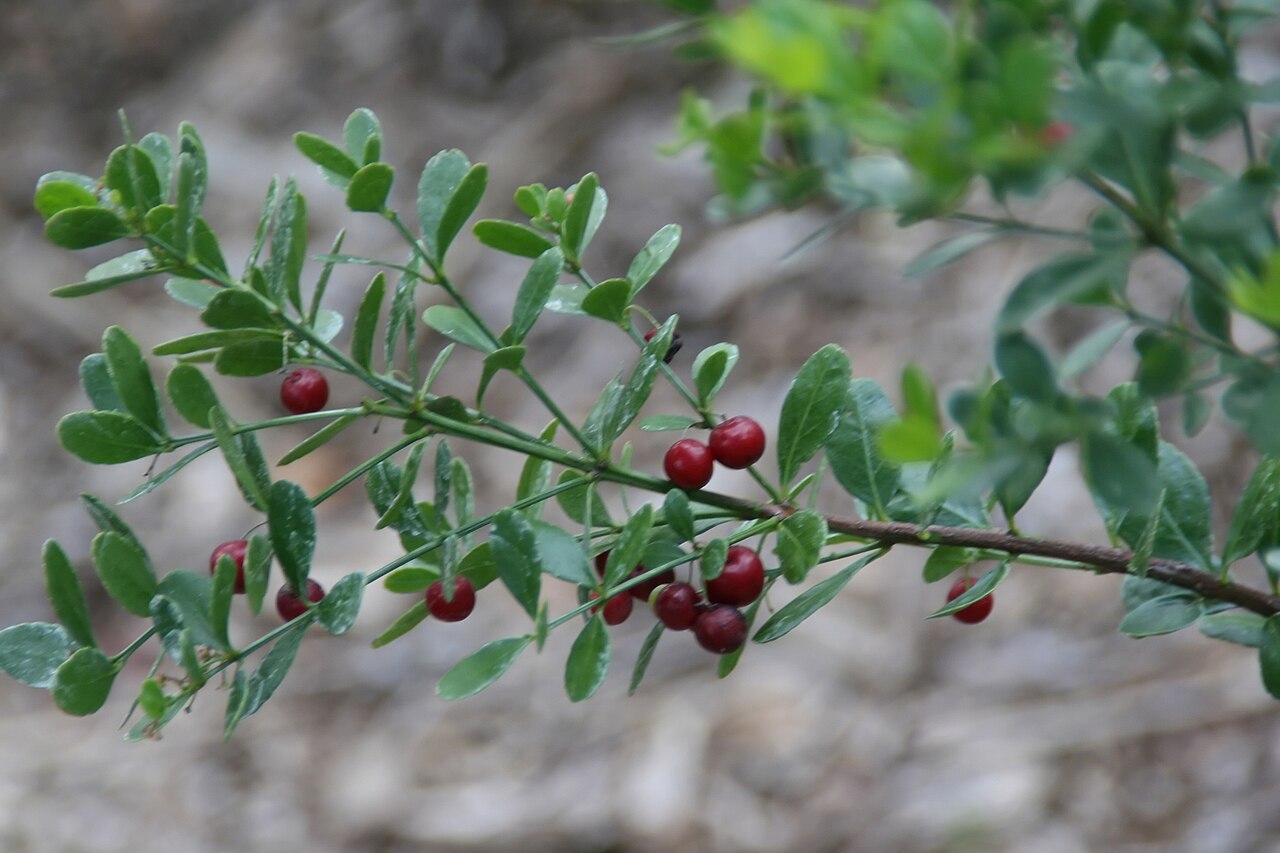
Crossopetalum rhacoma, known as Maidenberry or rhacoma, is a small evergreen shrub of south Florida’s pine rocklands, coastal hammocks and Keys thickets. It has small, glossy, finely toothed leaves, tiny dark red flowers, and bright red, pea-sized fruits that birds take quickly. Plants range from knee-high in frequently burned pinelands to small trees 10 feet or more tall in sheltered hammocks.
Maidenberry belongs to the bittersweet or staff-tree family (Celastraceae), which also includes the familiar American bittersweet and the euonymus shrubs. Within the United States it grows wild only in southern Florida, but it is widespread in the Caribbean, from the Bahamas and the Greater and Lesser Antilles (including Puerto Rico and the Virgin Islands) to the Yucatán Peninsula and parts of Central America.
In Florida, maidenberry is listed as Threatened by the state of Florida (FDACS Regulated Plant Index), largely because most of its pine rockland and coastal habitat has been cleared for development. It is a good choice for native gardens in south Florida, but only from nursery-propagated plants. Never dig or collect plants or cuttings from the wild. This guide covers identification, range, care and its value to wildlife.
Identification
Maidenberry is an unassuming shrub most of the year, and it is easiest to recognize when it carries its red fruits. The combination of small, opposite or whorled, toothed leaves, tiny red four-petaled flowers on thread-like stalks, and single red drupes is distinctive among south Florida shrubs.
Growth Form & Bark
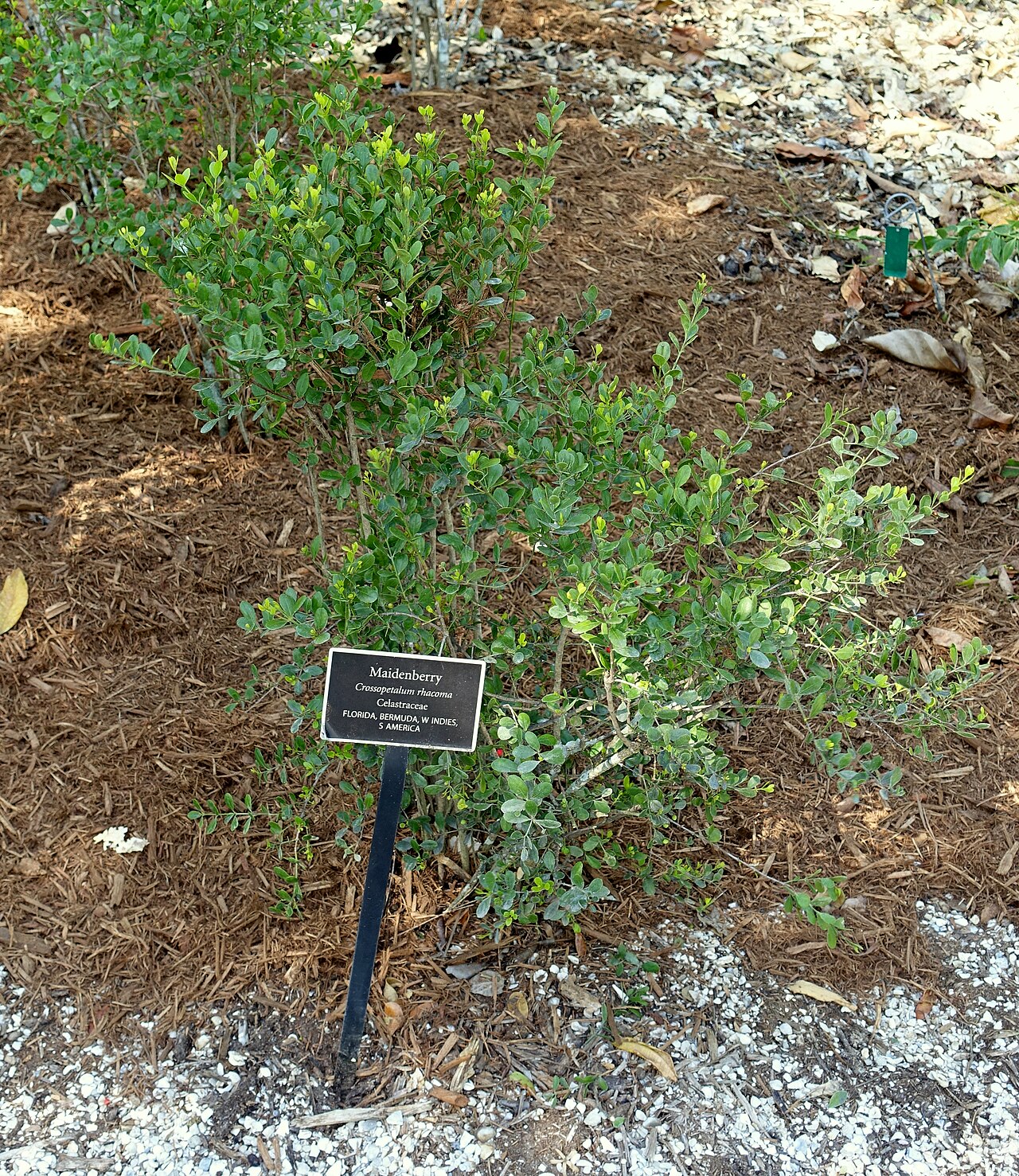
It is a much-branched evergreen shrub, usually 2 to 6 feet tall in pine rocklands and up to about 12 feet tall in hammocks, where it can take the form of a small, slender tree. Young twigs are slightly four-angled and greenish to reddish brown, becoming gray and smooth with age.
Leaves
The leaves are simple, leathery and glossy, usually ½ to 1½ inches long, oval to narrowly obovate, with a rounded or notched tip and small rounded teeth along the margin. They are arranged opposite each other or in whorls of three on the twig, an unusual arrangement that helps separate maidenberry from similar small-leaved shrubs. Leaves of sun-grown plants are thicker and often tinged bronze or reddish.
Flowers
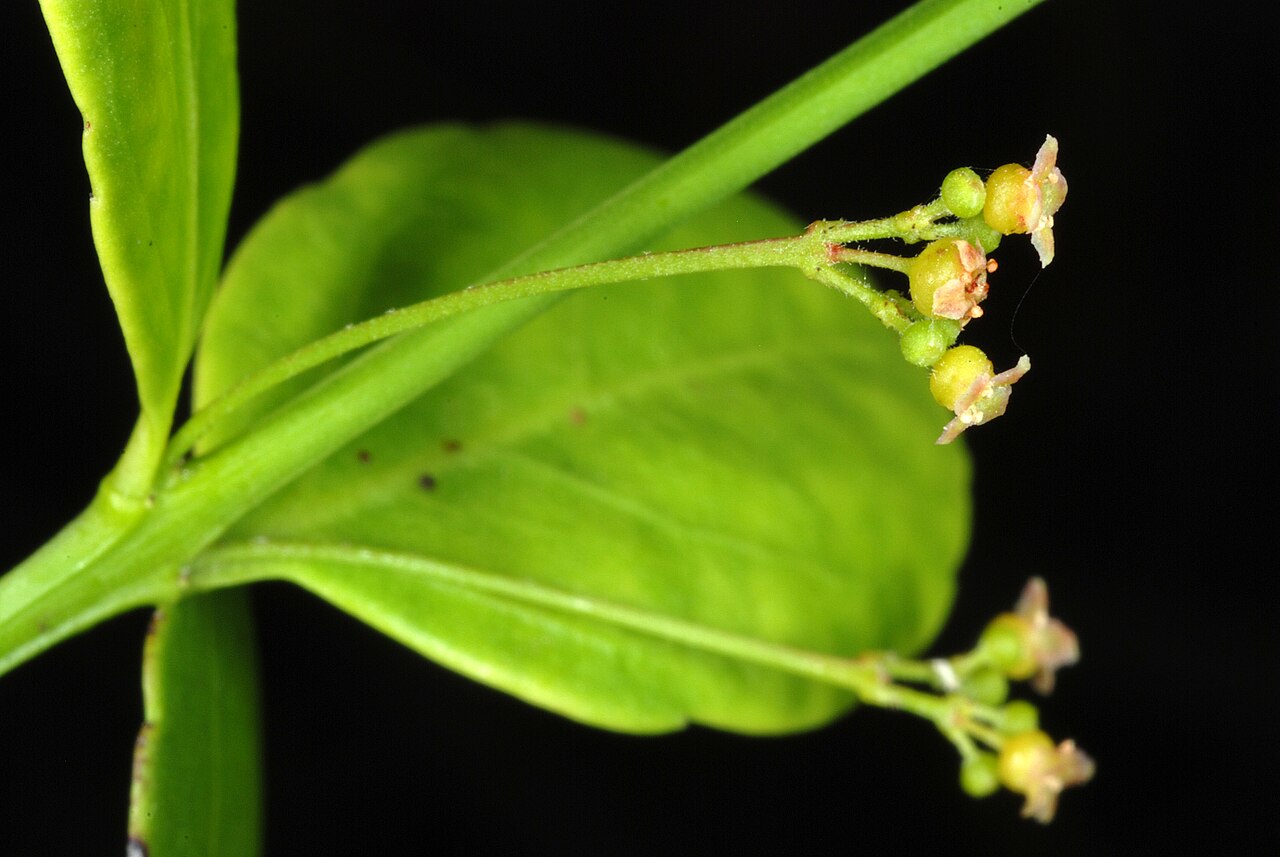
The flowers are tiny, about ⅛ inch across, with four rounded, dark red to maroon petals and a small fleshy disk at the center. They are borne in small, branched clusters (cymes) at the ends of long, very slender stalks from the leaf axils, so they seem to float beside the foliage. Maidenberry can flower in any month in south Florida, with peaks in spring and summer.
Fruit
The fruit is an egg-shaped to round drupe about ¼ inch long that ripens from green to glossy bright red. Each contains a single seed. Fruits may be present for much of the year and are the most conspicuous feature of the plant. Some sources call it poison cherry, and the fruit should not be eaten by people.
Quick Facts
| Scientific Name | Crossopetalum rhacoma Crantz |
| Family | Celastraceae (bittersweet family) |
| Plant Type | Evergreen shrub or small tree |
| Mature Height | 3–10 ft (to about 12 ft in sheltered hammocks) |
| Mature Spread | 3–6 ft |
| Growth Rate | Slow to moderate |
| Sun Exposure | Full sun to part shade |
| Water Needs | Low once established; well-drained soil |
| Soil Type | Limestone (oolite), sand or shell; well-drained |
| Soil pH | Neutral to alkaline, about 6.5–8.5 |
| Bloom Time | Year-round in south Florida, peaking spring–summer |
| Flower Color | Dark red to maroon (tiny) |
| Fall Color | None; evergreen |
| Fruit | Glossy red drupe about ¼ in long |
| Deer Resistant | Moderate |
| USDA Hardiness Zones | 10–11 |
Native Range
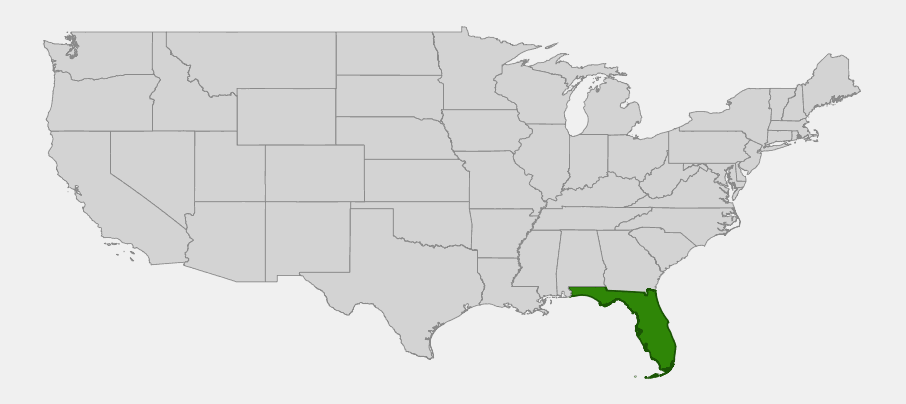
In the United States, maidenberry is native only to Florida. USDA PLANTS also lists it as native in Puerto Rico and the U.S. Virgin Islands. Outside U.S. territory it grows through the Bahamas, Cuba, Hispaniola, Jamaica, the Lesser Antilles, and around the Caribbean basin to the Yucatán Peninsula of Mexico and parts of Central America and northern South America.
The Atlas of Florida Plants records it from the southern counties of the peninsula, mainly along the coasts and on the Miami Rock Ridge, south through the Florida Keys. The largest Florida populations are in the pine rocklands of Miami-Dade County, including those in Everglades National Park, and in the coastal hammocks and thickets of the Keys.
Pine rockland is a globally rare habitat. Most of it outside Everglades National Park was cleared for the growth of the Miami area, and the remaining fragments depend on prescribed fire to stay open. That loss of habitat is the main reason maidenberry is listed as Threatened by the state of Florida. In gardens, choose plants grown by a nursery from cultivated stock rather than collected material.
📋 Regional plant lists featuring Maidenberry: North & South Florida
Growing & Care Guide
Maidenberry is a tough, slow-growing shrub that suits south Florida native landscapes, butterfly and bird gardens, and coastal plantings. Because it is listed as Threatened in Florida, buy only nursery-propagated plants from native plant nurseries, and never dig plants or take cuttings or seed from wild populations or public lands.
Light
It grows in full sun to part shade. Plants in full sun stay dense and fruit most heavily. In deeper shade they become taller, thinner and less fruitful, as they do in the wild under a hammock canopy.
Soil & Water
Give maidenberry very well-drained soil: limestone rock, sand, shell or a sandy mix. It is adapted to thin soil over oolite and tolerates alkaline conditions. Water regularly for the first few months after planting; afterward it is very drought tolerant and usually needs no irrigation except in long dry spells. It has moderate salt tolerance and handles salt spray in the second line of a coastal planting, but it should not sit in wet soil.
Planting Tips
Plant from containers at any time of year in south Florida, ideally at the start of the summer rainy season. Space plants 3 to 4 feet apart for a loose hedge or group. Its fine texture works well in front of larger native shrubs, beside rock outcrops, or in a pine rockland garden with coontie and wildflowers. It is hardy only in frost-free or nearly frost-free areas, roughly USDA zones 10 and 11.
Pruning & Maintenance
Maidenberry needs little care. Prune lightly after a flush of growth if you want a denser shape, but avoid heavy shearing, which removes flowers and fruit. Fertilizer is rarely needed in native soils. In larger pine rockland restorations it tolerates periodic fire and resprouts from the base.
Propagation
It can be grown from cleaned fresh seed sown in a well-drained mix, which germinates slowly and irregularly, or from semi-hardwood cuttings. Because the species is state-listed, propagation material should come only from cultivated plants or from permitted, legally collected sources.
Landscape Uses
- Bird gardens: red fruits draw mockingbirds, catbirds and other fruit-eating birds
- Pine rockland gardens: with coontie, saw palmetto and south Florida wildflowers
- Coastal landscapes: behind the dune line and in salt-spray zones with good drainage
- Low informal hedges: a fine-textured, slow-growing shrub for small spaces
- Habitat restoration: in permitted pine rockland and hammock edge restorations within its range
Wildlife & Ecological Value
Maidenberry is a small but useful part of the food web in south Florida’s pinelands and coastal hammocks, because it can flower and fruit through much of the year.
For Pollinators
The tiny flowers have an open, nectar-bearing disk that small insects can reach easily. They are visited by small bees, wasps and flies. A single plant flowers over many months, which offers a steady if modest nectar supply.
For Birds
The bright red drupes are eaten by birds such as northern mockingbirds, gray catbirds and other songbirds, which then disperse the seeds. Fruit is often available in winter when migrant birds are present in south Florida.
For Mammals
Small mammals may eat fallen fruit. The dense, low branches also give cover to lizards and small animals in open pinelands.
Ecosystem Role
Maidenberry is one of many tropical shrubs that make the pine rocklands of the Miami Rock Ridge and the Florida Keys so diverse. It survives the frequent fires that keep these pinelands open by resprouting from its base, and its decline tracks the loss of the habitat itself.
Cultural & Historical Uses
The species was described by the Austrian botanist Heinrich Johann Nepomuk von Crantz in 1766. Rhacoma, now the specific epithet, was earlier used by Linnaeus as a genus name for this plant, and “rhacoma” survives as one of its common names. The genus name Crossopetalum comes from Greek words for “fringe” and “petal”.
The common names maidenberry and poison cherry are both used in the Caribbean and Florida. Some traditional medicine uses of the plant are reported from the West Indies, but these are not well documented and the plant should not be eaten or used as a remedy.
In Florida, maidenberry has become a favorite of native plant gardeners in Miami-Dade and the Keys, who use it to bring pine rockland character and bird food into small yards. Because pine rockland survives mainly in scattered public preserves, these gardens and nursery-grown plants play a small role in keeping the species visible and appreciated.
Frequently Asked Questions
Is maidenberry endangered?
It is not federally listed, but it is listed as Threatened by the state of Florida (FDACS Regulated Plant Index). It is more common in parts of the Caribbean. Buy only nursery-propagated plants and never collect from the wild.
Are maidenberry fruits edible?
No. One of its common names is poison cherry, and the fruits should not be eaten by people or pets. Birds eat them without harm.
Can maidenberry grow in central or north Florida?
It is sensitive to frost and is generally reliable only in south Florida and the Keys, roughly USDA zones 10 and 11. Freezes can kill it to the ground farther north.
Does maidenberry need a lot of water?
No. Once established it is very drought tolerant and does best in fast-draining limestone or sandy soil. Overwatering and poorly drained soil are more likely to cause problems than drought.
How is maidenberry different from Christmas berry?
Christmas berry (Crossopetalum ilicifolium) is a close relative that also grows in south Florida. It is a low, sprawling groundcover with holly-like, spiny-toothed leaves, while maidenberry is an upright shrub with smaller, bluntly toothed leaves.

Looking for a nursery that carries Maidenberry?
Browse our native plant nursery directory: Florida