
East Palatka Holly (Ilex ×attenuata)
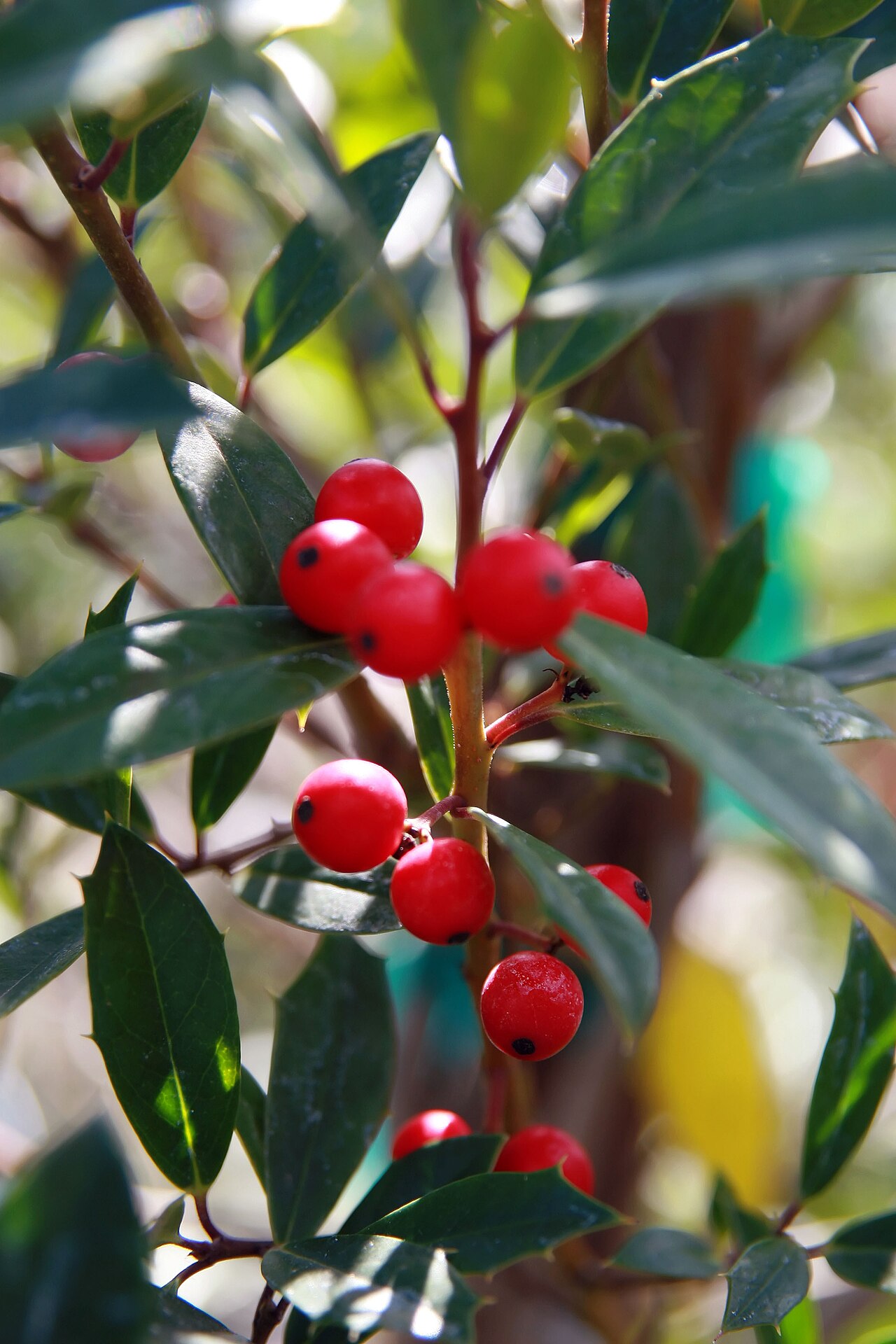
Ilex ×attenuata, the East Palatka Holly or topal holly (the USDA PLANTS common name), is a natural hybrid between two native hollies: dahoon (Ilex cassine) and American holly (Ilex opaca). The “×” in the name marks it as a hybrid. The Atlas of Florida Plants writes the name Ilex x attenuata. Wild hybrid trees turn up in the Southeast where the ranges of the two parents overlap.
It is an evergreen tree, usually 20 to 30 feet tall (occasionally to about 45 feet), with a narrow, upright, pyramidal shape, leathery leaves and bright red berries in fall and winter. It combines the narrower, less spiny leaves and heavy fruiting of dahoon with the denser, more cold-hardy habit of American holly.
In gardens it is almost always sold as named cultivars rather than wild-type plants. ‘East Palatka’ is a female clone selected from a wild tree near East Palatka, Florida, and ‘Savannah’, ‘Fosteri’ (Foster holly) and ‘Sunny Foster’ are other popular selections. They are among the most widely planted hollies in the Southeast, so a nursery plant is a cultivar of a native hybrid, not a wild plant from your area.
Identification
East Palatka holly is intermediate between its parents, and individual hybrids vary. The cultivars are easier to recognize because each is a single clone.
Leaves
The evergreen leaves are 2 to 4 inches long, leathery and medium to dark green. In ‘East Palatka’ they are oval to obovate, with a single sharp spine at the tip and only a few small spiny teeth, or none, along the margins. ‘Savannah’ has lighter green, more toothed leaves, and ‘Fosteri’ has narrow, dark leaves with several spiny teeth. American holly has more spines and duller leaves; dahoon has narrow leaves with few or no spines.
Shape & Bark
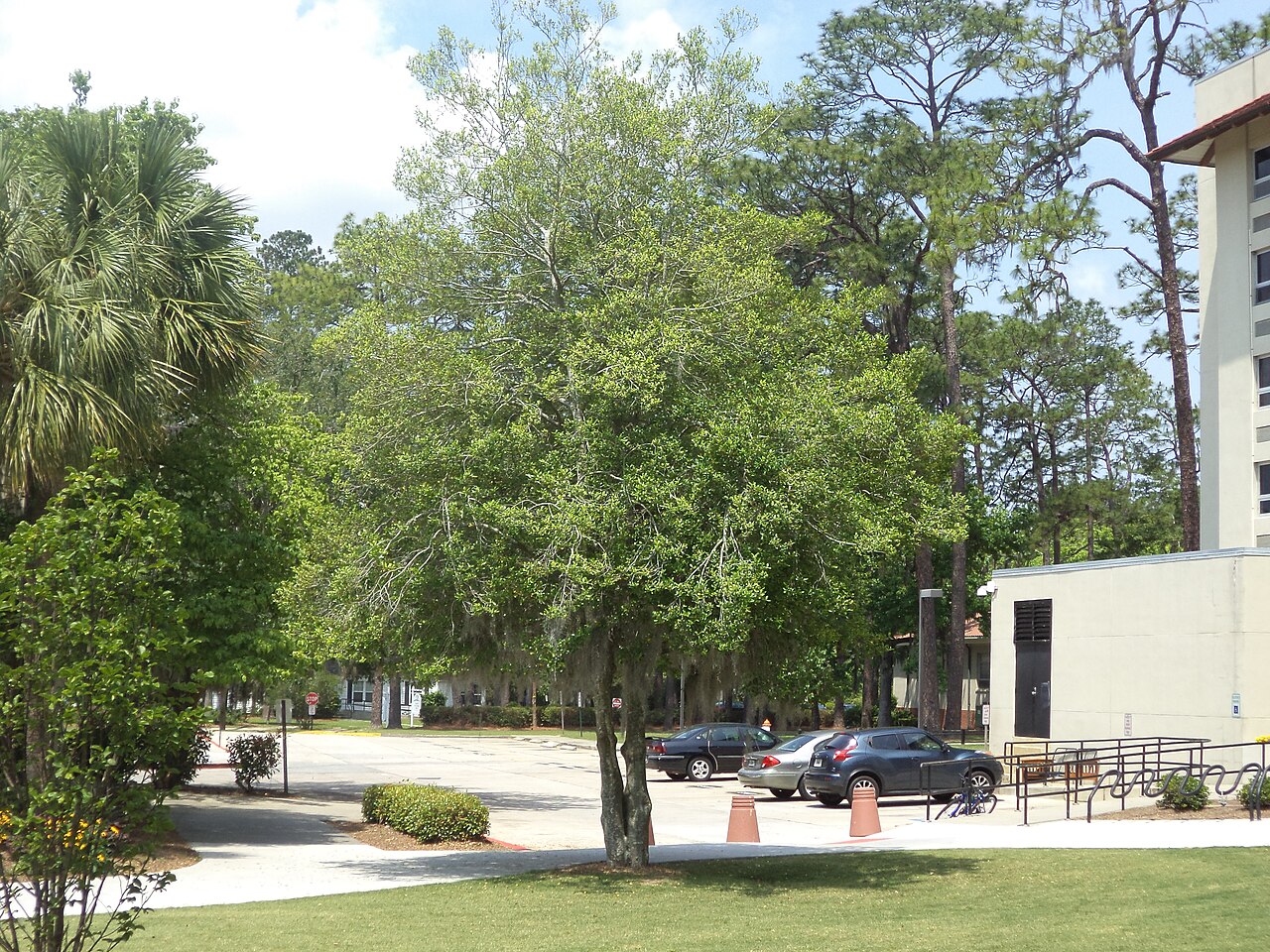
Young trees are narrowly pyramidal and dense to the ground, becoming more open with age. Mature trees are usually 20 to 30 feet tall and 10 to 15 feet wide. The bark is smooth and light gray, like that of other hollies.
Flowers
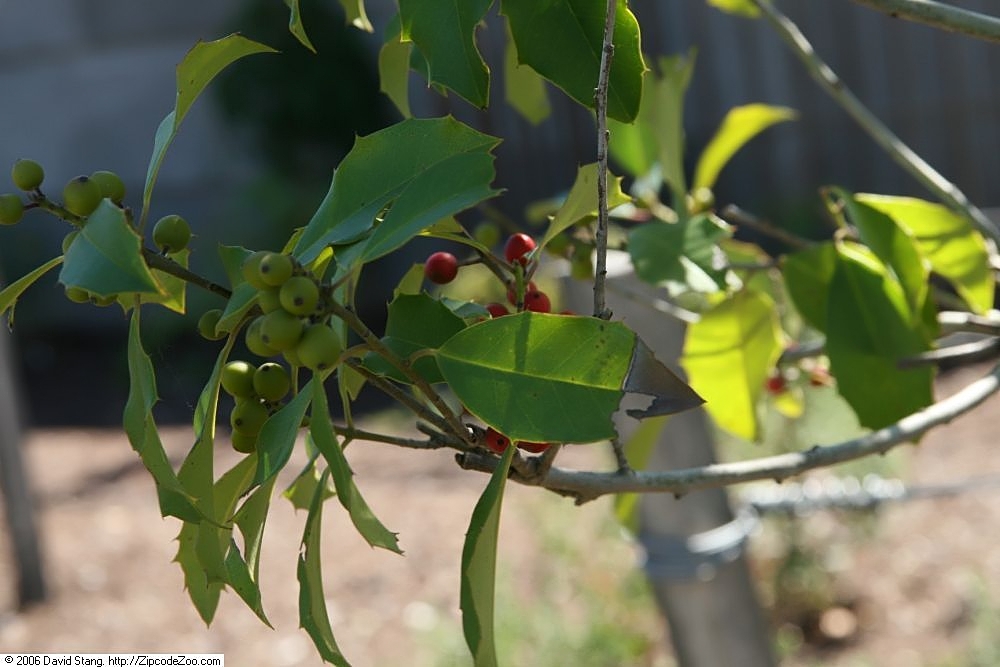
Like all hollies, it is dioecious: male and female flowers are on separate trees. The small, four-petaled white to greenish flowers appear in clusters along the twigs from March to May. They are not showy but attract many bees.
Fruit
Female trees bear round, bright red berries (drupes) about ¼ inch across in fall, which often stay on the tree through winter. A male holly of a compatible species, such as American holly or dahoon, nearby improves fruit set. ‘Fosteri’ is known for producing fruit even without a male nearby.
Quick Facts
| Scientific Name | Ilex ×attenuata (I. cassine × I. opaca); USDA common name topal holly |
| Family | Aquifoliaceae (holly family) |
| Plant Type | Evergreen tree |
| Mature Height | 20–30 ft (up to about 45 ft) |
| Mature Spread | 10–15 ft |
| Growth Rate | Moderate |
| Sun Exposure | Full sun to part shade |
| Water Needs | Moderate; drought tolerant once established |
| Soil Type | Moist, well-drained sandy or loamy soil |
| Soil pH | Acidic, about 5.0–6.5 |
| Bloom Time | March–May |
| Flower Color | White to greenish white |
| Fall Color | Evergreen |
| Fruit | Red berries (drupes) on female trees, fall–winter |
| Deer Resistant | Moderately; occasionally browsed |
| USDA Hardiness Zones | 7–9 |
Native Range
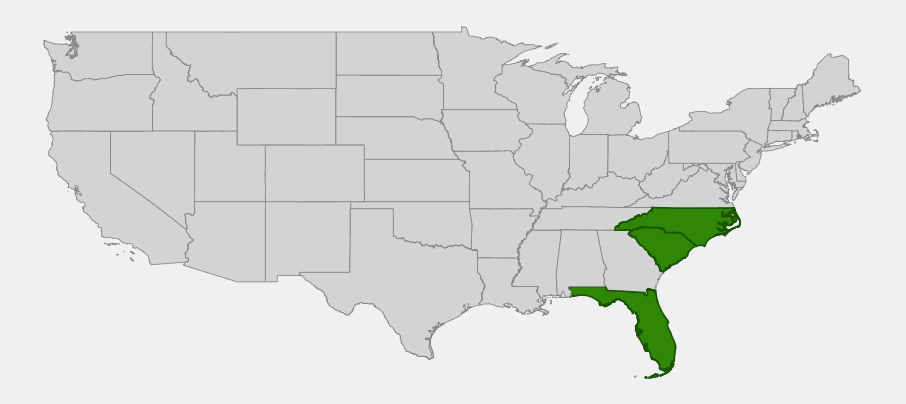
As a natural hybrid, East Palatka holly does not have a range of its own in the usual sense. Wild hybrids arise where dahoon and American holly grow together, mainly in north and central Florida and the coastal plain of the Carolinas. USDA PLANTS records it as native in Florida, South Carolina and North Carolina, and the Atlas of Florida Plants lists it as native in Florida.
Wild trees grow in moist hammocks, on the edges of swamps and bayheads, along streams and in moist flatwoods, typically on acidic, sandy or loamy soils. Because the hybrid can backcross with its parents, wild trees vary from dahoon-like to American-holly-like.
As a cultivated tree it is much more widespread than in the wild. It is planted across the Southeast, from Florida to Virginia and west to Texas, as a street tree, screen and specimen tree. Planted trees outside Florida and the Carolinas are not shown on the map.
📋 Regional plant lists featuring East Palatka Holly: North & South Florida · North & South Carolina
Growing & Care Guide
East Palatka holly is a tough, low-maintenance tree for most of the Southeast. Buy a female cultivar such as ‘East Palatka’, ‘Savannah’ or ‘Fosteri’ if you want berries.
Light
It grows in full sun to part shade. Trees in full sun are denser and fruit more heavily; in shade they become open and thin.
Soil & Water
Plant it in acidic, well-drained sandy or loamy soil. It tolerates brief wet periods and, once established, moderate drought, but it grows best with even moisture. In alkaline soil the leaves turn yellow from iron and manganese deficiency. Water regularly for the first year.
Planting Tips
Allow for a mature width of 10 to 15 feet and plant at least 6 feet from walls and walkways. For good berry crops, make sure a male holly (American holly or dahoon) grows nearby; in most Southeastern neighborhoods enough male hollies are already present. It makes an excellent narrow screen when planted 8 to 10 feet apart.
Pruning & Maintenance
It keeps a neat pyramidal shape with little pruning. Remove lower limbs if you want a tree form, and prune in late winter so you don’t remove too many flowers. Scale insects, leaf miners and spittlebugs sometimes attack it but rarely do serious damage.
Propagation
Cultivars are propagated from cuttings taken in summer to fall and rooted with rooting hormone and mist. Seed from cultivars will not come true, because it is pollinated by whatever males are nearby, and it takes one or more years to germinate.
Landscape Uses
- Street and parking-lot tree: narrow, tough and evergreen; widely used in Southeastern cities
- Evergreen screens and hedges: dense, upright growth with year-round cover
- Wildlife gardens: winter berries for birds and spring flowers for bees
- Specimen tree: glossy foliage and red berries in winter
Wildlife & Ecological Value
Like its parents, East Palatka holly gives birds food and cover in winter, when they need it most.
For Pollinators
The small flowers produce nectar and pollen and are visited by honey bees, native bees and small wasps in spring. Hollies, including its parent American holly, are larval host plants for Henry’s elfin butterfly.
For Birds
The red berries are eaten by American robins, cedar waxwings, northern mockingbirds, eastern bluebirds and other birds, usually in late winter after the fruit has softened. The dense evergreen crown provides nesting sites and shelter from cold winds.
For Mammals
Squirrels and raccoons may eat some fruit. Deer occasionally browse young trees.
Ecosystem Role
Natural hybrids like this one are part of the normal variation of Southeastern hollies, and they show how closely related species exchange genes where they meet. In the landscape, the dense evergreen canopy is valuable shelter for birds in winter.
Cultural & Historical Uses
The name East Palatka comes from the small town on the St. Johns River in Putnam County, Florida, where the original ‘East Palatka’ tree was found in the wild in the 1920s and brought into cultivation. It has been a staple of Florida and Southeastern landscapes ever since.
Other well-known cultivars come from different hybrid individuals. ‘Savannah’ originated in Savannah, Georgia, and the Foster hybrids were selected in Alabama. The epithet attenuata means “tapering,” a reference to the leaves.
The berries contain saponins and are mildly toxic to people and pets; eating them can cause vomiting and diarrhea. Keep this in mind where small children play. The berries are safe for the birds that eat them.
Frequently Asked Questions
Is East Palatka holly a native plant?
Yes. It is a natural hybrid of two native hollies, dahoon and American holly, and USDA PLANTS lists it as native in Florida, South Carolina and North Carolina. Garden plants are cultivars, clones selected from wild or cultivated hybrids.
Do I need a male tree for berries?
Cultivars such as ‘East Palatka’ and ‘Savannah’ are female. They fruit best with a male holly (such as American holly or dahoon) within a few hundred feet, which is often already present in Southeastern neighborhoods. ‘Fosteri’ often fruits without one.
How big does East Palatka holly get?
Usually 20 to 30 feet tall and 10 to 15 feet wide, with a narrow, pyramidal shape. Old trees can reach about 45 feet.
Are East Palatka holly berries poisonous?
The berries are mildly toxic to people and pets and can cause stomach upset. Birds eat them without harm.
What is the difference between East Palatka holly and dahoon?
Dahoon (Ilex cassine) is one of the parents. It has narrower leaves with few or no spines and grows in wetter places. East Palatka holly has broader leaves with a spiny tip, a denser habit and better cold hardiness, inherited from American holly.

Looking for a nursery that carries East Palatka Holly?
Browse our native plant nursery directory: Florida · North Carolina · South Carolina