
Myrtle Dahoon (Ilex myrtifolia)
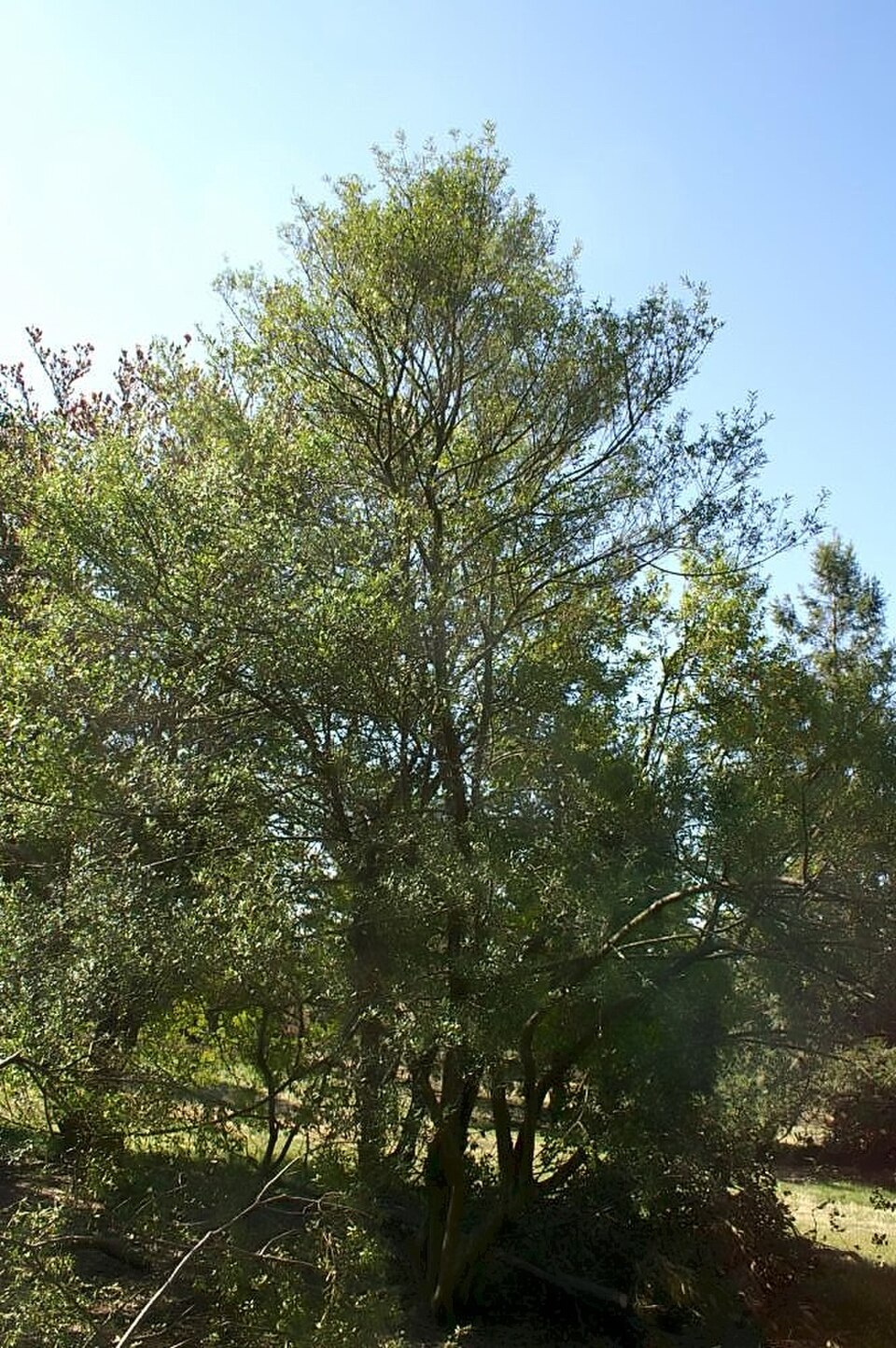
Ilex myrtifolia, commonly known as Myrtle Dahoon or Myrtle-Leaved Holly, is a slender, evergreen native holly of the southeastern coastal plain, prized for its fine-textured foliage that resembles true myrtle (Myrtus communis) far more than the broad leaves of most hollies. It grows naturally in moist pine flatwoods, swamp margins, and the wet, acidic soils of the coastal South from North Carolina to Texas.
Myrtle dahoon is closely related to dahoon holly (Ilex cassine), and some botanists have treated it as a variety of that species; most current treatments, however, recognize it as a distinct species, set apart by its much narrower leaves and finer overall texture. Whatever its exact taxonomic placement, it is a long-popular Southern landscape plant valued for its airy, willow-like form and its colorful red-and-yellow fruit display in fall and winter.
For gardeners in the lower South with a moist, acidic, sunny-to-shady site, myrtle dahoon makes an excellent evergreen hedge, specimen, or wetland-edge planting — salt tolerant, pest-free, and a dependable source of winter food for birds once a male and female are both in place.
Identification
Myrtle dahoon grows as a dense, evergreen shrub or small tree, typically 15 to 20 feet tall but capable of reaching 25 feet in favorable conditions. Its narrow leaves and fine branching give it a notably lighter, more delicate silhouette than broad-leaved hollies like American holly or dahoon holly.
Bark & Form
The bark is thin and dark gray, very smooth to slightly warty when young, becoming finely scaly with age. The overall form is upright and densely branched, often broader at the base and narrowing toward the top, giving a graceful, willowy outline well suited to screening and hedging.
Leaves
The evergreen leaves are narrow and elliptical to almost linear, closely resembling the foliage of true myrtle — the source of both the common and scientific names. They are glossy dark green, held densely along the stems, and give the plant fine, airy texture year-round, in clear contrast to the broader leaves of its close relative dahoon holly.
Flowers & Fruit
Like other hollies, myrtle dahoon is dioecious, with separate male and female plants; only females bear fruit, and only when a male is flowering nearby on the current year’s growth. The fruit set is notably colorful, with berries ranging from red to yellow, maturing in fall and persisting into winter — an attractive and reliable display in the landscape.
Quick Facts
| Scientific Name | Ilex myrtifolia |
| Family | Aquifoliaceae (Holly) |
| Plant Type | Evergreen shrub / small tree |
| Mature Height | 15–20 ft (to 25 ft) |
| Growth Rate | Slow to moderate |
| Sun Exposure | Full Sun to Part Shade |
| Water Needs | Moderate to high; tolerates wet, poorly drained sites |
| Soil Type | Moist, acidic soils of flatwoods and swamp margins |
| Soil pH | Acidic |
| Salt Tolerance | Moderate |
| Fruit | Red to yellow berries, fall–winter (female plants only) |
| USDA Hardiness Zones | 7a–9 (not reliably winter hardy below 7a) |
Native Range
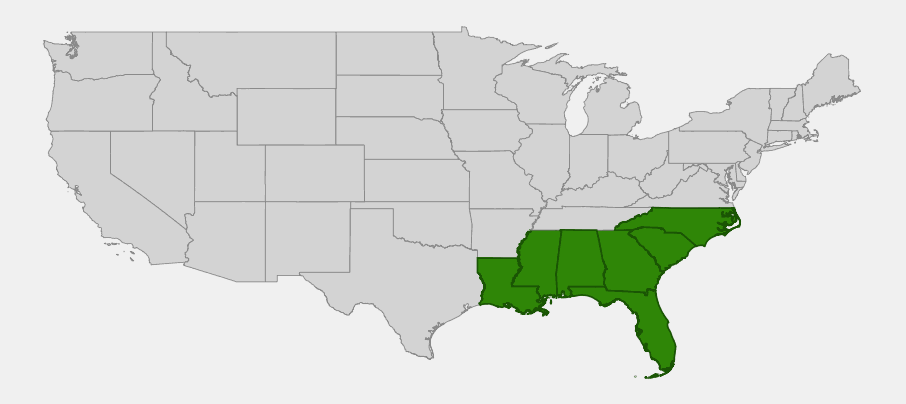
Myrtle dahoon is native to the coastal plain of the southeastern United States, ranging from North Carolina south through South Carolina, Georgia, and Florida, and west across Alabama, Mississippi, to Louisiana. It occurs chiefly in moist, acidic habitats: pine flatwoods, the margins of cypress swamps and bays, and other low, wet woodlands typical of the coastal South.
Throughout its range, myrtle dahoon often grows near its close relative dahoon holly (Ilex cassine), which shares similar wetland habitat but has noticeably broader leaves. Their close relationship has led some botanists to treat myrtle dahoon as a variety of dahoon holly, though most current references, including this one, treat it as its own distinct species based on its consistently narrower, myrtle-like foliage.
📋 Regional plant lists featuring Myrtle Dahoon: North Carolina & South Carolina · Georgia, Alabama & Mississippi · Arkansas, Louisiana, Eastern Oklahoma & Eastern Texas
Growing & Care Guide
Myrtle dahoon is an easy, trouble-free evergreen for the lower South as long as its need for moist, acidic soil is met. It establishes best when planted directly into its permanent position and left undisturbed.
Light
Myrtle dahoon grows well in full sun or partial shade. Full sun tends to produce denser growth and a heavier fruit set on female plants, while light shade is well tolerated, reflecting the open to partly wooded wetlands where it grows naturally.
Soil & Water
This species prefers consistently moist, acidic soil and tolerates wet, even seasonally flooded sites far better than most landscape shrubs, making it a strong choice for low spots, pond edges, and rain gardens. It is also moderately salt tolerant, useful in coastal gardens within its hardiness range.
Planting Tips
Myrtle dahoon resents root disturbance, so place container-grown plants directly into their permanent location rather than planning to move them later, and give young plants some winter protection for their first year or two, especially near the colder edge of their hardiness range. Plant both a male and a female if a fruit display is the goal, since only pollinated female plants produce berries.
Pruning & Maintenance
Flowers and fruit form on the current year’s growth, and the plant tolerates pruning well, even heavy cutting back to old wood if needed to rejuvenate or reshape it. It is relatively free of serious pests and diseases, making it a low-maintenance evergreen once established.
Propagation
Myrtle dahoon is commonly propagated from softwood cuttings taken in spring. Seed-grown plants are possible but, as with most hollies, the seeds require two to three years of dormancy before germinating, making cuttings the faster and more reliable route for home propagation.
Landscape Uses
- Evergreen hedges and screens, especially in wetland-edge settings
- Shade, native plant, and rain gardens
- Pollinator gardens, for its spring bloom
- Coastal plantings, given its moderate salt tolerance
- Companion planting with dahoon holly or yaupon holly for a mixed evergreen holly screen
Wildlife & Ecological Value
As a dense, evergreen wetland-edge shrub with a long season of colorful fruit, myrtle dahoon offers year-round structure and seasonal food for southeastern coastal plain wildlife.
For Birds
The red and yellow berries, which persist through fall and into winter, are a valuable food source for songbirds at a time when other food is scarce. The dense evergreen branching also provides year-round cover and nesting habitat.
For Pollinators
The small spring flowers attract native bees and other pollinating insects, which are essential for fruit production given the species’ dioecious habit.
Ecosystem Role
Myrtle dahoon adds evergreen structure to the pine flatwoods and swamp-margin communities where it grows, communities that are otherwise often dominated by deciduous or seasonal vegetation. Its tolerance of wet, acidic soils makes it a useful component of wetland buffer and restoration plantings along the coastal plain.
Cultural & Historical Uses
Myrtle dahoon has no significant independently documented history of traditional use, though as a close relative of yaupon holly and dahoon holly — both historically used by Indigenous peoples of the Southeast to brew a caffeinated ceremonial tea known as the “black drink” — it belongs to a holly group with deep regional cultural significance. Myrtle dahoon itself has primarily been valued horticulturally, long grown as a fine-textured evergreen landscape shrub throughout the lower South.
Frequently Asked Questions
Is myrtle dahoon the same as dahoon holly?
No, though they are closely related and sometimes confused. Myrtle dahoon (Ilex myrtifolia) has much narrower, myrtle-like leaves, while dahoon holly (Ilex cassine) has broader foliage. Some botanists have treated myrtle dahoon as a variety of dahoon holly, but most current references recognize it as a distinct species.
Is myrtle dahoon evergreen?
Yes. Unlike some deciduous native hollies, myrtle dahoon keeps its narrow, glossy leaves year-round, making it a good choice where a permanent evergreen screen or hedge is wanted.
Does myrtle dahoon need wet soil?
It prefers consistently moist, acidic soil and tolerates wet, even seasonally flooded sites, better than most shrubs. It is a strong choice for rain gardens, pond edges, and other low, damp spots.
How cold-hardy is myrtle dahoon?
It is reliably hardy to about USDA zone 7a but not much further north; gardeners at the cold edge of its range should provide winter protection, especially for young plants in their first year or two.
Do I need both a male and female plant for berries?
Yes. Like all hollies, myrtle dahoon is dioecious, with separate male and female plants. Only female plants produce the red-and-yellow fall and winter berries, and only if a male plant is flowering nearby at the same time.

Looking for a nursery that carries Myrtle Dahoon?
Browse our native plant nursery directory: North Carolina · South Carolina · Georgia & Florida · Alabama · Mississippi & Louisiana
Related reading: Native Hedgerows for Birds

