
Puerto Rico Royal Palm (Roystonea borinquena)
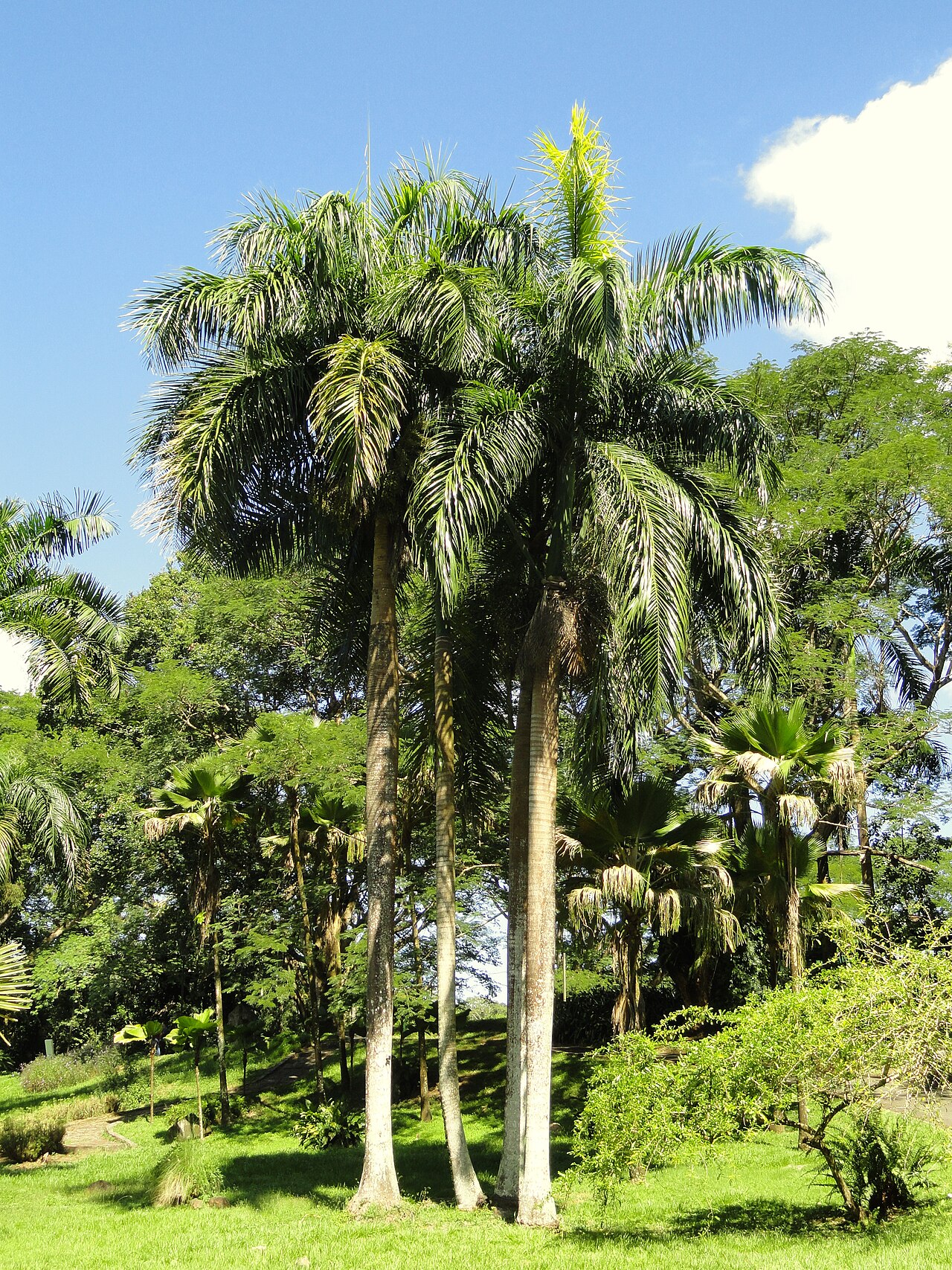
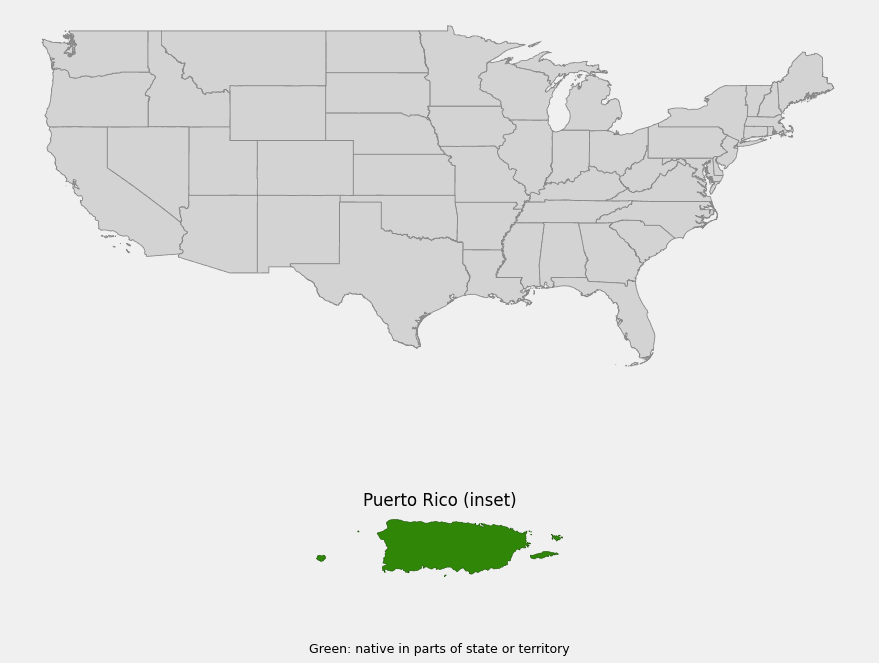
Roystonea borinquena, the Puerto Rico Royal Palm, is the tall, gray-trunked palm that lines streets, plazas and pastures across the island. In Puerto Rico it is called palma real, palma real puertorriqueña or palma de yaguas, after the yagua, its large fallen leaf sheath. USDA PLANTS uses the name Puerto Rico royal palm and lists it as native to Puerto Rico and the U.S. Virgin Islands.
This royal palm is native only to the northeastern Caribbean: Puerto Rico (including Vieques and Mona), Hispaniola and the Virgin Islands. It is closely related to the Cuban and Florida royal palm, Roystonea regia, and the two look much alike. The species name borinquena comes from Borinquen, the Taíno name for Puerto Rico.
Fast-growing, tolerant of many soils and generous with fruit for birds, the Puerto Rico royal palm is one of the most rewarding native trees you can plant on the island, as long as you have the room for a palm that can top 60 feet.
Identification
Royal palms are easy to spot: a straight, smooth, pale gray column of a trunk topped by a glossy green, tube-like crownshaft and a crown of long, arching feather-leaves. Telling the Puerto Rico royal palm from the widely planted Cuban royal palm is harder and rests mostly on the fruit and the flower parts.
Trunk
The single trunk is smooth and gray-brown to cinnamon-brown, often weathering to pale gray, and 10 to 28 inches (25–70 cm) thick. Faint rings mark the scars of fallen leaves. Most trees grow 40 to 60 feet (12–18 m) tall, and individuals of about 87 feet (26.4 m) have been recorded.
Leaves & Crownshaft
The leaves are pinnate (feather-shaped), 8 to 12 feet (2.4–3.7 m) long, with many narrow leaflets. Their bases form long sheaths, 3 to 10 feet (1–3 m) long, that wrap the top of the trunk in a smooth green crownshaft. When an old leaf falls, its sheath drops with it as a large, boat-shaped yagua.
Flowers
The flower clusters emerge from just below the crownshaft and are 3 to 4.5 feet (1–1.4 m) long and much branched. They carry both male and female flowers, which are creamy yellow; the anthers of the male flowers are bright purple. Trees may start flowering at about seven years old and can bloom throughout the year.
Fruit
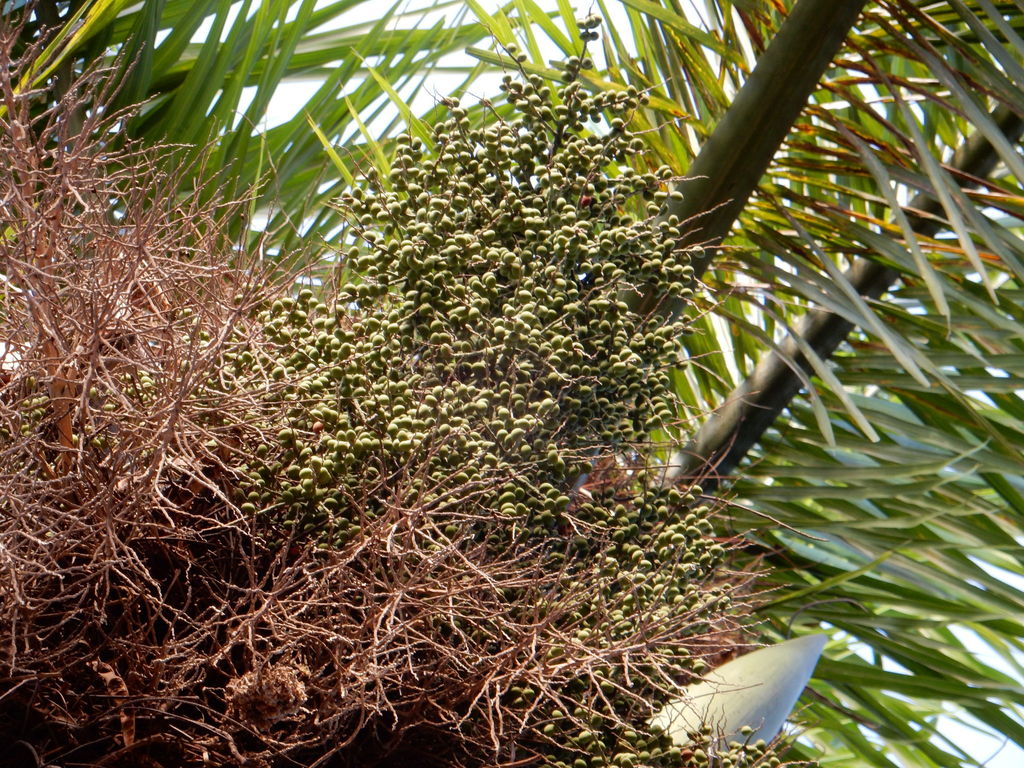
The fruits are small and single-seeded, about half an inch (13 mm) long and 0.4 inch (10 mm) wide. They are greenish yellow when young and turn brownish purple as they ripen. A single flower cluster can produce 6,000 to 12,000 fruits.
Quick Facts
| Scientific Name | Roystonea borinquena O.F. Cook |
| Family | Arecaceae (palm family) |
| Plant Type | Large single-trunked feather palm |
| Mature Height | 40–60 ft (rarely to 87 ft) |
| Mature Spread | 20–25 ft crown |
| Growth Rate | Fast; young palms can grow about 3 ft a year |
| Sun Exposure | Full sun |
| Water Needs | Moderate; native where 50–100 in of rain falls a year |
| Soil Type | Adaptable; grows in many soil types including limestone |
| Soil pH | Acidic to alkaline |
| Bloom Time | Year-round |
| Flower Color | Creamy yellow with purple anthers |
| Fall Color | None; evergreen |
| Fruit | Small one-seeded fruit, greenish yellow ripening brownish purple |
| Deer Resistant | Not rated (no deer in Puerto Rico) |
| USDA Hardiness Zones | Frost-free tropics and subtropics (about zones 10b–12) |
Native Range
The Puerto Rico royal palm is native to Puerto Rico, including Vieques and Mona, to Hispaniola (both Haiti and the Dominican Republic) and to the Virgin Islands, where it is recorded from St. Croix, St. John and Tortola. USDA PLANTS lists it as native in Puerto Rico and the U.S. Virgin Islands, and the Smithsonian’s Flora of the West Indies treats it as a West Indian endemic.
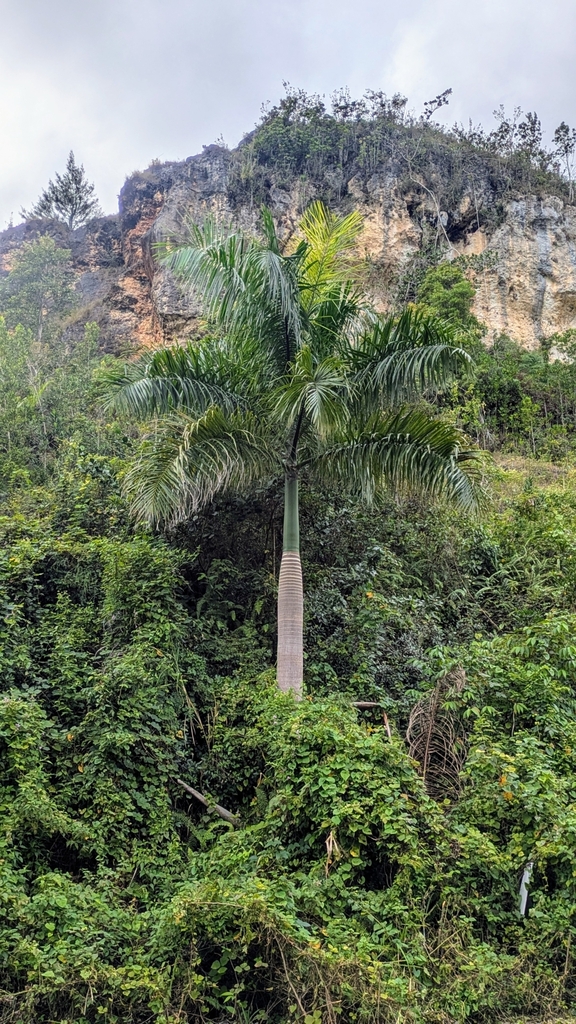
In Puerto Rico it grows below about 1,000 feet (300 m) in areas that receive about 50 to 100 inches (1,250–2,500 mm) of rain a year. It is a familiar sight in the lowland moist forests and in the northern karst region, where it rises above the forest on and around the limestone hills, as in the Río Abajo State Forest. In Hispaniola it grows below about 2,600 feet (800 m) everywhere except the driest regions.
Royal palms are also left standing when land is cleared and are planted around homes and along roads, so today many of the palms you see in pastures and towns are remnants of old forest or were planted. Because other royal palms, such as the Cuban royal palm, are also planted in Puerto Rico, not every royal palm on the island is this species.
📋 Regional plant lists featuring Puerto Rico Royal Palm: Puerto Rico
Growing & Care Guide
The Puerto Rico royal palm is one of the easiest large native palms to grow on the island. It is tolerant of air pollution and many soil types, and its roots do not heave sidewalks, which is why it is so popular for street and campus plantings.
Light
Plant in full sun. Seedlings grow quickly in full sunlight, reaching about a foot tall in six months, and young palms can add about 3 feet (1 m) of height a year.
Soil & Water
It grows in a wide range of soils, from clays to limestone. It is native to areas with 50 to 100 inches of rain a year, so water young palms regularly in dry areas and during droughts until established. Mature palms are fairly drought tolerant but look best with steady moisture.
Planting Tips
Allow plenty of space and overhead clearance: the palm can reach 60 feet or more, and falling leaves with their heavy sheaths can weigh many pounds. Keep it away from roofs, power lines, parked cars and spots where people sit. Its roots are not aggressive, so it can be planted near sidewalks and in street-side strips.
Pruning & Maintenance
Royal palms shed their old leaves on their own, so no pruning is needed. Never cut green leaves; it weakens the palm. Pick up fallen leaves and sheaths, which can be reused as mulch or crafts. Fertilize lightly with a palm fertilizer if new leaves look yellow.
Propagation
Grow from fresh seed. Clean the fruit pulp from ripe seeds and sow them in a moist, well-drained mix in a warm, sunny spot. Seeds germinate in about 50 to 100 days. Pot up seedlings as they grow and plant them out while still young, since large palms are heavy to move.
Landscape Uses
- Street and campus trees: tolerant of pollution, with roots that do not damage sidewalks
- Landmark palm: a tall, formal native palm for avenues, plazas and large yards
- Bird food: fat-rich fruits for pigeons and other birds
- Pastures and farms: traditional shade and fruit source for livestock
- Traditional materials: leaves for thatch, sheaths and trunks for building
Wildlife & Ecological Value
Wherever it grows, the Puerto Rico royal palm feeds and shelters a lot of wildlife, from bees at the flowers to large birds that eat its fruit and nest in its crown.
For Pollinators
The creamy yellow flowers produce nectar and are visited by honey bees. The palm is thought to be pollinated by insects, and because trees can flower all year it offers a steady nectar source.
For Birds
The ripe fruits are a fat-rich food for birds, and a single palm can produce tens of thousands of them. White-crowned pigeons have been reported to eat the fruits and disperse the seeds. In Hispaniola, palmchats build their large communal nests in royal palm crowns, and the critically endangered Ridgway’s hawk prefers this palm for nesting.
For Mammals
The fruits have long been fed to pigs and other livestock, which is reflected in the local name palma de cerdos.
Ecosystem Role
As a tall emergent palm of lowland and karst forests, it adds structure to the canopy, provides perches and nest sites and supports wildlife with fruit almost year-round.
Cultural & Historical Uses
The genus Roystonea was named by botanist Orator F. Cook in 1900 to honor U.S. Army general Roy Stone, who served in Puerto Rico during the Spanish–American War. Cook described the Puerto Rico royal palm the following year, in 1901, separating it from the Cuban royal palm.
The royal palm has long been part of everyday life in Puerto Rico and Hispaniola. The leaves were used for thatch, and the flattened leaf sheaths and trunk bark (tablas de palma or yaguas) were used as siding for the traditional rural houses called bohíos.
Today the palm is extensively planted as an ornamental across Puerto Rico. It lines the Quadrangle at the University of Puerto Rico’s Río Piedras campus and many town plazas, and it is one of the most familiar trees of the Puerto Rican countryside.
Frequently Asked Questions
How tall does the Puerto Rico royal palm get?
Most grow 40 to 60 feet tall, but some reach about 87 feet. Give it plenty of space and keep it away from roofs and power lines.
How is it different from the Cuban or Florida royal palm?
The two are very similar. The Puerto Rico royal palm (Roystonea borinquena) is native to Puerto Rico, Hispaniola and the Virgin Islands, while Roystonea regia is native to Cuba, Florida and nearby areas. They are told apart mainly by details of the fruit and flowers. Both are widely planted in Puerto Rico.
What is a yagua?
A yagua is the large, boat-shaped leaf sheath that falls with each old leaf. It gives the palm its Spanish name, palma de yaguas, and was traditionally used as siding for rural houses.
Does it damage sidewalks?
No. Its roots are not known to lift pavement, which, along with its tolerance of air pollution and many soils, makes it a good street tree.
What other native palms grow in Puerto Rico?
Other native palms include the sierra palm of El Yunque, the Puerto Rico hat palm (palma de sombrero) and the Puerto Rico silver palm.

Looking for a nursery that carries Puerto Rico Royal Palm?
Our nursery directory does not yet include Puerto Rico. Browse the native plant nursery directory by state: Alabama–Arkansas · California · Colorado–Hawaii · Idaho–Kansas · Kentucky–Montana · Nebraska–Oklahoma · Oregon · Pennsylvania–Virginia · Washington · West Virginia–Wyoming