
Puerto Rico Silver Palm (Coccothrinax barbadensis)
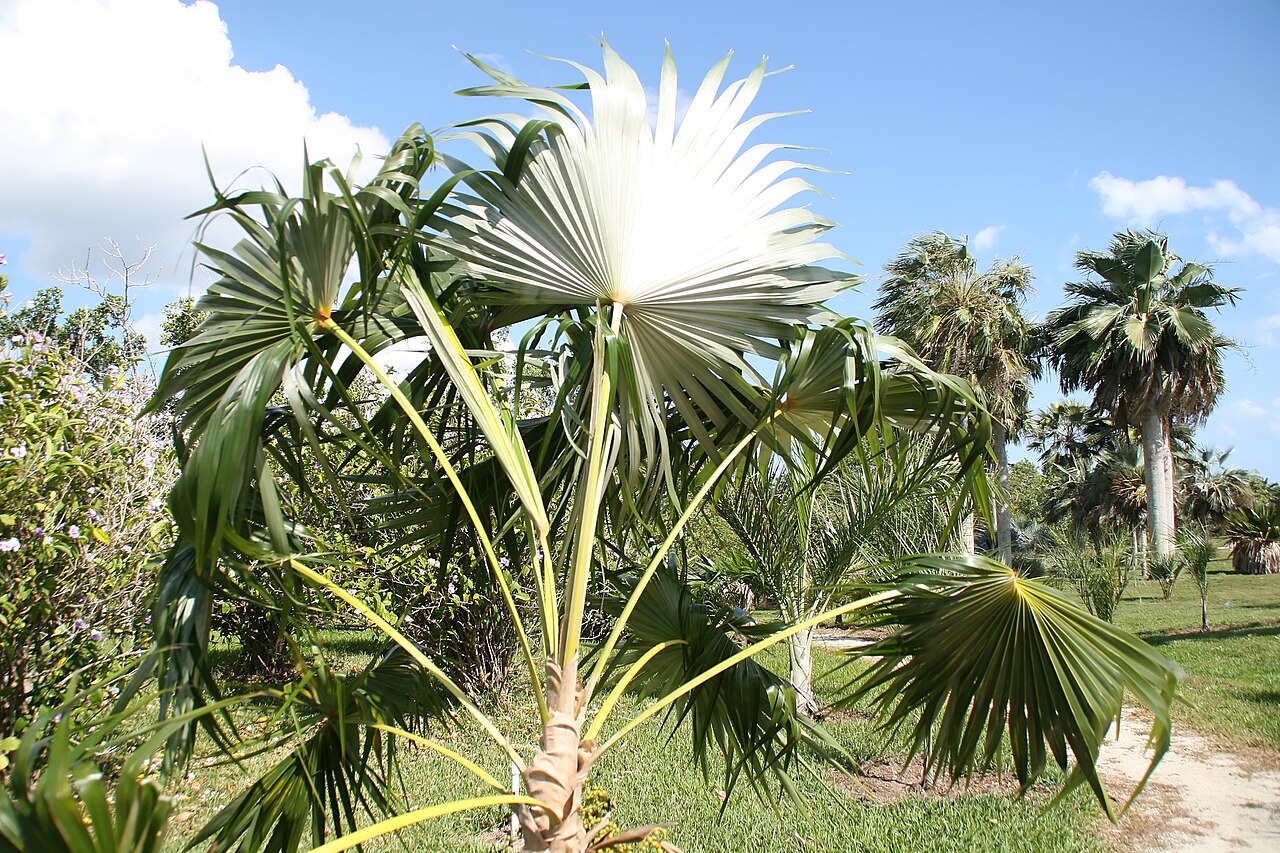
The Puerto Rico silver palm, known in Puerto Rico as palma plateada or palma de abanico, is a slender, single-trunked fan palm whose leaves are green above and bright silver beneath. USDA PLANTS lists it as Coccothrinax barbadensis, and Puerto Rican botanists have often treated the island’s plants as a separate species, Coccothrinax alta. In the Virgin Islands it has been called the Tyre palm, and elsewhere in the Caribbean it is known as silver thatch palm or latanier.
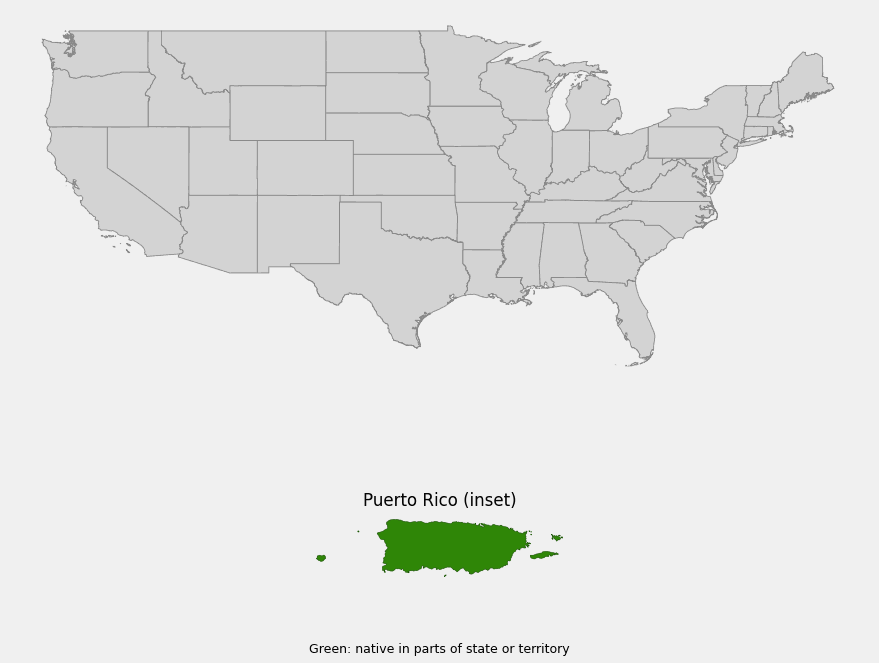
It is a palm of dry coastal hills and limestone. USDA PLANTS lists it as native in Puerto Rico and the U.S. Virgin Islands, and it grows on limestone in northern Puerto Rico and on volcanic soils on the islands off the east coast, including Vieques and Culebra. The same species, in the broad sense used by USDA, ranges through the Lesser Antilles to Trinidad and Venezuela.
This is a different plant from the Florida Silver Palm (Coccothrinax argentata), a smaller relative native to South Florida, the Florida Keys and the Bahamas. Both have silver-backed fan leaves, but the Puerto Rico silver palm is taller and more slender. It is an excellent, drought-tolerant native palm for sunny gardens in Puerto Rico.
Identification
Silver palms are told apart from other Puerto Rican fan palms by their slender single trunks, small round fan leaves with silvery undersides and small black fruit.
Trunk
It has a single, slender trunk, usually 6 to 20 feet tall and occasionally up to about 36 feet. The upper trunk is wrapped in a woven mesh of brown leaf-sheath fibers, while older parts become smooth and gray. Puerto Rican plants tend to have shorter, thinner trunks than plants in the Lesser Antilles.
Leaves
The leaves are round, deeply divided fans, up to about 3 feet across on long, slender, unarmed stalks. The upper surface is glossy green and the underside is covered in a silvery-white coating, so the crown shimmers when the wind moves it. The crown is open and holds a modest number of leaves.
Flowers
Small, light yellow flowers are produced on branched stalks that arch out from among the leaf bases. Each flower is bisexual.
Fruit & Seeds
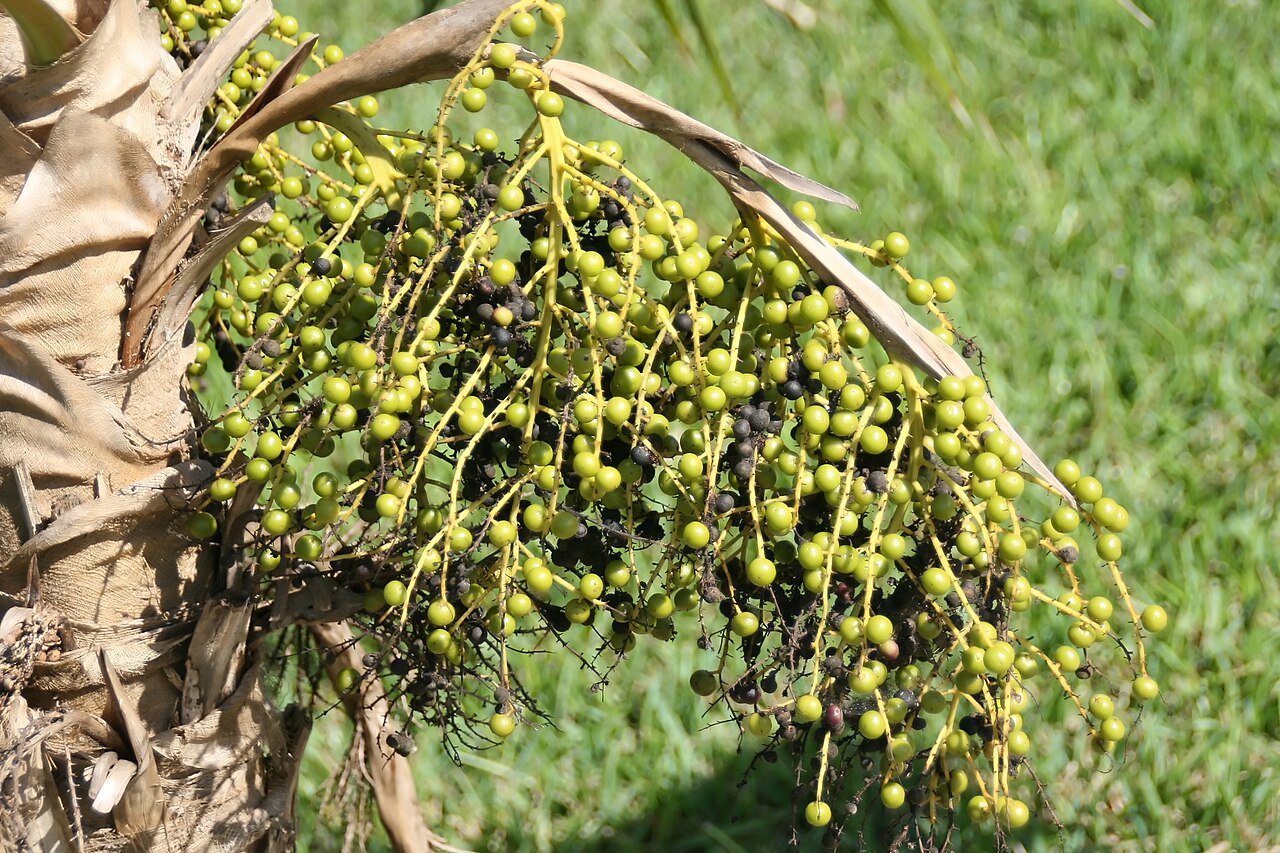
The fruits are small, round, fleshy berries that ripen from green to purple-black, hanging in clusters below the crown. Each holds a single seed. Puerto Rican plants have notably small fruit.
Quick Facts
| Scientific Name | Coccothrinax barbadensis (Lodd. ex Mart.) Becc.; Puerto Rican plants often called C. alta (O.F. Cook) Becc. |
| Family | Arecaceae (palm family) |
| Plant Type | Single-trunked fan palm |
| Mature Height | 6–20 ft; occasionally to about 36 ft |
| Mature Spread | 6–10 ft |
| Growth Rate | Slow |
| Sun Exposure | Full sun to light shade |
| Water Needs | Low; very drought-tolerant once established |
| Soil Type | Well-drained limestone, sandy or rocky soils |
| Soil pH | Neutral to alkaline; adaptable |
| Bloom Time | Variable; mainly in the warmer months |
| Flower Color | Light yellow |
| Fall Color | None; evergreen |
| Fruit | Small round berries, purple-black when ripe |
| Deer Resistant | Not a concern in Puerto Rico, which has no native deer |
| USDA Hardiness Zones | 10a–12; frost-sensitive |
Native Range
USDA PLANTS lists Coccothrinax barbadensis, including the plants once named C. alta, as native in Puerto Rico and the U.S. Virgin Islands. The Smithsonian’s Flora of the West Indies records it from Puerto Rico, the Virgin Islands, Hispaniola and many of the Lesser Antilles, including Barbados, Barbuda, Dominica, Martinique and St. Lucia, and it also reaches Trinidad and Venezuela.
In Puerto Rico it grows at low elevations, up to about 1,150 feet (350 m). On the main island it is found on limestone in the north, among the haystack hills (mogotes) and coastal karst, and on Vieques and Culebra it grows on volcanic soils in dry, open woodland and coastal scrub. In the Virgin Islands it occurs on St. Croix, St. Thomas and St. John, as well as several of the British Virgin Islands.
The species’ classification has been debated. George Proctor, in the Smithsonian’s 2005 flora of Puerto Rico and the Virgin Islands, kept Coccothrinax alta as a distinct species because of its shorter, more slender trunk, fewer stamens and much smaller fruit, while other palm specialists, and USDA, include it in C. barbadensis.
📋 Regional plant lists featuring Puerto Rico Silver Palm: Puerto Rico
Growing & Care Guide
The Puerto Rico silver palm is a slow-growing, tough native palm for hot, sunny, dry sites. It asks for good drainage and patience, and little else.
Light
Plant it in full sun for the best form and the most silvery foliage. It tolerates light shade, especially when young.
Soil & Water
It needs well-drained soil and does well on limestone, sand and rocky ground. Water regularly during the first year after planting; once established it is very drought-tolerant and rarely needs extra water. Avoid low spots where water stands.
Planting Tips
Because of its narrow crown it fits small gardens, narrow side yards and courtyards, and it looks best planted in groups of three or more at staggered heights. It tolerates wind and coastal conditions. Plant it at the same depth it grew in the pot; burying the trunk can cause rot.
Pruning & Maintenance
Remove only fully brown leaves. Leave green and partly yellow leaves in place, since the palm draws nutrients from them. No fertilizer is usually needed beyond an occasional palm fertilizer on very poor soil.
Propagation
It is grown from fresh seed, cleaned of its pulp and sown in a well-drained mix. Germination can be slow and seedlings grow slowly, so nursery-grown plants are the practical choice for most gardeners. Do not dig palms from the wild.
Landscape Uses
- Small-space accent: a slender, narrow-crowned palm for courtyards and small gardens
- Dry and coastal gardens: thrives in sun, wind and well-drained limestone or sandy soil
- Groupings: attractive planted in clusters at varied heights
- Restoration: suited to dry forest and karst restoration plantings in Puerto Rico
- Wildlife plantings: flowers for insects and fruit for birds
Wildlife & Ecological Value
Like other native palms, the Puerto Rico silver palm offers flowers, fruit and shelter in dry habitats where these resources can be scarce.
For Pollinators
The small, light yellow flowers are visited by bees and other small insects that gather pollen.
For Birds
The small, dark, fleshy fruits are the kind eaten by birds, which then scatter the seeds. The fibrous leaf bases and dense crown give small birds and lizards shelter.
For Mammals
Fruit-eating bats in the Caribbean feed on many palm fruits and may also take its fruit, though this has not been well studied.
Ecosystem Role
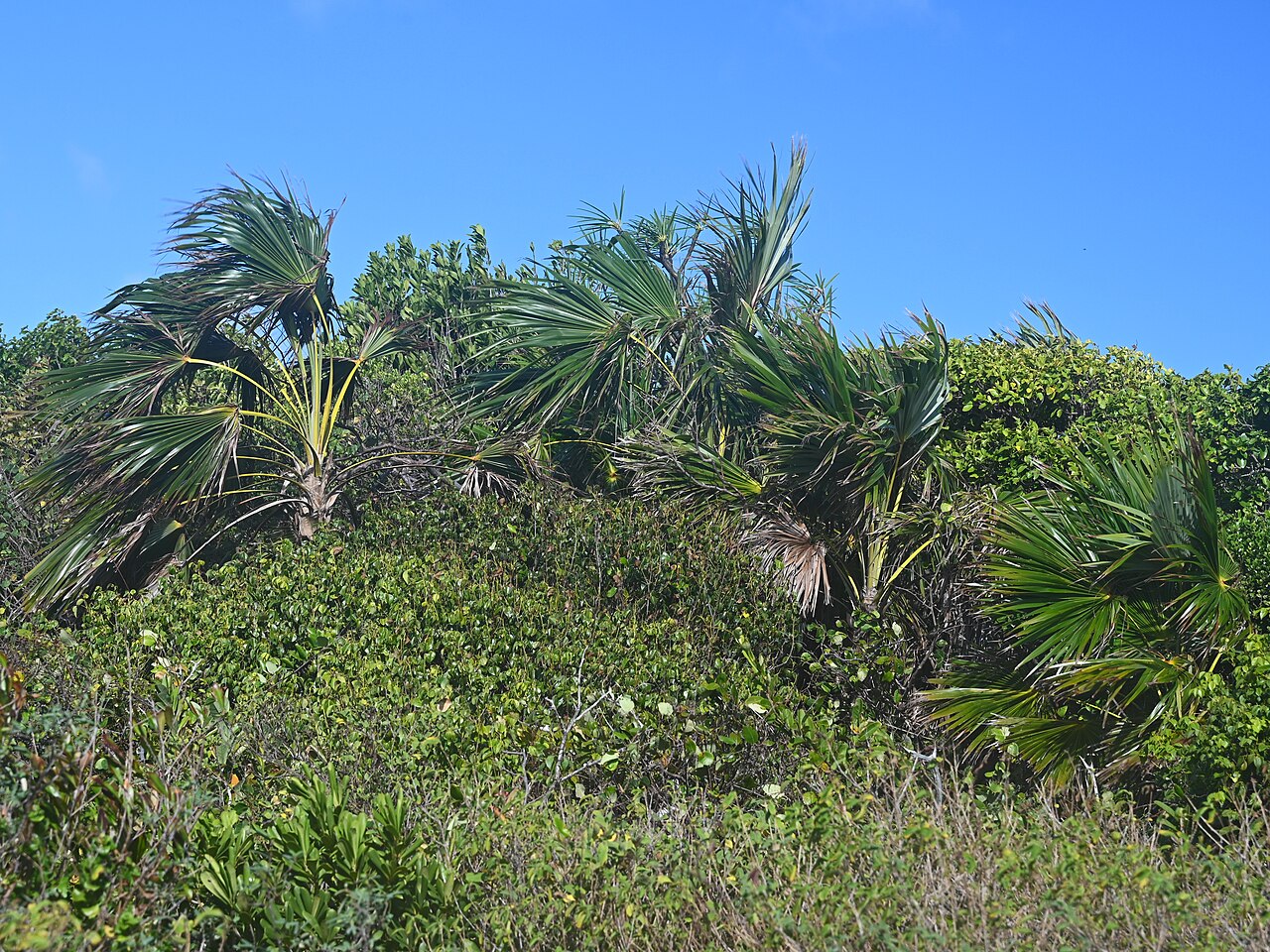
Silver palms are a distinctive part of the dry, open woodlands of the north coast karst and the eastern islands. Their slow growth and long lives make them a stable feature of these habitats, and they help anchor thin soils on rocky slopes.
Cultural & Historical Uses
The genus name Coccothrinax combines the Greek kokkos, a berry, with Thrinax, a related genus of thatch palms. The species name barbadensis refers to Barbados, and the Puerto Rican name alta, meaning tall, was given by the American botanist O.F. Cook.
Across the Caribbean, the leaves of this palm are widely used to thatch roofs, and its English name, silver thatch palm, reflects that use. In the French Antilles it is known as latanier and latanier balai; balai means broom.
Palm specialists have reported that the species was probably once present throughout the Lesser Antilles but has disappeared from many islands, a reminder that even widespread palms depend on the survival of coastal dry forest.
Frequently Asked Questions
Is the Puerto Rico silver palm the same as the Florida silver palm?
No. The Florida silver palm is Coccothrinax argentata, native to South Florida and the Bahamas. The Puerto Rico silver palm is Coccothrinax barbadensis (often called C. alta in Puerto Rico), a taller, more slender species of Puerto Rico, the Virgin Islands and the Lesser Antilles.
What is the Puerto Rico silver palm called in Spanish?
In Puerto Rico it is called palma plateada (silver palm) or palma de abanico (fan palm).
Is Coccothrinax alta a separate species?
Botanists disagree. Some, including the Smithsonian’s flora of Puerto Rico, treat it as a separate species with a shorter, more slender trunk and smaller fruit; USDA PLANTS and other authorities include it in Coccothrinax barbadensis.
How fast does the silver palm grow?
Slowly. It is a long-lived palm that may take many years to form a tall trunk, which is one reason to buy nursery-grown plants rather than expecting quick height.
Does the silver palm need much water?
No. Once established it is very drought-tolerant and needs well-drained soil. Overwatering and soggy soil are more of a risk than drought.

Looking for a nursery that carries Puerto Rico Silver Palm?
Our nursery directory does not yet include Puerto Rico. Browse the native plant nursery directory by state: Alabama–Arkansas · California · Colorado–Hawaii · Idaho–Kansas · Kentucky–Montana · Nebraska–Oklahoma · Oregon · Pennsylvania–Virginia · Washington · West Virginia–Wyoming