
Puerto Rico Tree Fern (Cyathea portoricensis)
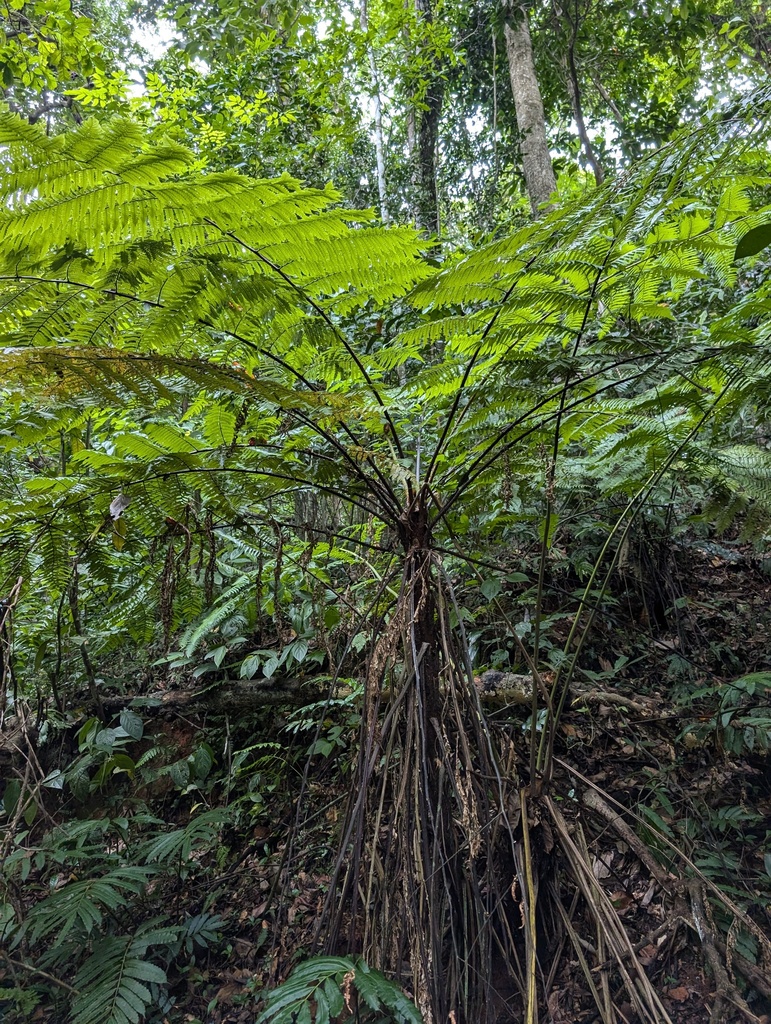
Cyathea portoricensis, the Puerto Rico Tree Fern, is a spiny tree fern found only in Puerto Rico. It grows in the island’s wet mountain and karst forests, where its single trunk carries a crown of large, finely divided fronds, and the stalks of old fronds often hang around the trunk in a dark, bristling skirt. USDA PLANTS treats it under the accepted name Alsophila portoricensis (USDA symbol ALPO7), with the common name Puerto Rico alsophila. It has also been placed in the genus Nephelea, as Nephelea portoricensis.
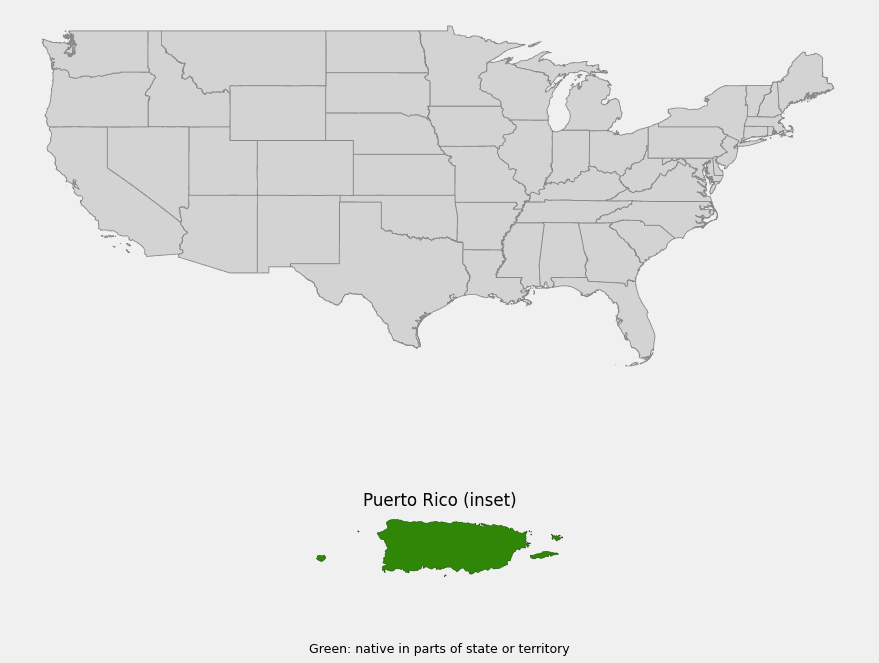
USDA PLANTS lists the Puerto Rico tree fern as native to Puerto Rico, and the World Checklist of Vascular Plants records it from Puerto Rico alone, making it one of the island’s endemic ferns. The Institute for Regional Conservation (IRC) records it in six protected forests: El Yunque National Forest, and Carite, Guilarte, Maricao, Río Abajo and Toro Negro state forests. They span the Luquillo Mountains, the Sierra de Cayey, the Cordillera Central and the northern karst.
This guide covers how to recognize the Puerto Rico tree fern, how it differs from the island’s other tree ferns, where it grows, and how it can be grown in humid, sheltered gardens in Puerto Rico’s interior. It is not native anywhere in the 50 states.
Identification
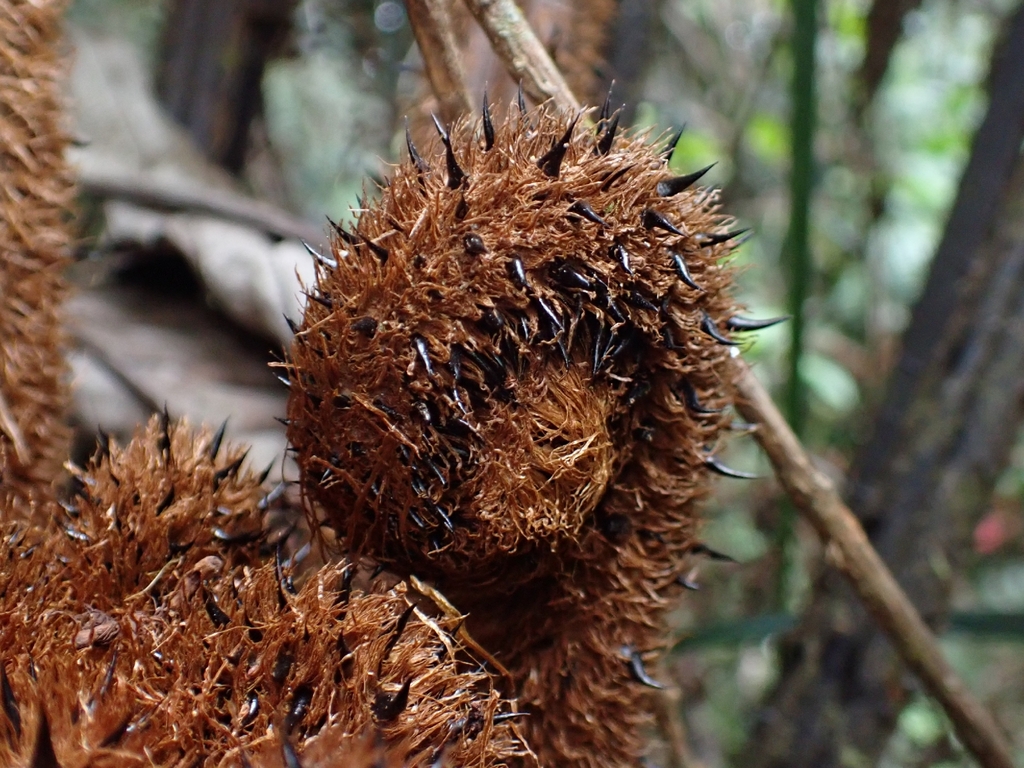
Puerto Rico has more than a dozen tree ferns, and several of them look alike from a distance. Up close, the Puerto Rico tree fern is recognized by the sharp, dark spines on its leaf stalks and fiddleheads, the glossy red-brown scales on its young fronds, and the skirt of old, spiny stalks that often surrounds its trunk.
Trunk
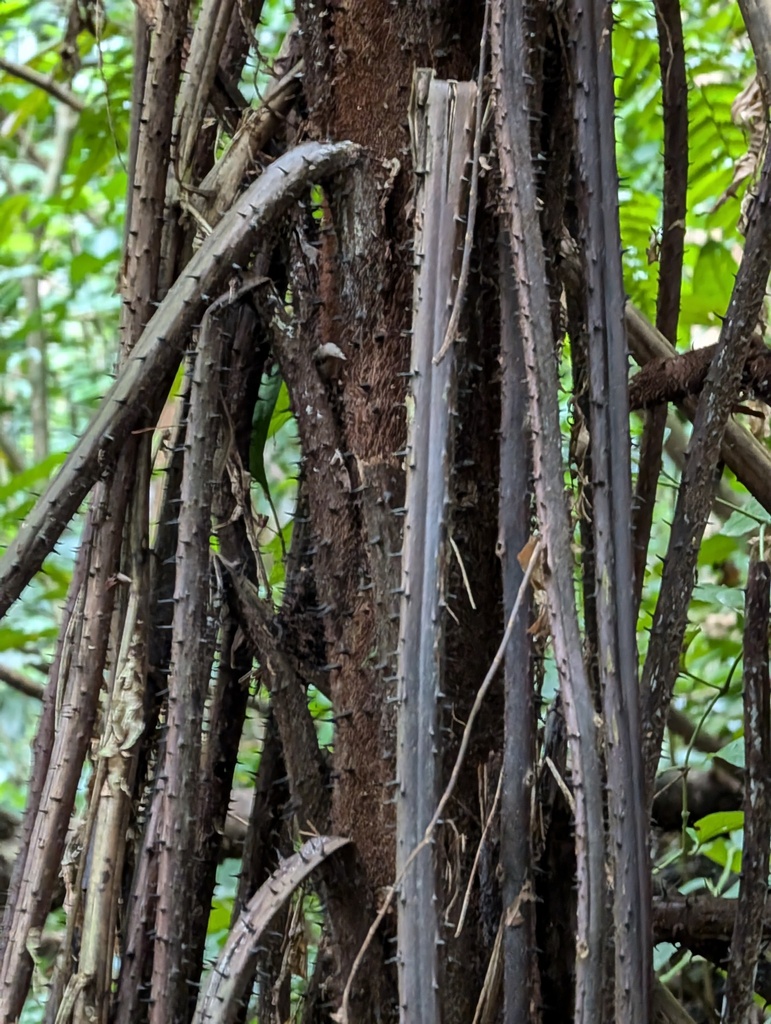
The plant forms a single, erect, unbranched trunk that is dark brown and rough with the bases and scars of old fronds. Older plants in sheltered forest form trunks taller than a person. The stalks of dead fronds often stay attached for a long time, hanging down along the trunk in a dense skirt.
Fronds & Stalks
The crown carries large, arching fronds that are finely divided, with long leaflets cut into many narrow, toothed segments, and are bright to dark green. The frond stalks (stipes) are dark brown to nearly black and armed with sharp, dark spines. As in other members of Alsophila, the stalks also carry brown scales with distinct pale margins.
Fiddleheads
New fronds unroll from large fiddleheads covered in shiny, red-brown to coppery scales and studded with black spines. They are one of the most striking features of the plant and among the easiest ways to tell it from the smooth-stalked West Indian tree fern.
Spores
Like all ferns, it has no flowers or seeds. It reproduces by spores produced in small, round clusters (sori) on the undersides of the frond segments, arranged in rows along the smaller veins.
Similar Species
The West Indian Tree Fern (Cyathea arborea), the tall helecho gigante of El Yunque’s roadsides, has a slender trunk and smooth, unarmed stalks. The Spiny Tree Fern (Cyathea horrida) also has spiny stalks, but its fronds are divided only once into broad, lobed leaflets and its trunk is usually short. The Puerto Rico tree fern combines finely divided fronds with dark, spiny stalks.
Quick Facts
| Scientific Name | Cyathea portoricensis Spreng. ex Kuhn; USDA accepted name Alsophila portoricensis (Spreng. ex Kuhn) Conant (syn. Nephelea portoricensis); USDA common name: Puerto Rico alsophila |
| Family | Cyatheaceae (scaly tree fern family) |
| Plant Type | Evergreen tree fern with a single trunk |
| Mature Height | Trunk to more than a person’s height in old plants; fronds several feet long |
| Mature Spread | Crown of arching fronds several feet across |
| Growth Rate | Slow to moderate |
| Sun Exposure | Partial shade to bright filtered light |
| Water Needs | High; needs constantly moist soil and high humidity |
| Soil Type | Moist, humus-rich, well-drained forest soils; also limestone soils of the northern karst |
| Soil pH | Acidic to slightly alkaline |
| Bloom Time | Does not flower; produces spores |
| Flower Color | None (fern) |
| Fall Color | None; evergreen |
| Fruit | None; reproduces by spores |
| Deer Resistant | Not applicable in Puerto Rico; no deer browse |
| USDA Hardiness Zones | 11–13 (frost-free, humid tropics) |
Native Range
The Puerto Rico tree fern is endemic to Puerto Rico. USDA PLANTS lists it (as Alsophila portoricensis) as native in Puerto Rico and records it nowhere else in the United States or its territories, and the World Checklist of Vascular Plants gives its distribution as Puerto Rico only. It is not native to the U.S. Virgin Islands or to Florida.
IRC records it in El Yunque National Forest in the Luquillo Mountains; Carite State Forest in the Sierra de Cayey; Guilarte, Toro Negro and Maricao state forests along the Cordillera Central; and Río Abajo State Forest in the northern karst, among the haystack hills (mogotes). IRC lists it from middle elevations of 500 to 1,000 m (about 1,600 to 3,300 ft) and from high elevations above 1,000 m, and from both volcanic-derived soils and limestone karst.
In these forests it grows in the humid understory and along ravines, streams, trails and forest edges, often with other tree ferns. The mountain forests of the Cordillera Central and the Luquillo Mountains catch frequent rain and cloud, which keeps the air humid all year, the condition tree ferns need most.
📋 Regional plant lists featuring Puerto Rico Tree Fern: Puerto Rico
Growing & Care Guide
The Puerto Rico tree fern is rarely offered for sale, but spore-grown plants make a dramatic, architectural feature for shady, humid gardens in Puerto Rico’s mountains and wetter north and east. It does poorly in the hot, dry south coast lowlands. Never dig tree ferns from the forest: they transplant badly, grow slowly, and removing plants from El Yunque and the commonwealth forests is not allowed without a permit. Because it grows only in Puerto Rico, every wild plant is part of the species’ entire world population.
Light
Give it partial shade or bright, filtered light under taller trees. In its forests it grows in the understory and in gaps where the air stays humid. Strong, direct sun and dry wind scorch the fronds.
Soil & Water
Plant it in deep, moist, well-drained soil rich in organic matter, and never let it dry out. During dry spells, water the trunk as well as the soil, since tree ferns take up water through the mass of roots on the trunk. Mulch heavily with leaf litter to keep the roots cool and moist.
Planting Tips
Choose a site sheltered from strong wind, which tears the large fronds, and keep it away from paths: the spiny stalks and fiddleheads scratch skin and snag clothing. Young, container-grown plants establish more easily than large trunks.
Pruning & Maintenance
Wear gloves when handling it. Cut off dead or storm-damaged fronds close to the trunk if you want a tidier look, or leave the skirt of old stalks, which is part of the plant’s natural character and shelters small animals. Never cut the top of the trunk: the crown is the only growing point, and a tree fern cannot branch or resprout from below.
Propagation
It is grown from spores. Collect a frond segment with ripe, brown sori, let it drop spores onto paper, and sow them on sterile, moist potting mix under a clear cover in bright, indirect light. Tiny green prothalli form first, followed by the first small fronds. Seedlings take several years to form a trunk.
Landscape Uses
- Shade gardens: a bold, prehistoric-looking focal point for humid, sheltered gardens
- Mountain gardens: suited to the cool, wet interior of Puerto Rico
- Stream and ravine plantings: moist, shaded sites along quebradas
- Forest restoration: for reforestation within its native mountain forests, using spore-grown plants
- Native fern collections: a Puerto Rico endemic to grow alongside the island’s other tree ferns
Wildlife & Ecological Value
Tree ferns are part of the structure of Puerto Rico’s wet forests. Their crowns, trunks and skirts of old stalks create shelter and growing space for many small animals and plants.
For Pollinators
As a fern, it has no flowers and offers nothing to pollinators directly.
For Birds
Its crowns give perches and cover to understory birds, and insect-eating birds forage among the fronds and on the trunks.
For Mammals
Puerto Rico’s only native land mammals are bats, and none are known to depend on this fern.
Ecosystem Role
Tree fern trunks, with their mass of fibrous roots and old frond bases, host mosses, filmy ferns, small orchids and other epiphytes. The skirt of old, spiny stalks can shelter frogs, lizards and invertebrates in the forest understory. As an endemic, the Puerto Rico tree fern also adds to the distinctive character of the island’s mountain forests.
Cultural & Historical Uses
The species was first described as Cyathea portoricensis, a name credited to the German botanist Kurt Sprengel and published by Maximilian Kuhn. The spiny tree ferns of the Americas were later separated by Rolla Tryon as the genus Nephelea, and the fern became Nephelea portoricensis. The American fern specialist David S. Conant then transferred it to Alsophila, the name USDA PLANTS now accepts. The genus name Cyathea comes from the Greek for “cup,” for the cup-like covering around the spore clusters in many species.
Because the boundaries between tree fern genera have changed several times, older guides and herbarium labels may list this fern under any of the three names. PlantNative uses Cyathea portoricensis, the name on our Puerto Rico native plant list, and gives USDA’s Alsophila portoricensis alongside it.
For visitors, tree ferns are an emblem of Puerto Rico’s mountain forests. Walkers on trails in El Yunque, Toro Negro or Maricao can find several species growing side by side, and the black-spined fiddleheads of the Puerto Rico tree fern are among the most memorable sights of the forest understory.
Frequently Asked Questions
Is the Puerto Rico tree fern native to Puerto Rico?
Yes. It is endemic: USDA PLANTS lists it as native in Puerto Rico, and the World Checklist of Vascular Plants records it from Puerto Rico only. IRC records it in El Yunque and in Carite, Guilarte, Maricao, Río Abajo and Toro Negro state forests.
Is it Cyathea portoricensis or Alsophila portoricensis?
Both names refer to the same fern. USDA PLANTS accepts Alsophila portoricensis; Cyathea portoricensis is the original name, and Nephelea portoricensis is another synonym. Tree fern classification has changed several times.
How do I tell it from the West Indian tree fern?
Look at the stalks. The West Indian tree fern has smooth, unarmed stalks and a slender trunk, while the Puerto Rico tree fern has dark stalks and fiddleheads armed with sharp black spines and covered in red-brown scales.
Are the spines dangerous?
They are sharp enough to scratch skin and snag clothing, so wear gloves when handling the plant and keep it away from paths. They are not known to be poisonous.
Can I grow it in Florida?
It is not native to Florida and needs constant warmth, shade and humidity. It is rarely grown on the mainland. Florida gardeners looking for a native fern for moist shade can try Hammock Fern.

Looking for a nursery that carries Puerto Rico Tree Fern?
Our nursery directory does not yet include Puerto Rico. Browse the native plant nursery directory by state: Alabama–Arkansas · California · Colorado–Hawaii · Idaho–Kansas · Kentucky–Montana · Nebraska–Oklahoma · Oregon · Pennsylvania–Virginia · Washington · West Virginia–Wyoming