
Possum Grape (Cissus verticillata)
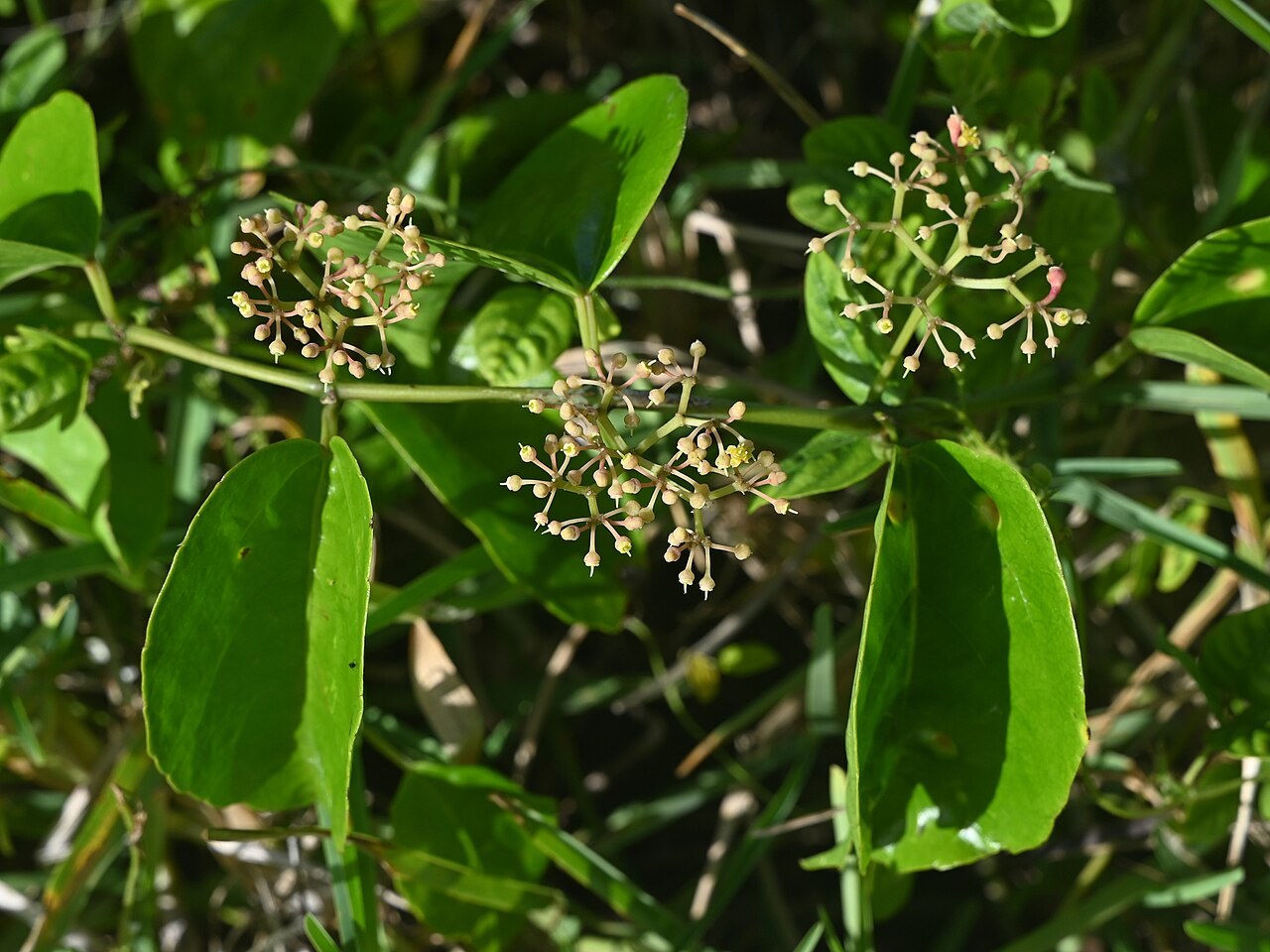
Cissus verticillata, the Possum Grape, is a fast-growing native vine of the grape family that scrambles over shrubs and trees in coastal thickets and forest edges. USDA PLANTS calls it seasonvine, and it is also sold as princess vine and curtain ivy. In Puerto Rico it is known as bejuco de caro, caro and lambrali. It is native from South Florida and the West Indies through Mexico, Central America and South America. Older books call it Cissus sicyoides.
The vine has smooth, rather fleshy, heart-shaped leaves, coiling tendrils and flat clusters of tiny flowers, followed by small black berries. Its most unusual feature is its aerial roots: long, thin, reddish strands that hang down from the stems, sometimes in such numbers that they form a curtain, which is where the name “curtain ivy” comes from.
This guide covers how to recognize possum grape, where it grows in Puerto Rico and Florida, how to grow it (and keep it in bounds), and its value for birds and insects.
Identification
Possum grape is a typical member of the grape family, with tendrils opposite the leaves and small clustered flowers, but its leaves are simple and its hanging aerial roots set it apart.
Growth Form
A perennial climbing or scrambling vine, herbaceous to slightly woody, with stems that can reach about 30 feet (9 m) long. It climbs by tendrils that grow opposite the leaves, and it often drapes over low vegetation, fences and tree crowns. Older stems become woody at the base; young stems are green and fleshy, sometimes with a whitish bloom.
Leaves
The leaves are simple, alternate, heart-shaped to oval, about 2 to 4 inches (5 to 10 cm) long, with a pointed tip and small, bristly teeth along the edges. They are somewhat thick and succulent, smooth or slightly hairy, and medium to bright green.
Aerial Roots
Mature plants send down long, thin, reddish to brown aerial roots from the stems. They hang straight down like strings and can reach the ground, where they root. Dense curtains of these roots are the most distinctive feature of the plant.
Flowers and Fruit
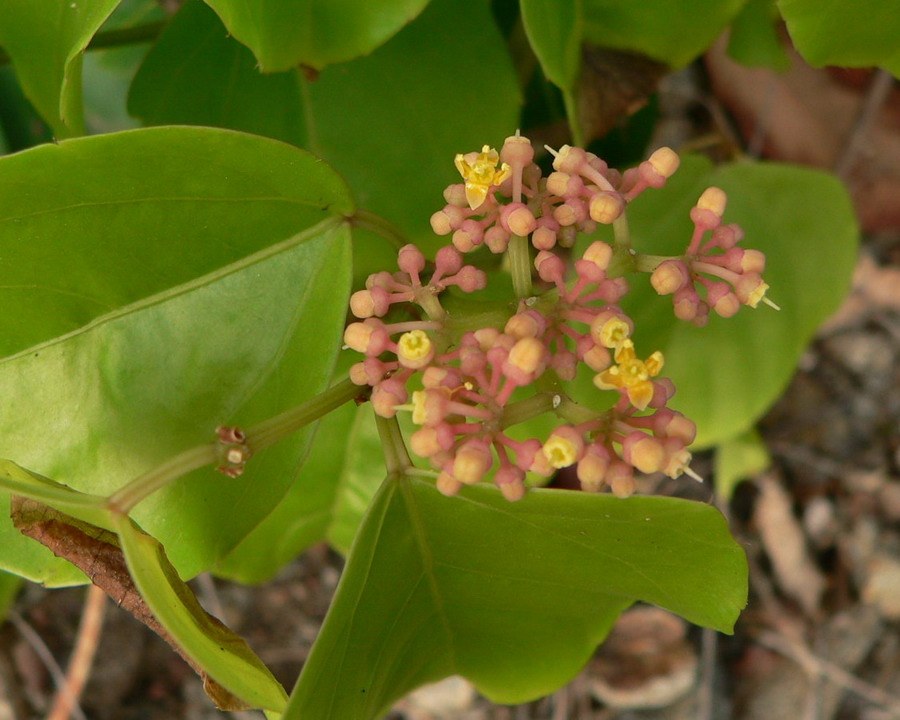
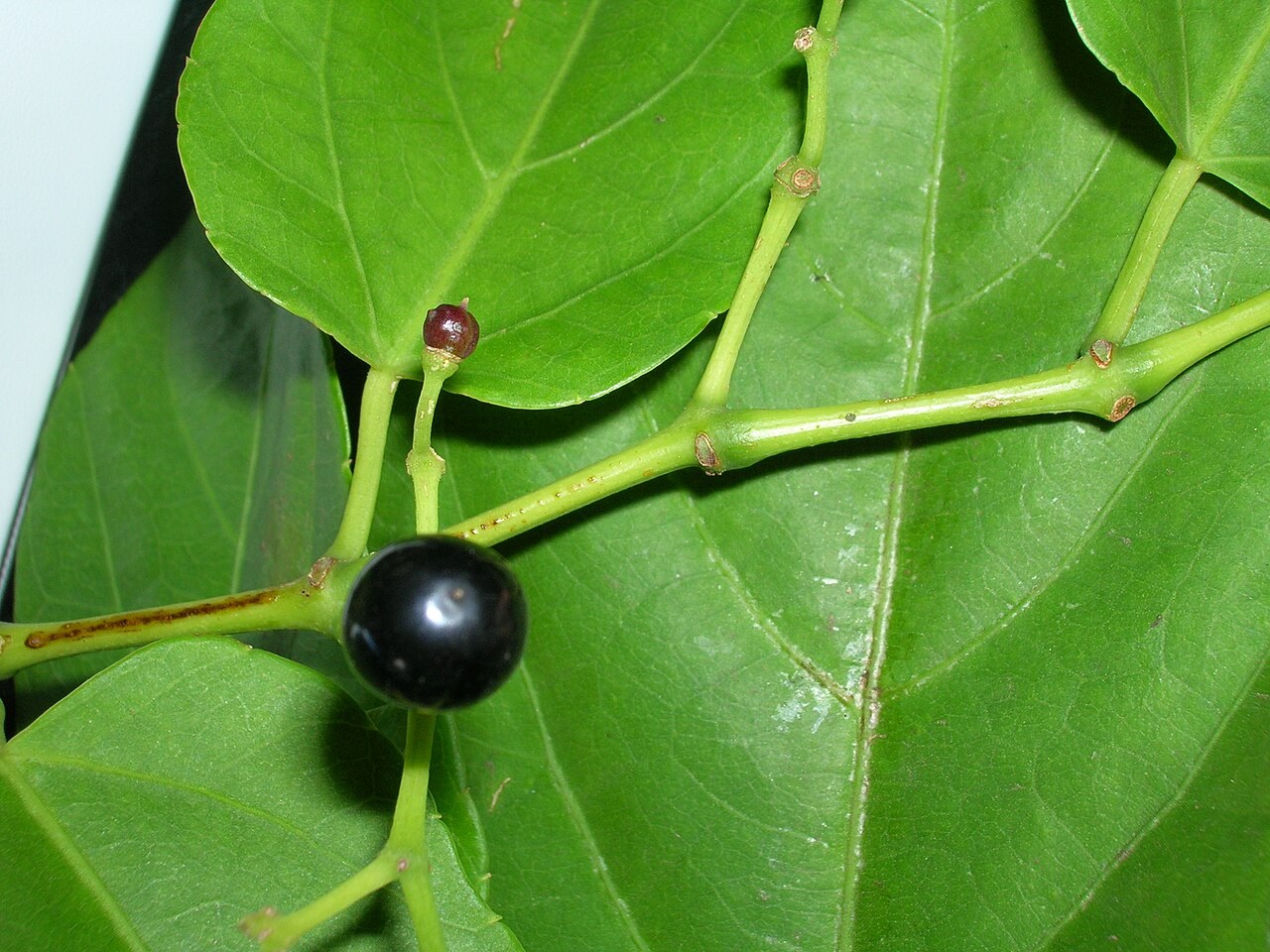
Flowers appear in flat-topped, branched clusters (cymes) opposite the leaves. Each flower is tiny, about 1/8 inch (3 mm) across, with four greenish-yellow to purplish petals and a yellow or orange nectar disk. The fruit is a small, round to egg-shaped berry about 1/4 to 3/8 inch (6 to 10 mm) long, glossy black when ripe, with a single seed.
Quick Facts
| Scientific Name | Cissus verticillata (L.) Nicolson & C.E. Jarvis (syn. Cissus sicyoides L.); USDA common name: seasonvine |
| Family | Vitaceae (grape family) |
| Plant Type | Perennial climbing vine |
| Mature Height | Climbs or sprawls to 30 ft |
| Mature Spread | 10–20 ft or more |
| Growth Rate | Fast |
| Sun Exposure | Full sun to partial shade |
| Water Needs | Low to moderate; drought tolerant once established |
| Soil Type | Sand, limestone, loam; well-drained soils |
| Soil pH | Neutral to alkaline |
| Bloom Time | Through the year, mostly in warm months |
| Flower Color | Greenish yellow to purplish |
| Fall Color | None; evergreen |
| Fruit | Small black one-seeded berry |
| Deer Resistant | Not well documented |
| USDA Hardiness Zones | 10–11 |
Native Range
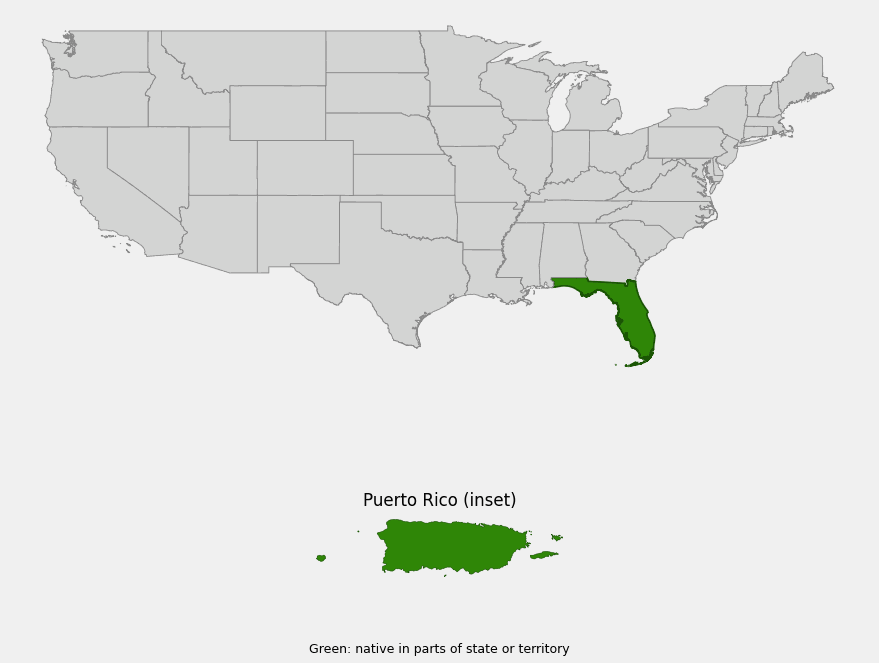
USDA PLANTS lists Cissus verticillata as native to Florida in the lower 48 states, to Puerto Rico and the U.S. Virgin Islands, and to Navassa Island. The Smithsonian Flora of the West Indies records it throughout the region: the Bahamas, Cuba, Jamaica, the Cayman Islands, Hispaniola, Puerto Rico, the Virgin Islands and the Lesser Antilles, as well as Mexico, Central America and South America. In Puerto Rico it grows on the main island and on many of the smaller islands, including Mona, Desecheo, Caja de Muertos, Vieques and Icacos.
It is a lowland plant that grows in coastal hammocks and thickets, forest edges, fence rows, roadsides and disturbed ground, often near the coast. In Puerto Rico it is common in coastal and dry forest scrub as well as moister lowland areas. In Florida it grows in coastal hammocks and low ground in the southern part of the state and the Keys.
It is not listed under the U.S. Endangered Species Act. It is common and easy to propagate from cuttings, so there is no need to collect it from the wild.
📋 Regional plant lists featuring Possum Grape: Puerto Rico · North & South Florida
Growing & Care Guide
Possum grape is easy to grow, perhaps too easy in a small garden. It thrives in heat, tolerates poor and limey soils and grows quickly from cuttings. Use it where you want fast, lush cover and have room for it, and be ready to cut it back.
Light
It grows in full sun to partial shade. In full sun it flowers and fruits more heavily; in shade it grows more slowly and produces fewer aerial roots.
Soil & Water
Almost any well-drained soil will do, including sand and limestone. Water regularly while it is getting established; after that it tolerates dry spells well. In very dry conditions the vine may drop some leaves and recover after rain.
Planting Tips
Give it a strong fence, trellis, pergola or a large shrub to climb. Planted at the top of a wall or pergola, it lets its aerial roots hang down in a curtain, which is the most decorative way to grow it. Keep it away from small shrubs and young trees, which it can smother.
Pruning & Maintenance
Cut it back as often as needed to keep it in bounds. Trim aerial roots if they are in the way; they will grow back. It responds well to hard pruning.
Propagation
Stem cuttings root very easily in moist soil or even in water. Aerial roots that reach the ground root on their own and can be cut from the parent. Seeds from ripe berries can also be sown fresh.
Landscape Uses
- Fast screening: quickly covers fences, pergolas and chain-link
- Living curtains: hanging aerial roots create a dramatic screen
- Coastal gardens: tolerates heat, sandy and limey soils
- Bird gardens: black berries feed fruit-eating birds
- Hammock restoration edges: a native vine of coastal thickets and forest edges
Wildlife & Ecological Value
Possum grape is a busy plant for wildlife, with flowers and nectar glands for insects and fruit for birds.
For Pollinators
The tiny flowers have an exposed nectar disk that is easy for short-tongued insects to reach. They attract small bees, wasps, flies and butterflies. The plant also has extrafloral nectaries, small glands outside the flowers that produce nectar and attract ants.
For Birds
Birds eat the small black berries and spread the seeds. The tangled vines also give dense cover and nesting sites for small birds in coastal thickets.
For Mammals
Possum grape is not an important food plant for mammals. Small mammals, lizards and other small animals shelter in the dense tangles of vines.
Ecosystem Role
As a fast-growing vine of forest edges and disturbed sites, possum grape quickly covers bare ground and openings after storms. Its aerial roots let it root at many points, helping it survive drought and damage.
Cultural & Historical Uses
Possum grape has a long history in folk medicine. It was reported from Mexico in the 16th century, and its roots were later exported to Europe for medicinal use. Folk remedies for stomach complaints and fevers are recorded from many parts of tropical America, but these uses have not been proven safe or effective.
Linnaeus described the plant twice, as Viscum verticillatum and as Cissus sicyoides, and botanists used Cissus sicyoides for most of the 20th century. Dan Nicolson and Charles Jarvis later showed that the older epithet verticillata had priority, and the plant has more than 70 recognized synonyms.
The trailing aerial roots made it popular in Asia, where it is planted on pergolas and walls as a decorative “curtain.” It is also grown as an ornamental in Hawaii and other warm regions outside its native range.
Frequently Asked Questions
Is possum grape a real grape?
It belongs to the grape family (Vitaceae) but not the grape genus, Vitis. Its berries are small and are not considered edible fruit; they are best left for the birds.
What are the long strings hanging from the vine?
Those are aerial roots. They grow down from the stems and can root when they reach the ground. They are normal and are one of the most distinctive features of the plant.
Will it take over my garden?
It grows fast and can smother shrubs if left alone. Plant it on a strong support with room to spread, and prune it regularly.
Is it native to Florida?
Yes. USDA lists it as native to Florida, where it grows in coastal hammocks and low ground in the southern part of the state.
Can I grow it from a cutting?
Yes. Stem cuttings root very easily in moist soil or water, and it is the quickest way to start new plants.

Looking for a nursery that carries Possum Grape?
Our nursery directory does not yet include Puerto Rico. Browse the native plant nursery directory by state: Alabama–Arkansas · California · Colorado–Hawaii · Idaho–Kansas · Kentucky–Montana · Nebraska–Oklahoma · Oregon · Pennsylvania–Virginia · Washington · West Virginia–Wyoming