
Chamise (Adenostoma fasciculatum)
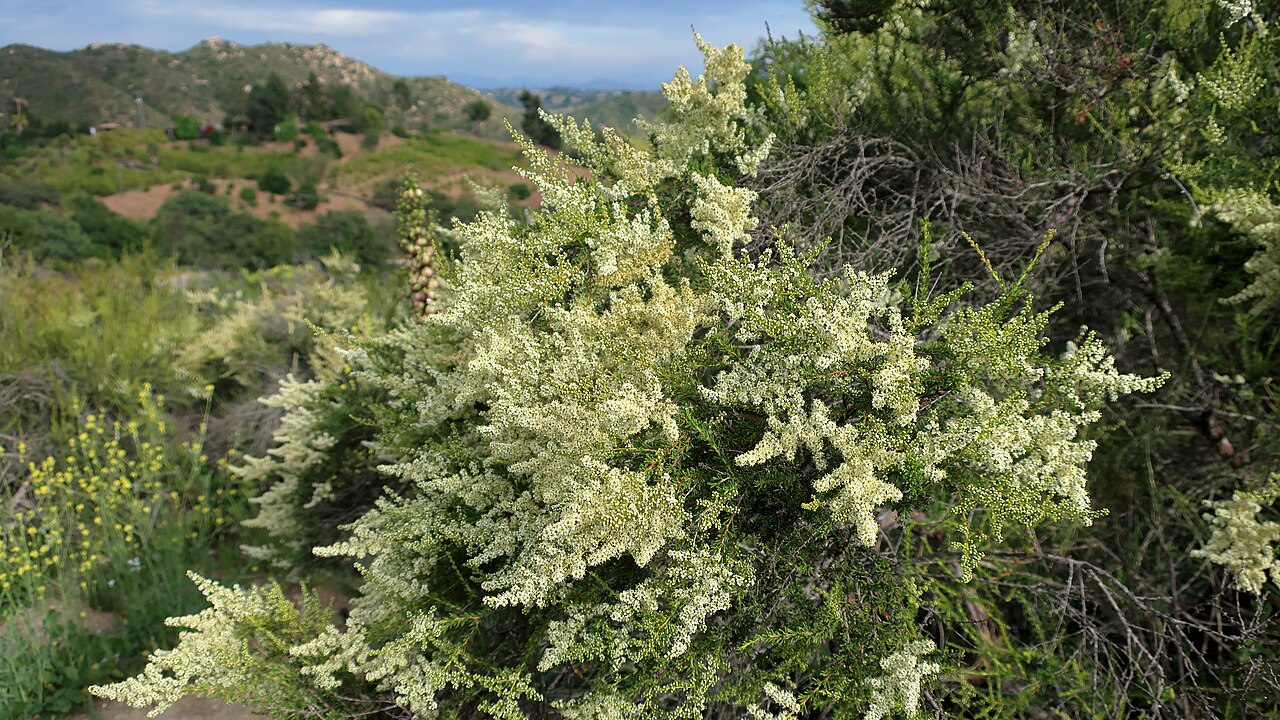
Adenostoma fasciculatum, known as Chamise or greasewood, is the most widespread shrub of California chaparral. It is a dense, evergreen member of the rose family (Rosaceae), usually 3 to 10 feet tall, with stiff, reddish branches crowded with tiny, needle-like leaves. In late spring it covers itself in sprays of small white flowers that turn rusty brown as they age, so whole hillsides change color through the season.
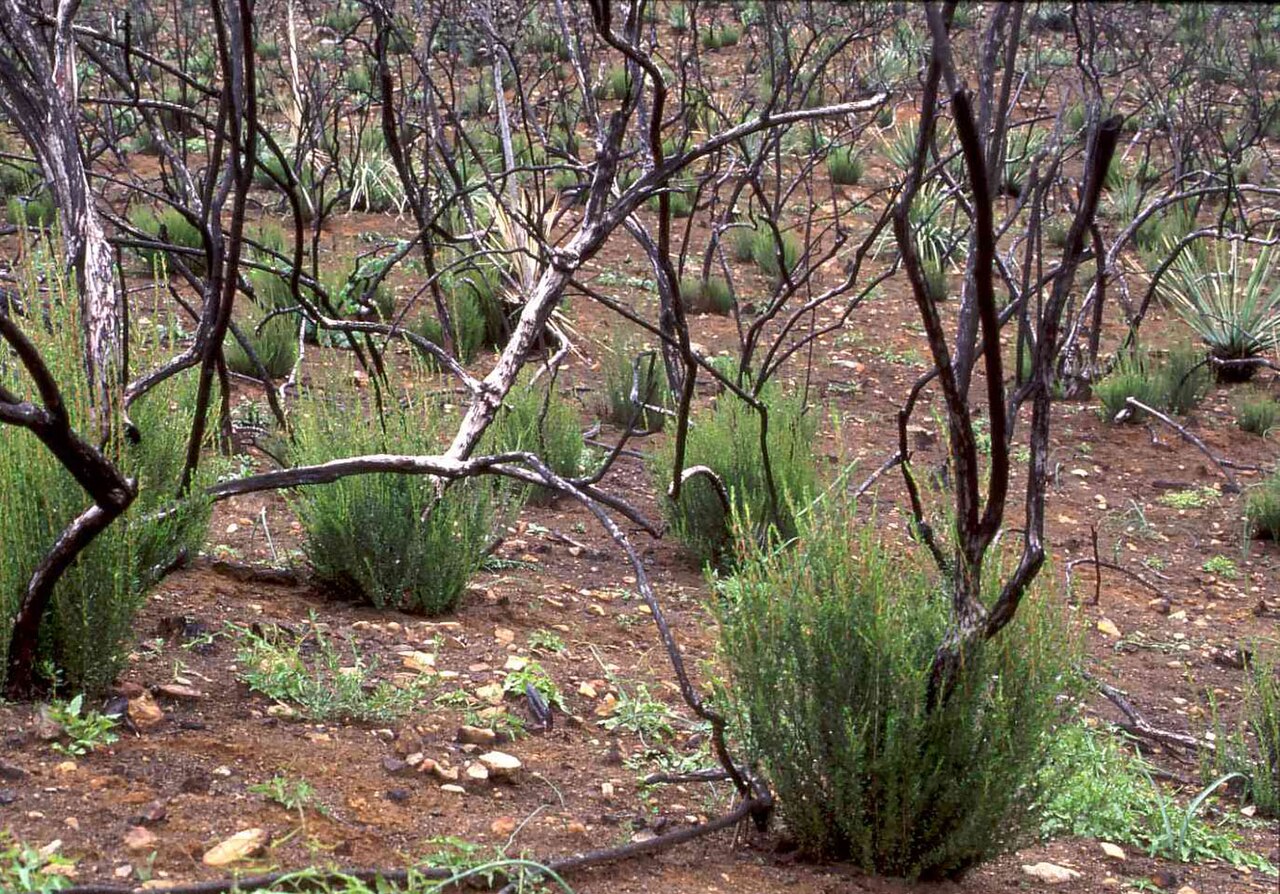
Chamise dominates huge areas of dry slopes and ridges in the Coast Ranges and the Sierra Nevada foothills, often forming nearly pure stands known as chamise chaparral. It is shaped by fire. Its leaves and twigs are rich in resinous, oily compounds that burn readily, and after a fire most plants resprout from a woody burl at the base, while heat and smoke trigger a flush of seedlings from seed stored in the soil.
This combination of drought tolerance, flammability and fire recovery makes chamise one of the key plants for understanding California landscapes. It is a tough, low-water shrub for large, wild gardens and slope stabilization, but it is also highly flammable and should be kept well away from homes. USDA PLANTS lists it in California and Nevada, and it also grows in northern Baja California.
Identification
Chamise is easy to recognize in the chaparral by its fine, needle-like leaves in small bundles, its reddish, shredding bark, and its long sprays of tiny white flowers in spring.
Form & Bark
Chamise is a many-stemmed evergreen shrub, usually 3 to 10 feet tall and occasionally taller, with stiff, upright to spreading branches. All the stems grow from a large woody root crown, or burl, at ground level. Young twigs are reddish, and the bark on older stems is gray to reddish-brown and peels in long, thin strips. Old shrubs often have many dead twigs in their interior.
Leaves
The leaves are tiny, about 1/4 to 1/2 inch long, narrow and needle-like, and grow in small bundles (fascicles) along the stems, which is the source of the species name fasciculatum. They are dark green, smooth and often slightly sticky or shiny with resin. From a distance, the foliage looks like a fine-textured conifer or heather.
Flowers
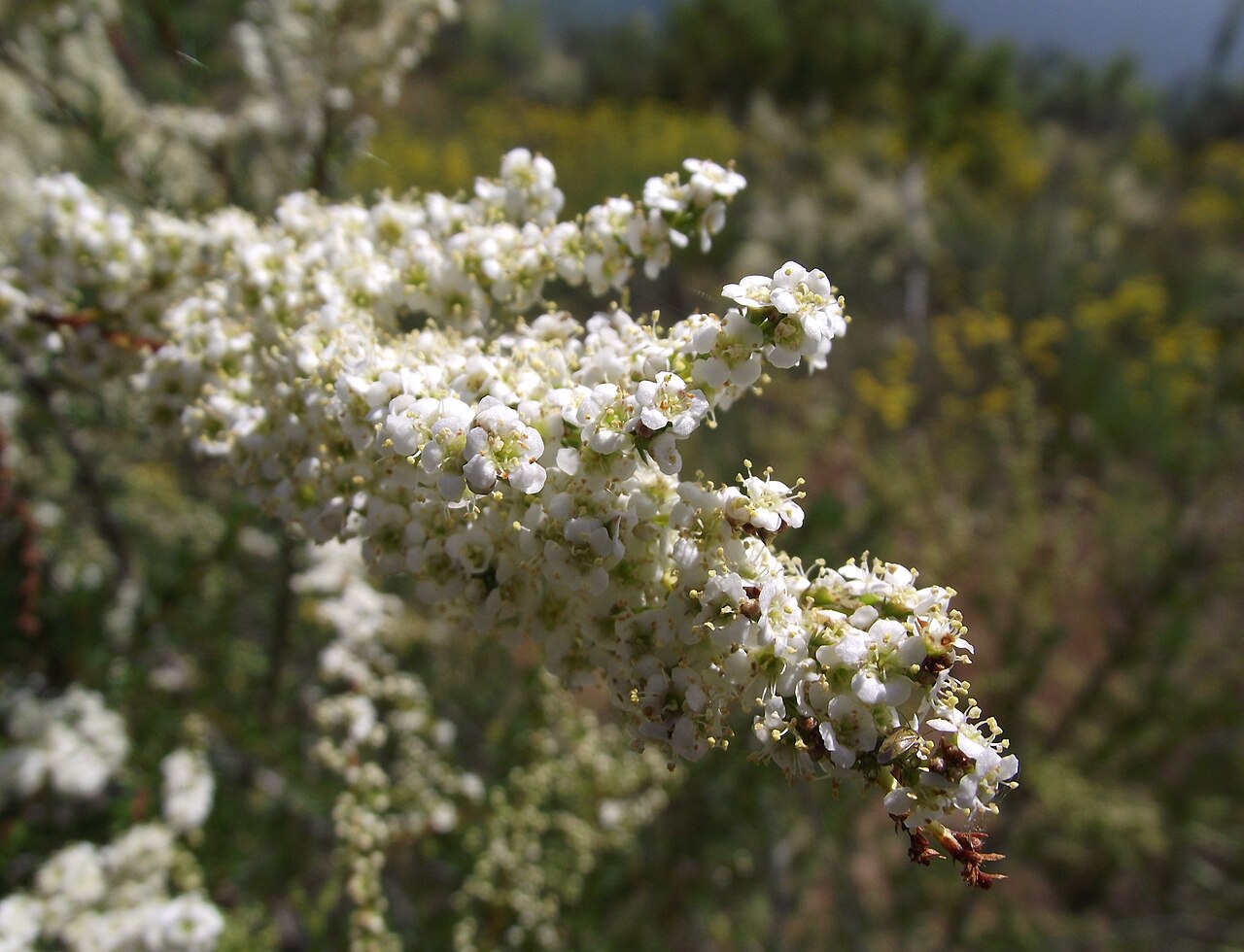
From April to July the branch tips carry dense, branched clusters (panicles) of white flowers, each only about 1/4 inch across, with five round petals and many stamens. In full bloom the shrubs look as if they were dusted with snow, and they have a faint, sweet scent. After flowering, the dry flower clusters turn reddish-brown and stay on the plants into the following year.
Fruit & Seeds
Each flower produces a single tiny, dry, one-seeded fruit (achene). The seeds fall below the shrub and build up in the soil over many years. Most germinate only after fire, when heat, smoke and charred wood break their dormancy. A burned chamise slope often turns green in the first spring after a fire with both resprouts and seedlings.
Quick Facts
| Scientific Name | Adenostoma fasciculatum |
| Common Names | Chamise (USDA), greasewood, common chamise |
| Family | Rosaceae (rose family) |
| Plant Type | Evergreen shrub; resprouts from a basal burl |
| Mature Height | 3–10 ft (occasionally to 12 ft) |
| Mature Spread | 3–10 ft |
| Growth Rate | Moderate; fast as resprouts after fire |
| Sun Exposure | Full sun |
| Water Needs | Very low; summer-dry once established |
| Soil Type | Well-drained, often shallow, rocky or gravelly sand, loam or clay |
| Soil pH | About 5.5–7.5 |
| Bloom Time | April–July |
| Flower Color | White, aging to rusty brown |
| Fall Color | None; evergreen |
| Fruit | Tiny dry achene; seeds stored in soil until fire |
| Deer Resistant | No; mule deer browse new growth, especially after fire |
| USDA Hardiness Zones | 8–10 |
Native Range
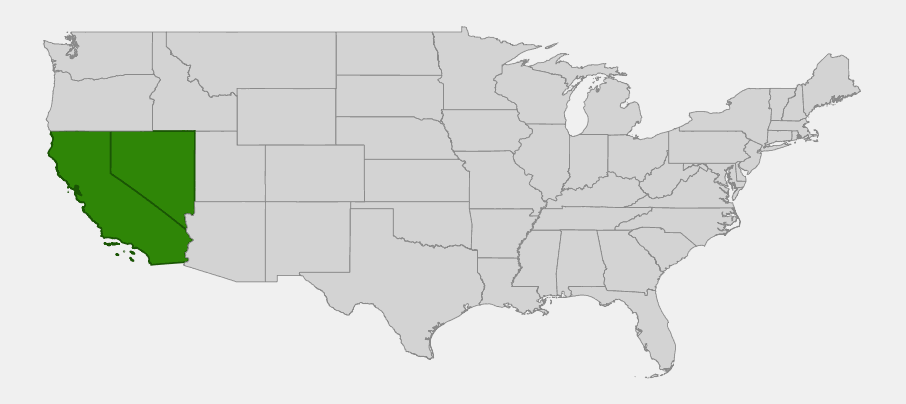
Chamise is native to the Mediterranean-climate region of California and northern Baja California. It grows from the inner and outer Coast Ranges of northern California, around Mendocino and Shasta counties, south through the Sierra Nevada foothills, the Transverse and Peninsular Ranges and the coastal mountains of southern California, into Baja California. USDA PLANTS also lists it for Nevada, at the eastern edge of its range.
It is the single most abundant shrub of California chaparral. Chamise chaparral, in which it forms more than half of the cover, occupies huge areas of hot, dry, south- and west-facing slopes and ridges, mostly below about 5,000 feet. On cooler, moister north-facing slopes it shares the chaparral with larger-leaved shrubs such as scrub oak, toyon and ceanothus.
Chamise is well suited to poor soils. It grows on shallow, rocky or gravelly soils derived from granite, sandstone, shale and serpentine, where few other shrubs can survive the long, rainless summer. A distinctive, densely leaved form in coastal San Diego County is sometimes treated as var. densifolium.
📋 Regional plant lists featuring Chamise: Idaho, Eastern Oregon & Eastern Washington
Growing & Care Guide
Chamise is a tough, long-lived shrub for large, dry, sunny sites within its native range. It is best used on slopes, in habitat gardens and in restoration, not next to buildings. Buy nursery-grown plants rather than digging wild shrubs, which rarely survive transplanting. Low, spreading selections such as ‘Nicolas’ are sometimes sold as ground covers.
Light
Give chamise full sun. It becomes thin and leggy in shade and is replaced by taller shrubs and trees in the wild once they shade it.
Soil & Water
It grows in almost any well-drained soil, including thin, rocky and nutrient-poor slopes. Good drainage is essential. Water young plants occasionally during their first summer to help them establish. After that, chamise needs no summer water in its native range, and regular irrigation in warm weather often causes root rot. Do not fertilize.
Planting Tips
Plant in fall or early winter so the roots grow with winter rains. Chamise works well for stabilizing slopes, as an informal screen, and in large chaparral or habitat gardens with manzanitas, ceanothus, sages and buckwheats. Fire safety: chamise is one of the most flammable plants in California because of its fine, resinous foliage and accumulated dead twigs. Keep it out of the defensible space around homes and other structures, and follow your local fire agency’s guidelines on plant spacing.
Pruning & Maintenance
Chamise needs little care. To keep plants dense and reduce fuel, remove dead wood and occasionally cut old, woody stems back to the base in late fall or winter, since plants resprout readily from the burl. Avoid pruning during the hot, dry fire season, when sparks from tools can start fires.
Propagation
Seed germinates poorly without treatment. Nurseries usually expose it to heat or to smoke or charred-wood treatments that imitate fire, then sow it in fall or winter. Chamise can also be grown from semi-hardwood cuttings, which root slowly. Most gardeners should simply buy container-grown plants.
Landscape Uses
- Slope stabilization: deep roots and a resprouting burl hold steep, dry slopes
- Chaparral and habitat gardens: with manzanitas, ceanothus, sages, toyon and buckwheats
- Restoration: re-establishing chaparral on degraded slopes within its native range
- Low-water landscapes: no summer irrigation once established, away from structures
- Pollinator support: late-spring flowers visited by many native bees and other insects
Wildlife & Ecological Value
As the dominant plant of much of the chaparral, chamise provides food and shelter for a great many animals, from native bees to deer.
For Pollinators
The flowers produce abundant pollen and some nectar and are visited by a wide range of insects, including many native bees, honey bees, flies, beetles and small butterflies. Because whole hillsides bloom at once, chamise is an important late-spring food source in the chaparral.
For Birds
The dense, twiggy shrubs provide nesting sites, roosting cover and protection from predators for chaparral birds such as California quail, wrentits, California thrashers, spotted and California towhees, and Bewick’s wrens. Many insectivorous birds hunt for insects in the foliage.
For Mammals
Chamise is an important browse plant for mule deer, especially the tender new shoots that appear after fire or pruning. Woodrats, rabbits and other small mammals shelter under the shrubs, and brush rabbits and woodrats eat the foliage.
Ecosystem Role
Chamise shapes the fire regime of the chaparral and recovers from it in two ways: most shrubs resprout from their burls, and seeds stored in the soil germinate after fire. Stands that burn too often, such as every few years, can lose chamise and other shrubs and turn into weedy grasslands of non-native annuals. Its dense root systems stabilize steep slopes, and its litter shades the soil and adds organic matter.
Cultural & Historical Uses
The name chamise comes from Spanish (often spelled chamiso or chamizo), a general term for brushy shrubs. Early Anglo settlers called it greasewood because of the oily look and fast, hot burning of its wood, although it is unrelated to the greasewood (Sarcobatus) of the Great Basin. The word “chaparral” itself comes from the Spanish for a place of scrub oaks.
Several Native Californian peoples made use of chamise. Its straight, hard stems were used for arrow shafts and for tools, the wood was valued as a hot-burning fuel, and the plant was also used in traditional medicine. Many tribes also managed chaparral with fire, creating openings and encouraging fresh growth for game and food plants.
In the 1960s chamise became a well-known case in ecology debates about allelopathy, the idea that plants release chemicals that suppress other plants. Researchers noticed bare zones around chaparral shrubs and suggested chemical inhibition. Later work showed that grazing by small mammals and birds sheltering in the shrubs also creates these zones. Today chamise is studied mainly for its role in fire behavior and post-fire recovery.
Frequently Asked Questions
Is chamise a fire hazard?
Yes. Chamise is one of the most flammable plants in California because of its fine, resinous leaves and dead twigs. It is adapted to fire and resprouts afterward, but it should not be planted within the defensible space around buildings.
Does chamise grow back after a wildfire?
Usually, yes. Most plants resprout from the woody burl at their base within weeks or months, and seeds stored in the soil germinate in the first wet season after the fire. Very frequent fires can kill the resprouts and deplete the seed bank, though.
Can I grow chamise in my garden?
Yes, on a dry, sunny, well-drained site within its native range, ideally on a slope or in a wild part of a large garden. It needs no summer water once established. Keep it well away from your home for fire safety.
Is chamise the same as greasewood?
Chamise is often called greasewood in California, but it is unrelated to the greasewood (Sarcobatus vermiculatus) of the Great Basin. The scientific name Adenostoma fasciculatum avoids the confusion.
When does chamise bloom?
From April to July, depending on elevation and location. Whole hillsides turn white, then rusty brown as the flower clusters age.

Looking for a nursery that carries Chamise?
Browse our native plant nursery directory: California · Nevada