
Desert Lily (Hesperocallis undulata)
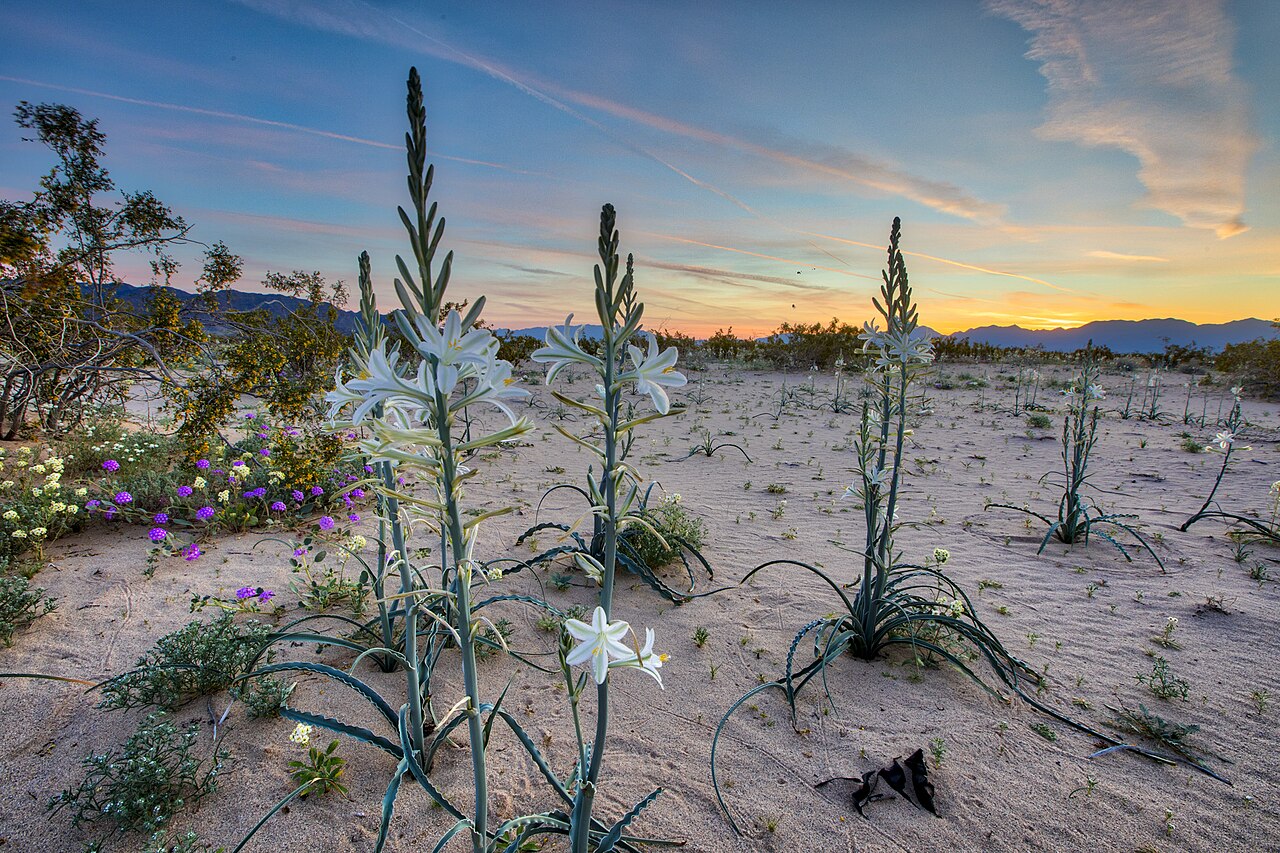
Hesperocallis undulata, known as Desert Lily (also ajo lily), is one of the most striking wildflowers of the low deserts of the Southwest. It is the only species in its genus. After a wet winter, a rosette of long, blue-green leaves with wavy edges appears on sandy flats, and in spring a stalk 1 to 6 feet tall rises from it, carrying fragrant white, trumpet-shaped flowers that look like Easter lilies. In good years thousands bloom together across the sand.
Despite its name and appearance, the desert lily is not a true lily. Molecular studies have shown that it belongs with the agaves in the asparagus family (Asparagaceae, subfamily Agavoideae). It grows from a deep bulb, sometimes 2 feet below the surface, that can stay dormant through dry years and bloom only when winter rains are generous.
Desert lily grows in the Mojave, Colorado and Sonoran deserts of southeastern California, western Arizona and the southern tip of Nevada, and south into Baja California and Sonora. It is very difficult to cultivate, and wild bulbs are deep and fragile. Never dig desert lilies. The best way to enjoy them is to visit in a wet spring, for example at the BLM’s Desert Lily Preserve in California.
Identification
In bloom, a desert lily is unmistakable: a tall, gray-green stalk of large white trumpets rising from a rosette of wavy-edged, blue-green leaves on open sand. Out of bloom, look for the rosette of long, ribbon-like leaves with ruffled margins.
Bulb
The plant grows from an egg-shaped bulb with a papery coat. The bulb is often 1 to 2 feet (30 to 60 cm) deep in sand or gravelly soil, which protects it from heat and drought. Bulbs can stay dormant for several years and send up leaves only after enough winter rain.
Leaves
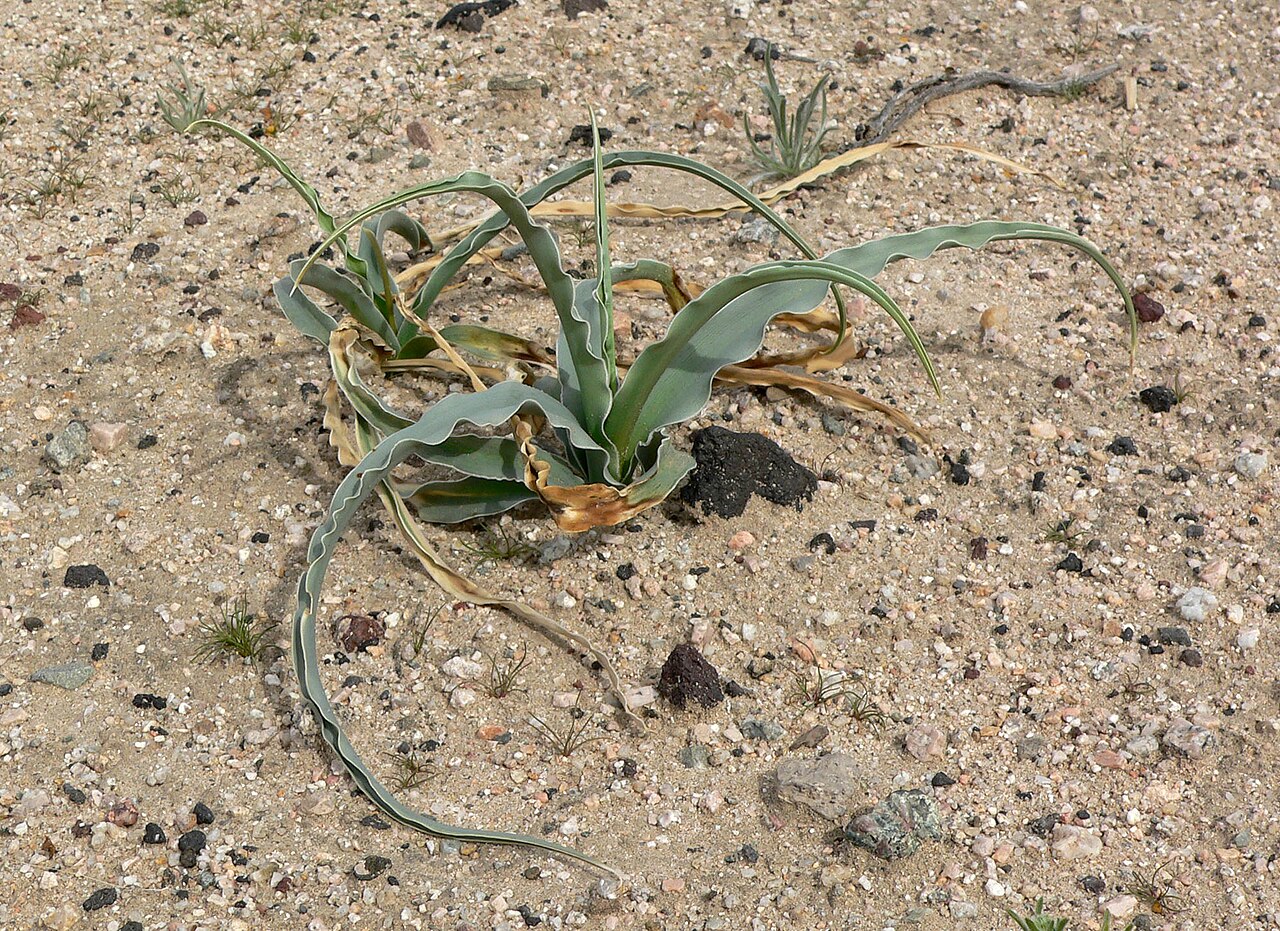
A basal rosette of a few long, narrow leaves, about 8 to 20 inches (20 to 50 cm) long and less than an inch wide, appears in winter, roughly a month before flowering. The leaves are blue-green, often lying flat or curving over the ground, with distinctly wavy (undulate) edges and a narrow whitish margin. They wither after flowering.
Flowers
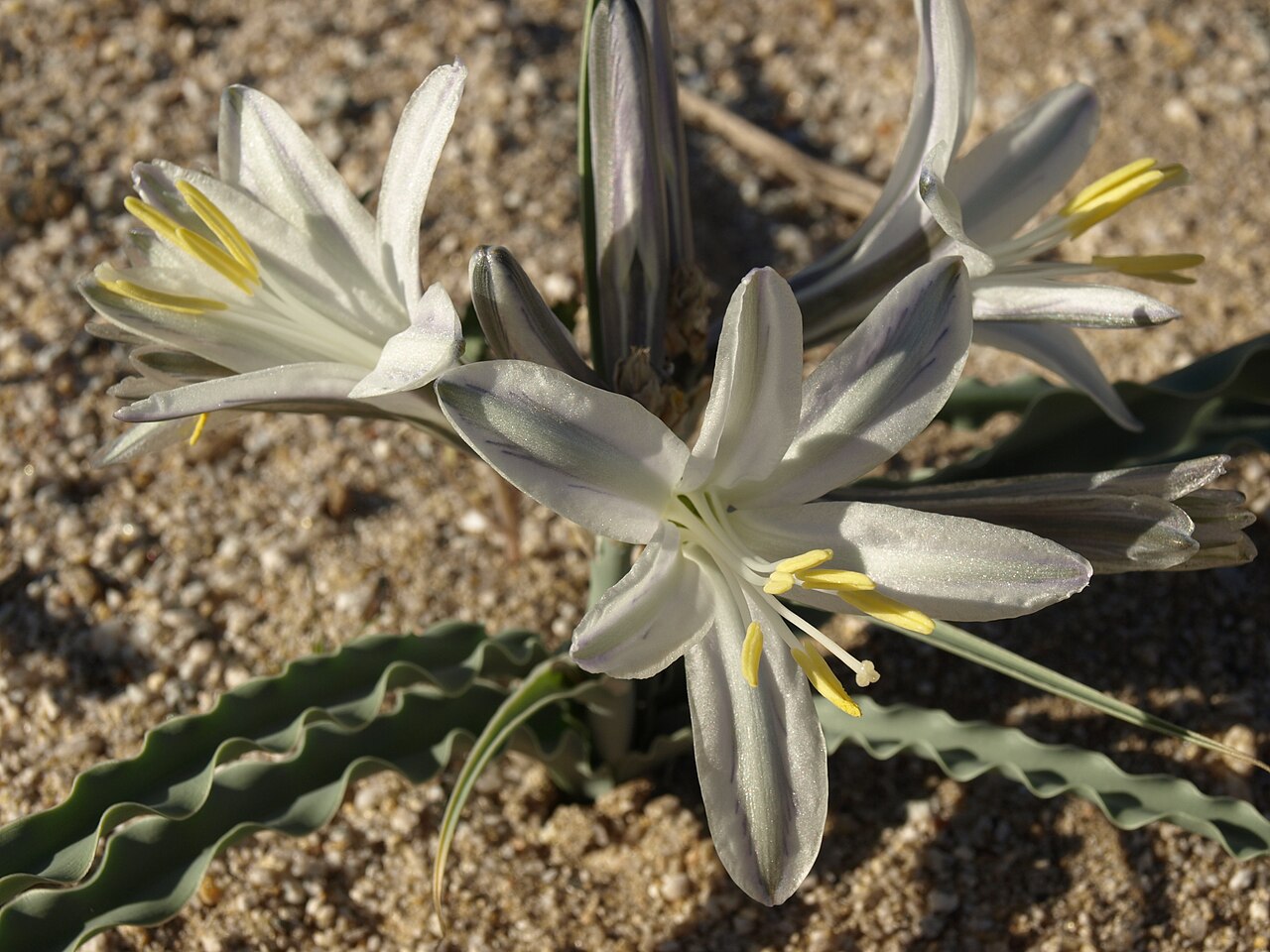
From February to May, a stout stalk 1 to 6 feet tall emerges and bears a long raceme of many flowers that open from the bottom up. Each flower is funnel-shaped, about 2 to 2 1/2 inches long, with six white tepals that each have a silvery blue-green or gray-green band on the back. The six stamens have yellow anthers. The flowers are sweetly fragrant, especially in the evening.
Fruit & Seeds
The fruit is a firm, rounded, three-parted capsule about 1/2 inch (1.5 cm) long that splits to release flat, black seeds about 1/4 inch long. The dry stalks and capsules can stand for months.
Look-alikes
Few desert plants resemble it. Ajo lily is another name for the same plant. Yuccas have tough, woody, sharp-pointed leaves. Dune evening primrose (Oenothera deltoides), which grows in the same sandy habitats, has white four-petaled flowers on low, spreading stems. Garden Easter lilies are not found wild in the desert.
Safety & Conservation
Desert lily bulbs were eaten by Indigenous peoples, but don’t harvest them: the bulbs are deep, slow to replace and are the plant’s only way to survive drought. Desert lily is not federally listed, but its sandy habitats are threatened by off-road vehicles, solar and other development, and invasive plants such as Sahara mustard. Never dig the bulbs, and stay on roads and trails when viewing them.
Quick Facts
| Scientific Name | Hesperocallis undulata |
| Family | Asparagaceae (asparagus family, agave subfamily); formerly Liliaceae |
| Plant Type | Bulb-forming herbaceous perennial; dormant most of the year |
| Mature Height | 1–6 ft in flower; leaves near the ground |
| Mature Spread | 1–2 ft |
| Growth Rate | Slow |
| Sun Exposure | Full sun |
| Water Needs | Very low; depends on winter rain |
| Soil Type | Deep sand, sandy or pebbly soils of flats and dunes |
| Soil pH | About 7.0–8.5 |
| Bloom Time | February–May, after wet winters |
| Flower Color | White with silvery blue-green stripes |
| Fall Color | None; dormant |
| Fruit | Rounded three-parted capsule with flat black seeds |
| Deer Resistant | Unknown; rabbits and rodents may eat leaves and flowers |
| USDA Hardiness Zones | 9–11 |
Native Range
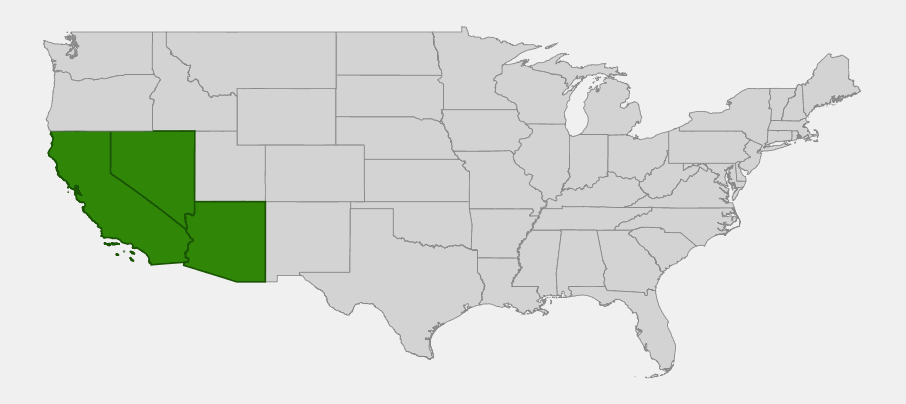
Desert lily is native to the low deserts of southwestern North America. USDA PLANTS lists it as native in Arizona, California and Nevada. The Lady Bird Johnson Wildflower Center describes its range as southwestern Arizona, southeastern California and adjacent Mexico, where it reaches Baja California and Sonora.
In California it grows in the Mojave and Colorado deserts, from the eastern Mojave, including Mojave National Preserve and the Kelso Dunes area, south through Joshua Tree National Park and the Desert Center area to Anza-Borrego and the Imperial Valley region. In Arizona it grows in the western Sonoran Desert, on sandy plains such as the Ranegras and Harquahala plains and in the Gila Bend area. In Nevada it is limited to the far southern tip of the state.
It grows on sandy flats, dunes and gentle, sandy or gravelly slopes, often among creosote bush and white bursage, generally below about 2,700 feet (800 m). It flowers in abundance only in years with good winter rain.
📋 Regional plant lists featuring Desert Lily: Idaho, Eastern Oregon & Eastern Washington · Arizona & New Mexico · California & Nevada
Growing & Care Guide
Desert lily is rarely cultivated and is one of the more difficult native bulbs to grow. It needs deep sand, desert heat, winter moisture and a bone-dry summer. Specialist growers in the low desert sometimes raise it from seed. For most people, the best way to enjoy it is to see it in the wild after a wet winter.
Light
Full, hot sun. It grows on open, unshaded desert sand.
Soil & Water
It needs very deep, sandy, fast-draining soil, where the bulb can sit far below the surface. Water only in winter and early spring to mimic rains, and keep it completely dry in summer. Any summer irrigation or heavy soil is likely to rot the bulb.
Planting Tips
Sow seed in fall or early winter in deep containers (tall pots or tree tubes) of coarse sand, or directly in a sandy, unirrigated desert garden. Container plants are hard to transplant without damaging the deep roots and bulb. Do not plant purchased bulbs from unknown sources; they may have been dug from the wild.
Pruning & Maintenance
Leave the leaves to wither naturally after flowering. Protect young plants from rabbits and rodents. Mark the spot, since nothing is visible above ground for most of the year.
Propagation
Grow it from seed, which germinates in cool weather. Seedlings form tiny bulbs that are pulled deeper each year by contractile roots. It may take several years before a plant is large enough to flower, and even then it blooms only in good years.
Landscape Uses
- Wildflower viewing: one of the signature blooms of a wet desert spring
- Desert gardens: for specialists with deep sand and no summer water
- Habitat conservation: protecting sandy desert flats and dunes
- Night pollinator habitat: fragrant flowers visited by sphinx moths
- Education: a remarkable example of a desert bulb adapted to drought
Wildlife & Ecological Value
Desert lily is part of the spring flush of life in the low desert, and its flowers feed night-flying moths and other insects.
For Pollinators
The fragrant white flowers are pollinated mainly by hawk moths (sphinx moths), which visit at dusk and night, according to the Lady Bird Johnson Wildflower Center. Bees and other insects also visit by day.
For Birds
Desert birds may glean insects from the flowers. The tall, dry stalks are used as perches by small birds on open desert flats.
For Mammals
Rabbits, ground squirrels and other rodents may eat the leaves and flower buds. The deep bulbs are mostly out of reach of digging animals.
Ecosystem Role
Desert lily is part of the desert annual and bulb community that blooms only after good winter rains. Its deep bulb lets it survive years of drought, and its mass blooms contribute to the food supply of desert insects during wet years.
Cultural & Historical Uses
Desert lily bulbs were eaten by Indigenous peoples of the desert, raw or roasted. The Spanish name ajo means garlic, and the plant is also called ajo lily.
The Bureau of Land Management protects a large population at the Desert Lily Preserve, about 8 miles north of Interstate 10 at Desert Center, California, along Highway 177. In wet years thousands of desert lilies bloom there.
Botanists long struggled to place Hesperocallis. It was put in the lily family, in its own family Hesperocallidaceae, or near the hostas. DNA studies published in 2004 confirmed a close relationship with Agave, so it is now placed in the agave subfamily of the asparagus family. The genus name means “western beauty.”
Frequently Asked Questions
Is desert lily a true lily?
No. Though it looks like an Easter lily, DNA studies place it with the agaves in the asparagus family. It is the only species in its genus.
When does desert lily bloom?
From about February to May, but only after wet winters. In dry years many plants stay dormant underground.
Can I dig up a desert lily bulb to grow at home?
No. The bulbs are deep, rarely survive digging and are the plant’s only way to survive drought. Grow it from seed, or enjoy it in the wild.
Where can I see desert lilies?
In wet springs, look on sandy flats in the Mojave and Colorado deserts of California, such as the BLM Desert Lily Preserve near Desert Center, Joshua Tree National Park and Anza-Borrego, and in western Arizona.
Why are the leaves wavy?
The wavy (undulate) leaf edges are a characteristic feature of the species, reflected in its name undulata.

Looking for a nursery that carries Desert Lily?
Browse our native plant nursery directory: Arizona · California · Nevada