
Silver Beachweed (Ambrosia chamissonis)
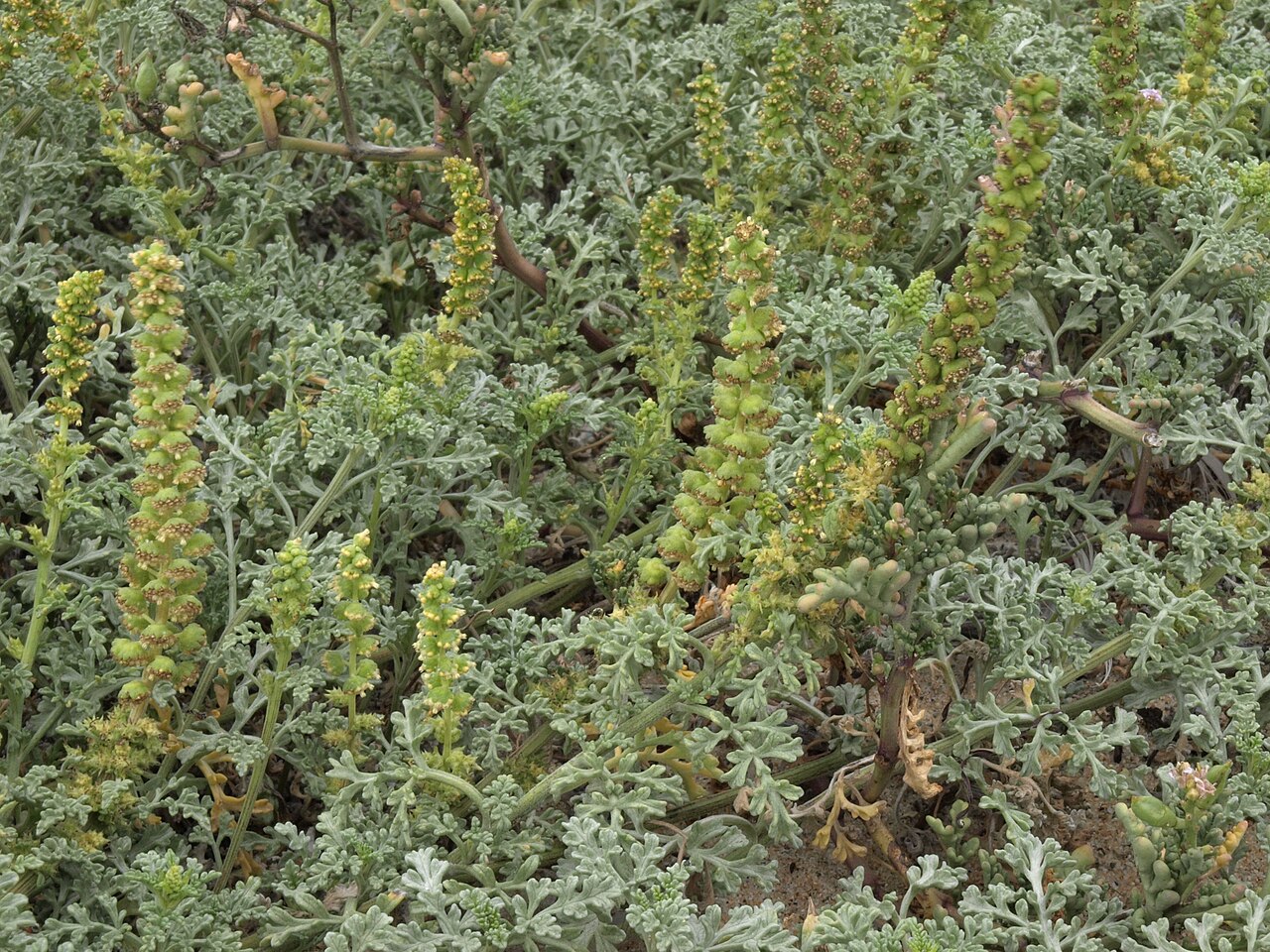
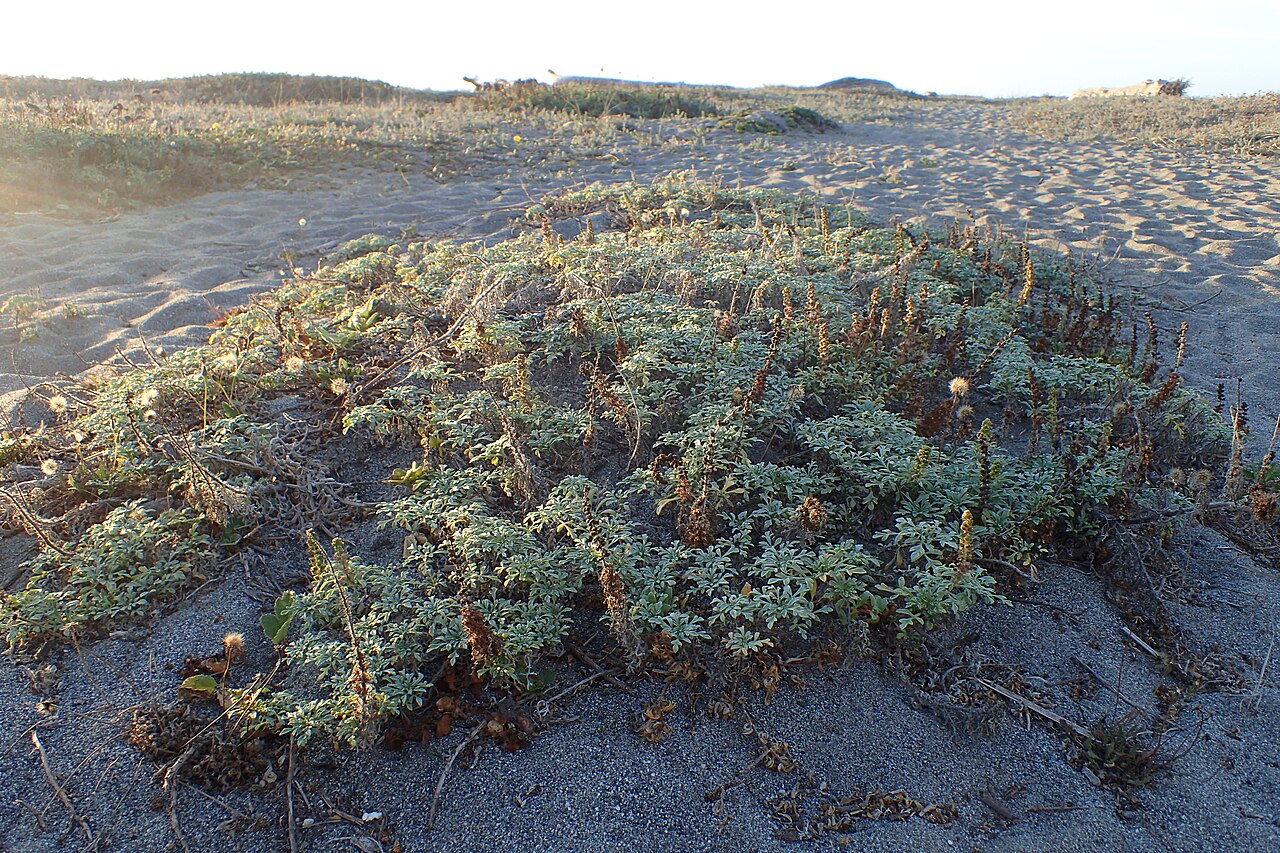
Ambrosia chamissonis, known as Silver Beachweed (USDA: silver bur ragweed; also beach bur or silver burr ragweed), is a sprawling, silver-leaved perennial of Pacific coast beaches and dunes. It belongs to the aster family (Asteraceae) and is a close relative of the ragweeds and bursages. Its long, trailing stems spread across loose sand, forming low silvery mats and mounds that can be more than 10 feet wide.
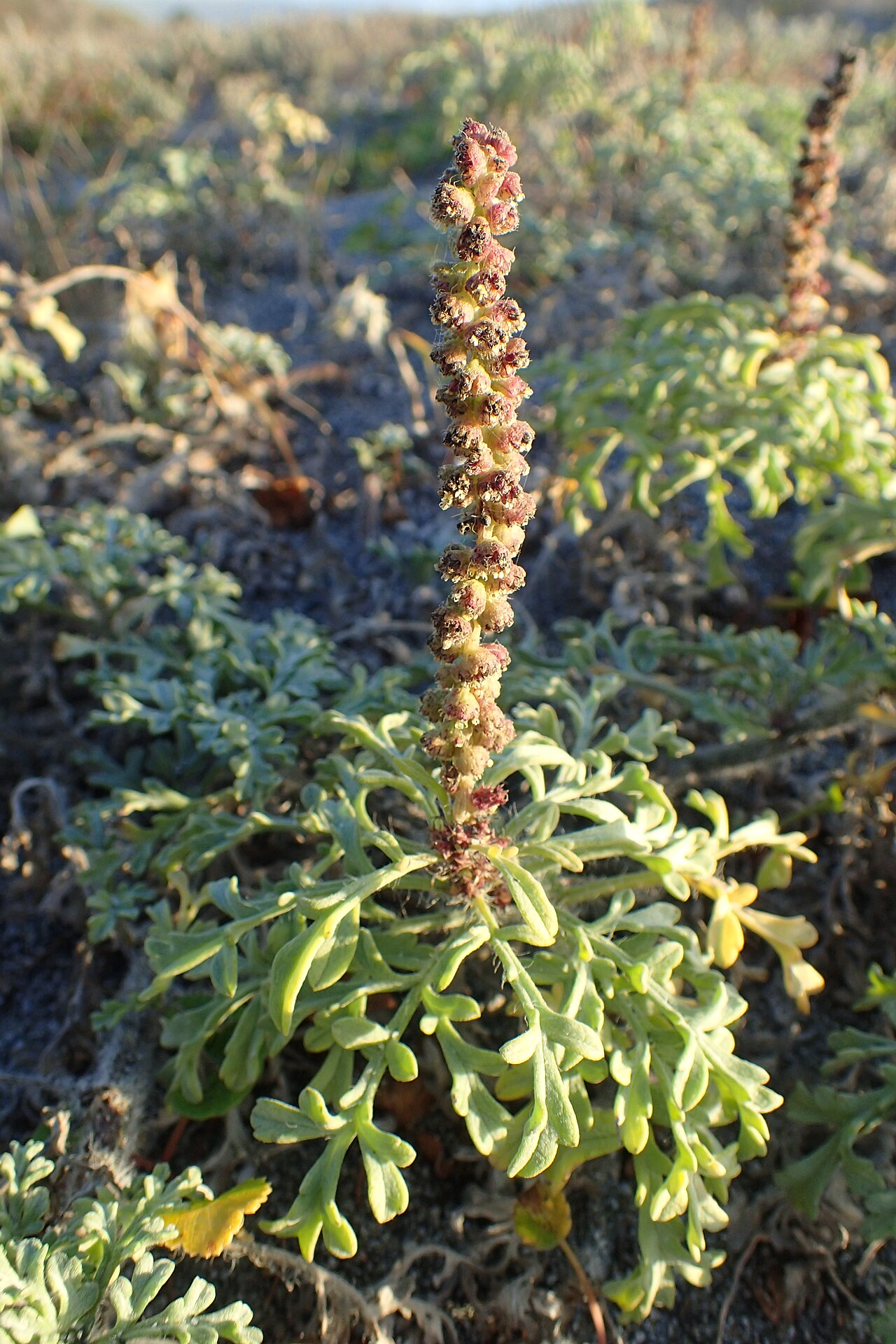
The soft, woolly leaves are silver-green and very variable in shape, from simply toothed to finely divided and lacy. From late spring into fall it sends up spikes of tiny, greenish to reddish-brown flower heads without petals. The female heads ripen into small brown burs covered with hooked spines. It is one of the most common native dune plants from Alaska and British Columbia to Baja California.
Allergy note: like other ragweeds, silver beachweed is wind-pollinated and sheds pollen that can trigger hay fever in sensitive people, though it grows mostly on beaches where few people live next to it. The spiny burs also stick to clothing, fur and bare feet. It is a valuable native sand-binder and is preferred over invasive iceplant and European beachgrass in dune restoration.
Identification
Look for a low, sprawling mat of silvery, woolly, often deeply lobed leaves on loose sand just above the high-tide line, with upright spikes of small, petal-less flower heads and, later, small brown burs with hooked spines.
Stems & Habit
Silver beachweed is a perennial herb with a deep taproot and many trailing to sprawling stems, usually lying on the sand and rising only about 4 to 20 inches (10 to 50 cm) at the tips. Individual stems can be 3 to 10 feet (1 to 3 m) or more long, and a single plant can cover a large area. The stems are ridged and roughly to softly hairy.
Leaves
The leaves are about 1 to 4 inches (2.5 to 10 cm) long, densely covered with silky, silvery hairs that reflect sun and reduce water loss. Their shape is remarkably variable: some plants have broad, coarsely toothed, triangular to oval leaves, others have leaves cut two or three times into narrow lobes, giving a lacy look. Both forms can grow on the same beach.
Flowers
The plant is monoecious, with separate male and female flower heads on the same plant. Many small, cup-shaped male heads containing pale florets crowd the upright spikes, and they shed yellow pollen into the wind. The female heads sit in clusters below them, each containing a single tiny flower without petals. Flowering runs from about April to November, peaking in summer.
Fruit
Each female head develops into a hard, brown, spindle-shaped bur about 1/4 to 1/2 inch (6 to 12 mm) long, armed with flattened, often hooked spines. The burs catch in fur and clothing or wash along the shore, carrying the seed to new beaches.
Look-alikes
Few beach plants share its combination of silvery leaves and burs. Beach sagewort (Artemisia pycnocephala) has finely divided silvery leaves but a strong sage scent and no burs. Yellow Sand Verbena and Beach Sand Verbena trail across the same sand but have sticky, rounded leaves and showy flower clusters. Inland bursages such as White Bursage are desert shrubs, not beach plants.
Safety & Conservation
Wind-borne ragweed pollen is a well-known cause of hay fever, and people with ragweed allergy may react to this species too. The spiny burs are a nuisance on bare feet and pets. Silver beachweed is common and secure (G5), but many native dune plants have declined where dunes are covered by iceplant or European beachgrass, and silver beachweed is widely used in dune restoration.
Quick Facts
| Scientific Name | Ambrosia chamissonis |
| Family | Asteraceae (aster family) |
| Plant Type | Sprawling herbaceous perennial (sometimes woody at base) |
| Mature Height | 4–20 in |
| Mature Spread | 3–10 ft or more |
| Growth Rate | Fast |
| Sun Exposure | Full sun |
| Water Needs | Low; drought tolerant once established |
| Soil Type | Loose beach and dune sand; salt tolerant |
| Soil pH | About 6.5–8.5 |
| Bloom Time | April–November (mostly summer) |
| Flower Color | Greenish-yellow to reddish-brown; no petals |
| Fall Color | None; silvery foliage most of the year |
| Fruit | Small brown bur with hooked spines |
| Deer Resistant | Yes; rarely browsed |
| USDA Hardiness Zones | 7–10 |
Native Range
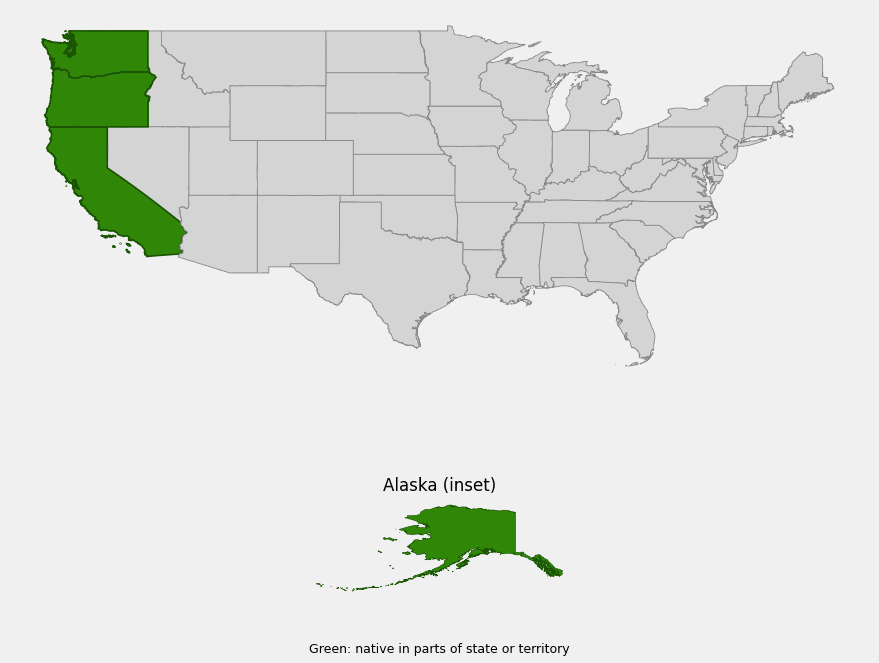
Silver beachweed is native along the Pacific coast of North America. USDA PLANTS lists it as native in Alaska, California, Oregon and Washington, and it also grows in British Columbia and south into Baja California, Mexico. It is also found on beaches in Chile, where some botanists regard it as introduced.
In California, Oregon and Washington it is one of the most familiar plants of the upper beach and foredunes, from the Channel Islands and Southern California beaches north through Monterey Bay, Point Reyes, Humboldt Bay, the Oregon Dunes and the Washington coast. It thins out northward and is much less common at its northern limit in British Columbia and Alaska.
It grows strictly in coastal habitats: open sand above the high-tide line, foredunes, sand spits and the edges of coastal salt marshes and lagoons, usually within sight of the ocean. It does not grow inland, so it is absent from the interior of Oregon and Washington east of the Cascades.
📋 Regional plant lists featuring Silver Beachweed: Alaska · Western Oregon & Western Washington · California & Nevada
Growing & Care Guide
Silver beachweed is a tough, low-maintenance ground cover for coastal sand gardens and dune restoration. It is mainly useful near the coast, where it thrives in sand, salt spray and wind that few other plants tolerate.
Light
Full sun. It becomes sparse and leggy in shade.
Soil & Water
Plant in loose sand or very sandy, fast-draining soil. It tolerates salt spray, wind and sand burial. Water young plants until established; afterward, natural rain and fog are usually enough near the coast. Rich soil and heavy watering make it rank and short-lived.
Planting Tips
Use it to bind loose sand on the seaward side of coastal gardens and on restored dunes, with sand verbenas, beach strawberry and native dunegrass. Give it room to sprawl, and keep it away from paths and play areas because of the spiny burs. People with ragweed allergy may prefer not to plant it beside windows or patios.
Pruning & Maintenance
Trim back overlong stems as needed in late winter. Rake up burs near paths. It needs no fertilizer.
Propagation
Grow from seed (burs) sown in fall or winter in sand, or root stem cuttings in a sandy mix. Trailing stems sometimes root where they touch moist sand, and these can be dug and moved.
Landscape Uses
- Dune restoration: binds loose sand and replaces invasive iceplant
- Coastal ground cover: silvery, salt- and wind-tolerant mat
- Beach and seaside gardens: for pure sand where little else grows
- Wildlife habitat: shelter for shorebirds and dune insects
- Erosion control: stabilizes foredunes and sand spits
Wildlife & Ecological Value
Silver beachweed is a structural plant of the foredunes, creating small hummocks and shelter on otherwise bare sand.
For Pollinators
It is wind-pollinated and offers no nectar, but bees may collect its pollen, and many small dune insects live among its leaves and stems.
For Birds
Western snowy plovers and killdeer sometimes nest in the open sand beside silver beachweed, where the low plants give some shelter and camouflage. Seed-eating birds take the seeds from the burs.
For Mammals
Small mammals such as deer mice shelter under the mats and eat some seeds. The burs hitch rides on fur.
Ecosystem Role
By trapping windblown sand, it builds low hummocks and helps form and stabilize foredunes. It provides food and shelter for many dune insects and is an important part of the native dune plant community that restoration projects try to bring back.
Cultural & Historical Uses
The genus name Ambrosia comes from the Greek word for the food of the gods, a curious name for the ragweeds. The species name honors Adelbert von Chamisso, the German poet and naturalist who sailed on the Russian Rurik expedition (1815–1818) and collected plants on the California coast at San Francisco in 1816. It was long placed in a separate genus as Franseria chamissonis.
Its leaf shape varies so much that early botanists described several different species from what is now treated as one.
In dune restoration across California and Oregon, crews remove invasive iceplant and European beachgrass and replant with silver beachweed, sand verbenas and native dunegrass. Related species on this site include White Bursage, Triangle-leaf Bursage and Cheesebush.
Frequently Asked Questions
Is silver beachweed a ragweed?
Yes. It is in the ragweed genus Ambrosia, and USDA calls it silver bur ragweed. Like other ragweeds, it is wind-pollinated, and its pollen can cause hay fever in sensitive people.
Where does silver beachweed grow?
On beaches and coastal dunes of the Pacific coast, from Alaska and British Columbia south through Washington, Oregon and California into Baja California. It does not grow inland.
Why are there spiny burs on the beach?
Those are the fruits of silver beachweed. Each female flower becomes a small bur with hooked spines that catches on fur, feathers, clothing and feet.
Is it good for dune restoration?
Yes. It is one of the main native plants used to stabilize sand after removing invasive iceplant and European beachgrass.
Can I grow it in my garden?
Only in very sandy, sunny, coastal gardens. It is easy from seed or cuttings there, but its burs and pollen make it best for areas away from paths and patios.

Looking for a nursery that carries Silver Beachweed?
Browse our native plant nursery directory: Alaska · California · Oregon · Washington