
Alkali Heath (Frankenia salina)
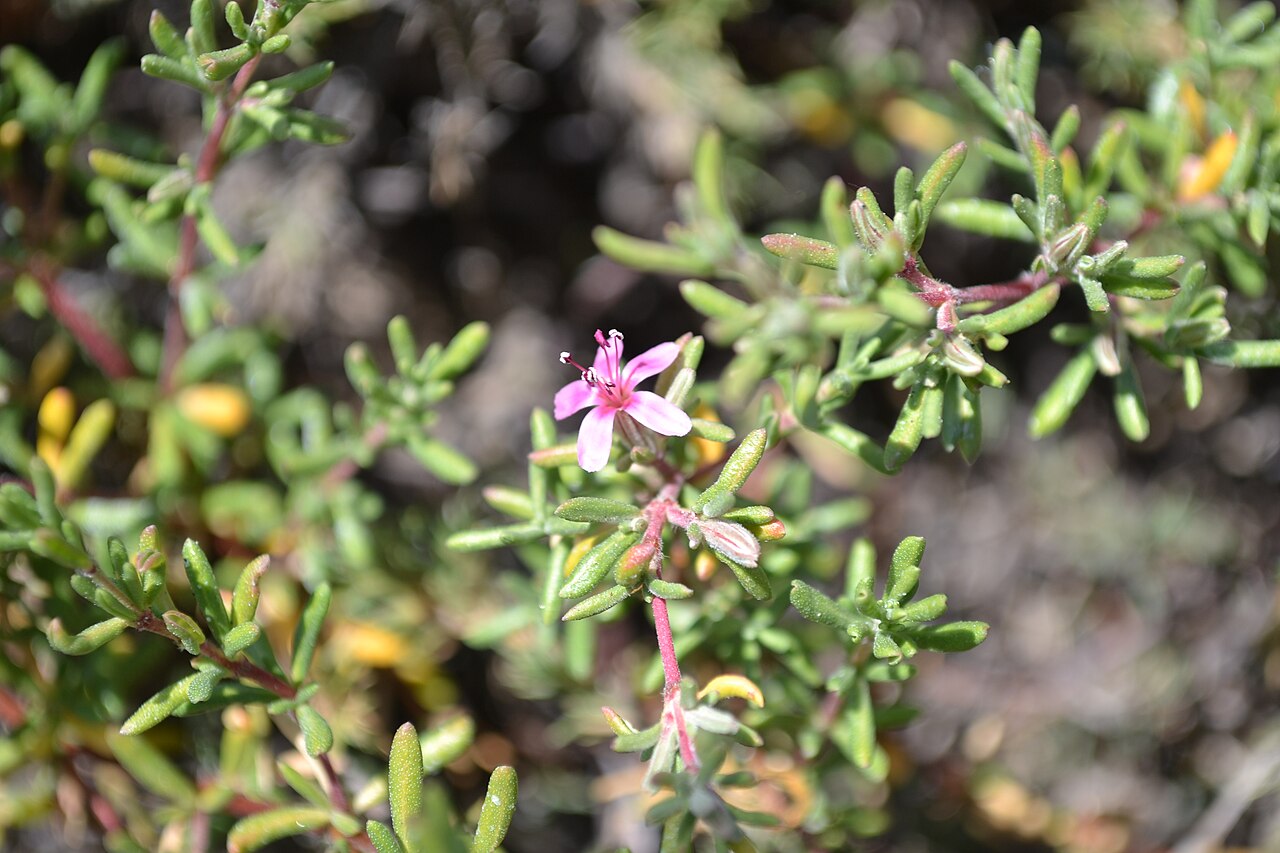
Frankenia salina (syn. Frankenia grandifolia), known as Alkali Heath (USDA: alkali seaheath), is a low, salt-tolerant perennial of California’s salt marshes, coastal flats and inland alkali sinks. It forms spreading mats of wiry stems clothed in tiny, gray-green leaves with rolled edges, and from late spring into fall it is dotted with small, pink, five-petaled flowers.
It is a woody-based perennial, or subshrub, usually 4 to 16 inches tall, that spreads by underground rhizomes into broad patches. It is one of the most salt-tolerant plants in California: it grows in the upper parts of tidal salt marshes and on alkaline soils inland, and its leaves often carry a whitish crust of salt that the plant excretes through special glands.
Alkali heath is increasingly used in California gardens as a tough, low-water groundcover and lawn alternative, especially near the coast and on salty or alkaline soils where few other plants thrive. It is also a valuable plant for salt marsh and wetland-edge restoration.
Identification
Look for a low, matted, gray-green plant with tiny, crowded, rolled leaves and small pink flowers with five fringed petals, in the upper salt marsh, on coastal and inland alkali flats, and along the margins of brackish wetlands.
Stems & Habit
Alkali heath grows from creeping rhizomes and a woody base. Its many wiry, branching stems are 4 to 16 inches (10 to 40 cm) long and may be upright or sprawling, forming dense mats or low mounds. The stems are often reddish and finely hairy.
Leaves
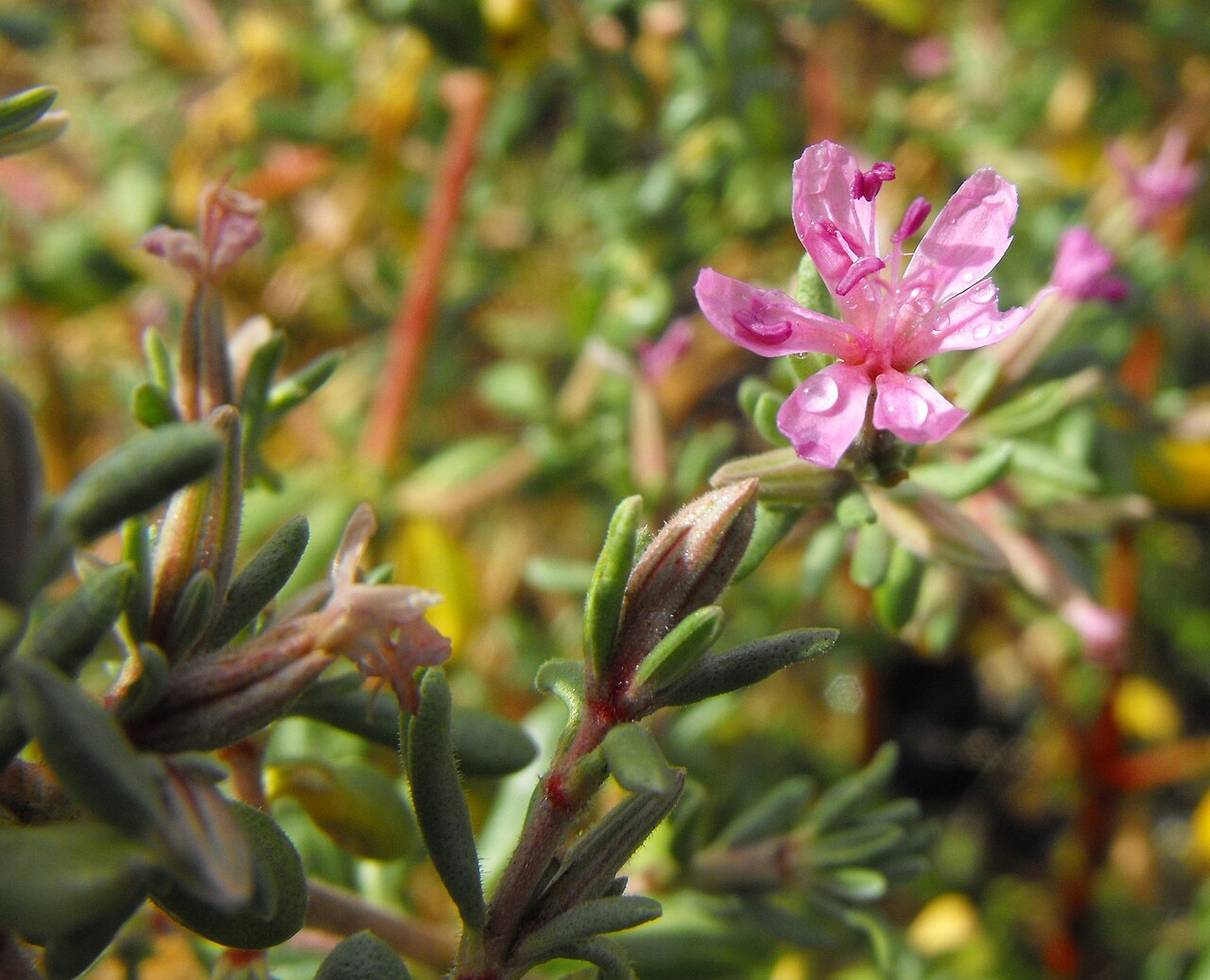
The leaves are small, about 1/4 to 3/4 inch (5 to 20 mm) long, narrowly oblong, thick and gray-green to dark green. Their edges are rolled under (revolute), making them look needle-like. They grow in opposite pairs or small clusters along the stems and are often dusted with white salt crystals.
Flowers
The flowers are about 1/3 to 1/2 inch across, with five pink to rose-purple (rarely white) petals that are narrow at the base and finely toothed at the tip. They sit singly or in small clusters in the leaf axils and at the stem tips, each in a tube-like, ribbed calyx. Bloom runs mainly from June to October, sometimes starting in spring.
Fruit & Seeds
The fruit is a small capsule enclosed in the persistent calyx, containing several tiny seeds.
Look-alikes
Its small rolled leaves give it a heath-like look, but it is unrelated to true heaths (Ericaceae). In the salt marsh, Pickleweed (Salicornia/Sarcocornia) has jointed, succulent, leafless stems, and saltgrass (Distichlis spicata) is a grass with stiff, two-ranked leaves. The Mediterranean Frankenia thymifolia, sometimes planted as a groundcover, is a non-native relative with smaller, tighter leaves.
Quick Facts
| Scientific Name | Frankenia salina (syn. F. grandifolia) |
| Family | Frankeniaceae (frankenia family) |
| Plant Type | Low, mat-forming perennial subshrub |
| Mature Height | 4–16 in |
| Mature Spread | 2–4 ft or more; spreads by rhizomes |
| Growth Rate | Moderate |
| Sun Exposure | Full sun |
| Water Needs | Low to moderate; tolerates both dry and seasonally wet, salty soils |
| Soil Type | Sandy, clay or silty soils; tolerates salty and alkaline ground |
| Soil pH | About 7.0–9.0 (alkaline) |
| Bloom Time | June–October |
| Flower Color | Pink to rose-purple, rarely white |
| Fall Color | None; evergreen in mild climates |
| Fruit | Small capsule within the calyx |
| Deer Resistant | Yes |
| USDA Hardiness Zones | 8–11 |
Native Range
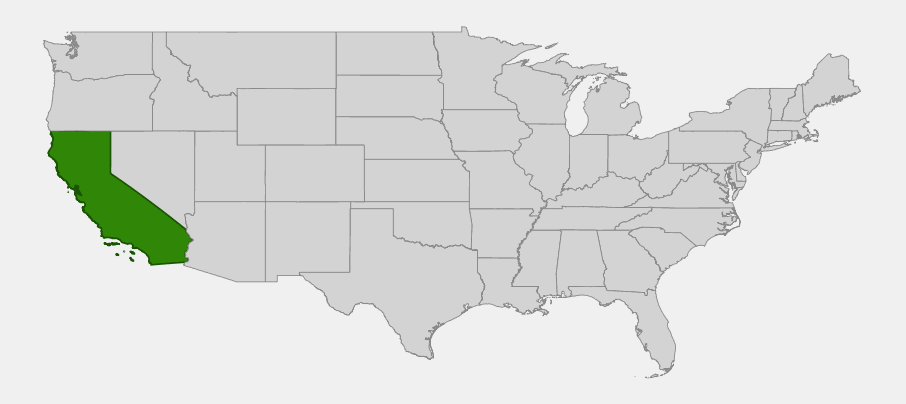
Alkali heath is native to the Pacific coast of the Americas. In the United States, USDA PLANTS lists it as native only in California; plants in Hawaii are introduced. It also grows in Baja California and on the coast of Chile in South America.
In California it grows along nearly the whole coast, from the North Coast and San Francisco Bay to San Diego County, and on several Channel Islands. Inland, it occurs on alkaline and saline soils in the Central Valley, the edges of interior valleys and, more locally, in alkali sinks of the deserts.
Its habitats are the upper (high) salt marsh, coastal salt flats and dune swales, brackish marsh edges, alkali meadows, vernal pool margins and alkali sinks. It is often one of the dominant plants at the transition between salt marsh and upland.
📋 Regional plant lists featuring Alkali Heath: California & Nevada
Growing & Care Guide
Alkali heath is a forgiving groundcover for sunny California gardens, especially on clay, salty, alkaline or poorly drained soils that defeat many other plants. It can serve as a low-water lawn alternative in areas with light foot traffic.
Light
Full sun. It becomes sparse and leggy in shade.
Soil & Water
It grows in sand, clay and silt and tolerates salt, alkali and periodic flooding. Water regularly the first season to establish. After that, it survives on little summer water near the coast, but it stays greener and denser with occasional deep watering every two to four weeks in summer, especially inland. It is not fussy about drainage.
Planting Tips
Plant plugs or small pots 12 to 18 inches apart in fall or winter for a quick-covering mat. It makes a good groundcover for parking strips, slopes, bioswales and seaside gardens, and it can be used between stepping stones.
Pruning & Maintenance
For a tidy lawn-like look, mow or shear it once or twice a year at 3 to 4 inches. Otherwise little care is needed. It can spread beyond its intended area by rhizomes, so give it room or edge it.
Propagation
Propagate by division of rooted rhizome sections or by stem cuttings, which root easily. It can also be grown from seed. Buy nursery-propagated plants; do not dig plants from salt marshes, which are protected habitats.
Landscape Uses
- Lawn alternative: low-water groundcover for light foot traffic
- Salt marsh restoration: native high-marsh and transition-zone plant
- Seaside gardens: tolerates salt spray, wind and salty soil
- Bioswales and rain gardens: handles periodic flooding and drought
- Alkaline and clay soils: grows where many plants fail
Wildlife & Ecological Value
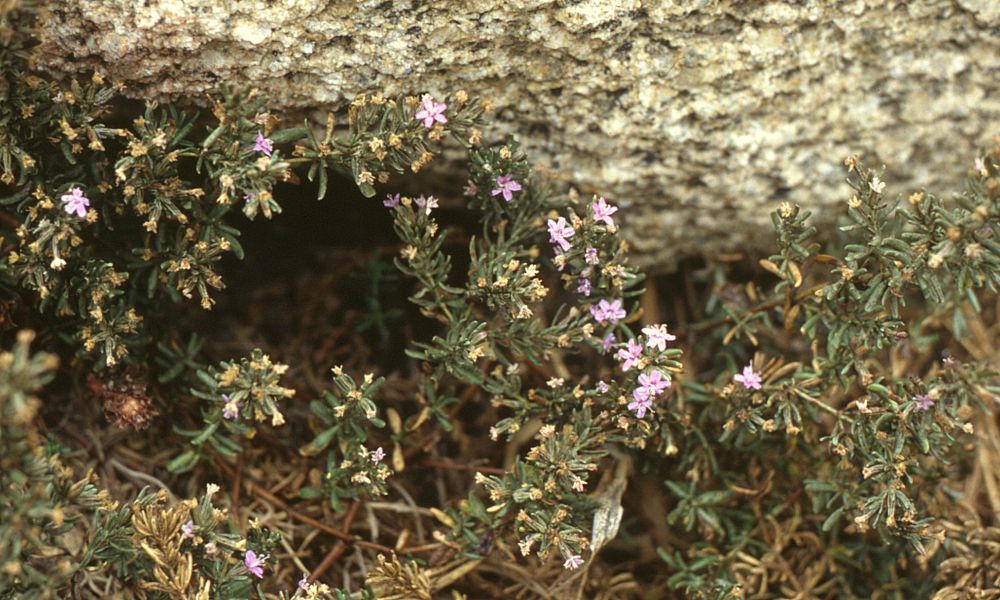
Alkali heath is a common and important plant at the upper edge of California’s salt marshes, a habitat that has been greatly reduced by development.
For Pollinators
Its long bloom season provides nectar for small native bees, wasps, flies and small butterflies through summer and fall, when few marsh plants are flowering.
For Birds
Its low mats provide cover and foraging ground for marsh and shorebirds, such as savannah sparrows, along the transition between salt marsh and upland. Some birds eat the small seeds.
For Mammals
The dense mats offer cover for small mammals, including mice and voles that live in the upper salt marsh.
Ecosystem Role
As a salt-tolerant perennial that spreads by rhizomes, alkali heath stabilizes soils on marsh edges, alkali flats and levees, and it is often planted in restoration projects at the marsh-upland transition, where it may help marshes adapt to sea-level rise.
Cultural & Historical Uses
The genus Frankenia is named for Johan Franck (Johannes Frankenius, 1590–1661), a Swedish physician and botanist. The species name salina means “of salty places.” The common name heath refers to its small, heath-like leaves, though it is not related to true heaths.
Like several other California salt-marsh plants, alkali heath excretes excess salt through glands on its leaves, and the leaves can taste salty. This adaptation lets it grow on soils too salty for most plants.
In recent decades it has become popular in California’s water-wise landscaping as a native alternative to turf. On this site, related salt-marsh species include Pickleweed (Sea Asparagus) and Coastal Gumplant.
Frequently Asked Questions
Can alkali heath be used as a lawn?
Yes, as a low-water lawn alternative for light foot traffic. Mow or shear it once or twice a year to keep it low and dense.
Does alkali heath tolerate salty soil?
Yes. It is one of California’s most salt-tolerant plants and grows naturally in the upper salt marsh and on alkali flats, excreting excess salt through its leaves.
How much water does alkali heath need?
After the first year, little. It survives on rainfall near the coast but looks best with a deep watering every few weeks in summer, especially inland.
Is alkali heath invasive?
It is native to California, but it spreads by rhizomes and can fill an area over time. Give it room or edge it. In Hawaii it is not native.
When does alkali heath bloom?
Mainly from June to October, with small pink flowers scattered over the mat.

Looking for a nursery that carries Alkali Heath?
Browse our native plant nursery directory: California