
Seacliff Wild Buckwheat (Eriogonum parvifolium)
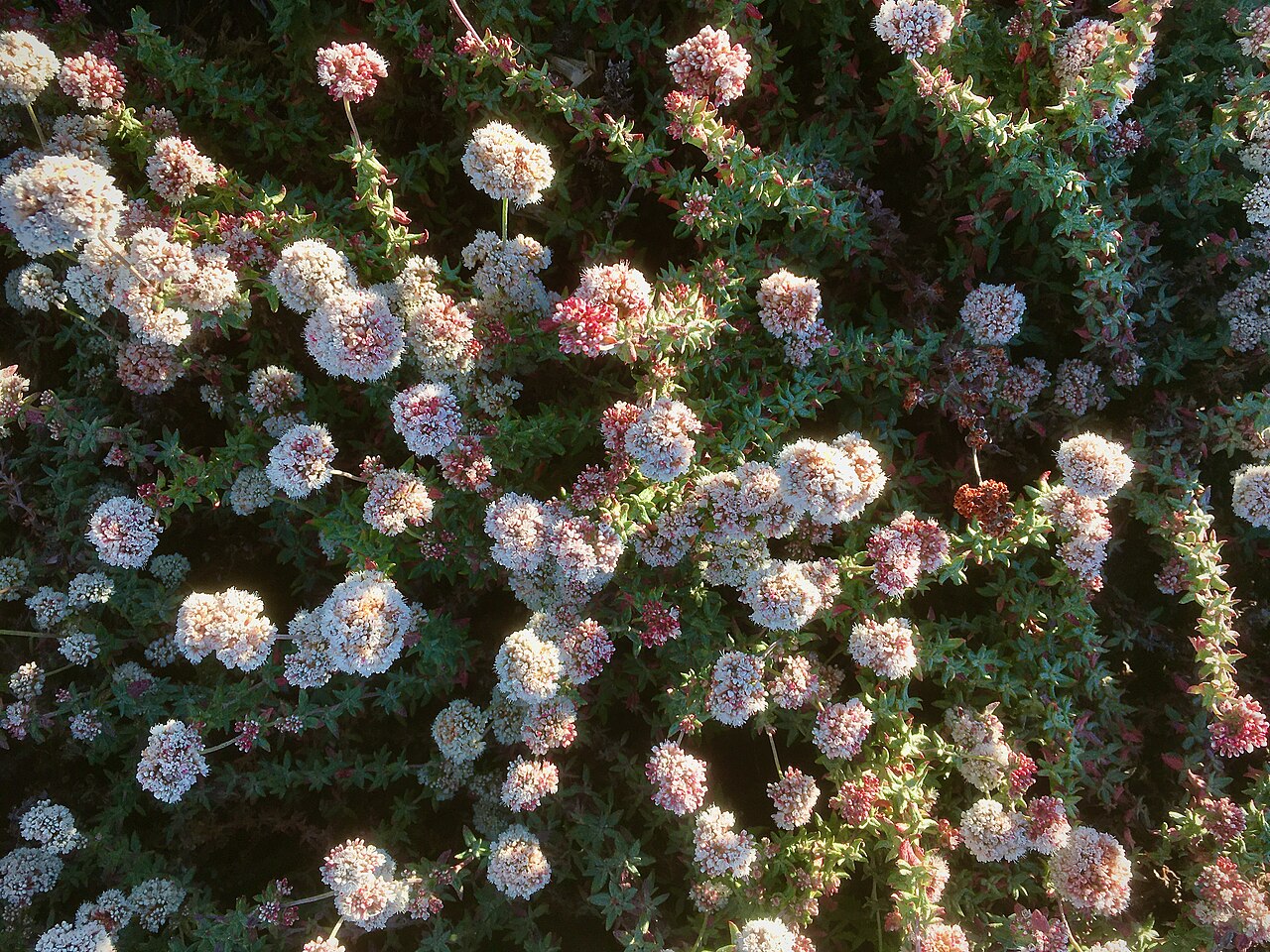
Eriogonum parvifolium, known as Seacliff Wild Buckwheat (USDA: seacliff buckwheat), and also called dune buckwheat, coast buckwheat or cliff buckwheat, is a low, evergreen shrub of the buckwheat family (Polygonaceae). It grows on coastal bluffs and sand dunes along the central and southern California coast. Plants form loose, sprawling mounds 1 to 3 feet tall with small, thick, dark green leaves that are white-woolly underneath.
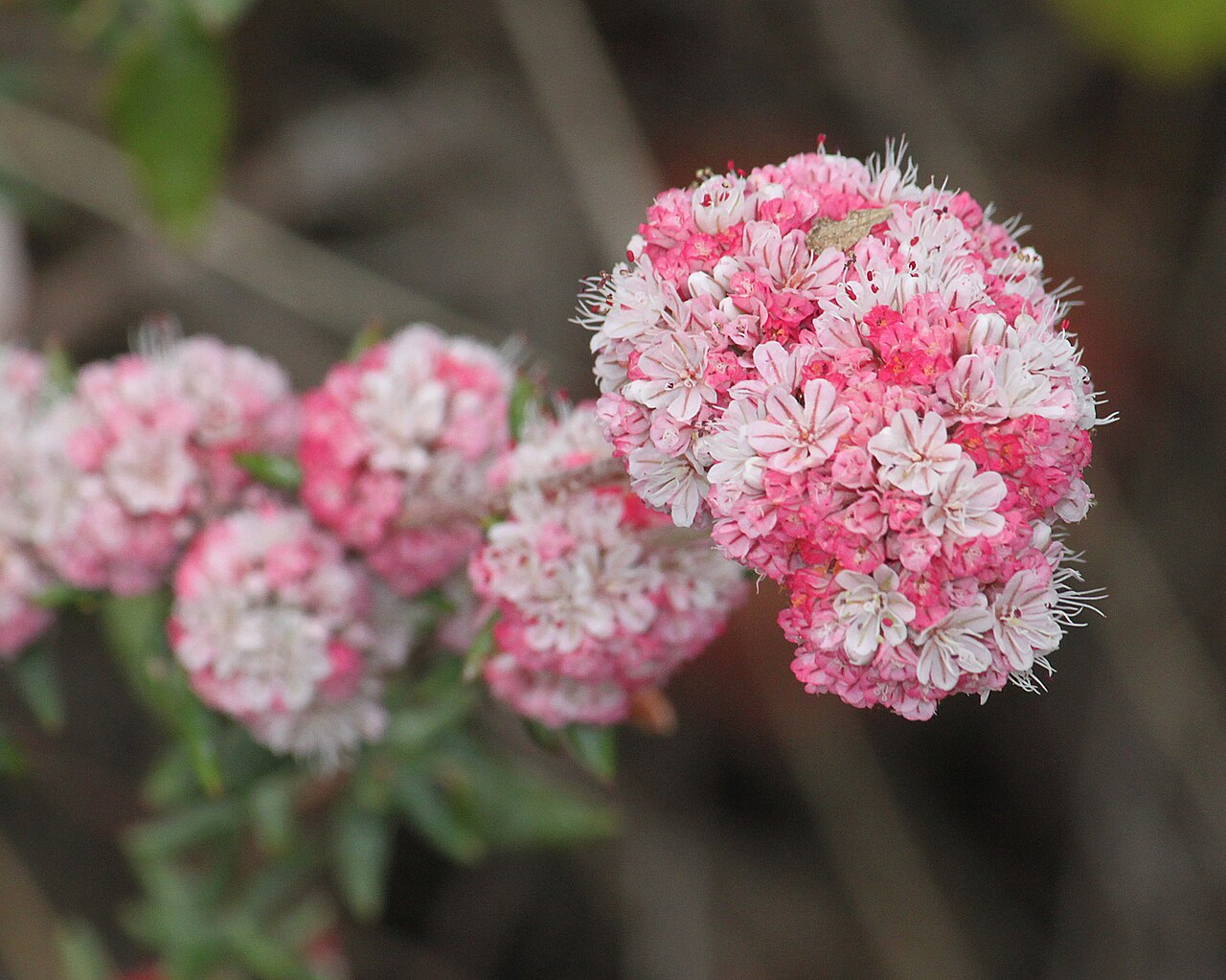
From late spring into fall it carries round clusters of tiny flowers on short stalks above the foliage. They open white or cream, often blushed with pink, and fade to rose and rusty brown as the seeds ripen, so a plant shows several colors at once. It blooms for months at a time when few other coastal plants are flowering, and its flowers are busy with bees, butterflies and other insects.
Seacliff buckwheat is best known as the host plant of two federally endangered butterflies: the El Segundo blue, which lives only in a few dune remnants around Los Angeles and depends on this one plant for its whole life cycle, and Smith’s blue of the Monterey County coast. Planting and protecting seacliff buckwheat has been central to their recovery. In the garden it is a tough, drought-tolerant, salt-tolerant shrub for coastal slopes, rock gardens and habitat plantings.
Identification
Seacliff buckwheat is easy to recognize on the coast: a low, spreading shrub with tiny, thick, dark green leaves and round heads of white-to-pink flowers held just above the foliage.
Growth Form
A low, evergreen shrub usually 1 to 3 feet tall and about as wide, with many slender, branching stems. Plants on windy bluffs and dunes are often flattened and sprawling, sometimes trailing down cliff faces; in sheltered spots they form rounded mounds. Older stems become woody and gray-brown.
Leaves
The leaves are small (about 1/4 to 1-1/4 inches long), thick and somewhat fleshy, and crowded along the stems. They are lance-shaped to rounded or nearly triangular, and the edges are often rolled under. The upper surface is smooth, dark green and sometimes tinged red; the underside is covered with white wool. The species name parvifolium means “small-leaved.”
Flowers
Tiny flowers, each only about 1/8 inch long, are packed into round to slightly flat-topped heads about 1/2 to 1 inch across, borne at the tips of leafy stems. They are white to cream, often pink-tinged, and occasionally pale yellow-green, aging to pink, rose and rust. Bloom typically runs from late spring through summer and into fall, and some plants flower almost year-round near the coast.
Fruit & Seeds
Each flower produces a single small, three-angled, smooth seed (achene) about 1/8 inch long, held in the dried flower parts. The rusty seed heads stay on the plant into winter.
Look-alikes
Coast Buckwheat (Eriogonum latifolium), common on bluffs farther north, has much larger, broad, woolly leaves in basal clusters and taller, leafless flower stalks. California buckwheat (E. fasciculatum) has narrow, needle-like leaves in bundles and flower clusters on long, bare stalks. Ashyleaf buckwheat (E. cinereum) of the southern coast has gray, felted leaves and pink flowers.
Butterfly Connection
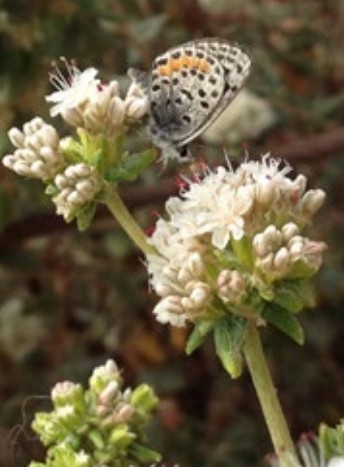
Look closely at the flower heads in summer for tiny blue butterflies. Where they live, the El Segundo blue and Smith’s blue spend almost their entire lives on seacliff buckwheat. Other small butterflies, including other blues and hairstreaks, also feed on its flowers.
Quick Facts
| Scientific Name | Eriogonum parvifolium |
| Family | Polygonaceae (buckwheat family) |
| Plant Type | Low evergreen shrub |
| Mature Height | 1–3 ft |
| Mature Spread | 2–4 ft |
| Growth Rate | Moderate to fast |
| Sun Exposure | Full sun to part shade |
| Water Needs | Low; very drought tolerant once established |
| Soil Type | Sandy, rocky, well-drained soils; tolerates clay in cultivation |
| Soil pH | About 5.0–8.0 |
| Bloom Time | Late spring to fall, peaking in summer |
| Flower Color | White to cream and pink, aging to rose and rust |
| Fall Color | Rusty-brown dried flower heads; evergreen foliage |
| Fruit | Small three-angled achene |
| Deer Resistant | Yes; seldom browsed |
| USDA Hardiness Zones | 9–11 |
Native Range
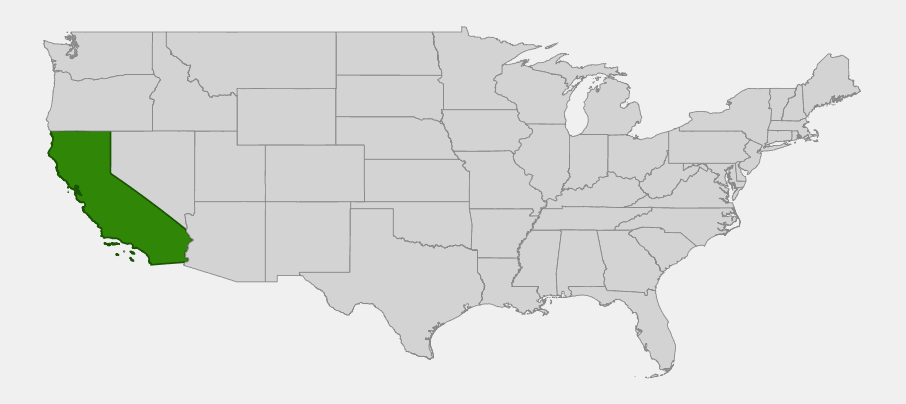
Seacliff wild buckwheat is native to coastal central and southern California and is found nowhere else in the United States. USDA PLANTS lists it as native in the lower 48 states and records it only from California. It ranges from the Monterey Bay area and the Big Sur coast south through San Luis Obispo, Santa Barbara, Ventura, Los Angeles and Orange Counties to San Diego County, mostly within a few miles of the ocean.
Typical habitats are coastal bluffs and sea cliffs, coastal strand and back dunes, and coastal sage scrub on sandy or rocky soils, generally below about 2,300 feet (700 m). A few populations grow farther inland, such as in the sandy soils of the Santa Cruz Mountains. Many former dune populations, especially around Los Angeles, have been lost to development.
It grows in a mild maritime climate with summer fog and roughly 15 to 30 inches of rain a year, falling mostly in winter. It tolerates salt spray, wind and loose, shifting sand, and in cultivation it adapts well to clay and to gardens a little inland from the coast.
📋 Regional plant lists featuring Seacliff Wild Buckwheat: California & Nevada
Growing & Care Guide
Seacliff buckwheat is widely grown by California native plant nurseries and is one of the easiest buckwheats for coastal gardens. It is also a key plant for butterfly habitat restoration. Buy nursery-grown plants, and where restoration is the goal, choose stock grown from local seed.
Light
Plant it in full sun near the coast. Inland, it appreciates some afternoon shade, and it tolerates part shade, though it blooms less and grows more open.
Soil & Water
It does best in sandy or rocky, fast-draining soil but will grow in clay if not overwatered. Water regularly during the first year, then reduce to occasional deep watering in summer, every few weeks or less near the coast. Established plants survive on winter rain alone in most coastal gardens but look fresher with a little summer water. Avoid fertilizer and soggy soil.
Planting Tips
Plant in fall or winter so the roots establish with the rains. Space plants 2 to 4 feet apart for a groundcover or slope planting. Use it on banks, in rock gardens, along dry walls, and in coastal and butterfly gardens with sagebrush, coast goldenbush, sand verbena and dudleyas.
Pruning & Maintenance
Leave the rusty seed heads through fall for color and for wildlife, then lightly trim spent flower stalks in late fall or winter if you want a tidier look. Avoid cutting into old, leafless wood. Plants are fairly short-lived for shrubs, but replace themselves readily from seed in sandy soil.
Propagation
It grows readily from seed sown in fall or winter on the surface of a well-drained mix; little pretreatment is needed. Semi-hardwood cuttings also root. For habitat restoration, use local seed sources so plants are adapted to the site and to local butterfly populations.
Landscape Uses
- Butterfly and habitat gardens: host plant for blue butterflies and nectar source for many pollinators
- Coastal gardens: tolerates wind, salt spray and sandy soil
- Slopes and banks: a low, spreading shrub for erosion control
- Rock gardens and dry walls: compact mounds with long summer-to-fall bloom
- Dune and bluff restoration: a keystone plant for endangered butterfly recovery
Wildlife & Ecological Value
Like other buckwheats, seacliff buckwheat is one of the most valuable plants for insects in its range, flowering through summer and fall when most of the coastal scrub is dry.
For Pollinators
The flowers are visited by a wide range of native bees, wasps, flies, beetles and butterflies. It is a larval host plant for several butterflies, including the El Segundo blue (Euphilotes allyni) and Smith’s blue (Euphilotes enoptes smithi), both listed as endangered under the federal Endangered Species Act. The adults of these tiny blues emerge in summer to coincide with the plant’s bloom, lay eggs on the flower heads, and their caterpillars feed on the flowers and developing seeds before pupating in the sand and litter below.
For Birds
Sparrows, finches and other small birds eat the seeds, and the dense, low shrubs give cover to birds such as California towhees and wrentits in coastal scrub.
For Mammals
Deer rarely browse it. Small mammals such as woodrats and mice eat the seeds and shelter under the shrubs.
Ecosystem Role
It helps stabilize sand on dunes and loose soil on bluffs. Because so many insects depend on it, it supports food webs for birds, lizards and other insect-eaters. Restoring it is central to recovery efforts for endangered blue butterflies, including dune restoration at the former El Segundo dunes next to Los Angeles International Airport, one of the last strongholds of the El Segundo blue.
Cultural & Historical Uses
The El Segundo blue was once found throughout the extensive coastal dunes of southwestern Los Angeles County, where seacliff buckwheat was common. As the dunes were developed, both the plant and the butterfly disappeared from most of that area. Today the butterfly survives in a few remnants, including the dunes preserved at Los Angeles International Airport, and restoration projects there and along the Palos Verdes Peninsula have focused on planting seacliff buckwheat and removing invasive iceplant.
Smith’s blue, found along the Monterey County coast from Monterey Bay to Big Sur, also depends on seacliff buckwheat and coast buckwheat. Its protection has shaped how coastal dunes, road cuts and bluffs are managed in the area, and local agencies and volunteers have planted buckwheats to expand its habitat.
Wild buckwheats in the genus Eriogonum are not related to the grain buckwheat (Fagopyrum esculentum) beyond belonging to the same plant family. The genus includes some 250 species, most in western North America, and many of them are important host and nectar plants for native butterflies.
Frequently Asked Questions
Which endangered butterflies use seacliff buckwheat?
The El Segundo blue (Euphilotes allyni) of the Los Angeles coast uses it as its only host plant, and Smith’s blue (Euphilotes enoptes smithi) of the Monterey County coast uses it along with coast buckwheat. Both are federally endangered.
Will planting seacliff buckwheat attract endangered butterflies?
Only if you live near an existing population, since these butterflies fly short distances. Your plants will still feed many other bees and butterflies. For restoration near their habitat, work with local agencies and use locally sourced plants.
How much water does it need?
Very little once established. Water regularly the first year, then only occasionally in summer. Overwatering, especially in heavy soil, can cause root rot.
Is seacliff buckwheat related to the buckwheat used for flour?
Distantly. Both are in the buckwheat family (Polygonaceae), but wild buckwheats (Eriogonum) are a different genus native to North America.
How long does it live?
Plants are relatively short-lived for a shrub, often declining after several years, but they reseed readily in sandy soil, so a planting often maintains itself.

Looking for a nursery that carries Seacliff Wild Buckwheat?
Browse our native plant nursery directory: California