
Dot-Seed Plantain (Plantago erecta)
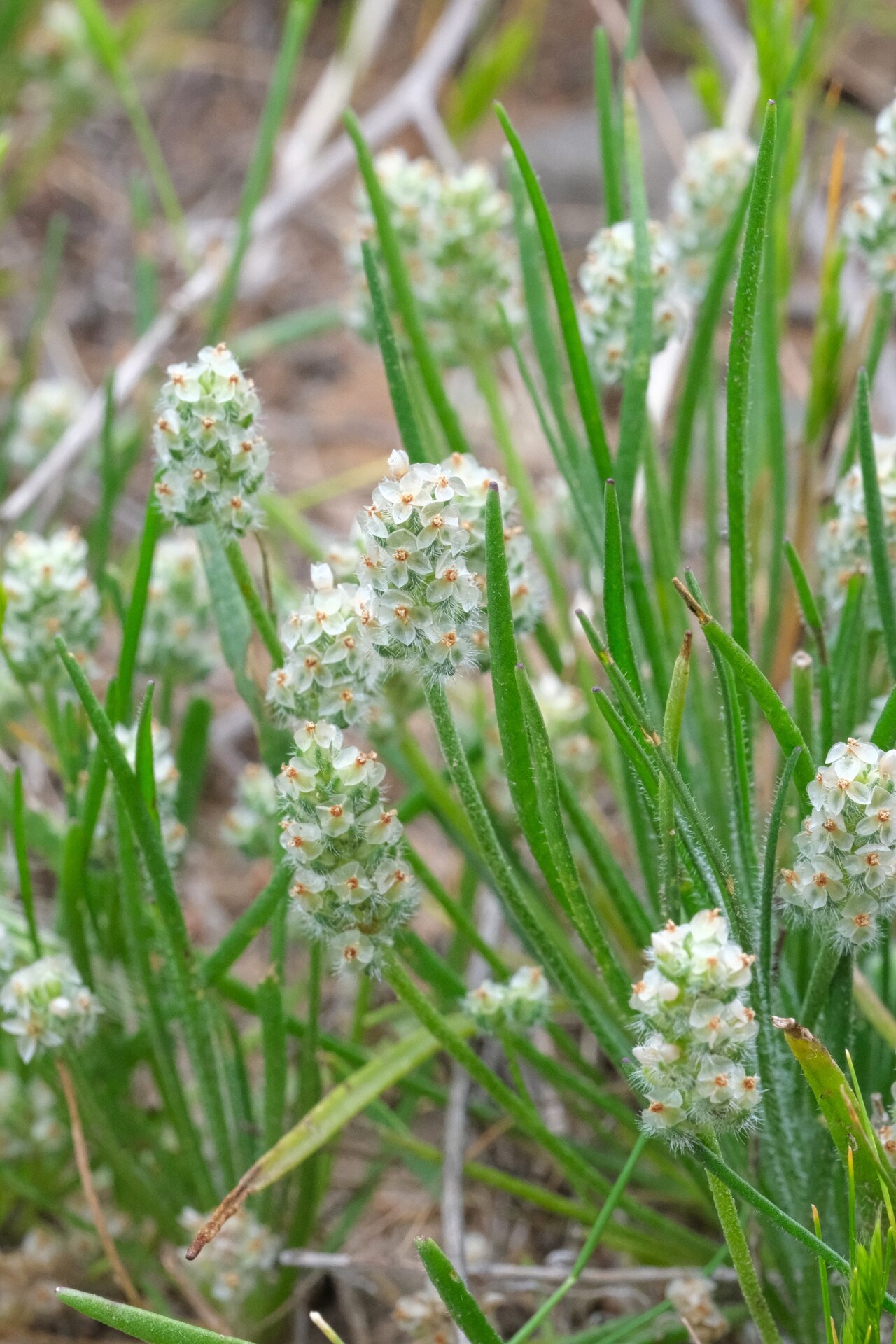
Plantago erecta, known as Dot-Seed Plantain (USDA: dotseed plantain), and also called California plantain, foothill plantain or dwarf plantain, is a small native annual of the plantain family (Plantaginaceae). It grows in grasslands, openings in scrub and woodland, and on serpentine soils across most of California, north into southwestern Oregon and south into Baja California.
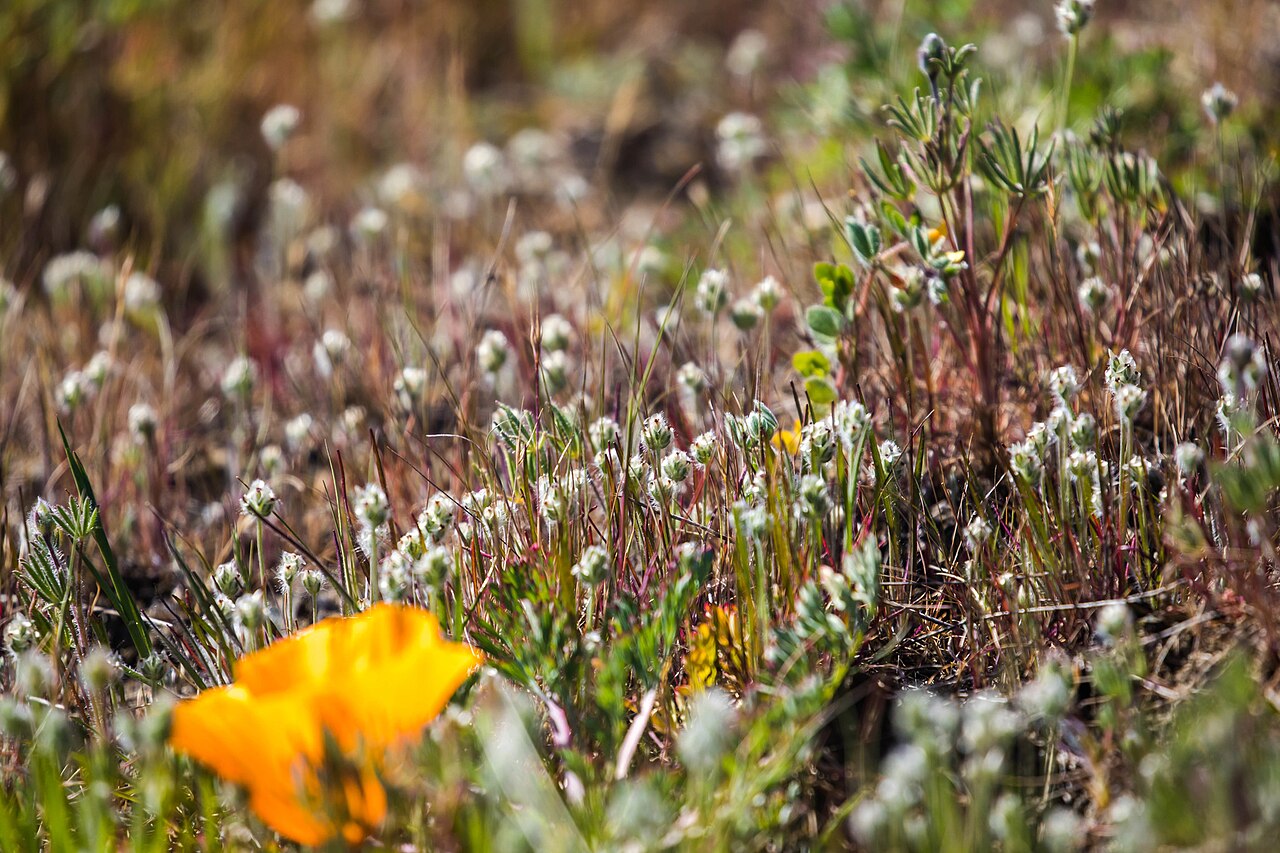
It is an easy plant to overlook. Each plant is only 2 to 6 inches tall, a tuft of narrow, grass-like, hairy leaves with a few short, woolly spikes of tiny, papery, translucent flowers in spring. Yet in good years it can carpet open ground by the millions, often alongside California poppies, goldfields and owl’s clover in the classic spring wildflower displays of California’s grasslands.
Dot-seed plantain has an outsized importance for wildlife. It is the main larval host plant of the Bay checkerspot butterfly, listed as threatened under the federal Endangered Species Act, and of the federally endangered Quino checkerspot of Southern California. Protecting and restoring the native grasslands where it grows, especially on serpentine soils, is central to the recovery of both butterflies. For gardeners it is an easy annual to sow in a native meadow or butterfly planting.
Identification
Dot-seed plantain looks like a tuft of grass until it blooms. Look for small, grayish-green tufts of very narrow leaves with short, woolly, cylindrical flower spikes on leafless stalks, in open spots in spring.
Growth Form
A small annual, usually 2 to 6 inches tall, growing from a slender taproot. Plants germinate with fall and winter rains, flower in spring and die by early summer, turning reddish-brown as they dry.
Leaves
All the leaves are in a basal tuft. They are very narrow, almost thread-like to linear, 1 to 4 inches long, and covered with soft, silky hairs that give the plant a grayish cast. Unlike most plantains, there are no broad leaf blades.
Flowers
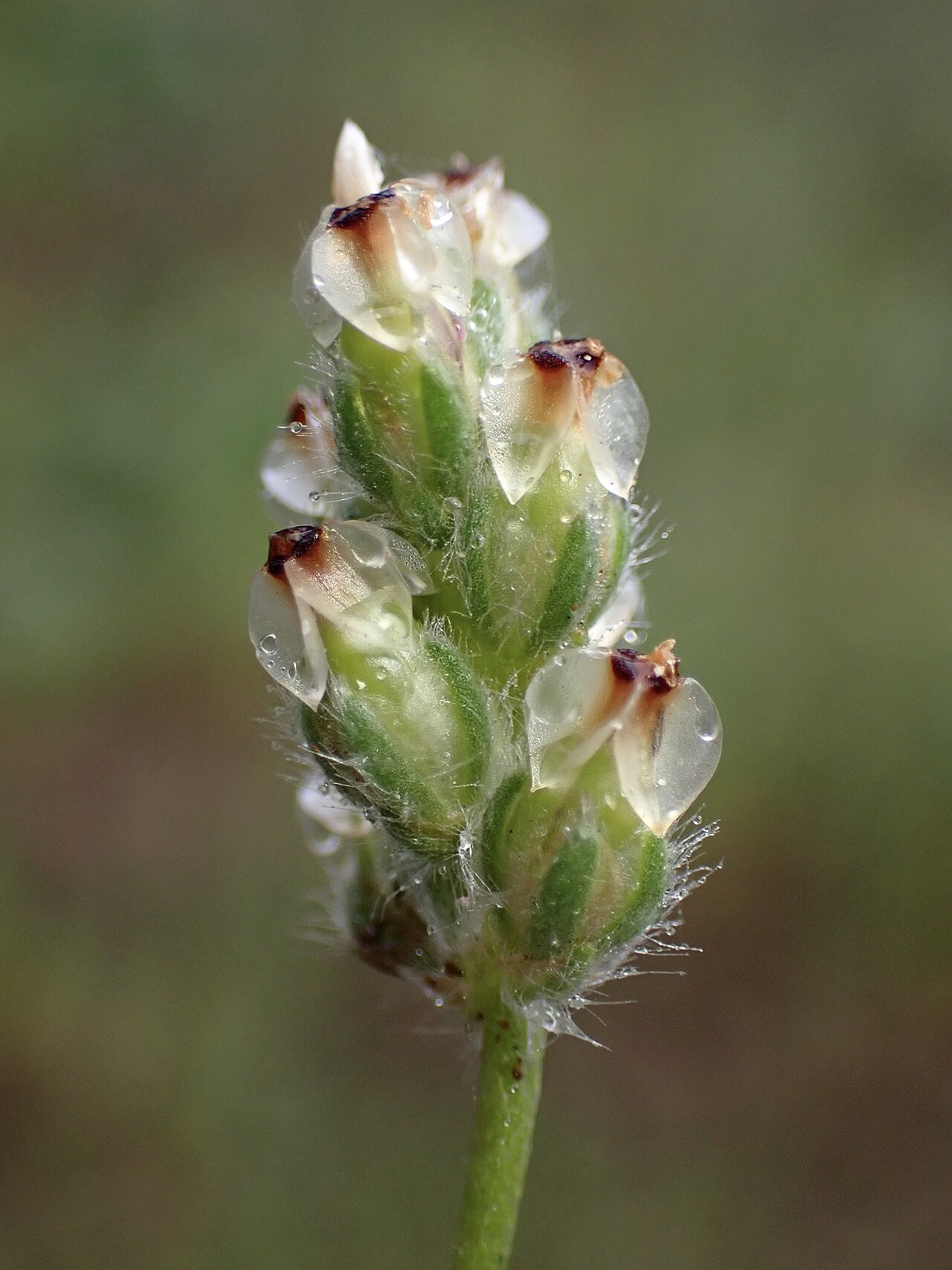
Several slender, leafless stalks rise from each tuft, each topped by a dense, egg-shaped to short cylindrical spike about 1/2 to 1-1/4 inches long. The spike is woolly with hairy bracts. The tiny flowers each have four translucent, papery, white to pale tan petal lobes, which spread open when fresh. Bloom is from about March to May, depending on rainfall and latitude.
Fruit & Seeds
Each flower forms a tiny capsule that splits around the middle, releasing two small, boat-shaped seeds. Like other plantain seeds, they become sticky and mucilaginous when wet, which helps them stick to soil and germinate.
Look-alikes
Woolly plantain (Plantago patagonica), more common in the interior West, is similar but usually has longer, denser, woollier spikes, and the two have sometimes been confused. Non-native plantains such as English plantain (P. lanceolata) are perennials with much broader, ribbed leaves and dark brown spikes on long stalks. Small annual grasses can look similar before flowering, but have flat leaf blades with sheaths and lack the woolly spikes.
Safety
Dot-seed plantain is not known to be toxic. Its seeds, like those of other plantains, produce a gel-like mucilage when wet.
Quick Facts
| Scientific Name | Plantago erecta |
| Family | Plantaginaceae (plantain family) |
| Plant Type | Small annual herb |
| Mature Height | 2–6 in |
| Mature Spread | 2–4 in |
| Growth Rate | Fast |
| Sun Exposure | Full sun |
| Water Needs | Low; winter and spring rain, dry in summer |
| Soil Type | Sandy, clay or serpentine; thin, open soils |
| Soil pH | About 6.0–8.0 |
| Bloom Time | March–May |
| Flower Color | Translucent white to pale tan, on woolly spikes |
| Fall Color | None; annual dries reddish-brown in early summer |
| Fruit | Small capsule with two boat-shaped, mucilaginous seeds |
| Deer Resistant | Unknown; grazed by livestock and small mammals |
| USDA Hardiness Zones | 7–10 (grows as a cool-season annual) |
Native Range
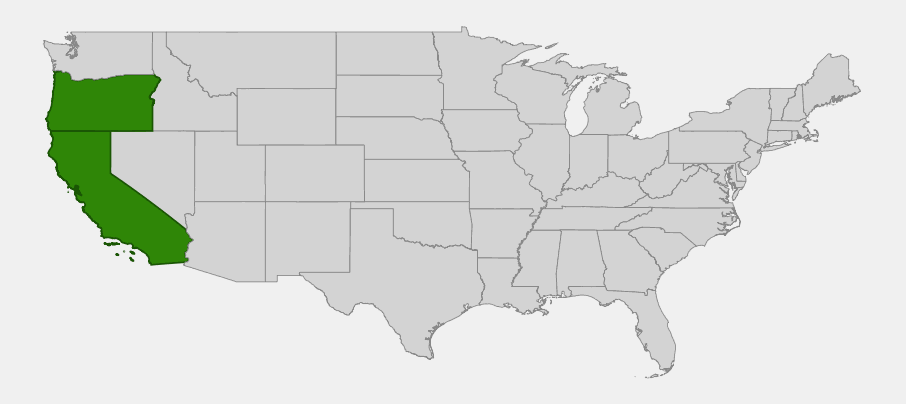
Dot-seed plantain is native to the California Floristic Province. USDA PLANTS lists it as native in the lower 48 states and records it from California and Oregon. It grows throughout most of California, from the coast to the Sierra Nevada foothills, but it is absent from the deserts and the northeastern corner of the state. In Oregon it reaches its northern limit in the southwest, in Curry, Coos and Jackson Counties, all west of the Cascades.
South of the border it grows in northern Baja California south to about El Rosario and the Sierra San Pedro Mártir, with a disjunct population farther south in the Sierra La Libertad.
It grows on grassy slopes and flats, coastal dunes and bluffs, openings between shrubs in coastal sage scrub and chaparral, and in open oak woodland, often on sandy, clay or serpentine soils. Serpentine grasslands, whose poor, rocky soils hold back non-native grasses, are among its most important habitats. Populations tend to be patchy, but each patch can contain huge numbers of plants.
📋 Regional plant lists featuring Dot-Seed Plantain: Western Oregon & Western Washington · California & Nevada
Growing & Care Guide
Dot-seed plantain is an easy native annual to grow from seed in sunny, open ground, and it is a good choice for butterfly gardens and native meadow plantings in California and southwestern Oregon. It is available as seed from California native seed suppliers.
Light
Plant in full sun. It is a plant of open ground and does poorly in shade or where taller plants crowd it.
Soil & Water
It grows in poor, thin, well-drained soils, including sandy, clay and rocky serpentine soils. Rich garden soil and fertilizer favor weeds and grasses that crowd it out. Natural winter and spring rainfall is usually enough; in a dry winter, water occasionally until it blooms. No summer water is needed after the plants dry.
Planting Tips
Sow seed in fall, just before or with the first rains, on bare, weed-free ground, and rake it in lightly or press it into the surface. It does best in open patches among low wildflowers such as goldfields, tidy tips, owl’s clover and California poppy, and between bunchgrasses such as purple needlegrass.
Pruning & Maintenance
No pruning is needed. Let the plants dry and drop seed in late spring before mowing or clearing. Keep non-native annual grasses in check, as they quickly shade out this tiny plant.
Propagation
Grow it from seed. Collect seed heads as they turn tan in late spring and store the seed dry until fall sowing. Once established, it usually reseeds on its own where there is open ground.
Landscape Uses
- Butterfly gardens: larval host for checkerspot butterflies
- Native wildflower meadows: fills gaps between spring annuals and bunchgrasses
- Serpentine and grassland restoration: key host plant for endangered butterfly habitat
- Rock gardens and thin soils: grows where richer soils would favor weeds
- Nature education: a tiny plant with a big role in butterfly conservation
Wildlife & Ecological Value
Dot-seed plantain is one of the most important larval host plants for checkerspot butterflies in California.
For Pollinators
Like most plantains, its flowers are largely wind-pollinated, and they are not a major nectar source. Its main value to insects is as food for caterpillars. It is the primary larval host of the Bay checkerspot (Euphydryas editha bayensis), a federally threatened butterfly of the serpentine grasslands around San Francisco Bay, and of the federally endangered Quino checkerspot (Euphydryas editha quino) of Riverside and San Diego Counties. Other populations of Edith’s checkerspot also use it.
For Birds
Sparrows, finches, juncos and other seed-eating birds eat the small seeds, and grassland birds forage for insects among the plants.
For Mammals
It is eaten by small mammals and grazed by livestock along with other grassland plants.
Ecosystem Role
The life of the Bay checkerspot is closely tied to this plant. The caterpillars hatch in spring and must feed and grow before the plantains dry up; in drought years many starve. Over the last few decades, nitrogen from vehicle exhaust has fertilized serpentine grasslands, allowing non-native grasses to invade and crowd out dot-seed plantain. Carefully managed grazing, which reduces those grasses, has helped maintain plantain-rich habitat for the butterfly.
Cultural & Historical Uses
The Bay checkerspot is one of the most intensively studied butterflies in the world. Long-term research by Stanford University biologists at Jasper Ridge and other Bay Area sites helped build modern understanding of population biology, climate effects and extinction risk, and much of that work focuses on how the butterfly’s timing matches the growth of dot-seed plantain. Populations at Jasper Ridge eventually disappeared, a well-known example of local extinction.
Conservation of the Bay checkerspot today centers on serpentine grasslands in Santa Clara County, such as Coyote Ridge, where land managers and conservation groups use grazing and restoration to maintain dot-seed plantain and the owl’s clovers that older caterpillars also eat. The Quino checkerspot in Southern California has similarly guided protection of grassland and open scrub habitat with its host plants.
Like other plantains, dot-seed plantain produces seeds that turn gelatinous when wet. The related desert Indianwheat (Plantago ovata) is the source of psyllium, used as a fiber supplement. Native peoples in California used the seeds of native plantains as food, but dot-seed plantain is far too small to be a practical food plant today.
Frequently Asked Questions
Why is dot-seed plantain important?
It is the main larval host plant of the federally threatened Bay checkerspot and the federally endangered Quino checkerspot butterflies, as well as other Edith’s checkerspot populations. Without it, these butterflies cannot complete their life cycle.
Is it related to the weedy plantains in lawns?
Yes, it is in the same genus as English plantain and broadleaf plantain, which are non-native weeds, but dot-seed plantain is a small native annual with narrow, grass-like leaves.
Can I grow it in my garden?
Yes. Sow seed in fall in a sunny spot with thin, open soil, and keep weeds and grasses down. It will bloom in spring and usually reseed.
Will planting it attract Bay checkerspots?
Only if you live very close to an existing population, since these butterflies rarely travel far. It will still support other insects and add to a native meadow.
When does it bloom?
From about March to May, depending on rainfall and location. Plants dry and die by early summer.

Looking for a nursery that carries Dot-Seed Plantain?
Browse our native plant nursery directory: California · Oregon