
Shortspur Seablush (Plectritis congesta)
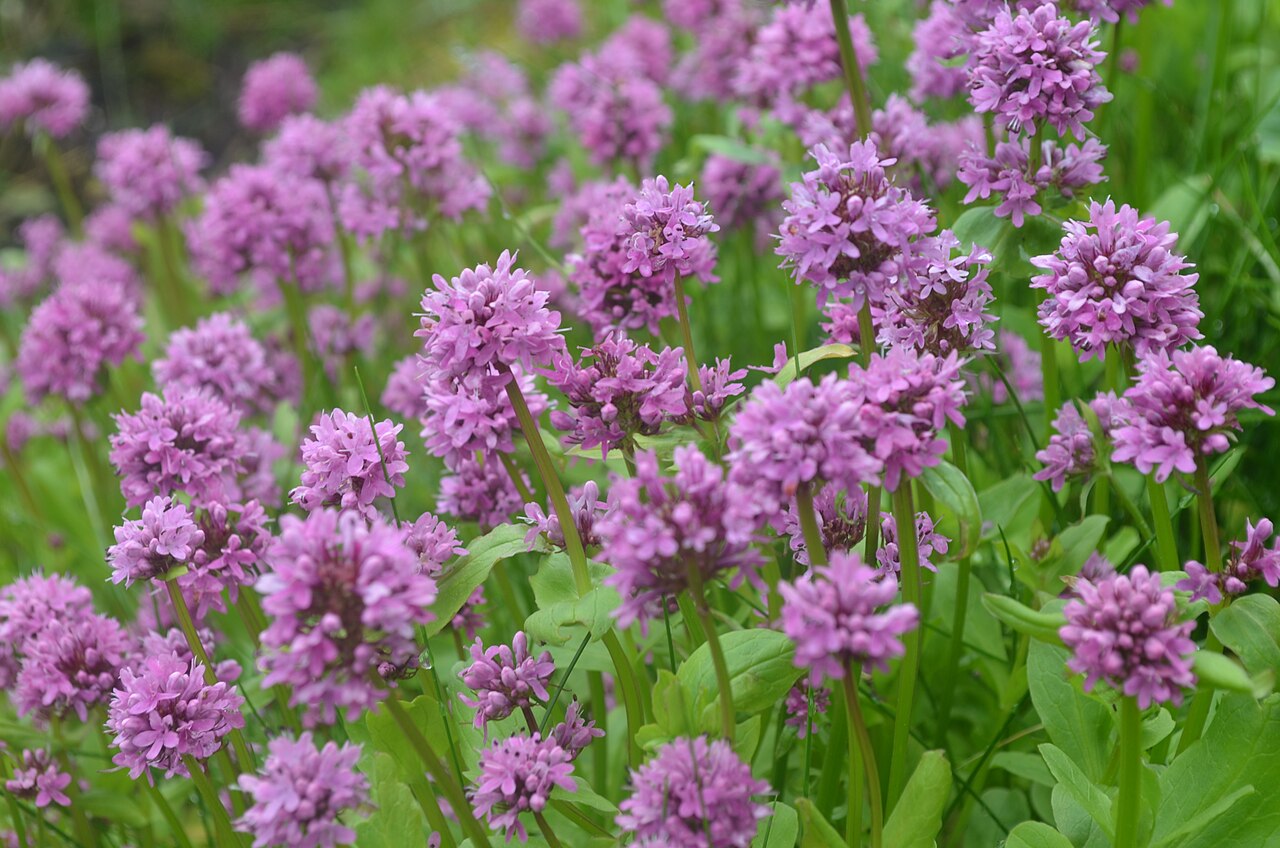
Plectritis congesta, known as Shortspur Seablush, sea blush or rosy plectritis, is a small spring annual of the Pacific Coast. It grows from southwestern British Columbia through western Washington and Oregon to California, and in a good year it turns grassy balds, oak savannas and coastal bluffs solid pink. Plants are usually 4 to 24 inches tall, with a few pairs of smooth, oval leaves and a dense, rounded head of tiny pink to white flowers at the top of the stem.
It belongs to the valerian group. Older references place it in the valerian family (Valerianaceae); many botanists now include that family in the honeysuckle family (Caprifoliaceae), and Plants of the World Online moves the species into the genus Valeriana as Valeriana congesta. USDA PLANTS and most regional floras and seed catalogs still use Plectritis congesta, the name used here.
Seablush is one of the easiest and showiest native annuals for Pacific Northwest and northern California gardens. Sown in fall on open, well-drained ground, it blooms the next spring, feeds early bees and butterflies, and reseeds freely into a self-sustaining patch. It is a classic partner of camas, blue-eyed Mary and other spring wildflowers of the region’s prairies and meadows.
Identification
Look for a slender spring annual with a few pairs of smooth leaves and a single dense, rounded to cylindrical cluster of small pink flowers at the stem tip, often growing by the thousands.
Growth Habit
Shortspur seablush is a hairless annual with a single upright stem, sometimes branched near the top, usually 4 to 24 inches tall. On thin, dry soil it may flower at only 2 to 3 inches, while plants in richer meadows are taller. It germinates in fall or late winter, flowers from March to June, sets seed and dies back by early summer.
Leaves
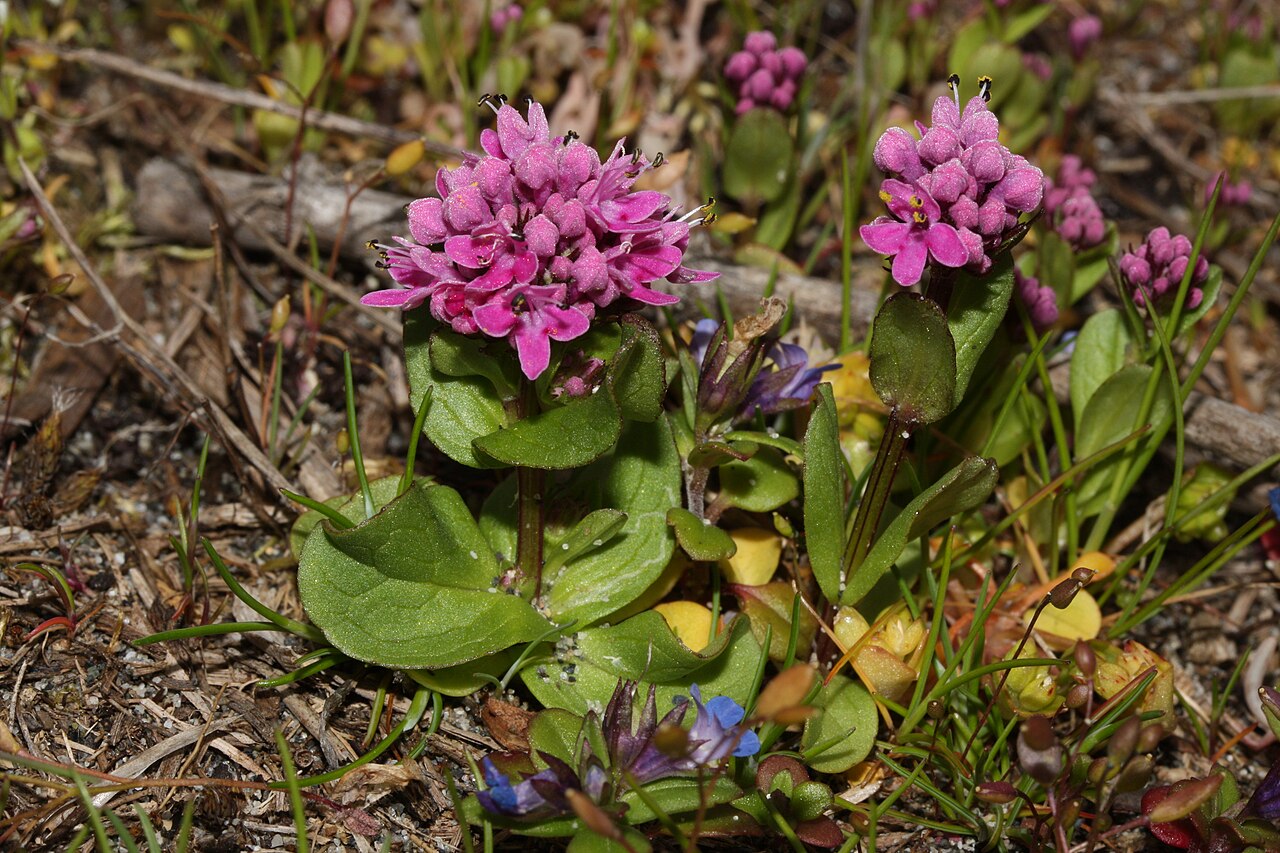
The leaves are opposite and widely spaced on the stem, smooth-edged and hairless, about 1/2 to 2 1/2 inches long. The lowest leaves are spoon-shaped or rounded with short stalks; the upper ones are oblong to elliptic and clasp the stem without a stalk.
Flowers
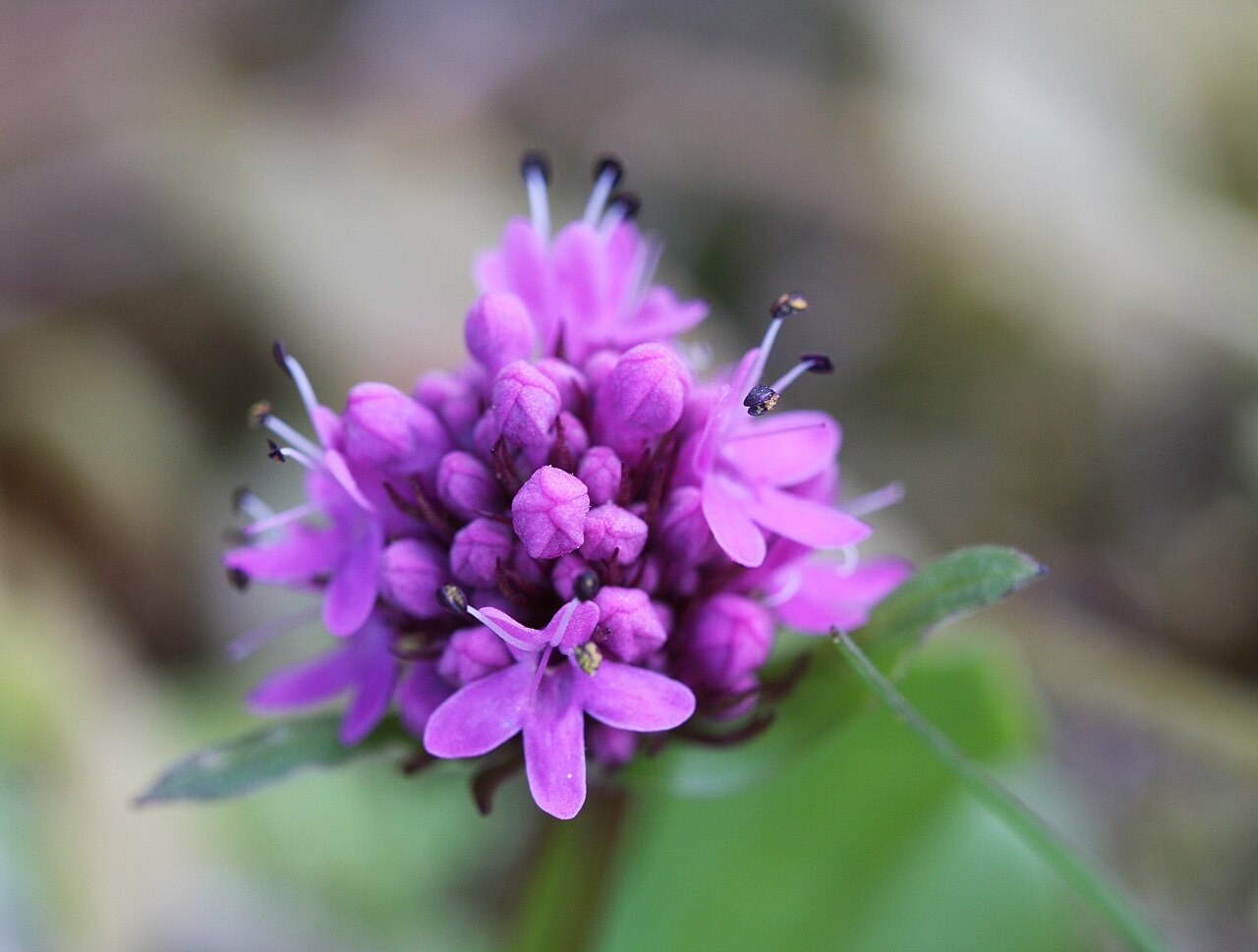
The flowers are crowded into a dense, head-like cluster about 1/2 to 1 1/2 inches long, sometimes with one or two smaller clusters below it. Each flower is only about 1/8 to 3/8 inch long, two-lipped, and bright pink to pale pink or occasionally white, with a short, thick spur at the base, three protruding stamens, and dark anthers. The lower lip often has two darker pink spots.
Fruit
The fruit is a small, dry, one-seeded nutlet about 1/8 inch long. One side is keeled, and the edges may or may not have thin wings. Winged and wingless fruits can occur on different plants in the same population.
Look-alikes
Longspur seablush (Plectritis ciliosa) has a long, slender spur as long as the rest of the flower. White plectritis (P. macrocera) has white flowers with a thick spur. Sea thrift (Armeria maritima) has similar pink heads on coastal bluffs, but its leaves are grass-like and all at the base, and its flowers are not two-lipped. Clovers have three-parted leaves.
Quick Facts
| Scientific Name | Plectritis congesta (syn. Valeriana congesta) |
| Family | Valerianaceae (valerian family), now often included in Caprifoliaceae |
| Plant Type | Annual wildflower |
| Mature Height | 4–24 in |
| Mature Spread | 2–4 in (per plant) |
| Growth Rate | Fast (germinates in fall, flowers in spring) |
| Sun Exposure | Full sun to part shade |
| Water Needs | Moist in winter and spring; dry in summer |
| Soil Type | Thin, rocky, sandy or loamy, well-drained |
| Soil pH | Slightly acidic to neutral (about 5.5–7.0) |
| Bloom Time | March–June |
| Flower Color | Bright pink to pale pink, occasionally white |
| Fall Color | None; annual, dies back by summer |
| Fruit | Small, dry, keeled nutlet, winged or wingless |
| Deer Resistant | Moderately; occasionally browsed |
| USDA Hardiness Zones | Annual; grows where native (about zones 7–10) |
Native Range
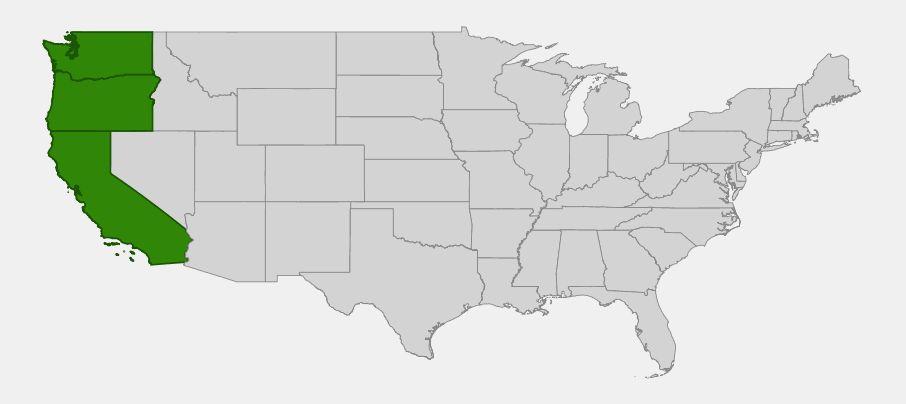
Shortspur seablush grows along the Pacific Coast from southwestern British Columbia, including Vancouver Island and the Gulf Islands, south through western Washington and Oregon to California. USDA PLANTS lists it as native in California, Oregon and Washington and in British Columbia. In California it is found in the Coast Ranges, the Klamath Mountains, the Sierra Nevada foothills and parts of southern California.
In Washington and Oregon it is mainly a plant of the lowlands and foothills west of the Cascade crest, including the Puget Trough, the San Juan Islands, the Willamette Valley and the Siskiyous. The Burke Museum herbarium notes that in Washington it extends east of the Cascades only in the Columbia River Gorge, where it is common on the grassy and rocky slopes of the Gorge in Klickitat County, Washington, and in Hood River and Wasco counties, Oregon. It is not a plant of the dry interior sagebrush country.
Typical habitats are open sites that are wet in winter and spring and dry out in summer: rocky balds, grassy bluffs, oak savannas and Garry oak meadows, coastal prairies, moist slopes, and mountain meadows, from sea level to middle elevations.
📋 Regional plant lists featuring Shortspur Seablush: Western Oregon & Western Washington · California & Nevada
Growing & Care Guide
Shortspur seablush is grown from seed, and it is one of the most reliable native annuals for West Coast gardens. Give it open ground, winter rain and summer dryness, and it will reseed itself year after year.
Light
Full sun to part shade. It flowers most heavily in sun, but also grows well under the light shade of oaks and at woodland edges.
Soil & Water
It grows in thin, rocky soils, sand and ordinary garden loam, as long as the site drains in winter. Natural rainfall is usually enough from fall through spring. Plants are naturally finished by early summer, so no summer water is needed; it can even favor weeds that compete with next year’s seedlings.
Planting Tips
Sow seed in fall (September to November) on bare, weed-free soil and rake it in lightly or press it onto the surface. Seed needs the cool, moist conditions of winter to germinate. Sow thickly in drifts or mix it into a native wildflower or meadow seed mix with other annuals and bulbs. Seed is available from Pacific Northwest and California native seed suppliers.
Pruning & Maintenance
Leave plants standing until the seed has dropped in early summer, then cut or pull the dry stems if you want a tidier look. Keep competing grasses and weeds down, especially in fall when seedlings appear. Avoid heavy mulch, which stops the seed from reaching soil.
Propagation
Grows easily from seed and reseeds freely. Collect the dry fruits in early summer when the heads turn brown and store them dry until fall sowing. Gather only small amounts from wild populations, and only where permitted.
Landscape Uses
- Meadow and prairie gardens: a key annual in Pacific Northwest prairie seed mixes
- Pollinator gardens: an early nectar source for bees and butterflies
- Rock gardens and green roofs: thrives in thin, fast-draining soil
- Oak savanna restoration: fills gaps under Oregon white oak
- Naturalizing: self-sows into drifts with camas and other bulbs
Wildlife & Ecological Value
Shortspur seablush is a valuable early-season resource in the prairies and balds of the Pacific Northwest and California.
For Pollinators
The flowers are visited by bumblebees and other native bees, bee flies, hoverflies and butterflies, and the Xerces Society lists it as having special value to native bees. It is an important nectar plant for butterflies of Pacific Northwest prairies, including checkerspots, and is often planted in prairie restoration aimed at rare butterflies.
For Birds
Seed-eating birds such as sparrows and finches feed on the small fruits that drop in early summer.
For Mammals
Deer and small mammals may graze it, but it is usually so abundant that grazing has little effect on a population.
Ecosystem Role
As a winter annual, it fills open spaces between bunchgrasses and perennials and helps keep out weedy annual grasses. Its dense spring displays are a signature of healthy Garry oak and prairie ecosystems, which are among the most threatened habitats in the region.
Cultural & Historical Uses
The genus name Plectritis comes from the Greek word plektron, meaning a spur, referring to the spur on each flower. The species name congesta means crowded, for the tightly packed flower heads. Botanist John Lindley first named it Valerianella congesta in 1827 from plants collected in the Pacific Northwest by David Douglas.
The common name “seablush” describes the pink wash of color that large stands give to coastal bluffs and islands in spring. Its displays are one of the highlights of the spring wildflower season on the Gulf and San Juan Islands and in the Columbia River Gorge.
Shortspur seablush is often used in the restoration of oak savannas and upland prairies in western Oregon, Washington and British Columbia, and seed is widely available from regional native seed growers.
Frequently Asked Questions
Is shortspur seablush an annual?
Yes. It germinates in fall or late winter, flowers in spring, sets seed and dies by early summer. It returns each year by reseeding.
When should I sow seablush seed?
Sow in fall, from September to November, on bare soil. Winter rain and cool temperatures trigger germination.
Is Plectritis congesta the same as Valeriana congesta?
Yes. Some botanists now place Plectritis inside the genus Valeriana, so the plant is also called Valeriana congesta. USDA PLANTS still uses Plectritis congesta.
Does seablush grow east of the Cascades?
Only barely. It is mainly a plant west of the Cascade crest, but it extends east into the Columbia River Gorge.
What pollinates shortspur seablush?
Native bees, bumblebees, bee flies, hoverflies and butterflies visit the flowers for nectar and pollen.

Looking for a nursery that carries Shortspur Seablush?
Browse our native plant nursery directory: California · Oregon · Washington