
Coastal Sagewort (Artemisia pycnocephala)
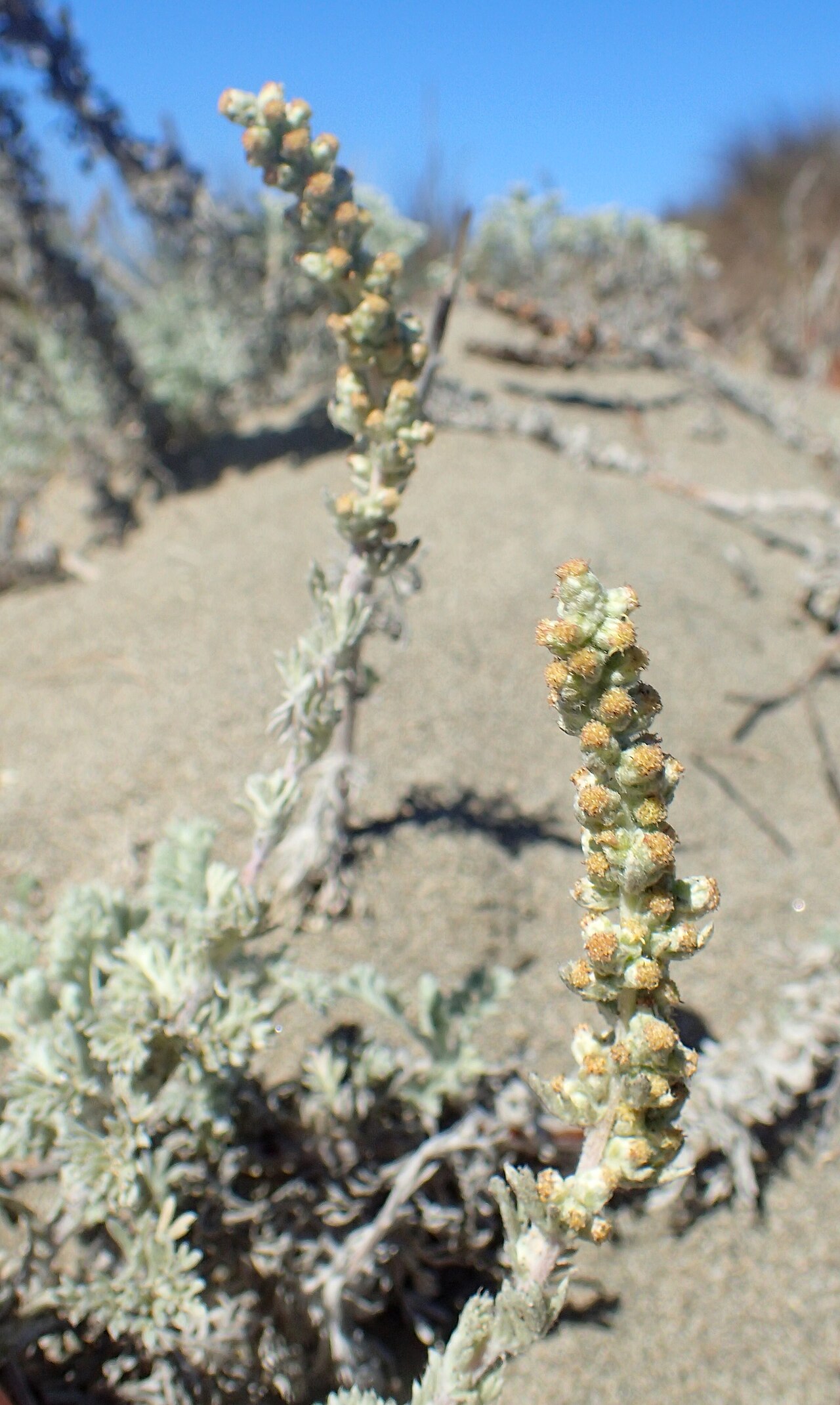
Artemisia pycnocephala, known as Coastal Sagewort (USDA: beach wormwood; also called sandhill sage), is a low, mounding perennial of the Pacific coast dunes, native only to California and Oregon. It belongs to the aster family (Asteraceae) and the same genus as big sagebrush and the culinary wormwoods. The plant forms a soft, rounded clump 1 to 2 feet tall and up to about 3 feet wide, made of finely divided leaves so densely covered with silky white hairs that the whole plant looks silver.
In summer it sends up stiff, leafy spikes packed with small, rounded, yellowish flower heads. Like other sagebrushes it is wind-pollinated, so the flowers are not showy, but the spikes add texture and the silver foliage stays attractive most of the year. The leaves are mildly aromatic when brushed, less pungent than most wormwoods.
In gardens, coastal sagewort is one of the best silver-foliage plants for the West Coast. It thrives in sandy, fast-draining soil, full sun, salt spray and wind, and needs little or no summer water near the coast. It is short-lived compared with woody sagebrushes and looks best in its first few years, but it reseeds modestly and is easy to replace. Compact selections such as ‘David’s Choice’ are sold by California native plant nurseries.
Identification
Look for a soft, silver mound on open coastal sand, with finely cut, felted leaves and, in summer, upright spikes of small, round, yellowish flower heads.
Growth Habit
Coastal sagewort is a perennial with a woody base (a subshrub), forming a low, dense mound 1 to 2 feet tall and 2 to 3 feet wide from a deep taproot. Flowering stems grow upright from the clump in summer and turn brown after seed is shed; the basal foliage persists through the mild coastal winter.
Leaves
The leaves are alternate and mostly crowded near the base, 1 to 3 inches long and divided two or three times into narrow, blunt lobes. Both surfaces are densely covered in silky, white to silvery hairs, so the plant looks pale gray-green to nearly white. Crushed leaves give off a mild, sage-like scent.
Flowers
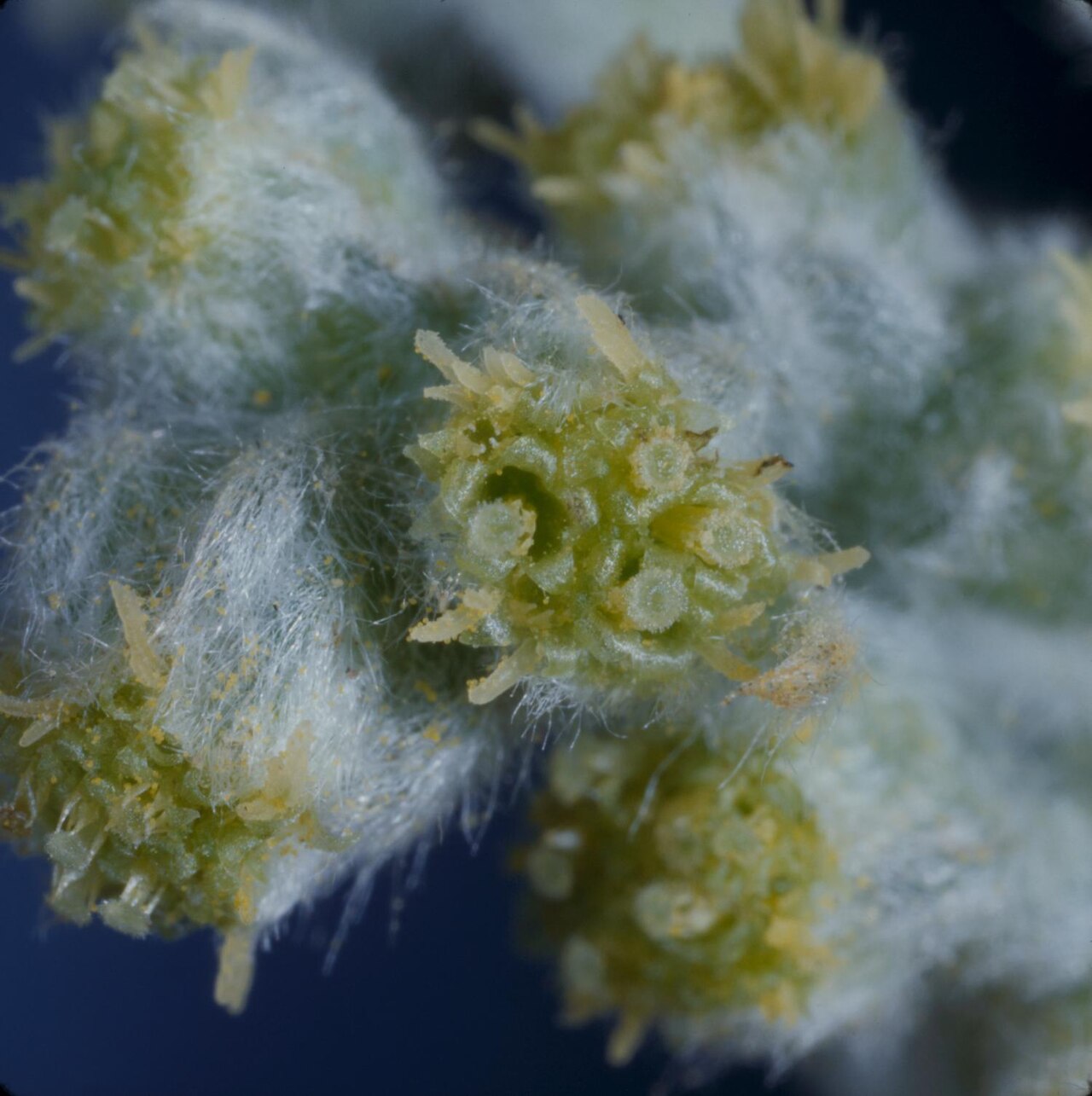
From early summer into early fall, upright stems 6 to 20 inches long carry dense spikes of small, rounded flower heads about 1/8 to 1/4 inch across, mixed with small, woolly leaves. Each head is a cluster of tiny yellowish disk flowers with no petals or rays. The flowers release abundant pollen into the wind.
Fruit & Seeds
Each tiny flower produces a small, dry, one-seeded fruit (a cypsela, often called an achene) without a fluffy pappus. The seeds drop close to the parent plant or are blown short distances across the sand.
Look-alikes
Silver beachweed (Ambrosia chamissonis) shares the same dunes and also has silvery, divided leaves, but it sprawls in long runners and has spiny burs. California sagebrush (Artemisia californica) is a taller, shrubby plant with threadlike, strongly scented leaves that grows on coastal bluffs and slopes rather than open sand. Dusty miller (Jacobaea maritima), a non-native garden plant, has broader, felted leaves and yellow daisy-like flowers.
Safety Notes
Coastal sagewort is not considered dangerous to touch, but like other wormwoods it contains bitter aromatic compounds and is not a food or tea plant. Its wind-borne pollen can trigger hay fever in sensitive people when the plants are in bloom.
Quick Facts
| Scientific Name | Artemisia pycnocephala |
| Family | Asteraceae (aster family) |
| Plant Type | Evergreen perennial subshrub |
| Mature Height | 1–2 ft |
| Mature Spread | 2–3 ft |
| Growth Rate | Fast |
| Sun Exposure | Full sun |
| Water Needs | Low; little or no summer water near the coast |
| Soil Type | Sandy, fast-draining soil; dune sand |
| Soil pH | About 6.0–8.0 |
| Bloom Time | June–September |
| Flower Color | Yellowish; inconspicuous |
| Fall Color | None; silver foliage persists |
| Fruit | Tiny dry achenes (cypselae) |
| Deer Resistant | Yes; aromatic foliage is seldom browsed |
| USDA Hardiness Zones | 8–10 |
Native Range
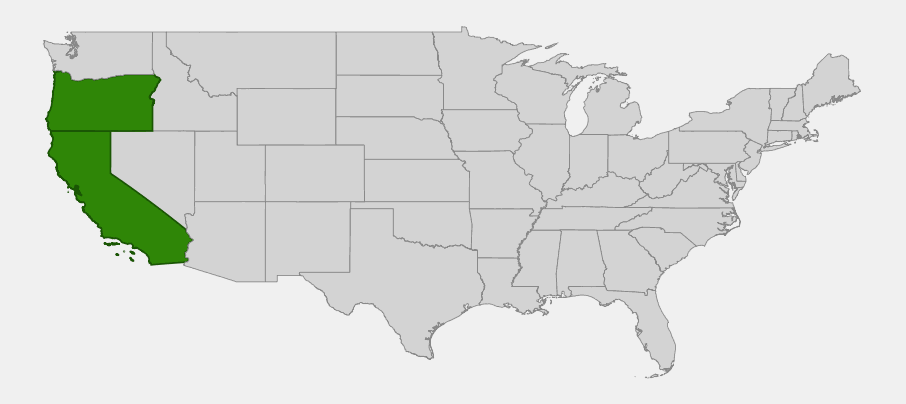
Coastal sagewort is a narrow coastal endemic of the Pacific states. USDA PLANTS lists it as native in only two states, California and Oregon. It grows along the coast from central Oregon south through northern and central California, with most California populations between Del Norte and San Luis Obispo counties and a few isolated records farther south in Los Angeles and San Diego counties.
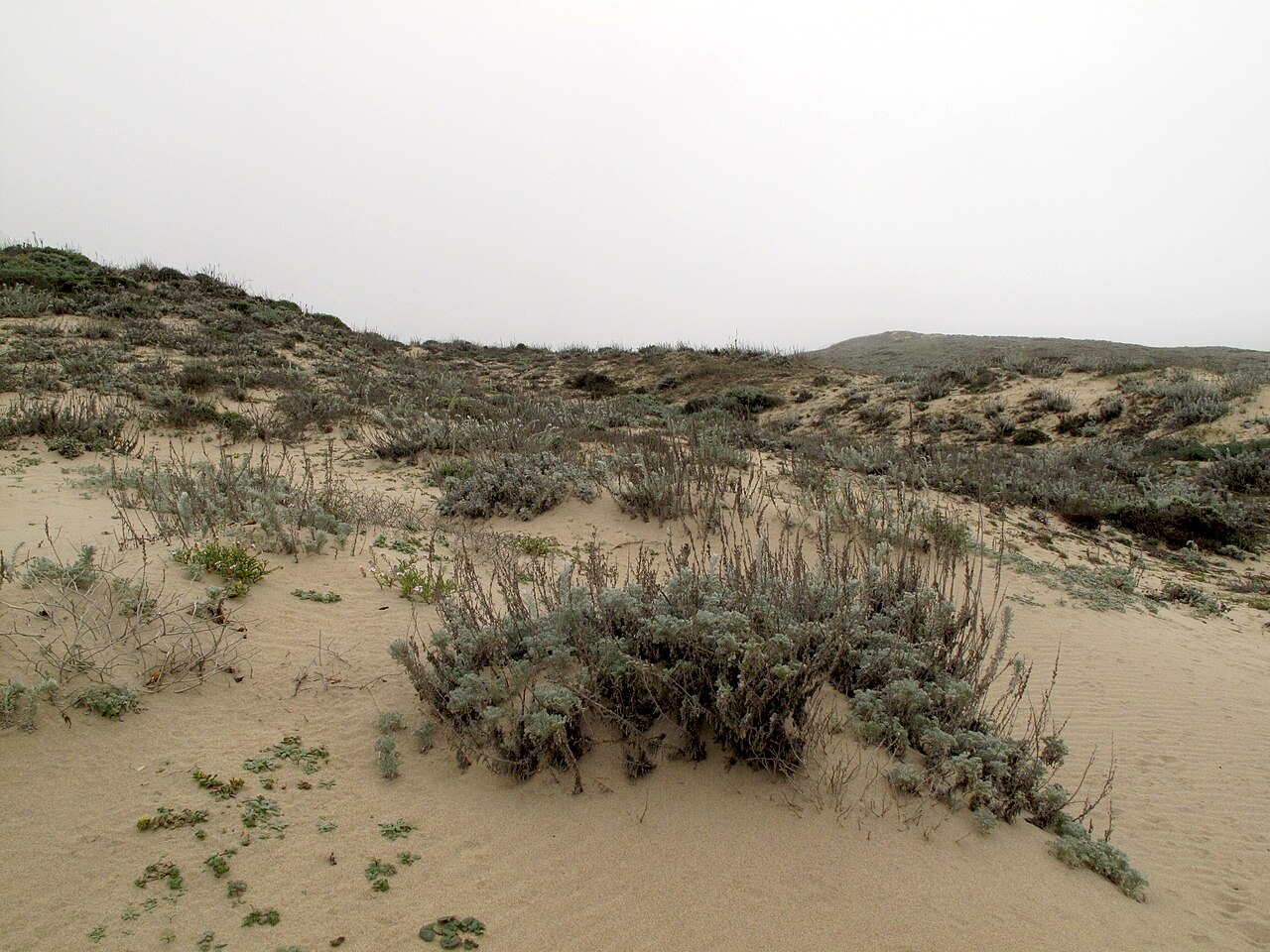
It is a plant of the coastal strand: open foredunes and back dunes, sandy bluffs, coastal prairie edges and rocky headlands, nearly always within reach of fog and salt spray. Herbarium records place it mostly below about 650 feet (200 m). It rarely, if ever, grows inland, so in Oregon and Washington terms it belongs entirely to the west side of the Cascades.
Dune habitats on the Pacific coast have been heavily altered by development and by the spread of European beachgrass and iceplant. Coastal sagewort is still widespread on remaining native dunes (NatureServe ranks it apparently secure), and it is a standard plant in dune restoration projects in California and Oregon.
📋 Regional plant lists featuring Coastal Sagewort: Western Oregon & Western Washington · California & Nevada
Growing & Care Guide
Coastal sagewort is easy in the right conditions: sun, sand and sea air. It struggles in heavy, wet soil and in hot inland gardens with frequent summer watering, where it tends to rot or flop.
Light
Plant it in full sun. In shade it becomes loose and green and loses its silver color.
Soil & Water
It needs very well-drained soil: sand, sandy loam or gravel. Clay must be amended heavily or avoided, or the plant should be grown on a mound. Water regularly only during its first summer. Once established near the coast it needs little or no summer irrigation; inland, give an occasional deep soak in the hottest months. Overwatering shortens its life.
Planting Tips
Plant in fall or winter so the rains establish the roots. Space plants about 2 to 3 feet apart. It is ideal at the front of a coastal border, along paths, between boulders, on dry banks and in dune gardens, and its silver leaves set off blue and purple flowers such as seaside daisy and lupines. It tolerates wind and salt spray.
Pruning & Maintenance
Many gardeners shear off the flower spikes as they appear, which keeps the plant compact and silver; leave a few if you want seedlings. Cut back old, sprawling growth lightly in late fall or winter. Plants are naturally short-lived and look best for the first few years, so replace tired clumps with seedlings or new plants. Away from the coast, remove dead growth regularly, since dry, resinous foliage can carry fire.
Propagation
Grow it from seed sown on the surface of sandy mix in fall or winter; no pretreatment is needed. It can also be increased by division of the root crown or by cuttings of nonflowering shoots.
Landscape Uses
- Dune and coastal gardens: silver accents that handle wind, sand and salt spray
- Dune restoration: a native stabilizer for sand in California and Oregon
- Silver foliage borders: a native alternative to dusty miller and lamb’s ears
- Rock gardens and dry banks: fast cover in sandy, well-drained spots
- Containers: a compact silver plant for sunny patios near the coast
Wildlife & Ecological Value
Coastal sagewort is a structural plant of the open dunes, giving shelter and stability on shifting sand where few other plants can grow.
For Pollinators
The flowers are wind-pollinated and offer no nectar, so they draw few butterflies. Bees sometimes collect its pollen, and the Xerces Society notes that the plant provides nesting materials or structure for native bees, which nest in the open sand around it.
For Birds
Its low, dense mounds give cover to ground-foraging birds on the dunes, and sparrows and other small birds pick seeds from the spent flower spikes in fall.
For Mammals
Mammals rarely browse it because of its bitter, aromatic foliage. Small rodents and rabbits shelter under the clumps.
Ecosystem Role
On native dunes, coastal sagewort helps catch blowing sand and stabilize back dunes, creating microhabitats for other dune plants, beetles and spiders. Like other Artemisia, it hosts specialist insects, including caterpillars of some moths that feed on sagebrushes. It is a key native plant for replacing invasive iceplant and European beachgrass in dune restoration.
Cultural & Historical Uses
The genus Artemisia is named for the Greek goddess Artemis and includes wormwood, mugwort, tarragon and the sagebrushes of the western United States. The species name pycnocephala means “dense-headed,” describing the tightly packed spikes of flower heads. The plant was described by the Swiss botanist Augustin Pyramus de Candolle in 1838.
Coastal sagewort is closely tied to the conservation of Pacific coast dunes. Dune restoration projects along the California and Oregon coast commonly plant it after removing iceplant and European beachgrass, because it establishes quickly in bare sand and helps rebuild native dune communities.
For gardeners, it has become a familiar California native nursery plant, valued as a soft, silvery foil for colorful coastal flowers. Compact selections such as ‘David’s Choice’, grown at the Regional Parks Botanic Garden in Berkeley, keep a tighter mound and are often sold for small gardens.
Frequently Asked Questions
Is coastal sagewort the same as culinary sage?
No. It is a wormwood in the aster family, related to sagebrush and tarragon, not a true sage (Salvia) in the mint family. It is not used for cooking.
Will coastal sagewort grow away from the coast?
It can, in sandy, well-drained soil with full sun, but it is less long-lived inland and dislikes hot, humid summers and heavy, wet soil. It looks best within reach of coastal fog.
Why does my coastal sagewort look leggy after a few years?
It is naturally short-lived and opens up with age. Shearing off flower stalks and light pruning helps, but most gardeners replace older plants every few years with seedlings or new plants.
Does it cause allergies?
Like other wind-pollinated Artemisia, its pollen can trigger hay fever in sensitive people during summer bloom. Removing flower stems as they appear reduces pollen.
Is it deer resistant?
Yes, in most gardens. The bitter, aromatic, hairy foliage is seldom eaten by deer or rabbits.

Looking for a nursery that carries Coastal Sagewort?
Browse our native plant nursery directory: California · Oregon