
Southern Harebell (Campanula divaricata)
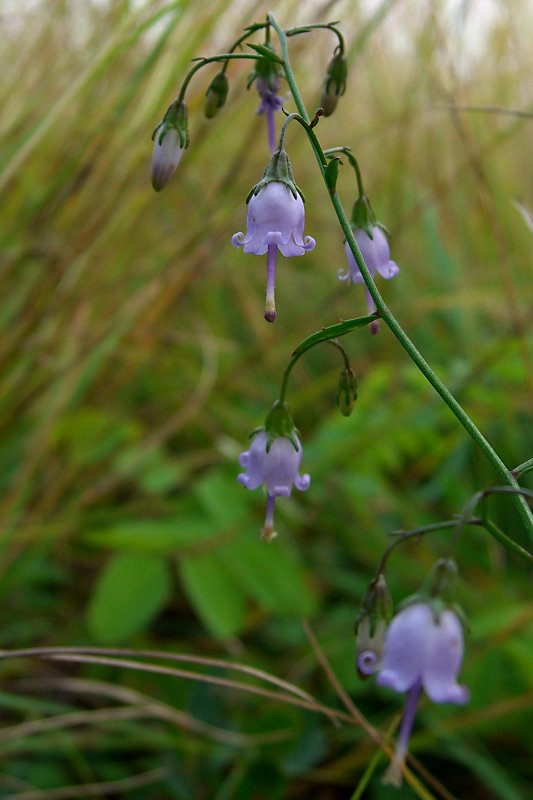
Campanula divaricata, known as Southern Harebell, Appalachian bellflower or small bonny bellflower (the USDA name), is a delicate perennial wildflower of rocky slopes and dry woods in the southern Appalachians. It belongs to the bellflower family (Campanulaceae).
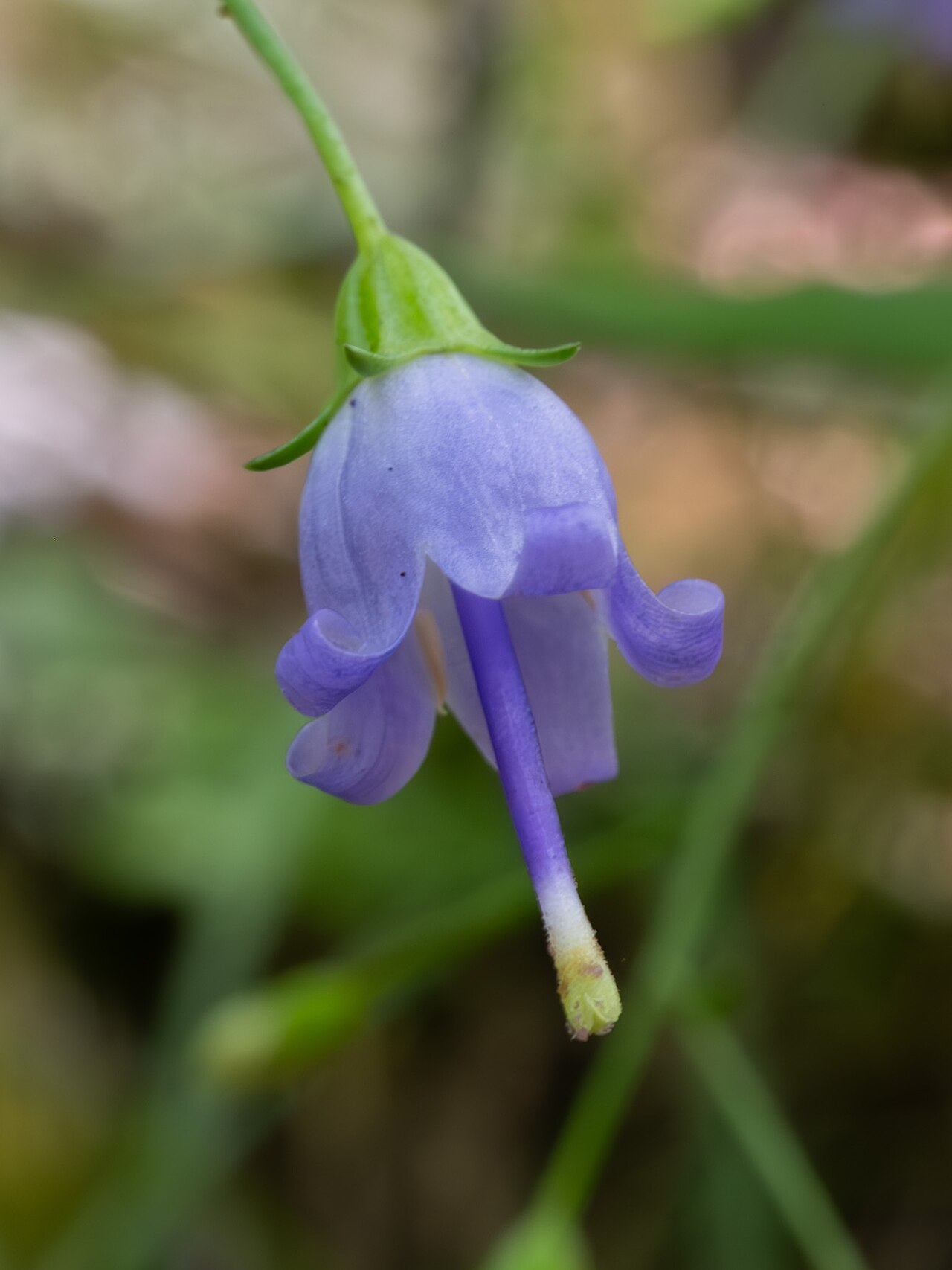
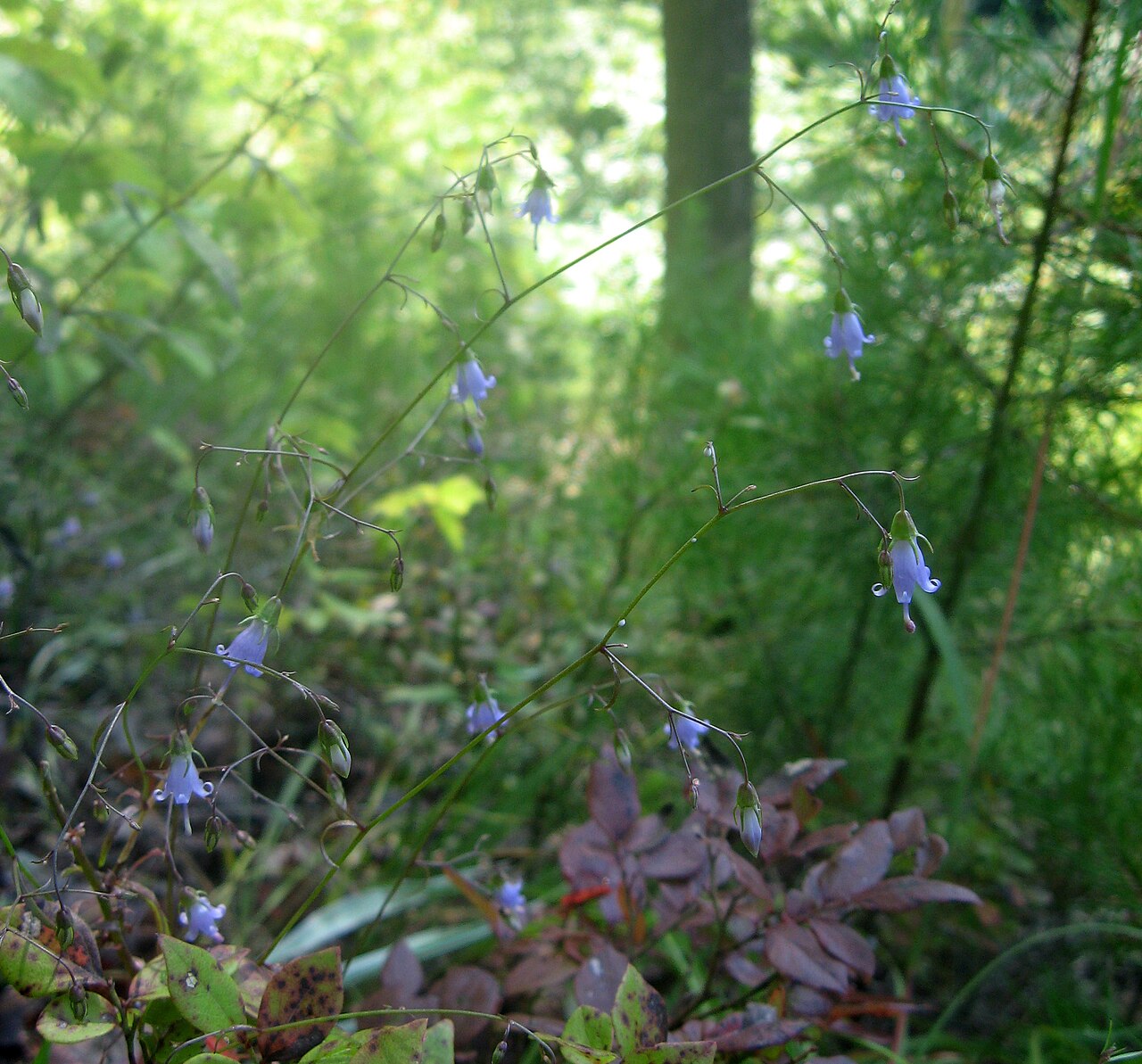
From midsummer into fall it produces a haze of tiny, nodding, lavender-blue bells, each only about 1/4 inch long, on wiry, widely branching stems 1 to 2 feet tall. A long, pale style sticks out of each bell like a clapper. In bloom, a clump looks like a small cloud of blue floating above the rocks.
Southern harebell is a plant of cliffs, rock outcrops, road banks and thin-soiled, open woods in the mountains and upper Piedmont from Maryland to Alabama. It is a charming, drought-tolerant plant for rock gardens and dry, partly shaded native gardens, where its late, airy flowers feed small bees after many spring wildflowers have gone dormant.
Identification
Look for a slender, much-branched plant with toothed, pointed leaves and dozens of tiny, nodding, pale blue bells with long, protruding styles, on rocky slopes from July to October.
Growth Habit
Southern harebell is a herbaceous perennial with one or several slender stems, usually 1 to 2 feet tall, that branch widely in the upper part, giving the plant an open, airy shape. The stems are smooth and often lean or arch from rock crevices and slopes. Plants grow from a short, thick rootstock.
Leaves
The leaves are alternate, lance-shaped to narrowly oval, about 1 to 3 inches long, with sharply and coarsely toothed edges and a long, pointed tip. They are thin and smooth, with short stalks or none. Leaves get smaller toward the flowering branches.
Flowers
Flowers appear from about July to October in loose, branching clusters at the ends of the stems. Each flower is a small, nodding bell about 1/4 inch long, pale blue to lavender, with five pointed lobes that curl back. The slender style protrudes well beyond the bell. The flowers hang from thread-like stalks and tremble in the slightest breeze.
Fruit & Seeds
The fruit is a small, nodding, cup-shaped capsule that opens by pores near the base to release many tiny seeds.
Look-alikes
Harebell (Campanula rotundifolia) has larger bells, about 1/2 to 1 inch long, with a style that does not stick out, and very narrow, grass-like stem leaves; it is a northern and high-mountain plant. American bellflower (Campanulastrum americanum) is a tall annual or biennial with flat, star-shaped blue flowers on a long spike. Southern harebell’s combination of tiny, nodding bells, protruding styles and toothed, pointed leaves is distinctive.
Safety Notes
Southern harebell is not known to be toxic, but it is not a food plant.
Quick Facts
| Scientific Name | Campanula divaricata |
| Family | Campanulaceae (bellflower family) |
| Plant Type | Herbaceous perennial wildflower |
| Mature Height | 1–2 ft |
| Mature Spread | 1–1.5 ft |
| Growth Rate | Moderate |
| Sun Exposure | Part shade to full sun |
| Water Needs | Low; dry, well-drained soil |
| Soil Type | Rocky, gravelly or thin, well-drained soil |
| Soil pH | About 4.5–6.5 |
| Bloom Time | July–October |
| Flower Color | Pale blue to lavender |
| Fall Color | Not significant |
| Fruit | Small nodding capsules with tiny seeds |
| Deer Resistant | Moderately; small plants on rocks are seldom browsed |
| USDA Hardiness Zones | 5–8 |
Native Range
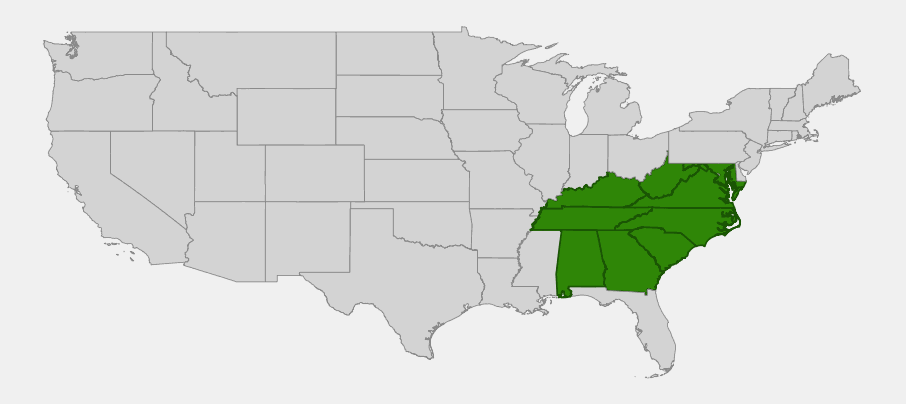
Southern harebell is native to the central and southern Appalachian region of the eastern United States. USDA PLANTS lists it as native in Alabama, Georgia, Kentucky, Maryland, North Carolina, South Carolina, Tennessee, Virginia and West Virginia. USDA also lists Connecticut and New Hampshire, but Go Botany (Native Plant Trust) notes that those records are plants escaped from cultivation, probably short-lived, so they are not treated as native range here.
It is most common in the Blue Ridge and the Ridge and Valley of Virginia, West Virginia, western North Carolina and eastern Tennessee, and extends onto the Cumberland Plateau of Kentucky and Tennessee, the upper Piedmont of the Carolinas and Georgia, and northeastern Alabama. Western Maryland is at the northern edge of its range.
Typical habitats are dry, rocky, often partly shaded places: cliffs and ledges, rock outcrops, talus slopes, steep, open oak and pine woods with thin soil, stream bluffs and road cuts. It often grows in crevices of granite, gneiss, sandstone or shale, in acidic soil.
📋 Regional plant lists featuring Southern Harebell: Alabama, Georgia & Mississippi · North & South Carolina · Maryland, Virginia & West Virginia · Kentucky & Tennessee
Growing & Care Guide
Southern harebell is sometimes offered by native plant nurseries in the Southeast. It is an easy, long-blooming plant for dry, well-drained spots and is happiest among rocks.
Light
Partial shade to full sun. In the wild it grows on sunny ledges and in the light shade of open woods. In hot, low-elevation gardens, afternoon shade keeps it looking fresh.
Soil & Water
It needs sharp drainage: rocky, gravelly or sandy, slightly acidic soil. It tolerates drought well once established. Heavy, wet soil, especially in winter, is the main cause of failure.
Planting Tips
Tuck it into a rock garden, stone wall, crevice, dry slope or the edge of a woodland path, where the small bells can be seen up close. It mixes well with alumroots, ferns, little bluestem and low asters. Plant in spring or fall.
Pruning & Maintenance
Little care is needed. Do not fertilize. Cut back the dry stems in late winter or leave a few to drop seed. It may self-seed lightly into nearby gravel and cracks.
Propagation
Grow it from seed: sow the tiny seeds on the surface of a gritty mix in fall or late winter and leave them uncovered, since they need light to germinate. Established clumps can also be divided carefully in early spring.
Landscape Uses
- Rock and crevice gardens: airy blue flowers among stones
- Dry shade: tolerates thin soil and drought under open trees
- Late-season color: blooms July to October
- Pollinator gardens: nectar and pollen for small native bees
- Slopes and walls: grows in cracks and on banks
Wildlife & Ecological Value
Southern harebell is a small plant, but its long blooming season makes it a useful late-summer resource on rocky slopes where few other plants flower.
For Pollinators
The small bells are visited by small native bees, including sweat bees and small carpenter bees, and by other small insects. Bellflowers pass pollen onto the outside of the style before the stigma opens, which helps cross-pollination between flowers.
For Birds
The tiny seeds are not an important bird food, but the insects attracted to the flowers feed small insect-eating birds.
For Mammals
Its small size and rocky, often steep habitat protect it from most browsing.
Ecosystem Role
Southern harebell is part of the specialized plant community of Appalachian cliffs, outcrops and thin-soiled woodlands, helping to stabilize soil in rock crevices and adding to the diversity of these harsh, dry habitats.
Cultural & Historical Uses
The French botanist André Michaux described the species in 1803 in his Flora Boreali-Americana, based on plants he found during his travels in the southern Appalachians. Campanula means “little bell,” and divaricata means “widely spreading,” for the open, branching flower stems.
Its many common names include southern harebell, Appalachian bellflower, small bonny bellflower and southern bellflower. Despite the name, it is not closely related to the true harebell of northern rocks; both simply share the bellflower genus and a liking for dry, rocky ground.
Hikers in the Blue Ridge and Great Smoky Mountains often notice its blue flowers trembling on road banks and rock faces in late summer, when many other woodland wildflowers have finished.
Frequently Asked Questions
Is southern harebell the same as harebell?
No. Harebell (Campanula rotundifolia) is a different species with larger bells and grass-like leaves. Southern harebell has tiny bells with long, protruding styles and toothed, pointed leaves.
When does southern harebell bloom?
From about July to October, with the peak in late summer.
Can southern harebell grow in dry shade?
Yes. It tolerates dry, thin, rocky soil and partial shade well, as long as the soil drains quickly.
Where does southern harebell grow?
On cliffs, rock outcrops, road banks and dry, rocky woods in the Appalachian region from Maryland and West Virginia south to Georgia and Alabama.
Does southern harebell attract pollinators?
Yes. Small native bees visit the flowers for nectar and pollen through late summer and early fall.

Looking for a nursery that carries Southern Harebell?
Browse our native plant nursery directory: Alabama · Georgia · Kentucky & Maryland · North Carolina · South Carolina, Tennessee & Virginia · West Virginia

