
San Diego Wirelettuce (Stephanomeria diegensis)
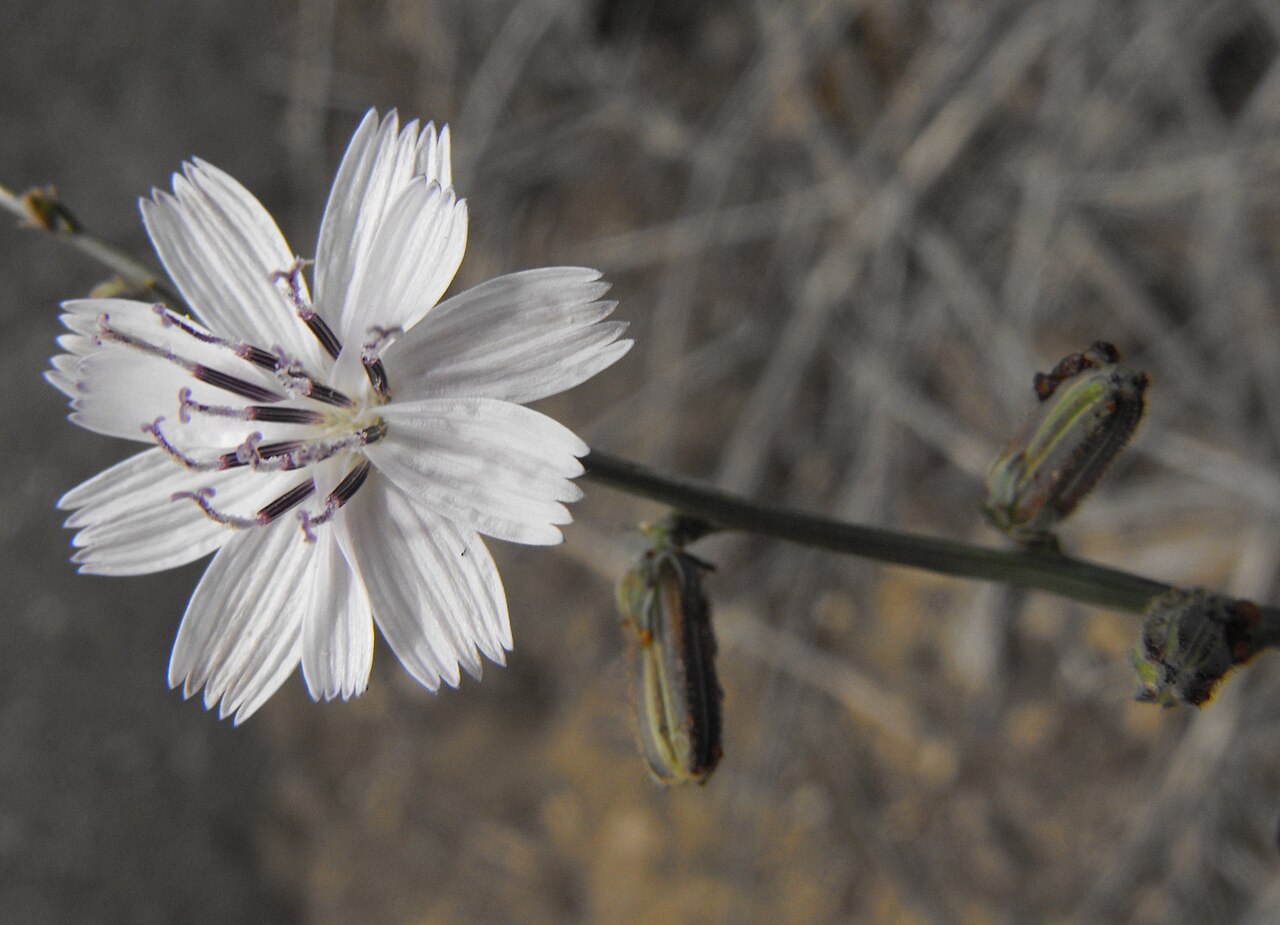
Stephanomeria diegensis, known as San Diego Wirelettuce, is a tall, wiry annual wildflower of the coastal hills and valleys of Southern California and northern Baja California. It belongs to the aster family (Asteraceae), in the same tribe as chicory and dandelions, and has milky sap like its relatives.
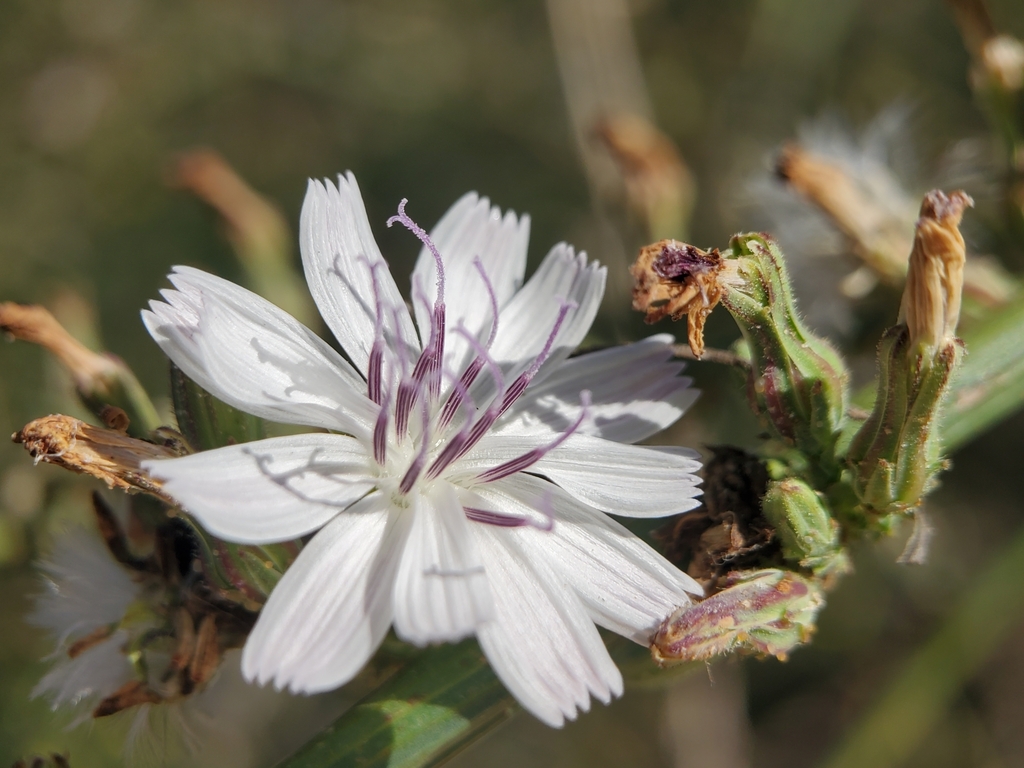
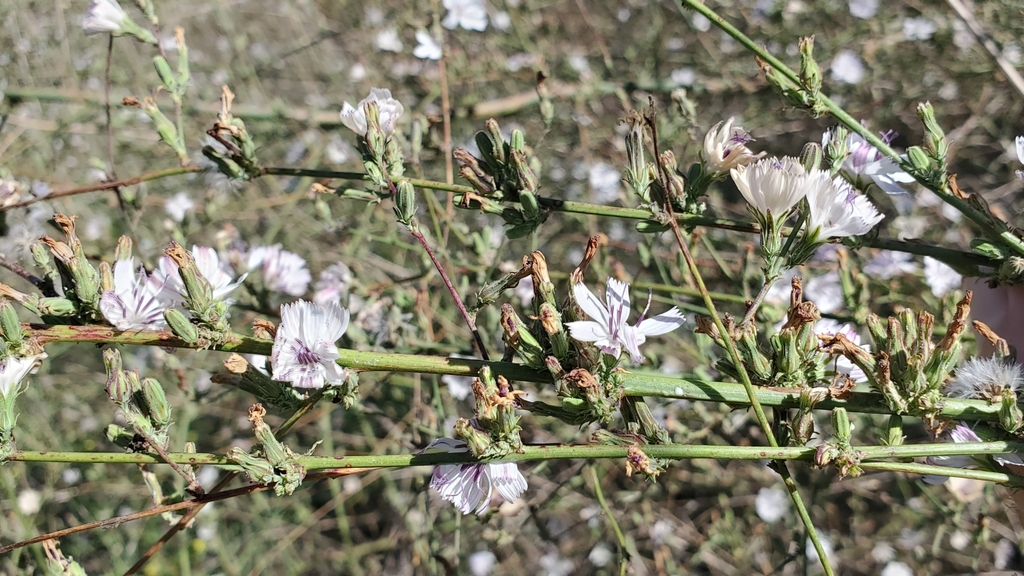
Through summer and fall, long after the spring wildflowers have dried, this plant stands 2 to 6 feet tall as a nearly leafless broom of stiff, green, wire-like branches. Scattered along them are flower heads about an inch across, made of white or pink-tinged, notched ray florets with purple centers. The flowers usually open in the morning and close by afternoon.
San Diego wirelettuce is also a famous plant in the study of evolution. Botanist Leslie Gottlieb, who described the species in 1971, showed that it arose through hybridization between two other wirelettuces, a rare example of a new species forming by hybridization without a change in chromosome number. In the field it is a common, easily overlooked native of coastal sage scrub, grasslands, roadsides and other open ground.
Identification
Look in summer and fall for a tall, nearly leafless, broom-like plant with stiff green branches and scattered white to pale pink, all-ray flower heads open in the morning.
Growth Habit
San Diego wirelettuce is an annual that germinates with winter rains and grows through the dry season on a deep taproot. It forms a single main stem with many stiff, spreading branches, usually 2 to 6 feet tall and sometimes taller. The stems are green, smooth and slightly ridged, and exude milky sap when broken.
Leaves
The basal leaves are linear to lance-shaped, up to about 4 inches long, and may be entire or have a few teeth or lobes. They wither early, and the upper leaves are tiny and scale-like, so by flowering time the plant looks almost leafless, like a bundle of green wires.
Flowers
Flowers appear mainly from about June to November. Small flower heads are borne singly or in small clusters along the branches. Each head has a narrow, cylindrical base of green bracts, often glandular, and about five to eleven strap-shaped ray florets, each about 1/2 inch long, white or tinged pink with darker pink or lavender veins on the back. The styles and anthers are dark purple. The heads open in the morning and generally close by early afternoon.
Fruit & Seeds
The fruit is a small, ribbed, brownish achene topped with a ring of feathery white bristles (pappus). The seeds blow away on the wind in late summer and fall.
Look-alikes
Its two parent species are very similar. Slender wirelettuce (Stephanomeria exigua) is usually a shorter plant of drier, often desert habitats, with fewer florets per head, while tall or virgate wirelettuce (Stephanomeria virgata) has more upright, wand-like branches and heads crowded along the stems. San Diego wirelettuce is intermediate between them and is often misidentified as one of its parents, especially with older keys; location, number of florets and achene details are needed for a confident identification. Non-native chicory has larger, sky-blue heads.
Safety Notes
San Diego wirelettuce is not known to be toxic, but it is not used as food. The milky sap may irritate sensitive skin.
Quick Facts
| Scientific Name | Stephanomeria diegensis |
| Family | Asteraceae (aster family) |
| Plant Type | Annual wildflower |
| Mature Height | 2–6 ft |
| Mature Spread | 1–3 ft |
| Growth Rate | Fast (one season) |
| Sun Exposure | Full sun |
| Water Needs | Very low; summer-dry |
| Soil Type | Sandy, gravelly, loamy or clay; tolerates disturbed soil |
| Soil pH | About 6.0–8.0 |
| Bloom Time | June–November |
| Flower Color | White to pale pink with pink or lavender veins |
| Fall Color | Stems turn tan as plants dry |
| Fruit | Small achenes with feathery white bristles |
| Deer Resistant | Generally yes |
| USDA Hardiness Zones | Annual; grows in mild-winter areas (about zones 9–11) |
Native Range
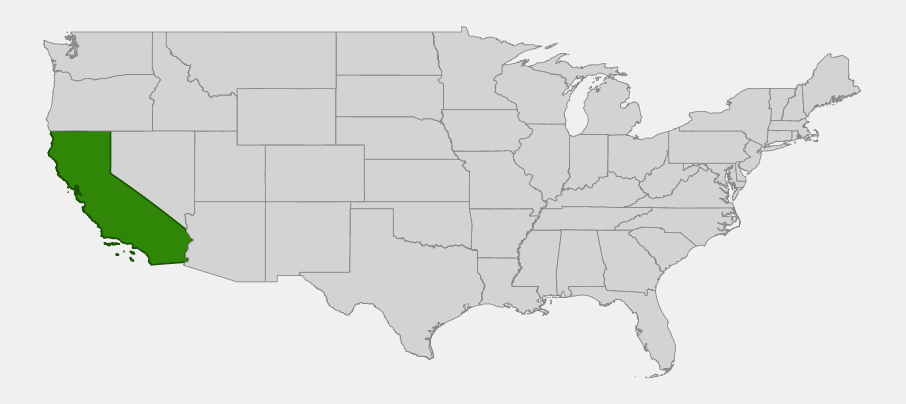
San Diego wirelettuce is native to Southern California and northern Baja California, Mexico. USDA PLANTS lists it only in California, so it does not grow wild elsewhere in the United States.
Its range covers the coastal plain, foothills and inland valleys of Southern California, including San Diego, Orange, Riverside and Los Angeles counties, and extends north into the Santa Monica Mountains and nearby coastal hills. It is common in San Diego County, as its name suggests, and continues south along the Pacific side of Baja California.
It grows in open, sunny places with dry summers: coastal sage scrub, grassland, openings in chaparral, coastal bluffs, sandy and gravelly washes, burned areas, vacant lots and roadsides. It readily colonizes disturbed soil, which is why many people see it along trails and road shoulders.
📋 Regional plant lists featuring San Diego Wirelettuce: California & Nevada
Growing & Care Guide
San Diego wirelettuce is not sold as a nursery plant, but it sometimes appears on its own in Southern California native gardens, especially on bare, sunny ground. It is best appreciated as a volunteer that brings late-season flowers to dry gardens and habitat areas.
Light
It needs full sun. It does not establish under shrubs or in shade.
Soil & Water
It grows in nearly any well-drained soil, including sand, gravel and clay, and tolerates poor, compacted or disturbed ground. Winter rain is all it needs; its deep taproot carries it through summer without irrigation. Summer watering is unnecessary and can make plants floppy.
Planting Tips
If you want to encourage it, scatter seed on bare, sunny ground in fall before the rains, or simply leave volunteers that come up in a dry garden, slope or habitat area. It suits wild, informal plantings with sages, buckwheats and bunchgrasses rather than tidy beds.
Pruning & Maintenance
No care is needed. Plants die after seeding in late fall. Leave them standing until seed has blown away if you want more next year, then pull or cut the dry stems. Remove volunteers where they are not wanted before they go to seed.
Propagation
Grow it from seed collected in late summer or fall, when the feathery pappus appears. Sow it on the surface of bare soil in fall. Because it can be hard to tell from related species, collect seed only from plants you have identified with care, and only small amounts with permission.
Landscape Uses
- Late-season pollinator food: blooms in summer and fall when coastal sage scrub has few flowers
- Habitat gardens: an airy native volunteer on dry, sunny ground
- Restoration of disturbed coastal sites: a native colonizer of bare soil and burns
- Education and nature study: a classic example of a species formed by hybridization
- Erosion cover on dry slopes: deep taproots and quick growth on bare ground
Wildlife & Ecological Value
San Diego wirelettuce flowers through the long, dry Southern California summer and fall, when nectar and pollen are scarce, and its seeds feed birds.
For Pollinators
The morning-open flowers are visited by native bees, such as small sweat bees, as well as flies and butterflies. Few other native plants are blooming in coastal sage scrub during late summer and fall.
For Birds
Seed-eating birds such as finches pick the seeds from the heads as they ripen. The tall, wiry stems give perches for small birds in open habitats.
For Mammals
It is seldom browsed heavily. Rodents eat the fallen seeds, and rabbits may nibble the young rosettes in winter.
Ecosystem Role
As an annual colonizer of disturbed and burned ground, it provides quick cover and late-season food in coastal sage scrub and grassland while longer-lived shrubs recover.
Cultural & Historical Uses
The species was described in 1971 by Leslie D. Gottlieb, an American evolutionary botanist. The name diegensis refers to San Diego, near where it was studied. The genus name Stephanomeria comes from Greek words meaning “wreath” and “division,” a reference to the arrangement of the flower parts.
Gottlieb’s research showed that San Diego wirelettuce originated from hybrids between slender wirelettuce (Stephanomeria exigua) and tall wirelettuce (Stephanomeria virgata). Unlike most hybrid species in plants, it did not double its chromosome number. It is often cited in textbooks as a case of homoploid hybrid speciation.
Gottlieb is also known for a related study in which he showed that the annual Stephanomeria malheurensis of Oregon evolved from Stephanomeria exigua, making the genus a well-known model in the study of how plant species form.
Frequently Asked Questions
Why is it called wirelettuce?
By flowering time the plant is nearly leafless, with stiff, green, wire-like branches, and it is related to lettuce and chicory in the aster family.
Is San Diego wirelettuce a weed?
It is a native annual that often comes up on disturbed ground such as roadsides and vacant lots, but it is part of the natural coastal sage scrub and grassland flora and supports pollinators late in the year.
When does San Diego wirelettuce bloom?
Mainly from June to November. Its flowers open in the morning and usually close by afternoon.
Why is San Diego wirelettuce important to scientists?
It is one of the best-known examples of a new species formed by hybridization between two other species without a change in chromosome number.
Where does San Diego wirelettuce grow?
In Southern California, from the coast to the foothills, and south into Baja California, in coastal sage scrub, grassland and disturbed open ground.

Looking for a nursery that carries San Diego Wirelettuce?
Browse our native plant nursery directory: California

