
Giant Coreopsis (Coreopsis gigantea)
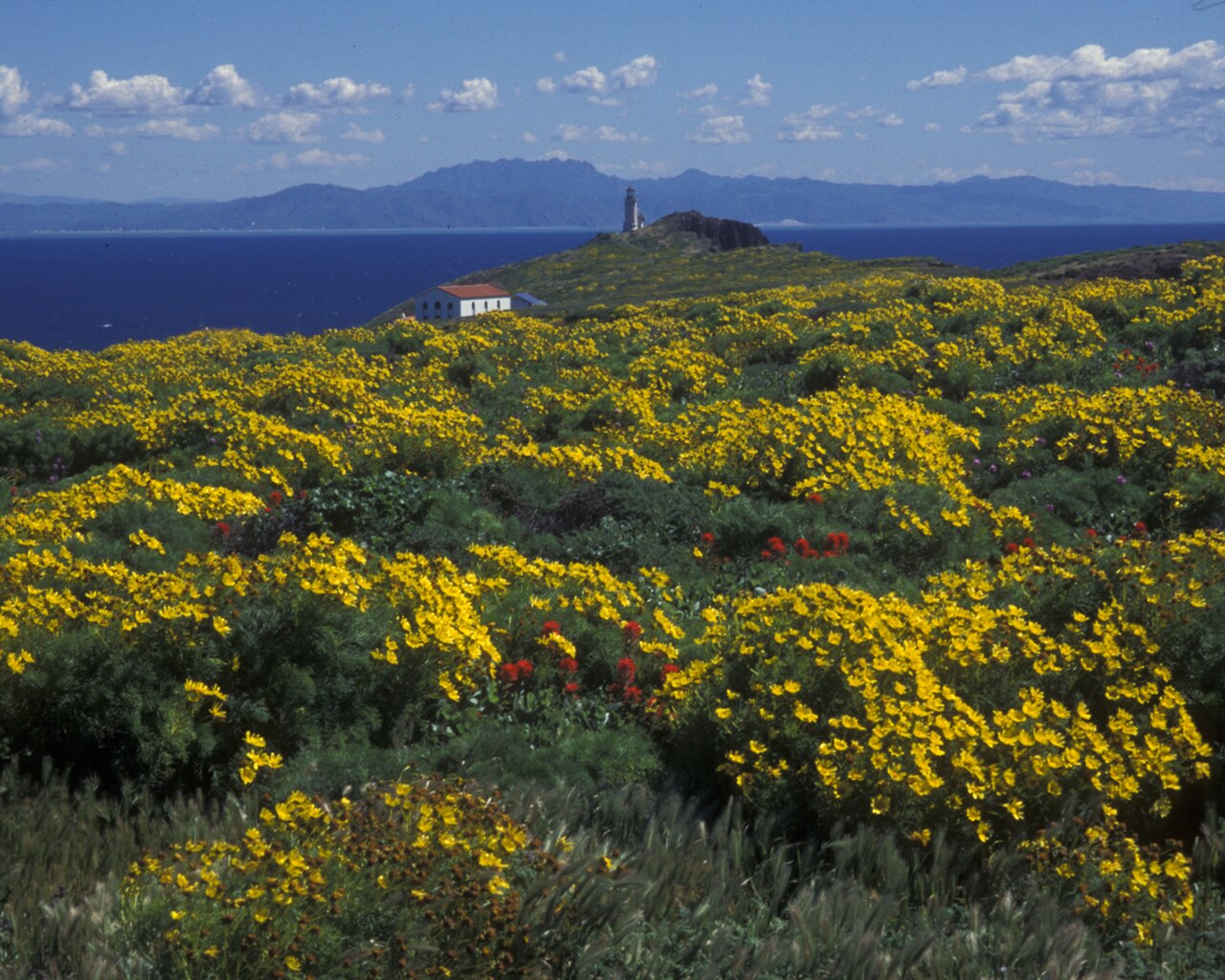
Coreopsis gigantea, known as Giant Coreopsis or tree coreopsis, is a remarkable succulent-stemmed shrub of the aster family (Asteraceae) that grows on coastal bluffs, dunes and island slopes of central and southern California. It is found from San Luis Obispo County south to Los Angeles County and on most of the Channel Islands.
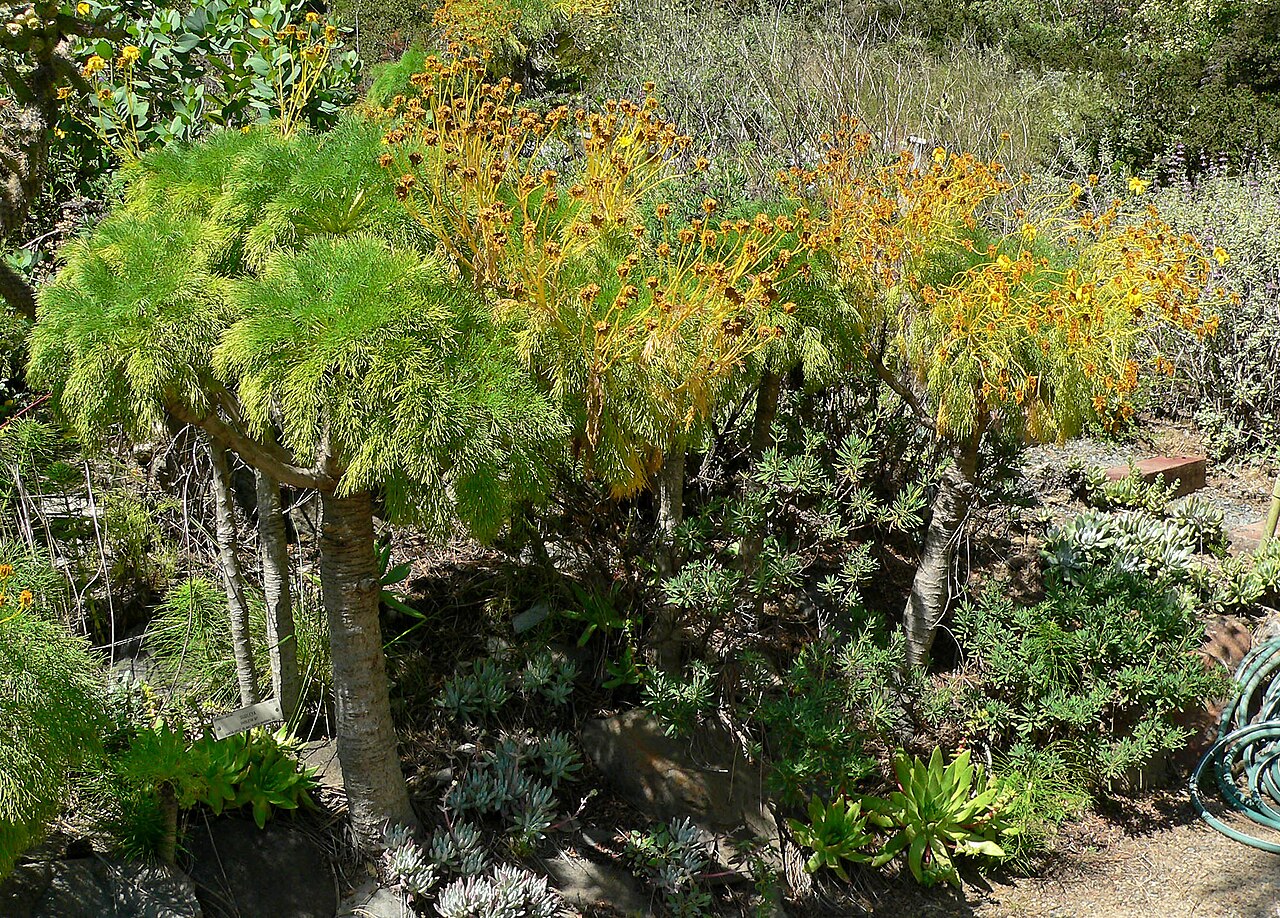
Giant coreopsis looks like something out of a storybook. It grows a thick, soft, often unbranched or sparsely branched trunk 3 to 6 feet tall (occasionally to about 10 feet), topped by a tuft of bright green, finely divided, feathery leaves. In late winter and spring the tufts burst into clusters of large yellow daisies, and on the Channel Islands whole hillsides turn gold.
It is summer-dormant. In the dry season it drops its leaves and stands as a bare, gray trunk, then leafs out again with the first fall and winter rains. It is a striking plant for coastal California gardens. This guide covers how to identify it, where it grows, how to grow it, and its value for wildlife.
Identification
Look for a plant with a thick, upright trunk like a small palm or tree-fern, topped by a mop of feathery, carrot-like leaves and, in spring, many bright yellow daisies. In summer it may be leafless.
Growth Habit
Giant coreopsis is a woody-based perennial or shrub. Its main stem is thick (often 3 to 4 inches across), soft and somewhat succulent, with a rough, gray bark marked by old leaf scars. It is usually 3 to 6 feet tall, sometimes up to about 10 feet, with one main trunk or a few branches. Older plants can look like small trees or cycads.
Leaves
The leaves are crowded at the tips of the stems. Each is 4 to 12 inches long and finely divided two or three times into many narrow, thread-like segments, giving a soft, feathery, fern-like or carrot-like look. They are bright green and hairless. The leaves fall during the summer drought and regrow after rains begin.
Flowers
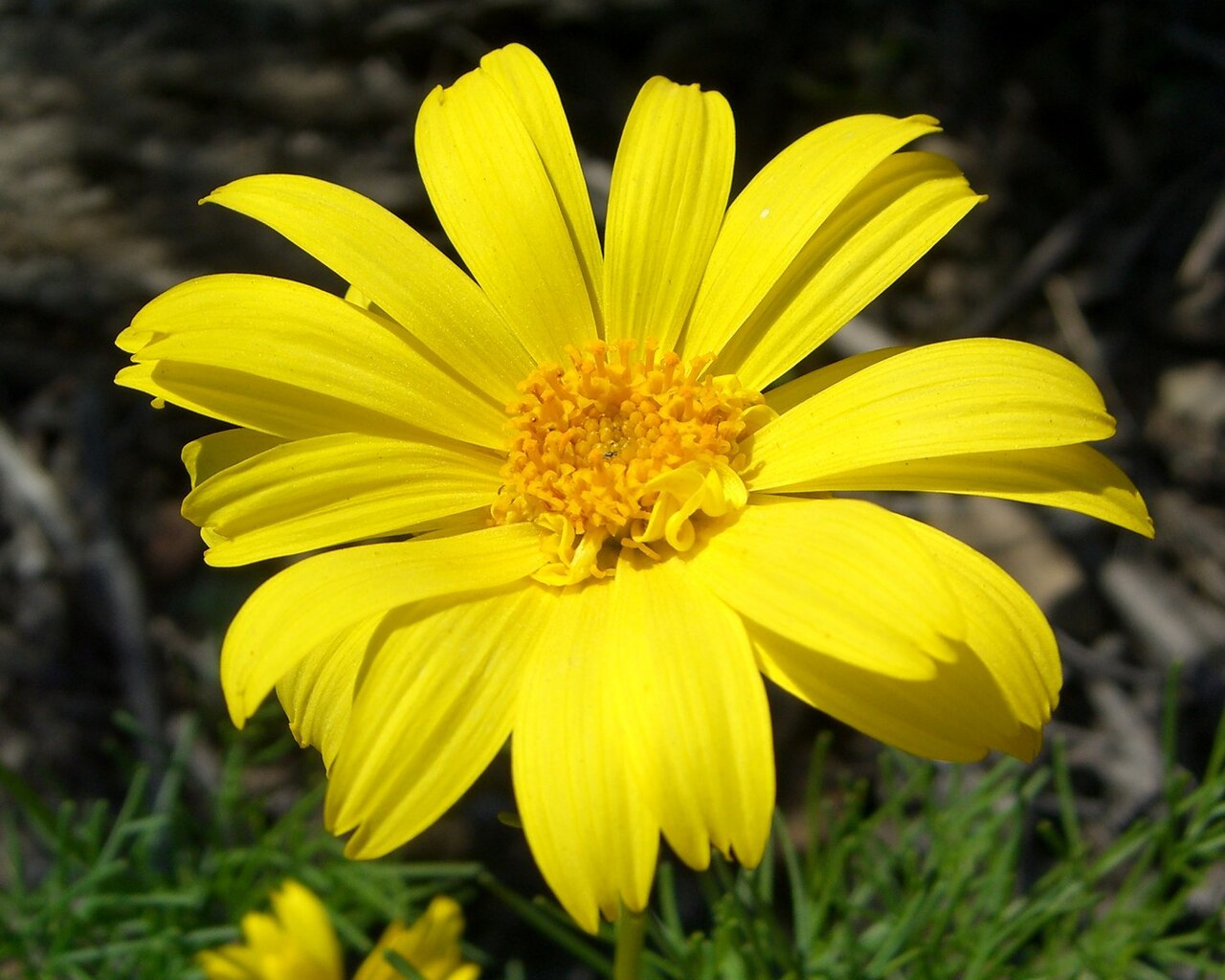
Flower heads appear in clusters on stalks above the leaves, usually from about February to May. Each head is 2 to 3 inches across, with 10 to 16 broad, bright yellow ray flowers around a yellow to golden disk. A single large plant can carry dozens of heads at once.
Fruit & Seeds
The fruits are small, flattened achenes (dry seeds) that ripen in late spring and early summer. Seed-eating birds such as finches take them from the old heads.
Look-alikes
On the coast, California encelia (Encelia californica) also has large yellow daisies, but its flowers have a dark brown center and its leaves are simple and oval, on a low, rounded shrub. Other coreopsis species in California are small annuals or low perennials without a trunk. The thick trunk and feathery leaves of giant coreopsis are unique.
Quick Facts
| Scientific Name | Coreopsis gigantea (Kellogg) H.M. Hall |
| Family | Asteraceae (aster or sunflower family) |
| Plant Type | Summer-deciduous succulent-stemmed shrub |
| Mature Height | 3–6 ft (occasionally to 10 ft) |
| Mature Spread | 2–4 ft |
| Growth Rate | Moderate |
| Sun Exposure | Full sun to light shade |
| Water Needs | Low; no summer water |
| Soil Type | Sandy, rocky or well-drained loam |
| Soil pH | About 6.0–8.0 |
| Bloom Time | February–May |
| Flower Color | Bright yellow |
| Fall Color | None; leaves drop in summer, regrow with fall rains |
| Fruit | Small flattened achenes |
| Deer Resistant | Moderately |
| USDA Hardiness Zones | 9–11 |
Native Range
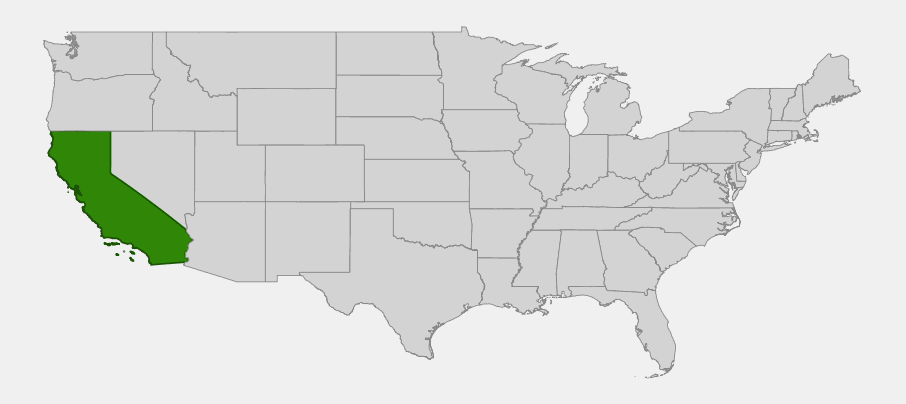
Giant coreopsis is a California native with a narrow, coastal range. USDA PLANTS lists it only for California, where it grows from San Luis Obispo County south through Santa Barbara and Ventura counties to Los Angeles County, and on most of the Channel Islands. Some references also include coastal Baja California, Mexico.
On the mainland it is found on coastal bluffs, sea cliffs and dunes, including the Guadalupe-Nipomo Dunes in San Luis Obispo and Santa Barbara counties and the coastal slopes of the Santa Monica Mountains around Malibu. On the Channel Islands, such as Anacapa, Santa Barbara, San Miguel, Santa Rosa and Santa Cruz Islands, it forms extensive stands on slopes and bluffs.
It grows in maritime coastal sage scrub, coastal dune scrub and on rocky bluffs within reach of fog and ocean breezes, almost always within a few miles of the ocean. The cool, foggy climate softens summer drought, and the plant avoids the driest months by going dormant.
📋 Regional plant lists featuring Giant Coreopsis: California & Nevada
Growing & Care Guide
Giant coreopsis is a dramatic, sculptural plant for coastal California gardens and is sold by many native plant nurseries. It is easy to grow near the coast if you give it sharp drainage and respect its summer dormancy.
Light
Give it full sun on the coast. In hotter inland gardens it does better with afternoon shade, and it generally grows best within reach of marine air.
Soil & Water
Plant it in well-drained sandy, gravelly or rocky soil; it also grows on slopes in loam. Water it during its first winter if rains are sparse. Once established it needs no summer water at all, and summer irrigation can rot the trunk. Let it go bare in summer; this is normal.
Planting Tips
Plant in fall or early winter so the rains establish it. It looks best in groups, on a slope or bluff, or as a focal point among low coastal sage scrub plants. It is frost-tender and is damaged by hard freezes, so it is best near the coast in zones 9 to 11.
Pruning & Maintenance
Little care is needed. Cut off old flower stalks after seeds have dropped if you want a tidier look, or leave them for birds. Do not cut into the trunk. Plants can live for many years but may decline after a decade or more; let some seedlings grow as replacements.
Propagation
Grow it from fresh seed sown in fall or winter in a well-drained mix; seedlings grow quickly. It can also be grown from stem cuttings taken in winter while the plant is actively growing. Never dig plants from bluffs or dunes.
Landscape Uses
- Coastal gardens: a sculptural “tree sunflower” accent for sandy or rocky seaside gardens
- Slopes and bluffs: helps cover dry slopes with spring color
- Pollinator gardens: masses of yellow flowers for bees and other insects in late winter
- Bird gardens: seeds eaten by finches and other small birds
- Habitat restoration: a key plant of coastal bluff and island scrub restoration
Wildlife & Ecological Value
Giant coreopsis flowers at a time when few other plants are in bloom on the coast, so it is an important food source in late winter and spring.
For Pollinators
Its many open, yellow daisies attract native bees, honey bees, flies, beetles and butterflies, providing pollen and nectar from late winter into spring.
For Birds
Finches such as lesser goldfinches and house finches eat the seeds from the dry flower heads, and songbirds hunt insects among the foliage.
For Mammals
Small mammals use the base of the plants and the surrounding scrub for cover. On the Channel Islands, giant coreopsis stands are an important part of the native scrub used by island wildlife.
Ecosystem Role
On the Channel Islands, giant coreopsis declined during years of grazing by introduced sheep, goats and other livestock. Since grazing animals were removed, it has recovered on several islands, and its yellow hillsides are now one of the signature sights of Channel Islands National Park.
Cultural & Historical Uses
The genus name Coreopsis comes from Greek words meaning “bug-like”, for the seeds, which resemble ticks; the common name tickseed has the same origin. Gigantea means “giant”. The species was first described by the California botanist Albert Kellogg as Leptosyne gigantea, and some modern references, including several California floras, have returned it to the genus Leptosyne.
Giant coreopsis is a classic example of island and coastal “gigantism”, in which plants related to small herbs evolve into tall, woody forms in mild, frost-free maritime climates.
Its spring display is famous. Visitors travel to the Channel Islands and to places such as “Coreopsis Hill” in the Guadalupe-Nipomo Dunes to see the bright yellow flowers, which bloom against the blue ocean in late winter and early spring.
Frequently Asked Questions
Why does my giant coreopsis lose its leaves in summer?
It is summer-dormant. In the wild it drops its leaves during the dry season and regrows them after fall and winter rains begin. Do not water it heavily in summer to try to keep it green.
When does giant coreopsis bloom?
Usually from about February to May, depending on rainfall and location.
How tall does giant coreopsis grow?
Most plants are 3 to 6 feet tall with a thick trunk, and old plants occasionally reach about 10 feet.
Can I grow giant coreopsis inland?
It grows best near the coast. Inland it needs afternoon shade, excellent drainage and protection from hard frost, and it may be short-lived.
Where can I see giant coreopsis in the wild?
Channel Islands National Park, especially Anacapa Island, the Guadalupe-Nipomo Dunes and coastal bluffs of the Santa Monica Mountains are good places to see it in late winter and spring.

Looking for a nursery that carries Giant Coreopsis?
Browse our native plant nursery directory: California

