
Fernald’s Iris (Iris fernaldii)
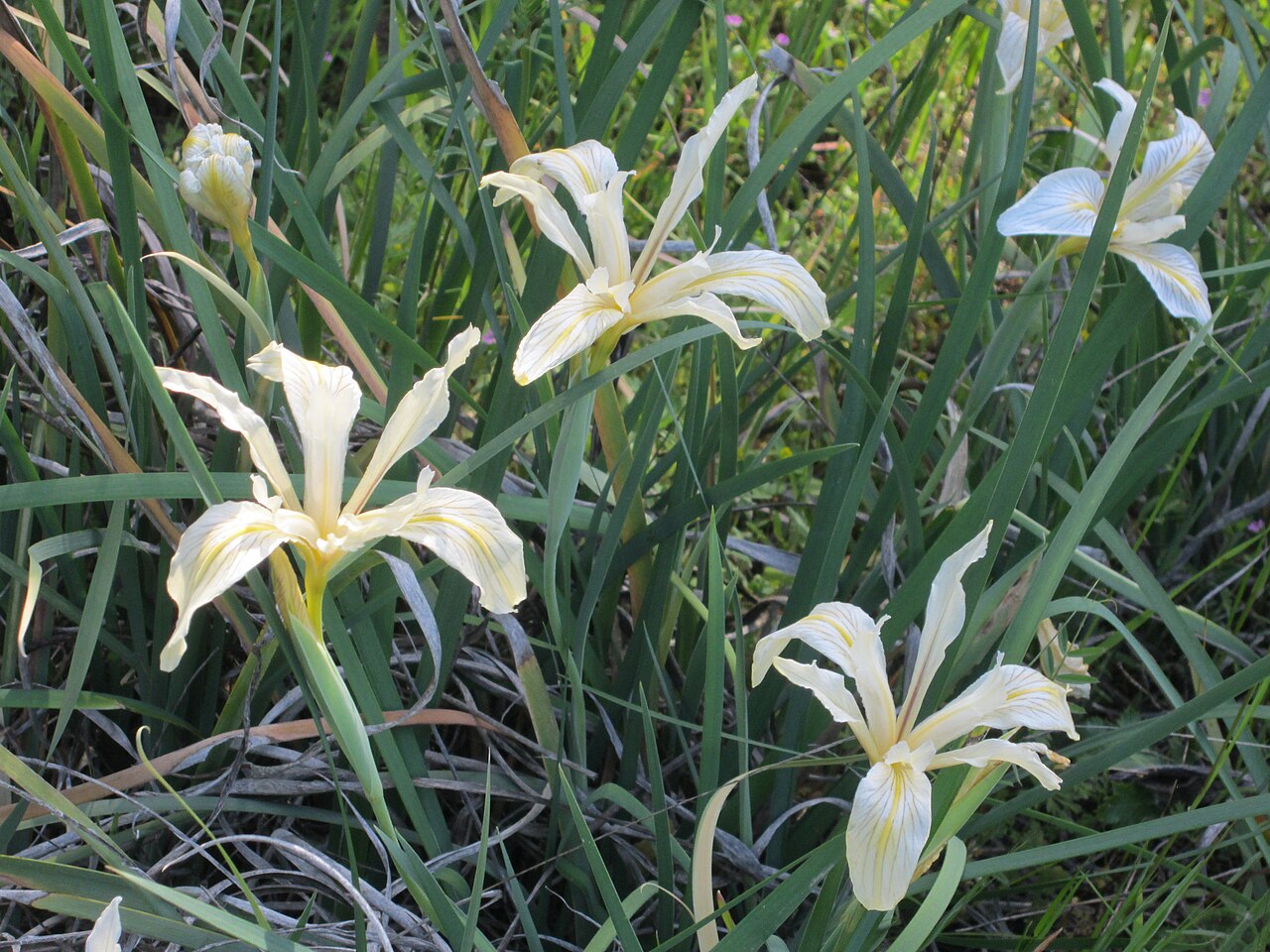
Iris fernaldii, known as Fernald’s Iris, is a small, pale-flowered iris found only in California. It grows on grassy slopes, in open oak woodland and along the edges of forests and chaparral in the Coast Ranges around the San Francisco Bay Area, from Sonoma, Napa and Lake counties south to the Santa Cruz Mountains. In spring it opens creamy white to soft yellow flowers, finely veined with gray or brown, above tufts of narrow gray-green leaves.
It is one of the Pacific Coast irises (series Californicae), a group of about a dozen closely related species from California, Oregon and Washington that are famous for their beauty and their willingness to hybridize. Fernald’s iris is one of the palest of the group, and its long, slender floral tube and gray-green leaves tinged pink or purple at the base help tell it apart from its common neighbor, Douglas iris.
For California gardeners, Fernald’s iris is a graceful, summer-dry perennial for woodland edges and native gardens, and it is sold by a few native plant nurseries. This guide covers how to identify it, where it grows, and how to grow it.
Identification
Pacific Coast irises are notoriously variable and often hybridize where their ranges meet. Fernald’s iris is best identified by a combination of features: pale yellow to cream flowers, a long floral tube, and narrow gray-green leaves with colored bases.
Leaves & Rhizomes
The plant grows from slender, creeping rhizomes and forms loose clumps. The leaves are narrow, sword-like, about ¼ inch wide and up to about a foot tall, gray-green to bluish-green, and often pink, red or purple at the base and along the edges. They are evergreen in mild climates, though they look tired by late summer.
Flowers
Each stem, usually a little shorter than or about as tall as the leaves, carries one or two flowers between a pair of green bracts. The flowers are about 2½ to 3½ inches across, creamy white to pale or rich yellow, rarely tinged lavender, with fine gray, brown or purplish veins. The three falls (outer petal-like parts) curve downward and have a deeper yellow center, and the three standards stand more upright. Below the flower is a slender floral tube, roughly 1 to 2 inches long, longer than in Douglas iris. It blooms from about April to June.
Fruit
After flowering, the plant forms a three-sided, oblong capsule that splits open in summer to release dark brown, angular seeds.
Similar Species
Douglas iris (I. douglasiana) is a bigger, coarser plant with broader, glossy dark green leaves, a short floral tube and usually lavender to purple flowers. Ground iris (I. macrosiphon) also has a long tube but is shorter, with very narrow leaves, and its flowers are often deep purple or golden. Where Fernald’s iris meets these species, intermediate hybrids are common, and in Marin County nearly all plants are hybrids with Douglas iris.
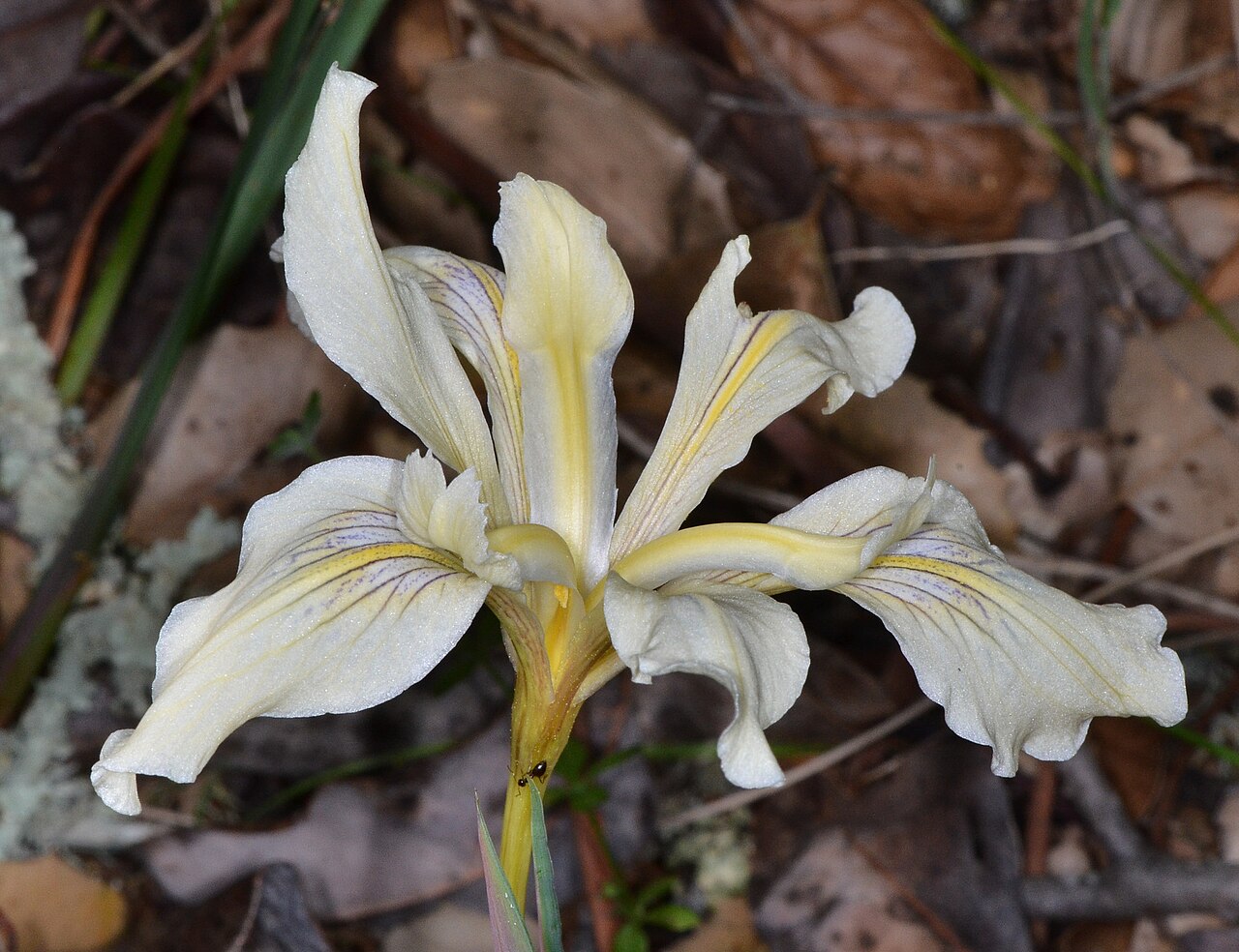
Quick Facts
| Scientific Name | Iris fernaldii R.C. Foster |
| Family | Iridaceae (iris family) |
| Plant Type | Rhizomatous herbaceous perennial (Pacific Coast iris) |
| Mature Height | 8–16 in |
| Mature Spread | 12–18 in clumps |
| Growth Rate | Moderate |
| Sun Exposure | Full sun near the coast; partial shade inland |
| Water Needs | Low; summer-dry once established |
| Soil Type | Well-drained loam, clay loam or rocky soil |
| Soil pH | About 5.5–7.0 (slightly acidic to neutral) |
| Bloom Time | April–June |
| Flower Color | Creamy white to pale yellow with fine darker veins |
| Fall Color | None; leaves evergreen but may brown in late summer |
| Fruit | Three-sided capsule with brown seeds |
| Deer Resistant | Yes; usually avoided by deer |
| USDA Hardiness Zones | 7–10 |
Native Range
Fernald’s iris is endemic to California. USDA PLANTS lists it only from California, where it grows in the Coast Ranges of the northern and central part of the state: in Sonoma, Napa and Lake counties, around the San Francisco Bay Area, and south into the Santa Cruz Mountains in San Mateo, Santa Clara and Santa Cruz counties.
It grows on grassy slopes, in openings and along edges of oak woodland, mixed evergreen forest and redwood or Douglas-fir forest, and at the margins of chaparral. Near the coast it often grows in full sun, while inland it is more often found in partial shade on north-facing slopes or under open trees. It usually grows at low to middle elevations in the Coast Ranges.
Like other Pacific Coast irises, it hybridizes readily with its neighbors. In Marin County it has merged so thoroughly with Douglas iris that pure plants are no longer found there, and in the Santa Cruz Mountains and North Coast Ranges intermediate plants are common where species meet.
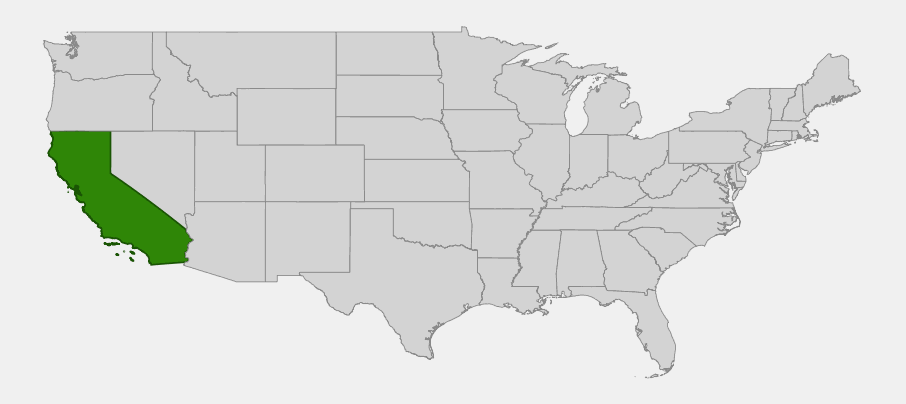
📋 Regional plant lists featuring Fernald’s Iris: California & Nevada
Growing & Care Guide
Fernald’s iris is easy in California gardens with a Mediterranean climate. Like other Pacific Coast irises, it wants good drainage, winter rain and a dry summer, and it resents being moved. Buy plants from a native plant nursery, and avoid digging wild plants.
Light
Near the coast, grow it in full sun or light shade. In hot inland gardens give it afternoon shade or the filtered light of oaks, as it gets on shaded slopes in the wild.
Soil & Water
It grows in many soils, from loam to clay, as long as water does not sit around the rhizomes. Slightly acidic to neutral soil is best. Water regularly through the first winter and spring. Once established it needs little or no summer water near the coast; inland, an occasional deep watering in summer keeps it from going completely dormant. Too much summer water, especially in warm weather, invites root rot.
Planting Tips
Plant in fall or early winter, at the start of the rainy season, when new white roots are growing. Set the rhizomes shallowly and water them in well. Pacific Coast irises dislike root disturbance, so plant small, well-rooted container plants and keep them moist until established. Space plants about a foot apart. They look best in drifts at woodland edges, under oaks, or among native grasses.
Pruning & Maintenance
Remove old, browned leaves in late summer or fall to tidy clumps, pulling them gently or cutting them at the base. Cut off spent flower stalks unless you want seed. No fertilizer is needed. Divide only when clumps decline, and do it in fall or early winter when new roots are forming.
Propagation
Grow it from fresh seed sown outdoors in fall; seedlings usually flower in two to three years. Divisions also work if taken in late fall or early winter with plenty of new roots attached. Because Pacific Coast irises cross easily, seed from gardens with several species may produce hybrids.
Landscape Uses
- Woodland gardens: under oaks and at the edges of native woodland plantings
- Summer-dry native gardens: a low-water perennial for California Mediterranean-climate gardens
- Meadows and grassy slopes: with native bunchgrasses, blue-eyed grass and spring wildflowers
- Erosion control: its spreading rhizomes help hold soil on gentle slopes
- Habitat restoration: in Coast Range grassland and woodland restoration within its native range
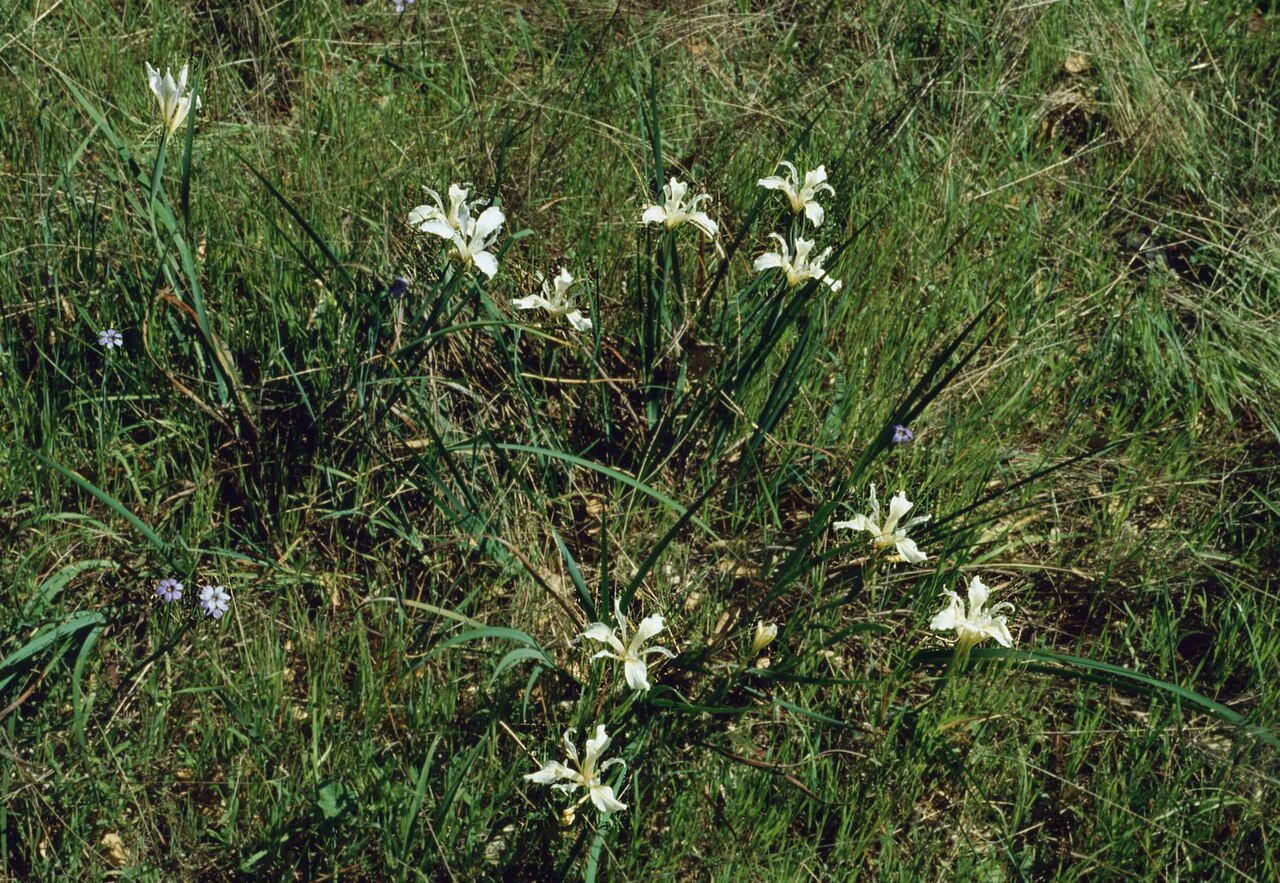
Wildlife & Ecological Value
Fernald’s iris is part of the spring flower display of Coast Range woodlands and grasslands, and it supports native bees and other insects.
For Pollinators
The flowers are visited mostly by bees, including bumble bees, mason bees and other native bees, which follow the veins on the falls to the nectar at the base of the long floral tube. Bee flies and other insects with long mouthparts also visit.
For Birds
The plant has no major food value for birds, but its clumps provide some cover for ground-feeding birds at woodland edges.
For Mammals
Iris leaves and rhizomes contain irritating compounds, and deer and rabbits usually leave them alone. Gophers may occasionally eat the rhizomes.
Ecosystem Role
As a long-lived, rhizomatous perennial, it helps hold soil on slopes and contributes to the native herb layer of oak woodlands and grasslands. Its tendency to hybridize with other Pacific Coast irises makes it part of a natural laboratory that botanists use to study how plant species form and merge.
Cultural & Historical Uses
Robert C. Foster of Harvard University described Iris fernaldii in the 1930s, naming it after the Harvard botanist Merritt Lyndon Fernald, one of the leading American plant taxonomists of his era.
Native peoples of California used fibers from the leaves of Pacific Coast irises, especially Douglas iris, to make strong, fine cordage for nets and snares. Each leaf yields only a couple of fine fibers, and a single net could take many thousands of leaves. Records rarely distinguish between the different iris species, so Fernald’s iris may have been used in the same way where it grew.
Today Fernald’s iris is grown by native plant enthusiasts and Pacific Coast iris specialists, and the pale yellow and cream tones of this group of species appear in many modern Pacific Coast iris hybrids. Iris rhizomes and leaves are mildly toxic and should not be eaten by people or pets.
Frequently Asked Questions
Where does Fernald’s iris grow?
Only in California, in the Coast Ranges from Sonoma, Napa and Lake counties south through the San Francisco Bay Area to the Santa Cruz Mountains. It grows on grassy slopes and in open woodland and forest edges.
What color are Fernald’s iris flowers?
Usually creamy white to pale or rich yellow, with fine gray, brown or purplish veins and a deeper yellow center on the falls. Rarely, flowers are tinged with lavender, often a sign of hybridization with other irises.
How do I tell Fernald’s iris from Douglas iris?
Fernald’s iris has narrower, gray-green leaves with pink or purple bases, pale yellow to cream flowers and a long, slender floral tube. Douglas iris has broader, glossy dark green leaves, usually lavender to purple flowers and a short tube.
Does Fernald’s iris need summer water?
Not near the coast once established. In hot inland gardens, an occasional deep watering in summer helps, but frequent summer watering in warm weather can rot the rhizomes.
When is the best time to plant or divide Fernald’s iris?
In fall or early winter, when the rains begin and new roots are growing. Pacific Coast irises transplant poorly at other times of year.

Looking for a nursery that carries Fernald’s Iris?
Browse our native plant nursery directory: California

