
Longleaf Buckwheat (Eriogonum longifolium)
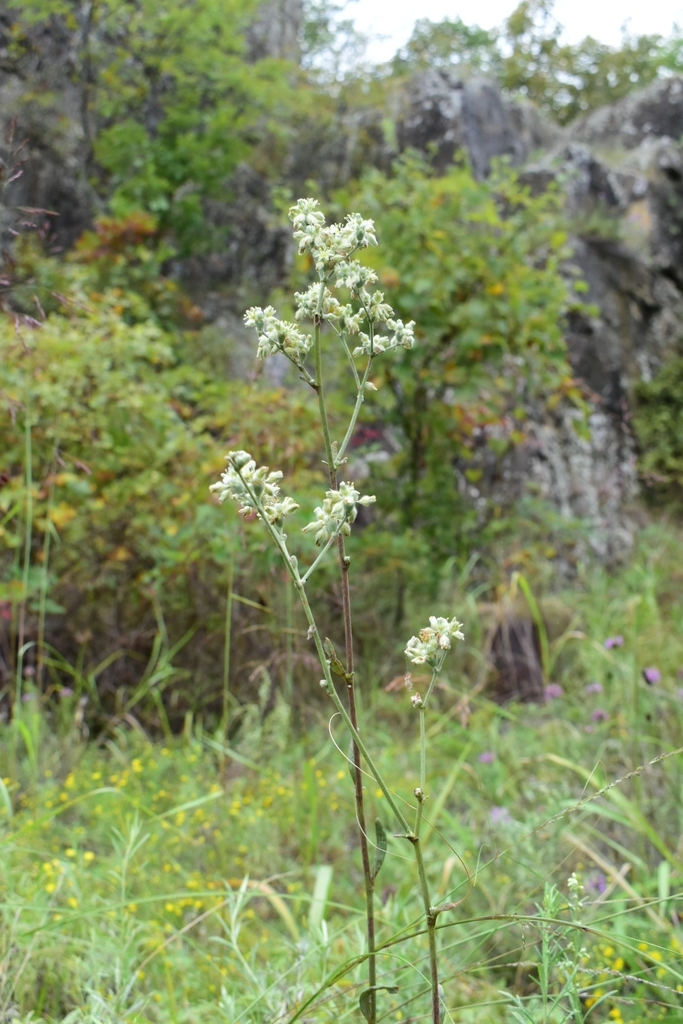
Eriogonum longifolium, known as Longleaf Buckwheat, longleaf wild buckwheat or longleaf eriogonum, is a tall, deep-rooted perennial in the buckwheat family (Polygonaceae). From a rosette of long, narrow leaves that are silvery-woolly underneath, it sends up branched flowering stems 2 to 5 feet tall, sometimes taller, topped by airy clusters of small, hairy, cream to yellowish-white flowers from summer into fall. It is one of the few wild buckwheats native east of the Rocky Mountains.
The species is split into three varieties with very different ranges. Variety longifolium grows in sandy and rocky prairies, open woods and roadsides from Missouri and Kansas south to Texas, Louisiana and New Mexico. Variety harperi, Harper’s buckwheat or Harper’s umbrella plant, is a rare plant of limestone and gravel sites in Alabama, Tennessee and Kentucky. Variety gnaphalifolium, the scrub buckwheat of central Florida, is sometimes treated as a separate species, Eriogonum floridanum.
Scrub buckwheat is listed as Threatened under the federal Endangered Species Act, and Harper’s buckwheat is critically imperiled. Never dig or collect any longleaf buckwheat from the wild; grow only nursery-propagated plants or seed from legal, responsibly managed sources. In the right garden, a dry, sunny, sandy or rocky site, it is a striking, long-lived plant for pollinators.
Identification
Look for a rosette of long, narrow leaves that are green on top and silvery-white woolly beneath, and tall, forked stems carrying loose clusters of small, fuzzy, cream flowers.
Growth Habit
Longleaf buckwheat is a long-lived perennial with a thick, deep taproot. It forms a basal rosette of leaves and, in summer, one to a few erect flowering stems 2 to 5 feet tall (recorded to about 5 1/2 feet), branching repeatedly near the top. The stems are woolly, especially when young.
Leaves
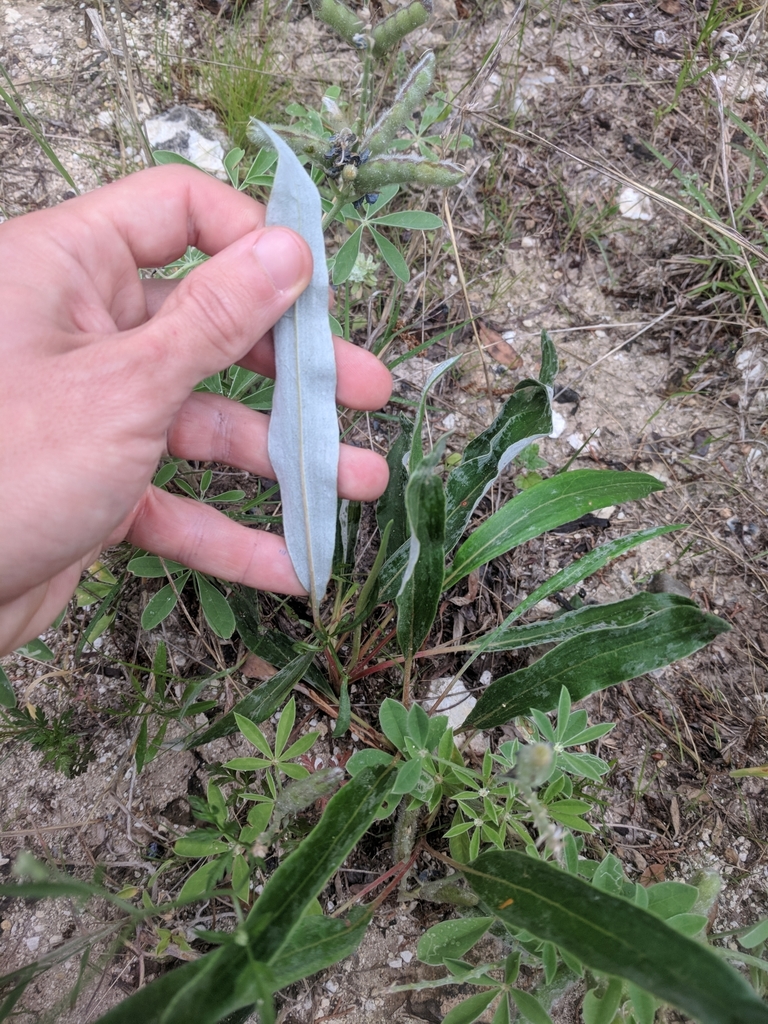
The basal leaves are 3 to 8 inches long (occasionally longer) and 1/4 to 1 inch wide, narrowly lance-shaped to oblong, tapering to a long stalk. They are green and nearly smooth to thinly woolly above and densely covered with silvery-white wool underneath. Smaller leaves grow along the lower part of the flowering stem, and narrow, leaf-like bracts appear where the stems fork.
Flowers
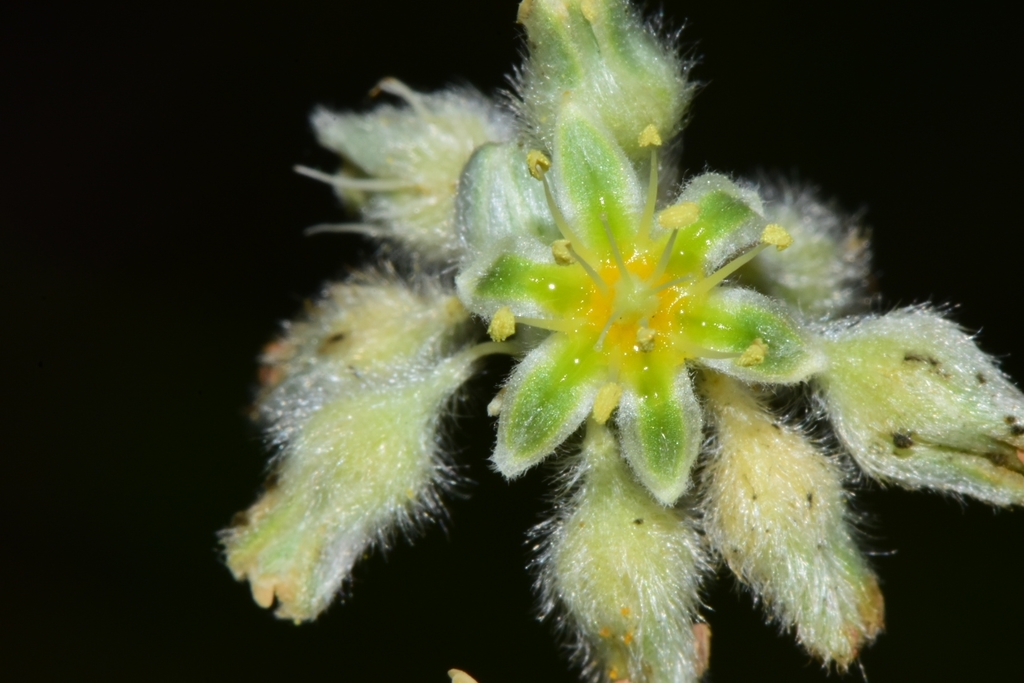
The flowers are borne in many small, cup-shaped clusters (involucres) arranged along the branches of an open, forked inflorescence. Each flower is about 1/4 inch long, with six tepals that are cream, yellowish-white or greenish-yellow and densely hairy on the outside, giving the clusters a soft, fuzzy look. Bloom time is mainly July to October; Florida plants may start in June.
Fruit & Seeds
Each flower produces a single, small, three-angled brown achene, typical of the buckwheat family. The dried flower clusters turn tan to rusty brown and stay on the stems into winter.
Varieties & Look-alikes
Variety harperi has narrower, smoother leaves and sometimes grows on gravel bars and limestone outcrops. Scrub buckwheat (variety gnaphalifolium) has smaller, very woolly leaves and grows in sandhills and scrub. Other eastern wild buckwheats, such as annual buckwheat (Eriogonum annuum) and dogtongue buckwheat (E. tomentosum), are densely hairy all over and have different leaf shapes. Western relatives such as sulfur buckwheat are lower, mat-forming plants with umbrella-like flower clusters.
Quick Facts
| Scientific Name | Eriogonum longifolium |
| Family | Polygonaceae (buckwheat family) |
| Plant Type | Long-lived herbaceous perennial with a taproot |
| Mature Height | 2–5 ft in flower |
| Mature Spread | 1–2 ft |
| Growth Rate | Slow to moderate |
| Sun Exposure | Full sun |
| Water Needs | Low; very drought tolerant |
| Soil Type | Deep sand, sandy loam, gravel or rocky limestone soils; excellent drainage |
| Soil pH | Acidic to alkaline, depending on variety (about 5.0–8.0) |
| Bloom Time | June/July–October |
| Flower Color | Cream to yellowish-white |
| Fall Color | Rusty-tan seed heads |
| Fruit | Small, three-angled achenes |
| Deer Resistant | Moderately |
| USDA Hardiness Zones | 6–10 |
Native Range
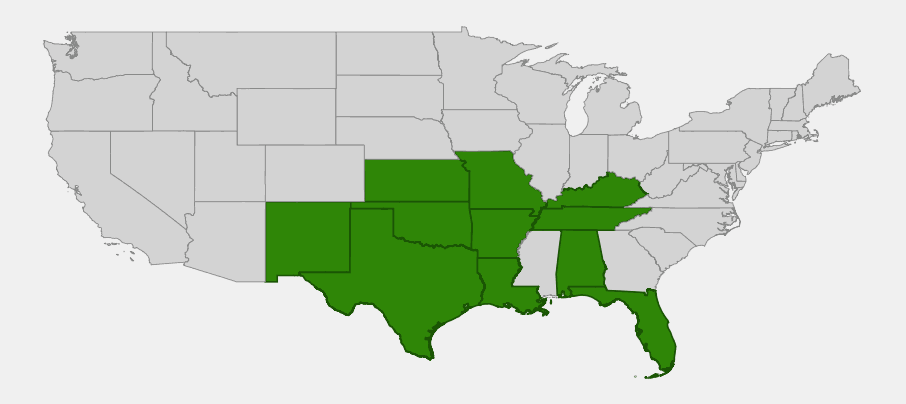
Longleaf buckwheat is native to the southern and south-central United States. USDA PLANTS lists it from 11 states. Variety longifolium covers most of that range, from southern Missouri and eastern Kansas south through Arkansas, Oklahoma and Louisiana to Texas and New Mexico. In Texas it is most common in the Cross Timbers and Blackland Prairie around Dallas and Fort Worth, and it also grows in the Post Oak Savanna of East Texas, on the Rolling Plains and in the Panhandle.
Variety harperi is known from a few sites in northern Alabama and middle Tennessee. NatureServe ranks it as critically imperiled in both states and lists it as historical in Kentucky, where it has not been seen in decades. Variety gnaphalifolium is restricted to central Florida, mainly the Lake Wales Ridge and nearby sandhills, and is listed as Threatened by the U.S. Fish and Wildlife Service.
Habitats vary with the variety: sandy and rocky prairies, post oak and Cross Timbers woodland openings, granite and limestone outcrops, and roadsides for variety longifolium; limestone outcrops, barrens and gravelly river bars for variety harperi; and longleaf pine-turkey oak sandhills and scrub with deep, dry sand for scrub buckwheat. It does not occur in Canada.
📋 Regional plant lists featuring Longleaf Buckwheat: Kentucky & Tennessee · Nebraska, Kansas & Eastern Colorado · Illinois, Iowa & Missouri · Alabama, Georgia & Mississippi · North & South Florida · Arkansas, Louisiana, Eastern Oklahoma & Eastern Texas · South & West Texas
Growing & Care Guide
Longleaf buckwheat is a plant for patient gardeners with dry, sunny, well-drained ground. Its deep taproot makes it extremely drought tolerant once established but also means it resents being moved. Buy only nursery-propagated plants, and never collect from the wild, especially the rare Florida and Tennessee-Alabama varieties.
Light
Full sun is essential. Plants in shade stretch, flower poorly and are prone to rot.
Soil & Water
Plant it in deep sand, sandy loam, gravel or rocky soil with excellent drainage. Heavy, wet soil and winter wetness are the main causes of failure. Water only while it is getting established; after that it needs no watering in most years.
Planting Tips
Set out small, container-grown plants in spring or fall so the taproot is not disturbed. It works well in prairie and sandhill plantings, gravel gardens and on dry, sunny slopes, with low grasses such as little bluestem that will not crowd it.
Pruning & Maintenance
Leave the flowering stems standing through winter for their rusty seed heads and for wildlife, and cut them down in late winter. Do not fertilize. Keep taller, aggressive plants from shading the rosette.
Propagation
Grow it from fresh seed sown in fall or after a period of cold, moist stratification; germination can be slow and uneven. Sow into deep pots to accommodate the taproot. Established plants should not be divided or transplanted.
Landscape Uses
- Pollinator gardens: late-summer flowers for bees, wasps and butterflies
- Prairie and sandhill restoration: a native forb for sandy and rocky sites
- Xeriscapes: deep-rooted and drought-proof
- Gravel and rock gardens: silvery leaves and tall, airy flower stems
- Winter interest: rusty-tan seed heads
Wildlife & Ecological Value
Wild buckwheats are among the most important nectar plants in the West, and longleaf buckwheat plays a similar role in the open habitats of the south-central states and Florida.
For Pollinators
The many small flowers produce nectar and pollen over a long season and are visited by native bees, wasps, flies, beetles and butterflies. In Florida scrub, scrub buckwheat is one of the late-summer nectar sources for the insects of this specialized habitat.
For Birds
Seed-eating birds such as sparrows feed on the small achenes in fall and winter.
For Mammals
The woolly leaves are not a preferred food for deer, though they may browse the flowering stems. Small mammals eat the seeds.
Ecosystem Role
Its deep taproot helps it survive drought and fire, and it resprouts after burns in prairies and sandhills. Many wild buckwheats are host plants for hairstreak and blue butterflies and small moths, and longleaf buckwheat supports the insect life of the open, fire-maintained habitats where it grows.
Cultural & Historical Uses
The genus name Eriogonum comes from Greek words meaning “woolly knees,” referring to the hairy joints of the stems of many species. The species name longifolium means “long-leaved.”
According to the University of Michigan’s Native American Ethnobotany database, the Kiowa used longleaf buckwheat as a food and the Comanche used it as a medicine. These are traditional uses and are not recommendations.
Scrub buckwheat was listed as Threatened under the federal Endangered Species Act in 1993, along with other plants of the Lake Wales Ridge, because most of its sandhill and scrub habitat has been converted to citrus groves and housing. Prescribed fire, which keeps scrub open, is important for its survival.
Frequently Asked Questions
Is longleaf buckwheat related to the buckwheat we eat?
Yes, both belong to the buckwheat family (Polygonaceae), but longleaf buckwheat is a wild perennial in a different genus from cultivated buckwheat (Fagopyrum).
Is longleaf buckwheat endangered?
The species as a whole is secure, but two of its varieties are rare. Florida’s scrub buckwheat is federally listed as Threatened, and Harper’s buckwheat in Alabama, Tennessee and Kentucky is critically imperiled.
Can I grow longleaf buckwheat in my garden?
Yes, if you have full sun and very well-drained, sandy or rocky soil. Buy only nursery-propagated plants, and never collect from wild populations.
When does longleaf buckwheat bloom?
Mainly from July to October, with small cream to yellowish flowers on tall, branched stems.
Why are the leaves white underneath?
The undersides are covered with dense, woolly hairs that reflect sunlight and reduce water loss, an adaptation to hot, dry, sandy or rocky habitats.

Looking for a nursery that carries Longleaf Buckwheat?
Browse our native plant nursery directory: Alabama & Arkansas · Florida · Kansas · Kentucky, Louisiana & Missouri · New Mexico & Oklahoma · Tennessee & Texas

