
Coinvine (Dalbergia ecastaphyllum)
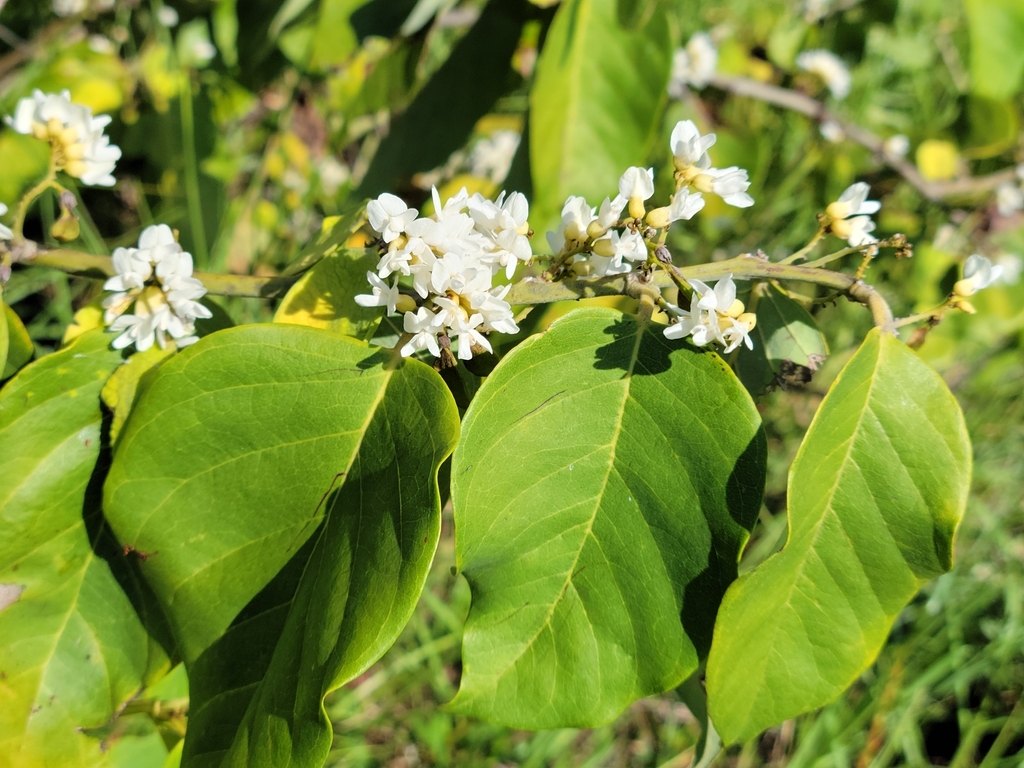
Dalbergia ecastaphyllum, known as Coinvine or coin vine, is a sprawling, salt-tolerant shrub of tropical and subtropical coastlines. In the United States it grows along the coasts of central and southern Florida, and it is also native to Puerto Rico and the U.S. Virgin Islands. It forms dense thickets on the landward edges of mangrove swamps, along brackish shorelines and in coastal hammocks, where its long, arching branches scramble over other plants or sprawl along the ground.
Coinvine belongs to the pea and bean family (Fabaceae), in the same genus as the famous rosewoods. Unlike its timber-tree relatives it is a shrub, usually 3 to 10 feet tall, with simple, glossy, oval leaves. In spring and summer it carries clusters of small, fragrant, white or pinkish pea flowers, and these ripen into flat, round, one-seeded pods that look like small coins and give the plant its name.
Its range is unusually wide: it grows on Atlantic coasts on both sides of the ocean, from Florida, the Caribbean and Central and South America to West Africa. For Florida gardeners and land managers, coinvine is a tough native shrub for coastal buffers, shoreline stabilization and wildlife plantings. This guide covers how to identify it, where it grows, and how to grow it.
Identification
Coinvine is easiest to recognize by its combination of simple, oval leaves arranged alternately along long, arching stems, its clusters of small white pea flowers, and its distinctive round, flat pods.
Growth Habit
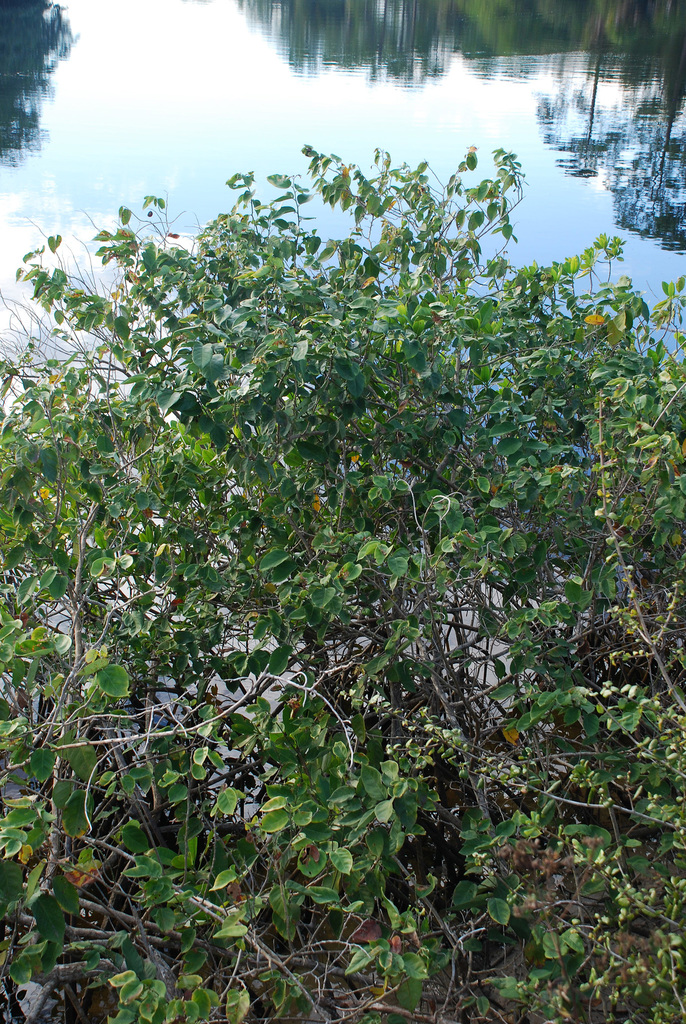
Coinvine is a sprawling shrub or scrambling, vine-like plant. Its long, flexible branches arch outward and may climb into nearby trees or lie along the ground, where they often root. Over time a single plant can form a dense thicket. Plants are usually 3 to 10 feet tall, though they can climb higher into mangroves or hammock trees. Young twigs are covered in fine brownish hairs.
Leaves
Although it belongs to a genus with compound leaves, coinvine has what botanists call unifoliolate leaves: each leaf consists of a single leaflet on a short stalk. The leaves are alternate, oval to elliptic, about 2 to 5 inches long, with a short, pointed tip and smooth edges. They are glossy, bright to dark green above and paler, often finely hairy, beneath, with a fine network of veins.
Flowers
The flowers are small, about ⅓ inch long, white to pale pink, and shaped like typical pea flowers with a banner, wings and keel. They are fragrant and are held in short, dense clusters in the leaf axils along the branches. Coinvine blooms mainly from spring into summer (about April to August in Florida).
Fruit
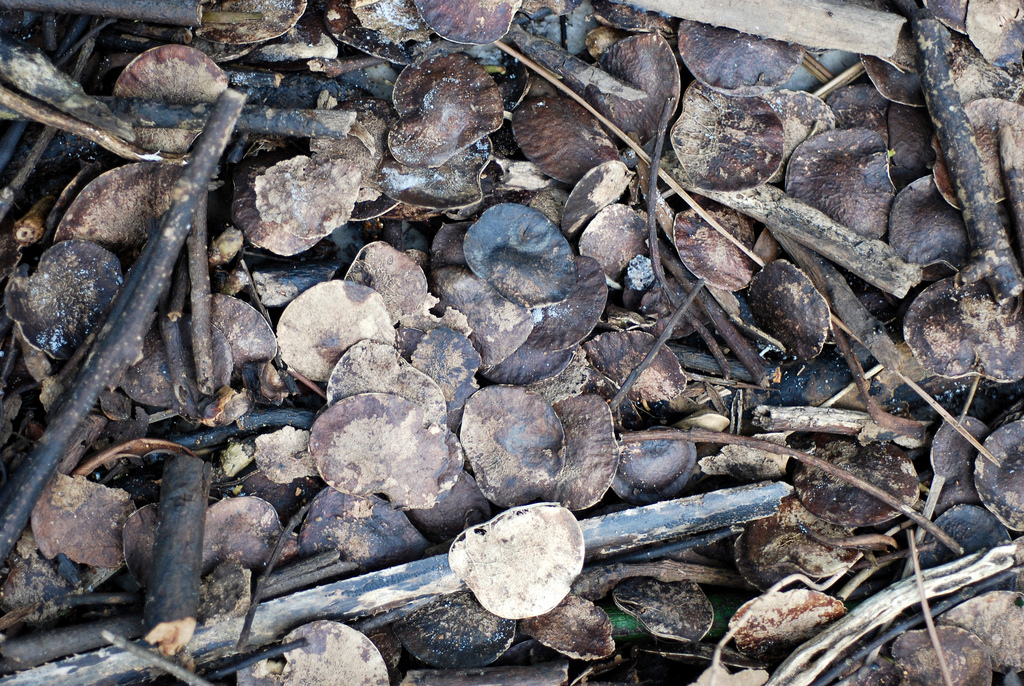
The fruit is the most distinctive part of the plant. It is a flat, rounded to kidney-shaped pod about ¾ to 1 inch across, green at first and drying to brown, with a single seed in the center. The pods do not split open. They fall from the plant, float and can be carried long distances by water, which helps explain the species’ wide range on Atlantic shores.
Quick Facts
| Scientific Name | Dalbergia ecastaphyllum (L.) Taub. |
| Family | Fabaceae (pea and bean family) |
| Plant Type | Evergreen sprawling shrub or scrambling woody vine |
| Mature Height | 3–10 ft (higher when climbing into trees) |
| Mature Spread | 6–15 ft; forms thickets |
| Growth Rate | Moderate to fast |
| Sun Exposure | Full sun to partial shade |
| Water Needs | Moderate to high; tolerates periodic flooding and brackish water |
| Soil Type | Sandy, shelly, peaty or muck soils of coastal wetlands and hammocks |
| Soil pH | About 6.0–8.5 |
| Bloom Time | April–August |
| Flower Color | White to pale pink |
| Fall Color | None; evergreen |
| Fruit | Flat, round, one-seeded pod (the “coin”) |
| Deer Resistant | Moderately; occasionally browsed |
| USDA Hardiness Zones | 9b–11 |
Native Range
In the United States, coinvine is native to Florida and to Puerto Rico and the U.S. Virgin Islands, according to USDA PLANTS. In Florida it grows mainly along the Atlantic and Gulf coasts of the central and southern peninsula and in the Florida Keys, becoming more common southward. Beyond the United States it ranges through the Bahamas and the Caribbean, along the coasts of Mexico, Central America and South America south to Brazil, and on the Atlantic coast of tropical West Africa.
Coinvine is a coastal plant that rarely grows far from salt or brackish water. It is found on the landward edges of mangrove swamps, along tidal creeks and brackish marshes, in coastal hammocks and maritime thickets, on the back sides of dunes and beach ridges, and along canals and spoil islands. It usually grows within a few feet of sea level.
Its floating, coin-like pods are well suited to dispersal by ocean currents, and its presence on both sides of the Atlantic is usually explained by seeds drifting across the ocean. In Florida, where its northern limit is set by frost, it is most abundant in the frost-free coastal zone of the southern peninsula.
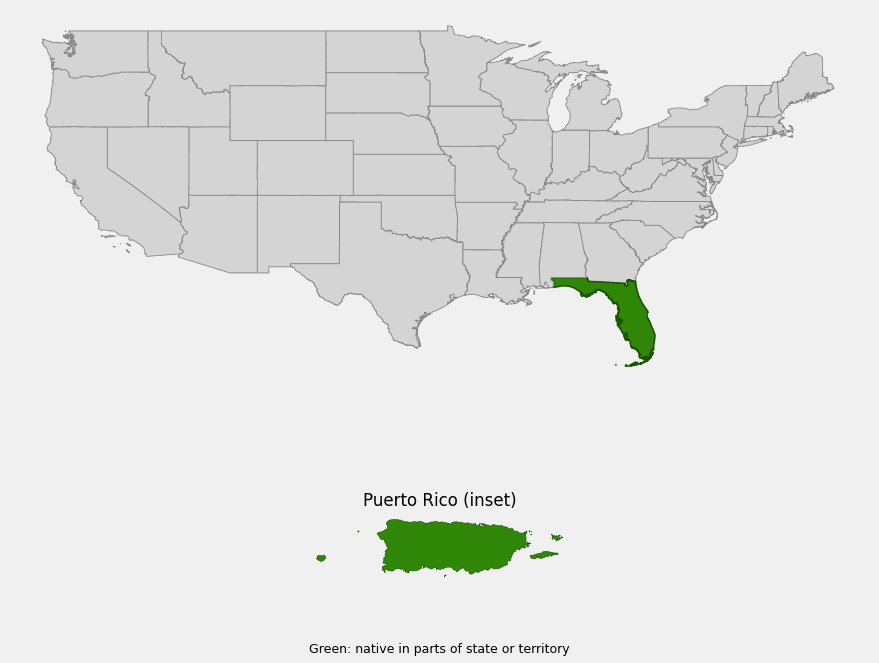
📋 Regional plant lists featuring Coinvine: North & South Florida · Puerto Rico
Growing & Care Guide
Coinvine is an easy, fast-growing native shrub in frost-free coastal Florida, and it is sold by some Florida native plant nurseries for coastal landscaping and restoration. Its main drawback is its sprawling, scrambling habit, so give it room or plan to prune it.
Light
It grows in full sun to partial shade. In full sun it stays denser and flowers more heavily; in shade it becomes looser and more vine-like as it reaches for light.
Soil & Water
Coinvine tolerates sandy, shelly, peaty and mucky soils, salt spray, brackish water and occasional tidal flooding. It does best where the soil stays moist, but established plants tolerate dry spells. It is a good choice for shoreline sites where many ornamental shrubs fail.
Planting Tips
Plant container stock at any time of year in South Florida, watering regularly until established. Space plants about 6 to 10 feet apart for a hedge or thicket. Use it along shorelines, canal banks and the edges of mangrove areas, or as a loose screen. Note that mangroves and coastal wetlands are regulated in Florida, so check local rules before planting or pruning in tidal areas.
Pruning & Maintenance
Prune as needed to keep its long branches in bounds or to shape it into a hedge. It tolerates hard pruning and quickly regrows. Remove branches that climb into nearby trees if they start to smother them. No fertilizer is needed; like many legumes it can fix nitrogen with the help of soil bacteria.
Propagation
Grow it from seed: sow fresh pods (the seed does not need to be removed) in moist, sandy soil. It can also be propagated by cuttings and by layering, since branches root readily where they touch moist ground.
Landscape Uses
- Shoreline stabilization: dense, rooting branches hold sandy and mucky soils on banks and shores
- Coastal buffers and screens: a salt-tolerant hedge or thicket near the water
- Mangrove-edge restoration: in the transition zone between mangroves and upland hammock
- Wildlife gardens: fragrant flowers for bees and dense cover for birds
- Salt-tolerant landscaping: for seaside properties in frost-free South Florida
Wildlife & Ecological Value
Coinvine is a valuable part of the coastal fringe, where it supplies flowers, cover and shoreline structure.
For Pollinators
Its fragrant flowers attract bees, including native bees and honey bees, as well as wasps and butterflies. In Brazil, honey bees collect a red resin from coinvine stems to make “red propolis,” a product valued for its chemical properties.
For Birds
Its dense, tangled thickets provide nesting sites and shelter for songbirds such as northern cardinals and gray catbirds, and for wading birds along mangrove edges. Migrant warblers forage for insects in its foliage.
For Mammals
Small mammals use the thickets for cover. Raccoons and marsh rabbits move through the tangle along shorelines.
Ecosystem Role
Coinvine binds shorelines with its rooting branches and helps trap sediment and debris along the landward edge of mangrove forests. As a legume, it can host nitrogen-fixing bacteria in its root nodules, adding nitrogen to poor coastal soils. Its floating pods let it colonize new shorelines after storms.
Cultural & Historical Uses
Linnaeus first described this plant in the 1750s as Hedysarum ecastaphyllum, and it was later placed in several other genera before Paul Taubert moved it to Dalbergia in the 1890s. The genus honors the Swedish brothers Nils and Carl Dalberg, and the species name comes from Ecastaphyllum, an older genus name used for it.
Its English name refers to the coin-like pods. The round pods have long caught the attention of beachcombers, and they are among the drift seeds found on tropical Atlantic beaches.
In recent decades coinvine has drawn scientific interest in Brazil as the botanical source of red propolis, a resin product made by honey bees. In Florida it is valued mainly for coastal restoration and landscaping. Like many legumes, its seeds should not be eaten.
Frequently Asked Questions
Why is it called coinvine?
Its seed pods are flat, round and about the size of a coin. Combined with its vine-like, scrambling branches, they gave the plant its common name.
Is coinvine a vine or a shrub?
Both, in a way. It is a woody shrub, but its long, flexible branches can sprawl along the ground or scramble up into nearby trees, so it often looks like a vine.
Where does coinvine grow in Florida?
Along the coasts of central and southern Florida and in the Keys, usually at the edges of mangrove swamps, brackish marshes, coastal hammocks and shorelines.
Is coinvine salt tolerant?
Yes. It tolerates salt spray, brackish water and occasional tidal flooding, making it a good native shrub for waterfront landscapes in frost-free areas.
Is coinvine related to rosewood?
Yes. It belongs to the genus Dalbergia, which includes the rosewood timber trees, but coinvine itself is a shrub and is not used for wood.

Looking for a nursery that carries Coinvine?
Browse our native plant nursery directory: Florida

