
ʻĀkala (Rubus macraei)
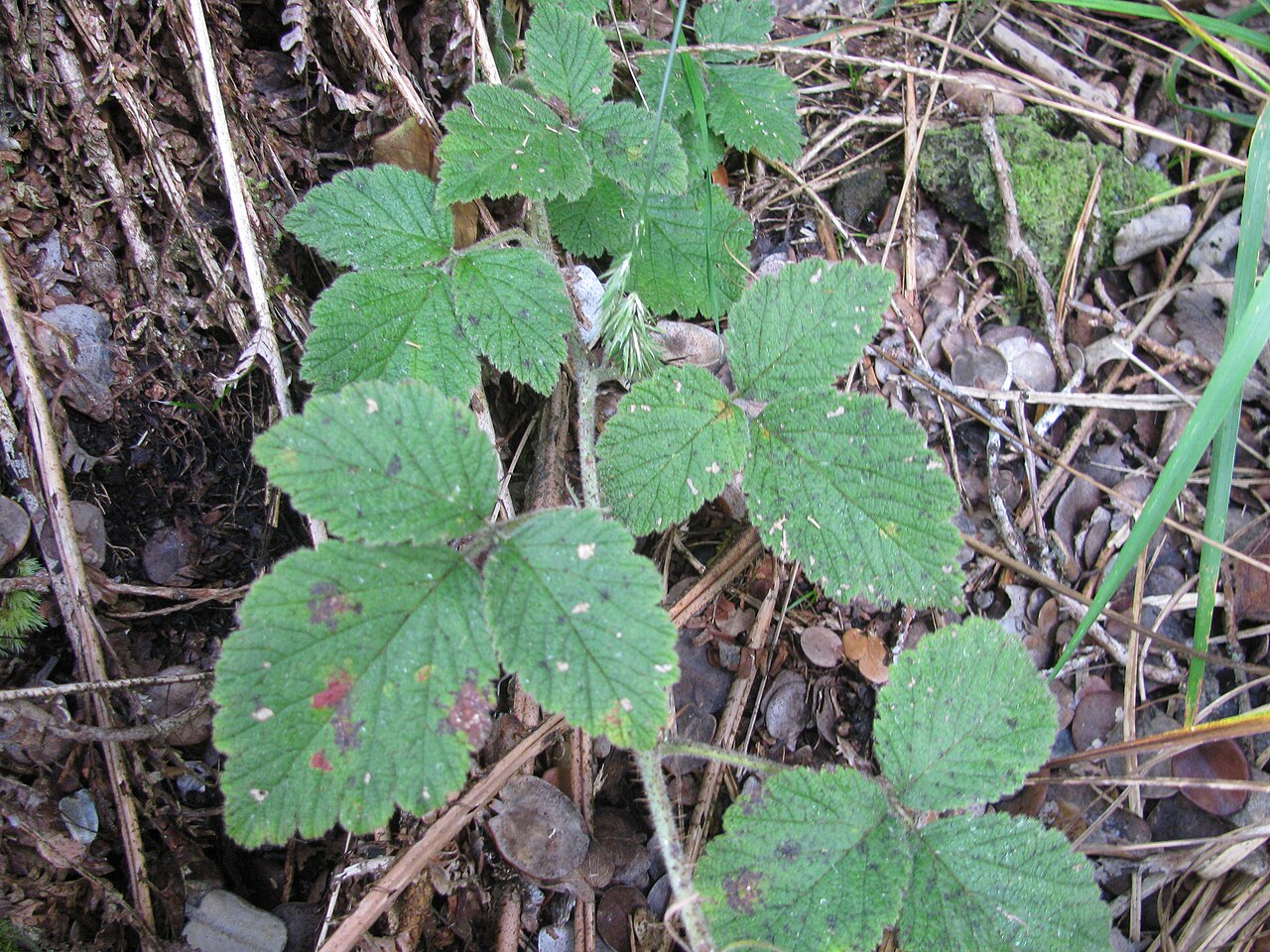
Rubus macraei is one of Hawaiʻi’s two native raspberries, both called ʻākala. This one is a low, trailing, prickly bramble found only on the high mountains of East Maui and Hawaiʻi Island, where its stems creep through bogs, wet montane forest and subalpine shrubland, usually above about 5,000 feet. It is endemic to the Hawaiian Islands and grows nowhere else in the world.
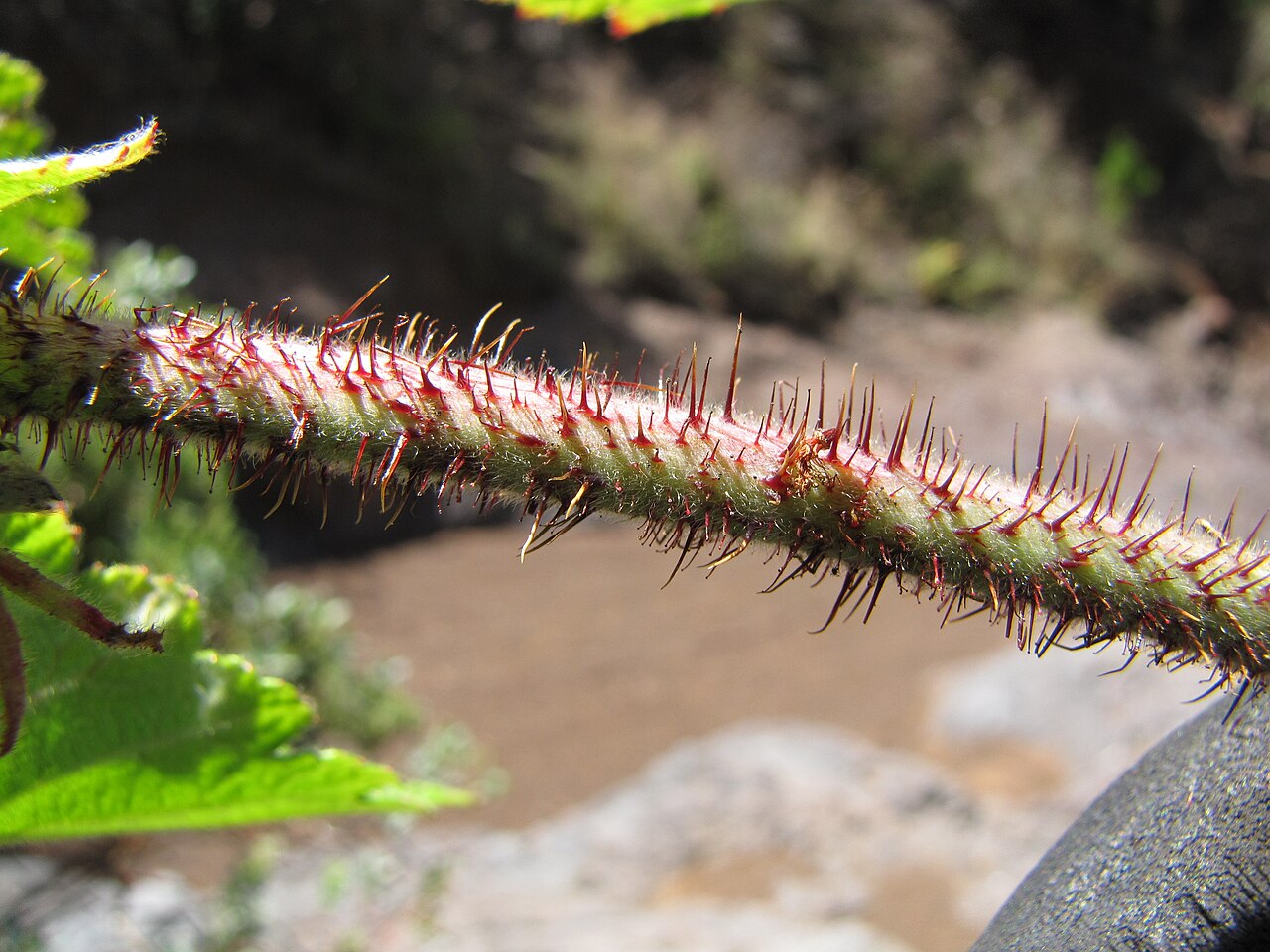
It is easy to confuse with the better-known ʻākala, Rubus hawaiensis, a tall shrub with long arching, nearly smooth canes that grows on four islands. Rubus macraei stays low, sprawls along the ground or over other plants, and has stems densely covered in slender reddish prickles. Both bear deep pink flowers and large red raspberry-like fruits; the Hawaiian name ʻākala means “pink,” after the color of the juice of the berries.
This guide covers how to identify Rubus macraei and tell it from the other ʻākala and from introduced brambles, where it grows, what is known about growing it, and its place in Hawaiʻi’s upland ecosystems. It is rarely cultivated. Never dig plants or collect cuttings in parks or reserves; Haleakalā and Hawaiʻi Volcanoes National Parks and the state and private preserves where it grows protect all plants.
Identification
Rubus macraei is a trailing to sprawling perennial subshrub with three-parted, toothed leaves and very prickly stems. In the high-elevation places where it grows, its low habit and bristly stems set it apart from the upright, nearly smooth canes of Rubus hawaiensis.
Stems & Habit
The stems are long and slender, trailing along the ground, rooting in places, or scrambling a short way over ferns, shrubs and fallen logs. They rarely stand more than about a foot or two above the ground, though individual stems can run several feet. The stems are green to reddish and densely covered with straight, slender, reddish prickles and gland-tipped bristles.
Leaves
The leaves are alternate and compound with three leaflets, the end leaflet on a longer stalk. Leaflets are broadly oval with pointed tips and sharply double-toothed edges, bright to dark green above and paler beneath, and the leaf stalks are prickly like the stems. New growth and leaves in sunny spots are often flushed red.
Flowers & Fruit
The flowers are borne singly or a few together near the stem tips. They have five spreading petals in deep rose-pink to dark reddish purple, around a center of many stamens, like a large wild rose. They are followed by a raspberry-like aggregate fruit, dark red to purplish when ripe, that pulls free of its core like other raspberries.
Look-alikes
The other native ʻākala, Rubus hawaiensis, is an upright to arching shrub often 6 feet or more tall, with few, weak prickles, and it grows on Kauaʻi, Molokaʻi, Maui and Hawaiʻi Island. Several introduced brambles are serious weeds in Hawaiʻi: yellow Himalayan raspberry (R. ellipticus) has yellow fruits and hooked prickles, thimbleberry or roseleaf raspberry (R. rosifolius) has white flowers and leaves with many leaflets, and Florida prickly blackberry (R. argutus) has white flowers, black fruit and stout hooked prickles. If you find a low, trailing, bristly bramble with pink flowers at high elevation on Maui or Hawaiʻi Island, it is probably R. macraei.
Quick Facts
| Scientific Name | Rubus macraei A. Gray |
| Family | Rosaceae (rose family) |
| Plant Type | Trailing perennial subshrub (bramble) |
| Mature Height | 6 in–2 ft |
| Mature Spread | 3–10 ft (trailing stems) |
| Growth Rate | Moderate |
| Sun Exposure | Partial shade to full sun |
| Water Needs | High; cool, moist to wet sites |
| Soil Type | Organic, well-drained volcanic soils; bog margins |
| Soil pH | About 4.5–6.5 (acidic) |
| Bloom Time | Mainly spring and summer |
| Flower Color | Deep rose-pink to dark reddish purple |
| Fall Color | None |
| Fruit | Dark red to purplish raspberry-like aggregate |
| Deer Resistant | No; damaged by pigs, goats and deer where present |
| USDA Hardiness Zones | 10–11; needs cool, high-elevation conditions |
Native Range
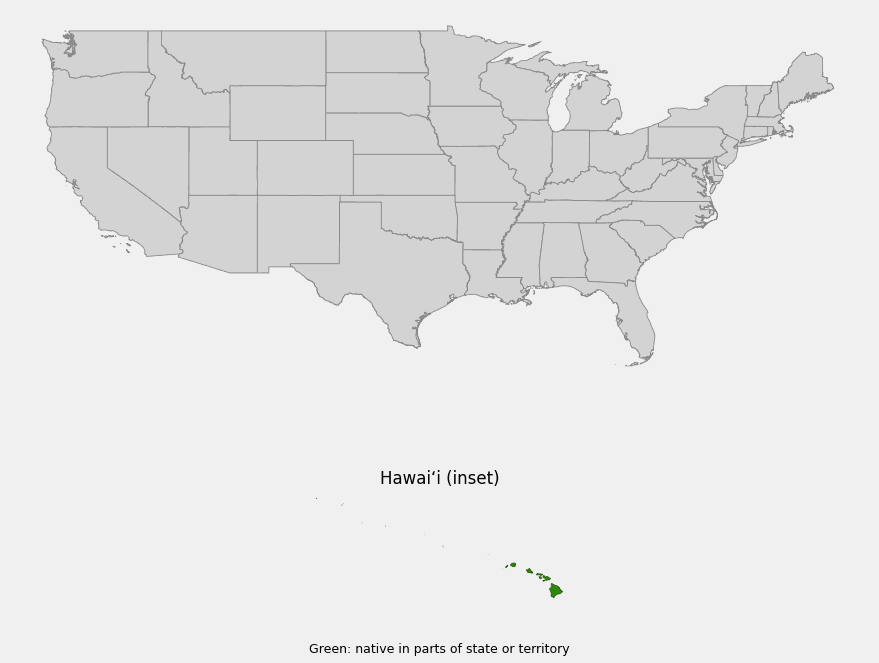
Rubus macraei is endemic to Hawaiʻi. USDA PLANTS lists it only for Hawaii, where it grows on just two islands: East Maui, on the slopes of Haleakalā, and Hawaiʻi Island, on the high slopes of its large volcanoes. On Maui it is found in places such as Haleakalā National Park, the Koʻolau Gap, the Waikamoi Preserve and the Kula Forest Reserve around Polipoli.
It is a plant of the cool upper montane and subalpine zones, mostly from about 5,000 to 9,500 feet, where clouds bring frequent mist and temperatures are mild by day and cool to near freezing at night. It grows in wet and mesic montane forest of ʻōhiʻa and koa, in montane bogs, along forest edges and in openings, and in subalpine shrubland with pūkiawe and ʻōhelo.
Like many Hawaiian upland plants, it has been reduced by feral pigs and goats, which root up and browse the forest floor, and by invasive plants that crowd the understory, including several introduced brambles. Fenced and managed areas such as Haleakalā National Park and Waikamoi now protect important populations.
📋 Regional plant lists featuring ʻĀkala: Hawaii
Growing & Care Guide
Rubus macraei is very rarely grown. It needs the cool, misty conditions of Hawaiʻi’s high mountains and does poorly in warm lowland gardens. If you garden at upper elevations on Maui or Hawaiʻi Island and want a native ʻākala, ask native Hawaiian plant nurseries; most offer the taller Rubus hawaiensis, which is easier to find and grow. Use only nursery-propagated plants, and never dig plants or take cuttings from parks, reserves or private land without permission.
Light
Partial shade to filtered sun, as at a forest edge. In full sun it needs constant moisture and cool temperatures; in deep shade it grows thinly and flowers little.
Soil & Water
Rich, organic, acidic soil that stays moist but drains well, such as volcanic soils with plenty of leaf litter. It is adapted to frequent mist and rain and should not dry out. Heat and drought are its main limits in cultivation.
Planting Tips
Plant only at cool, upland sites, ideally above about 3,000 feet on Maui or Hawaiʻi Island. Give the trailing stems room to sprawl over a bank, among ferns or along a woodland edge. Its prickles make it a poor choice beside paths.
Pruning & Maintenance
Wear gloves. Cut back old, tangled stems after fruiting to keep it in bounds. Keep invasive brambles, grasses and other weeds away from it. Protect plants from pigs and goats with fencing where needed.
Propagation
Like other raspberries, it can be propagated from stem tips that root where they touch the ground (tip layering), from stem cuttings, or from seed cleaned from ripe fruit. Seed germination is slow and uneven and usually improves with a period of cool, moist conditions. Propagation of wild material in Hawaiʻi is best left to native plant nurseries and conservation programs working with landowners’ permission.
Landscape Uses
- Upland native gardens: groundcover among ferns in cool, misty mountain gardens
- Forest restoration: native understory bramble for high-elevation wet forest
- Wildlife food: fruits for birds in native forest
- Education: shows how Hawaiian brambles diversified from mainland ancestors
Wildlife & Ecological Value
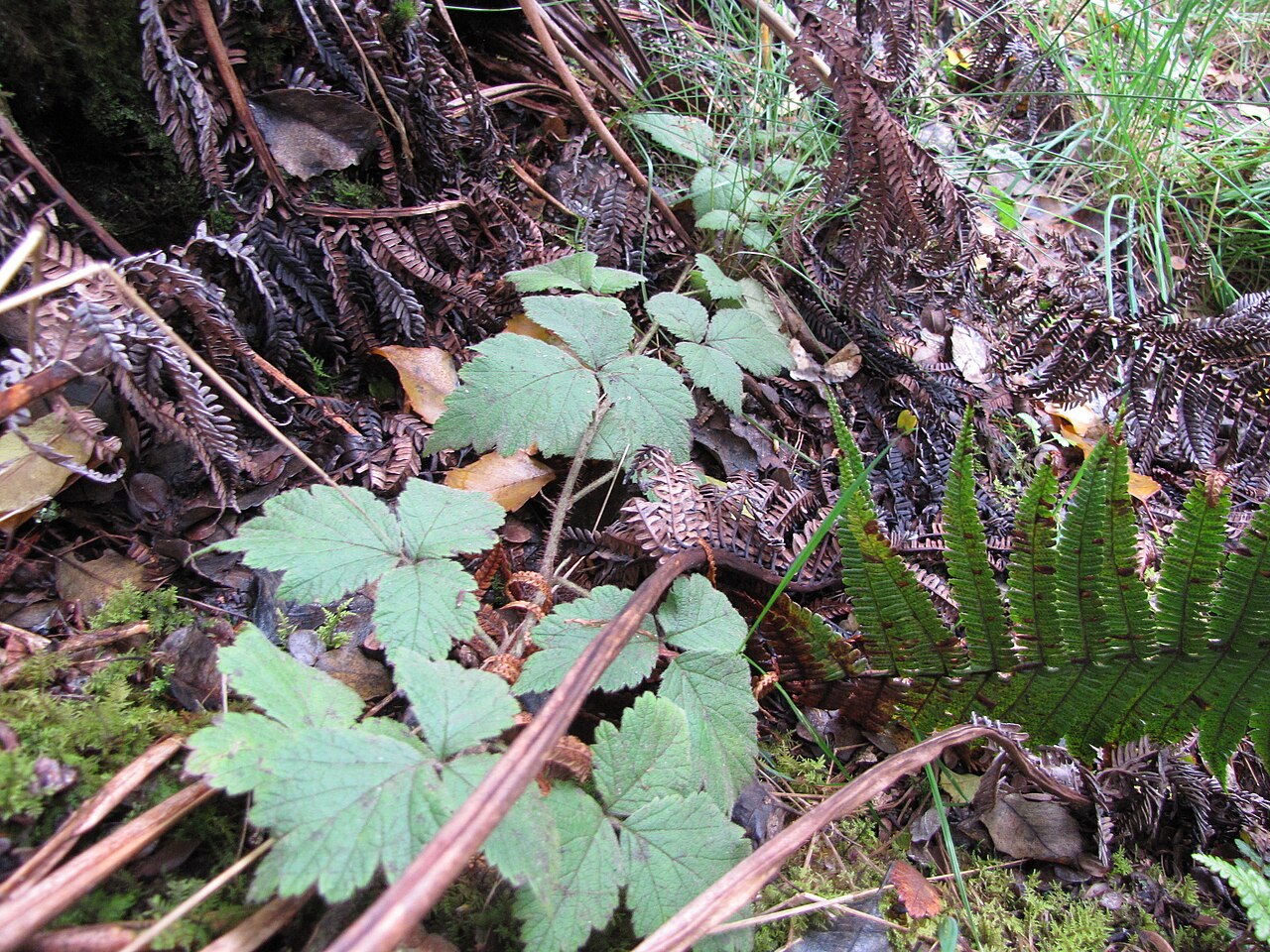
Rubus macraei is part of the native understory of Hawaiʻi’s high-elevation forests and shrublands, where it provides flowers, fruit and ground cover.
For Pollinators
The open, pink flowers offer nectar and pollen to insects. In Hawaiʻi’s uplands, native insects such as yellow-faced bees (Hylaeus), flies and moths, along with introduced honey bees, visit flowers like these in Hawaiʻi’s uplands.
For Birds
The fruits are eaten by birds, which spread the seeds. Before many native birds declined, fruit-eating native birds likely played this role; today introduced birds such as the Japanese white-eye, which eat many native fruits, likely spread most seed.
For Mammals
Hawaiʻi has no native land mammals except a bat. Introduced pigs, goats and deer browse and trample ʻākala and are a major threat to the forests where it grows.
Ecosystem Role
Its trailing stems knit together the ground layer of upland forests and bogs, helping to hold thin volcanic soils on steep slopes. It is part of the native plant community that land managers work to protect from feral ungulates and invasive plants.
Cultural & Historical Uses
Asa Gray described Rubus macraei in the 1850s from plants collected on the United States Exploring Expedition, naming it for James Macrae, a Scottish botanist who collected in Hawaiʻi in 1825. Rubus is the Latin name for brambles.
The Hawaiian name ʻākala means “pink,” and both native raspberries share it. The fruits were eaten, though Hawaiian raspberries are generally described as tart or bland compared with commercial raspberries.
The Hawaiian brambles are a textbook case of island evolution. Genetic studies show they descend from North American ancestors related to salmonberry that reached the islands, most likely carried by birds. One lineage became the tall, nearly smooth R. hawaiensis; R. macraei, by contrast, kept dense prickles and became a low, trailing plant of the highest forests and bogs.
Frequently Asked Questions
What is the difference between the two ʻākala?
Rubus macraei is a low, trailing plant with very prickly stems, found only on East Maui and Hawaiʻi Island, mostly at high elevations. Rubus hawaiensis is a tall shrub with long arching canes and few, weak prickles, found on Kauaʻi, Molokaʻi, Maui and Hawaiʻi Island. Both have pink flowers and red raspberry-like fruit.
Is ʻākala fruit edible?
The fruits of Hawaiian raspberries are edible but are usually tart or bland. In parks and preserves, leave them for wildlife and follow the area’s rules, and be sure of the identification before eating any wild fruit.
Where can I see Rubus macraei?
On East Maui, along trails in Haleakalā National Park, the Polipoli area of Kula Forest Reserve and guided hikes in the Waikamoi Preserve; and at high elevations on Hawaiʻi Island. Stay on trails, since many of these areas protect rare plants and birds.
Can I grow Rubus macraei?
Only in cool, moist, high-elevation gardens in Hawaiʻi, and it is rarely offered by nurseries. Most gardeners who want a native ʻākala grow the taller Rubus hawaiensis. Never collect plants or cuttings from the wild.
Is Rubus macraei invasive?
No. It is a native Hawaiian endemic. The invasive brambles in Hawaiʻi are introduced species such as yellow Himalayan raspberry, roseleaf raspberry and Florida prickly blackberry.

Looking for a nursery that carries ʻĀkala?
Browse our native plant nursery directory: Hawaii

