
Southern Cutgrass (Leersia hexandra)
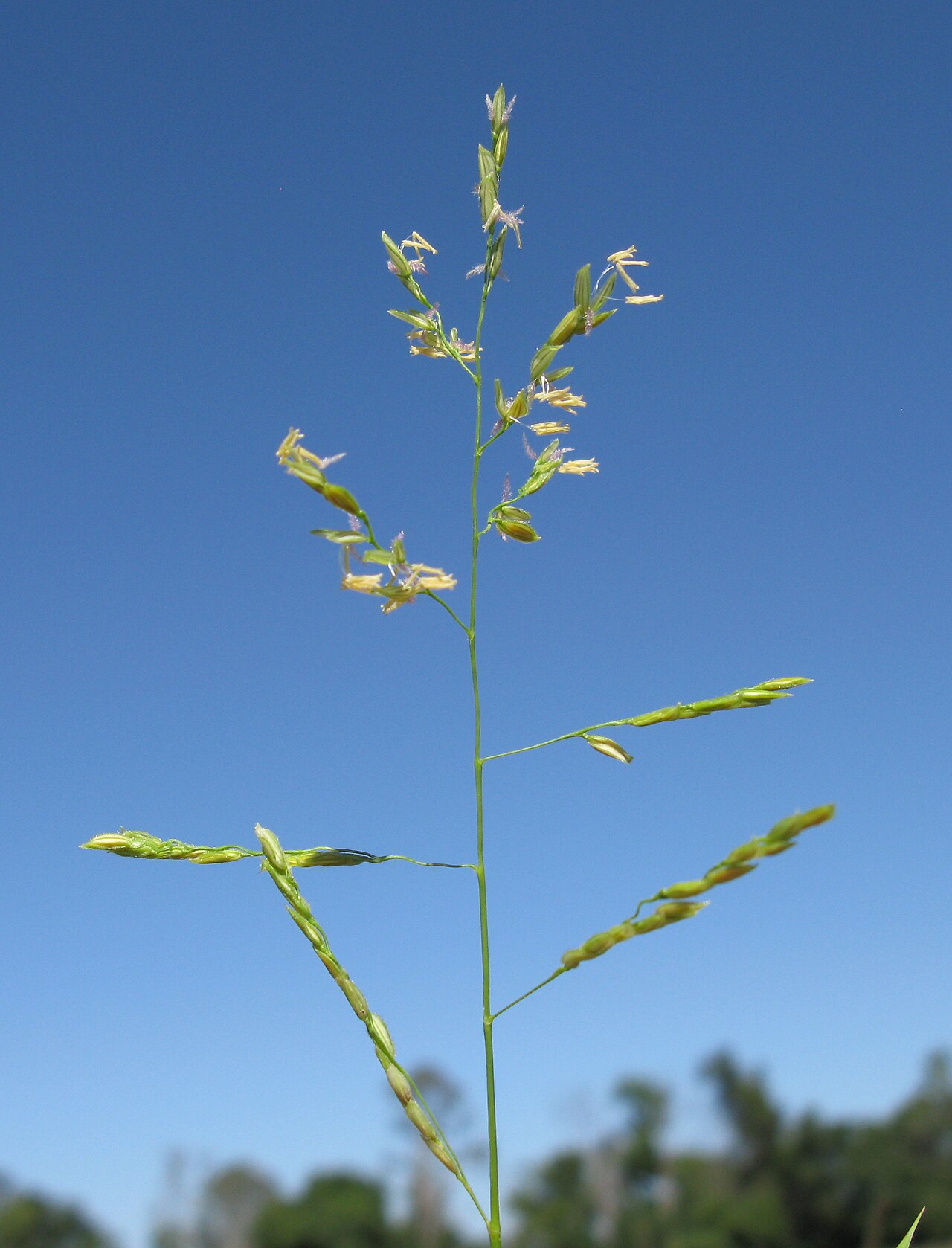
Leersia hexandra, the Southern Cutgrass (also called clubhead cutgrass, swamp rice grass or native rice grass), is a creeping perennial wetland grass and a wild relative of cultivated rice. It forms bright green mats and floating rafts in shallow water, marshes, ditches and the edges of ponds and lakes across the warm parts of the world.
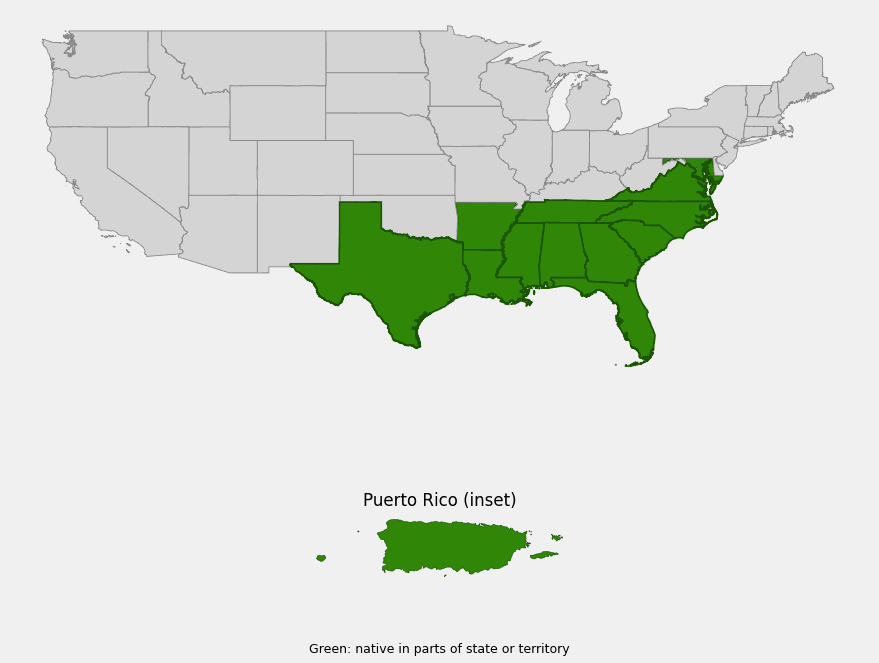
In the United States it is native to the Coastal Plain of the Southeast, from Virginia and Maryland south to Florida and west to Texas and Arkansas, and to Puerto Rico. Its name “cutgrass” is earned: the leaf edges and sheaths are lined with tiny, sharp, forward-pointing teeth that can scratch bare skin if you pull a leaf the wrong way.
It is an important native grass of freshwater wetlands, providing seed and cover for ducks and other wildlife and good grazing for cattle in wet pastures. Gardeners and land managers use it for pond edges, rain gardens, stormwater wetlands and wetland restoration in the South. This guide covers identification, range, growing tips and wildlife value.
Identification
Southern cutgrass is a slender, sprawling grass with stems that lie on mud or float in water and root at the nodes, then turn up at the tips. Its single-flowered, flattened spikelets with no glumes and its six stamens identify it among southern wetland grasses.
Stems & Leaves
The stems are 1 to 4 feet long, often reclining or floating before turning upright, and spread by creeping rhizomes and rooting runners. The nodes are swollen and fringed with short, stiff hairs. Leaf blades are flat, narrow (about ⅛ to ⅜ inch wide) and 2 to 8 inches long, stiff and often held at an angle from the stem. The blade edges and sheaths are rough to the touch with tiny teeth. The ligule is a short membrane joined to small ear-like lobes at the base of the blade.
Flowers & Spikelets
The flower head is a narrow to open panicle 2 to 6 inches long, with short, stiffly ascending branches. The spikelets are about ⅛ to ¼ inch long, flattened from the sides and oval, with no glumes. Each spikelet holds one flower inside two stiff, keeled scales fringed with short bristles. Each flower has six stamens, the “hexandra” of the name, while most grasses have three. It blooms from late spring through fall, and year-round in Florida and Puerto Rico.
Fruit
The grain is small and enclosed in the hardened spikelet scales. Spikelets drop when ripe and float, spreading the plant along waterways. Much of its spread, though, is by creeping stems and rhizomes.
Look-alikes
Rice Cutgrass (L. oryzoides) is more widespread across the U.S. and has larger, more open panicles with drooping branches and three stamens. Whitegrass (L. virginica) grows in shady woods and has very small spikelets on long, thin, spreading branches. Giant cutgrass (Zizaniopsis miliacea) is much taller, up to 10 feet, with wide leaves. Water paspalum and Knotgrass have spikelets in one-sided spikes rather than a panicle.
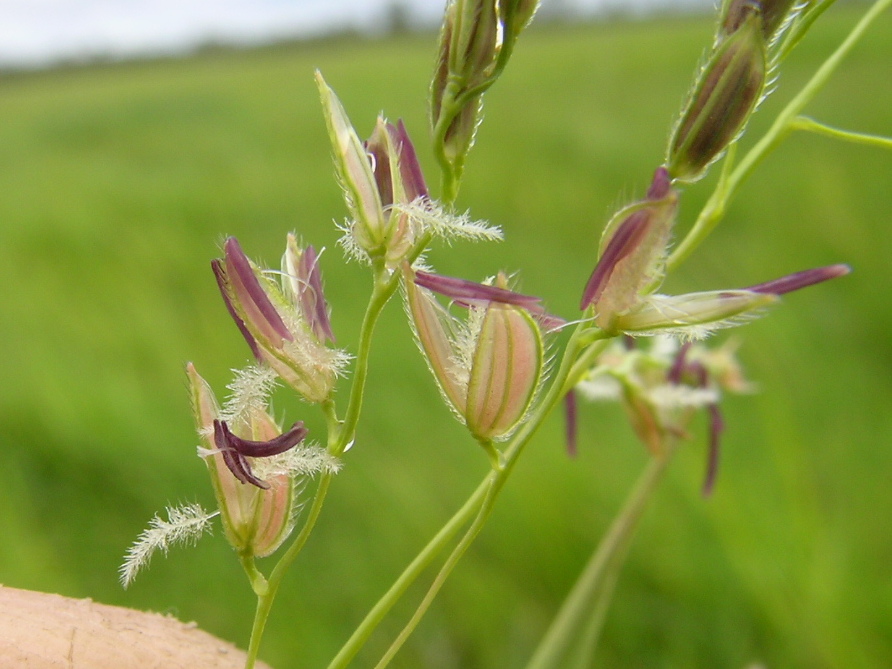
Quick Facts
| Scientific Name | Leersia hexandra Sw. |
| Family | Poaceae (grass family), rice tribe (Oryzeae) |
| Plant Type | Rhizomatous, stoloniferous perennial wetland grass |
| Mature Height | 1–3 ft (stems up to 4 ft long) |
| Mature Spread | Spreads indefinitely by runners |
| Growth Rate | Fast |
| Sun Exposure | Full sun to light shade |
| Water Needs | Wet; saturated soil or shallow water to about 1 ft deep |
| Soil Type | Mucky, sandy or clay wetland soils |
| Soil pH | About 4.5–7.5 |
| Bloom Time | May–October (year-round in Florida and Puerto Rico) |
| Flower Color | Greenish to straw, with purple anthers |
| Fall Color | Green to tan; evergreen in frost-free areas |
| Fruit | Small grain enclosed in a flattened spikelet |
| Deer Resistant | Moderate; grazed by cattle and other herbivores |
| USDA Hardiness Zones | 7–11 |
Native Range
Southern cutgrass is one of the most widespread wetland grasses in the world, native to tropical and warm-temperate regions of the Americas, Africa, Asia and Australia. In the United States, USDA PLANTS lists it as native in Alabama, Arkansas, Florida, Georgia, Louisiana, Maryland, Mississippi, North Carolina, South Carolina, Tennessee, Texas and Virginia, and in Puerto Rico. It is a plant of the Atlantic and Gulf Coastal Plains. In Texas it grows mainly in the eastern and coastal parts of the state, south along the Gulf coast; the Maryland and Tennessee records are at the northern and inland edges of its range.
It is common throughout Florida, in marshes, wet prairies, flatwoods ponds, ditches and lake margins, and in the Everglades. In Puerto Rico it grows in freshwater marshes, wet pastures, ditches and rice-field edges from the coast into the lowland valleys.
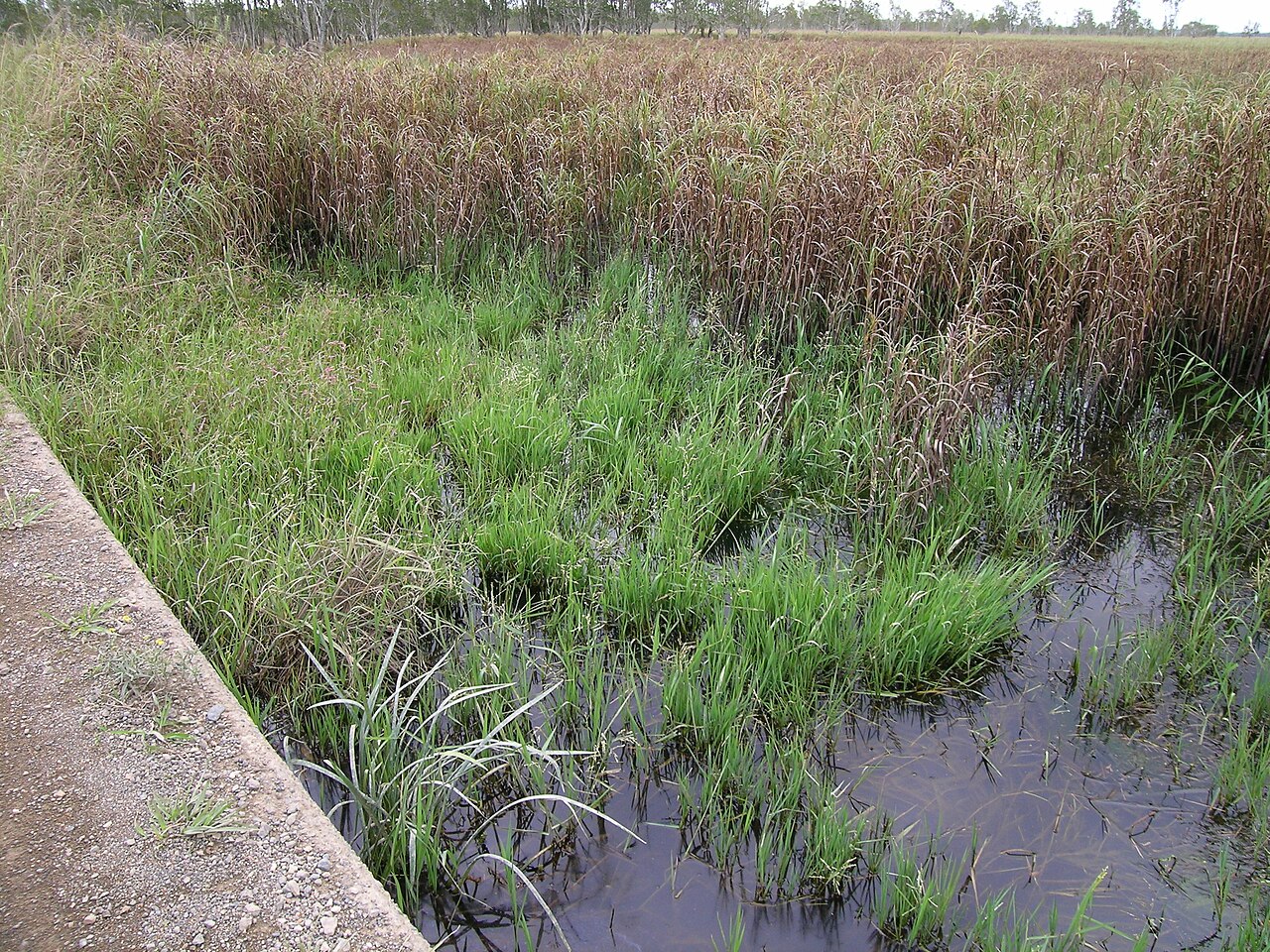
Its habitat is shallow fresh water and saturated ground: the edges of ponds, lakes and slow streams, freshwater marshes, swales, cypress and gum ponds, wet prairies, canals and roadside ditches. It tolerates long flooding and fluctuating water levels, and it often forms floating mats that extend out from the shore over deeper water.
📋 Regional plant lists featuring Southern Cutgrass: North & South Florida · Alabama, Georgia & Mississippi · Arkansas, Louisiana, Eastern Oklahoma & Eastern Texas · South & West Texas · North & South Carolina · Kentucky & Tennessee · Maryland, Virginia & West Virginia · Puerto Rico
Growing & Care Guide
Southern cutgrass is easy to grow anywhere it has full sun and constantly wet soil or shallow water. It is sold by some wetland and restoration nurseries in the Southeast as plugs. Because it spreads quickly by runners, use it where you want a fast, soft-textured groundcover for a wet area, not in a small, tidy water garden.
Light
Full sun is best. It tolerates light shade along wooded pond edges but becomes thin in heavier shade.
Soil & Water
It grows in almost any wet soil, from sand to muck and clay, and in water up to about a foot deep. It tolerates periods of flooding and can survive short dry spells as long as the roots stay damp. It is not salt tolerant beyond slightly brackish water.
Planting Tips
Plant plugs 1 to 2 feet apart in spring or early summer along pond and lake shorelines, in rain gardens, stormwater ponds and constructed wetlands, or in wet swales. Mix it with taller wetland plants such as pickerelweed, arrowheads and rushes for a natural look. Wear gloves when handling it, since the leaf edges are rough and can scratch.
Pruning & Maintenance
Little care is needed. In small spaces, pull or cut runners that spread where they are not wanted. It can be mowed in wet pastures and recovers quickly. In frost-prone areas the top dies back in winter and regrows from the base in spring.
Propagation
The easiest way is by division: dig rooted pieces of stem or rhizome and replant them in wet soil. Stem pieces with a few nodes root readily in mud or shallow water. It can also be grown from seed sown on wet soil in warm weather.
Landscape Uses
- Pond and lake shorelines: a soft, spreading edge that stabilizes banks
- Stormwater ponds and rain gardens: tolerates fluctuating water and filters runoff
- Wetland restoration: native groundcover for marshes and wet prairies
- Wet pastures: good forage grass for cattle in wet ground
Wildlife & Ecological Value
Southern cutgrass is a quiet but important part of southern wetlands, providing food and shelter for waterfowl, wading birds, fish and many small animals.
For Pollinators
Like other grasses, it is wind-pollinated and offers little nectar, though some bees collect its pollen. Its mats host many insects that feed on grasses, which in turn feed birds, frogs and fish.
For Birds
Ducks and other waterfowl eat the seeds and the tender shoots, and rails, sparrows and red-winged blackbirds forage among the mats. Its dense cover provides shelter and feeding areas for wading birds such as herons and egrets.
For Mammals
It is grazed by cattle, white-tailed deer and marsh rabbits, and is eaten by muskrats and nutria where they occur. It is a valued native forage in wet pastures of Florida and the Gulf Coast.
Ecosystem Role
Its creeping stems and floating mats slow water, trap sediment and stabilize shorelines and ditch banks. Underwater stems provide cover for small fish and aquatic insects. In some rice-growing regions abroad, it is considered a weed of rice paddies because it competes so well in shallow water.
Cultural & Historical Uses
Olof Swartz described Leersia hexandra in 1788 from plants of the West Indies. The genus honors the German botanist Johann Daniel Leers, and hexandra means “six stamens,” a feature that sets it apart from most grasses.
Leersia belongs to the rice tribe of grasses, together with Asian rice (Oryza), wild rice (Zizania) and giant cutgrass. Its spikelets look like tiny, flattened rice grains, which is why it is called rice grass in some places. Unlike its famous relatives, it has never been domesticated as a grain crop.
Wetland scientists have studied southern cutgrass for cleaning polluted water. Research, especially in China, has found that it can tolerate and accumulate metals such as chromium from contaminated water and soil, making it a candidate for constructed treatment wetlands.
Frequently Asked Questions
Why is it called cutgrass?
The edges of the leaves and the leaf sheaths are lined with tiny, sharp, forward-pointing teeth. Pulling a leaf through your hand the wrong way can leave small scratches, so wear gloves when handling it.
Is southern cutgrass related to rice?
Yes. It belongs to the rice tribe of grasses (Oryzeae), along with cultivated rice and wild rice. Its small, flattened spikelets resemble tiny grains of rice.
Is southern cutgrass invasive?
Not in its native range in the southeastern U.S. and Puerto Rico, where it is a natural part of wetlands. It does spread quickly by runners, so plant it only where it has room to spread. It can be a weed in rice fields in other countries.
Will it grow in a pond?
Yes. It grows in saturated soil and in water up to about a foot deep, and it can form floating mats that extend out from the shore.
How is it different from rice cutgrass?
Rice cutgrass (Leersia oryzoides) grows across most of the U.S. and has a larger, more open, drooping panicle and three stamens per flower. Southern cutgrass has stiffer, narrower leaves, a smaller panicle with ascending branches, and six stamens.

Looking for a nursery that carries Southern Cutgrass?
Browse our native plant nursery directory: Alabama & Arkansas · Florida & Georgia · Louisiana, Maryland & Mississippi · North Carolina · South Carolina, Tennessee, Texas & Virginia

